Home Swapping: The Key To Affordable Global Travel

SwappaHome Editorial Team
Home Exchange & Slow Travel Editorial
Home Swapping: The Key To Affordable Global Travel !Travelers researching home swap in Paris apartment More than 35 percent of American and European...
Home Swapping: The Key To Affordable Global Travel
 Travelers researching home swap in Paris apartment
More than 35 percent of American and European homeowners now look for ways to cut travel costs without sacrificing quality. For those tired of overpriced hotels, home swapping offers a smart alternative to traditional lodging. If you want to enjoy local life abroad, simplify your travel planning, and keep your accommodation budget in check, exploring how home exchanges really work—and separating the myths from reality—can give you the insights needed to travel smarter.
Table of Contents
- Home Swapping Defined And Common Myths
- Major Types Of Swaps And Key Differences
- How Home Swapping Platforms Operate
- Legal And Trust Requirements For Exchanges
- Risks, Costs, And Avoiding Common Mistakes
Key Takeaways
| Point | Details |
|---|---|
| Home Swapping Overview | Home swapping allows homeowners to exchange homes for travel without monetary transactions, promoting authentic living experiences. |
| Types of Swaps | Reciprocal swaps require exact timing and coordination, while non-reciprocal swaps offer flexibility with points-based systems. |
| Platform Functionality | Home swapping platforms operate as digital marketplaces, facilitating secure communication, user verification, and property matching. |
| Risk Mitigation | To minimize risks, thorough documentation, clear communication, and detailed home exchange agreements are essential before swaps. |
Home swapping defined and common myths
Home swapping is a unique travel accommodation strategy where homeowners exchange living spaces for temporary periods without monetary transactions. Home exchange represents an innovative approach to travel that transforms traditional lodging expectations by enabling people to stay in fully furnished homes across different locations worldwide.
At its core, home swapping involves two parties agreeing to trade their residential spaces for a set duration, typically during vacation periods. This model challenges conventional hotel accommodations by offering travelers authentic living experiences in residential environments. Unlike traditional rentals, home swapping eliminates direct financial exchange, instead relying on mutual trust and reciprocal arrangements between verified homeowners.
Despite its growing popularity, several persistent myths surround home swapping. Many potential participants mistakenly believe that home exchanges are risky, complicated, or exclusively for younger travelers. In reality, home swapping strategies can help diverse demographics optimize housing consumption, particularly for seniors and families seeking cost-effective travel alternatives. The practice has evolved from niche community exchanges to a structured, technology-enabled platform that prioritizes safety, verification, and seamless communication.
Pro tip: Before your first home swap, thoroughly document your home's condition through detailed photographs and create a comprehensive welcome guide for your exchange partners to ensure a smooth, respectful experience.
Major types of swaps and key differences
Home swapping platforms offer several distinct exchange models designed to accommodate diverse traveler preferences and logistical needs. The primary categories include reciprocal and non-reciprocal swap arrangements, each presenting unique advantages for homeowners seeking flexible accommodation alternatives.
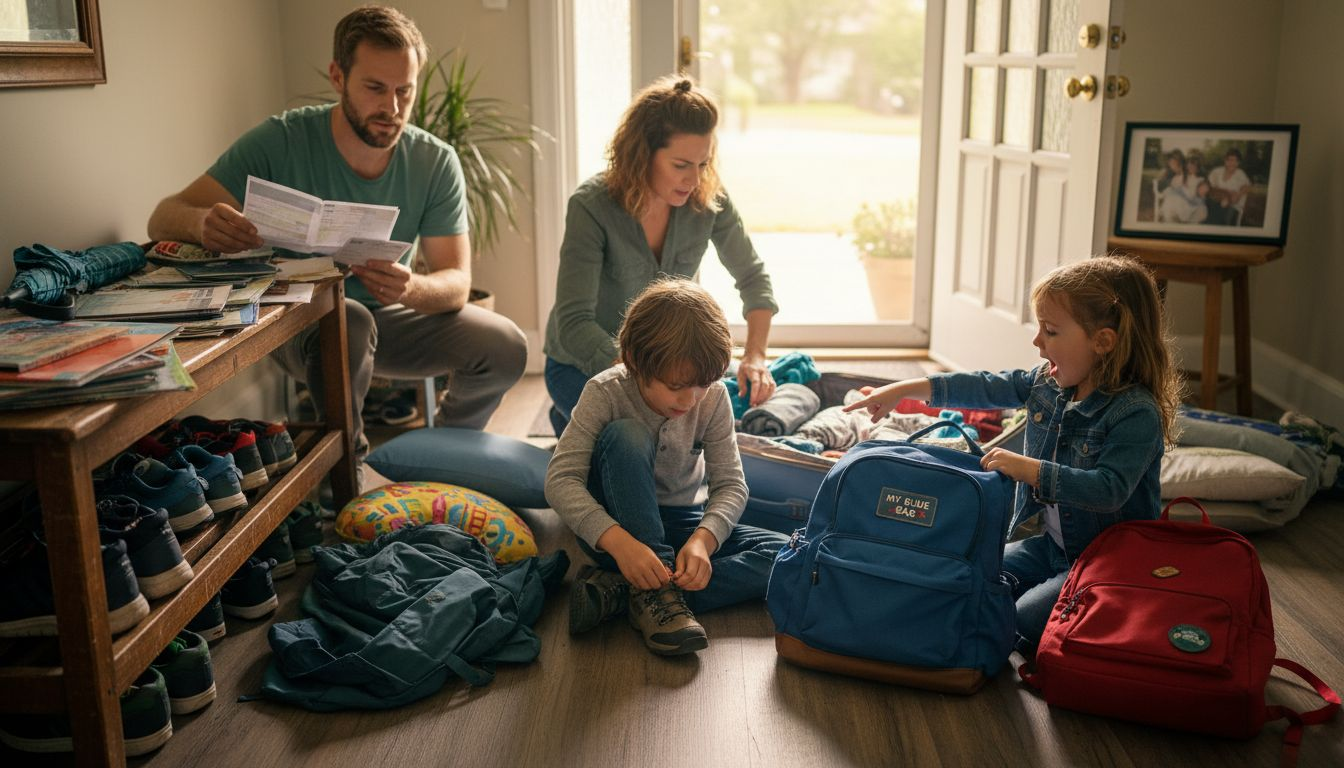 Family preparing for home swap travel
Reciprocal Swaps represent the most traditional home exchange format, where two parties directly trade homes for identical time periods. This method requires precise timing coordination and mutual agreement on dates, destinations, and home conditions. Participants typically exchange simultaneously, ensuring both homeowners experience a direct, one-to-one property swap. These exchanges work best for travelers with synchronized vacation schedules and compatible lifestyle expectations.
Non-Reciprocal Swaps introduce greater flexibility by implementing points-based systems that transcend direct, simultaneous exchanges. In this model, homeowners can accumulate credits by hosting travelers, which they can subsequently use for stays in other network members' properties. This approach eliminates the strict requirement of finding a perfect match in timing and location, enabling more dynamic and personalized travel experiences. Non-reciprocal platforms often support varied exchange durations, ranging from weekend getaways to extended multi-week adventures.
Pro tip: When exploring home swap opportunities, create a comprehensive, attractive home profile that highlights unique features and demonstrates your reliability to increase your chances of successful exchanges.
Here is a comparison of the two main home swap models to help you determine which best fits your travel needs:
| Swap Model | Coordination Style | Flexibility Level | Typical User Profile |
|---|---|---|---|
| Reciprocal Swap | Requires exact timing | Limited, date-dependent | Families with set vacation plans |
| Non-Reciprocal Swap | Flexible, points-based | High, wide date choices | Travelers with flexible schedules |
How home swapping platforms operate
Home swapping platforms function as sophisticated digital marketplaces that connect homeowners seeking unique travel accommodations across global networks. These platforms create structured environments where members can list their properties, search for potential exchanges, and communicate securely while establishing mutually beneficial travel arrangements.
 Infographic showing home swapping platform process
The operational framework typically involves several key components designed to build trust and facilitate seamless exchanges. Members are required to create detailed profiles showcasing their homes, travel preferences, and personal backgrounds. Advanced platforms implement robust verification processes, including identity checks, home documentation, and user reviews to ensure participant reliability. Sophisticated matching algorithms help users find compatible exchange partners based on location preferences, home characteristics, travel dates, and specific accommodation requirements.
Technological innovations are increasingly transforming home swapping platforms. Emerging blockchain-based governance models could revolutionize trust mechanisms by providing transparent, decentralized systems for managing exchanges. These technologies offer potential solutions for establishing clear communication protocols, automated dispute resolution, and enhanced security measures that address traditional concerns about peer-to-peer property exchanges.
Pro tip: Create a comprehensive, high-quality home profile with professional photographs and detailed descriptions to significantly increase your chances of successful home swap matches.
This summary outlines the core platform features that help ensure smooth and secure home exchanges:
| Platform Feature | Purpose | Benefit to Homeowner |
|---|---|---|
| User Verification | Authenticate identities and residence | Reduces risk of fraud |
| Reviews & Ratings | Feedback on past exchanges | Builds community trust |
| Matching Algorithms | Suggest compatible exchange partners | Saves time searching |
| Secure Messaging | Facilitates direct, private communication | Prevents misunderstandings |
Legal and trust requirements for exchanges
Home exchange platforms establish comprehensive legal frameworks to protect participants and ensure secure, reliable property exchanges. These frameworks address critical aspects of mutual respect, property protection, and potential liability scenarios that might arise during home swapping interactions.
The foundation of legal trust in home exchanges relies on multiple verification mechanisms. Platforms typically implement rigorous identity checks, requiring members to provide government-issued identification, proof of residence, and verifiable contact information. Additional trust-building measures include detailed home documentation, comprehensive user profiles, mutual references, and transparent communication channels that allow potential exchange partners to assess each other's reliability and property conditions before committing to an exchange.
Technological innovations are transforming trust mechanisms in home swapping. Blockchain and decentralized autonomous organization (DAO) technologies offer groundbreaking solutions for creating immutable exchange agreements, automating contract enforcement, and providing transparent, tamper-proof records of interactions. These advanced systems can potentially reduce disputes by establishing clear, mutually agreed-upon terms that are automatically executable and verifiable across different legal jurisdictions.
Pro tip: Always document your home's condition with dated, high-resolution photographs and create a detailed home manual to protect yourself and set clear expectations for exchange partners.
Risks, costs, and avoiding common mistakes
Home swapping involves navigating potential risks and understanding associated costs that can impact the overall exchange experience. While the potential for substantial travel savings exists, participants must approach home exchanges with careful preparation and realistic expectations to minimize potential complications.
Key risks in home swapping primarily revolve around property damage, miscommunication, and unexpected logistical challenges. Potential issues include unintended property damage, differences in cleanliness standards, and miscalculated expectations about home conditions. Financial risks are relatively minimal but can include platform membership fees, potential repair costs, and the need for supplemental travel insurance. Experienced home swappers recommend comprehensive communication, detailed property documentation, and establishing clear agreements before finalizing any exchange.
Mitigating risks requires a strategic approach to partner selection and exchange preparation. Successful home swappers typically conduct thorough background checks, request multiple references, verify partner identities, and maintain transparent communication channels. Advanced platforms offer verification systems, user rating mechanisms, and support services that help participants make informed decisions. Additional protective strategies include creating detailed home manuals, documenting property conditions through photographs, and establishing explicit guidelines about property usage, cleaning expectations, and potential liability scenarios.
Pro tip: Create a comprehensive home exchange agreement that explicitly outlines expectations, responsibilities, and potential contingencies before finalizing any property swap.
Unlock Affordable Travel Through Trusted Home Swapping
The article highlights how home swapping offers a fresh, cost-effective alternative to traditional travel accommodations but also points out challenges like trust, timing coordination, and finding verified partners. If you want to avoid complicated scheduling headaches and reduce risks associated with exchanges there is a solution designed exactly for these pain points. Swappahome is a curated, members-only platform that simplifies home swapping by verifying every homeowner and using a points-based system to make travel flexible and safe.
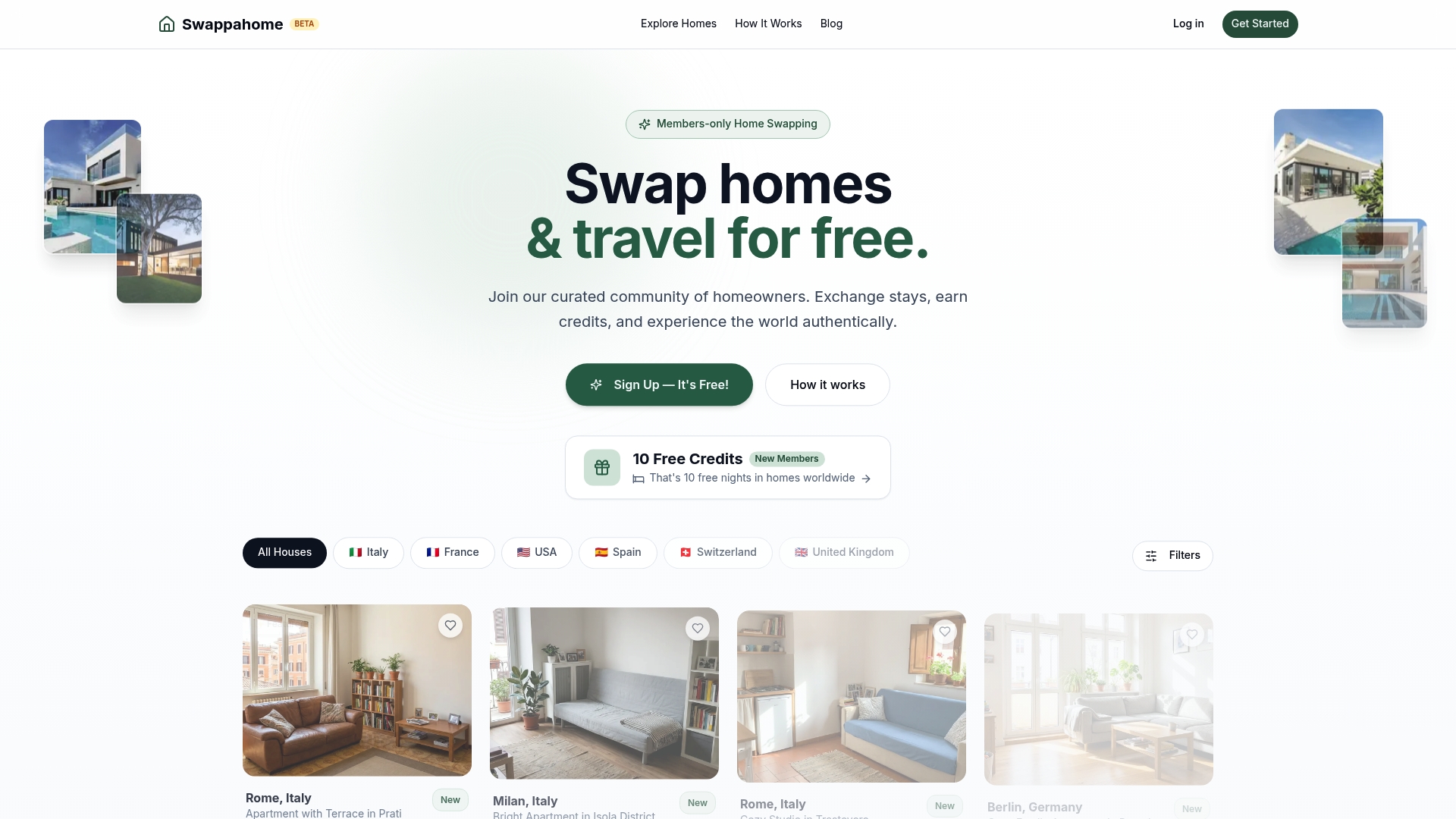 https://swappahome.com
Take control of your travel budget now and experience authentic cultural exchange without worrying about financial transactions or complicated reciprocal swaps. Join Swappahome today where you can list your home, earn credits for hosting, and book stays around the world with an easy, trustworthy system. Don't wait for perfect timing or uncertain partners start your seamless home swapping journey at Swappahome and see how affordable global travel can be.
Frequently Asked Questions
What is home swapping?
Home swapping is a travel accommodation strategy where homeowners exchange living spaces for a predetermined period without any monetary transactions, allowing travelers to stay in fully furnished homes worldwide.
How do reciprocal and non-reciprocal swaps differ?
Reciprocal swaps require both parties to exchange homes simultaneously for the same duration, while non-reciprocal swaps allow homeowners to earn credits by hosting travelers and use those credits for future stays, offering more flexibility.
What risks are associated with home swapping?
Potential risks include property damage, miscommunication regarding home conditions, and unexpected logistical challenges. It's essential to conduct background checks, document property conditions, and establish clear agreements to mitigate these risks.
How do home swapping platforms ensure safety and trust?
Home swapping platforms implement verification processes, user profiles, reviews, and matching algorithms to promote trust and facilitate secure exchanges. Some platforms are also exploring blockchain technologies to enhance these processes.
Recommended

Published by
SwappaHome
SwappaHome Editorial Team
Home Exchange & Slow Travel Editorial
The SwappaHome Editorial Team brings together travel research, home-exchange community insights, and platform data to produce practical guides for first-time and experienced home swappers. Every article cites real platforms, current market rates, and verifiable city-level facts so readers can make informed decisions without guessing.
Ready to try home swapping?
Join SwappaHome and start traveling by exchanging homes. Get 7 free credits when you sign up!