
How Home Exchange Works: Credit System Explained

SwappaHome Editorial Team
Home Exchange & Slow Travel Editorial
How Home Exchange Works: Credit System Explained !Couple packing for home exchange in cozy living room Tired of the high costs and lack of...
How Home Exchange Works: Credit System Explained
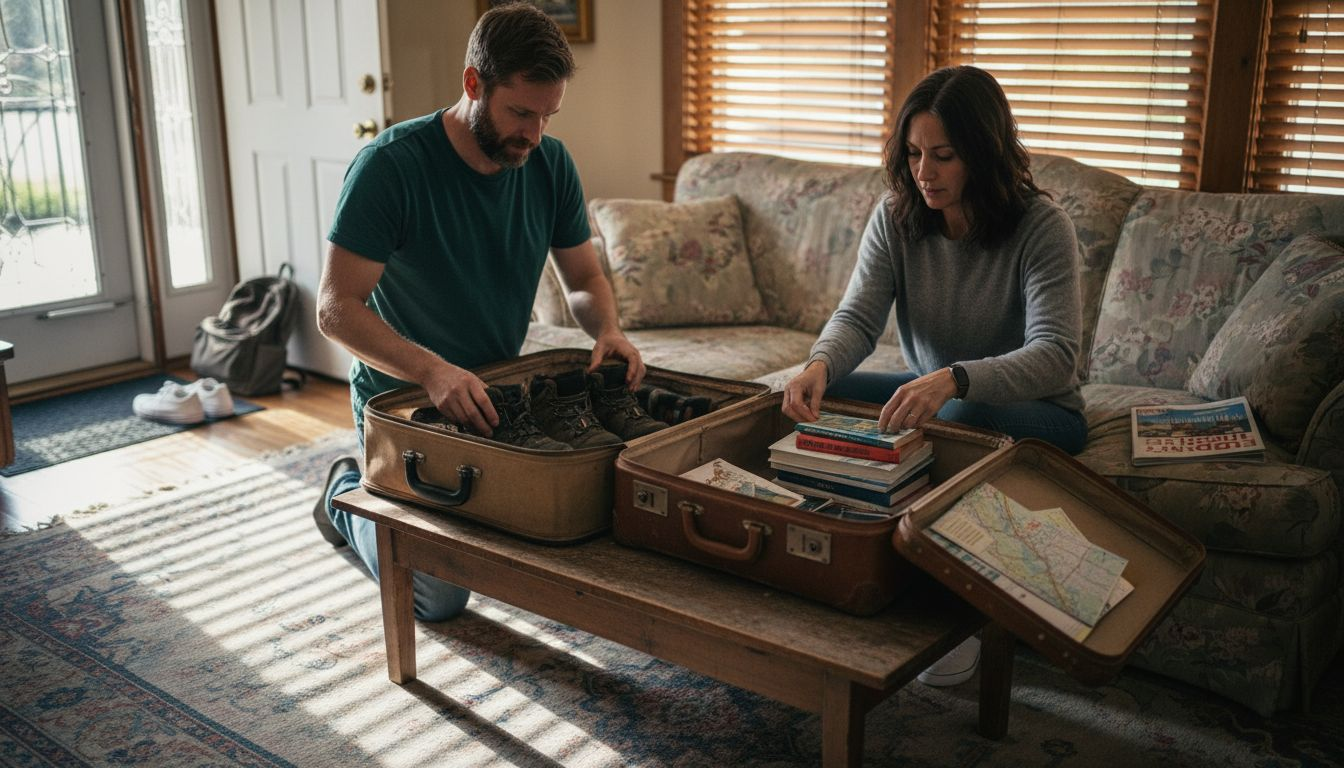 Couple packing for home exchange in cozy living room
Tired of the high costs and lack of authenticity that come with typical hotel stays or short-term rentals, many Canadian and American homeowners are turning to the idea of home exchange. This solution lets you swap homes with someone in another city or country, eliminating accommodation expenses while offering genuine immersion in a different culture. Discover how this approach not only cuts travel costs but also delivers real experiences and lasting connections, making every trip memorable. Home exchange is changing the way smart travelers go abroad.
Table of Contents
- What Is Home Exchange and How It Works
- Types of Home Exchanges and Key Differences
- Swappahome's Credit System and Verification Process
- Member Responsibilities and House Rules
- Risks, Protections, and Common Pitfalls
Key Takeaways
| Point | Details |
|---|---|
| Home Exchange Basics | Home exchange allows two homeowners to swap residences temporarily, providing cost-free accommodation and authentic travel experiences. |
| Types of Exchanges | Simultaneous exchanges occur simultaneously, while sequential exchanges require more trust and flexibility. Choose based on your availability and preferences. |
| SwappaHome's Credit System | Earn credits by hosting, which can be redeemed for future stays, offering flexibility without the hassle of matching travel dates. |
| Responsibilities and Risks | Clear communication and adherence to house rules are essential for a smooth exchange, and potential risks include property damage and incompatible guests. |
What Is Home Exchange and How It Works
Home exchange, also known as house swapping, is straightforward in concept but rich in opportunity. Two homeowners simply agree to stay in each other's homes for a set period without any money changing hands. It's a barter arrangement at its core, and it solves one of the biggest pain points for budget-conscious travelers like you: the cost of accommodation.
Let's break down how it actually works in practice. You list your home on a platform like SwappaHome with photos, details about your space, and your preferred travel dates. Another homeowner elsewhere in the world sees your listing and likes what you're offering. You both agree to the exchange, and boom, you have free accommodations in their city while they stay in yours. The exchange can happen simultaneously, where both parties travel at the same time, or sequentially, where one person uses the home first and the other goes later. Exchanges typically range from a weekend getaway to several weeks or longer, depending on what both parties want.
What makes this model work for people in your situation is the flexibility and authenticity. Unlike hotel stays or even rental apartments, you're not just renting a transactional space. You're accessing someone's actual home, complete with their kitchen equipment, their neighborhood knowledge, their community connections. Many exchanges happen simultaneously, meaning you're getting genuine accommodation while someone gets the same from you. The beauty here is economic: you eliminate hotel markups, cleaning fees, and nightly rate premiums. You're trading equivalent value.
The credit system that powers platforms like SwappaHome removes the complexity of synchronizing travel dates. When you host someone in your home, you earn credits. Those credits then let you book stays in other members' homes later, whether that's next month or next year. It's flexibility wrapped in fairness. One credit typically equals one free night, so a seven-day stay costs seven credits. This removes the negotiation friction between individual homeowners and creates a standardized currency for the community.
Pro tip: When you first list your home, request initial credits from the platform to jumpstart your travel plans while simultaneously welcoming your first exchange guests, allowing you to take advantage of upcoming travel windows without waiting for hosting income.
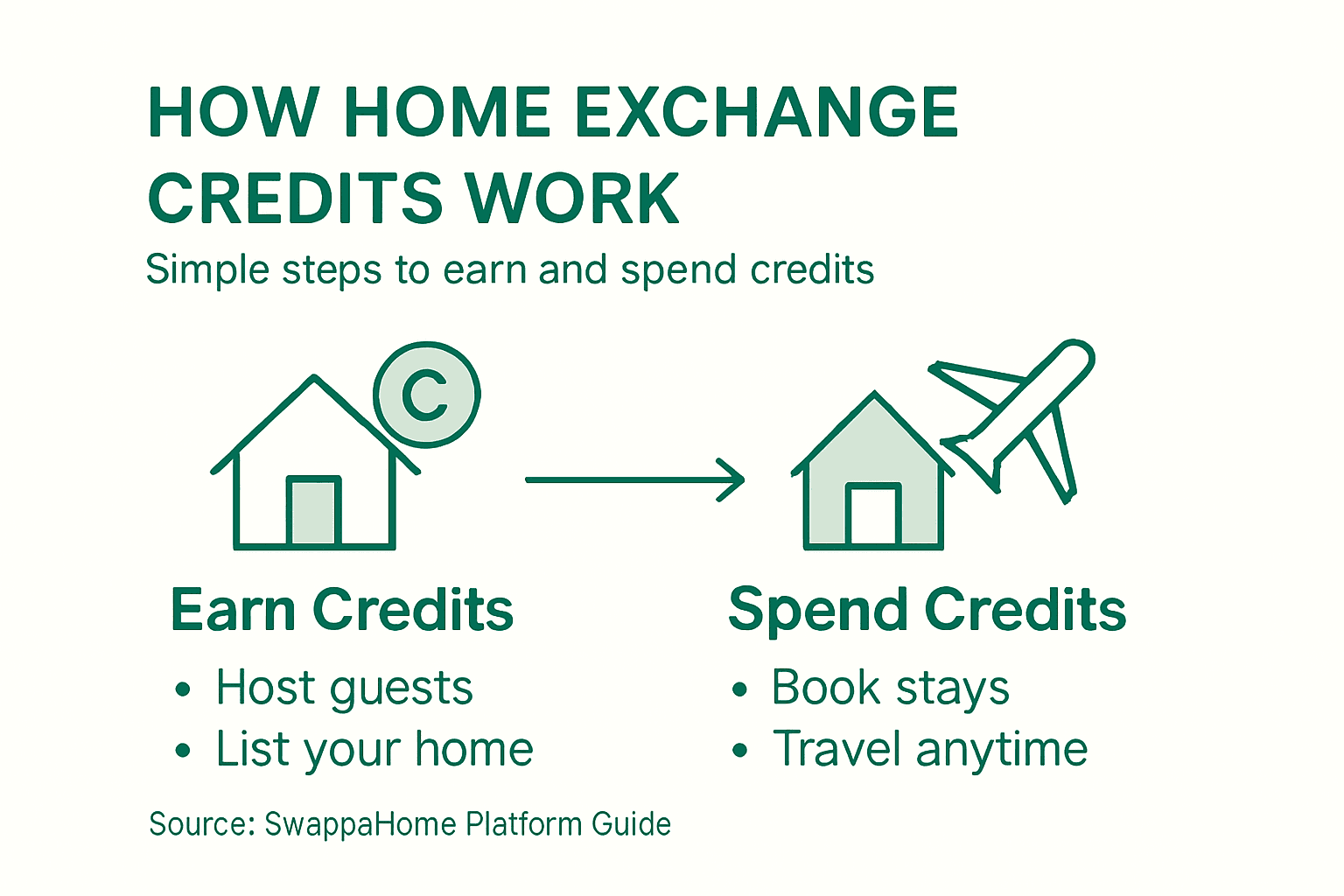 Infographic showing how home exchange credits work
Types of Home Exchanges and Key Differences
Not all home exchanges work the same way. Understanding the different models helps you choose what fits your lifestyle and travel goals. The most common type is the simultaneous exchange, where both homeowners travel at the same time and occupy each other's homes during the identical period. This works beautifully when your schedules align. You leave on Monday, the other family arrives at your place on Monday, and everyone swaps back on the same return date. It's clean, symmetrical, and eliminates the need for one party to trust the other with their home for an extended period while waiting for their turn.
Then there's the sequential exchange, where one homeowner uses the other's home first, and the second person travels later. This requires more trust and flexibility since your home sits empty or gets handed off to your exchange partner weeks or even months after you've returned. Sequential exchanges are practical when your travel dates don't overlap or when you need to accommodate a child's school schedule. They also work well on platforms with credit-based systems that let you bank credits from hosting and redeem them whenever you're ready to travel.
A less common but growing model is homeshare, which blends accommodation with service. Rather than a straight housing swap, you exchange housing for help in the home, often benefiting older individuals or people needing support in exchange for affordable accommodation. This appeals to travelers seeking meaningful cultural connection beyond typical sightseeing. It's less transactional and more community focused. Some homeowners in European cities use this model to provide companionship and practical help while gaining affordable housing access.
The duration varies widely too. Weekend exchanges work for quick getaways and test runs before committing to longer swaps. Seasonal exchanges align with school holidays or your company's vacation calendar. Long-term exchanges lasting months or even a year appeal to remote workers and sabbatical takers wanting deep immersion in a new place. Each duration level changes what you're really getting from the experience. A weekend in Paris feels different from three months settling into a Barcelona neighborhood.
Here's a comparison of the main types of home exchanges and their unique characteristics:
| Exchange Type | Timing Requirement | Trust Level Needed | Ideal For |
|---|---|---|---|
| Simultaneous | Same dates swap | Moderate trust; both participate | Beginners, families, vacationers |
| Sequential | Different dates | High trust; delayed use | Teachers, flexible travelers |
| Homeshare | Overlapping/resident host | High trust; ongoing communication | Seniors, cultural explorers |
Pro tip: Start with a simultaneous exchange for your first home swap to build confidence and ensure both parties feel equally protected, then explore sequential exchanges once you understand how the community operates and trust your ability to vet exchange partners.
Swappahome's Credit System and Verification Process
Swappahome operates on a straightforward credit model designed to remove the friction of coordinating simultaneous exchanges. When you host another member in your home, you earn one credit per night of accommodation provided. Those credits sit in your account ready to use whenever you want to travel. If your guest stays seven nights, you earn seven credits. If you want a week-long vacation in Barcelona next year, you book a listing there for seven credits. It's a one-to-one exchange of value with complete timing flexibility. This removes the pressure of finding someone who wants your exact home at your exact dates and instead lets you participate in a broader community marketplace of available homes.
 Woman verifies account for credit system at table
What makes this system function smoothly is trust, and that's where SwappaHome's verification process becomes critical. Before you can list your home or book someone else's, you go through member verification. This includes identity confirmation, home address validation, and background checks that ensure you're dealing with legitimate homeowners. Modern verification systems use automated document verification and third-party validation to improve accuracy and speed, processes that align with industry best practices. SwappaHome doesn't take shortcuts here. You'll provide government-issued ID, utility bills or other proof of residence, and references from previous hosts or guests if available. The platform reviews everything before your profile goes live.
The verification protects both sides equally. When you're the guest booking someone's home, you know their identity has been confirmed and their home is real. When you're the host, you know who's staying in your space. This mutual vetting eliminates a huge source of anxiety for people considering home exchanges. You're not listing your home to strangers in the abstract sense, you're listing it to verified members with established profiles and community history. Members can leave reviews after exchanges, creating ongoing reputation that compounds over time. Someone with 15 positive five-star reviews from actual stays has built trust capital.
The credit system also includes initial credits for new members. When you sign up, SwappaHome typically provides starter credits, letting you take your first trip before you've hosted anyone. This solves the chicken-and-egg problem that kills most exchange platforms. You can actually use the platform immediately instead of waiting months to accumulate credits from hosting. Your home listing then generates credits as guests arrive, and suddenly you're participating in a balanced exchange rather than wondering if you'll ever get value from what you're putting in.
Pro tip: Complete your full profile with detailed photos, a compelling home description, and response to guest questions within 24 hours, as members with complete, well-maintained profiles earn trust faster and book more consistently across the community.
Member Responsibilities and House Rules
Home exchange only works when both parties understand their role. The host has responsibilities to the guest, and the guest has responsibilities to the host's home and property. This isn't about rigid control but about creating a foundation of respect that makes the experience smooth for everyone. When you list your home on SwappaHome, you're inviting someone into your most personal space. That someone needs to understand what you expect. Equally, when you're a guest in someone else's home, you need to know the boundaries before you arrive.
As a host, your primary responsibility is providing a safe, welcoming environment. This means disclosing any issues with the home upfront, from a temperamental shower to neighborhood noise patterns. Don't surprise your guest with information that should have been communicated before they arrived. Your house rules should be clear and documented. Will guests be allowed to have visitors over? Can they invite friends to dinner? What about parking? Yard access? Pet policies? These details matter enormously. Clear house rules help set expectations for everything from curfews to chores, and they contribute to a successful and respectful exchange experience. You're also responsible for ensuring your home is reasonably clean, functional, and stocked with the basics your guest will need to operate it. If you want them to not use the good china, tell them. If certain rooms are off limits, mark them.
Guests have equally important responsibilities. Treat the home as if it were your own property, because for those weeks, it is your responsibility. Don't throw parties without permission. Don't rearrange furniture or alter the space. Return the home in the condition you found it. Respect quiet hours. Follow the house rules you agreed to. Communicate if something breaks. These aren't onerous requests, they're baseline respect. Adherence to safeguarding policies and clear communication of house rules ensure a positive and secure exchange environment for everyone involved. If you're unsure about something, ask before doing it.
The reciprocal nature of home exchange creates natural accountability. Your reputation follows you. Poor guests get poor reviews and can't book again. Poor hosts get called out, and their home sits vacant. This peer accountability is stronger than any contract because it affects real participation in the community. Document everything via the platform messaging. Photos of the home's condition before and after add a layer of protection for both sides. Most exchanges go smoothly because both parties know they're being judged by their behavior and that judgment affects their future access to the community.
Below is a summary of host and guest responsibilities to ensure a respectful home exchange experience:
| Role | Key Duties | Importance for Exchange |
|---|---|---|
| Host | Disclose issues, provide house rules, prepare essentials | Sets clear expectations, builds trust |
| Guest | Respect property, follow rules, communicate issues | Maintains property, preserves reputation |
Pro tip: Create a detailed welcome guide for guests that includes WiFi passwords, appliance instructions, parking details, local transit information, and emergency contacts, then photograph key areas of your home before each exchange to establish clear baseline conditions.
Risks, Protections, and Common Pitfalls
Home exchange isn't risk-free, but the risks are manageable when you know what to watch for. Property damage is the most obvious concern. A guest could break something valuable, spill wine on the carpet, or leave the place in worse condition than they found it. This happens occasionally, but it's rare among verified members with established reputations. The real risk isn't catastrophic damage, it's the smaller disappointments: a guest who doesn't refill the gas tank, leaves dishes in the sink, or treats your home with less care than they'd treat a rental. These aren't disasters, but they sting because your home isn't a transaction, it's personal.
Then there's the interpersonal risk. What if you don't click with your exchange partner? What if they're loud at night or smoke indoors despite your rules? What if they have unexpected guests constantly? These mismatches happen. Cultural misunderstandings, safety concerns, and miscommunications are inherent risks in any exchange program, and they can dampen the entire experience. You're inviting a stranger into your home and trusting they'll respect your space. Sometimes that trust gets tested. This is why detailed communication before the exchange matters so much. Video calls before arrival help you gauge compatibility. Specific house rules eliminate ambiguity.
SwappaHome's protections include the verification process we discussed earlier, but also dispute resolution systems. If something goes wrong, you can file a claim. The platform has mediation processes and, in extreme cases, can pursue recovery or ban problematic members. Reviews create accountability. A guest who damages property or breaks rules gets negative reviews that prevent future bookings. A host who retaliates unfairly gets exposed the same way. The community polices itself because reputation is currency.
Common pitfalls beyond property issues include unmet expectations about the experience itself. You imagine leisurely mornings in a European kitchen, but your exchange home is noisier or smaller than expected. Someone wanted a quiet retreat but hosted a guest who wanted to party. Culture shock and homesickness can affect how you experience someone else's space. The solution isn't perfect matching, it's realistic expectations and flexibility. Read descriptions thoroughly. Ask questions. Understand that no home is perfect and that part of travel is adapting to something different. Another pitfall is poor communication during the exchange. If something breaks, tell your host immediately instead of hiding it. If you need clarification on rules, ask. Most problems stem from silence, not from legitimate disagreements.
Pro tip: Request a video call with your exchange partner at least one week before arrival to establish comfort, confirm house rules, address any concerns, and exchange emergency contact information, reducing mismatched expectations and increasing the likelihood of a positive experience.
Unlock the Power of Home Exchange with Swappahome's Credit System
The article breaks down the challenges of coordinating home swaps and highlights the frustration travelers face trying to match dates for simultaneous exchanges. If you want flexibility without the hassle of time constraints or complicated negotiations, understanding the credit system is key. By earning and spending credits instead of matching exact dates, you can enjoy authentic travel experiences without the cost of hotels or rentals. This system solves the timing issues that often limit home exchange opportunities for budget-conscious travelers who value trust and verified communities.
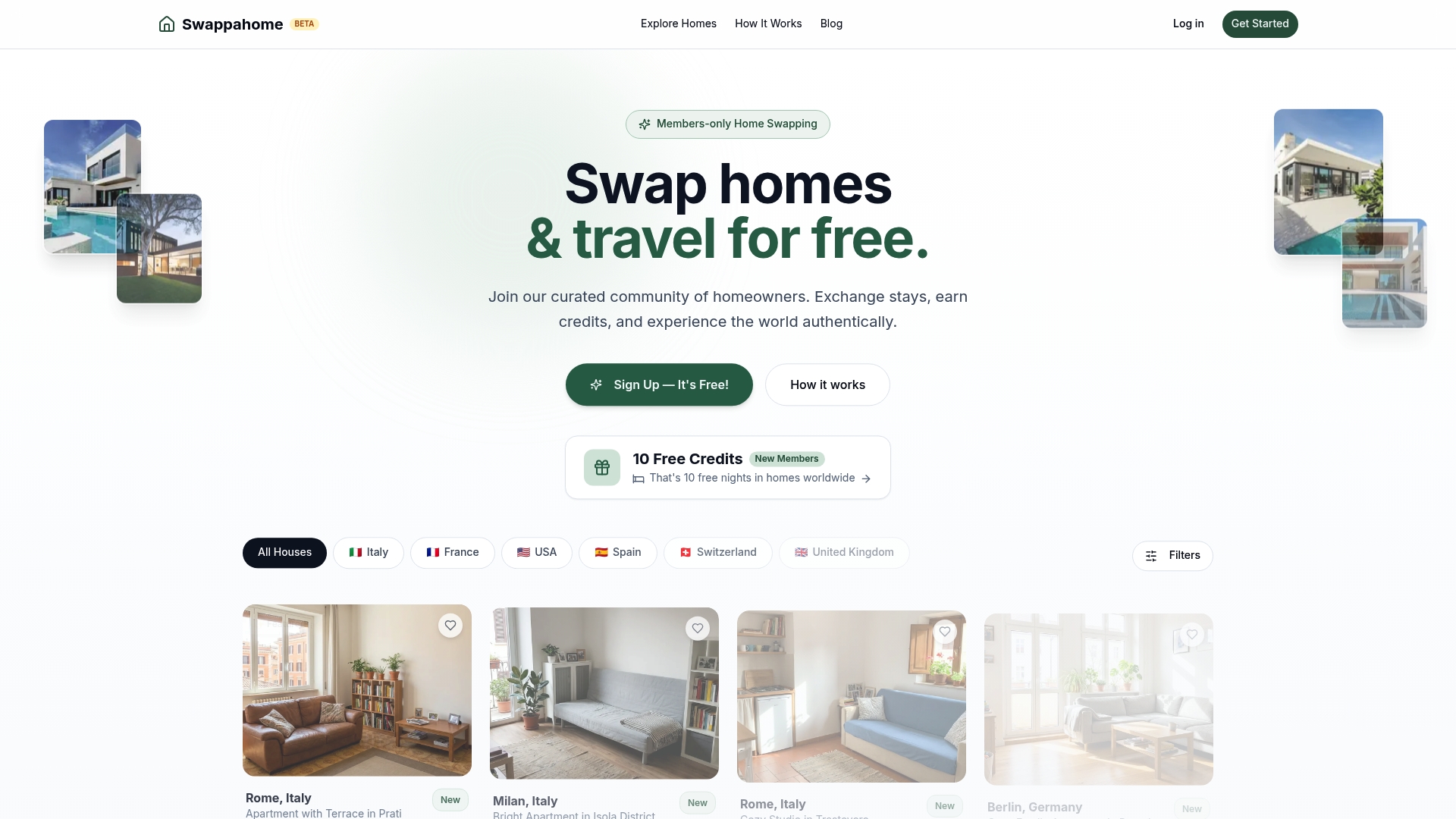 https://swappahome.com
Ready to turn your home into a travel passport and gain freedom to explore verified homes worldwide? Visit Swappahome now to list your space, earn credits from hosting, and redeem them for stays anywhere in the global network. Start your journey with initial free credits and experience stress-free travel on your terms. Learn more about how our credit system simplifies exchanges and read member stories that prove authentic cultural exchange is just a swap away.
Frequently Asked Questions
How does the credit system work in home exchange?
The credit system allows homeowners to earn credits by hosting others in their home. Each night a guest stays, the host earns one credit, which can later be used to book stays in other members' homes, offering flexibility in travel planning.
What are the benefits of using a credit-based home exchange platform?
A credit-based system eliminates the need for matching exact travel dates between homeowners, allowing users to participate in a larger marketplace. It also creates a standardized value exchange, making the process smoother and more straightforward for all members.
How can new members start using the credit system?
New members typically receive initial credits upon signing up, which allows them to take their first trip before hosting anyone. This approach helps overcome the challenge of accumulating credits, enabling immediate participation in the home exchange community.
What protections does a home exchange platform provide for users?
Home exchange platforms offer protections like a verification process for members, ensuring legitimacy and safety. Additionally, they often have dispute resolution systems in place to address issues that may arise during exchanges, fostering a trustworthy environment.
Recommended

Published by
SwappaHome
SwappaHome Editorial Team
Home Exchange & Slow Travel Editorial
The SwappaHome Editorial Team brings together travel research, home-exchange community insights, and platform data to produce practical guides for first-time and experienced home swappers. Every article cites real platforms, current market rates, and verifiable city-level facts so readers can make informed decisions without guessing.
Ready to try home swapping?
Join SwappaHome and start traveling by exchanging homes. Get 7 free credits when you sign up!