
Role of Trust in Home Exchanges—Building Safety and Community

SwappaHome Editorial Team
Home Exchange & Slow Travel Editorial
Role of Trust in Home Exchanges—Building Safety and Community !Family welcoming home exchange guests at door Most American and European homeowners...
Role of Trust in Home Exchanges—Building Safety and Community
 Family welcoming home exchange guests at door
Most American and European homeowners place trust at the top of their list when considering peer-to-peer home exchanges. With over 75 percent of participants stating that verification and reputation are more important than price, the appeal of safe, budget-friendly cultural swaps keeps growing. Understanding how trust is built through transparent communication, verified profiles, and mutual accountability empowers you to confidently enjoy enriching global experiences without sacrificing security.
Table of Contents
- Trust In Home Exchanges: Core Concepts
- Types Of Home Swap And Trust Dynamics
- How Verification And Reviews Foster Trust
- Risks, Safety, And Legal Considerations
- Best Practices To Build Trustful Exchanges
Key Takeaways
| Point | Details |
|---|---|
| Trust is Essential | Trust serves as the core currency in home exchanges, relying on transparent communication and verified member profiles. |
| Types of Exchanges Vary | Different home swap models necessitate distinct trust dynamics, influencing interaction strategies and reliability requirements. |
| Verification is Crucial | Comprehensive verification processes, including background checks and detailed reviews, help mitigate risks and foster confidence among participants. |
| Strategic Profile Building | A well-crafted and authentic profile, along with proactive communication, significantly enhances trustworthiness and exchange success. |
Trust in Home Exchanges: Core Concepts
Home exchanges represent a sophisticated social mechanism where trust becomes the fundamental currency of interaction. Conceptual frameworks of trust reveal that interpersonal connections transcend mere transactional arrangements, transforming accommodation sharing into a rich, community-driven experience.
At its core, home exchange trust operates through multiple interconnected dimensions. Participants evaluate potential exchanges through social-psychological lenses, assessing not just physical property characteristics but the underlying human connections. Peer-to-peer accommodation sharing demonstrates that trust emerges from transparent communication, verified member profiles, and shared community values.
The trust ecosystem in home exchanges involves several critical components. Verification processes, mutual accountability, reputation systems, and clear communication protocols create a framework where strangers can confidently share their most personal spaces. Participants build credibility through consistent interactions, detailed property descriptions, and responsive engagement with potential exchange partners.
Successful home exchanges depend on strategic trust-building mechanisms. Members must proactively establish their reliability through comprehensive profiles, authentic photographs, and transparent property descriptions. Platforms facilitate this by implementing robust verification systems, background checks, and user rating mechanisms that transform uncertainty into predictable, safe interactions.
Pro Tip: Always thoroughly complete your profile with genuine information and high-quality images to signal trustworthiness and increase your chances of successful home exchanges.
Types of Home Swap and Trust Dynamics
Home exchanges emerge in diverse formats, each presenting unique trust dynamics that shape participant interactions. Sharing economy research reveals complex trust mechanisms operating across different swap models, ranging from direct reciprocal exchanges to more nuanced community-based arrangements.
Three primary home swap typologies define contemporary exchange practices: direct reciprocal swaps, non-simultaneous exchanges, and credit-based systems. Direct reciprocal swaps involve two parties exchanging homes simultaneously, creating immediate mutual accountability. Non-simultaneous exchanges allow greater flexibility, where members can use credits accumulated from hosting to stay in different properties at different times. Credit-based systems introduce additional complexity, enabling more dynamic trust networks where reputation becomes a transferable social currency.
Trust dynamics in these models depend on several critical factors. Home-based interaction mechanisms underscore the importance of transparent communication, verified member profiles, and consistent interaction history. Participants build credibility through detailed property descriptions, responsive communication, platform-verified backgrounds, and a track record of successful previous exchanges. These elements transform potential interpersonal uncertainty into predictable, safe interactions.
Each exchange type demands nuanced trust-building strategies. Reciprocal swaps require immediate, symmetrical trust, while credit-based systems rely on accumulated reputation and platform-mediated verification. Successful participants understand these subtle differences, proactively presenting comprehensive profiles, maintaining open communication, and demonstrating reliability across multiple interactions.
Here is a comparison of the main home exchange models and how trust operates in each:
| Exchange Model | Trust Requirement | Key Advantages | Typical Trust-building Actions |
|---|---|---|---|
| Direct Reciprocal Swap | Immediate, mutual trust | Clear expectations, instant reciprocity | Transparent agreements, thorough vetting |
| Non-simultaneous Exchange | Delayed, sequence-based trust | Greater scheduling flexibility | Accumulated credits, verified history |
| Credit-based System | Platform-mediated trust | Wider network, flexible timing | Strong online reputation, active reviewing |
Pro Tip: Choose home swap models that align with your comfort level and gradually expand your exchange experiences as you build confidence and platform reputation.
How Verification and Reviews Foster Trust
Verification systems are the cornerstone of trust in home exchanges, transforming potential strangers into reliable exchange partners. Reputational information mechanisms demonstrate how systematic identity confirmation and review processes mitigate interpersonal uncertainty and build confidence among participants.
 Person verifying profile for home exchange
The verification process typically involves multiple layers of authentication. Platforms require comprehensive personal documentation, including government-issued identification, proof of residence, and linked social media profiles. Background checks and identity verification create a foundational trust infrastructure. Reviews serve as a dynamic trust mechanism, where previous exchange participants provide detailed feedback about their experiences, highlighting property conditions, host reliability, communication quality, and overall interaction satisfaction.
Consumer trust research reveals that robust review systems significantly impact trust perception. Numerical ratings combined with detailed written feedback create a transparent ecosystem where potential exchangers can make informed decisions. Sophisticated platforms implement multi-dimensional rating systems that evaluate cleanliness, communication responsiveness, accuracy of property descriptions, and overall hospitality, providing a nuanced understanding of each participant's reliability.
Successful home exchange platforms recognize that trust is a continuous process. They encourage ongoing communication, provide dispute resolution mechanisms, and maintain strict community standards. Members who consistently demonstrate reliability through verified profiles, positive reviews, and transparent interactions become trusted community members, enhancing the overall platform's credibility and attractiveness.
Pro Tip: Always complete your verification profile thoroughly and encourage detailed, honest reviews from your exchange partners to build long-term platform reputation.
Risks, Safety, and Legal Considerations
Home exchanges involve complex legal and safety landscapes that require careful navigation. Comprehensive risk assessment reveals multiple potential challenges that participants must proactively address to ensure secure and reliable interactions.
Legal considerations span multiple dimensions, including property damage, personal liability, insurance coverage, and jurisdictional variations. Participants should prioritize creating detailed exchange agreements that explicitly outline responsibilities, expectations, and potential compensation mechanisms. These agreements typically cover scenarios such as accidental property damage, unexpected cancellations, and potential disputes. Insurance becomes a critical component, with specialized home exchange policies offering protection against potential financial risks associated with temporary property sharing.
Trust and safety frameworks emphasize the importance of transparent communication and comprehensive risk management strategies. Different countries and regions maintain unique legal interpretations of home exchanges, making it essential for participants to understand local regulations. Key considerations include tax implications, local housing regulations, homeowners association restrictions, and potential zoning limitations that might impact home exchange activities.
Risk mitigation requires a multifaceted approach. Successful home exchangers implement robust screening processes, maintain comprehensive documentation, carry appropriate insurance, and cultivate clear communication channels. Platforms play a crucial role by providing verification systems, dispute resolution mechanisms, and guidelines that help standardize safety protocols across diverse international contexts. Personal vigilance, combined with platform-supported safety features, creates a protective ecosystem that minimizes potential risks.
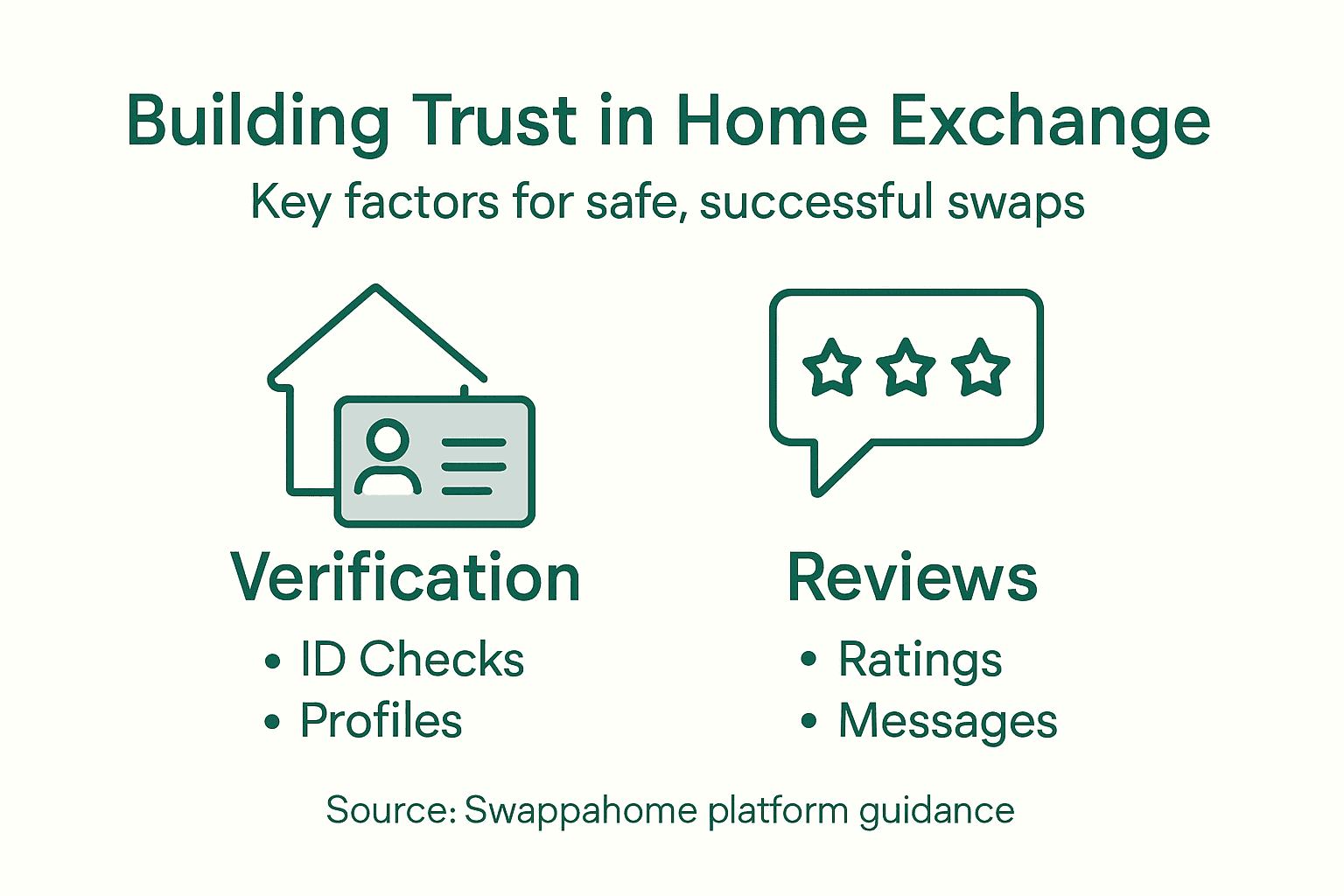 Infographic about trust and safety in home exchange
The following table summarizes essential elements that improve trust and safety in home exchanges:
| Trust Element | Purpose | Example Implementation |
|---|---|---|
| Identity Verification | Ensure genuine participants | ID check, address confirmation |
| Detailed Reviews | Share transparent experiences | Multi-factor rating system |
| Insurance Coverage | Mitigate property and liability risks | Home exchange insurance |
| Dispute Resolution | Resolve conflicts fairly | Platform mediation services |
Pro Tip: Always consult local legal experts and obtain specialized home exchange insurance to protect yourself comprehensively before engaging in any property exchange.
Best Practices to Build Trustful Exchanges
Trust-building in home exchanges requires a strategic and proactive approach. Reputational transparency research highlights the critical importance of consistent, authentic communication and predictable interactions that demonstrate reliability and integrity.
Successful home exchangers implement comprehensive strategies to establish credibility. This includes creating detailed, accurate profiles that showcase personal background, home characteristics, and exchange preferences. Transparent communication involves providing high-quality photographs, comprehensive property descriptions, and responsive messaging that addresses potential exchange partners' questions and concerns. Prompt, honest responses and setting clear expectations about property conditions, house rules, and local neighborhood dynamics help mitigate potential misunderstandings.
Trust-building interaction strategies emphasize the significance of consistent, problem-solving oriented communication. Participants should develop a track record of reliability by maintaining an updated profile, responding quickly to exchange inquiries, and providing comprehensive information about their home and local environment. Documenting previous successful exchanges, collecting positive reviews, and actively participating in platform community discussions can significantly enhance perceived trustworthiness.
Platform engagement plays a crucial role in building trust. Active members who contribute meaningful reviews, participate in community discussions, and demonstrate a commitment to positive exchange experiences create a reputation of reliability. This involves not only showcasing successful past exchanges but also being transparent about potential challenges, maintaining a solution-oriented approach, and showing genuine interest in creating mutually beneficial exchange experiences.
Pro Tip: Invest time in creating a comprehensive, authentic profile and prioritize clear, timely communication to build a strong reputation in the home exchange community.
Build Trust and Enjoy Safe Home Exchanges with Swappahome
Navigating the crucial role of trust in home exchanges can feel overwhelming. You want a platform that offers verified members, transparent communication, and a strong community to turn unfamiliar arrangements into authentic, safe experiences. Swappahome perfectly addresses these challenges by emphasizing member verification, a simple credit system, and a curated network of homeowners worldwide — making trust not just a concept but a lived reality.
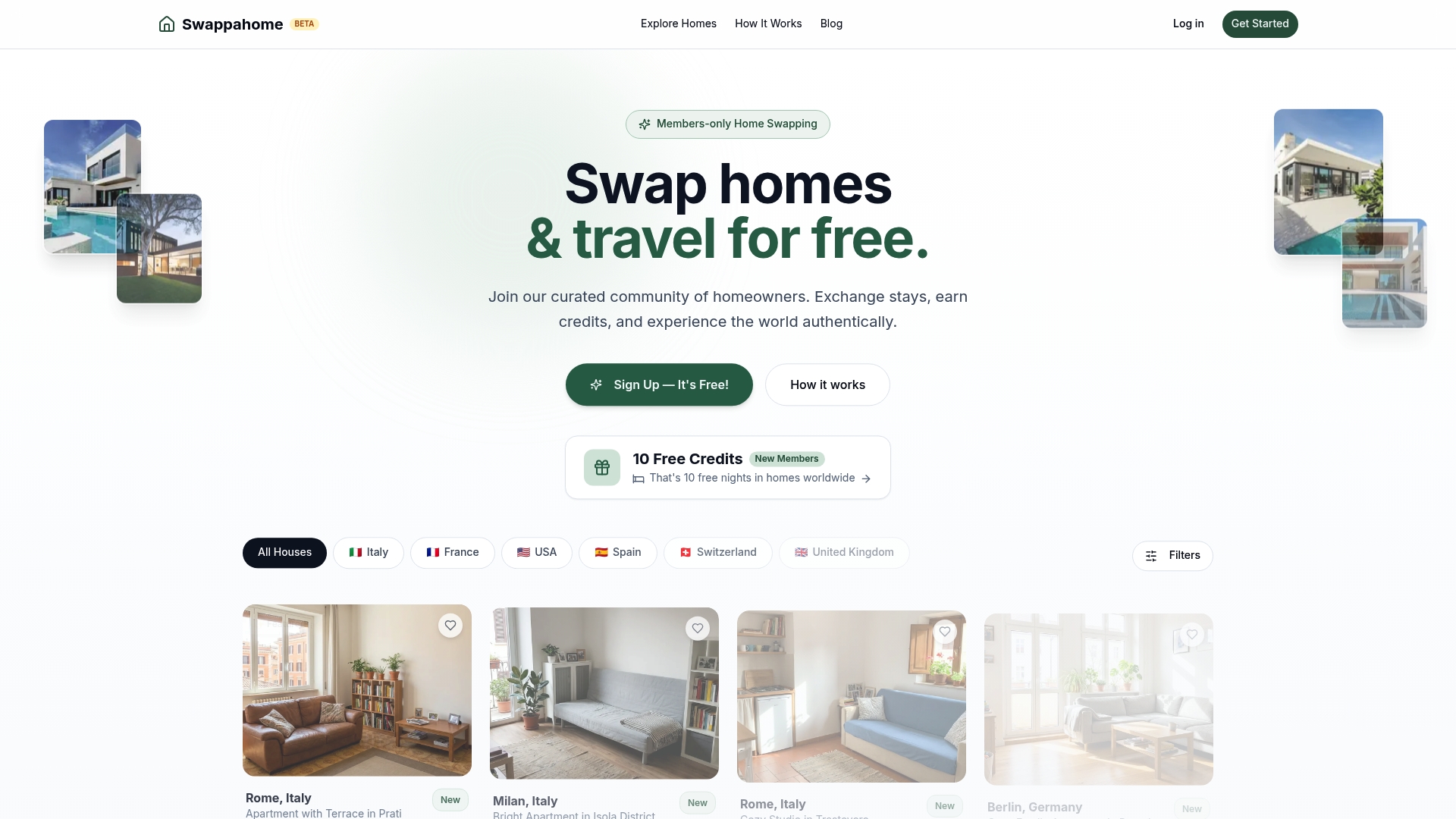 https://swappahome.com
Discover how Swappahome’s unique approach transforms uncertainty into confidence. Join a community where your profile is verified, your home listed securely, and your credits earn you stays at verified homes globally. Start your journey today to build genuine connections and experience affordable, trustworthy travel at Swappahome. Learn more about how our platform fosters safety and trust by visiting our landing page and take the first step toward your next trusted home exchange.
Frequently Asked Questions
What is the importance of trust in home exchanges?
Trust is crucial in home exchanges as it fosters safe interactions, enabling participants to confidently share their personal spaces. It operates through verification processes, mutual accountability, and consistent communication that builds credibility among members.
How can I enhance my profile to build trust in home exchanges?
To enhance your profile, include comprehensive and accurate information, high-quality images of your property, and maintain transparency about house rules and neighborhood details. A complete profile signals trustworthiness to potential exchange partners.
What are the different types of home exchange models, and how do they affect trust?
The main types of home exchange models include direct reciprocal swaps, non-simultaneous exchanges, and credit-based systems. Each model has distinct trust dynamics, with reciprocal swaps requiring immediate trust and credit-based systems depending on accumulated reputation over time.
How do reviews and verification processes contribute to building trust in home exchanges?
Reviews and verification processes serve as essential trust mechanisms. Verified profiles and feedback from previous exchanges help mitigate uncertainty and establish reliability, allowing potential exchangers to make informed decisions about their interactions.
Recommended
- Home Swap Communication: Complete Etiquette Guide | SwappaHome
- 10 Tips for First-Time SwappaHome Hosts | Complete Guide
- Teaching Kids About Travel Through Home Swapping | Family Guide
- How to Travel for Free with Home Exchange | Complete 2024 Guide
- Understanding Safe Travel in Austin Guide | Trinity Concierge

Published by
SwappaHome
SwappaHome Editorial Team
Home Exchange & Slow Travel Editorial
The SwappaHome Editorial Team brings together travel research, home-exchange community insights, and platform data to produce practical guides for first-time and experienced home swappers. Every article cites real platforms, current market rates, and verifiable city-level facts so readers can make informed decisions without guessing.
Ready to try home swapping?
Join SwappaHome and start traveling by exchanging homes. Get 7 free credits when you sign up!