Travel budget checklist: save more, travel smarter

SwappaHome Editorial Team
Home Exchange & Slow Travel Editorial
Travel budget checklist: save more, travel smarter !Woman planning travel budget at home table > TL;DR: > > - Breaking down travel costs into...
Travel budget checklist: save more, travel smarter
 Woman planning travel budget at home table
TL;DR:
- Breaking down travel costs into categories helps prevent overspending and provides a clear budgeting framework.
- Daily regional expenses vary widely, with planning for big-day spikes essential for staying on budget.
- Using tracking tools and regularly reviewing spending habits reduces stress and helps stick to your travel budget.
Running out of money halfway through a trip is one of the most stressful experiences a traveler can face. You've planned the flights, packed the bags, and finally arrived — only to watch your funds drain faster than expected. A solid travel budget checklist changes that entirely. It turns vague spending anxiety into a clear, category-by-category roadmap you can follow from day one. This article walks you through every major budget category, realistic daily cost benchmarks by region, the tools that keep you on track, and the hidden expenses most travelers never see coming.
Table of Contents
- Break down your travel budget: The essential categories
- Realistic daily costs: What budget travelers spend worldwide
- Avoiding overspending: Checklist of tracking tools and smart habits
- Budget busters: Common surprises and how to plan for them
- What most budget guides miss about travel checklists
- Ready to make your budget go further? Try travel swapping
- Frequently asked questions
Key Takeaways
| Point | Details |
|---|---|
| Cover all categories | Break your budget into transportation, accommodation, food, activities, safety, and extras for total clarity. |
| Track and adjust daily | Use apps or spreadsheets to monitor expenses in real-time and plug leaks before they hurt. |
| Expect the unexpected | Add at least 10% as a cushion for currency shifts, emergencies, or hidden fees. |
| Save big on lodging | Try home swapping to turn a major cost into zero—freeing up funds for adventures. |
Break down your travel budget: The essential categories
Let's start by breaking down the core categories that belong on every travel budget checklist. Most travelers underestimate their spending simply because they forget entire categories exist until they're already paying for them.
Here are the six essential categories every checklist should include:
- Transportation: Flights, trains, buses, airport transfers, ride-shares, and local transit passes
- Accommodation: Hotels, rentals, hostels, or home exchange arrangements
- Food and dining: Groceries, restaurants, coffee, snacks, and the occasional splurge meal
- Activities and entertainment: Tours, museum entries, concerts, day trips, and adventure sports
- Insurance and emergency fund: Travel insurance premiums and a dedicated emergency reserve
- Miscellaneous: Souvenirs, tips, laundry, SIM cards, and anything that doesn't fit neatly above
A great framework for allocating across these is the 1/3 rule for travel budgeting: spend roughly one-third on transport and accommodation combined, one-third on food and fun, and keep the final third as a safety net. It sounds simple, but most people only realize they've ignored it after they've already overspent.
Accommodation is typically the biggest variable. Hotel costs in popular cities can easily consume more than half your total budget. This is exactly why home exchange is worth serious consideration — it can bring that accommodation number to zero. If you want to see how that breaks down in practice, check out these accommodation savings tips that go deeper into the numbers.
For transportation, use a budget calculator tool to model multiple scenarios before you book anything. Entering realistic transport costs early prevents the shock of discovering your flights ate 60% of your total budget.
Pro Tip: Always add a 10-20% safety buffer on top of your full projected total. Not as a vague "just in case" line, but as a real, separate number in your budget. If you don't use it, great. If you do, you'll be glad it was there.
Realistic daily costs: What budget travelers spend worldwide
With the categories in hand, how much should you actually expect to spend each day? Daily spending varies enormously depending on region, travel style, and time of year.
| Region | Budget daily spend | Mid-range daily spend |
|---|---|---|
| Southeast Asia (Vietnam, Thailand) | $20-35 | $50-80 |
| Eastern Europe | €35-60 | €70-110 |
| Western/Central Europe | €60-90 | €120-180 |
| Central/South America | $25-45 | $60-100 |
| North America | $80-120 | $150-250 |
| Australia/New Zealand | $70-110 | $140-200 |
Budget travelers in low-cost countries like Vietnam or Georgia can manage comfortably on $20-40 per day, while Eastern Europe sits in the €35-60 range and mid-range European cities push to €60-120. Those are solid anchors for setting expectations.
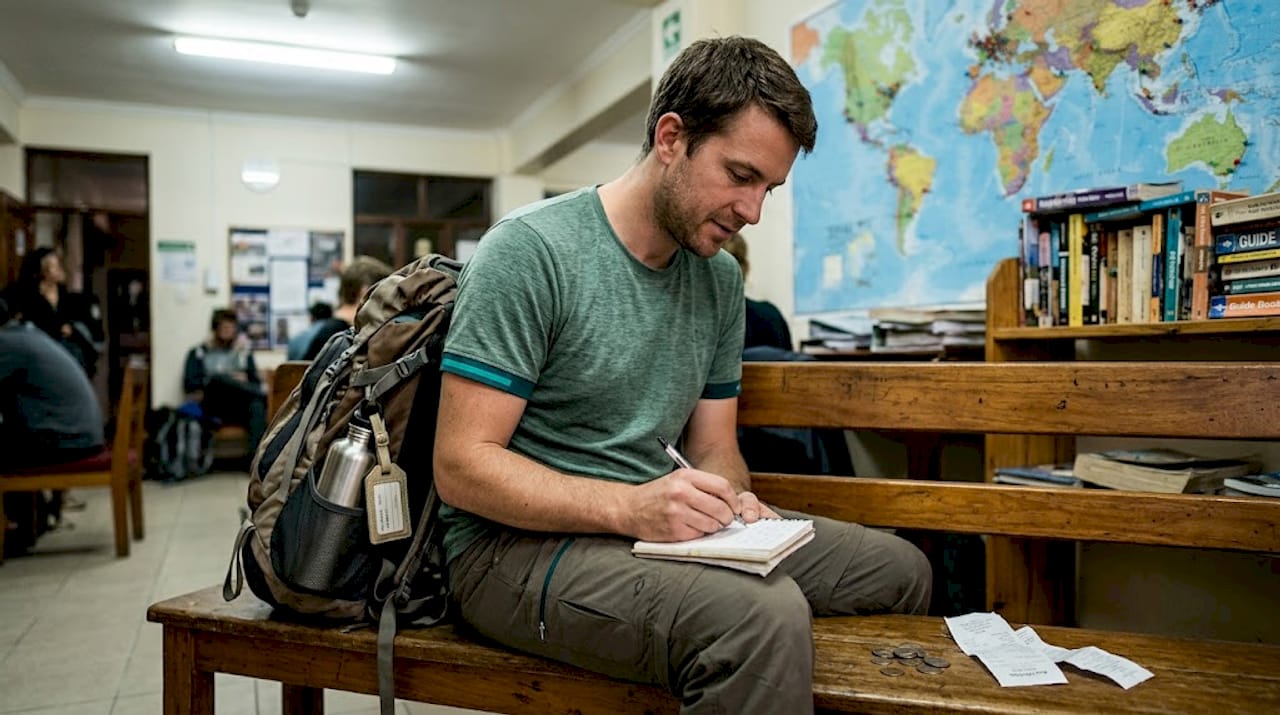 Backpacker recording travel expenses in common room
But here's what makes daily budgets misleading: they rarely account for the irregular big-ticket days. A day where you book a guided tour, take a long-distance train, and eat at a nicer restaurant can cost three times your average. Planning for these spikes is not optional.
Some factors that cause costs to spike:
- Peak season travel: Prices across accommodation, flights, and tours often rise 30-80% in summer or over holidays
- Tourist-trap restaurants: Eating near major landmarks can cost double what locals pay two blocks away
- Taxis over transit: Using ride-shares and taxis daily instead of public transport adds up fast
- Entry fees and tourist taxes: Several European cities now charge daily tourist taxes that can reach €5-10 per person, per night
Pro Tip: Shoulder season (one month before or after peak) can cut your total trip cost by 20-50%, especially on flights and accommodation. The weather is often still great, and crowds are thinner.
If you swap accommodation through a platform like Swappahome, your daily cost drops sharply because the single biggest line item disappears. For a head-to-head look at actual numbers, the swapping vs rental costs breakdown is worth reviewing before you finalize any accommodation decisions.
For more region-specific guidance, Lonely Planet's budget travel tips are reliable and frequently updated.
Avoiding overspending: Checklist of tracking tools and smart habits
Knowing your targets is one thing; sticking to them takes tools and discipline. The gap between having a budget and following it is where most trips go wrong.
Budget travelers overspend by 25% early in a trip when they aren't tracking in real time. The excitement of arrival, the "we're on vacation" mindset, and the absence of daily monitoring all combine into a slow leak.
Here's a simple daily tracking routine that takes under five minutes:
- Log every purchase immediately using a budgeting app or a notes app. Don't wait until evening; memory fails fast.
- Categorize each expense against your six checklist categories so you can spot which area is running hot.
- Check your running total each night before bed. Compare it to your planned daily limit.
- Adjust tomorrow's plan if you overspent today. Skip one activity or cook one meal instead of eating out.
- Review weekly to see patterns, not just daily fluctuations.
Here's a quick comparison of three popular tracking apps:
| App | Best for | Automation | Offline access |
|---|---|---|---|
| Trail Wallet | Simplicity and visual limits | Manual entry | Yes |
| TravelSpend | Multi-currency trips | Manual + stats | Yes |
| Google Sheets | Full customization | Manual | Requires setup |
For a broader look at digital travel budgeting tools, there are options specifically designed for travelers who manage accommodation through exchanges and credits.
One often-overlooked habit: open a separate vacation account or use a dedicated travel debit card before you leave. When you can see the balance dropping in real time, spending feels more tangible.
"Travelers who track spending nightly spend less overall and report feeling less financial stress during trips."
After the trip, do a 30-minute post-trip review. Compare your projected budget to actual spending in each category. The patterns you find will save you money on every trip that follows.
Budget busters: Common surprises and how to plan for them
Even a perfect plan can go awry — here's how to outsmart the unexpected. No matter how carefully you budget, certain costs have a habit of appearing from nowhere.
Here are the most frequently overlooked expenses that derail travel budgets:
- ATM fees: Foreign ATM fees plus your bank's conversion markup can add 3-6% to every cash withdrawal
- Baggage fees: Budget airlines charge for checked bags, carry-ons, and sometimes even seat selection
- Tourist taxes: Cities like Amsterdam, Rome, and Barcelona charge nightly tourist taxes that rarely appear in booking prices
- Transport strikes or delays: Missing a connection because of a strike can mean unplanned hotel nights and new tickets
- Healthcare: Even a minor illness requiring a doctor visit abroad can cost hundreds of dollars without insurance
- Currency fluctuation: A 5-10% shift in exchange rates over a two-week trip can meaningfully change what you spend in local terms
Hidden fees including tourist taxes, baggage charges, and currency shifts are among the top reasons travelers blow their contingency funds. Building that 10-20% buffer into your plan from the start is not pessimism — it's the single smartest move you can make.
For home exchangers specifically, plan for property-related surprises: a burst pipe, an appliance issue, or a guest-related incident. Good home exchange platforms provide guidance on insurance, but having your own travel and home insurance in place is non-negotiable.
Pro Tip: Research shows flights booked 52-72 days in advance typically hit the best price windows for most routes. Mark that window on your calendar and set fare alerts the moment your travel dates are confirmed.
For a real-world example of how these costs stack up in a specific city, the Berlin savings breakdown shows exactly what a home swapper saved compared to a hotel stay. And if you're new to using credits for travel, credit-based travel tips explain how the model works in practice.
What most budget guides miss about travel checklists
Most travel budget guides hand you a template and call it done. The problem is that a template built for a solo backpacker looks nothing like what a family of four doing a home exchange in Portugal actually needs.
Budgets are personal. A traveler who prioritizes food experiences should allocate more there and less to paid activities. Someone doing a home exchange through a platform like Swappahome has already zeroed out accommodation, which reshapes every other percentage. Blindly following generic rules ignores that reality entirely.
The more powerful move is to treat your budget as a living document. Review it mid-trip, not just before and after. Adjust when something changes — a free invitation from a local host, a festival that wasn't on your radar, a day you got sick and spent nothing. Mixing disciplined tracking with flexible priorities produces trips that feel less stressful and more memorable.
Home exchange is particularly underrated here. It doesn't just save money; it changes how you experience a place. Staying in a real home, in a real neighborhood, shapes how you eat, move, and connect with a city. For concrete inspiration on what that looks like across different travel styles, sharing economy travel examples are worth browsing.
Finally, the travelers who consistently stay under budget aren't the ones with the most rigid spreadsheets. They're the ones who do the post-trip review every single time and carry those lessons forward.
Ready to make your budget go further? Try travel swapping
Your checklist is built, your categories are set, and your contingency fund is locked in. Now consider what happens when you eliminate your single biggest line item entirely.
 https://swappahome.com
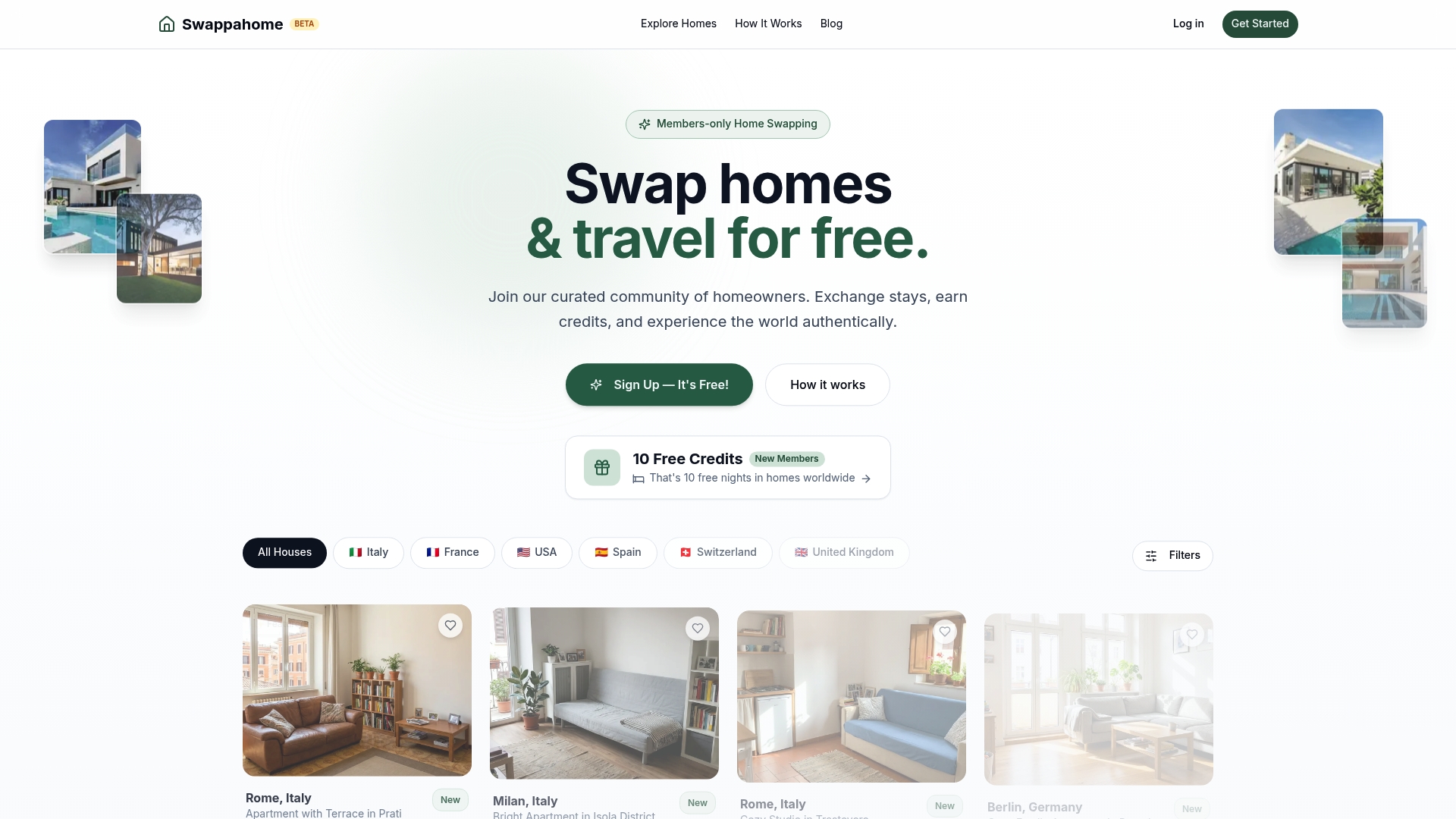
Swappahome is a members-only home swapping platform where verified homeowners earn credits by hosting and spend those credits on stays around the world — no money exchanged, no nightly hotel rates. You can browse home swap listings right now to see what's available in your target destination. New members receive free credits to get started, which means your first stay could cost you nothing in accommodation. The Swappahome community is built around exactly the kind of authentic, budget-smart travel this checklist is designed to support.
Frequently asked questions
What are the main categories to include in a travel budget checklist?
Standard travel budget categories include transportation, accommodation, food and dining, activities and entertainment, insurance and emergency funds, and miscellaneous items as your six core categories.
How much daily spending should I plan for travel in 2026?
Plan for $20-40 per day in low-cost countries, €35-60 in Eastern Europe, or €60-120 for mid-range cities in Western and Central Europe, depending on your travel style.
What's the best way to track my travel spending?
Use budgeting apps like Trail Wallet or TravelSpend or a customized spreadsheet to log purchases daily and compare spending against your planned category limits in real time.
How much extra should I set aside for travel emergencies?
Add a 10-20% contingency on top of your total projected budget to cover unexpected healthcare costs, transport disruptions, or surprise fees that don't show up in advance.
Can home exchange or swapping really save money?
Yes — home exchange eliminates accommodation costs entirely, which is typically the largest single expense in any travel budget, freeing that money for experiences, activities, or building a stronger emergency fund.
Recommended
- 7 Smart Ways to Save on Accommodation While Traveling | SwappaHome Blog
- Cost-Effective Travel Explained: Real Savings Globally | SwappaHome Blog
- 7 Essentials for Your Global Travel Checklist 2026 | SwappaHome Blog
- 7 Essential Long-Term Travel Planning Tips for Home Swappers | SwappaHome Blog
- 7 Smart Affordable Travel Tips for College Students in Utah | ReVroom

Published by
SwappaHome
SwappaHome Editorial Team
Home Exchange & Slow Travel Editorial
The SwappaHome Editorial Team brings together travel research, home-exchange community insights, and platform data to produce practical guides for first-time and experienced home swappers. Every article cites real platforms, current market rates, and verifiable city-level facts so readers can make informed decisions without guessing.
Ready to try home swapping?
Join SwappaHome and start traveling by exchanging homes. Get 7 free credits when you sign up!