
7 Essential Long-Term Travel Planning Tips for Home Swappers

SwappaHome Editorial Team
Home Exchange & Slow Travel Editorial
7 Essential Long-Term Travel Planning Tips for Home Swappers !Couple planning long-term home swap travel at kitchen table Planning for long-term...
7 Essential Long-Term Travel Planning Tips for Home Swappers
 Couple planning long-term home swap travel at kitchen table
Planning for long-term travel can feel overwhelming when you want to balance adventure, comfort, and affordability. Whether you are dreaming of exploring new countries for months at a time or hoping to swap homes for an extended stay, knowing where to start is often the hardest part. Without clear priorities and a solid strategy, it is easy to lose time and money—or miss out on the experiences that matter most.
This guide brings together expert-backed steps for organizing every part of your long-term travel plans. From building a realistic budget to managing health and safety, you will get specific, actionable advice to make your journey smoother and more rewarding. Get ready to discover smart travel habits and insider tips that successful global explorers use to confidently travel for months at a time.
Table of Contents
- 1. Set Your Long-Term Travel Goals and Priorities
- 2. Create a Realistic Travel Budget and Track Expenses
- 3. Leverage Home Swapping for Affordable Stays
- 4. Plan Itineraries Around Cultural Events and Seasons
- 5. Organize Travel Documents and Homeowner Verification
- 6. Pack Smart for Extended, Flexible Travel
- 7. Join and Engage in a Global Travel Community
Quick Summary
| Takeaway | Explanation |
|---|---|
| 1. Set clear travel goals. | Define your objectives for personal growth, professional development, and cultural immersion to guide your journey effectively. |
| 2. Create a thorough travel budget. | Develop a comprehensive financial plan that accounts for living expenses, emergencies, and insurance to avoid financial stress. |
| 3. Leverage home swapping for savings. | Use home exchange for affordable accommodations, allowing you to experience destinations authentically without high lodging costs. |
| 4. Plan itineraries around local events. | Align travel with cultural festivals to enhance engagement and dive deeper into local traditions and social dynamics. |
| 5. Organize essential travel documents. | Meticulously prepare and securely store critical documents to ensure smooth and stress-free long-term travel experiences. |
1. Set Your Long-Term Travel Goals and Priorities
Long-term travel requires more than just wanderlust - it demands strategic planning and crystal-clear objectives. Before packing your bags and embarking on an extended journey through home swapping, you need a comprehensive roadmap that aligns with your personal and professional aspirations.
Successful long-term travelers understand that setting precise goals transforms an ordinary trip into a transformative experience. Your objectives will guide every subsequent decision from destination selection to budget allocation. Consider these critical factors when defining your travel goals:
- Personal Growth: Identify specific skills or experiences you want to develop
- Professional Development: Determine how travel can enhance your career trajectory
- Cultural Immersion: Define the depth of cultural engagement you seek
- Budget Parameters: Establish realistic financial boundaries
The U.S. Department of State's International Travel Checklist provides an excellent framework for structuring your travel priorities. This resource helps travelers methodically review essential preparation elements like understanding local regulations and organizing critical documentation.
Your travel goals are the compass that will navigate your entire long-term journey. Without them, you risk drifting without purpose or direction.
Health considerations are equally paramount when planning extended travel. The CDC's Survival Guide recommends assessing destination-specific health risks and necessary vaccinations as part of goal-setting. This proactive approach ensures you're medically prepared for diverse environments.
To translate your goals into actionable steps, create a detailed spreadsheet or planning document that breaks down your objectives into measurable milestones. Track your progress, remain flexible, and be willing to adjust your goals as you gain more travel experience.
Pro tip: Schedule quarterly personal review sessions to reassess and realign your long-term travel goals, ensuring they remain relevant and inspiring throughout your journey.
2. Create a Realistic Travel Budget and Track Expenses
Managing your finances is the backbone of successful long-term travel. Without a solid budget and expense tracking system, even the most exciting travel plans can quickly unravel into financial stress.
Budgeting for extended travel requires more than simply estimating daily costs. You need a comprehensive financial strategy that accounts for unexpected expenses and provides flexibility. The Consumer Financial Protection Bureau's budgeting guide offers critical insights into maintaining financial discipline during long-term journeys.
To build a robust travel budget, consider these essential components:
- Daily Living Expenses: Food, local transportation, accommodation
- Emergency Fund: Minimum 3-6 months of total travel expenses
- Insurance and Healthcare: Medical coverage and potential treatment costs
- Travel Credits and Points: Strategies to minimize direct expenses
- Currency Exchange Considerations: Accounting for potential rate fluctuations
A well-planned budget is your financial safety net that transforms potential stress into travel confidence.
The Consumer.gov budgeting resource recommends creating a detailed spreadsheet that tracks every single expense. Digital tools like mobile apps can automate much of this process, allowing real-time expense monitoring and instant category breakdowns.
For home swappers, additional budget considerations include platform membership fees, travel insurance specific to home exchange, and potential supplemental accommodation costs during transition periods.
Effective budgeting isn't about restricting yourself - it's about understanding your financial flow and making informed decisions that maximize your travel experiences while maintaining fiscal responsibility.
Pro tip: Utilize a dedicated travel finance app that allows multi-currency tracking and automatically categorizes expenses to streamline your budget management process.
3. Leverage Home Swapping for Affordable Stays
Home swapping represents a revolutionary approach to travel accommodations that can dramatically reduce your lodging expenses. By exchanging homes with verified travelers, you unlock unprecedented travel affordability without compromising comfort or safety.
Affordable home swap options have transformed how budget-conscious travelers approach global exploration. The Harvard Kennedy School research on peer-to-peer rental markets highlights how these platforms leverage trust-building technologies to create cost-effective accommodation solutions.
Key advantages of home swapping include:
- Zero Accommodation Costs: Eliminate nightly hotel expenses
- Authentic Local Experiences: Stay in residential neighborhoods
- Fully Equipped Living Spaces: Access to kitchens and home amenities
- Extended Stay Flexibility: Longer travel periods without high costs
- Cultural Immersion: Live like a local in genuine residential settings
Home swapping isn't just about saving money - it's about experiencing destinations through an insider's perspective.
The U.S. Government Accountability Office research underscores how innovative housing arrangements like home swapping contribute to more accessible travel experiences. By participating in these networks, you transform traditional travel economics.
Successful home swappers understand that building a strong profile with detailed descriptions, high-quality photos, and responsive communication increases their chances of securing desirable exchanges.
Pro tip: Invest time in creating a comprehensive, attractive home listing with multiple clear photos to significantly improve your home swapping opportunities.
4. Plan Itineraries Around Cultural Events and Seasons
Cultural events transform ordinary travel into extraordinary experiences. Strategic trip planning around local festivals, seasonal celebrations, and cultural milestones can unlock immersive travel opportunities that go far beyond typical tourist experiences.
Cultural tourism strategies reveal that timing your travels can dramatically enhance your understanding of local traditions and community dynamics. The U.S. National Park Service heritage travel resources emphasize the importance of connecting travel with meaningful cultural contexts.
Key considerations for event-driven itinerary planning include:
- Seasonal Festival Schedules: Align travel with unique local celebrations
- Regional Climate Variations: Understand optimal travel seasons
- Cultural Significance: Research deeper meanings behind events
- Crowd Dynamics: Anticipate peak tourist periods
- Cost Fluctuations: Understand how events impact local pricing
True cultural immersion happens when you synchronize your journey with the rhythmic pulse of local traditions.
Successful travelers understand that planning around cultural events requires more than just checking a calendar. It demands deep research into local customs, understanding seasonal nuances, and being flexible enough to adapt your itinerary.
Consider creating a flexible travel framework that allows spontaneous participation in unexpected cultural experiences. This approach transforms your trip from a simple vacation into a rich narrative of cultural discovery.
Pro tip: Create a digital spreadsheet tracking potential cultural events in your destination regions at least six months in advance to optimize your travel planning strategy.
5. Organize Travel Documents and Homeowner Verification
Document organization is the silent guardian of smooth long-term travel. Without meticulous preparation and verification, even the most carefully planned journey can unravel at the first bureaucratic checkpoint.
The U.S. Department of State's travel planning resource emphasizes the critical importance of comprehensive document preparation. Effective document management goes beyond merely collecting paperwork it involves strategic organization and anticipatory verification.
Key documents every home swapper must organize include:
- Passport and Visa Details: Current and upcoming international documentation
- Insurance Certificates: Comprehensive travel and home insurance proof
- Home Ownership Documentation: Property titles and legal residency verification
- Emergency Contact Information: Comprehensive backup contact network
- Digital Backup Copies: Secure cloud storage of critical documents
Proper documentation is your passport to stress-free travel experiences.
Home swap verification steps require systematic approach. Digital organization tools can help travelers maintain real-time access to critical information across multiple platforms and devices.
Successful long-term travelers recommend creating both physical and digital document portfolios. This redundancy ensures you have multiple access points for critical information in case of unexpected challenges.
Pro tip: Create an encrypted digital folder with high-resolution scans of all critical documents and share access with a trusted family member or friend as a backup strategy.
6. Pack Smart for Extended, Flexible Travel
Long-term travelers know that intelligent packing is an art form that balances minimalism with preparedness. Your suitcase is not just a container of belongings it is your mobile support system for extended global adventures.
Packing strategies for home swap travelers require thoughtful consideration beyond traditional vacation preparation. The Transportation Security Administration's travel tips provide invaluable guidance for creating a versatile travel wardrobe that adapts to changing environments.
Essential packing principles for flexible travel include:
- Versatile Clothing Layers: Pieces that mix and match easily
- Compact Technical Fabrics: Lightweight materials that wash and dry quickly
- Multipurpose Accessories: Items serving multiple functions
- Digital Document Backups: Portable storage solutions
- Minimal Electronics: Lightweight multi-use devices
Intelligent packing transforms constraints into opportunities for seamless global exploration.
Successful home swappers understand that strategic packing reduces stress and increases travel flexibility. Consider clothing that can transition between casual and slightly formal settings and prioritize items that can be easily washed and dried.
Technology plays a crucial role in modern travel packing. Invest in lightweight adapters compact chargers and devices with multiple functions to minimize weight and maximize utility.
Pro tip: Pack a small compression bag to reduce clothing volume and create extra space for souvenirs or unexpected purchases during your journey.
7. Join and Engage in a Global Travel Community
Connecting with global travel communities transforms solo adventures into rich collaborative experiences. These networks are not just social platforms they are powerful ecosystems of shared knowledge and mutual support for long-term travelers.
The Harvard Kennedy School research highlights the transformative potential of peer-to-peer networks in modern travel. Travel community engagement offers far more than simple social connections it provides strategic advantages for home swappers.
Benefits of joining global travel communities include:
- Real-time Travel Insights: Immediate local knowledge and recommendations
- Safety Network: Shared emergency support and information
- Cultural Exchange: Deeper understanding beyond tourist experiences
- Problem-solving Resources: Collective wisdom for travel challenges
- Cost-saving Opportunities: Shared tips and collaborative strategies
A connected traveler is an empowered traveler navigating the world with collective intelligence.
The U.S. Department of State's traveler enrollment program demonstrates how structured community networks can provide critical support during international journeys. Active participation means transforming from a passive observer to an engaged global citizen.
Successful global travelers invest time in building genuine connections. This means being generous with your own experiences contributing meaningful insights and maintaining an open mindset toward diverse perspectives.
Pro tip: Allocate at least 30 minutes weekly to actively engaging in travel communities through meaningful interactions comments and shared experiences.
Below is a comprehensive table summarizing the key strategies and recommendations for successful long-term travel planning from the article.
| Aspect | Description | Suggestions |
|---|---|---|
| Setting Travel Goals | Define clear objectives aligning with personal and professional aspirations. | Break plans into actionable steps and review periodically. |
| Financial Planning | Create a realistic budget and track expenses diligently. | Use cost estimation tools and include contingencies like currency fluctuations and emergency funds. |
| Accommodations | Leverage home swapping for affordable and immersive stays. | Build an appealing profile including detailed descriptions and high-quality images. |
| Cultural Engagement | Plan itineraries around festivals and cultural events. | Research local celebrations and understand seasonal dynamics for enhanced experiences. |
| Documentation Preparation | Organize and verify critical travel documents and backups. | Maintain physical and digital copies and share with trusted contacts for emergencies. |
| Packing Strategy | Pack versatile and lightweight clothing suitable for diverse conditions. | Incorporate items with multipurpose functionality and compact electronics for convenience. |
| Community Engagement | Engage with global travel communities for support and insights. | Contribute actively to discussions and share experiences to build connections and gain resources. |
Unlock Affordable and Authentic Long-Term Travel with Swappahome
Long-term travel planning can feel overwhelming when you consider budgeting, cultural immersion, and finding reliable accommodations. This article highlights the struggle of managing travel goals, finances, and lodging while seeking genuine local experiences without breaking the bank. If you want to overcome these challenges, Swappahome offers a seamless solution tailored specifically for home swappers who crave cost-effective, verified stays that transform travel into a cultural exchange.
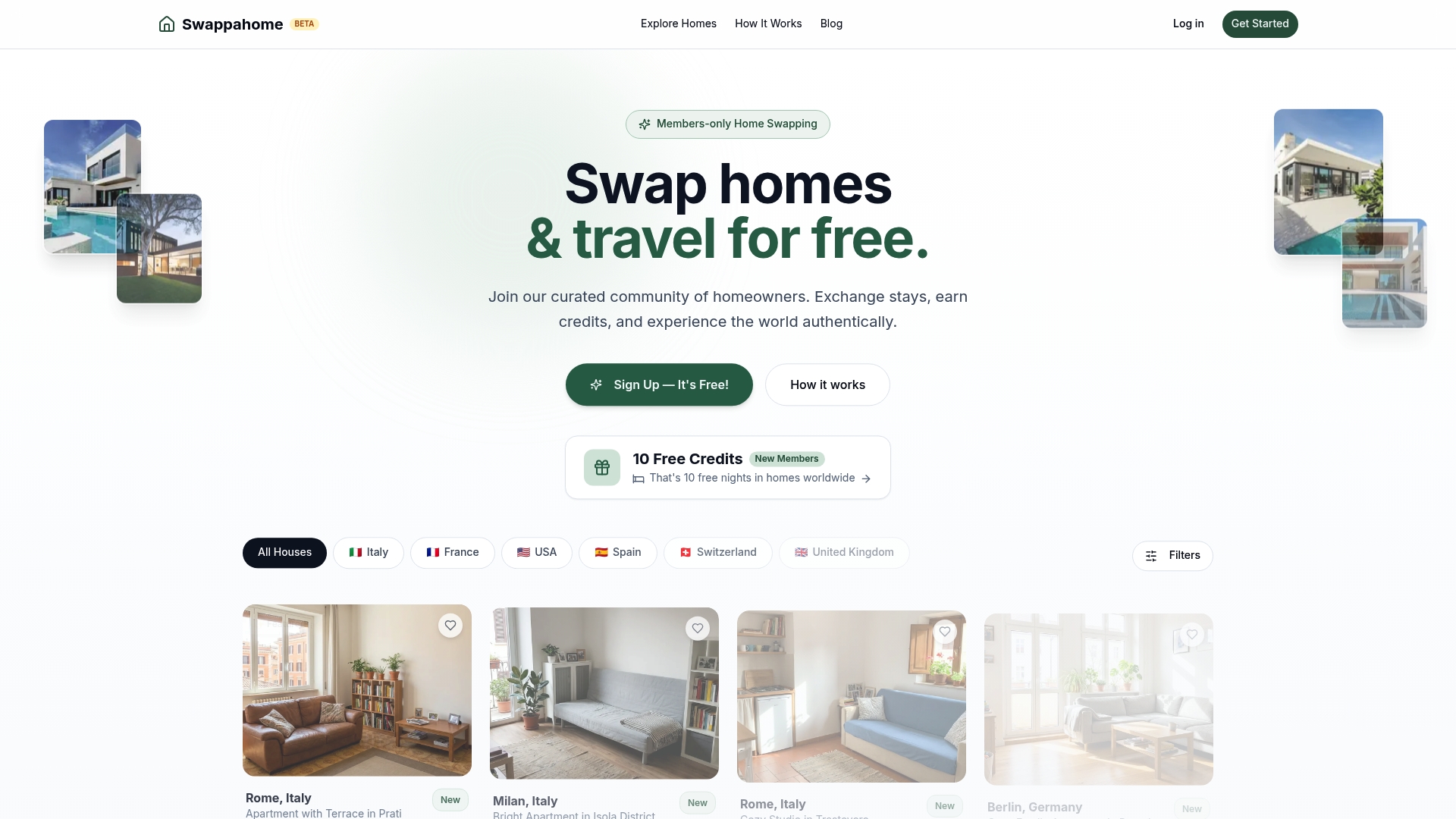 https://swappahome.com
By joining Swappahome, you gain access to a curated community of verified homeowners worldwide where you can list your home, earn credits, and stay in other members’ homes without paying for hotels. This platform bridges the gap between your travel ambitions and the need for smart budgeting as discussed in the article’s sections on creating realistic travel budgets and leveraging home swapping for affordable stays. Start your journey today with free credits, verify your profile, and explore the world through authentic local living. Visit Swappahome now to begin planning your next long-term cultural adventure with trusted accommodations and a supportive network.
Frequently Asked Questions
How can I set my long-term travel goals when home swapping?
To set long-term travel goals for home swapping, identify objectives such as personal growth, professional development, and cultural immersion. Create a roadmap with measurable milestones, and reassess your goals regularly to ensure they align with your travel experiences.
What should I include in my travel budget for long-term home swapping?
When budgeting for long-term home swapping, include daily living expenses, an emergency fund, insurance costs, and potential currency exchange rates. Track all expenses in a detailed spreadsheet to stay within your financial limits and make adjustments as needed.
How do I effectively organize travel documents for home swapping?
To organize travel documents for home swapping, create a checklist that includes your passport, insurance certificates, and proof of home ownership. Use both physical and digital copies to ensure you have access to your critical documents at all times while traveling.
What packing tips should I consider for flexible long-term travel while home swapping?
When packing for long-term travel, focus on versatile clothing that can mix and match easily. Choose lightweight and quick-drying fabrics, and carry compact electronic devices to minimize weight, allowing for flexibility during your travels.
How can I engage with global travel communities to enhance my home swapping experience?
To enhance your home swapping experience, actively engage in global travel communities by sharing insights, asking questions, and contributing to discussions. Dedicate at least 30 minutes each week to connect with fellow travelers for real-time advice and support.
Recommended

Published by
SwappaHome
SwappaHome Editorial Team
Home Exchange & Slow Travel Editorial
The SwappaHome Editorial Team brings together travel research, home-exchange community insights, and platform data to produce practical guides for first-time and experienced home swappers. Every article cites real platforms, current market rates, and verifiable city-level facts so readers can make informed decisions without guessing.
Ready to try home swapping?
Join SwappaHome and start traveling by exchanging homes. Get 7 free credits when you sign up!