7 reliable ways to verify home swaps for safe travel

SwappaHome Editorial Team
Home Exchange & Slow Travel Editorial
7 reliable ways to verify home swaps for safe travel !Woman checks verified home swap profiles online Trusting a stranger with your home while...
7 reliable ways to verify home swaps for safe travel
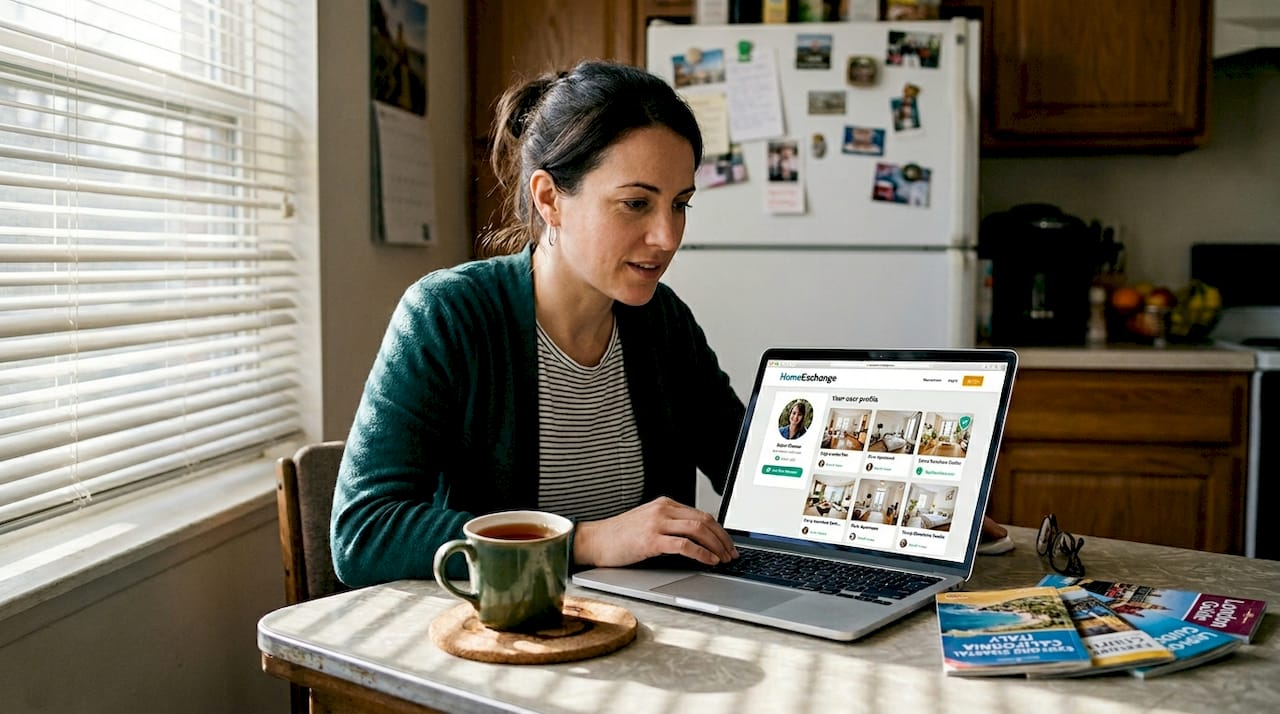 Woman checks verified home swap profiles online
Trusting a stranger with your home while staying in theirs requires careful verification. Home swapping offers incredible travel savings and authentic cultural experiences, but only when both parties feel confident about safety and legitimacy. Without proper verification methods, you risk encountering fraudulent listings, unsafe properties, or unreliable swap partners. This guide presents seven proven verification strategies that empower homeowners and travelers to confidently engage in home exchanges. You'll learn how to leverage platform tools, conduct thorough research, validate ownership, protect your belongings, and understand the real safety data behind successful swaps.
Table of Contents
- Key takeaways
- 1. Use reputable home swap platforms with built-in verification
- 2. Review profiles, photos, past reviews, and conduct video calls
- 3. Validate home ownership and ensure safety features
- 4. Protect valuables and confirm insurance coverage
- 5. Understand low incident rates and mutual accountability
- Comparison of home swap verification methods
- Discover trusted home swaps on SwappaHome
- FAQ
Key Takeaways
| Point | Details |
|---|---|
| Platform verification | Choose reputable home swap platforms that require government ID, address proof, and property documents to establish trust before agreeing to a swap. |
| Profile checks and video calls | Thoroughly review profiles, photos, and past reviews and conduct video calls to virtually tour the home and assess the partner's reliability. |
| Ownership validation | Verify property ownership or lease permissions and confirm safety features before finalizing an exchange. |
| Valuables protection | Secure valuables and confirm any available insurance coverage to safeguard belongings during the swap. |
| Incident data awareness | Review safety and incident data from trusted platforms to understand real risks and inform decision making. |
1. Use reputable home swap platforms with built-in verification
Trusted platforms like HomeExchange and SwappaHome require government ID, proof of address, and home documents for verification badges. These checks create a foundation of trust by confirming each member's identity and legitimate access to the property they're offering. Verification badges appear on profiles after successful document review, signaling to potential swap partners that the platform has validated key credentials.
Platform verification systems typically include:
- Government-issued photo ID matching the name on property documents
- Utility bills or tax statements proving current residence at the swap address
- Property ownership documents or lease agreements for renters with landlord permission
- Email and phone number confirmation through automated verification codes
Profiles displaying verification badges consistently receive more swap requests because they demonstrate commitment to transparency. Users who complete all verification steps show they're serious about building trust within the community. This screening process filters out casual users or those unwilling to provide documentation, naturally elevating the quality of available swap partners.
Pro Tip: Prioritize swappers who completed verification within the past year, as this indicates active platform engagement and up to date documentation. Older verifications may not reflect current circumstances or property ownership status.
Reputable platforms also maintain reporting systems where members can flag suspicious behavior or problematic experiences. This community oversight adds another safety layer, as patterns of complaints trigger platform investigations. Review the home swap verification checklist 7 steps to understand exactly what documentation platforms require and why each element matters for your security.
2. Review profiles, photos, past reviews, and conduct video calls
Detailed profile analysis reveals crucial information about potential swap partners and their properties. Prioritize swappers with multiple positive reviews; use video calls for home tours and WiFi checks to assess trustworthiness. Profiles with 10 or more completed swaps and consistent positive feedback demonstrate reliability and experience managing exchanges successfully.
Examine these profile elements carefully:
- Photo galleries showing multiple rooms, outdoor spaces, and neighborhood context
- Detailed descriptions of amenities, house rules, and local attractions
- Response patterns indicating communication style and responsiveness
- Swap history showing frequency and geographic diversity of past exchanges
Video calls transform the verification process by adding real-time interaction. Schedule a 30-45 minute video chat to virtually tour the home, observe property condition, and gauge your comfort level with the swap partner. Use video calls to assess home condition and ensure your technology needs, like WiFi, are met. During the call, ask to see specific areas mentioned in the listing, test lighting in different rooms, and confirm amenities like kitchen appliances or workspace setups.
Pro Tip: Request a brief neighborhood tour via video where your swap partner walks outside to show parking, nearby shops, or public transit access. This reveals environmental context that photos alone cannot capture.
Pay attention to communication quality during video interactions. Reliable swap partners answer questions directly, share local tips enthusiastically, and demonstrate genuine interest in making your stay comfortable. Hesitation about showing certain areas or vague responses about property features may signal concerns worth investigating further. Check home swapping safety tips and home swapping user reviews to understand what red flags other swappers have identified through their experiences.
3. Validate home ownership and ensure safety features
Confirming legal ownership protects you from scams where someone lists a property they don't control. Use ownership deeds and tax receipts for validation; ensure smoke detectors and locks meet safety standards. Request copies of property tax statements, mortgage documents, or title deeds that match the address and owner name on the platform profile.
Key ownership validation steps include:
- Comparing property records with government databases when publicly available
- Verifying the listing address matches documentation exactly, including unit numbers
- Confirming the swap partner's legal name appears on all ownership papers
- For renters, obtaining written landlord permission for the exchange arrangement
Safety features require equal attention. During video calls, ask your swap partner to demonstrate working smoke detectors, carbon monoxide alarms, and fire extinguishers. Check that exterior doors have deadbolts and windows have functional locks. Inquire about security systems, outdoor lighting, and whether neighbors know about the upcoming swap.
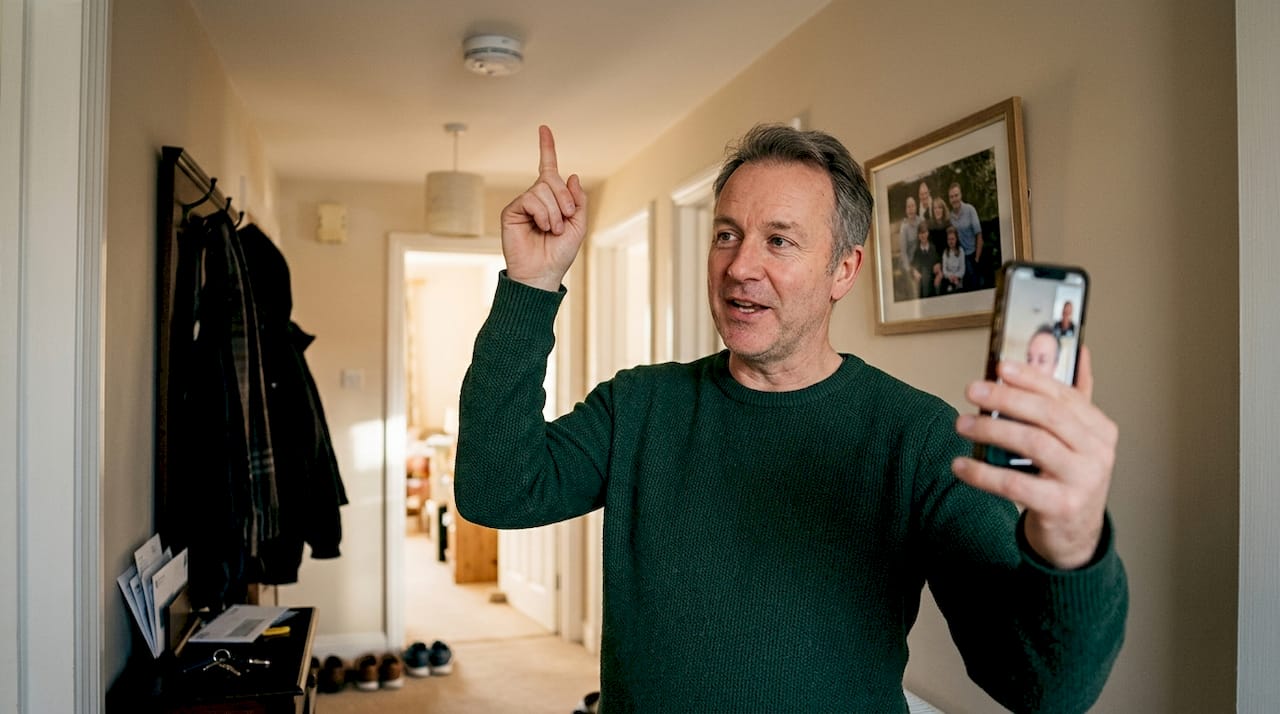 Man uses video to show smoke detector
Pro Tip: Research the neighborhood's crime statistics and emergency services response times using local government websites. Understanding the area's safety profile helps you make informed decisions about the swap location.
Draft a detailed swap agreement outlining responsibilities for property care, damage protocols, and emergency contacts. Include specifics about which areas are off limits, how to handle maintenance issues, and expectations for cleanliness standards. This document creates accountability and provides reference points if questions arise during the exchange. Review the home swap security guide for comprehensive checklists covering safety inspections and agreement templates.
4. Protect valuables and confirm insurance coverage
Securing personal belongings before a swap prevents loss and reduces anxiety during your travels. Use lockboxes, safes, or locked closets for jewelry, important documents, electronics, and sentimental items. Remove or secure anything you would be devastated to lose, regardless of monetary value.
Valuables protection strategies:
- Install temporary locks on specific rooms or storage areas
- Store important documents in fireproof safes or off-site locations
- Remove prescription medications and personal financial records
- Photograph valuable items and maintain inventory lists
HomeExchange offers up to $1M damage protection; many homeowner policies exclude swaps requiring riders or disclosure. Platform insurance typically covers accidental damage caused by swap guests but excludes intentional harm or theft. Review coverage limits, deductibles, and claim procedures before finalizing any exchange. Understanding exactly what protection exists prevents unpleasant surprises if issues occur.
Standard homeowner insurance policies often contain clauses excluding coverage when you allow non-family members to occupy your home without rent payment. Contact your insurance agent to discuss your swap plans and determine if you need additional coverage or policy riders. Some insurers offer short-term endorsements specifically for home exchanges, while others may require you to disclose each swap arrangement.
Document your home's condition thoroughly before departure. Take photos and videos of every room, focusing on existing damage, valuable items, and overall cleanliness. This evidence proves the property's pre-swap state and supports insurance claims if needed. Share these records with your swap partner so both parties understand baseline expectations. The home swap insurance guide explains coverage options, claim processes, and how to fill insurance gaps for complete protection.
5. Understand low incident rates and mutual accountability
Data consistently shows home swapping carries minimal risk when participants use verification methods properly. 99.7% of HomeExchange swaps are incident-free, significantly better than hotel stay issue rates. This exceptional safety record stems from the mutual accountability inherent in simultaneous exchanges. When both parties have homes at stake, incentives align toward respectful treatment and careful property management.
"Mutual accountability naturally reduces risk versus traditional rentals, especially for first-time swappers starting with experienced hosts. The reciprocal nature of home exchanges creates built-in safeguards that rental situations lack."
Serious problems like major property damage or theft occur extremely rarely in established swap communities. Most reported issues involve minor inconveniences such as miscommunication about amenities, different cleanliness standards, or small accidental breakages. These situations typically resolve through direct communication and goodwill between swap partners.
Experienced swappers provide safer first exchanges for newcomers. Their established track records, detailed profiles, and refined communication skills help first-timers navigate the process confidently. Starting your swap journey with hosts who have completed 10 or more exchanges significantly reduces uncertainty and provides mentorship through the experience.
The swap community's self-regulating nature maintains high standards. Members who cause problems receive negative reviews that impact their ability to arrange future exchanges. This reputation system incentivizes respectful behavior and accountability. Platform algorithms often prioritize showing verified members with positive histories in search results, further filtering the community toward trustworthy participants. Explore the role of verification in home exchanges to understand how community standards and platform tools work together to maintain safety.
Comparison of home swap verification methods
| Method | Key Benefits | Main Challenges | Best Used When |
|---|---|---|---|
| Platform verification | Official ID and document checks, verification badges | Requires time to complete, some platforms have varying standards | Starting your swap search to filter trustworthy members |
| Profile and video review | Assess personality fit, see real-time home condition | Time intensive, requires scheduling coordination | You've identified potential swap partners and want deeper insight |
| Ownership validation | Confirms legal rights, prevents fraud | May feel intrusive to request, requires document sharing | High-value properties or unfamiliar destinations |
| Valuables protection | Secures belongings, provides peace of mind | Takes preparation time, limits guest access to some areas | All swaps, regardless of perceived trust level |
| Incident rate awareness | Builds confidence through data, realistic risk assessment | Doesn't prevent individual issues | Making final decisions and managing expectations |
Combining multiple verification methods creates comprehensive protection:
- Start with platform verification to establish baseline trust and filter your search to verified members only.
- Review profiles thoroughly and conduct video calls with your top three potential swap partners before deciding.
- Request ownership documents and safety feature confirmation from your final choice before committing.
- Secure valuables and confirm insurance coverage once dates are finalized.
- Reference incident rate data to maintain perspective and confidence throughout the process.
Layering these strategies addresses different risk categories. Platform tools handle identity verification, personal research assesses compatibility, ownership validation prevents fraud, valuables protection limits loss exposure, and data awareness keeps risks in proper context.
Discover trusted home swaps on SwappaHome
Ready to experience authentic travel through verified home exchanges? SwappaHome connects you with thousands of homeowners worldwide who share your passion for cost-effective, cultural travel experiences. Our platform combines rigorous verification processes with community-driven trust building, ensuring every swap meets high safety and quality standards.
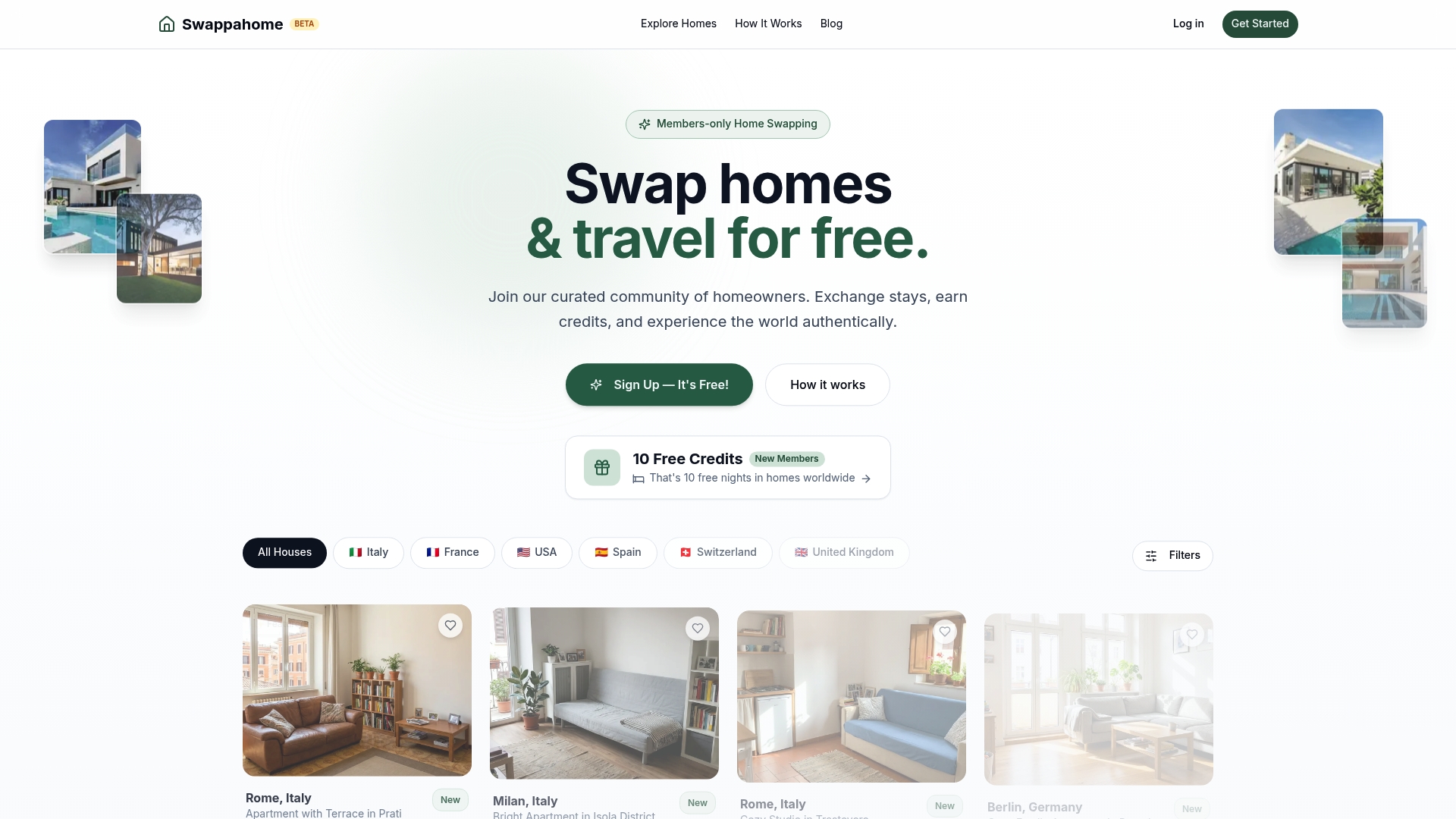 https://swappahome.com
Explore verified home swap listings across six continents, each backed by ID verification, ownership documentation, and member reviews. Our credit-based system rewards hosting and eliminates monetary transactions, creating a true sharing economy. New members receive complimentary credits to start their swap journey immediately. Use built-in messaging and video call features to connect with potential partners, tour homes virtually, and build relationships before exchanging. Benefit from comprehensive platform support, damage protection, and a global community committed to respectful, rewarding home exchanges.
FAQ
How do I verify that the home offered for swap is genuinely owned by the lister?
Request official ownership documents such as property deeds, mortgage statements, or tax receipts that match the listing address and owner name. Cross-reference these documents with platform profile information to confirm consistency. For renters offering their homes, ask for written landlord permission and lease agreements proving they have authority to arrange the swap. Check the home swap verification checklist for detailed document requirements.
Is home swap insurance coverage usually included, or should I get extra protection?
Major platforms like HomeExchange provide damage protection up to $1 million, but coverage terms vary by platform and situation. Most standard homeowner insurance policies exclude home swap arrangements unless you specifically disclose them to your insurer or purchase additional riders. Contact your insurance agent before your first swap to understand your policy's limitations and explore supplemental coverage options. Review the home swap insurance guide to understand platform coverage details and identify potential insurance gaps.
What are reliable signs that a swap partner is trustworthy?
Multiple positive reviews from past swap partners demonstrate consistent reliability and respectful property treatment. Active, responsive communication during the planning phase indicates commitment and professionalism. Verification badges confirming ID and ownership checks signal platform-validated credentials. Willingness to conduct video home tours and answer detailed questions openly shows transparency and confidence in their offering. Check home swapping safety tips for additional trust indicators.
How can first-time swappers minimize risk when arranging their first exchange?
Start your swap journey with experienced hosts who have completed 10 or more successful exchanges and maintain consistently positive reviews. Use all available platform verification tools including ID checks, video calls, and messaging systems to build familiarity before committing. Choose destinations in your home country for your first swap to simplify logistics and reduce cultural barriers. Read is home swapping safe to understand real incident rates and evidence-based safety strategies that experienced swappers recommend for newcomers.
Recommended

Published by
SwappaHome
SwappaHome Editorial Team
Home Exchange & Slow Travel Editorial
The SwappaHome Editorial Team brings together travel research, home-exchange community insights, and platform data to produce practical guides for first-time and experienced home swappers. Every article cites real platforms, current market rates, and verifiable city-level facts so readers can make informed decisions without guessing.
Ready to try home swapping?
Join SwappaHome and start traveling by exchanging homes. Get 7 free credits when you sign up!