
Antigua Nomad Digital Residence: Your Guide to Living and Working Remotely

SwappaHome Editorial Team
Home Exchange & Slow Travel Editorial
So, you're thinking about becoming an Antigua nomad? It's a pretty sweet deal if you can swing it. This program lets you live and work from this Caribbean…
So, you're thinking about becoming an Antigua nomad? It's a pretty sweet deal if you can swing it. This program lets you live and work from this Caribbean island for a while. It's not exactly a vacation, but it's definitely not your typical office grind either. We'll break down what you need to know to make this happen, from the paperwork to actually, you know, living there.
Key Takeaways
- The Antigua Nomad Digital Residence program is designed for remote workers looking to live and work from the island.
- You'll need to meet specific eligibility criteria, including proof of income and health insurance.
- Living in Antigua offers benefits like a tropical lifestyle and a new cultural experience, but also comes with considerations like the cost of living and healthcare.
- Setting up a reliable workspace with good internet is important, whether you choose co-working spaces or a home office.
- Beyond work, Antigua has plenty to offer, from beautiful beaches and outdoor activities to local food and culture.
Understanding the Antigua Nomad Digital Residence
What is the Antigua Nomad Digital Residence?
The Antigua Nomad Digital Residence program is basically a way for people who work online to live in Antigua and Barbuda for an extended period. It's designed for folks who don't need to be in a specific office to do their jobs – think freelancers, remote employees, or business owners who can manage their operations from anywhere. This program gives you a legal pathway to stay on the island for up to two years, which is pretty sweet if you're looking for a change of scenery. It's not a fast track to citizenship or anything, but it does let you experience life in Antigua without the usual tourist limitations.
Eligibility and Requirements for Applicants
So, who can actually apply for this? Generally, you need to prove you're earning a decent amount of money from outside Antigua and Barbuda. We're talking about a minimum income, usually around $50,000 USD per year. You also need to be at least 18 years old, have a valid passport, and be able to show you have health insurance that covers you while you're in Antigua. It's also important that you don't have a criminal record. They want to make sure you're a legitimate remote worker and not trying to pull a fast one. The application process involves submitting quite a bit of paperwork, so be prepared for that.
Benefits of the Antigua Nomad Digital Residence Program
Why would you even bother with this program? Well, there are some pretty good perks. The biggest draw is definitely the chance to live in a beautiful Caribbean paradise while still earning your income. Beyond that, you get to stay for up to two years, which is way longer than a typical tourist visa. This gives you time to really get to know the island, its people, and its culture. Plus, you're exempt from paying income tax in Antigua and Barbuda on your foreign earnings, which is a huge financial plus. It also allows you to bring your immediate family members with you, which is great if you have kids or a partner who wants to join the adventure. It's a solid way to get a taste of island life without completely uprooting your life back home. You can find more details on the official government website, but it's a pretty straightforward process if you meet the criteria. Digital nomad visas are becoming more common, and this one offers a unique Caribbean experience.
Navigating Life in Antigua as a Digital Nomad
So, you've got the Antigua Nomad Digital Residence sorted and you're ready to pack your bags. That's awesome! But what's it actually like to live and work here day-to-day? It's not just about the beaches, though they are pretty great. You'll want to get a feel for the rhythm of island life, figure out your budget, and make sure you're covered if anything unexpected pops up. It's all part of the adventure, right?
Cost of Living for Remote Workers
Antigua can be surprisingly affordable if you know where to look. Eating out a lot will definitely add up, but cooking at home and hitting up local markets can save you a ton. Think about your daily habits – do you need fancy coffees every morning, or are you happy with a local brew? Your biggest expenses will likely be accommodation and any activities you do. It's a good idea to have a rough budget in mind before you arrive. Here's a general idea of what you might spend monthly, but remember this can change a lot based on your lifestyle:
| Category | Estimated Monthly Cost (USD) |
|---|---|
| Accommodation | $800 - $1500+ |
| Groceries | $300 - $500 |
| Dining Out | $200 - $400 |
| Transportation | $100 - $200 |
| Utilities & Internet | $100 - $150 |
| Entertainment | $150 - $300 |
Pro tip: Look into longer-term apartment rentals rather than short-term stays. You'll often get a much better rate and a more local feel. Plus, having a kitchen really helps keep food costs down.
Healthcare and Insurance Considerations
This is super important. While Antigua has decent medical facilities, especially in the capital, St. John's, you'll want to be prepared. The Nomad Digital Residence program requires you to have health insurance, which is a smart move anyway. Make sure your policy covers you for the duration of your stay and includes emergency medical evacuation, just in case. It's always better to have it and not need it, you know?
Here are a few things to think about:
- Insurance Policy: Get a comprehensive travel or international health insurance plan that covers you in Antigua and Barbuda. Check the policy details carefully.
- Local Facilities: Familiarize yourself with the location of the nearest clinics and hospitals. The main hospital is Mount St. John's Medical Centre.
- Prescriptions: If you take regular medication, bring an adequate supply with a doctor's note, as some specific drugs might not be available locally.
Local Culture and Integration Tips
Antiguans are generally friendly and welcoming people. The pace of life is definitely slower here – it's called 'island time' for a reason! Don't get frustrated if things take a little longer than you're used to. Embrace it. Learning a few basic phrases in Antiguan Creole (though English is the official language) can go a long way, and showing respect for local customs is key. Try to engage with the community; join local events, visit markets, and strike up conversations. You'll find that the more you put yourself out there, the richer your experience will be. It's all about connecting with the place and its people, not just working from a pretty backdrop. For more on settling in, check out essential details for digital nomads.
Setting Up Your Workspace in Antigua
Alright, so you've got the visa, you're dreaming of beaches, but where are you actually going to get your work done? Setting up a functional workspace is key to making your Antigua digital nomad experience a success. It's not just about having a laptop; it's about creating an environment where you can actually focus and be productive.
Reliable Internet Connectivity for Remote Work
This is probably the most important thing. Without good internet, your remote work dreams can turn into a nightmare pretty fast. Antigua has made strides in improving its infrastructure, but it's still a good idea to know what you're getting into.
- Check your accommodation: Before you even book a place, ask about the internet speed. Don't just take their word for it; ask for a speed test screenshot if you can. Some places might have decent Wi-Fi for checking emails but struggle with video calls.
- Mobile Hotspots: Having a local SIM card with a good data plan is a smart backup. Companies like Digicel and Flow are the main providers. You can often get a data package that will keep you connected if your primary internet goes down.
- Consider a dedicated service: For longer stays, you might look into getting a dedicated internet line installed at your rental. This can be a bit of a process, but it offers the most stability.
The island's internet landscape is improving, but it's wise to have a backup plan. Relying solely on one connection can lead to unexpected disruptions, especially during peak usage times or bad weather.
Finding Co-working Spaces and Cafes
Sometimes you just need a change of scenery, or maybe your rental just doesn't cut it for a full workday. Luckily, Antigua has a few spots that can work.
- Local Cafes: Many cafes offer Wi-Fi, and they can be great for a few hours of work. Places in St. John's or along the coast often have a good vibe. Just be mindful of noise levels and be a good patron by buying drinks or snacks.
- Dedicated Co-working: While not as widespread as in larger digital nomad hubs, there are a few co-working spaces popping up. These offer a more professional environment with reliable internet and networking opportunities. A quick search online for 'Antigua co-working spaces' should give you the latest options.
- Hotel Business Centers: Some hotels offer business center access, even if you're not staying there, for a fee. This can be a good option for a quiet, professional setting when you need it.
Creating an Ergonomic Home Office Setup
Working from your couch might sound appealing, but it's a recipe for back pain and low productivity. Even in a temporary setup, a little effort goes a long way.
- Invest in a portable laptop stand: This simple gadget can make a huge difference by raising your screen to eye level, saving your neck and back.
- External keyboard and mouse: Typing on a laptop for hours isn't ideal. An external keyboard and mouse can make your setup much more comfortable and ergonomic.
- Good lighting: Natural light is best, so try to set up near a window. If you need artificial light, opt for a desk lamp that provides focused, non-glaring illumination.
- Comfortable chair: If your rental doesn't have a suitable chair, consider getting a cheap, foldable one or even a comfortable cushion to improve your posture. You might even find that home exchange options can sometimes offer more established workspaces.
Setting up your workspace might seem like a chore, but it's a crucial step in ensuring you can actually enjoy your time in Antigua while staying on top of your work responsibilities. A little planning now means a lot less stress later.
Exploring Antigua Beyond Work
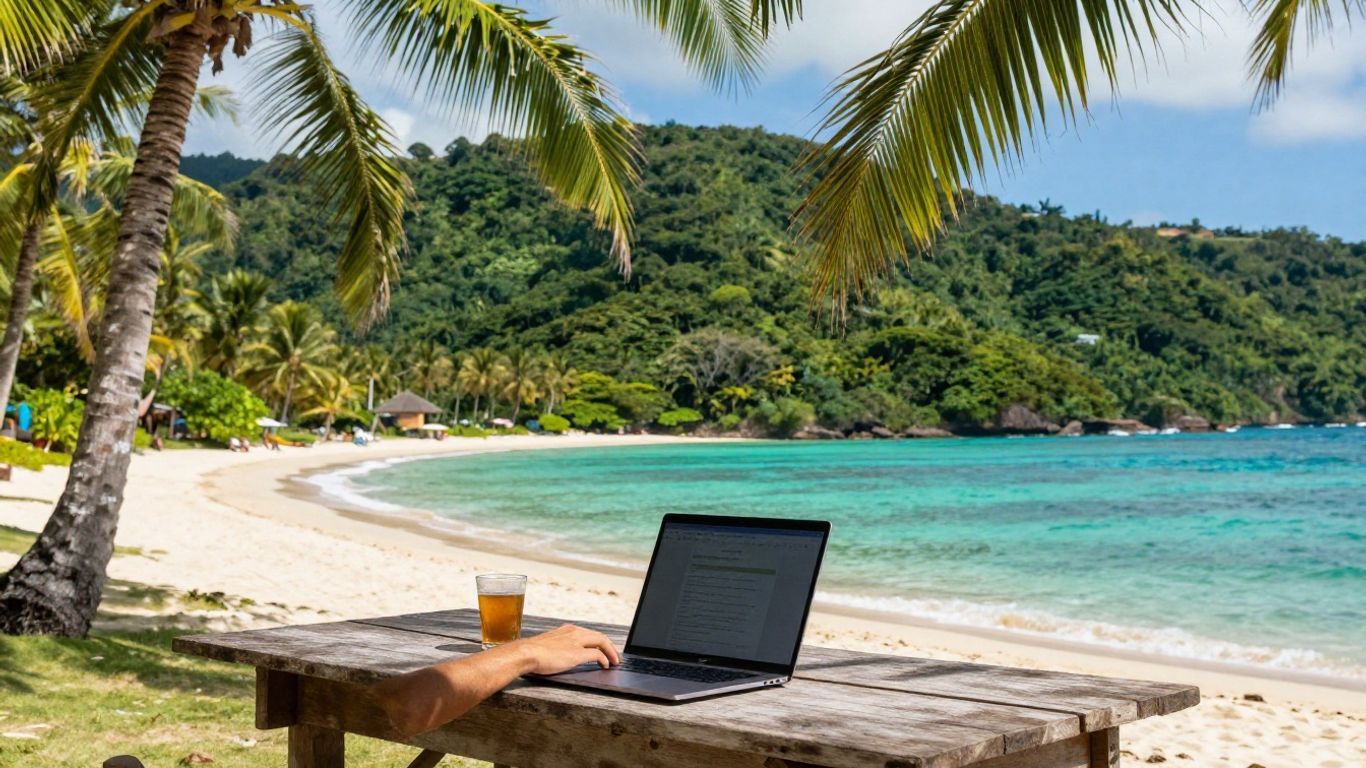 Person working on laptop on beach in Antigua.
Antigua is more than just a place to get work done; it's a vibrant island brimming with natural beauty and cultural experiences. When you're ready to step away from your laptop, a whole world of adventure awaits. From exploring the stunning coastline to immersing yourself in local life, there's plenty to keep you entertained.
Must-Visit Destinations and Attractions
Antigua boasts a rich history and breathtaking landscapes. A visit to Nelson's Dockyard in English Harbour is a must. This UNESCO World Heritage site offers a glimpse into the island's naval past with beautifully restored Georgian buildings. Shirley Heights, just a short drive away, provides panoramic views of English Harbour, especially spectacular at sunset. Don't miss the chance to explore St. John's, the capital city, with its colorful markets and historic cathedral.
Outdoor Activities and Adventures
For the active nomad, Antigua is a playground. The crystal-clear waters are perfect for a variety of activities. You can go snorkeling or diving to see the vibrant marine life, or try kayaking and stand-up paddleboarding along the coast. For a different perspective, consider a boat tour to explore the island's 365 beaches – one for every day of the year! Hiking trails offer a chance to see the island's lush interior, and for the thrill-seekers, ziplining through the rainforest canopy is an unforgettable experience. You can also learn to sail and feel the wind in your hair on the open water.
Culinary Delights and Local Cuisine
Antiguan food is a delicious blend of Caribbean and international influences. Fresh seafood is a staple, with dishes like grilled lobster and snapper being local favorites. Be sure to try the national dish, fungie (a cornmeal-based side) and pepperpot (a hearty stew). Local fruits are abundant, so enjoy fresh mangoes, papayas, and pineapples. For a true taste of the island, visit local restaurants and food stalls to sample authentic dishes. Don't forget to try the local rum, a perfect accompaniment to a sunset.
The island's pace of life encourages you to slow down and savor each moment. Whether you're exploring ancient ruins or simply enjoying a meal with a view, Antigua offers a chance to truly disconnect and recharge.
Practicalities of Your Antigua Nomad Stay
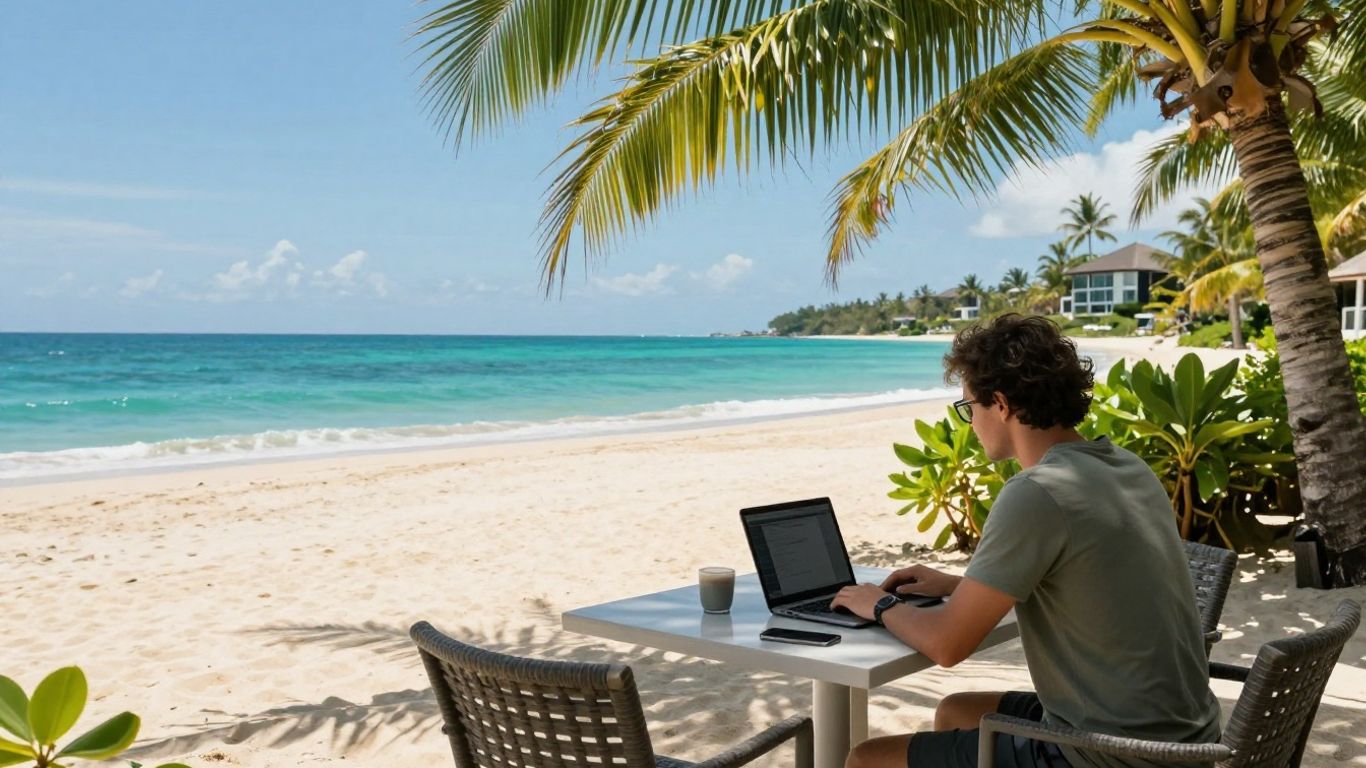 Person working on laptop on a tropical beach in Antigua.
Alright, so you've got the work setup sorted and you're ready to soak in the island vibes. But before you get too lost in the turquoise waters, let's talk about the nitty-gritty of making your Antigua stay smooth sailing. It’s not all about beaches and sunsets, though those are definitely a big part of it!
Transportation Options on the Island
Getting around Antigua is pretty straightforward, but it helps to know your options. Taxis are readily available, especially at the airport and in popular tourist areas. They're convenient but can add up if you're moving around a lot. Renting a car is a popular choice for digital nomads who want the freedom to explore at their own pace. It gives you access to those hidden coves and local spots that aren't on the main bus routes. Just remember, they drive on the left here, and some of the roads can be a bit bumpy, especially outside the main towns. Buses are the most budget-friendly option, connecting most of the island's villages and towns. They run on a pretty flexible schedule, so patience is key, but it's a great way to see the real Antigua and interact with locals.
- Taxis: Convenient, readily available, good for short trips or airport transfers.
- Car Rentals: Offers the most flexibility for exploring the island. Book in advance, especially during peak season.
- Public Buses: The most economical choice, offering a local experience. Schedules can be unpredictable.
Banking and Financial Management
Managing your money while living abroad is always a bit of a puzzle. Antigua has several local banks, and most major international banks have a presence here too. ATMs are available in St. John's and other larger towns, but it's always a good idea to have some cash on hand, especially when you're venturing into smaller villages or visiting local markets. Credit cards are widely accepted in hotels, restaurants, and larger shops, but smaller vendors might prefer cash. Setting up a local bank account might be an option, but it can involve some paperwork. Many digital nomads find it easiest to rely on international money transfer services or their home bank's debit/credit cards, just be sure to check any foreign transaction fees beforehand. It’s also wise to inform your bank about your travel dates to avoid any unexpected card freezes.
Pro Tip: Always have a mix of payment methods. Relying solely on one can lead to unexpected issues. Cash is king in many local spots, but cards are useful for larger purchases.
Visa Renewal and Long-Term Stay Information
So, you're loving Antigua and thinking about extending your stay beyond the initial digital nomad visa period? That's fantastic! The Antigua Nomad Digital Residence program is designed for longer stays, but it's important to understand the renewal process. Generally, you'll need to submit an application for extension before your current permit expires. This usually involves providing updated proof of accommodation, ongoing financial stability, and health insurance. The specifics can change, so it's always best to check the official immigration website or contact the relevant authorities directly for the most current requirements and timelines. Staying informed about visa regulations is key to a stress-free long-term experience on the island. You'll want to have your passport-style photo and confirmed accommodation ready for any renewal applications, just like when you first arrived [ab63]. Planning ahead will save you a lot of hassle down the line.
Wrapping It Up
So, there you have it. Antigua offers a pretty sweet deal for anyone looking to ditch the office and work from a beach. It’s not just about the sunshine and good vibes, though. Getting set up with the right visa, finding a decent place to stay with good internet, and figuring out the local scene all take a bit of effort. But honestly, the payoff of living and working from a place like Antigua? Totally worth it. It’s a chance to really change up your routine and experience something new. Give it a shot, you might just find your new favorite work spot.
Frequently Asked Questions
What is the Antigua Nomad Digital Residence program?
The Antigua Nomad Digital Residence program is a special visa that lets people who work online live and work in Antigua for a year or more. It's designed for folks who can work from anywhere, making Antigua their temporary home base while they earn a living through their digital jobs.
Who can apply for this program?
To apply, you generally need to be earning a certain amount of money each month from remote work, usually from sources outside of Antigua. You'll also need to prove you have health insurance and a clean background check. The specific rules can be found on the official Antigua government website.
What are the main perks of being an Antigua digital nomad?
Living in Antigua as a digital nomad means you get to enjoy the island's beautiful beaches, warm weather, and relaxed lifestyle. Plus, you can work without worrying about paying local income taxes on your remote earnings. It's a great way to combine work with a tropical adventure.
How is the internet in Antigua for remote work?
Antigua has been working on improving its internet services. While major towns and tourist areas usually have good Wi-Fi, it's always a good idea to check the specific connection speed where you plan to live or work. Having a backup plan, like a mobile hotspot, is also smart.
What's the cost of living like for a digital nomad in Antigua?
The cost of living can vary, but generally, it's more affordable than many major cities in North America or Europe, especially if you avoid super touristy spots. You can save money by cooking at home, using local transport, and finding housing outside the main resorts. Groceries and dining out can be reasonable.
Do I need special health insurance for Antigua?
Yes, you'll need to have valid health insurance that covers you while you're in Antigua. The program usually requires proof of this insurance when you apply. It's important to make sure your plan offers good coverage for any medical needs you might have on the island.

Published by
SwappaHome
SwappaHome Editorial Team
Home Exchange & Slow Travel Editorial
The SwappaHome Editorial Team brings together travel research, home-exchange community insights, and platform data to produce practical guides for first-time and experienced home swappers. Every article cites real platforms, current market rates, and verifiable city-level facts so readers can make informed decisions without guessing.
Ready to try home swapping?
Join SwappaHome and start traveling by exchanging homes. Get 7 free credits when you sign up!