
Budget Travel Strategies 2026: Spend Less, See More

SwappaHome Editorial Team
Home Exchange & Slow Travel Editorial
Budget Travel Strategies 2026: Spend Less, See More !Young woman planning budget travel outdoors > TL;DR: > > - Effective budget travel in 2026...
Budget Travel Strategies 2026: Spend Less, See More
 Young woman planning budget travel outdoors
TL;DR:
- Effective budget travel in 2026 relies on stacking timing, accommodation, and financial strategies rather than individual discounts. Travelers should focus on shoulder season travel, diverse accommodation types, and strategic point redemption to reduce daily costs significantly. Home swapping platforms like Swappahome offer a zero-cost alternative that reshapes travel budgeting by eliminating accommodation expenses.
Budget travel strategies in 2026 are defined as a combination of smart timing, stacking cost-saving tactics, and flexible expense management that lets you explore the world without draining your savings. Inflation has hit travel costs unevenly, making it more important than ever to focus on the highest-impact variables first: accommodation, flights, and daily spending. The old approach of extreme frugality is giving way to what experts now call flexible control, a mindset where you prioritize the decisions that move the needle most. Tools like Google Flights, TrustedHousesitters, and travel rewards credit cards are no longer optional extras. They are the core infrastructure of any serious budget trip in 2026.
What are the best budget travel strategies for 2026?
The single most effective shift in budget travel strategies for 2026 is moving away from chasing individual discounts and toward stacking multiple cost-saving tactics simultaneously. According to travel research, combined budget hacks can keep daily spending to $20 to $35 in Southeast Asia, $30 to $45 in Eastern Europe and South America, and $70 to $100 in Western Europe. That is not a ceiling. That is what disciplined travelers actually achieve when they layer timing, accommodation, food, and transport decisions together. Each tactic alone saves a little. Together, they transform what a trip costs.
The framework starts with identifying your three biggest cost drivers before you book anything. For most travelers, those are flights, accommodation, and in-destination transport. Get those three right and the rest of the budget becomes much easier to manage. Ignore them and no amount of street food or free museum days will compensate.
How does timing impact budget travel costs in 2026?
 Infographic comparing timing and accommodation strategies
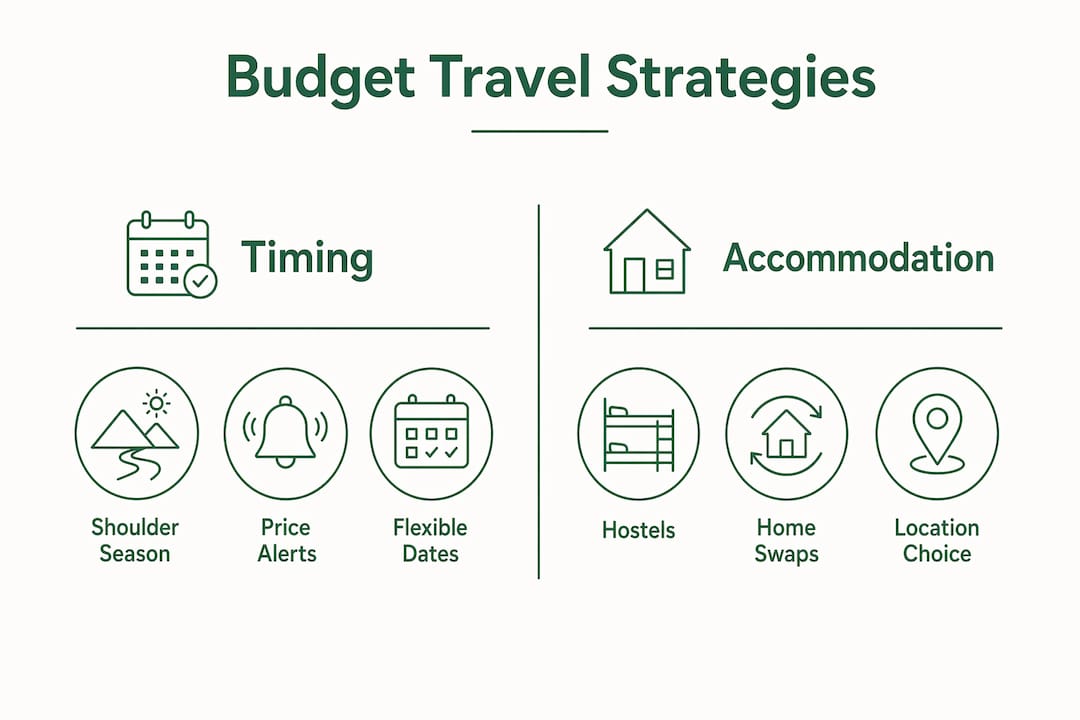
Timing is the single highest-leverage variable in affordable travel. Shoulder season travel in Europe reduces hostel prices by 20 to 40% and airfare by up to 35% compared to summer peak. That is not a marginal saving. On a three-week trip, it can mean the difference between affording the trip at all or not.
 Hands laying out travel tickets and calendar
Shoulder seasons in Europe run from late April to mid-May and from mid-September to mid-October. You get most of the experience with a fraction of the crowds and cost. Off-season travel goes further, but comes with real tradeoffs: shorter daylight hours, some attractions closed, and weather that may not suit your plans. For most travelers, shoulder season is the sweet spot.
Day-of-week timing matters too, and most people ignore it:
- Flights: Tuesday and Wednesday departures consistently price lower than Friday or Sunday.
- Accommodation: Weeknight rates at hostels and guesthouses often run 15 to 25% below weekend rates.
- Attractions: Many museums and galleries offer free or reduced entry on specific weekdays. The Louvre in Paris is free on the first Friday evening of each month for visitors under 26.
- Restaurants: Lunch menus at sit-down restaurants frequently cost 30 to 40% less than the same dishes at dinner.
Pro Tip: Set a Google Flights price alert for your target route at least 60 days out. Fares for budget destinations like Lisbon, Tbilisi, and Chiang Mai fluctuate significantly week to week, and alerts catch drops you would otherwise miss.
What accommodation strategies maximize savings without sacrificing experience?
Accommodation is where most budget travelers either win or lose their trip budget. The key insight from experienced travelers is that stacking accommodation types across a trip, rather than relying on one option, reduces average spend by roughly 40%. A week in a hostel dorm, followed by a few nights of Couchsurfing, followed by a home swap, produces a very different total cost than booking the same hostel for the entire stay.
Here is how the main options compare:
| Option | Average cost | Best for | Watch out for |
|---|---|---|---|
| Hostel dorm | $10 to $30/night | Solo travelers, social connections | Noise, limited privacy |
| Airbnb private room | $40 to $90/night | Couples, longer stays | Cleaning fees inflate short stays |
| Couchsurfing | Free | Cultural immersion, flexibility | Requires reciprocity and trust |
| House sitting | Free | Pet lovers, longer stays | Requires advance planning |
| Home swapping | Free | Homeowners, families | Requires your own property |
TrustedHousesitters has over 280,000 members and can save users $700 or more per week in hotel costs. Workaway offers a similar model through work exchanges, where a few hours of daily tasks cover your accommodation and sometimes meals. Neither option suits every traveler, but both are legitimate and widely used.
Location matters as much as price. Poorly located accommodation is a classic false economy: saving $20 on lodging can cost $30 or more in added daily transport and lost time. Always calculate total cost including transit before booking.
Pro Tip: Check out the hotel alternatives guide on Swappahome's blog for a detailed breakdown of lodging options that go well beyond the standard booking sites.
How can travelers manage transportation and daily expenses effectively?
Transport and daily spending are where budgets quietly bleed out. The fix is not dramatic. It is consistent attention to a handful of decisions that compound over a two-week trip.
For getting around in-destination, public transit beats taxis and rideshares on cost every time. In cities like Bangkok, Budapest, and Mexico City, a day pass for public transit costs under $5 and covers unlimited travel. Tourist transit passes in cities like Rome or Prague often include museum discounts bundled in, making them better value than they appear at face value.
For meals, the hierarchy is simple:
- Cook your own food when your accommodation has a kitchen. Markets in most cities sell fresh produce cheaply, and cooking even two meals a day cuts food costs by 50% or more.
- Street food and local markets deliver the best value and often the most authentic eating. In Vietnam, a full bowl of pho costs under $2. In Mexico, tacos from a street stall run $0.50 to $1 each.
- Sit-down restaurants at lunch rather than dinner. The food is identical; the price is not.
Hidden fees are the silent budget killers. Checked baggage on budget carriers like Ryanair or Spirit Airlines can add $40 to $60 per flight if not booked in advance. International roaming charges on a standard phone plan can run $10 to $15 per day. A local SIM card or an eSIM through providers like Airalo costs a fraction of that for the same data.
Free walking tours operate in almost every major city, from Berlin to Buenos Aires. They run on tips, so you pay what the experience is worth. They also connect you with local guides who know the city's best cheap eating spots, which is information no travel app replicates.
Pro Tip: Use a travel spending tracker from day one of your trip. Reviewing your daily spend each evening takes five minutes and prevents the slow budget creep that catches most travelers by week two.
What budgeting and financial planning tactics ensure stress-free affordable travel?
Financial planning is the part most travelers skip until something goes wrong. Experts recommend building a 10 to 15% buffer into every trip budget for unplanned expenses. That buffer is not pessimism. It is the difference between a delayed flight being an inconvenience and a financial crisis.
Here is a practical planning sequence for any trip in 2026:
- Set a total trip budget before researching anything. Work backward from what you can actually spend, not forward from what you want to do.
- Allocate by category. A workable split for most budget travelers: 35% flights, 30% accommodation, 20% food and transport, 15% activities and buffer.
- Identify your highest-cost line items and attack those first. Booking flights six to eight weeks out and using shoulder season dates typically produces the biggest single savings.
- Apply for a no-foreign-transaction-fee travel credit card if you do not already have one. Cards like the Chase Sapphire Preferred or Capital One Venture eliminate the 2 to 3% fee that standard cards charge on every overseas purchase.
- Redeem points for flights and hotels, not gift cards. Strategic point redemptions on major travel expenses yield significantly better value than low-value redemptions. A business class flight on points that would cost $3,000 in cash is a better redemption than $200 in retail gift cards.
- Never carry high-interest credit card debt into a trip. Debt interest rates of 35 to 46% annually can increase the effective cost of travel by 20 to 30%, wiping out every saving you worked to achieve.
Pro Tip: Use the travel budget checklist on Swappahome's blog to map your full trip cost before you book. It covers categories most travelers forget, including visa fees, travel insurance, and airport transfers.
How to balance budget savings with authentic cultural immersion?
The most experienced budget travelers do not just cut costs. They redirect spending toward experiences that actually matter and cut ruthlessly on everything else. That distinction is what separates a genuinely good trip from one that felt cheap in the wrong ways.
Slow travel is the most underrated money-saving strategy available. Staying in one city or region for two to three weeks instead of hopping between five destinations cuts transport costs dramatically, often qualifies you for weekly accommodation rates, and gives you time to find the local spots that tourists on three-day itineraries never discover.
A few principles that hold up across destinations:
- Volunteer and work exchange programs through platforms like Workaway or WWOOF place you with local families or projects in exchange for a few hours of daily work. Accommodation and meals are typically covered. The cultural access is unmatched by any hotel stay.
- Avoid the tourist tax. Restaurants within 200 meters of a major landmark charge a premium that has nothing to do with food quality. Walk two streets further and prices drop by 30 to 50%.
- Spend on experiences, not things. A cooking class in Chiang Mai, a flamenco show in Seville, or a guided hike in Patagonia costs money but creates the memories that justify the trip. Souvenir shopping rarely does.
- Budget for one meaningful splurge per destination. A single well-chosen upgrade, whether a nicer dinner, a private tour, or a night in a standout guesthouse, raises the quality of the whole trip without breaking the budget.
Creative resourcefulness rather than pure cost-cutting defines budget travel success in 2026. The travelers who come home with the best stories are not the ones who spent the least. They are the ones who spent wisely.
Key takeaways
Effective budget travel in 2026 requires stacking timing, accommodation, and financial tactics together rather than relying on any single saving strategy.
| Point | Details |
|---|---|
| Timing drives the biggest savings | Shoulder season travel cuts airfare by up to 35% and hostel costs by 20 to 40%. |
| Stack accommodation types | Mixing hostels, home swaps, and house sitting reduces average accommodation spend by roughly 40%. |
| Build a financial buffer | Include a 10 to 15% unplanned expense buffer in every trip budget to avoid debt. |
| Redeem points strategically | Use rewards points for flights and hotels, not low-value options like gift cards. |
| Slow travel cuts costs and deepens experience | Staying longer in fewer places lowers transport costs and unlocks local pricing. |
Why I think most budget travel advice misses the point
I have watched the budget travel conversation shift significantly over the past few years, and the 2026 version of it is sharper than it used to be. The old advice, book the cheapest flight, stay in the cheapest hostel, eat only street food, was never really a strategy. It was a list of individual decisions with no connective tissue.
What actually works is thinking about your trip as a system. Inflation has made this more obvious because costs are no longer moving uniformly. Flights to some destinations are cheaper than they were three years ago. Accommodation in popular cities is significantly more expensive. That unevenness rewards travelers who focus on high-impact categories early and stay flexible on everything else.
The false economy trap is the one I see most often. Someone saves $25 a night on accommodation by staying far from the center, then spends $20 a day on taxis to get anywhere worth going. The math never works out, and the trip feels worse. Location is not a luxury. It is a budget decision.
Home swapping changed how I think about accommodation entirely. When your lodging costs zero, the entire budget conversation shifts. You stop optimizing around the biggest line item and start spending on the things that make travel worth doing. That is the version of budget travel I find most interesting to talk about, and it is the one I think more travelers should explore.
— Swappa
How Swappahome makes budget travel smarter in 2026
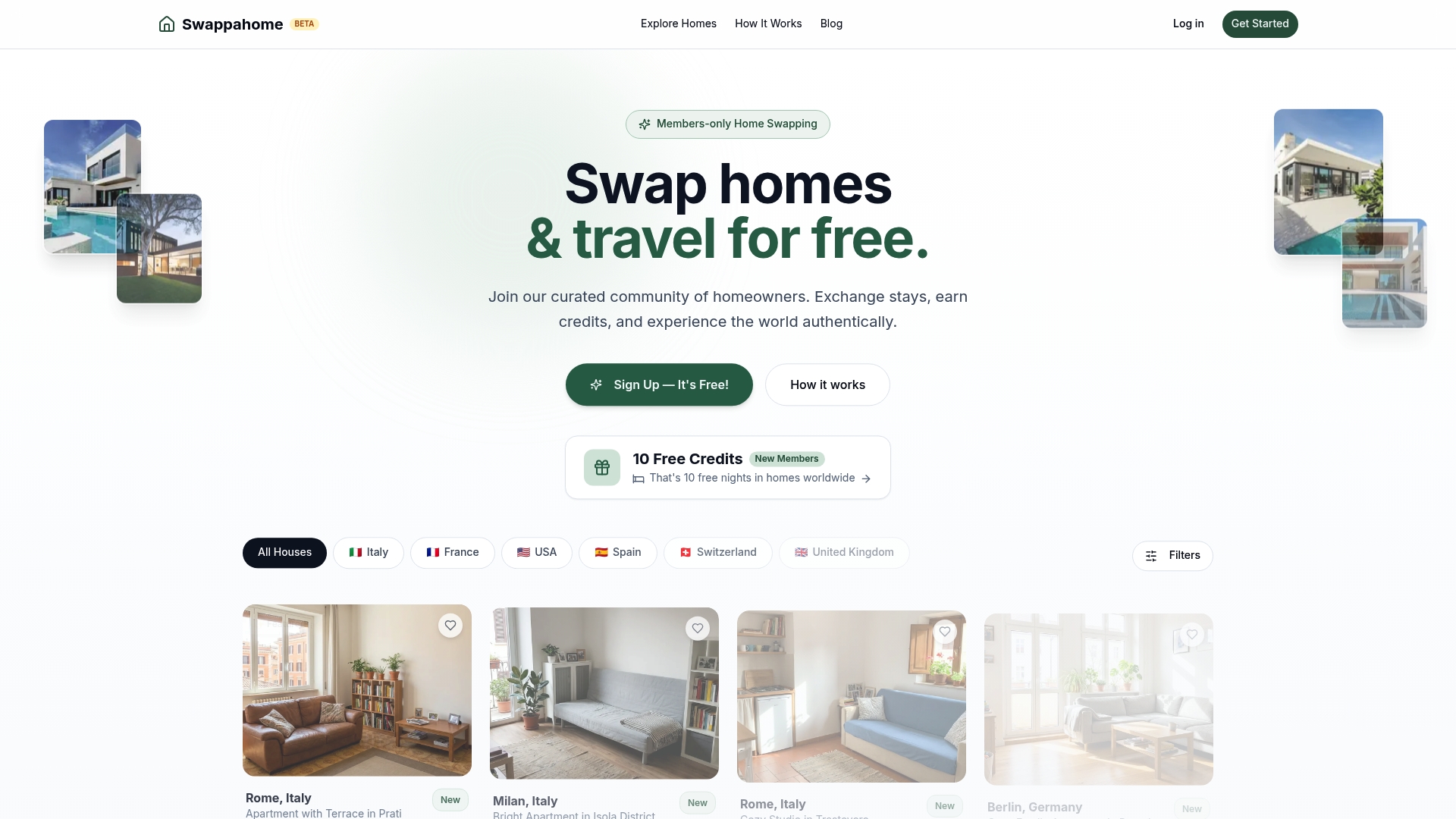
Accommodation is the biggest controllable cost in any trip budget, and Swappahome eliminates it entirely. As a members-only home swapping platform, Swappahome connects verified homeowners globally through a simple credit system: one credit equals one free night. You list your home, earn credits when other members stay, and use those credits to stay in homes across dozens of countries at no cost.
 https://swappahome.com
New members receive free starter credits, so you can book your first stay before hosting anyone. Browse verified home listings across Europe, Asia, the Americas, and beyond to find your next base. For travelers who want authentic local stays without the accommodation bill, Swappahome is the most direct path to making that happen. Explore the platform and see how far your home can take you.
FAQ
What is the most effective budget travel strategy for 2026?
Stacking multiple cost-saving tactics simultaneously produces the best results. Combining shoulder season timing, mixed accommodation types, and strategic points redemptions can reduce daily travel costs to $20 to $45 in many destinations.
When is the best time to travel to Europe on a budget?
Late April to mid-May and mid-September to mid-October are the optimal shoulder seasons. Airfare drops by up to 35% and hostel prices fall 20 to 40% compared to summer peak periods.
How much buffer should I include in a travel budget?
Experts recommend a 10 to 15% buffer above your estimated total trip cost. This covers unplanned expenses like medical costs, missed connections, or price increases without forcing you into high-interest debt.
Is home swapping a realistic option for budget travelers?
Home swapping is one of the most effective ways to eliminate accommodation costs entirely. Platforms like Swappahome use a credit-based system that lets verified homeowners exchange stays globally without any monetary transaction.
How do I avoid false economies when planning a budget trip?
Calculate the total cost of each accommodation option including daily transport to and from key areas. Saving $20 per night on a poorly located property often costs more in transit fees and time than the saving is worth.
Recommended

Published by
SwappaHome
SwappaHome Editorial Team
Home Exchange & Slow Travel Editorial
The SwappaHome Editorial Team brings together travel research, home-exchange community insights, and platform data to produce practical guides for first-time and experienced home swappers. Every article cites real platforms, current market rates, and verifiable city-level facts so readers can make informed decisions without guessing.
Ready to try home swapping?
Join SwappaHome and start traveling by exchanging homes. Get 7 free credits when you sign up!