
Budget travel trends 2026: save big on accommodations

SwappaHome Editorial Team
Home Exchange & Slow Travel Editorial
Budget travel trends 2026: save big on accommodations !Traveler searching alternative lodging options > TL;DR: > > - Alternative accommodations like...
Budget travel trends 2026: save big on accommodations
 Traveler searching alternative lodging options
TL;DR:
- Alternative accommodations like home swapping, house-sitting, and co-living offer significant cost savings and cultural immersion.
- Homeowners can generate income through short-term rentals and tiny homes, with yields up to 12 percent annually.
- Travelers are adopting slow travel and diversified strategies, blending platforms for flexibility and maximizing savings.
Travelers who stick to traditional hotels in 2026 are leaving thousands of dollars on the table. A quiet revolution in alternative accommodations, from home swapping to co-living to house-sitting, is reshaping how people experience the world. Homeowners and budget travelers now have access to a powerful toolkit of options that deliver genuine cultural immersion alongside dramatic cost savings. This guide breaks down the biggest accommodation trends of 2026, showing you exactly how to cut costs without cutting corners on experience.
Table of Contents
- Alternative lodging on the rise: home swapping, house-sitting, and co-living
- Short-term rentals and tiny homes: a boon for homeowners
- Slow travel and extended stays: savings and deep dives
- Premium versus budget trends: AI personalization and authenticity
- What most travelers and homeowners miss about 2026's trends
- Discover your next travel adventure with Swappahome
- Frequently asked questions
Key Takeaways
| Point | Details |
|---|---|
| Alternative lodging dominates | Home swapping, house-sitting, and co-living are now mainstream for cost-effective, immersive travel. |
| Homeowners benefit financially | Short-term rentals and tiny homes offer lucrative side income for property owners willing to host. |
| Longer stays cut costs | Slow travel and monthly rates provide deep discounts and richer, more local experiences. |
| Tech shapes premium stays | High-end accommodations rely on AI personalization, while budget travelers seek authenticity and simplicity. |
| Mixing strategies pays off | Combining different platforms and approaches maximizes both savings and experience quality in 2026. |
Alternative lodging on the rise: home swapping, house-sitting, and co-living
With the outdated notion of high accommodation costs fading, let's look at how alternative lodging solutions are reshaping travel in 2026. Three models are leading the charge: home swapping, house-sitting, and co-living. Each one solves the same problem, paying too much for a place to sleep, but in its own distinct way.
Home swapping lets you trade your property with another homeowner, so both parties get free accommodation. House-sitting means caring for someone's home (and often their pets) while they travel, in exchange for free lodging. Co-living spaces offer shared housing with flexible leases, usually month-to-month, targeting digital nomads and slow travelers.
These aren't fringe options anymore. House-sitting sits over 29 days are up 110% since 2022, and TrustedHousesitters alone now has over 260,000 members. Active users of these platforms report saving between $15,000 and $25,000 annually on accommodation costs alone. Those are life-changing numbers.
Here's a quick comparison of the three main alternative lodging types:
| Lodging Type | Typical Cost | Best For | Key Requirement |
|---|---|---|---|
| Home swapping | $0 (credits only) | Homeowners, families | Owning a property |
| House-sitting | $0 (platform fee) | Flexible travelers | Reliability, pet care |
| Co-living | $500–$2,000/month | Digital nomads | Monthly commitment |
House-sitting assignments typically include responsibilities like watering plants, collecting mail, and caring for pets. The trade-off is real: you're not just a guest, you're a temporary caretaker. Most platforms, like those covered in our roundup of budget travel exchange services, vet both homeowners and sitters carefully.
Key benefits of alternative lodging:
- Zero or near-zero accommodation costs
- Authentic neighborhood living instead of tourist zones
- Flexibility for extended or slow travel
- Built-in community and cultural exchange
- Access to full kitchens, private spaces, and local insider knowledge
For the most thorough comparison of what's available, check out affordable home swap options to see how platforms stack up on features, fees, and global reach.
Pro Tip: Don't rely on a single platform. Signing up for two or three house-sitting or swapping services increases your chances of landing the right assignment. Budget $200–$400 per year for platform memberships, and treat it as an investment, not an expense. The house-sitting trends show that multi-platform users consistently land more opportunities than single-platform subscribers.
Short-term rentals and tiny homes: a boon for homeowners
While alternative lodging grows for travelers, homeowners are also tapping into new ways to profit from the accommodation revolution. Short-term rentals (STRs) and tiny homes have emerged as two of the most practical income tools available to property owners today.
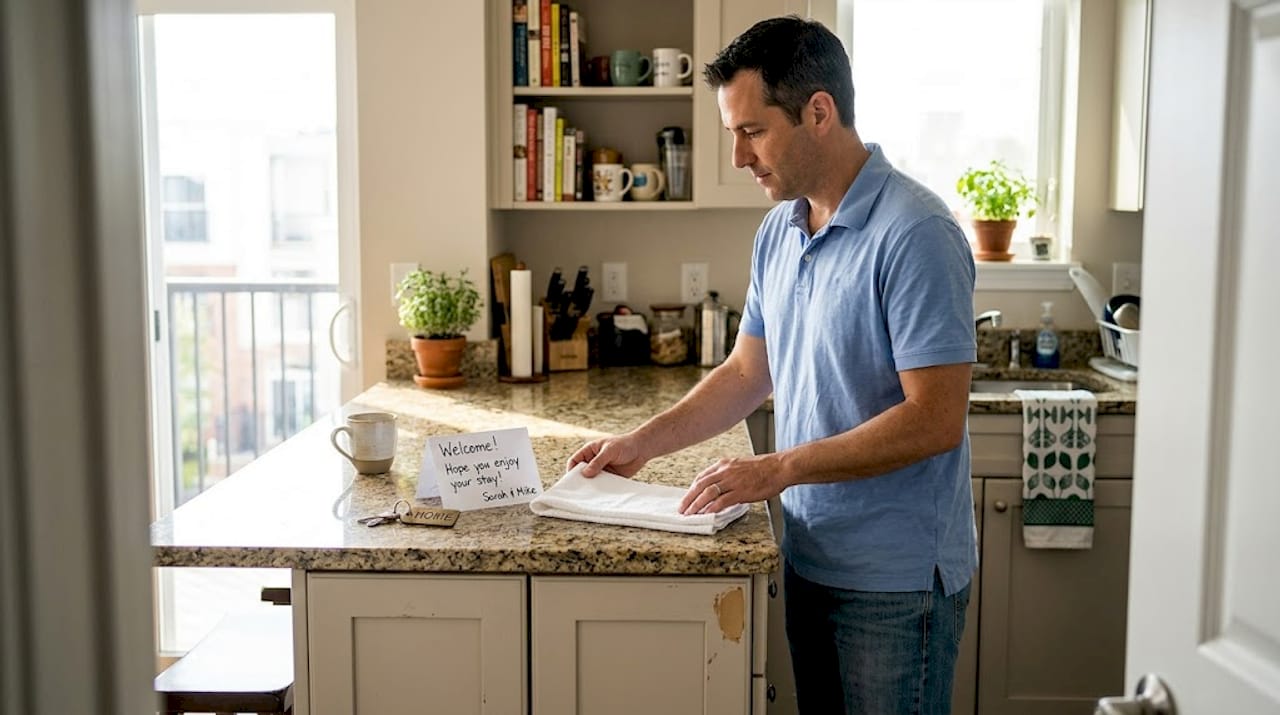 Homeowner preparing short-term rental condo
STRs let you list your home on platforms like Airbnb or Vrbo while you travel. The math is straightforward: your home earns income while you stay for free somewhere else through a swap or house-sit. Tiny homes cost $45,000–$100,000 to build and rent for $100–$300 per night, with typical STR net yields hitting 6–12% or higher annually.
Here's a side-by-side look at how different homeowner strategies compare:
| Strategy | Upfront Cost | Monthly Income Potential | Vacancy Risk |
|---|---|---|---|
| STR (main home) | Low (furnishing) | $1,400–$2,800 | Medium |
| Tiny home rental | $45k–$100k | $2,000–$6,000 | Low–Medium |
| Long-term rental | Low | $800–$1,800 | Very Low |
| Home swap (credits) | Platform fee only | Free travel nights | None |
Monthly rental pricing on Airbnb brings 30–40% discounts compared to nightly rates, which attracts long-term guests and reduces the risk of empty nights. A property sitting vacant for a week every month can eat into your margins fast. Offering monthly rates fills gaps and builds relationships with reliable guests.
For homeowners new to this space, the sharing economy travel model offers real-world inspiration from people who've turned their properties into travel-funding machines.
Here's a simple step-by-step to get started listing your tiny home or property:
- Calculate your true costs: mortgage, insurance, utilities, and platform fees.
- Research your local STR regulations (many cities require permits).
- Stage and photograph your space professionally.
- Set competitive pricing using platform analytics tools.
- Offer a monthly discount of at least 25% to attract longer stays.
- Automate guest communication with templates and smart locks.
Pro Tip: In small spaces, every design choice matters. Prioritize multi-use furniture, good lighting, and fast WiFi. Guests in tiny homes consistently rate ambiance and functionality higher than size, so a thoughtfully designed 300-square-foot space will outperform a cluttered 600-square-foot one.
Slow travel and extended stays: savings and deep dives
Just as flexibility opens doors for homeowners, travelers are embracing longer, slower trips for even greater value. Slow travel isn't a compromise. It's a strategy. Instead of racing through five cities in two weeks, slow travelers pick one or two destinations and actually live there for a month or more.
The cost advantages are significant. Extended-stay motels run $1,200–$2,500/month, while monthly Airbnb rates drop 30–40% below nightly equivalents. House-sitting platform fees range from just $29–$259 per year, making them an almost negligible expense relative to what you save.
"House-sitting delivers zero accommodation costs for the stay itself, with only a small annual platform fee standing between a traveler and months of free lodging."
Here's how the numbers break down across common slow travel options:
| Accommodation Type | Monthly Cost (USD) | Annual Platform Fee | Best For |
|---|---|---|---|
| House-sitting | $0 | $29–$259 | Flexible, pet-friendly travelers |
| Extended-stay motel | $1,200–$2,500 | None | Comfort seekers, families |
| Monthly Airbnb | $1,400–$2,800 | None | Mid-range budget travelers |
| Home swap (credits) | $0 | Platform fee | Homeowners with properties |
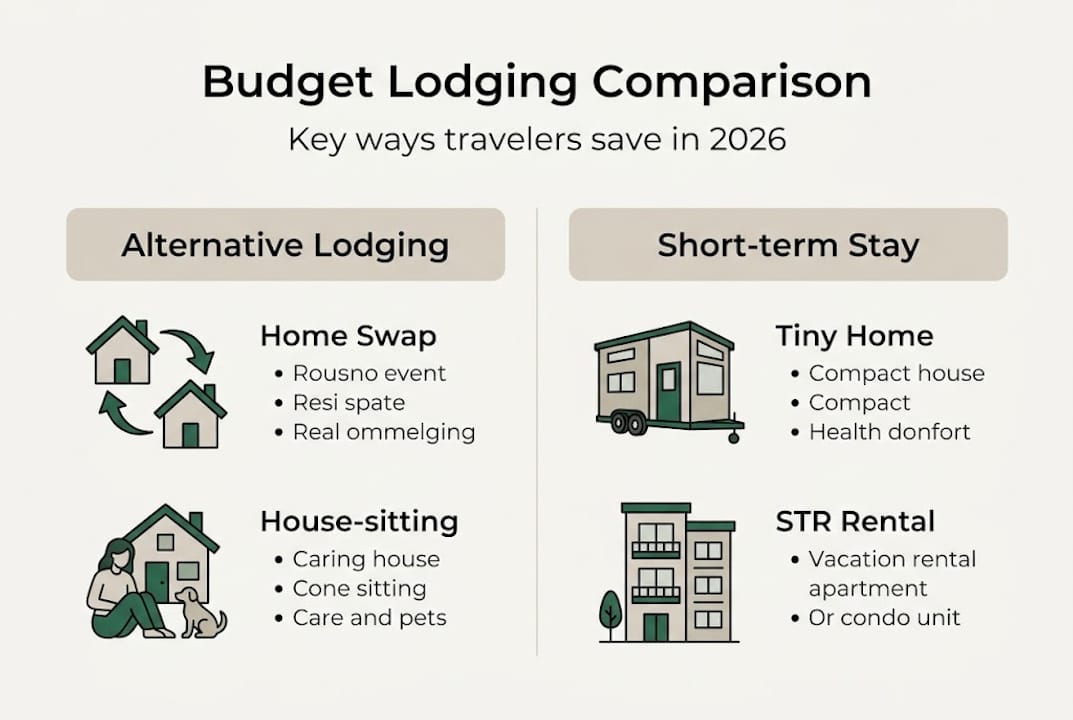 Infographic comparing budget lodging options
Slow travel also pairs naturally with affordable global travel strategies, since being location-flexible dramatically expands the pool of available swaps and sits.
Top platforms for maximizing slow travel value:
- TrustedHousesitters: largest house-sitting network globally
- Swappahome: credit-based home exchange for verified homeowners
- Workaway: volunteer-based accommodation exchange
- Airbnb (monthly mode): discounted long stays with full amenities
- VRBO: often better for family-sized extended stays
One underrated angle: slow travel reduces costs beyond accommodation. Staying longer means cooking more meals, building local routines, and skipping tourist-priced restaurants. When you compare rental versus home swapping, the total savings picture becomes even clearer. According to 2026 travel trends, the appetite for slower, more intentional travel continues to rise sharply among all age groups.
Premium versus budget trends: AI personalization and authenticity
While slow travel and alternative models transform the average trip, the premium segment is marching toward a different future. The travel market in 2026 is splitting into two clear camps, and understanding where you fall can help you make smarter decisions.
Luxury accommodations are leaning hard into technology. AI-driven personalization, digital concierge services, agentic booking tools, and what the industry calls "hushpitality" (ultra-private, ultra-curated stays) define the high end of the market. Guests at premium properties can expect rooms pre-configured to their sleep preferences, dietary needs, and activity history.
Budget travelers, by contrast, are moving in the opposite direction. Authenticity, cultural exchange, and simplicity are the new premium for this group. Many are actively rejecting "decision fatigue," the overwhelm of too many options, in favor of community-driven platforms where the experience feels real rather than manufactured.
| Factor | Premium Travelers | Budget Travelers |
|---|---|---|
| Main priority | AI personalization, privacy | Cultural immersion, community |
| Accommodation type | Boutique hotels, luxury resorts | Home swaps, house-sits, co-living |
| Booking method | App-based, AI-curated | Platform communities, word-of-mouth |
| Cost sensitivity | Low | High |
| Experience goal | Seamless comfort | Authentic connection |
Tech features shaping luxury stays in 2026:
- Agentic AI that books travel end-to-end without manual input
- Biometric room preferences (temperature, lighting, sound)
- Digital concierge with real-time local recommendations
- Hotel personalization tools that remember guests across stays
For budget travelers, the best home swapping networks offer a counter-narrative: trust-based community, real homes, and stays that feel lived-in rather than polished. Both ends of the market are responding to the same core need, to feel known and valued as a traveler. They're just doing it in very different ways.
What most travelers and homeowners miss about 2026's trends
Now that we've seen how both high-tech and high-authenticity shape travel, here's the honest reality: no single model works perfectly for everyone, and the people who get the best results are almost always blending strategies.
The most successful budget travelers we've seen mix house-sitting for longer stays, home swapping for prime-location visits, and short-term rentals to offset costs at home. Relying entirely on one platform or one method leaves you exposed when competition is high or a last-minute cancellation throws off your plans.
The hidden challenges are real too. House-sitting markets in popular destinations like Lisbon, Bali, or Costa Rica are genuinely competitive. Some platforms have steep learning curves. Local regulations around STRs change frequently and vary city by city.
But here's what most people overlook: timing and flexibility are worth more than any single platform feature. Travelers who book accommodations three to six months early, stay alert to new platform promotions, and maintain flexible dates consistently land better deals and more desirable assignments. Understanding how travel network strategies work behind the scenes gives you a genuine edge over people who approach these platforms casually.
Pro Tip: Treat your accommodation strategy like a portfolio. Diversify your platforms, stay flexible on dates, and never count on a single booking until it's confirmed.
Discover your next travel adventure with Swappahome
Ready to experience these trends for yourself? Here's how you can take the next step.
Every model we've covered, home swapping, slow travel, credit-based stays, comes together on Swappahome. It's built specifically for homeowners who want to turn their property into a passport. You list your home, earn credits when you host, and use those credits to browse available homes across verified properties worldwide.
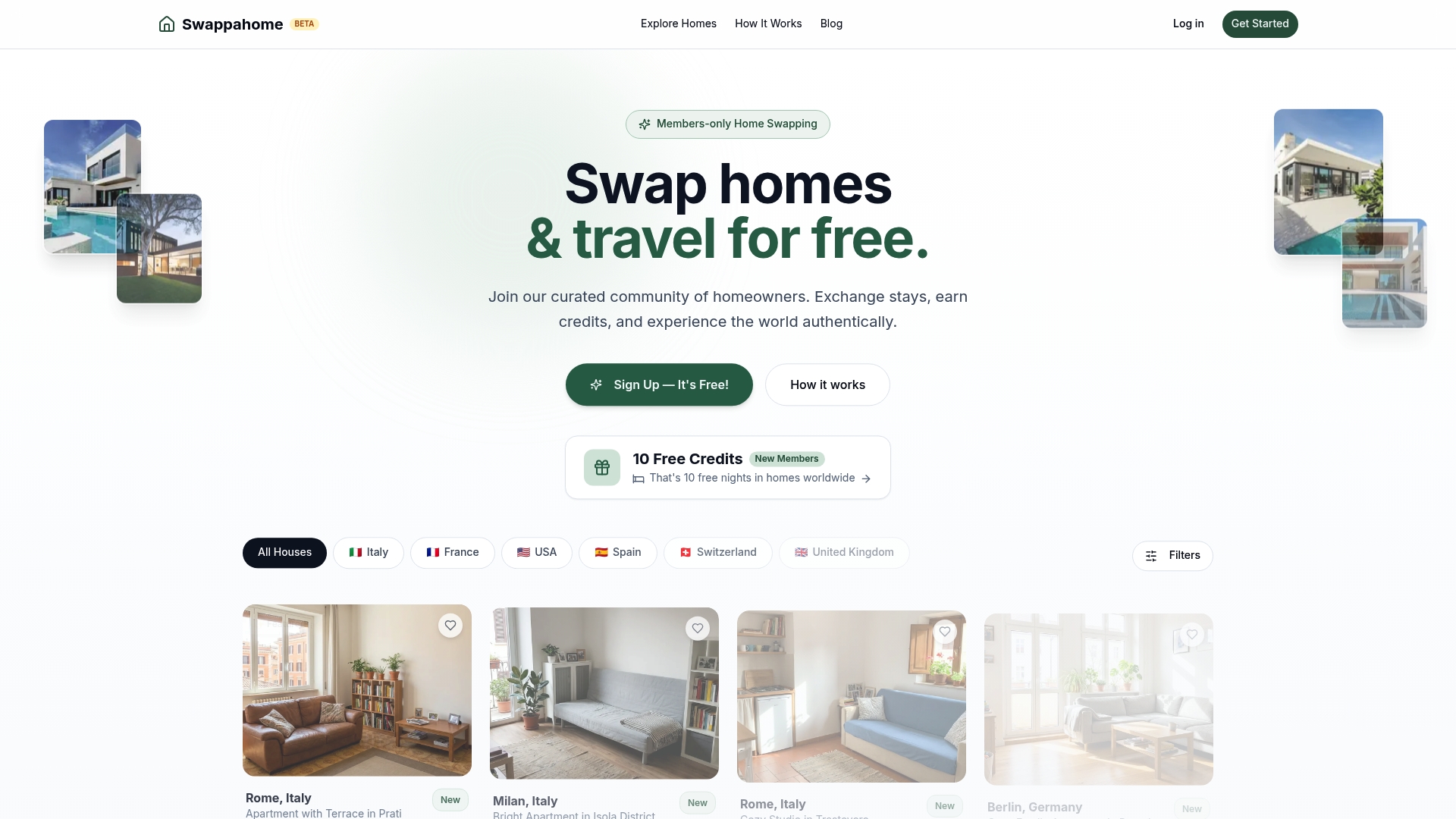 https://swappahome.com
New members receive free starter credits, which means your first trip could cost nothing beyond the membership fee. If you're ready to stop paying hotel prices and start traveling the way locals do, join Swappahome and see what's waiting for you. The homes are real, the community is vetted, and the savings speak for themselves.
Frequently asked questions
How much can I really save with house-sitting or home swapping in 2026?
Dedicated house-sitters and swappers typically report annual savings between $15,000 and $25,000 on accommodation alone. The exact figure depends on destination, frequency of travel, and how actively you use the platform.
Are short-term rentals or tiny homes profitable for homeowners in 2026?
Short-term rentals and tiny homes can deliver net yields of 6–12%+ annually, with tiny homes renting for $100–$300 per night. Profitability depends heavily on location, occupancy rates, and how well the space is designed and marketed.
Which platforms are best for budget travelers seeking alternative accommodations?
TrustedHousesitters, Swappahome, and co-living networks are the top picks for 2026. TrustedHousesitters has 260,000+ members and leads the house-sitting category by volume.
What's the main difference between emerging premium and budget accommodation trends?
Premium accommodations are focused on AI-driven personalization and seamless technology, while budget travel trends center on authenticity, community, and cultural exchange over convenience.
Recommended

Published by
SwappaHome
SwappaHome Editorial Team
Home Exchange & Slow Travel Editorial
The SwappaHome Editorial Team brings together travel research, home-exchange community insights, and platform data to produce practical guides for first-time and experienced home swappers. Every article cites real platforms, current market rates, and verifiable city-level facts so readers can make informed decisions without guessing.
Ready to try home swapping?
Join SwappaHome and start traveling by exchanging homes. Get 7 free credits when you sign up!