Cultural exchange checklist: Host and guest success guide

SwappaHome Editorial Team
Home Exchange & Slow Travel Editorial
Cultural exchange checklist: Host and guest success guide !Host and guest chatting at kitchen table > TL;DR: > > - Home swapping offers affordable...
Cultural exchange checklist: Host and guest success guide
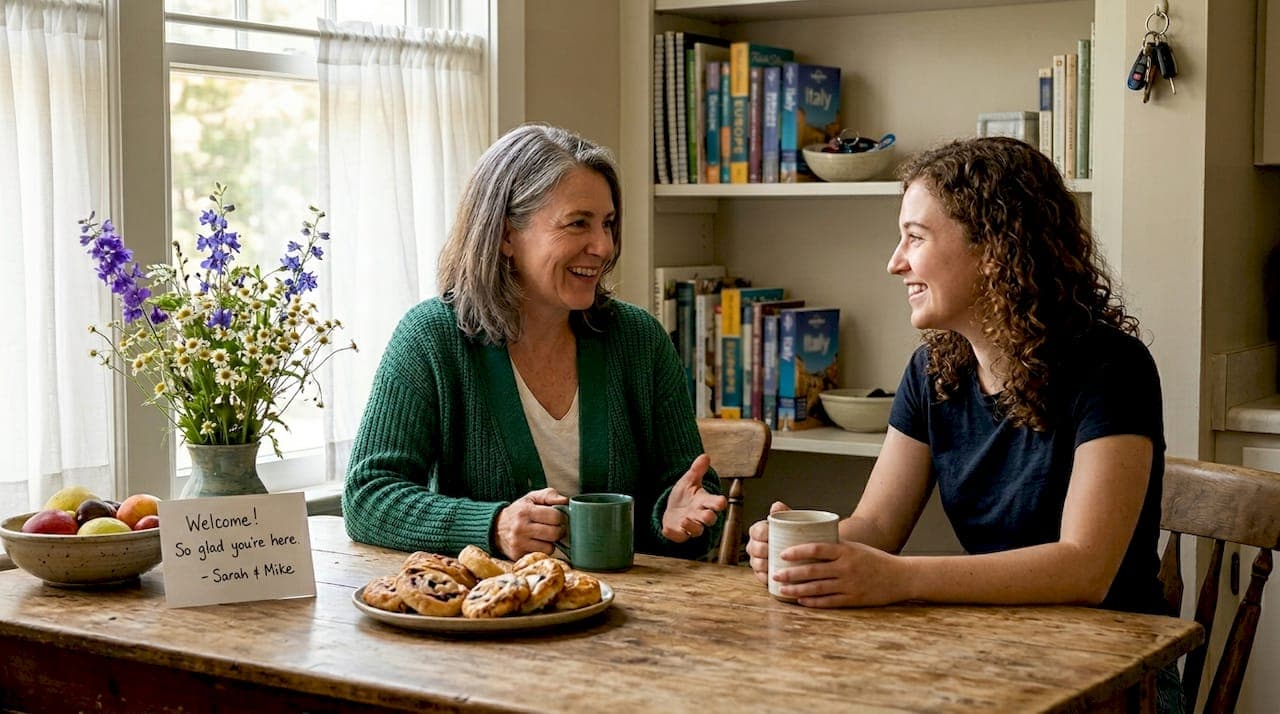
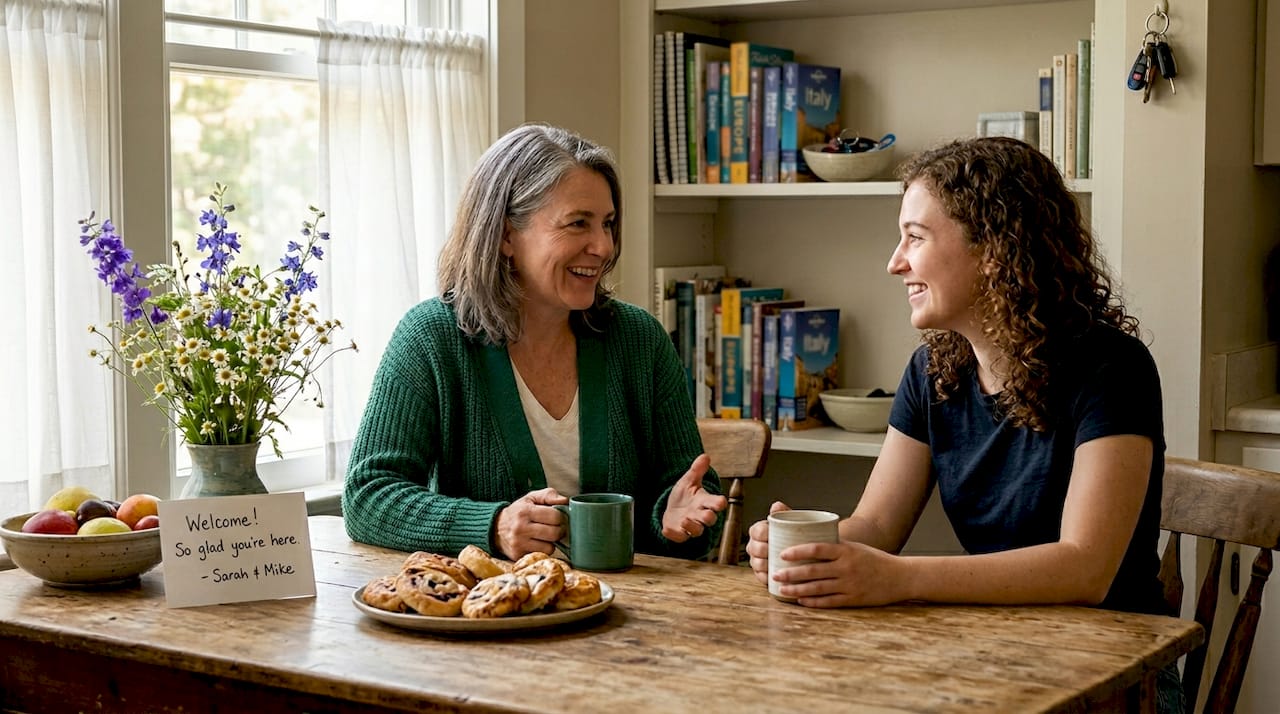 Host and guest chatting at kitchen table
TL;DR:
- Home swapping offers affordable travel opportunities that foster authentic cultural exchanges and meaningful connections. Success depends on thorough preparation, clear communication, mutual respect, and responsible platform use to ensure safety and trust. Respecting boundaries and offering invitations rather than obligations create a welcoming environment where guests can freely observe, participate, or withdraw.
Home swapping is one of the most affordable ways to travel, but the real value isn't just free accommodation. It's the chance to live like a local, share your own traditions, and build genuine connections with people from completely different backgrounds. Most first-time swappers focus almost entirely on logistics: cleaning the house, exchanging keys, writing up a welcome note. What they miss is the human side of the exchange, which is where the real magic happens and where most swaps either succeed or fall flat.
Table of Contents
- What makes a great cultural exchange?
- Essential checklist for host preparation
- Host and guest responsibilities: Setting expectations
- Safety, trust, and using the right platform
- The overlooked art: Invitation, not obligation
- Ready for your own cultural exchange?
- Frequently asked questions
Key Takeaways
| Point | Details |
|---|---|
| Clear expectations | Setting rules and open communication ensures a stress-free and friendly home exchange. |
| Thorough preparation | A decluttered, safe, and welcoming home sets the foundation for memorable exchanges. |
| Mutual respect | Both hosts and guests should honor boundaries and invite, not oblige, participation in customs. |
| Safety first | Vetted platforms, references, and emergency planning are essential for trust and peace of mind. |
What makes a great cultural exchange?
Cultural exchange, in the context of home swapping, means more than simply letting someone sleep in your guest room while you sleep in theirs. It's an intentional process of sharing, learning, and mutual respect. The difference between a forgettable swap and a transformative one usually comes down to preparation and attitude on both sides.
According to AYUSA guidance, the best approach is to treat guests as part of the family: share your customs in respectful, low-pressure ways and provide crystal-clear expectations around things like curfew, shared chores, and communication guidelines. These principles apply directly to home swapping, even when the arrangement is temporary.
Here's what authentic exchange actually looks like in practice:
- Set expectations in writing before arrival. Share house rules, routines, and any household quirks (like the trick to getting the shower pressure right).
- Invite, never pressure. If you're cooking a traditional meal or planning a local outing, extend the invitation warmly but make it clear that participation is optional.
- Respect cultural differences around food, religion, and social customs. What feels normal to you might feel intrusive to someone from a different background.
- Create space for observation. Some guests prefer to watch and absorb rather than dive in immediately. That's a perfectly valid form of cultural learning.
- Communicate openly about daily schedules. Knowing when common spaces will be in use prevents awkward run-ins and builds a sense of shared respect.
"The goal isn't to turn your home into a museum of your culture, but to make your guest feel welcome enough to ask questions and share their own."
Pro Tip: Before your guest arrives, write a short personal letter (one page is plenty) that introduces your household, mentions a few local favorites, and extends a genuine invitation to share a meal or an outing. It sets the tone immediately.
Exploring cultural exchange travel steps can give you a structured approach to planning the human side of your swap before you even pack a bag.
Essential checklist for host preparation
With a clear understanding of what authentic exchange means, here's how to get your home ready for a rewarding experience. Preparation isn't about creating a hotel-like environment. It's about making space, literally and figuratively, for someone else to feel at home.
Standard host preparation benchmarks for home swaps include decluttering storage areas for guest use, deep-cleaning the entire home, verifying that all appliances work correctly, securing personal valuables, and checking smoke alarms, security systems, and outdoor hazard-free areas. Think of this list as your non-negotiable baseline before any swap goes ahead.
Here is a step-by-step checklist to work through:
- Declutter and create guest-friendly space. Clear out at least one dresser, a closet section, and bathroom storage so guests have room for their belongings. Nobody wants to live out of a suitcase for two weeks.
- Deep clean the entire home. This includes inside appliances like the microwave and refrigerator, not just the obvious surfaces. A clean home signals respect and sets the right tone.
- Test every appliance and leave clear instructions. The oven with the tricky ignition, the smart TV that needs a specific remote sequence, the thermostat that runs warm. Write it all down. A one-page appliance guide prevents frustration.
- Secure or remove personal valuables and sensitive documents. Lock away or relocate passports, financial paperwork, irreplaceable jewelry, and anything with sentimental value you'd be heartbroken to lose.
- Run through your home's safety checklist. Test smoke alarms and carbon monoxide detectors, note any steps or outdoor areas that could be hazardous, and leave emergency contact numbers clearly posted.
- Prepare a local guide. Include your favorite coffee shop, the nearest grocery store, how public transit works in your area, and any neighborhood tips that don't show up on Google Maps.
Pro Tip: Walk through your home as if you're the guest, not the owner. Pretend you've never been there before. You'll quickly notice things that need a label, a fix, or an explanation.
Detailed home prep for swap hosts advice can help you go beyond the basics, and if safety is a concern, the home swap safety guide is a must-read before you finalize any listing.
Host and guest responsibilities: Setting expectations
Once your home is ready, clear roles and rules ensure the experience runs smoothly for both sides. One of the most common causes of friction in home swaps isn't dishonesty or negligence. It's simply misaligned expectations. Both parties assume the other knows what's expected, and neither one asks.
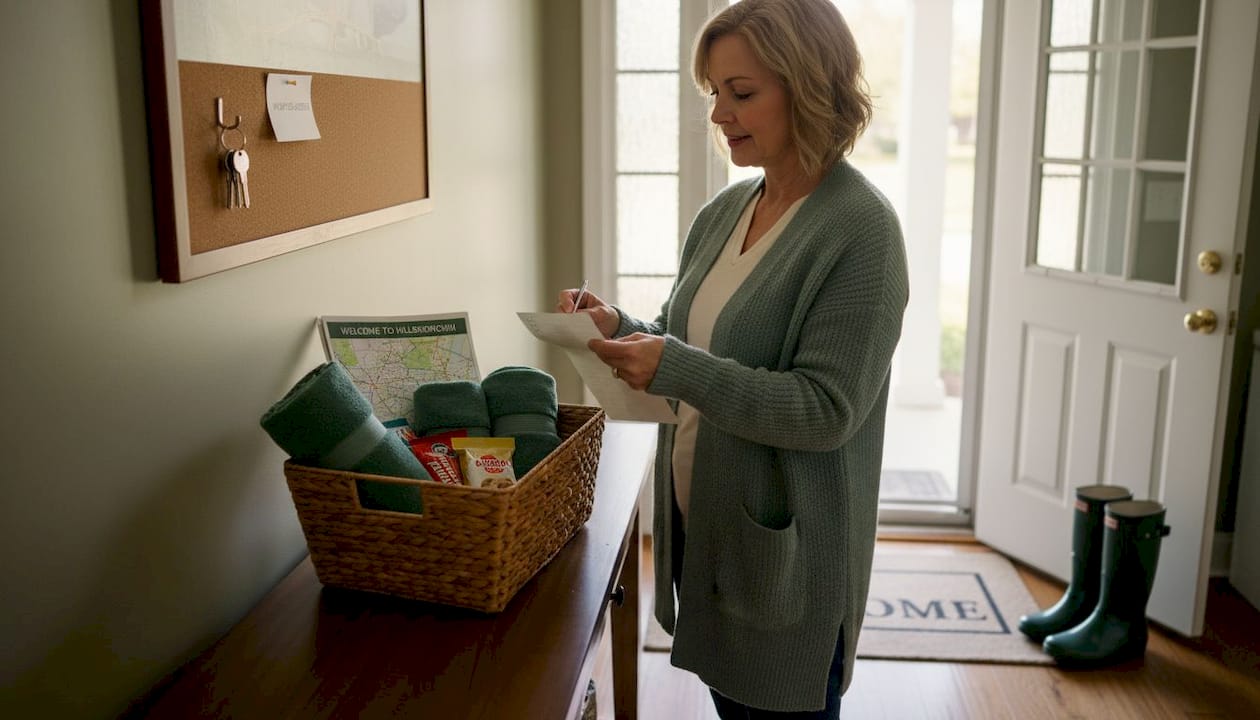 Host preparing welcome basket at entryway
A concrete hosting methodology from the host-family model includes providing room and board with at least three healthy meals per day, ensuring reliable transportation access, and designating a support contact for ongoing assistance and emergency handling. While not every home swap will include meals, the underlying principle holds: you're responsible for setting up a comfortable, supported environment.
Here is a clear breakdown of who should do what:
| Responsibility | Host duties | Guest duties |
|---|---|---|
| Communication | Share house rules before arrival | Confirm understanding of house rules |
| Daily living | Offer guidance on routines and shared spaces | Respect routines and clean up after yourself |
| Meals | Share any food that's available or note restrictions | Ask before using food; offer to contribute |
| Emergencies | Provide local emergency contacts and procedures | Follow emergency procedures as outlined |
| Cultural sharing | Extend invitations to share customs and outings | Engage with openness; decline politely if needed |
| Departure | Confirm checkout details in writing | Leave the home in the condition it was found |
Beyond this table, certain communication essentials apply to every swap. Review the home swap etiquette guide for a deeper look, but the minimum communication checklist includes:
- Emergency contacts: Share your personal cell, a local neighbor's contact, and the nearest hospital or urgent care.
- WiFi credentials: Obvious but often forgotten until the guest is already there.
- Transportation overview: Nearest bus stop, subway, or rideshare habits in your neighborhood.
- Local support: Whether it's a friend, a neighbor, or a platform rep, guests should know who to call if something goes wrong.
The essential swap etiquette tips article breaks down specific behaviors that build goodwill on both sides. And if you want to understand how travel community trust works at a broader level, that's a great place to start.
Safety, trust, and using the right platform
Knowing your shared responsibilities, it's time to ensure everyone's safety and peace of mind by choosing the right tools and practices. Safety in home swapping isn't a luxury concern. It's foundational. No amount of cultural openness or warm hospitality compensates for a situation where you didn't verify who you were letting into your home.
Reliable platform guidance strongly recommends using a professional home swap platform rather than arranging swaps privately, because platforms provide review and reference systems that set clear expectations and give both parties recourse if something goes wrong. Private arrangements feel simpler but leave both sides without any safety net.
Here's a quick reference table for the key security features worth looking for in any home swap platform:
| Security feature | Why it matters |
|---|---|
| Identity verification | Confirms that members are who they say they are |
| Member review system | Creates accountability and a visible track record |
| Emergency support line | Gives you someone to call when things go wrong |
| Insurance or damage coverage | Protects both parties against unexpected costs |
| Dispute resolution process | Ensures issues are handled fairly and quickly |
Beyond the platform itself, your personal safety tips for exchanges checklist should include the following non-negotiables:
- Verify member identity before confirming any swap, using platform tools or a video call.
- Set up a formal agreement that outlines dates, expectations, and any specific conditions for both parties.
- Have an emergency procedure written down and shared with your guest before their arrival.
- Review the member's profile history carefully, including their previous swap reviews and any flags.
- Secure personal and financial data by removing or locking away anything sensitive before check-in.
For homeowners new to the process, the home swap security tips guide walks through exactly what to look for when vetting a potential swap partner. And the swap verification checklist provides a seven-step process to confirm you've done your due diligence before handing over keys.
Pro Tip: Always do a video call with your swap partner before finalizing. It's a fast way to gauge trust, ask questions in real time, and make both parties feel more comfortable with the arrangement.
The overlooked art: Invitation, not obligation
Here's what most guides on cultural exchange don't tell you: more interaction is not always better. There's a pervasive assumption that a successful swap means maximum participation, shared meals every night, outings together, and constant cultural immersion. But that assumption can actually damage the exchange by turning hospitality into pressure.
Homestay etiquette guidance makes an important distinction: guests may observe instead of joining every event, and the most respectful approach is always invitation plus consent, not expectation or pressure. This applies equally to hosts and guests in a home swap setting.
We've seen this play out repeatedly. A host who insists on cooking dinner together every night, even after the guest has signaled they're tired or prefer to be alone, is not being more hospitable. They're being less respectful of the boundary that makes a guest feel safe. The exchange breaks down not through neglect but through over-enthusiasm.
True cultural exchange lives in the small, unforced moments. A guest who notices a photo on the wall and asks about it. A host who offers to share a traditional recipe without making the kitchen feel like a required activity. A shared laugh over something that got lost in translation. These moments can't be scheduled.
What actually works is building an environment where both parties feel free to engage or withdraw without judgment. Hosts should make a point of saying, explicitly, "There's no pressure to join any of this." And guests should feel empowered to explore independently without worrying the host will feel rejected. Reviewing the cultural exchange travel guide can help you build the kind of open, consent-first mindset that makes genuine connection possible.
The most memorable swaps we hear about from our members aren't the ones packed with joint activities. They're the ones where both sides felt respected enough to be themselves.
Ready for your own cultural exchange?
You've explored all the elements of a meaningful, safe, and memorable swap, and now it's your turn to put this knowledge into action.
 https://swappahome.com
At Swappahome, we've built a platform specifically designed for homeowners and travelers who want the real experience of cultural immersion without the cost of hotels or the risk of unverified arrangements. Every member is verified, every listing is reviewed, and our credit-based system means one credit equals one free night anywhere in our global network. New members even receive free credits to get started. Whether you want to host first or explore the world immediately, you can search current home swap listings to find your next destination and start building the kind of travel memories that no hotel stay could ever create.
Frequently asked questions
What is the most important thing for cultural exchange success during a home swap?
Clear communication of house rules, sharing customs respectfully, and an open, inviting attitude are key. Treating guests as part of the family while setting clear expectations from the start creates the foundation for genuine cultural connection.
How do I prepare my home for an international cultural exchange guest?
Declutter space, deep clean, check all appliances and security systems, and leave clear written notes for your guest. Standard preparation benchmarks also include securing personal valuables and verifying that smoke alarms and safety systems are fully functional.
Is it safer to use a home swapping platform than arrange privately?
Yes, platforms provide reviews, references, and support that private arrangements simply can't match. Using a professional platform ensures there's a system in place to set expectations and handle issues if they arise.
What should guests do if they don't want to participate in every family activity?
Guests can politely decline and simply observe; consent and comfort should guide every invitation to join customs or shared activities. No explanation is required, and a respectful host will never make a guest feel obligated.
Recommended
- Step-by-Step Guide to Cultural Exchange Travel Success | SwappaHome Blog
- Home Swap Etiquette Guide for Seamless Stays | SwappaHome Blog
- Travel planning checklist for home swapping homeowners | SwappaHome Blog
- Welcome Package for Guests: Complete Home Exchange Hosting Guide
- Tipping Culture in Vietnam | VietnamTourPackage.sg
- Experiencia cultural india auténtica en Barcelona: guía - Desi Galli

Published by
SwappaHome
SwappaHome Editorial Team
Home Exchange & Slow Travel Editorial
The SwappaHome Editorial Team brings together travel research, home-exchange community insights, and platform data to produce practical guides for first-time and experienced home swappers. Every article cites real platforms, current market rates, and verifiable city-level facts so readers can make informed decisions without guessing.
Ready to try home swapping?
Join SwappaHome and start traveling by exchanging homes. Get 7 free credits when you sign up!