
Difference Between Home Swapping and Airbnb: Real Savings

SwappaHome Editorial Team
Home Exchange & Slow Travel Editorial
Difference Between Home Swapping and Airbnb: Real Savings !Friends comparing home swap and Airbnb options Choosing how to stay during your next...
Difference Between Home Swapping and Airbnb: Real Savings
 Friends comparing home swap and Airbnb options
Choosing how to stay during your next adventure can shape every aspect of your journey. For many American and European homeowners, balancing cost with authentic local experiences is a top priority. Comparing home swapping and Airbnb reveals two distinct models that redefine travel accommodations, offering a mix of financial benefits, community connections, and unique perspectives suited for those ready to trade ordinary hotel stays for something truly engaging.
Table of Contents
- Home Swapping Vs Airbnb: Core Concepts
- How Each Platform Works For Travelers
- Costs, Fees, And Financial Impact
- Authenticity And Guest Experience Compared
- Risks, Requirements, And Legal Implications
Key Takeaways
| Point | Details |
|---|---|
| Home Swapping vs. Airbnb | Home swapping emphasizes cultural exchange and cost savings through mutual accommodation, while Airbnb focuses on commercial profit with direct payment. |
| Financial Impact | Home swapping typically incurs minimal costs with annual membership fees, whereas Airbnb charges per-night rates and additional service fees. |
| Booking Flexibility | Home swapping requires coordinated travel with exchange partners, unlike Airbnb, which allows for more immediate and flexible bookings. |
| Legal Considerations | Home swapping involves fewer legal complexities due to non-monetary exchanges, while Airbnb is subject to strict local regulations and tax requirements. |
Home swapping vs Airbnb: Core concepts
Travel accommodation has transformed dramatically with the rise of digital platforms offering alternatives to traditional hotels. Home swapping and Airbnb represent two distinct approaches to finding affordable, unique lodging experiences, each with its own set of advantages and operational models.
Home swapping fundamentally differs from Airbnb by eliminating monetary transactions. Home exchange involves mutual accommodation sharing where travelers directly swap residences without financial exchange. This collaborative consumption model focuses on cultural exchange and cost savings, creating a community-driven travel experience.
Airbnb, by contrast, operates as a commercial platform where homeowners rent out spaces for profit. Key differences include:
- Monetary Exchange: Airbnb involves direct payment, while home swapping uses credit-based or reciprocal systems
- Cultural Interaction: Home swapping emphasizes personal connections and cultural immersion
- Cost Structure: Airbnb charges nightly rates plus service fees; home swapping typically has membership fees
- Flexibility: Home swapping often requires simultaneous or coordinated travel, whereas Airbnb offers more flexible booking
Airbnb's model enables short-term rentals worldwide, providing travelers options from private rooms to entire homes. The platform supports global accessibility and diverse accommodation types, making it attractive for travelers seeking convenience and variety.
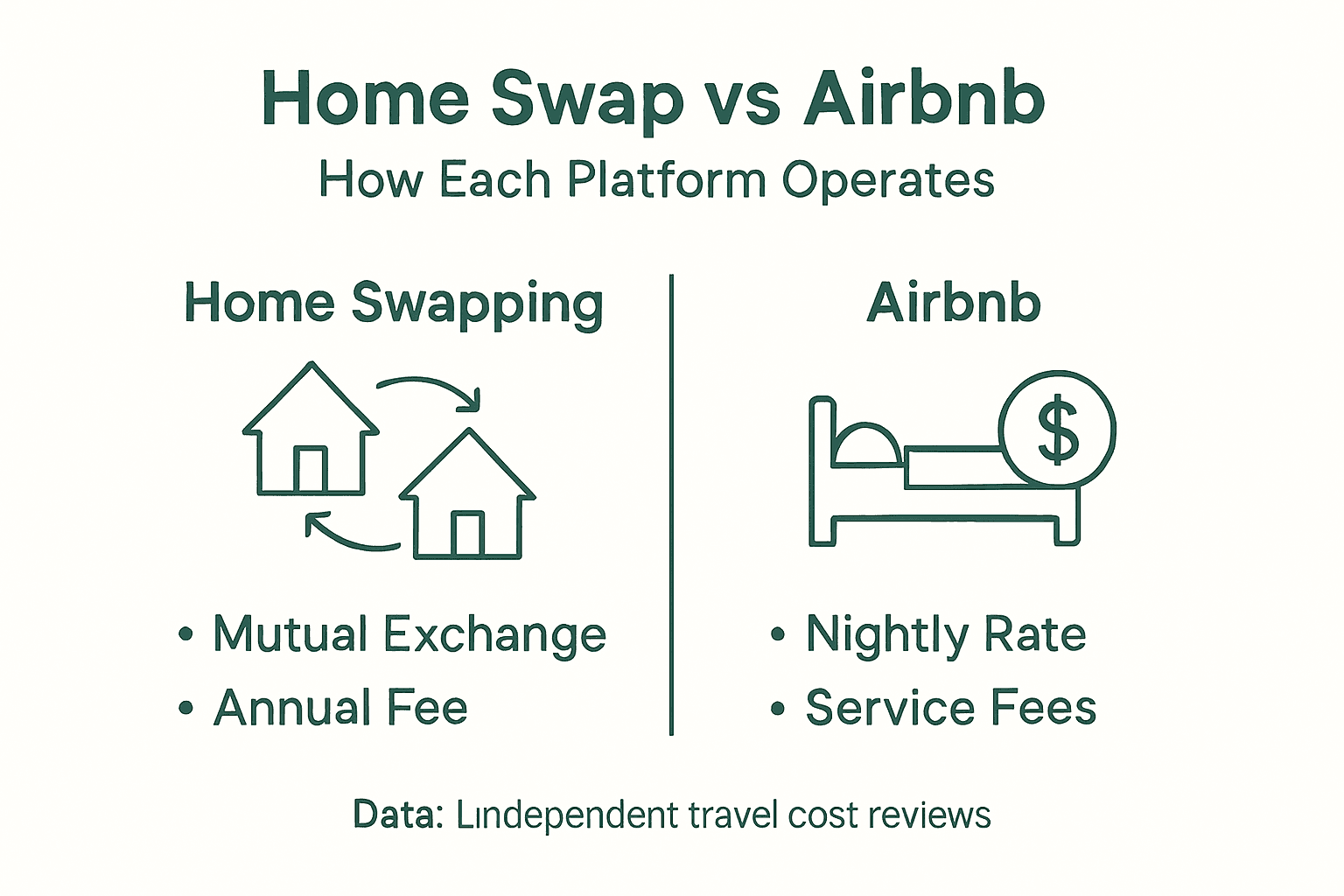 Infographic comparing home swapping to Airbnb
Pro tip: Before choosing between home swapping and Airbnb, carefully assess your travel style, budget flexibility, and comfort with different accommodation models.
Here is a side-by-side summary comparing key aspects travelers consider when choosing between home swapping and Airbnb:
| Criteria | Home Swapping | Airbnb |
|---|---|---|
| Booking Flexibility | Needs coordination with exchange partner | Book instantly in most cases |
| Social Engagement | High – direct interactions | Mixed – depends on host and property |
| Financial Predictability | Membership fees only or low extra costs | Nightly rate can fluctuate widely |
| Accommodation Variety | Limited to member homes | Wide range globally |
| Cultural Immersion | Encouraged through mutual exchange | Variable, based on listing type |
How each platform works for travelers
Navigating travel accommodation platforms requires understanding their unique operational mechanisms. Home swapping and Airbnb offer distinctly different approaches to securing lodging, each with specific processes designed to meet travelers' diverse needs.
Home exchange networks coordinate traveler accommodations through specialized online platforms that enable mutual residence sharing. Travelers can participate in two primary exchange models: simultaneous exchanges, where participants swap homes concurrently, and non-simultaneous exchanges, allowing more flexible travel scheduling. This system encourages direct communication between homeowners and establishes a community-driven approach to travel accommodations.
The operational workflows for each platform differ significantly:
Home Swapping Process:
- Create a detailed profile showcasing your home
- Browse available homes in desired destinations
- Communicate directly with potential exchange partners
- Negotiate and agree on exchange terms
- Coordinate travel dates and home access details
Airbnb Booking Process:
- Search destinations and available properties
- Filter results by price, amenities, and preferences
- Review booking options and host details
- Make direct financial transaction
- Confirm booking through platform
- Receive host approval or instant booking
Airbnb functions as a commercial marketplace, providing travelers with extensive lodging options ranging from private rooms to entire homes. The platform supports global transactions, includes user reviews, and offers various protections for both hosts and guests. Unlike home swapping's reciprocal model, Airbnb operates on a straightforward paid rental system.
Pro tip: Always thoroughly review platform-specific requirements, verification processes, and community guidelines before committing to any travel accommodation arrangement.
Costs, fees, and financial impact
Travel accommodations represent a significant expense for most travelers, making the financial structure of home swapping and Airbnb critically important for budget-conscious adventurers. Understanding the nuanced cost implications of each platform can help travelers make more informed decisions about their lodging choices.
 Woman reviewing travel costs budget worksheet
Airbnb's fee structure impacts overall travel expenses through complex pricing models that include charges for both hosts and guests. These fees can vary significantly depending on location, property type, and seasonal demand, creating a dynamic pricing environment that can unexpectedly increase travel costs.
Key financial differences between home swapping and Airbnb include:
Home Swapping Financial Characteristics:
- Minimal direct accommodation costs
- Typically requires annual membership fee
- Exchange based on reciprocal arrangements
- No nightly rental charges
- Potential savings on long-term travel
Airbnb Financial Characteristics:
- Per-night pricing model
- Additional service fees for guests
- Host commission fees
- Variable pricing based on demand
- Potential local taxes and regulatory charges
Home swapping offers a fundamentally different approach to travel expenses. Home exchange minimizes direct lodging costs by emphasizing mutual benefit and barter principles. Travelers can potentially save thousands of dollars on accommodation, especially during extended trips or when visiting expensive destinations.
Travelers can save up to 70% on lodging expenses by strategically using home swapping platforms compared to traditional rental methods.
Pro tip: Calculate your potential savings by comparing annual home swap membership costs against typical hotel or Airbnb expenses for your planned travel destinations.
Authenticity and guest experience compared
Travel experiences are defined by more than just accommodation—they're about connection, cultural immersion, and genuine interactions. Home swapping and Airbnb offer distinctly different pathways to experiencing a destination, each with unique approaches to creating memorable travel moments.
Airbnb builds trust through peer ratings by implementing a comprehensive review system that allows guests and hosts to verify and validate each other's experiences. This platform creates a commercial yet personalized environment where travelers can select accommodations based on detailed community feedback and host reputation.
Key differences in guest experience include:
Home Swapping Experience Characteristics:
- Direct personal connection with homeowners
- Deeper cultural immersion
- Authentic local living environment
- Mutual trust and reciprocal responsibilities
- Potential for long-term international relationships
Airbnb Experience Characteristics:
- Diverse accommodation options
- Professional host interactions
- Standardized safety protocols
- Consistent booking and communication processes
- Wide range of price points and property types
Home swapping offers authentic local experiences rooted in personal interaction and cultural exchange. Unlike traditional rentals, these exchanges involve genuine connections between travelers, creating opportunities for meaningful cross-cultural understanding beyond mere transactional stays.
Authentic travel experiences are about connection, not just a place to sleep.
Pro tip: Research platform community guidelines and host/traveler expectations thoroughly to ensure a smooth and enriching travel experience.
Risks, requirements, and legal implications
Navigating travel accommodations involves understanding complex legal landscapes that differ significantly between home swapping and Airbnb. Each platform presents unique regulatory challenges and potential risks that travelers and hosts must carefully consider before engaging in their services.
Airbnb rentals face extensive legal challenges across various jurisdictions, involving intricate regulatory requirements. These challenges range from local zoning restrictions to tax compliance, creating a complex environment where hosts must remain vigilant about potential legal implications.
Key legal considerations for each platform include:
Airbnb Legal Requirements:
- Local zoning law compliance
- Short-term rental permits
- Tax reporting obligations
- Potential municipal restrictions
- Insurance and liability considerations
Home Swapping Legal Considerations:
- Clear written exchange agreements
- Personal property protection
- Mutual responsibility documentation
- Limited financial transaction risks
- Minimal regulatory oversight
Home exchange networks typically involve fewer legal complications due to the non-monetary nature of transactions. The absence of direct financial exchange reduces regulatory scrutiny, though participants must still establish clear expectations and potential liability protections.
Legal risks vary significantly between commercial rental platforms and non-monetary exchange networks.
Pro tip: Consult local regulations and obtain comprehensive travel insurance that covers unique accommodation arrangements before finalizing any home swap or rental agreement.
This chart outlines typical legal and risk factors for each platform:
| Issue Type | Home Swapping Approach | Airbnb Approach |
|---|---|---|
| Regulation Level | Minimal oversight, informal agreements | Subject to strict rental regulations |
| Liability | Shared between exchangers | Host or guest insurance often required |
| Legal Paperwork | Simple agreements or none | Permit, tax, and contract compliance |
| Risk of Scams | Lower due to member vetting | Higher; potential for fraudulent listings |
Discover Real Travel Savings with Swappahome
The article highlights how choosing between home swapping and Airbnb involves navigating key challenges such as fluctuating fees, booking flexibility, and authentic cultural experiences. If you are seeking to avoid unpredictable nightly rates and complex service fees while craving genuine local immersion through trusted connections Swappahome offers a proven solution designed precisely for budget-conscious travelers like you. With our members-only platform you can earn credits by hosting verified homeowners and exchange them for free stays in beautiful homes worldwide, eliminating monetary transactions and unexpected costs.
 https://swappahome.com
Take control of your travel experience today by joining a community that values authenticity, financial predictability, and ease of use. Start listing your home or browse verified properties with Swappahome and unlock affordable, authentic travel that aligns with your goals. Learn more about how our home swapping process works and experience the freedom of credit-based travel. Visit Swappahome now to start saving and traveling smarter.
Frequently Asked Questions
What is the main difference between home swapping and Airbnb?
Home swapping involves mutual accommodation sharing without monetary exchange, focusing on cultural immersion, while Airbnb operates as a commercial platform where homeowners rent out spaces for profit.
How does the cost structure differ between home swapping and Airbnb?
Home swapping typically requires an annual membership fee, while Airbnb charges per-night rates plus service fees. Home swapping minimizes direct lodging costs through reciprocal arrangements.
What unique experiences can travelers expect from home swapping compared to Airbnb?
Home swapping encourages direct personal connections between hosts and guests, leading to deeper cultural immersion and authentic local living experiences, whereas Airbnb offers diverse accommodations with mixed social interactions based on host personality.
What are the legal considerations for using home swapping versus Airbnb?
Home swapping usually involves minimal regulatory oversight due to the non-monetary nature of exchanges, while Airbnb requires compliance with local zoning laws, short-term rental permits, and tax obligations, increasing legal complexity.
Recommended
- Home Swapping vs Rentals: Real Savings for Travelers | SwappaHome Blog
- Home Swap vs Airbnb: Real Cost Comparison & Honest Review
- Home Swap vs Hotel: 10 Reasons Home Exchange Wins | 2024
- Home Swap vs Hotel in London: Real Cost Comparison | Save £2,000+
- 7 Key Benefits of Guest Houses for Budget Travellers

Published by
SwappaHome
SwappaHome Editorial Team
Home Exchange & Slow Travel Editorial
The SwappaHome Editorial Team brings together travel research, home-exchange community insights, and platform data to produce practical guides for first-time and experienced home swappers. Every article cites real platforms, current market rates, and verifiable city-level facts so readers can make informed decisions without guessing.
Ready to try home swapping?
Join SwappaHome and start traveling by exchanging homes. Get 7 free credits when you sign up!