
Exchange-Based Travel: Unlocking Authentic, Affordable Stays

SwappaHome Editorial Team
Home Exchange & Slow Travel Editorial
Exchange-Based Travel: Unlocking Authentic, Affordable Stays !Two couples exchanging keys in Paris apartment Every homeowner knows the struggle of...
Exchange-Based Travel: Unlocking Authentic, Affordable Stays
 Two couples exchanging keys in Paris apartment
Every homeowner knows the struggle of balancing travel dreams with rising accommodation costs. Exchange-based travel flips the script by making it possible to explore new corners of the world while staying in someone else’s home and welcoming guests into yours. For those who want to experience real local culture and save money, home exchange programs offer an alternative that feels more personal and connected than any hotel stay.
Table of Contents
- Exchange-Based Travel Defined and Debunked
- Types of Exchange-Based Travel Models
- How Point and Credit Systems Work
- Verification, Safety, and Legal Considerations
- Obligations, Risks, and Common Pitfalls
- Comparing Exchange-Based Travel to Alternatives
Key Takeaways
| Point | Details |
|---|---|
| Exchange-Based Travel | This model promotes home swapping, allowing travelers to explore destinations authentically and affordably. |
| Types of Models | Exchange-based travel includes direct swaps, credit systems, and membership networks, each with distinct benefits and requirements. |
| Verification and Safety | Effective home exchanges depend on thorough verification processes for safety and legal compliance, ensuring secure transactions. |
| Comparison to Alternatives | Home exchanges offer superior cultural immersion and lower costs compared to hotels and traditional rentals, fostering personal connections. |
Exchange-Based Travel Defined and Debunked
Exchange-based travel represents a revolutionary approach to experiencing global destinations by swapping homes instead of paying for traditional accommodations. This innovative model allows homeowners to explore new locations while offering their own property as a temporary living space for other travelers. Unlike conventional tourism, home exchange programs create unique opportunities for authentic cultural immersion and budget-friendly adventures.
Academically, these travel models have been critically examined for their potential and limitations. Academic mobility research highlights that such exchange programs challenge traditional assumptions about travel, questioning both environmental sustainability and financial feasibility. The core philosophy revolves around mutual trust, cultural understanding, and leveraging existing housing resources to create meaningful travel experiences.
Key characteristics of exchange-based travel include:
- Direct home swapping between verified property owners
- Elimination of traditional accommodation expenses
- Opportunities for genuine local experiences
- Potential for extended stays without additional housing costs
- Reduction of overall travel expenses
While the concept sounds straightforward, successful home exchanges require careful planning and strategic engagement. Travelers must be willing to open their own homes, communicate transparently with potential exchange partners, and maintain high standards of mutual respect and property care.
Pro tip: Always thoroughly verify potential exchange partners through platform background checks and establish clear communication protocols before finalizing any home swap arrangements.
Types of Exchange-Based Travel Models
Travel exchange platforms have evolved to offer diverse models that cater to different traveler preferences and needs. Travel exchange platform models demonstrate remarkable complexity in facilitating authentic travel experiences beyond traditional accommodation booking systems. These models range from direct home swaps to more sophisticated credit-based exchanges that provide travelers with flexible options for global exploration.
Primary types of exchange-based travel models include:
- Direct Home Swap: Homeowners exchange properties directly with each other
- Credit-Based Exchange: Travelers earn and spend points for stays in different locations
- Indirect Exchange: Participants can stay in properties not owned by their direct exchange partner
- Membership Network Model: Structured platforms with verified member networks
- Reciprocal Exchange: Mutual agreement between property owners for balanced exchanges
Each model presents unique advantages and challenges. Travel mobility approaches reveal that these systems are not just about accommodation, but about creating meaningful cross-cultural connections and reimagining travel as a collaborative experience. The underlying philosophy centers on mutual trust, community engagement, and resource optimization.
Here's a quick summary of how various exchange-based travel models operate:
| Model Type | Exchange Process | Typical Flexibility | Membership Requirement |
|---|---|---|---|
| Direct Home Swap | Owners swap residences | Fixed dates and location | Often required |
| Credit-Based Exchange | Earn/spend travel credits | Flexible timing/location | Usually required |
| Indirect Exchange | Use network properties | High destination choice | Platform membership |
| Reciprocal Exchange | Balanced mutual agreement | Mutually agreed terms | May be needed |
Successful participation in these models requires understanding platform-specific rules, maintaining transparent communication, and being open to diverse cultural experiences. Travelers must carefully evaluate each exchange model's specific requirements, verification processes, and potential restrictions to ensure a smooth and enjoyable experience.
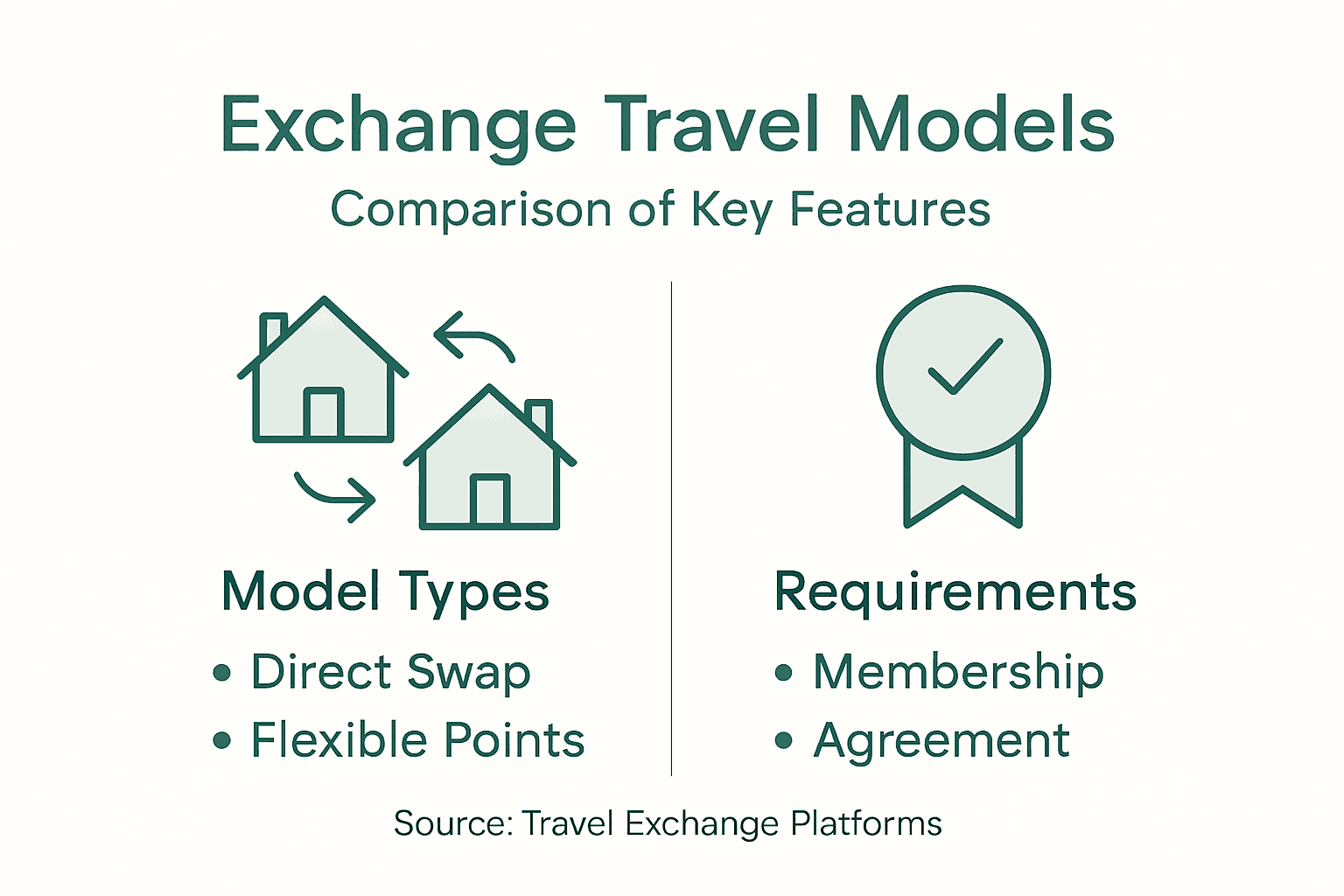 Infographic comparing home exchange travel models
Pro tip: Research multiple exchange platforms and compare their specific models, membership requirements, and point systems before committing to a particular travel exchange approach.
How Point and Credit Systems Work
Home exchange platforms have revolutionized travel by implementing sophisticated credit-based systems that transform how travelers access accommodations worldwide. Credit allocation systems provide a standardized mechanism for tracking and exchanging travel opportunities, enabling members to maximize their global exploration potential.
Typical point and credit systems operate through several key mechanisms:
- Initial Credit Allocation: New members receive starter credits
- Credit Earning Methods:
- Hosting other travelers
- Maintaining an attractive, well-maintained property
- Participating in platform community activities
- Credit Redemption Options:
- Booking stays in different locations
- Transferring credits between members
- Accessing premium exchange opportunities
Academic mobility frameworks demonstrate that these systems are more than simple transaction platforms—they represent complex social networks built on mutual trust and collaborative travel experiences. Each credit typically represents a standard unit of value, often equivalent to one night's accommodation, allowing for flexible and transparent exchanges.
Successful navigation of point systems requires strategic planning. Members must understand platform-specific rules, track their credit balances, and actively engage with the exchange community to maximize their travel opportunities. The most effective travelers treat their credits as a valuable resource, carefully planning exchanges to optimize their global travel experiences.
Pro tip: Maintain a detailed log of your credit earnings and potential exchange opportunities to strategically plan your future travel experiences.
Verification, Safety, and Legal Considerations
Home exchange platforms recognize the critical importance of participant safety and legal compliance. Travel safety guidelines emphasize comprehensive verification processes that protect both homeowners and travelers, establishing robust frameworks for secure international exchanges.
Key verification and safety considerations include:
- Identity Verification:
- Government-issued ID checks
- Social media profile validation
- Background screening processes
- Property Authentication:
- Verified property ownership documentation
- Current photographs and virtual tours
- Accurate property description requirements
- Legal Protection Mechanisms:
- Comprehensive insurance coverage
- Clear contractual exchange agreements
- Platform-mediated dispute resolution
International travel compliance requires understanding complex legal frameworks that govern cross-border exchanges. Successful platforms implement multilayered verification strategies that balance participant privacy with robust safety protocols, ensuring transparent and trustworthy interactions.
 Man reviewing home exchange safety documents
Homeowners and travelers must actively participate in safety protocols by maintaining updated profiles, communicating transparently, and following platform guidelines. Understanding the nuanced legal landscape of international home exchanges becomes crucial for creating positive, secure travel experiences that prioritize mutual respect and professional interaction.
Pro tip: Always request and review multiple verification credentials before finalizing any home exchange agreement, and maintain open communication channels throughout the process.
Obligations, Risks, and Common Pitfalls
Home exchange travel requires a nuanced understanding of potential risks and participant obligations. Academic travel risk management reveals critical considerations that extend far beyond simple property swaps, encompassing complex legal, personal, and logistical challenges.
Common risks and obligations in home exchanges include:
- Personal Property Risks:
- Potential property damage
- Unexpected maintenance issues
- Insurance coverage gaps
- Legal Obligations:
- Compliance with local housing regulations
- Tax implications of international exchanges
- Contractual responsibilities
- Personal Safety Considerations:
- Background verification limitations
- Cultural misunderstandings
- Emergency communication protocols
International travel risk assessments emphasize the importance of comprehensive preparation. Successful home exchangers must develop a proactive approach to risk mitigation, understanding that each international stay involves complex interpersonal and logistical dynamics.
Navigating home exchanges requires emotional intelligence, clear communication, and a willingness to establish transparent expectations. Participants must be prepared to address potential challenges, maintain open dialogue, and develop flexible strategies for resolving unexpected complications during their travels.
Pro tip: Create a comprehensive contingency plan that includes emergency contacts, backup accommodation options, and clear communication protocols before initiating any home exchange.
Comparing Exchange-Based Travel to Alternatives
Travelers today have multiple options for accommodations, each with distinct advantages and limitations. Alternative travel approaches reveal nuanced considerations beyond traditional lodging methods, highlighting the unique value of home exchanges in modern travel experiences.
Comparative analysis of travel accommodation options:
Compare the experience and cost factors across major accommodation types:
| Accommodation Type | Cultural Immersion Level | Average Cost per Night | Likelihood of Personal Interaction |
|---|---|---|---|
| Hotel | Low, generic experiences | High | Minimal |
| Home Exchange | High, authentic local living | Very low | Frequent with hosts/locals |
| Short-Term Rental | Moderate, varies by property | Medium to high | Occasional, depends on host |
- Hotel Stays:
- Consistent, standardized experience
- High predictability
- Higher cost per night
- Limited cultural immersion
- Home Exchange:
- Authentic local experiences
- Significantly lower costs
- Personal connections
- Cultural depth
- Short-Term Rentals:
- Some local character
- Variable quality
- Higher costs than exchanges
- Less personal interaction
Academic travel research demonstrates that alternative travel models increasingly prioritize sustainability, cost-effectiveness, and meaningful interactions. Home exchanges represent a sophisticated approach that transcends traditional transactional travel experiences, offering deeper cultural engagement and mutual benefits for participants.
Successful travelers understand that each accommodation option serves different needs. Home exchanges excel by providing not just a place to stay, but an opportunity for genuine cultural connection, personal growth, and community building across geographic boundaries.
Pro tip: Evaluate travel accommodation options based on your specific trip goals, budget constraints, and desired level of cultural immersion.
Experience Authentic and Affordable Travel with Home Exchanges
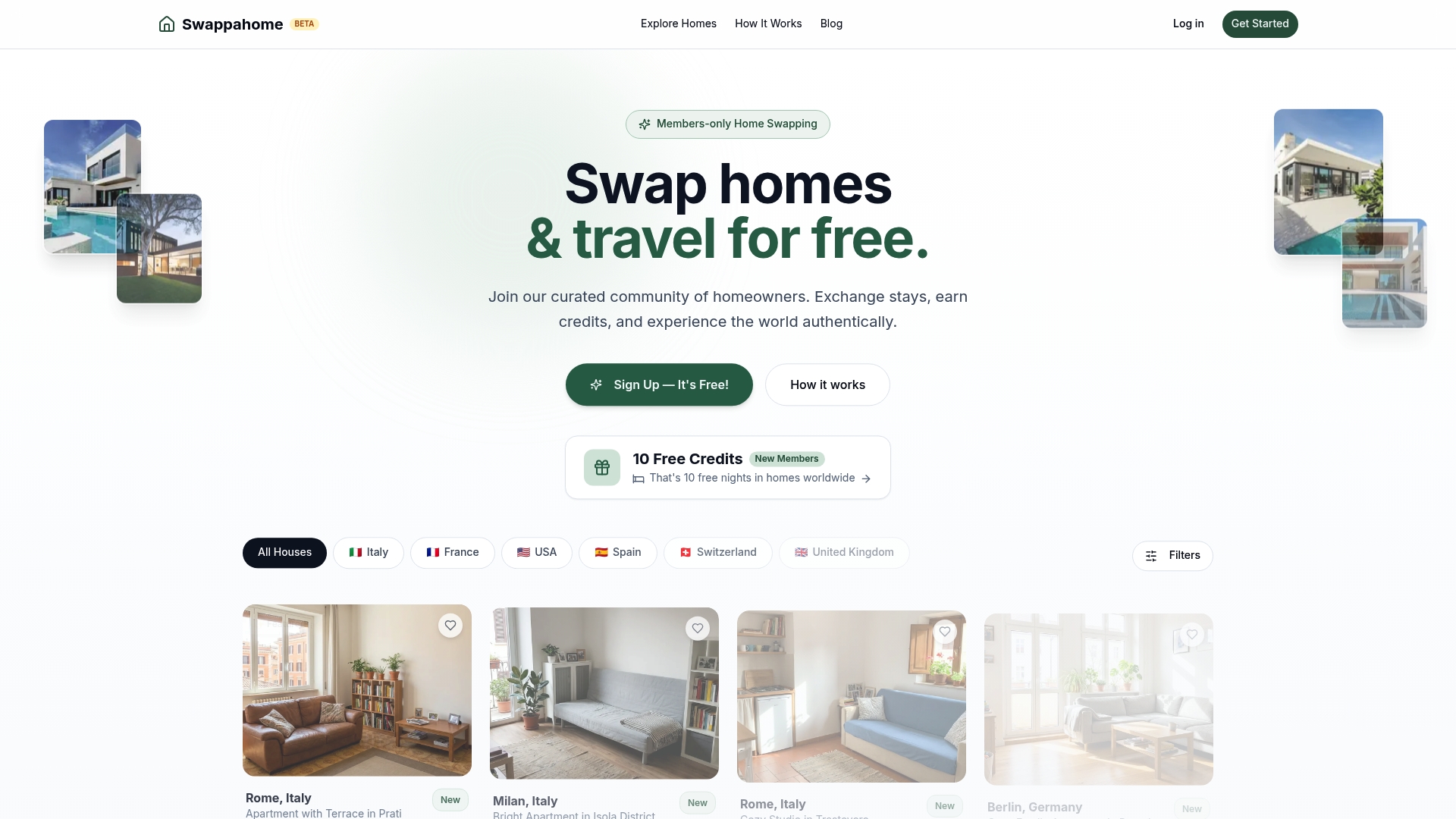
The article highlights the challenges travelers face with traditional accommodations such as high costs and limited cultural immersion. It introduces exchange-based travel models like direct home swaps and credit-based systems that open doors to genuine local experiences while cutting expenses. If you are seeking a trusted platform that values verification and community to safely facilitate these unique stays, Swappahome is designed specifically for you. Our members-only network connects verified homeowners worldwide so you can list your home, earn credits, and unlock stays in exceptional properties without any monetary exchange.
 https://swappahome.com
Discover how simple it is to start your journey toward meaningful travel by joining a platform that embodies the principles of mutual trust and cultural exchange explained in the article. Visit Swappahome to create your profile, explore verified homes across numerous countries, and use our straightforward point system where one credit equals one free night. Start exchanging your home today and transform your travel experience without the stress of traditional costs or risks.
Frequently Asked Questions
What is exchange-based travel?
Exchange-based travel is a model where homeowners swap their properties with each other instead of paying for traditional accommodations. This allows travelers to explore new destinations while enjoying authentic local experiences without the added costs.
How do point and credit systems work in home exchange programs?
Point and credit systems allow travelers to earn and spend credits based on their participation in home exchanges. Members can typically earn credits by hosting travelers, maintaining their properties, or participating in community activities, which can then be redeemed for stays at different locations.
What safety measures are implemented in home exchange platforms?
Home exchange platforms implement several safety measures, including identity verification, property authentication, and legal protection mechanisms such as insurance coverage and clear contractual agreements, to ensure participant safety and trust during exchanges.
What are some common risks associated with home exchanges?
Common risks of home exchanges include potential property damage, unexpected maintenance issues, and legal obligations related to housing regulations. Participants should develop a proactive approach to risk management to navigate these challenges effectively.
Recommended

Published by
SwappaHome
SwappaHome Editorial Team
Home Exchange & Slow Travel Editorial
The SwappaHome Editorial Team brings together travel research, home-exchange community insights, and platform data to produce practical guides for first-time and experienced home swappers. Every article cites real platforms, current market rates, and verifiable city-level facts so readers can make informed decisions without guessing.
Ready to try home swapping?
Join SwappaHome and start traveling by exchanging homes. Get 7 free credits when you sign up!