Home Swap in Kuala Lumpur: Your Complete Guide to Neighborhoods, Local Secrets and Insider Tips

SwappaHome Editorial Team
Home Exchange & Slow Travel Editorial
Discover the best neighborhoods for home swap in Kuala Lumpur, from KLCC penthouses to artsy Bangsar bungalows. Local secrets, costs, and tips from 7 years of swapping.
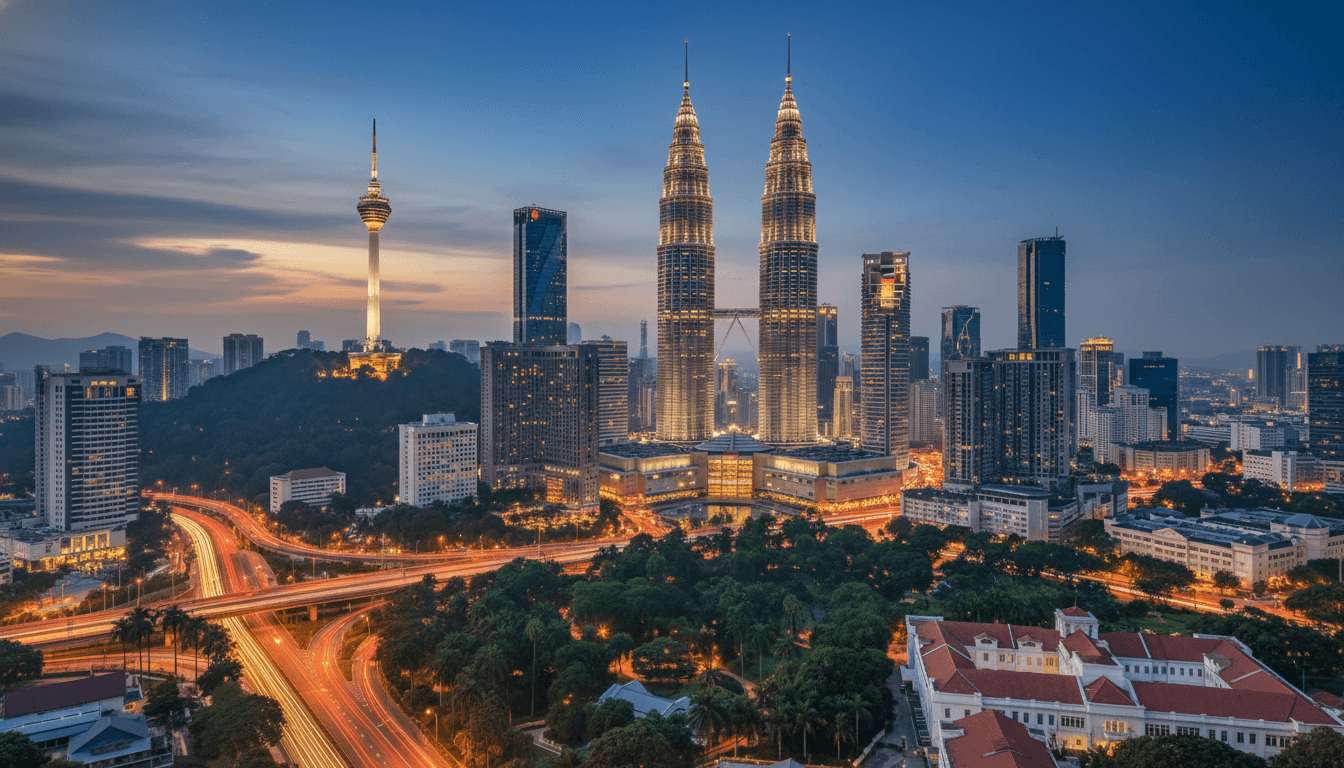
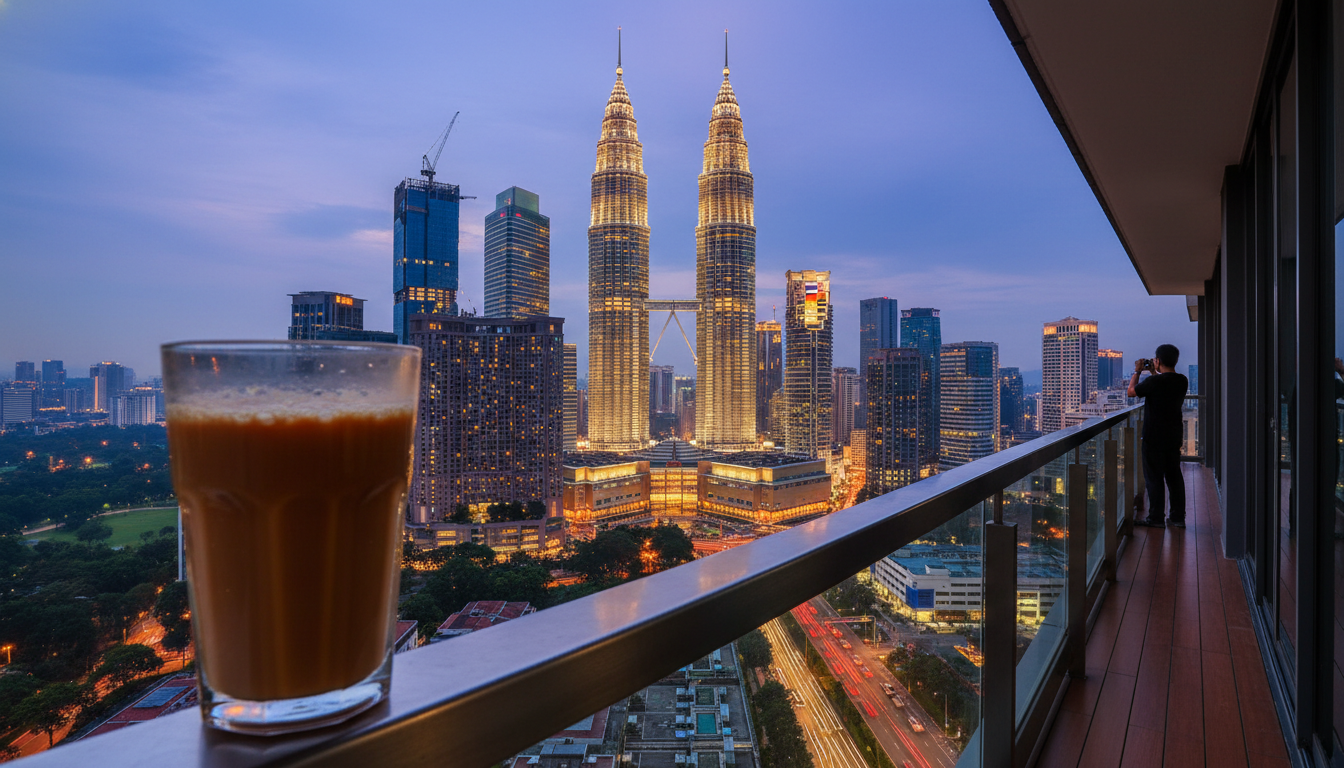
The elevator doors opened to the 47th floor, and I stepped into what would be my home for the next two weeks—a sleek apartment in KLCC with floor-to-ceiling windows framing the Petronas Towers so close I could practically count the steel panels. My host, a Malaysian architect named Wei Lin, had left a handwritten note on the kitchen counter: "The nasi lemak stall downstairs opens at 6 AM. Trust me." That moment—standing in a stranger's living room that somehow already felt like mine, with the city sprawling beneath me—perfectly captures why a home swap in Kuala Lumpur remains one of my favorite travel experiences to date.
I've been doing home exchanges for seven years now, across 25 countries and 40+ swaps. But KL holds a special place in my heart. It's a city that doesn't try to impress you with one singular identity. Instead, it throws everything at you—Malay, Chinese, Indian, colonial British, ultramodern—and dares you to keep up. And doing a home swap here? It transforms you from a tourist staying in some sterile hotel box into someone who actually lives this chaos. Someone who knows which wet market has the best curry puffs. Someone who understands why locals escape to the Cameron Highlands when the humidity becomes unbearable.
 Panoramic view of Kuala Lumpur skyline at dusk with Petronas Towers illuminated, shot from a high-ri
This guide is everything I wish someone had told me before my first Kuala Lumpur home exchange—the neighborhoods that actually make sense for different travel styles, the local secrets that'll make your Malaysian hosts nod in approval, and the practical stuff (like why you absolutely need to understand the LRT system before you commit to a location).
Why Home Swap in Kuala Lumpur Makes So Much Sense
Here's the thing about KL that most travel guides won't tell you: the hotel scene is... fine. Perfectly adequate. But hotels here tend to cluster in two modes—either the massive international chains around Bukit Bintang (think: shopping mall attached, zero local character) or budget options that can feel pretty grim. That sweet spot of "charming boutique hotel in interesting neighborhood" that you'd find in Lisbon or Mexico City? It barely exists here.
But the residential scene? Completely different story.
Kuala Lumpur has some of the most architecturally interesting homes I've encountered anywhere in Southeast Asia. We're talking colonial-era bungalows in Bangsar with original terrazzo floors and gardens bursting with frangipani. Converted shophouses in Chinatown where you sleep above a century of history. Ultra-modern condos with infinity pools overlooking the city. And because the cost of living here is relatively affordable (even as it's risen in recent years), many Malaysians live in spaces that would cost a fortune elsewhere.
The math is simple. A decent hotel room in central KL runs about $80-150 USD per night. A really nice one? $200-300. Over two weeks, you're looking at $1,100 to $4,200 just for accommodation. With SwappaHome's credit system, you're spending 1 credit per night—credits you earned by hosting travelers in your own home. The only cash leaving your wallet goes toward experiences, food, and those inevitable extra bags of white coffee to bring home.
But honestly, the money isn't even the main thing. It's the access. My KLCC host Wei Lin introduced me to her favorite char kway teow uncle (yes, that's what you call the hawker stall vendors—uncle and auntie). Her neighbor invited me to a Deepavali celebration. I borrowed her yoga mat and found a community class in the park. None of that happens when you're staying at the Marriott.
Best Neighborhoods for Home Exchange in Kuala Lumpur
Choosing where to stay in KL can feel overwhelming because the city sprawls. Like, really sprawls. The neighborhood you pick will fundamentally shape your experience, so let me break down the areas where home swaps make the most sense.
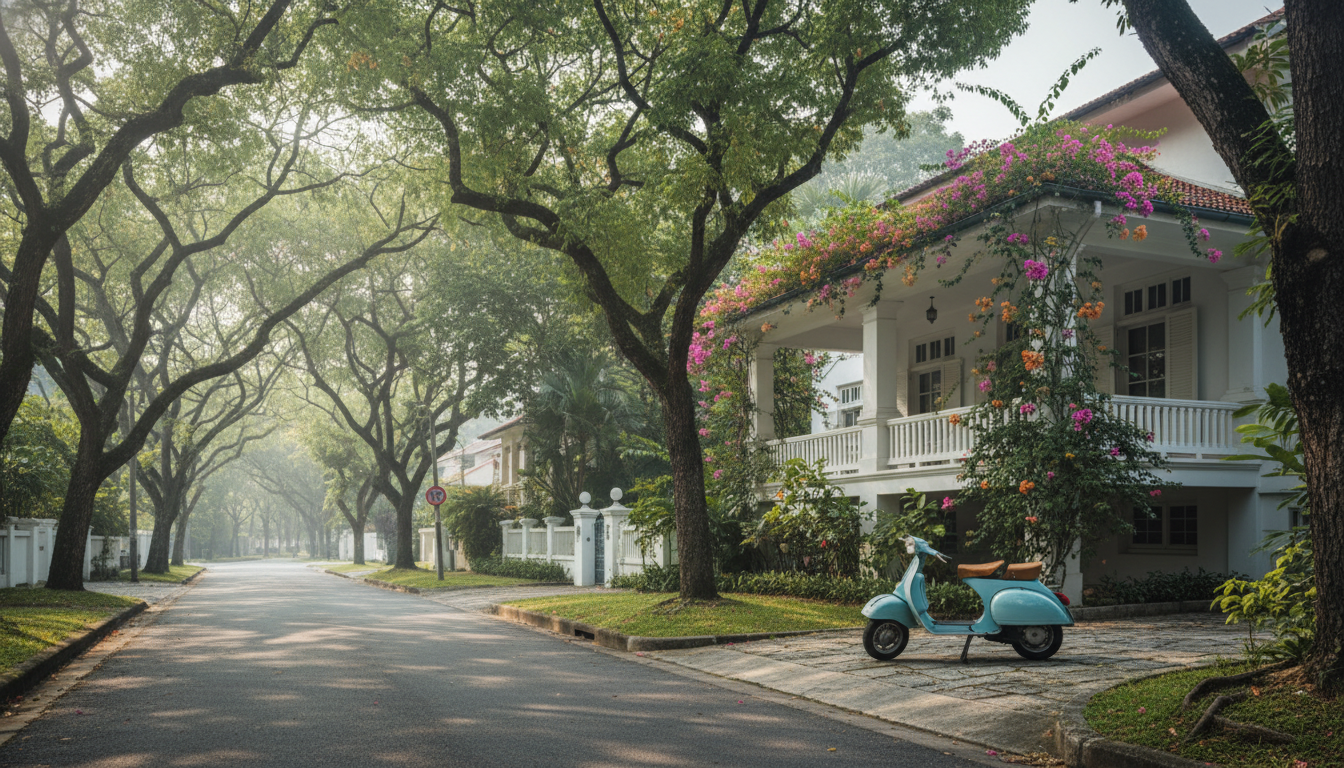 Tree-lined street in Bangsar with colonial-era bungalow featuring a wraparound veranda, tropical gar
KLCC and the Golden Triangle: Urban Energy Central
This is the postcard KL—the Petronas Towers, the high-end malls, the skyline you've seen in every Malaysia tourism ad. Living here means you're in the thick of it. The apartments tend to be modern high-rises with amenities like pools, gyms, and sometimes even sky lounges.
The vibe is international and fast-paced. You'll find excellent restaurants (Din Tai Fung, Nobu, but also incredible local spots hidden in the basement food courts of Pavilion and Suria KLCC), easy access to the KLCC-Bukit Bintang elevated walkway, and the stunning KLCC Park right at your doorstep. Morning jogs around that park with the towers looming above? Genuinely magical.
Best for: First-time visitors, business travelers, anyone who wants convenience and doesn't mind a more polished, less "local" experience.
Watch out for: Traffic. Dear god, the traffic. If your swap is here, plan to use the LRT or MRT for anything outside walking distance. Also, some of the older condos can feel dated despite the location.
Bangsar: Where Expats and Locals Actually Hang Out
If KLCC is KL's business suit, Bangsar is its weekend linen shirt. This neighborhood has the highest concentration of interesting restaurants, independent cafés, and the kind of leafy streets that make you want to walk everywhere—rare in this city.
The homes here range from those gorgeous colonial bungalows I mentioned (usually divided into apartments now, but still full of character) to modern low-rise condos. Bangsar Village and Bangsar Shopping Centre are the local hubs, but the real action is on the side streets—places like Telawi where you'll find everything from craft cocktail bars to old-school kopitiams.
I did a swap here in 2019, staying in a converted shophouse unit with original wooden shutters and a tiny courtyard. My host was a food writer, and her neighborhood guide was essentially a treasure map. She'd marked her favorite roti canai spot (Restoran Mahbub, if you're wondering—get there before 9 AM), the best place for banana leaf rice, and a speakeasy hidden behind a laundromat facade.
Best for: Food lovers, anyone wanting a more residential feel while still having plenty to do, travelers who appreciate walkability.
Watch out for: Bangsar is pricier than other KL neighborhoods, both for dining and the homes themselves. The bungalows can also get warm—not all have great air conditioning in every room.
Chinatown (Petaling Street Area): History and Chaos
This is KL at its most raw and unfiltered. The streets are narrow, the signage is a mix of Chinese characters and Jawi script, and the sensory overload is constant—incense from temples, sizzling woks from street stalls, the calls of vendors in the night market.
Home swaps here are usually in converted shophouses or older apartment buildings. The spaces tend to be smaller and quirkier, often with steep stairs and compact layouts. But the location is unbeatable for experiencing old KL. You're walking distance from the Sri Mahamariamman Temple, the Central Market, Merdeka Square, and some of the city's best street food.
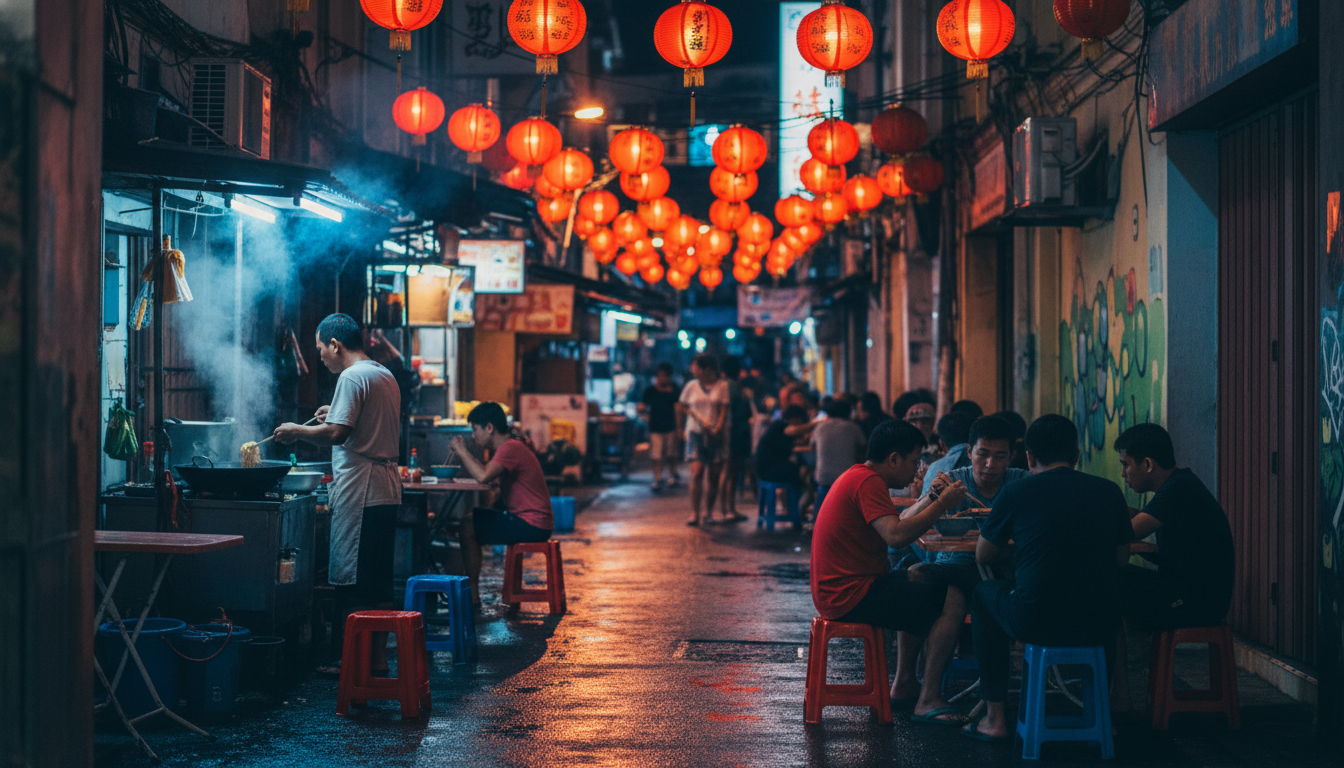 Narrow alley in Chinatown at night with red lanterns overhead, steam rising from a noodle stall, and
Best for: Culture enthusiasts, photographers, budget-conscious travelers who prioritize location over luxury, anyone who wants to feel the city's pulse.
Watch out for: It's loud. Really loud, especially at night when the market is in full swing. Some buildings are quite old with unreliable elevators (or none at all). And the area can feel a bit gritty if you're used to more polished environments.
Mont Kiara: Suburban Comfort
This is expat central—a planned township about 20 minutes from the city center with wide roads, international schools, and condos that feel like they could be in Singapore or Dubai. The homes here are generally spacious and modern, often with multiple bedrooms and full kitchens.
Honestly, Mont Kiara isn't the most exciting place to explore on foot. But if you're traveling with kids, working remotely and need reliable infrastructure, or just want a quieter base, it makes a lot of sense. The malls here (1 Mont Kiara, Plaza Mont Kiara) have everything you need, and there's a surprising number of good restaurants—including some of the best Korean food in KL, thanks to the large Korean expat community.
Best for: Families, remote workers, longer stays where comfort matters more than constant exploration.
Watch out for: You'll need to Grab (Malaysia's Uber equivalent) or drive to get anywhere interesting. It can feel isolated from "real" KL.
Bukit Bintang: The Tourist Heart
This is KL's Times Square—shopping malls stacked on shopping malls, street food along Jalan Alor, and tourists everywhere. I'm including it because there are home swap options here, but I'll be honest: I'd only recommend it for short stays or if you really want to be in the commercial center.
The apartments tend to be in serviced residence buildings or older condos. The advantage is walkability to everything touristy and excellent public transit connections. The disadvantage is that it can feel overwhelming and not particularly authentic.
Best for: Short trips focused on shopping and nightlife, travelers who want maximum convenience.
Watch out for: Tourist pricing at restaurants, aggressive touts, and that "could be anywhere" feeling that defeats the purpose of home swapping.
How to Find the Perfect Kuala Lumpur Home Swap
Alright, let's get practical. Finding the right home exchange in KL requires a slightly different approach than swapping in, say, Europe.
Timing matters here. Malaysia has two monsoon seasons—the southwest monsoon (May to September) brings rain to the west coast where KL is located, but it's usually afternoon thunderstorms rather than all-day dreariness. The northeast monsoon (November to March) is actually drier in KL. The absolute peak tourist season is during school holidays (late November through early January) and Chinese New Year (dates vary, usually late January or February).
I've found that Malaysian hosts on SwappaHome tend to be incredibly responsive and detailed in their communications. Many speak excellent English (it's widely used here), and they're often eager to share local recommendations. When you're browsing listings, pay attention to the photos of the kitchen—Malaysian home cooking is a thing of beauty, and if your host has a well-equipped kitchen, you can hit the wet markets and try your hand at making laksa or rendang. Look for a rice cooker (essential), a wok, and ideally a blender for making fresh juices.
Air conditioning details matter more than you'd think. KL is hot and humid year-round—we're talking 30-33°C (86-91°F) with 80%+ humidity. Make sure the bedrooms have AC, and ask about electricity costs if they're not included. Running AC 24/7 can add up.
Check the parking situation if you're planning to rent a car (useful for day trips to Batu Caves, Genting Highlands, or Malacca). Many condos have assigned spots, but older buildings might not. And proximity to public transit is huge—the LRT, MRT, and monorail systems are excellent and cheap (most rides are under $1 USD). Being within walking distance of a station makes everything easier.
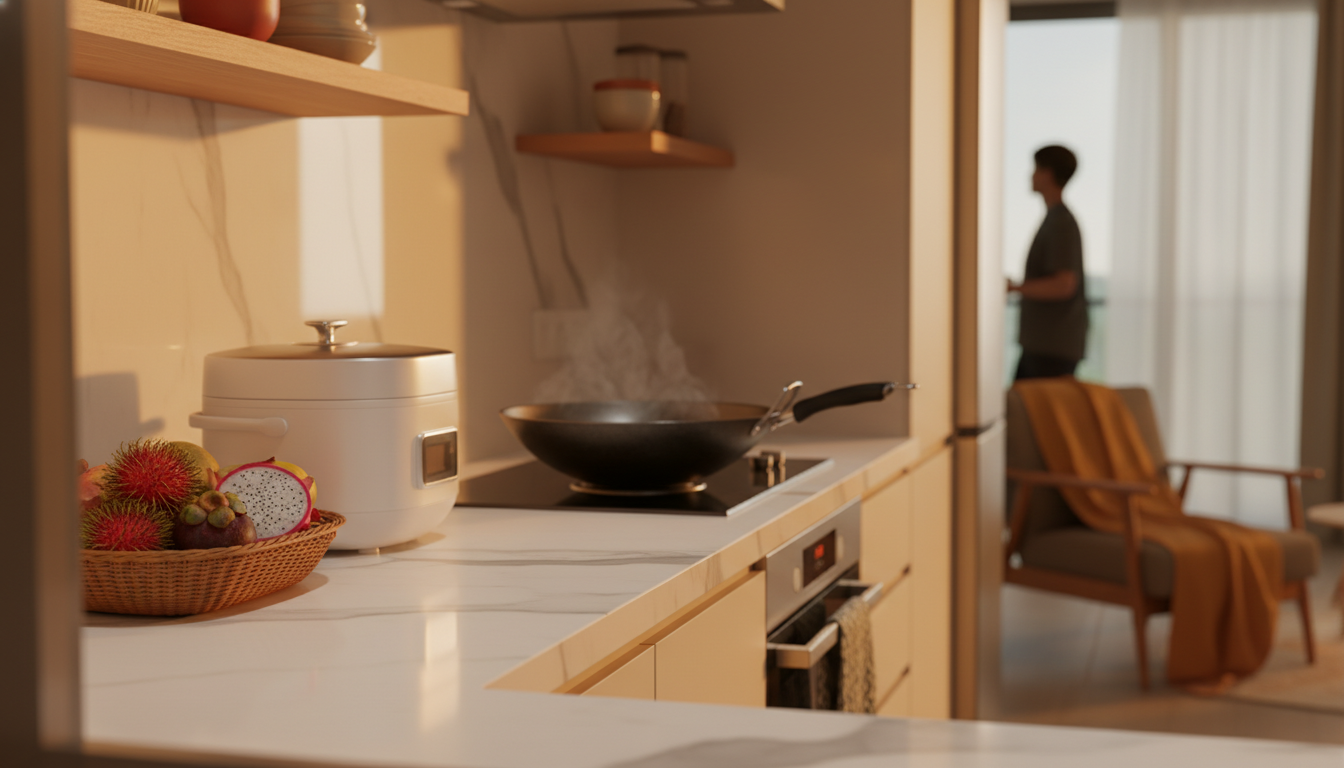 Interior of a bright, modern KL apartment kitchen with marble countertops, a rice cooker, wok on the
When reaching out to potential hosts, I always mention specific things about their home that appeal to me—it shows I've actually looked at the listing. And I share a bit about myself: what I do, why I'm visiting KL, what kind of traveler I am. Building that initial connection makes the whole exchange smoother.
Local Secrets for Your Kuala Lumpur Home Exchange
This is the part I get most excited about—the stuff that turns a good trip into an unforgettable one.
Food: Beyond the Tourist Trail
Yes, you should eat at Jalan Alor. It's touristy for a reason—the grilled chicken wings and fried noodles are legitimately good. But the real magic happens elsewhere.
For the best nasi lemak in the city, skip the famous places and find a random stall that has a line of office workers at 7 AM. The coconut rice should be fragrant, the sambal should have depth (not just heat), and the ikan bilis (anchovies) should be crispy. My personal favorite is a stall in the Kampung Baru area, but part of the joy is discovering your own.
Chinese-Malaysian food here is different from what you'll find in China or even Singapore. The Hokkien mee (dark soy sauce noodles with pork lard—yes, pork lard, it's essential) at Kim Lian Kee in Chinatown has been served since 1927. The bak kut teh (pork rib tea soup) along Jalan Imbi is the herbal Klang-style, best eaten with a side of you tiao (fried dough) for dipping.
Indian food in KL deserves its own trip. The banana leaf rice at places like Devi's Corner in Bangsar is a full experience—rice served on an actual banana leaf, surrounded by an array of vegetable curries, with crispy papadum and tangy pickles. You eat with your right hand, mixing everything together. Around $4-6 USD for a feast.
And don't sleep on Malay food beyond nasi lemak. Nasi kerabu (blue rice with herbs and fish) from the east coast, satay that's been grilled over coconut shell charcoal, and kuih (traditional sweets) from the Malay aunties at Pasar Seni.
Getting Around Like a Local
Grab is your best friend here. The app works seamlessly, prices are reasonable (a 20-minute ride might be $3-5 USD), and it eliminates the language barrier with drivers. Always opt for GrabCar over taxis—the pricing is more transparent.
But the public transit system is genuinely great and worth using. The MRT Kajang line connects many key areas, the LRT covers the inner city well, and the KL Monorail hits the tourist spots. Get a Touch 'n Go card (available at any station) and load it with credit—you can use it for transit, tolls, and even some shops.
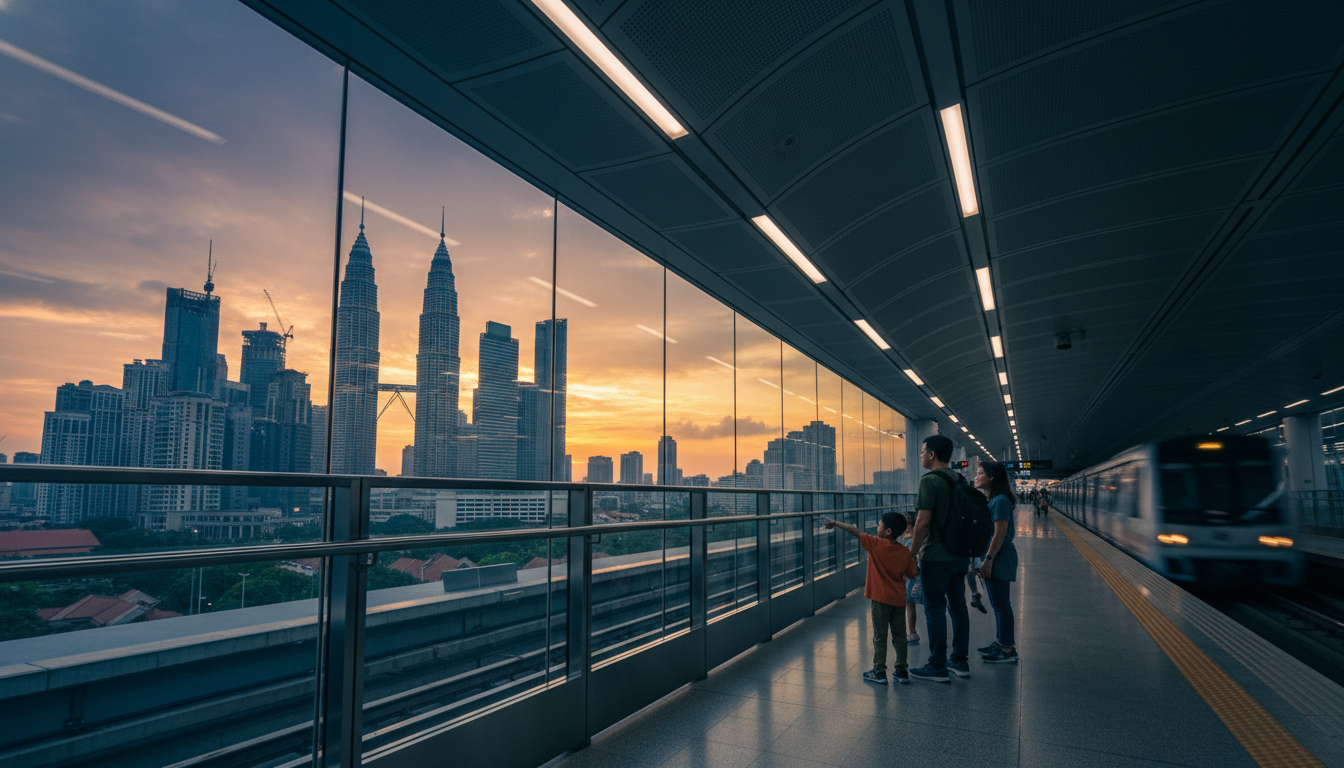 Inside a modern KL MRT station with sleek design, a local family waiting on the platform, and throug
For day trips, renting a car makes sense. The roads are good, signage is in English, and places like the Cameron Highlands (tea plantations and cool weather), Malacca (historic port city), and Ipoh (food paradise) are all 2-3 hours away. Just avoid driving in central KL during rush hour—the traffic will make you question your life choices.
Cultural Navigation
Malaysia is a Muslim-majority country, but it's also one of the most religiously diverse places in Asia. You'll see mosques, Chinese temples, Hindu shrines, and churches sometimes on the same street. This diversity is celebrated, but it also means being mindful.
During Ramadan (dates change yearly based on the lunar calendar), be respectful about eating in public during daylight hours, especially in Malay-majority areas. But also—the Ramadan bazaars are incredible. Every evening, markets pop up selling every kind of food imaginable for iftar (breaking fast). Even non-Muslims are welcome to browse and buy.
When visiting mosques (the National Mosque is stunning and free to enter), women need to cover their hair and wear loose clothing—robes are usually provided at the entrance. Remove shoes before entering any place of worship.
Tipping isn't expected in Malaysia. Service charge is often included at restaurants, and locals don't tip hawker stalls or taxi drivers. Rounding up is appreciated but not required.
The Weather Reality
I need to be real with you: KL is hot. Always. The temperature barely fluctuates throughout the year, hovering around 31-33°C (88-91°F) during the day. The humidity is the real challenge—it's like wearing a warm, wet blanket the moment you step outside.
Plan your outdoor activities for early morning or late afternoon. Midday is for air-conditioned malls, museums, or retreating to your swap home for a rest. Locals call this strategic laziness; I call it survival.
The afternoon thunderstorms (usually 3-5 PM during monsoon season) are dramatic but brief. Carry a small umbrella or just duck into a mall—they're everywhere—and wait it out. The rain actually makes the evenings more pleasant.
What to Expect from Your Malaysian Host
Malaysian hospitality is warm but not overwhelming. Your host will likely leave detailed notes about the home, the neighborhood, and their favorite spots. Many leave small welcome gifts—local snacks, instant white coffee, maybe some fruit.
Communication tends to be straightforward and friendly. WhatsApp is the preferred method (download it if you haven't), and hosts are usually quick to respond to questions. Don't be surprised if they check in during your stay to make sure everything's okay—it's genuine care, not intrusion.
The review system on SwappaHome helps build trust on both sides. After your exchange, take time to write a thoughtful review. Mention specific things that made your stay great—it helps future travelers and shows appreciation for your host's effort.
One thing I've noticed: Malaysian hosts often understate how nice their homes are. That "simple apartment" might have a gorgeous view. That "basic kitchen" might be stocked with every spice you need. Manage your expectations, but be prepared to be pleasantly surprised.
Practical Tips for Your Kuala Lumpur Home Swap
Let me rapid-fire some practical stuff that'll make your life easier.
Money: The currency is Malaysian Ringgit (MYR). As of writing, roughly 4.5 MYR = 1 USD. ATMs are everywhere, credit cards are widely accepted, and many places take e-wallets (Touch 'n Go, GrabPay). Carry some cash for hawker stalls and wet markets.
SIM cards: Grab a prepaid SIM at the airport—Maxis, Digi, and Celcom are the main providers. For about $10-15 USD, you'll get a week or two of data. Your host's WiFi will handle most needs, but having data for Grab and maps is essential.
Electrical: Malaysia uses the UK-style three-pin plugs (Type G). Voltage is 240V. Bring an adapter if you're coming from the US.
Water: Tap water isn't safe to drink. Your swap home will likely have a water filter or dispenser—ask your host. Bottled water is cheap (around $0.50 USD for 1.5L) and available everywhere.
Language: Bahasa Malaysia is the official language, but English is widely spoken, especially in KL. You'll have no trouble communicating. Learning a few phrases ("terima kasih" for thank you, "berapa" for how much) is appreciated but not necessary.
Making the Most of Your Home Exchange Experience
Here's what I've learned after all these swaps: the magic isn't just in the free accommodation. It's in the life you get to temporarily live.
When I stayed in that KLCC apartment, I didn't just see the Petronas Towers—I watched them light up every night from my living room while eating takeaway char kway teow. I knew which elevator was fastest, which security guard would chat with me about football, where to find the best teh tarik within a 5-minute walk.
In Bangsar, I had a morning routine. Coffee at a kopitiam where the uncle knew my order by day three. A walk through the wet market, picking up kangkung and fresh tofu for dinner. Evening drinks at a rooftop bar where I actually recognized other regulars.
That's what home swapping gives you. Not a vacation from life, but a different life to try on for a while.
Kuala Lumpur is a city that rewards curiosity. It's not trying to be pretty for you—it's too busy being alive. The gleaming towers and the crumbling shophouses. The call to prayer and the Chinese opera. The best meal of your life served on a plastic plate at a folding table.
If you're considering a home swap in Kuala Lumpur, do it. List your place on SwappaHome, earn some credits by hosting travelers curious about your corner of the world, and then use those credits to wake up in a KL apartment with the city sprawling beneath you.
Trust me on the 6 AM nasi lemak.
Frequently Asked Questions
Is home swapping in Kuala Lumpur safe?
Yes—KL is one of Southeast Asia's most developed cities with low violent crime rates. SwappaHome's verification and review system helps build trust between members. Use common sense like you would anywhere: secure valuables, communicate clearly with your host, and consider travel insurance for peace of mind.
How much can I save with a home swap in KL compared to hotels?
A mid-range hotel in central Kuala Lumpur costs $80-150 USD per night, while luxury options run $200-300+. Over a two-week stay, that's $1,100-4,200 in accommodation costs. With SwappaHome, you spend 1 credit per night—credits earned by hosting others. Your only costs are the annual membership and actual experiences in KL.
What's the best neighborhood for a first-time home swap in Kuala Lumpur?
I'd say Bangsar or KLCC. Bangsar gives you that walkable, neighborhood feel with excellent food and charming homes ranging from colonial bungalows to modern condos. KLCC puts you in the heart of the action with easy access to major attractions. Both have great public transit connections.
When is the best time to do a home exchange in Kuala Lumpur?
KL is a year-round destination with consistent temperatures (30-33°C/86-91°F). The drier months are January-March and June-August. Avoid major holidays like Chinese New Year and Hari Raya if you want lower crowds. The shoulder seasons (April-May, September-October) offer good availability for home swaps and fewer tourists.
Do I need to speak Malay for a home swap in Kuala Lumpur?
Not at all—English is widely spoken in Kuala Lumpur, especially in urban areas. Most SwappaHome hosts communicate in English, and you'll have no trouble navigating restaurants, transit, and attractions. Learning basic phrases like "terima kasih" (thank you) is appreciated but definitely not required.

Published by
SwappaHome
SwappaHome Editorial Team
Home Exchange & Slow Travel Editorial
The SwappaHome Editorial Team brings together travel research, home-exchange community insights, and platform data to produce practical guides for first-time and experienced home swappers. Every article cites real platforms, current market rates, and verifiable city-level facts so readers can make informed decisions without guessing.
Ready to try home swapping?
Join SwappaHome and start traveling by exchanging homes. Get 7 free credits when you sign up!
Related articles
How to Extend or Modify a Home Swap Mid-Stay: The Complete Flexibility Guide
Need to extend your home swap or change dates mid-trip? Here's exactly how to negotiate changes, handle credits, and keep both parties happy.
How to Visit Bali for Free with Home Exchange: The Complete 2026 Guide
Skip the $150/night villas. Home exchange in Bali lets you stay in Ubud rice field houses and Seminyak beach pads for zero accommodation cost. Here's exactly how.
How to Vet Home Swap Guests: 12 Red Flags Every Host Should Know
Learn how to vet home swap guests before handing over your keys. Spot the 12 red flags experienced hosts watch for—and protect your home with confidence.