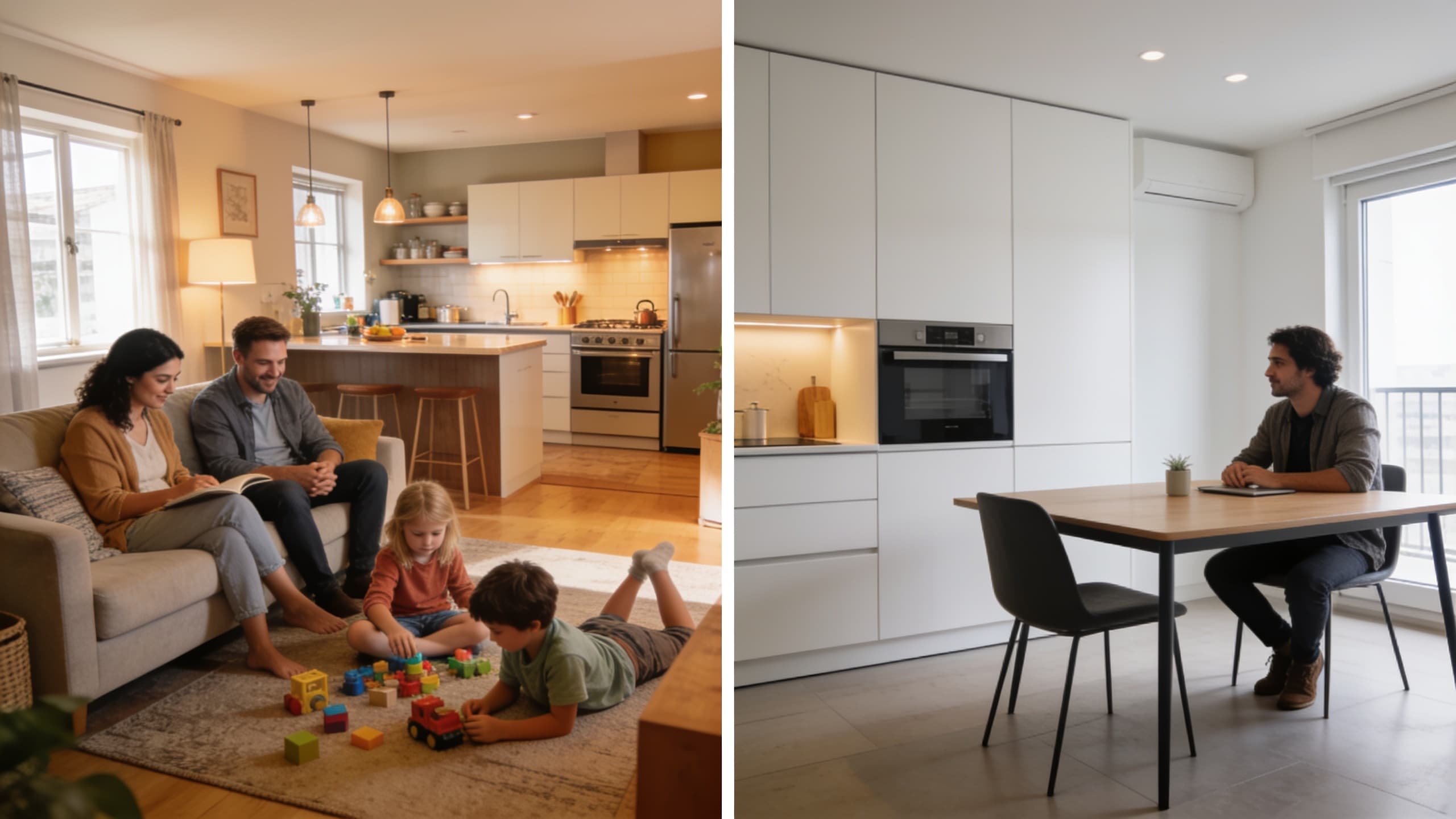
Home Swap vs. Airbnb: Which Saves You More Money?

SwappaHome Editorial Team
Home Exchange & Slow Travel Editorial
Honestly? It usually comes down to one question: how much do you actually want to bleed on lodging? In a home swap vs Airbnb comparison, home exchanges almost always cost less out of pocket, because...
Honestly? It usually comes down to one question: how much do you actually want to bleed on lodging? In a home swap vs Airbnb comparison, home exchanges almost always cost less out of pocket, because you're not paying nightly rates, cleaning fees, or service charges. You're just trading stays with another homeowner. Airbnb gives you more flexibility and instant availability, sure, but it also piles on fees that can add 20-30% to your final bill, according to data Airbnb itself has published on host and guest service fees.
So let me walk you through the real costs, the sneaky fees, the logistics headaches, and the lifestyle trade-offs of both. By the end you'll know which one actually fits how you travel (and what your bank account can handle).
Table of Contents
- What Is a Home Swap and How Does It Work?
- How Does Airbnb Pricing Actually Work?
- Home Swap vs. Airbnb: Which Saves You More Money?
- Hidden Costs Most Travelers Forget
- Comparing the Travel Experience Beyond Price
- Who Should Choose a Home Swap vs. Airbnb?
- How to Get Started With a Home Swap
- Frequently Asked Questions
What Is a Home Swap and How Does It Work?
A home swap is when two homeowners agree to stay in each other's houses or apartments, either at the same time or on separate dates, with no money changing hands for the accommodation itself. Platforms like Swappahome connect members who list their homes and browse listings in places they'd love to visit, then hash out an exchange that works for both sides.
The mechanics are pretty simple, really. You set up a profile, list your home's location, size, amenities, and available dates. Then you go hunting for a match. Say someone in Lisbon wants to visit Denver while you're itching to see Lisbon. Once you both agree, you lock in dates, sort out keys or entry instructions, and sometimes even swap cars (though that's its own separate conversation).
Most swap platforms charge either a flat annual membership fee, usually somewhere between $100 and $200 a year, or a smaller per-swap fee. But there's no nightly rate. No cleaning fee. No service charge stacked on top. That's the whole reason home swapping keeps getting called one of the best forms of budget travel accommodation out there, especially on longer trips where nightly rental costs would otherwise snowball fast.
Simultaneous vs. Non-Simultaneous Swaps
There are two flavors of this. A simultaneous swap is exactly what it sounds like: you're both traveling at the same time, so you're in their place while they're in yours. A non-simultaneous swap (some people call it a "hosted exchange" or point-based system) lets you stay in someone's home during their off-season, or whenever they're not around, and you pay it back later. Or you rack up points to spend with other members across a bigger network. The non-simultaneous route gives you way more scheduling freedom, which is huge for retirees or remote workers who don't need to travel on anyone's fixed calendar.
How Does Airbnb Pricing Actually Work?
Airbnb pricing starts with a base nightly rate the host sets, then adds a cleaning fee, then a guest service fee that Airbnb tacks on, and together those usually push the final price 15-25% above the advertised nightly rate. You really need to understand this fee stack before you compare anything to home swapping.
Airbnb's guest service fee generally comes in under 14.2% of the booking subtotal, according to Airbnb's published fee policy, though the exact number bounces around depending on the listing and region. On top of that, hosts set their own cleaning fees, which run anywhere from $25 for a small city apartment to $200 or more for a big vacation home. Some hosts want a security deposit too. And in plenty of U.S. cities and international spots, you'll get slapped with occupancy or tourist taxes at checkout. Barcelona, Paris, and New York all have their own lodging taxes that Airbnb collects on the host's behalf.
Here's roughly what a "$100 per night" listing actually costs once the meter's done running:
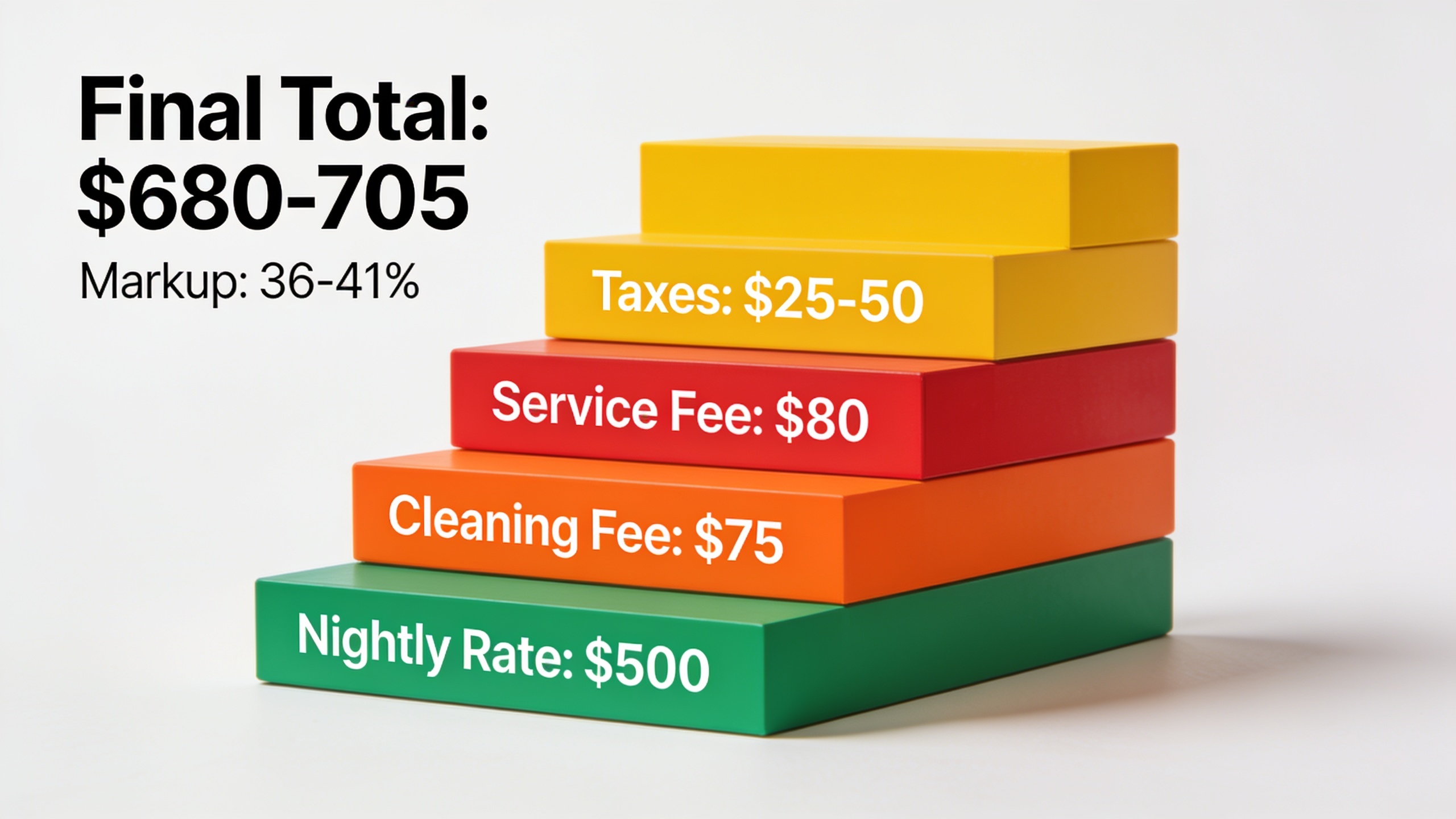 Cost breakdown infographic showing how Airbnb fees stack up from base rate to final total price
| Cost Component | Estimated Amount (per booking) |
|---|---|
| Base nightly rate ($100 x 5 nights) | $500 |
| Cleaning fee (one-time) | $75 |
| Airbnb guest service fee (~14%) | $80 |
| Occupancy/tourist tax (varies by city) | $25-$50 |
| Estimated total | $680-$705 |
That's about 36-41% above the advertised nightly rate by the time every fee lands. And yeah, that gap is exactly what makes people grumble when they start comparing platforms.
Home Swap vs. Airbnb: Which Saves You More Money?
For anything longer than four or five nights, a home swap pretty much always beats Airbnb on cost, because you skip nightly rates entirely and pay only a modest membership fee, while Airbnb's price climbs with every single extra night, cleaning fee, and tax. And the longer your trip runs, the wider that gap gets.
Take a two-week family vacation. On Airbnb, even a fairly modest $120-a-night two-bedroom comes to $1,680 in base rent alone. Add the cleaning fee, the service fee, and local taxes, and you're realistically looking at $2,100 to $2,300. With a home swap? Your only cost is that annual membership, often $150 to $200, which covers unlimited swaps for the whole year. Not just this one trip. Do two swaps in a year and your effective cost per trip drops to $75-$100. A tiny fraction of what the same Airbnb would run you.
And it snowballs with bigger groups. Airbnb's per-night pricing usually climbs with bedroom count and occupancy, but a swapped home's "price" doesn't budge no matter how many people you bring, as long as the place comfortably fits everyone. That's why families and multigenerational crews love swapping. Otherwise they'd be booking two Airbnb units and doubling the pain.
Now, to be fair, Airbnb can hold its own on really short trips. One to three nights, especially in cities with a glut of rentals where nightly rates are low and off-peak discounts kick in. If you just need a weekend crash pad, the hassle of arranging and coordinating a swap probably isn't worth it compared to a quick, cheap Airbnb.
Hidden Costs Most Travelers Forget
Both options come with secondary costs that quietly move the value needle, things like transportation, insurance, and all the incidental spending you do once you actually get there. Skipping over these is one of the most common budgeting mistakes people make.
Transportation and Local Logistics
Neither a swap nor an Airbnb gets you around once you land. If you're headed somewhere without solid public transit, you'll need to budget for car rentals, rideshares, or local transport. People traveling to places like Lombok, Indonesia, for instance, often lean on local operators like Ricaritranslombok to sort out shuttles, car rentals, and guided transport between islands and attractions. That cost hits you either way, swap or rental, but it's the kind of thing that's easy to forget when you're laser-focused on the lodging price.
Insurance and Financial Protection
Airbnb bakes in some protections, like AirCover for hosts and guests, but a security deposit or a damage dispute can still lock up your money for a while. Home swaps mostly run on mutual trust, sometimes with optional home exchange insurance add-ons. Either way, it's worth zooming out and asking how the trip fits into your bigger financial picture. If you're juggling travel spending against long-term savings goals, something like Wealthmax can help you think through budgeting and planning so a vacation doesn't quietly nibble away at money you'd earmarked for something else.
Personal Prep Costs
People also forget the little personal expenses tied to where and when they're going. Heading somewhere sunny for a beach swap or rental? That might mean sunscreen, swimwear, or a pre-trip spray tan from a place like Tantopia if you want to show up looking like you've already been on vacation for a week. None of this has anything to do with which lodging model you pick, but it's all part of the true cost of a trip, so factor it in regardless.
Comparing the Travel Experience Beyond Price
Money's not the whole story. Home swapping and Airbnb also differ a lot on flexibility, authenticity, and plain convenience, and the "right" one really depends on what kind of trip you're after. A side-by-side makes it easier to see.
| Factor | Home Swap | Airbnb |
|---|---|---|
| Typical cost for a 1-2 week stay | $75-$200 (membership-based) | $1,000-$2,500+ depending on location |
| Booking flexibility | Requires matching with another member; less spontaneous | Instant booking, wide date availability |
| Space and amenities | Full home, kitchen, laundry, sometimes a car | Varies widely; often smaller or hotel-style units |
| Local authenticity | High — you often get neighbor tips, local contacts | Moderate — depends on host engagement |
| Best for | Longer stays, families, retirees, remote workers | Short trips, spontaneous travel, solo stays |
| Cancellation flexibility | Depends on mutual agreement between members | Host-set cancellation policies, often stricter for last-minute changes |
| Upfront cost structure | Annual/membership fee, no per-night charge | Per-night rate plus fees, paid per trip |
Home swapping just tends to feel more like living somewhere. You're in an actual residential neighborhood, usually with the host's recommendations, their local contacts, and sometimes their car. Airbnb gives you tighter control over exact dates and spots, which is great if you're booking last minute or need a guaranteed check-in without having to coordinate with another human being who owns a house.
Who Should Choose a Home Swap vs. Airbnb?
The right pick comes down to trip length, group size, and how much flexibility you'll trade for savings. Broadly, home swapping wins for longer trips, bigger households, and people with flexible schedules, while Airbnb makes more sense for short, spur-of-the-moment, or very location-specific trips.
Digital nomads and remote workers tend to fall in love with home swaps. They need a real living space, decent Wi-Fi, a desk, a kitchen, for weeks or months at a stretch, and that flat membership cost gets more and more economical the longer they stay put. A one-month Airbnb, even with a long-term discount, can still run $2,000-$4,000 depending on the city. A swap keeps things basically flat.
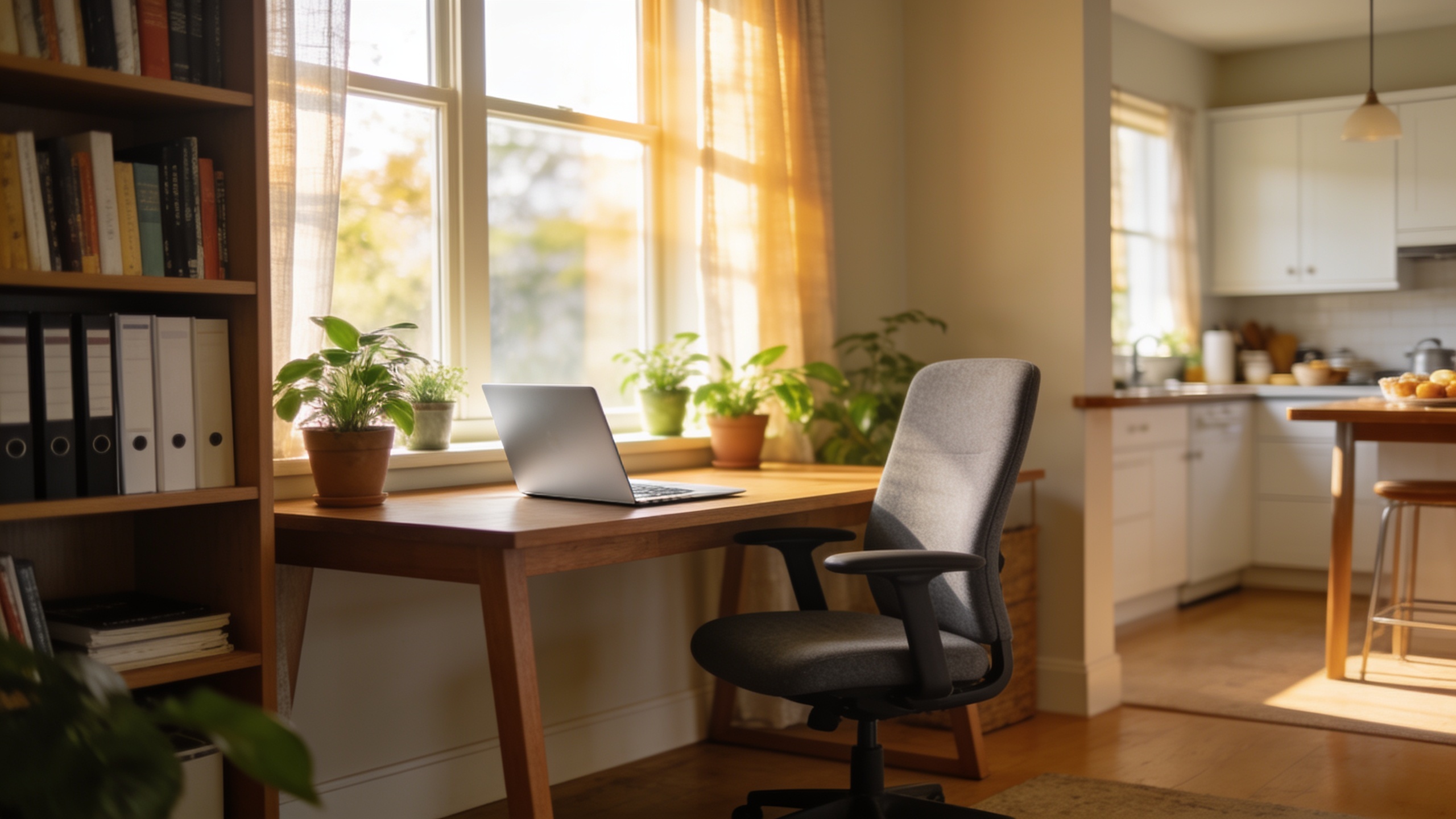 Remote worker's home office in a residential home with desk, laptop, natural lighting, and kitchen access
Families get a lot out of the extra room, the kitchen, the laundry. Most swapped homes come with all of that by default, which cuts down on restaurant tabs and laundromat runs that add up scary fast on a family trip. Multiple bedrooms plus a backyard or common area also just work better for a family of five than one cramped, hotel-style Airbnb unit.
Retirees with open schedules are perfectly set up for non-simultaneous swaps. They can travel off-peak when more homes are up for exchange, and honestly, settling into a fully furnished home beats living out of suitcases across a string of short-term rentals. Less hauling, less hassle.
Solo travelers or couples on a quick getaway, though? Airbnb's probably simpler for you. Arranging a swap takes lead time and coordination that just isn't worth it for two or three nights. If you care more about spontaneity than squeezing out every dollar, Airbnb's instant-book wins on convenience even when it costs more.
How to Get Started With a Home Swap
Getting into home swapping means building a detailed listing, being upfront about your availability, and reaching out to potential matches well before your travel dates, ideally two to six months ahead for the popular spots. This is one of those things where preparation and honest communication matter way more than moving fast.
Start by photographing your home properly and writing an accurate description of its size, location, and amenities. Transparency is what builds the trust that makes a swap actually work. Then go browse listings on a platform like Swappahome in the destinations you're eyeing, and reach out with specific dates instead of vague "hey, maybe sometime?" messages. Specificity speeds everything up. When you find a promising match, get the expectations on the table early: house rules, pet care if there's a pet, utility costs, whether a car or anything else is part of the deal. And finally, put the details in writing, swap emergency contacts, and honestly, do a quick walkthrough video call before the trip so nobody's blindsided on arrival.
One more thing. Building up a profile with reviews from past exchanges seriously boosts your odds of landing the good swaps in high-demand cities, kind of like how a solid review history helps hosts and guests trust each other on Airbnb.
Frequently Asked Questions
So is a home swap actually free? Not quite, but close. Most platforms charge an annual membership fee, usually $100-$200, and that covers unlimited swaps for the year. You're not paying any nightly rate to the other homeowner, which is the whole reason swaps come out so much cheaper than Airbnb on longer stays.
What if something breaks during a home swap? Depends on your agreement and the platform's policies. Some networks offer optional insurance add-ons, and plenty of swappers use a security deposit or a simple informal agreement covering damages. My advice: talk about it upfront and photograph your home's condition before you leave, kind of like the documentation Airbnb hosts do before a guest checks in.
Can I swap homes without traveling at the same time as my partner? Yep. Non-simultaneous swaps, often run through points-based systems, let you stay in someone's home during one window and pay it back later, or spend accumulated points with a totally different member. Super handy for retirees and remote workers with flexible calendars.
Is Airbnb ever the cheaper option? For really short stays, one to three nights, yeah, Airbnb can win on total cost, since arranging a swap just isn't worth the coordination for such a brief trip. Airbnb also tends to come out ahead in places with low nightly rates and tons of host competition, where discounted listings undercut what a swap membership effectively costs.
Do I have to swap cars along with my home? Nope, totally optional and negotiated separately from the home itself. A lot of swappers do arrange it because it kills the rental car cost, but plenty of exchanges are just the home, with each traveler sorting out their own transport, whether that's public transit, rideshares, or regional operators in the more tourist-heavy areas.
Final Thoughts
When you boil down home swap vs Airbnb, the math leans toward swapping for longer trips, bigger groups, and anyone with a flexible schedule, while Airbnb keeps its footing for short, spontaneous stays where convenience just matters more than saving money. Personally, I don't think you have to marry one option forever. Match the model to the trip: a home swap for your three-week summer escape, an Airbnb for a quick weekend away. Either way, once you actually understand the real cost structure, fees, taxes, transportation, all of it, you're in a much stronger spot to travel well without torching your budget.

Published by
SwappaHome
SwappaHome Editorial Team
Home Exchange & Slow Travel Editorial
The SwappaHome Editorial Team brings together travel research, home-exchange community insights, and platform data to produce practical guides for first-time and experienced home swappers. Every article cites real platforms, current market rates, and verifiable city-level facts so readers can make informed decisions without guessing.
Ready to try home swapping?
Join SwappaHome and start traveling by exchanging homes. Get 7 free credits when you sign up!