
Home swapping safety tips for confident exchanges 2026

SwappaHome Editorial Team
Home Exchange & Slow Travel Editorial
Home swapping safety tips for confident exchanges 2026 !Homeowners discussing swap in cozy living room Home swapping offers travelers free...
Home swapping safety tips for confident exchanges 2026
 Homeowners discussing swap in cozy living room
Home swapping offers travelers free accommodation worldwide, but safety concerns often hold homeowners back. Verified member systems reduce fraud by over 70%, making home swapping far safer than most people realize. This guide walks you through proven strategies to protect your property, build trust with swap partners, and enjoy secure exchanges through verification, communication, smart security measures, insurance coverage, and community reputation systems.
Table of Contents
- Understanding Home Swapping And Its Risks
- Member Verification And Vetting Processes
- Communication Protocols For Safety And Trust
- Home Security Measures And Property Protection
- Insurance And Legal Considerations In Home Swapping
- Trust And Reputation Systems In Home Swap Communities
- Common Misconceptions About Home Swapping Safety
- Practical Safety Tips For Successful Home Swaps
- Explore Safe Home Swapping With SwappaHome
Key takeaways
| Point | Details |
|---|---|
| Verification cuts fraud by 70% | Identity checks and background screening dramatically reduce fraudulent swaps. |
| Communication builds trust | Video tours and written agreements prevent misunderstandings and disputes. |
| Smart home security protects property | Remote monitoring and temporary access codes safeguard your home. |
| Insurance reduces financial risk by 80% | Specialized coverage handles property damage and liability concerns. |
| Reputation systems promote accountability | Mutual reviews encourage responsible behavior and transparency. |
Understanding home swapping and its risks
Home swapping lets homeowners exchange properties temporarily without money changing hands. Unlike traditional rentals where guests pay hosts, swappers trade equivalent stays using credits or direct exchanges. This model creates authentic travel experiences while cutting accommodation costs to zero.
Three popular swap types dominate globally. Simultaneous swaps involve direct property exchanges where both families stay in each other's homes at the same time. Non-simultaneous swaps use credit systems where hosting earns points for future stays anywhere in the network. Hospitality exchanges combine hosting with local guidance, where one party stays while the host remains present.
Common risks include:
- Property damage from accidents or careless guests
- Theft of valuables or personal belongings
- Liability issues if guests injure themselves on your property
- Misunderstandings about house rules, pet policies, or usage boundaries
- Cancellations that disrupt travel plans
- Privacy violations or unauthorized property access
Proactive safety planning transforms these risks into manageable concerns. Following the home swap verification checklist 7 steps before confirming exchanges helps homeowners avoid most negative experiences. The key is layering multiple safety measures rather than relying on trust alone.
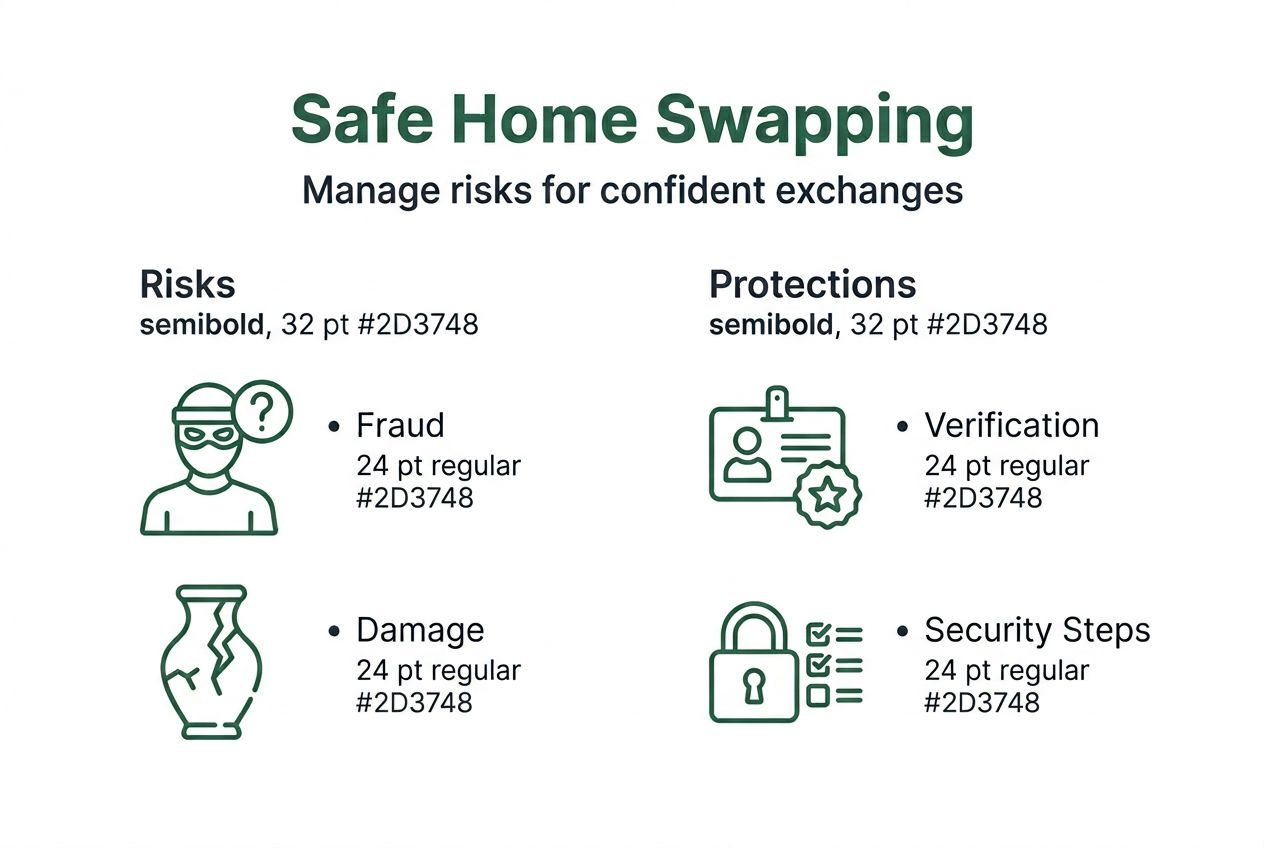 Infographic summarizing home swapping risks and protections
Member verification and vetting processes
Verification serves as your first defense against fraud and problematic swaps. Identity verification confirms swap partners are who they claim to be through government-issued IDs, address verification, phone number validation, and social media cross-checks. Background screening adds another layer by reviewing criminal records, previous swap histories, financial standing checks, and reference validation from past hosts.
Platforms implement verification differently. Some require minimal email confirmation while others mandate comprehensive identity documentation, video verification calls, property ownership proof, and continuous monitoring of member behavior. The most secure platforms combine automated checks with human review teams.
| Verification Method | Fraud Prevention | Trust Building | Implementation Difficulty |
|---|---|---|---|
| Email only | Low | Minimal | Easy |
| ID document check | Medium | Moderate | Medium |
| Background screening | High | Strong | Complex |
| Video verification | High | Very Strong | Medium |
| Multi-factor system | Very High | Excellent | Complex |
Strong vetting processes create safer communities. When members know everyone passed rigorous screening, they feel more comfortable opening their homes. This psychological safety encourages honest behavior since verified identities make bad actors easily traceable. Platforms with verified member systems reduce fraud substantially, protecting both properties and reputations.
Pro Tip: Request copies of verification documents directly from your swap partner before finalizing agreements. Check that profile photos match ID pictures and validate property ownership through public records when possible.
Communication protocols for safety and trust
Clear communication eliminates assumptions that lead to disputes. Transparent dialogue about expectations, property conditions, and house rules prevents most misunderstandings. Multi-channel communication using video calls, messaging apps, email documentation, and phone conversations builds stronger connections than text alone.
Video tours revolutionize trust building. Live walkthroughs let you showcase your home's actual condition while assessing your partner's property remotely. Point out quirks like temperamental appliances, parking challenges, or neighborhood noise during these tours. Seeing each other's faces humanizes the exchange and makes deceptive behavior far less likely.
Explicit written agreements should cover:
- Exact swap dates with arrival and departure times
- Guest limits and visitor policies
- Pet permissions and restrictions
- Cleaning expectations before departure
- Utility usage guidelines
- Emergency contact procedures
- Cancellation terms and notice requirements
Following home swap communication etiquette guide principles ensures respectful, productive exchanges. Document everything in writing, even casual agreements discussed verbally. Digital contracts or detailed message threads provide evidence if disputes arise. The role of trust in home exchanges grows through consistent, honest communication.
Pro Tip: Create a shared digital document outlining all swap details, house rules, and local recommendations. Update it collaboratively so both parties acknowledge and agree to every point before keys change hands.
Home security measures and property protection
Physical security protects your biggest investment. Smart locks offer tremendous advantages for home swappers by providing temporary access codes that expire automatically, remote locking and unlocking capabilities, entry logs showing who accessed your home when, and elimination of key copying risks. Install them on all exterior doors for comprehensive coverage.
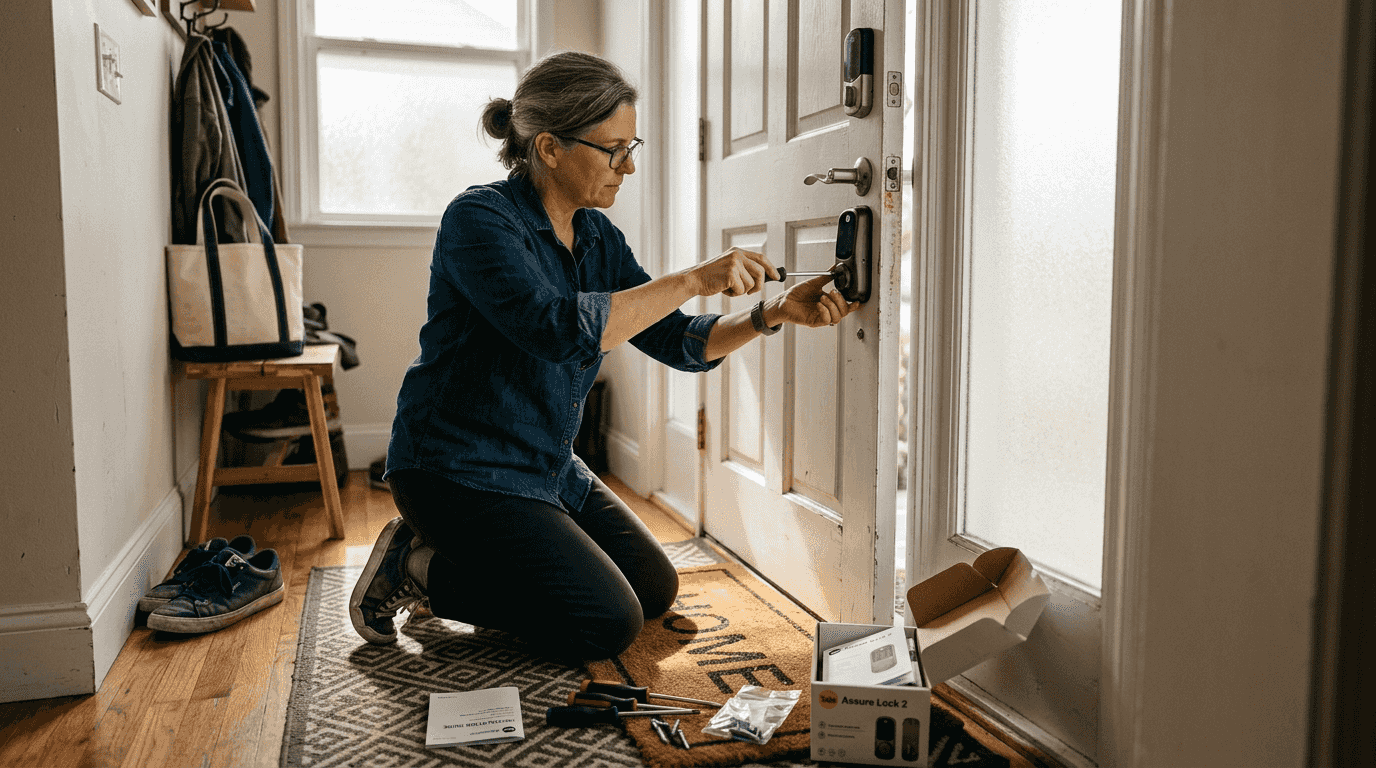 Woman installing smart lock on home door
Surveillance cameras provide peace of mind through real-time monitoring. Position cameras at entrances, driveways, and common outdoor areas while respecting privacy by avoiding bedrooms and bathrooms. Inform swap partners about camera locations upfront to maintain trust and comply with privacy laws.
Secure valuables before swaps. Move jewelry, important documents, collectibles, and sentimental items to locked safes or off-site storage. Don't assume guests will respect closed doors or private areas. Remove temptation entirely.
| Security Option | Cost Range | Installation | Remote Access | Best For |
|---|---|---|---|---|
| Traditional locks | $50-$200 | Easy | No | Basic security |
| Smart locks | $150-$350 | Moderate | Yes | Active swappers |
| Security cameras | $100-$500 | Moderate | Yes | High-value properties |
| Integrated systems | $500-$2000 | Complex | Yes | Maximum protection |
The home swap security guide provides detailed implementation steps. Create pre-swap checklists covering exterior door checks, window lock verification, alarm system testing, and valuables removal. Post-swap checklists should include property inspection, inventory verification, lock code changes, and neighbor feedback collection.
Pro Tip: Give temporary access codes to trusted neighbors during swaps. They can monitor for unusual activity and respond quickly to emergencies, adding human oversight to your technological protections.
Insurance and legal considerations in home swapping
Standard homeowner policies rarely cover home swapping scenarios. Specialized insurance fills critical gaps. Property damage coverage handles repairs when guests accidentally break fixtures, damage appliances, or cause structural harm. Liability protection defends you if guests injure themselves on your property and file claims. Cancellation coverage reimburses non-refundable expenses when swaps fall through unexpectedly.
Insurance designed for home swapping addresses unique risks standard policies ignore. Some providers offer short-term policies covering single swaps while others provide annual coverage for frequent swappers. Coverage significantly reduces financial exposure, with specialized policies cutting homeowner risk by substantial margins.
Legal contracts formalize swap terms and provide dispute resolution frameworks. Include property condition clauses, damage responsibility assignments, guest behavior expectations, termination conditions, and jurisdiction for legal disputes. Both parties should sign contracts before exchanging keys.
Homeowner responsibilities extend beyond your own property. You remain liable for damage your family causes at your swap partner's home. Verify your policy covers your actions as temporary guests elsewhere. Some countries require specific insurance types for property exchanges, so research local regulations before international swaps.
Consult insurance providers specializing in sharing economy risks. Explain your swapping frequency, property value, and typical guest profiles to get appropriate coverage recommendations. Don't rely on platform insurance alone since it often provides minimal protection with high deductibles.
Trust and reputation systems in home swap communities
Mutual reviews create powerful accountability mechanisms. Knowing your behavior will be publicly rated motivates careful property treatment and rule compliance. Detailed reviews help future swappers make informed decisions by revealing patterns of respectful behavior or warning about problematic members.
Reputation frameworks typically include:
- Star ratings across categories like cleanliness, communication, and accuracy
- Written testimonials describing specific experiences
- Response rates showing communication reliability
- Verification badges indicating completed security checks
- Swap completion statistics tracking successful exchanges
- Community standing based on accumulated positive feedback
Effective reputation systems require honest participation. Leave detailed, balanced reviews mentioning both positive aspects and areas for improvement. Avoid revenge reviews after disputes, but do warn the community about serious violations like property damage or rule breaking. The swappahome blog emphasizes that transparent feedback strengthens the entire community.
Platforms with robust review systems see higher safety adherence. Members protect their reputations by maintaining properties well, communicating clearly, and respecting house rules. Bad actors get filtered out quickly when their negative reviews accumulate, making the community progressively safer.
Review generation and management principles apply to home swapping. Request reviews promptly after swaps while experiences remain fresh. Respond professionally to all feedback, thanking positive reviewers and addressing concerns from critical ones. Your response style tells future partners how you handle conflicts.
Common misconceptions about home swapping safety
Myth: Trust alone ensures safe swaps. Reality shows that emotional connections, while valuable, don't protect against accidents, misunderstandings, or rare bad actors. Even genuinely nice people can accidentally damage property or misinterpret house rules. Layered safety measures protect relationships by preventing problems that erode trust.
Myth: Home swapping carries more risk than paid rentals. The opposite often proves true. Mutual vulnerability creates aligned incentives since both parties have homes at stake. Renters risk only security deposits while swappers risk their own properties being mistreated in retaliation. This reciprocity encourages better behavior than monetary transactions alone.
Myth: Formal agreements seem unfriendly and unnecessary between swappers. Written contracts actually strengthen relationships by eliminating ambiguity. Clear expectations prevent the resentment that builds when unstated assumptions go unmet. Professional frameworks demonstrate respect for both parties' interests and provide fair dispute resolution paths.
Relying on assumptions about shared values or community goodwill exposes homeowners to preventable problems. The home swapping safety myths article debunks additional misconceptions. Adopt comprehensive safety approaches combining verification, communication, security measures, insurance, and legal protections rather than depending on single safeguards.
Practical safety tips for successful home swaps
Follow these actionable steps for secure exchanges:
-
Vet swap partners thoroughly by reviewing all verification badges, reading past guest reviews carefully, conducting video calls to assess communication style, and confirming property ownership through public records.
-
Communicate expectations explicitly through detailed house manuals covering appliance instructions, wifi passwords, trash schedules, and local emergency contacts. Schedule live video property tours showing actual conditions. Create written agreements documenting all swap terms and house rules.
-
Secure your home by installing smart locks with temporary codes, positioning security cameras at key locations, removing valuable items to secure storage, and informing neighbors about your absence with guest descriptions.
-
Arrange appropriate insurance by purchasing specialized home swapping coverage, verifying your policy covers guest liability, reviewing damage claim procedures, and keeping coverage documents accessible during swaps.
-
Document property conditions with timestamped photos of every room before departure, detailed inventory lists for provided items, and meter readings for utilities to establish baselines.
-
Follow up after swaps by conducting thorough property inspections, leaving honest detailed reviews promptly, addressing any issues directly with partners first, and documenting lessons learned for future exchanges.
Pro Tip: Maintain a swap diary recording partner details, communication highlights, pre-swap property conditions, and post-swap observations. This documentation proves invaluable if disputes arise and helps refine your safety protocols over time. The safe home swapping steps guide provides additional implementation details.
Explore safe home swapping with SwappaHome
Ready to put these safety principles into practice? SwappaHome offers comprehensive member verification ensuring every user passes identity checks before listing properties. The platform provides transparent communication tools including integrated messaging, video call scheduling, and digital contract templates that formalize swap agreements.
 https://swappahome.com
Browse verified home swap listings across numerous countries, all from homeowners who completed rigorous vetting processes. The review system lets you assess potential partners through detailed feedback from previous swappers. Learn how SwappaHome works to understand the credit system, booking process, and safety features protecting your exchanges. Start swapping confidently with a platform designed around the security principles outlined in this guide.
FAQ
Is home swapping safe for first-time users?
Yes, especially when using platforms with strong verification and communication tools. First-time swappers should follow all recommended safety steps including thorough partner vetting, detailed written agreements, and appropriate insurance coverage. Starting with shorter local swaps helps build confidence before attempting longer international exchanges.
What should I do if something goes wrong during a home swap?
Contact your swap partner immediately to discuss the issue and attempt direct resolution. Notify platform support for mediation assistance and documentation. Review your legal agreement and insurance policy for dispute resolution procedures. Use the SwappaHome cancellation policy when necessary to protect yourself from further problems.
How can technology improve safety in home swapping?
Smart locks, security cameras, and remote monitoring systems provide real-time oversight of your property during swaps. Video tours before exchanges let you verify property conditions and build partner trust. Digital contracts eliminate misunderstandings by documenting all agreements clearly. Technology increases transparency and confidence, making fraudulent behavior far more difficult and risky for potential bad actors.
Do I need special insurance for home swapping?
Standard homeowner policies typically exclude coverage for home swapping scenarios. Specialized insurance addressing property damage, liability protection, and cancellation coverage significantly reduces your financial risk. Consult insurance providers familiar with sharing economy models to get appropriate protection. Without proper coverage, you could face substantial out-of-pocket costs if problems occur during swaps.
Recommended
- Security in Home Swapping: What Homeowners Must Know | SwappaHome Blog
- Is Home Swapping Safe? Complete Safety Guide 2024
- Home Swap Security: How to Protect Your Property | Complete Guide
- 7 Steps to a Secure Home Swap Verification Checklist | SwappaHome Blog
- How to Travel Safely in Namibia: Expert Tips and Essential Steps - Namibia Luxury Safaris | Book Your 2025/2026 Adventure Today
- Top Safari Safety Tips for a Secure African Adventure 2025

Published by
SwappaHome
SwappaHome Editorial Team
Home Exchange & Slow Travel Editorial
The SwappaHome Editorial Team brings together travel research, home-exchange community insights, and platform data to produce practical guides for first-time and experienced home swappers. Every article cites real platforms, current market rates, and verifiable city-level facts so readers can make informed decisions without guessing.
Ready to try home swapping?
Join SwappaHome and start traveling by exchanging homes. Get 7 free credits when you sign up!