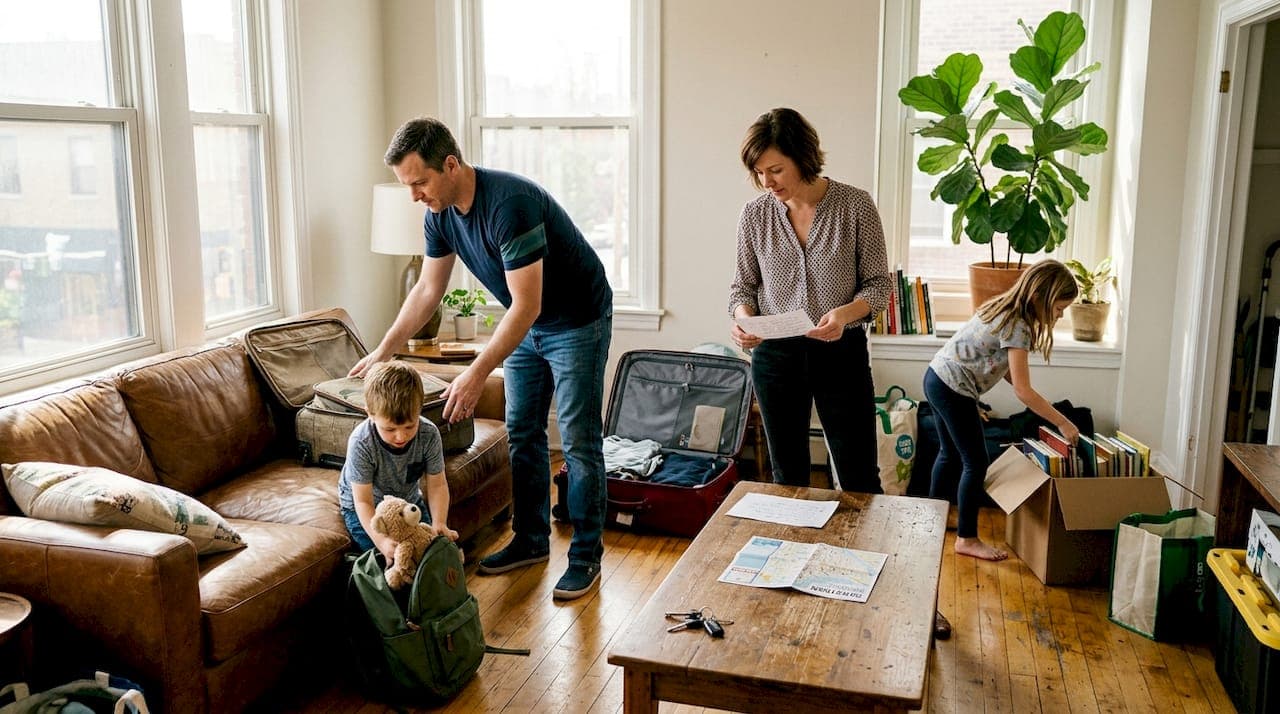
Home swapping: save up to 90% on travel accommodations

SwappaHome Editorial Team
Home Exchange & Slow Travel Editorial
Home swapping: save up to 90% on travel accommodations !Family arriving in home swap living room > TL;DR: > > - Home swapping offers travelers up to...
Home swapping: save up to 90% on travel accommodations
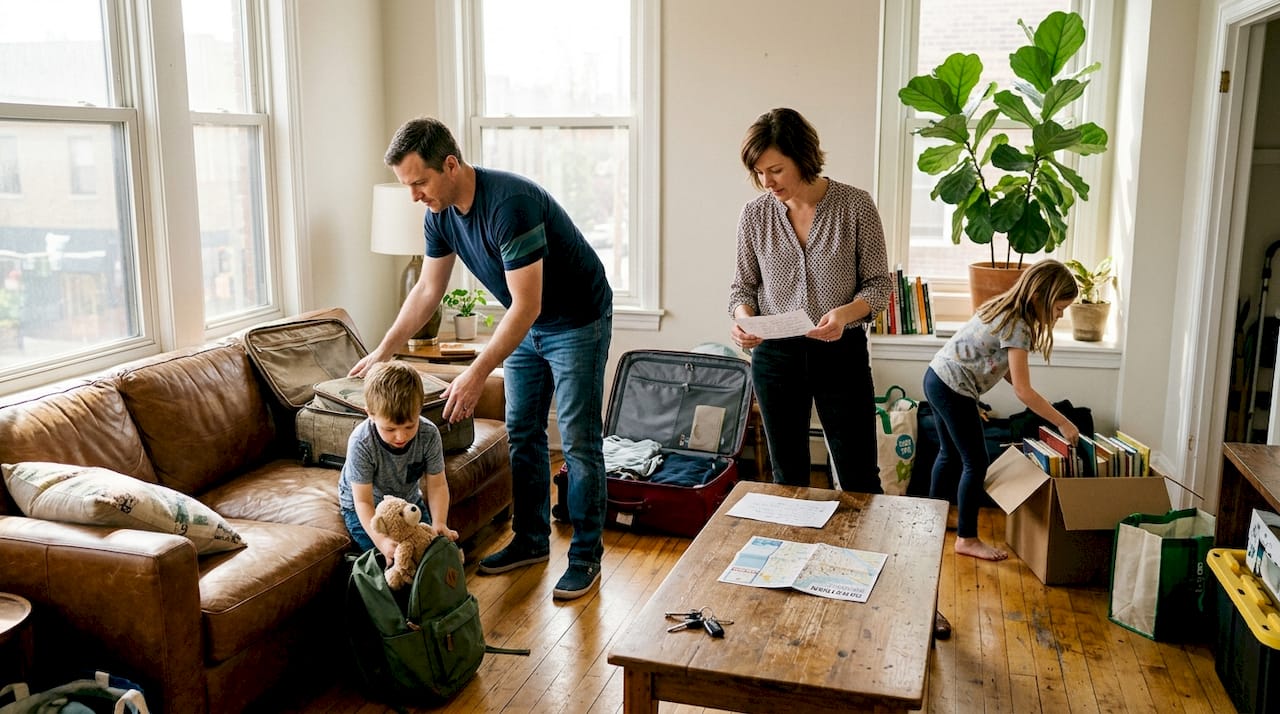 Family arriving in home swap living room
TL;DR:
- Home swapping offers travelers up to 90% savings compared to hotels and rentals.
- It involves exchanging homes through platforms with verified profiles, flexible swap types, and clear etiquette.
- Beyond cost savings, it provides authentic neighborhood experiences and builds global friendships.
Accommodation costs are eating a bigger slice of every travel budget in 2026. Hotel rates in major cities have climbed steadily, and short-term rental platforms like Airbnb now charge fees that can push a two-week stay well past $3,000. But a growing community of travelers has quietly been sidestepping these costs entirely, reporting 30 to 90% savings through home swapping. This guide breaks down exactly how home exchange works, what you can realistically save, and the proven strategies that make it work for families, solo travelers, and everyone in between.
Table of Contents
- How home swapping works: The mechanics of affordable exchange
- How much can you save? Real numbers compared to hotels and rentals
- Steps for a safe, successful swap: Profiles, prep, and etiquette
- Pitfalls and edge cases: What to watch for and how to avoid risks
- Why home swapping changes the budget-travel game and what most skip
- Start your cost-saving home swap journey with SwappaHome
- Frequently asked questions
Key Takeaways
| Point | Details |
|---|---|
| Dramatic savings | Home swapping can reduce accommodation costs by up to 90% compared to hotels or rentals. |
| Cultural immersion | Staying in real homes offers authentic local experiences and food savings unavailable in most hotels. |
| Safety and flexibility | Verified platforms, flexible exchange formats, and etiquette practices ensure safe, seamless swaps even for beginners. |
| Plan for success | Thorough preparation, honest profiles, and clear communication help guarantee worry-free exchanges. |
How home swapping works: The mechanics of affordable exchange
Home swapping is simpler than most people expect. You list your home on a platform, connect with another homeowner who wants to visit your area, and you both stay in each other's place, either at the same time or at different times. No money changes hands for accommodation. That's the core idea.
There are three main types of swaps to know:
- Simultaneous swap: Both parties stay in each other's homes at the same time. Great for matching schedules.
- Non-simultaneous swap: You host someone first, earn credits, then redeem those credits to stay somewhere else later. This is the most flexible option.
- Points or credit-based swap: Platforms assign credit values to nights hosted. One credit typically equals one free night anywhere in the network.
The step-by-step process looks like this:
- Register and verify your identity on the platform.
- Create a detailed profile with photos of your home.
- List your property with honest descriptions, amenities, and available dates.
- Search for homes in your target destination using filters.
- Send a swap request or use credits to book directly.
- Confirm logistics, share a house manual, and travel.
Verification is a key trust layer. Reputable platforms run identity checks, collect reviews after each stay, and encourage members to complete detailed house manuals that cover everything from the Wi-Fi password to the quirks of the washing machine.
| Platform | Fee model | Listings | Swap type |
|---|---|---|---|
| HomeExchange | Annual subscription | 150,000+ homes | Simultaneous + points |
| SwappaHome | Credit system | Global, 150+ countries | Non-simultaneous + credits |
| Kindred | No annual fee | Curated network | Invitation-based |
As noted in home swap platform comparisons, major platforms like HomeExchange and SwappaHome have hundreds of thousands of listings across more than 150 countries, with varying fee structures to suit different travel styles. Understanding the key home swapping benefits before choosing a platform helps you pick the right model for how you actually travel.
Pro Tip: Use the destination filter to find members who have already listed your city as a desired location. These are your warmest leads for a quick, successful match.
If you want to see how real travelers have made this work, real-world home swap stories from seasoned swappers are a great place to start building confidence.
How much can you save? Real numbers compared to hotels and rentals
The numbers are hard to ignore. Home swapping delivers 80 to 90% cost reductions compared to hotel or rental bookings. That's not a marketing claim. It's what consistent data from platform users shows year after year.
Let's put that in concrete terms with a side-by-side comparison:
| Accommodation type | Average cost per night (major city) | 14-night trip total |
|---|---|---|
| 3-star hotel | $180 | $2,520 |
| Airbnb (2-bedroom) | $150 + fees | $2,300+ |
| Home swap (credit-based) | $0 accommodation | $0 to $50 in platform credits |
The real savings numbers from actual users back this up. One traveler documented saving $47,000 over three years compared to equivalent hotel costs. Families regularly report $2,000 to $3,000 saved per two-week trip. Those figures don't even account for food savings.
When you stay in a home with a full kitchen, you stop eating every meal at a restaurant. That alone cuts $30 to $40 per person per day from your travel budget. For a family of four on a 14-night trip, that's over $2,000 in additional savings on top of the accommodation discount.
"Home swapping has saved us over £25,000 in holiday costs. We've stayed in places we never could have afforded otherwise, and we've made lifelong friends in the process."
Here's how savings stack up across different traveler profiles:
- Frequent traveler (6+ trips/year): Maximum benefit from credit accumulation; annual platform fees become negligible.
- Family traveler: Biggest per-trip savings due to needing large spaces; home swaps provide full homes vs. cramped hotel rooms.
- Occasional traveler (1-2 trips/year): Still saves $1,500 to $2,500 per trip; platform fee pays for itself on the first stay.
- Solo traveler: Savings are proportionally strong; credits are easier to earn with a single-occupancy home.
For more accommodation savings stories and a breakdown of the top money-saving networks, you can explore detailed comparisons that match your travel frequency.
Steps for a safe, successful swap: Profiles, prep, and etiquette
Knowing the savings potential is one thing. Actually executing a smooth swap is another. The good news is that success factors are well documented: high-quality photos, transparent descriptions, video calls before confirming, and clear communication of expectations make the biggest difference.
Here's a practical checklist to get your first swap right:
- Sign up and verify early. Verified profiles get significantly more swap requests.
- Take professional-quality photos. Natural light, tidy spaces, and multiple angles of every room.
- Write an honest description. Mention the great things and the limitations. Guests who know what to expect leave better reviews.
- Prepare a detailed house manual. Include appliance instructions, emergency contacts, neighborhood tips, and your Wi-Fi password.
- Schedule a video call. A 15-minute call builds trust faster than any amount of messaging.
- Confirm logistics in writing. Arrival times, key handoff, parking, and any house rules.
Etiquette matters as much as logistics. The home swap community runs on goodwill and reciprocity. A few non-negotiable practices:
- Communicate early and often, especially if plans change.
- Leave the home as clean as you found it, or cleaner.
- Respect personal spaces like private closets or home offices.
- Leave a small welcome gift: local snacks, a handwritten note, or a bottle of wine.
Pro Tip: Leave a printed card with your neighbor's contact information and your top five local restaurant recommendations. Guests love it, and it almost always results in a five-star review.
For detailed guidance on how to prep your home for swaps and a full breakdown of home swap etiquette best practices, these resources cover every scenario you're likely to encounter. You can also review a practical home swap tip checklist before your first stay. Real etiquette and savings stories from experienced swappers show just how much a thoughtful approach pays off.
Pitfalls and edge cases: What to watch for and how to avoid risks
Home swapping has real advantages, but it's not without friction. Knowing the limitations upfront saves you from unpleasant surprises.
The most common issues travelers run into:
- Insurance gaps. Many standard home insurance policies don't automatically cover home exchange stays. Check your policy before listing, and ask your insurer about a short-term rider if needed.
- Lease restrictions. Renters must check their lease terms. Many landlords require written permission before allowing third parties to stay.
- Preparation time. Getting your home guest-ready takes real effort. Cleaning, decluttering, and writing a house manual aren't trivial tasks.
- Platform fees. Annual membership costs range from $75 to $299 depending on the platform. Factor this into your savings calculation.
- Advance planning required. Home swapping is not for spontaneous trips. Most successful swaps are arranged weeks or months ahead.
As platform guidance consistently notes, travelers should verify insurance terms, seek landlord permissions where applicable, and factor in both preparation time and platform costs when calculating net savings.
Pro Tip: Stick to verified-only networks when you're starting out. Platforms that require identity verification and have a review system dramatically reduce the risk of a bad experience.
The credit-based model also means you need to host before you can travel extensively. If you want to take five trips a year, you'll need to host five times. That's a real commitment, and it's worth being honest with yourself about whether your lifestyle supports it.
For a broader look at how global home swap networks manage these challenges, and for an unfiltered view of swap risks and realities, both resources give you a balanced picture before you commit.
Why home swapping changes the budget-travel game and what most skip
Most articles frame home swapping purely as a cost-cutting tool. That's accurate, but it misses the bigger shift happening here.
When you stay in someone's home, you don't just save money. You land in a real neighborhood, shop at the same grocery store your host uses, and get restaurant recommendations that never appear on any travel blog. That's a fundamentally different travel experience than a hotel or even a well-located Airbnb can offer.
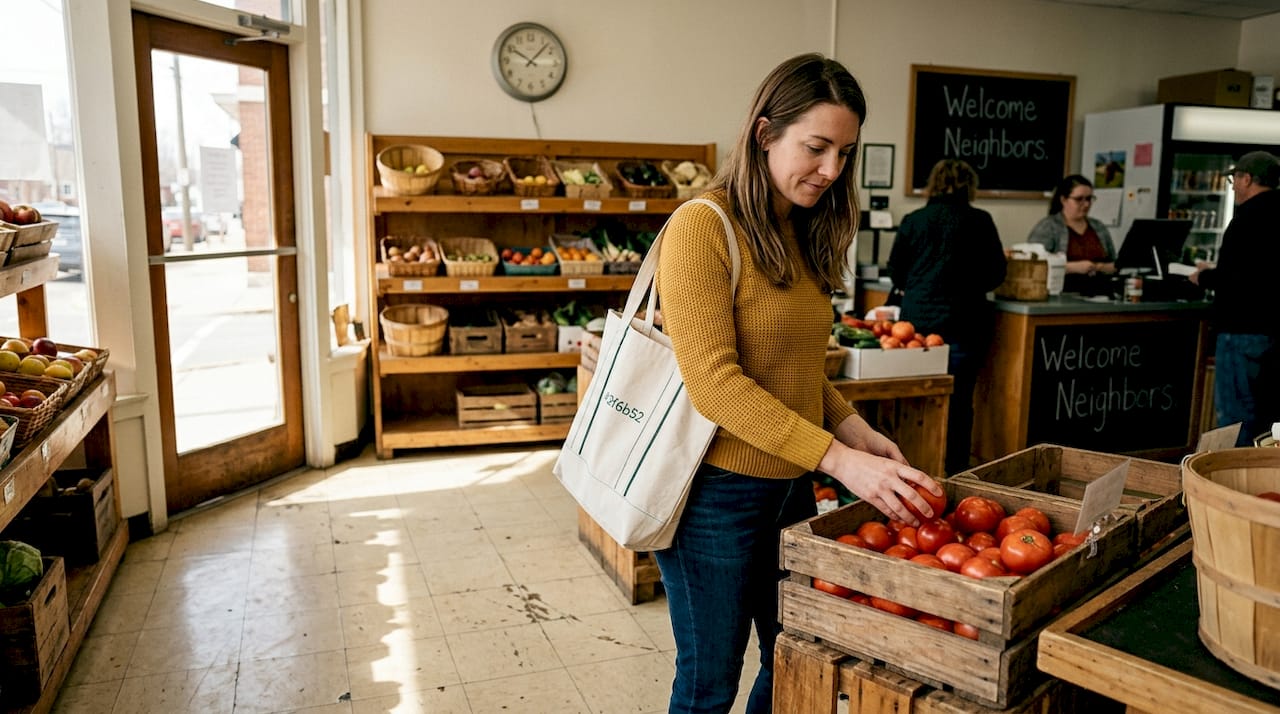 Traveler shopping in local grocery store
The hidden value of home swapping goes beyond finances. Swappers consistently report forming genuine friendships and describe the feeling of having a trusted contact in cities around the world. That network compounds over time. After five or six swaps, you have friends in five or six countries.
Contrary to what many assume, this model suits families and non-backpackers best. A family of four gets a full house with bedrooms, a kitchen, and a backyard, often in a residential neighborhood, for the cost of a platform membership. That's not a budget compromise. That's an upgrade.
There's also a sustainability angle worth noting. Empty homes being used for travel means fewer new hotel rooms need to be built and fewer resources consumed. It's a lighter footprint by design.
For a deeper look at affordable global travel insights and the community dimension that most guides overlook, it's worth spending time with the experiences of long-term swappers who've built this into their annual travel rhythm.
Start your cost-saving home swap journey with SwappaHome
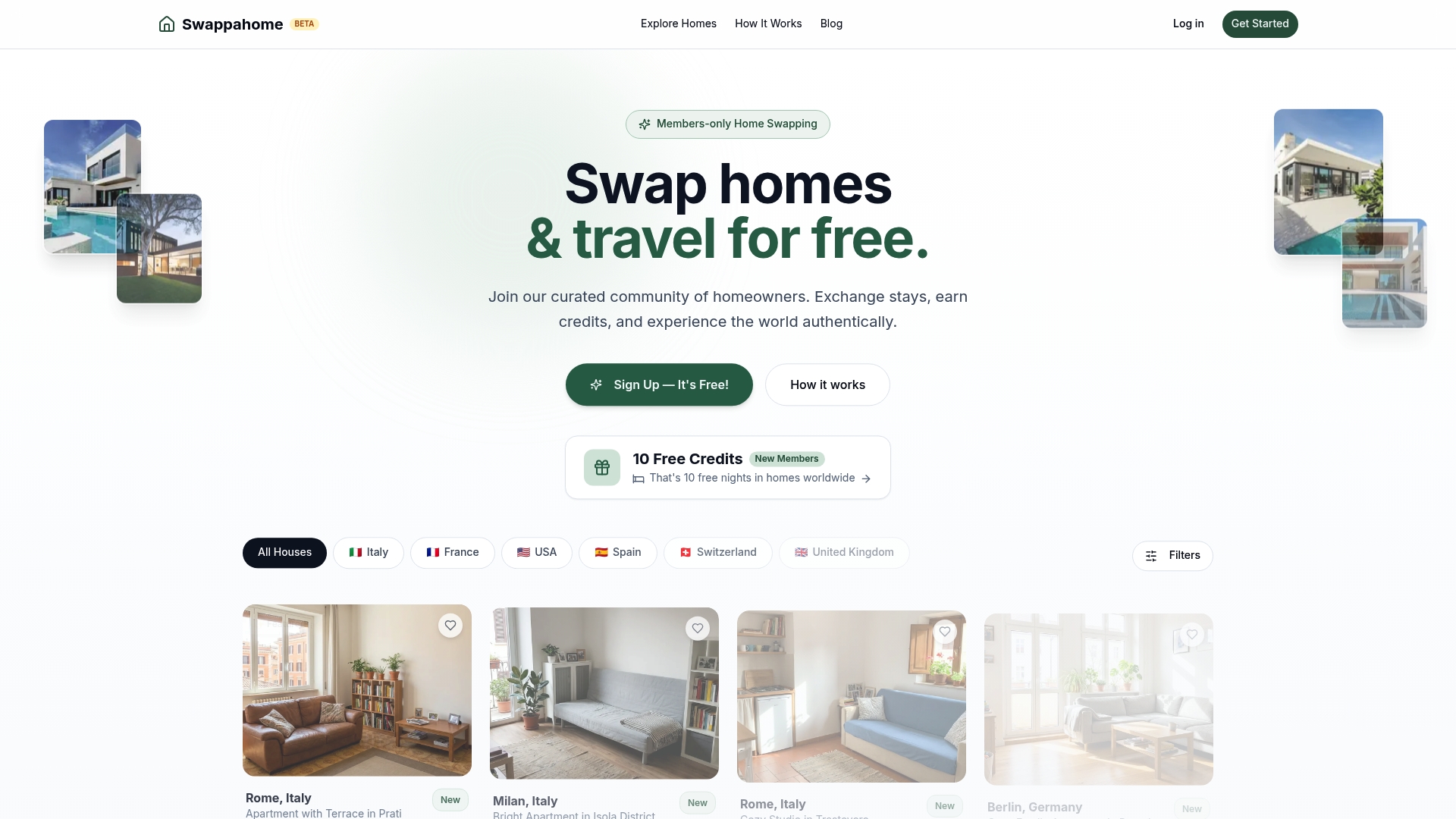
Everything covered in this guide, from credit-based exchanges to etiquette best practices, becomes much easier when you're working with a platform built specifically for verified, community-driven swaps.
 https://swappahome.com
SwappaHome connects budget-conscious travelers with a global network of verified homeowners across more than 150 countries. The credit system is straightforward: host a guest, earn a credit, use it for a free night anywhere in the network. New members receive free starter credits to get their first trip moving without waiting to host first. You can browse home swap listings by destination, travel dates, or home type, and explore curated food and culture swap experiences that go beyond just a place to sleep. List your home, connect with like-minded travelers, and start turning your property into a passport.
Frequently asked questions
What are the main costs involved with home swapping?
Most platforms charge an annual fee of $75 to $299, and some swaps include a small cleaning fee. Compared to nightly hotel rates, total costs remain dramatically lower.
Can renters participate in home swapping?
Yes, but you must first check your lease terms and get written permission from your landlord before hosting or swapping your rental property.
How safe is home swapping for families?
Home swapping is generally very safe for families, particularly on platforms that require identity verification and reviews. Most families report more space and better amenities than comparable hotel stays.
Is home swapping only for experienced travelers?
Not at all. Newcomers can start with short, local swaps to build confidence and reviews. Starting with short stays and using community guides makes the learning curve very manageable.
Recommended

Published by
SwappaHome
SwappaHome Editorial Team
Home Exchange & Slow Travel Editorial
The SwappaHome Editorial Team brings together travel research, home-exchange community insights, and platform data to produce practical guides for first-time and experienced home swappers. Every article cites real platforms, current market rates, and verifiable city-level facts so readers can make informed decisions without guessing.
Ready to try home swapping?
Join SwappaHome and start traveling by exchanging homes. Get 7 free credits when you sign up!