How authenticity in travel creates deeper experiences

SwappaHome Editorial Team
Home Exchange & Slow Travel Editorial
How authenticity in travel creates deeper experiences !Traveler entering lived-in local apartment > TL;DR: > > - Authenticity in travel involves...
How authenticity in travel creates deeper experiences
 Traveler entering lived-in local apartment
TL;DR:
- Authenticity in travel involves objective, constructive, and existential experiences that influence travelers' satisfaction and community benefits.
- Home exchanges promote genuine local immersion, cultural connection, and budget-friendly travel by living in residents' homes.
Seasoned travelers return from bucket-list destinations feeling vaguely hollow, while a random afternoon chatting with a local baker in a side-street café becomes the story they retell for years. That gap, between what we expect to be "real" and what actually moves us, sits at the heart of one of travel's most misunderstood concepts. Authenticity is not a feature a tour operator can simply advertise, and it is not exclusively found in UNESCO sites or off-the-beaten-path villages. This guide breaks down what authenticity in travel truly means, why the research behind it is more surprising than you'd think, and how practical tools like home exchanges can radically shift your experience.
Table of Contents
- What does authenticity in travel really mean?
- Why does authenticity matter? Impact on travelers and communities
- Home exchanges: The key to authentic, budget-friendly travel
- Navigating the line between authenticity and commercialization
- Our take: The uncomfortable truth about seeking authenticity
- Ready for authentic travel? Explore home exchange with Swappahome
- Frequently asked questions
Key Takeaways
| Point | Details |
|---|---|
| Multiple types of authenticity | Travel authenticity includes objective, constructive, and existential dimensions, each with its own impact. |
| Authenticity boosts satisfaction | Authentic experiences enhance traveler well-being, memorable moments, and engagement with local communities. |
| Home exchanges enable immersion | Swapping homes lets you live like a local, save money, and access more meaningful connections and tips. |
| Beware of overt commercialization | Commercially staged experiences can sometimes feel inauthentic, so look for community-driven options. |
| Openness creates authenticity | True authenticity often comes from genuine participation and mutual respect with host communities. |
What does authenticity in travel really mean?
The word "authentic" gets thrown around on travel blogs the way "artisan" appears on coffee shop menus: constantly and often without much substance. But travel researchers have spent decades trying to pin it down precisely, and their framework is genuinely useful.
Authenticity in travel is conceptualized through three main types: objective (tangible heritage), constructive (personal expectations and interpretations), and existential (transformative, self-related experiences). Understanding these distinctions immediately changes how you plan and evaluate your trips.
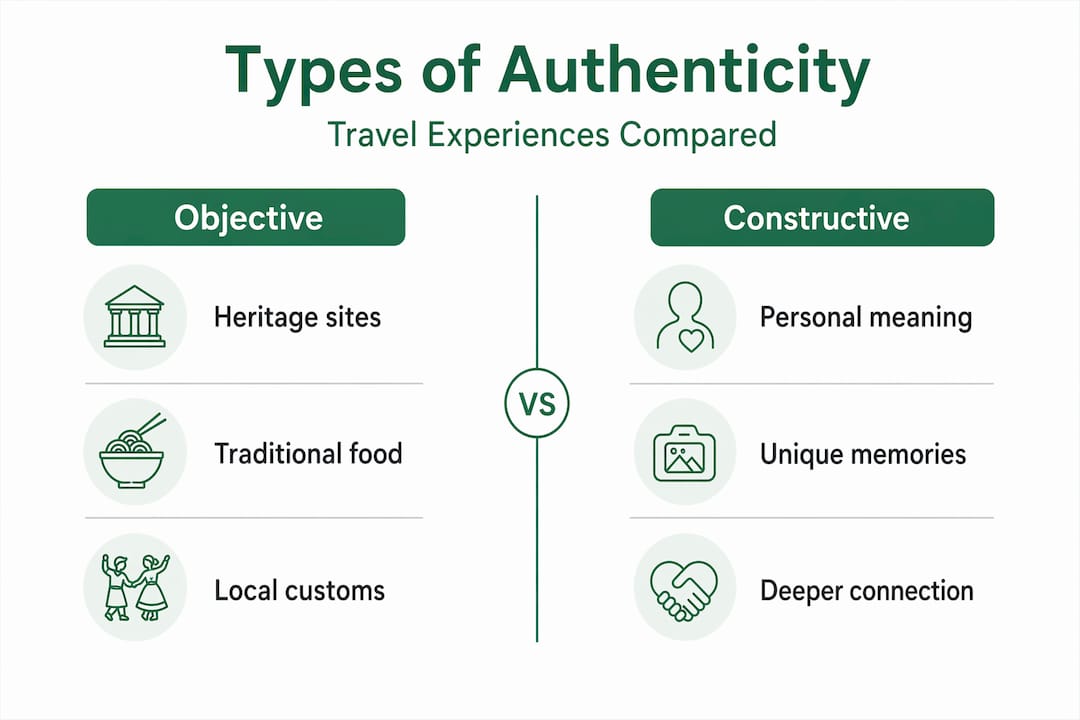 Infographic showing two types of travel authenticity
| Type | Definition | Real-world example | Who it serves |
|---|---|---|---|
| Objective | Authenticity rooted in tangible heritage or historical fact | Visiting an unrestored medieval village in southern France | History lovers, heritage seekers |
| Constructive | Authenticity shaped by your own expectations and cultural lens | Finding a local market "exactly as you imagined Japan" | First-time explorers, culture-curious travelers |
| Existential | Authenticity tied to personal transformation and self-discovery | Feeling genuinely changed after living with a local family | Growth-focused, immersive travelers |
These are not mutually exclusive. A single trip can carry all three, and often the most memorable journeys do exactly that.
Here is why these distinctions matter:
- Objective authenticity is largely out of your control. You can seek it, but the site itself determines whether it exists.
- Constructive authenticity is shaped largely by the traveler. Managing expectations and doing honest research before you go directly affects it.
- Existential authenticity is almost entirely up to you. No guide can manufacture it. It emerges from openness, risk, and genuine participation in local life.
"Authenticity is not embedded in objects or places alone. It is continuously negotiated between visitors, hosts, and the broader community. Tour operators cannot stage it; they can only create conditions that make it more or less likely." — Tourism Studies Review, 2023
If you want to build cultural exchange activities into your itinerary, starting with an honest look at which type of authenticity you are personally chasing will save you from booking experiences that feel hollow on arrival. Travelers who have sought authentic experiences in Provence often describe how the most moving moments came not from guided tours but from unplanned meals, market conversations, and time spent simply observing daily rhythms.
Why does authenticity matter? Impact on travelers and communities
Now that we understand authenticity on a conceptual level, let's see why it actually matters for your travels and the communities you visit.
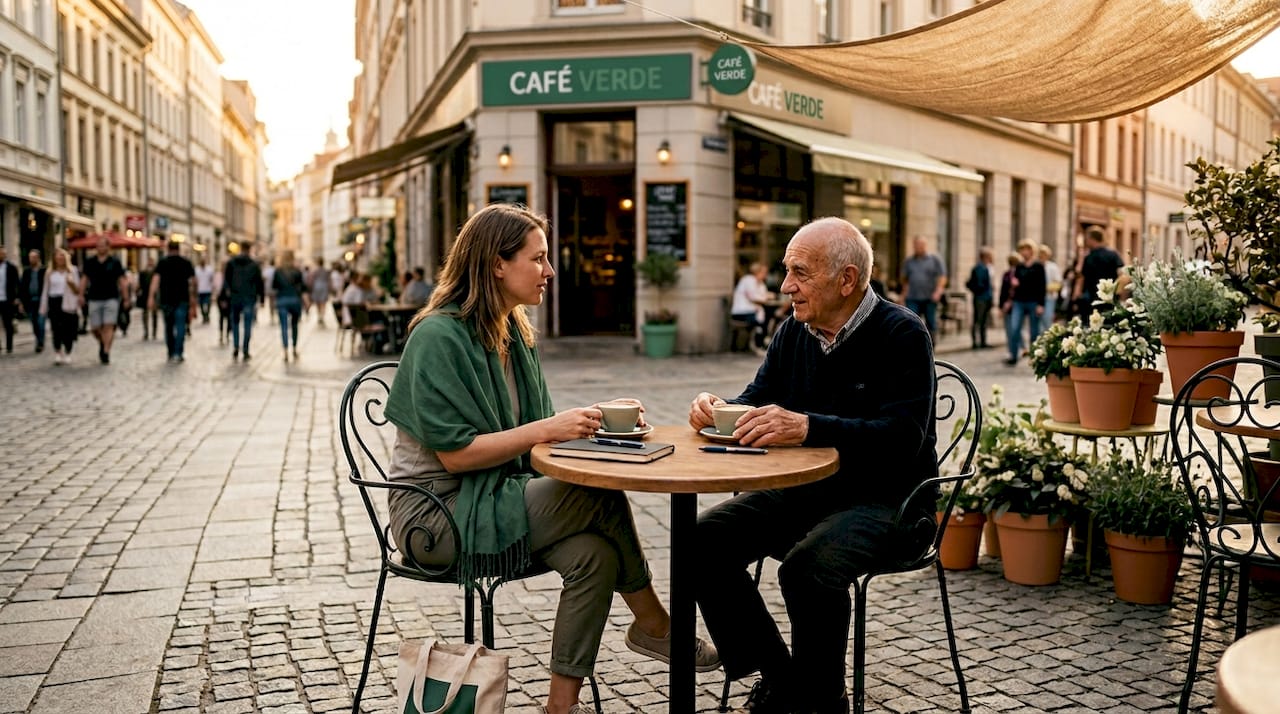 Traveler talking with local in busy café
Research has moved well beyond subjective testimonials. An empirical study conducted in Quanzhou, China, found that perceived authenticity positively impacts well-being, memorability, and place attachment, with mean scores of 4.72 to 4.89 out of 7 across authenticity dimensions. These numbers are not just academic. They represent real, measurable differences in how people feel during and after a trip.
| Metric | Impact of high perceived authenticity |
|---|---|
| Emotional well-being | Significantly higher post-trip satisfaction |
| Memorability | Experiences recalled more vividly and for longer |
| Place attachment | Stronger desire to return, recommend, and support local businesses |
| Traveler loyalty | Higher likelihood of sustainable, repeat visits |
| Community benefit | Increased local economic participation by visitors |
The same body of research confirms that authenticity types influence tourist motivations, satisfaction, and loyalty differently. Objective authenticity drives heritage site visits, constructive authenticity shapes expectations and satisfaction at cultural events, and existential authenticity drives personal growth and long-term behavioral change, including how travelers treat local communities on return visits.
For travelers, the top three benefits of authentic experiences are:
- Richer memories that hold emotional weight long after the trip ends
- Genuine personal growth through cross-cultural understanding and empathy
- Greater satisfaction and value perception, even on a modest budget
For hosts and local communities, the benefits are equally significant:
- Respectful visitors who participate in local economies more meaningfully
- Stronger reputation for a destination built on real community pride
- More sustainable tourism that does not erode the culture it attracts
The practical takeaway is clear. Travelers who actively pursue authentic experiences, whether through affordable stays through exchange or other immersive formats, consistently report higher satisfaction. And global home exchange models are increasingly recognized as a powerful vehicle for exactly this kind of connection.
Home exchanges: The key to authentic, budget-friendly travel
Understanding the impact of authenticity leads many travelers to seek immersive options. Enter home exchanges as a practical solution.
Home exchanges enable authentic local immersion by placing you in residential areas, giving you access to local markets, and connecting you with hosts who share insider knowledge that no guidebook covers. For budget-conscious travelers, the model is a revelation. You are not paying for a hotel room sanitized for tourists. You are living in someone's actual home, in their neighborhood, shopping where they shop.
The core benefits of home exchanges for authenticity:
- Local connections: Your exchange partner becomes an informal ambassador, pointing you toward real neighborhood gems
- Significant cost savings: Accommodation is free, which frees up your budget for genuine local experiences like cooking classes, local tours, or community events
- Cultural immersion by default: Living in a residential area means daily life unfolds around you naturally
- Host insider tips: These go far beyond restaurant recommendations, covering local festivals, community events, hidden natural spots, and timing advice
- Reduced tourist bubble: You naturally avoid tourist-facing businesses and discover where residents actually spend their time
Understanding how exchange platforms work is the essential first step. Most use a credit or point-based system where hosting earns credits that you spend on stays elsewhere. Swappahome, for example, operates on a simple model: one credit equals one free night, and new members receive starter credits to begin exchanging without waiting to host first.
Pro Tip: Before finalizing an exchange, send your host a message specifically asking about the neighborhood's weekly rhythm. Ask about local markets, community events, and any nearby spots that do not appear on travel sites. The answers you receive will tell you quickly whether this person is engaged enough with their community to give you the authentic experience you are looking for.
Travelers who have used different exchange models report that staying in someone's home in a European city like Lisbon or Lyon or a North American town like Oaxaca or Quebec City creates fundamentally different experiences than hotel stays. In one case, a couple exchanging homes in rural Tuscany spent a week joining their host family's harvest activities on their return visit, forming a genuine friendship that outlasted the trip.
"Budget travel used to mean sacrificing comfort and connection. Home exchange reverses that equation: by staying in someone's actual home, you gain more comfort and far more connection than any mid-range hotel could offer." — Housing and Travel Exchange Review
A trusted home exchange guide will also walk you through vetting a partner before you commit. Look for profile completeness, reviews from prior exchanges, and communication responsiveness. When choosing private holiday accommodation, experienced travelers in regions like Provence specifically cite the host relationship as the single biggest predictor of a memorable stay.
Navigating the line between authenticity and commercialization
Of course, not every "authentic" experience is what it seems. Here is how to spot real immersion versus a staged show.
Commercialization in travel refers to the process of packaging cultural practices or local life into consumable products for tourists. Commercialization can enhance perceived authenticity and satisfaction in some cases, but it risks turning living culture into a commodity, a performance designed for outsiders rather than a practice maintained by insiders.
The tricky part is that the line is genuinely blurry. A pottery workshop in Kyoto that costs $80 might be deeply authentic if the instructor is a working ceramicist sharing their actual practice. The same format offered by a large tourism company using replica materials is performance. The activity looks identical on a booking page.
Signs of a commodified experience:
- No local residents present except paid staff
- Scripts, rehearsed demonstrations, or performances that never deviate
- Heavy reliance on English-language promotion even in non-English-speaking regions
- Pricing structured entirely for tourist budgets rather than local norms
- No opportunity for genuine interaction or deviation from the program
Signs of a community-driven experience:
- Local residents participate voluntarily, not as part of a job
- Activities have an obvious function in daily or seasonal community life
- Pricing, timing, and format reflect local rhythms, not tourist convenience
- You feel like you are observing or joining something real, not watching a show
It is also worth acknowledging the subjectivity of authenticity. What feels deeply authentic to one traveler can feel contrived to another. Your own cultural background, past travel experience, and emotional state all color the perception. This is not a flaw; it is a reminder that authenticity is partly co-created between visitor and place.
Community-led travel platforms have emerged as one structural solution to this problem. When the platform itself is built around verified community members rather than third-party operators, the incentive structure changes. Hosts share their real lives because that is literally the model, not because they are paid to perform.
Pro Tip: Before booking any "cultural" experience, ask yourself three questions. First, would this activity exist if tourists stopped coming? Second, does money from this experience go primarily to local residents or to an outside operator? Third, does the activity require tourist presence to function, or are visitors simply invited into something that happens anyway? Honest answers to these three questions will clarify most situations.
Our take: The uncomfortable truth about seeking authenticity
After exploring definitions, impacts, and blurred lines, it is worth being direct about the real and sometimes messy nature of authenticity in travel.
The honest truth is that travelers who are most vocal about seeking authenticity are often the ones least likely to find it. There is a paradox at work: the more consciously you pursue "real" experiences, the more you risk treating local culture as a product to be consumed on your terms. You show up with a checklist. You want the market scene, the family dinner, the candid street moment. And because you are optimizing for an idea of authenticity rather than actual connection, you miss the genuinely unscripted moments that happen when you stop performing the role of the discerning traveler.
We have seen this play out in home exchanges more than once. A guest arrives determined to experience "real local life" but brings so many expectations and requests that the host feels like a service provider rather than a neighbor. The exchange technically happens, but the connection does not. Conversely, the exchanges that generate lasting friendships almost always start with one simple quality: genuine curiosity without an agenda.
The most profound experiences in travel without money exchange formats tend to happen in the margins. A guest lingers after breakfast and helps a host fix a garden gate. A traveler gets lost and ends up spending an hour in a barbershop waiting for directions that never come but leaving with a story and a standing invitation to return. You cannot book those moments. You can only make yourself available to them.
"The best exchange I ever had went sideways on day two. The host's plans fell through, we had an awkward evening with nothing to do, and we ended up cooking whatever was in the fridge together. That meal became the reason I went back the following year."
The contrarian insight here is genuinely practical: stop trying so hard. Participate first. Judge later. The most authentic travel is not a category of experience. It is a posture.
Ready for authentic travel? Explore home exchange with Swappahome
If you have been nodding along through this article, you already understand that authentic travel is less about destination and more about how you show up. Home exchange makes that shift structurally easier.
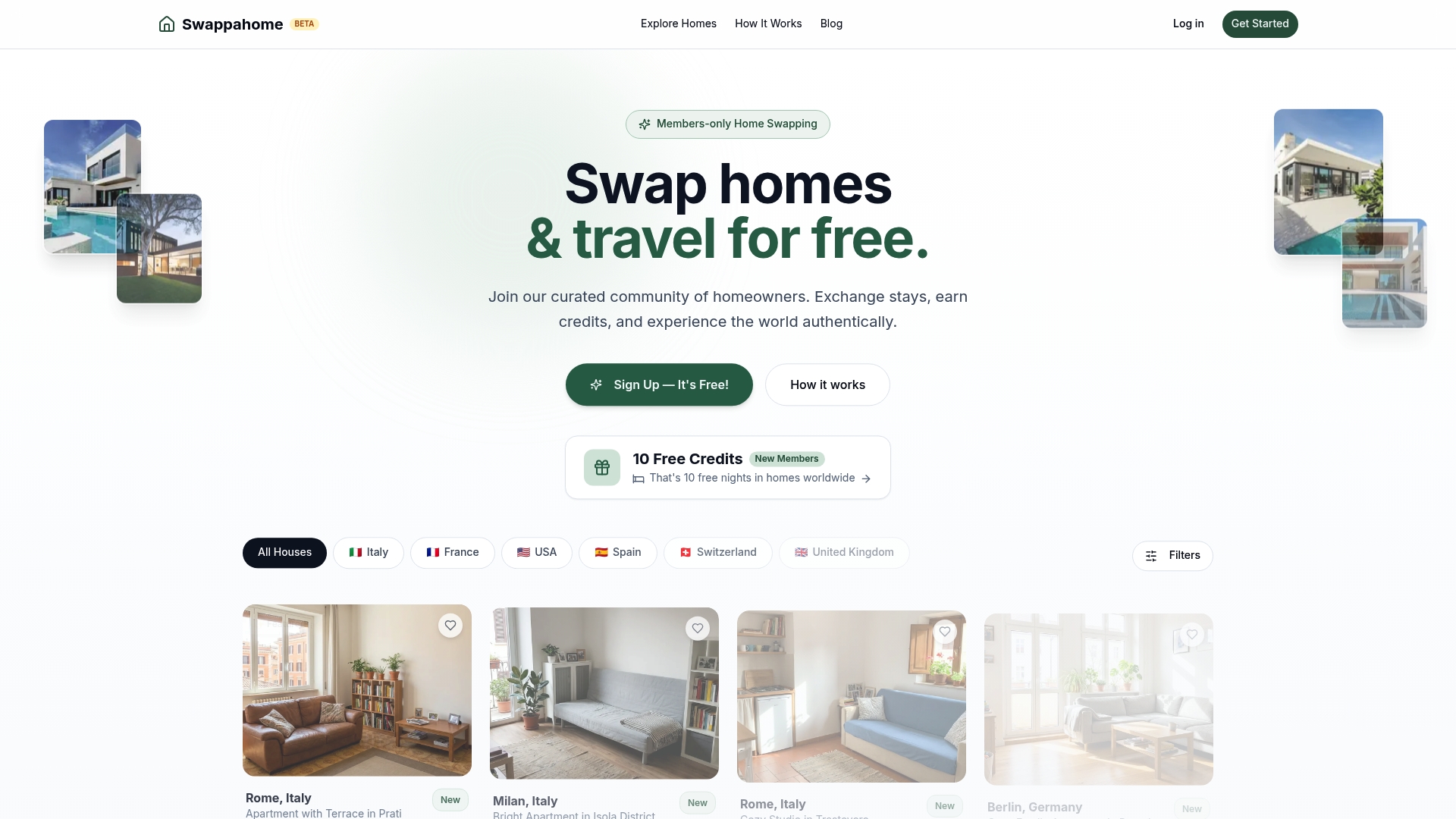 https://swappahome.com
Swappahome is built specifically for travelers who want real local immersion without the hotel bill that keeps them from participating fully in local life. The process is simple: list your home, earn credits by hosting verified members, and use those credits to stay in homes around the world for free. You can browse current available home swap listings right now to see what is already available across dozens of countries. New members receive starter credits, so you do not have to wait until you have hosted to begin exploring. Every member is verified, which means you are connecting with a community of real homeowners who genuinely share your interest in meaningful travel.
Frequently asked questions
How can travelers tell if an experience is truly authentic?
Look for genuine local engagement, community involvement, and activities not designed just for tourists. Authenticity is host community-driven, not something that can be staged convincingly over time.
Does choosing a home exchange guarantee an authentic trip?
Home exchanges increase your chances significantly by placing you in local neighborhoods with direct host connections, but local immersion through exchange still depends on your openness and genuine participation once you arrive.
Are commercialized experiences always less authentic?
Not always. A well-run experience led by genuine community members can still feel deeply authentic, but commercialization risks commodification when the primary driver becomes tourist revenue rather than cultural practice.
How does authenticity impact travel memories?
Authenticity directly boosts memorability and emotional resonance. Research shows that well-being and place attachment both score significantly higher when travelers perceive their experiences as authentic, making those memories last longer and feel richer.
Can hosts create authentic experiences for guests?
Yes, and the most effective way is simply to include guests in everyday life rather than performing for them. Sharing a market run, introducing a neighbor, or explaining a local custom naturally creates the kind of genuine connection no curated itinerary can replicate.
Recommended
- How to join travel communities for authentic adventures | SwappaHome Blog
- What Is Experiential Travel—Why It Matters for Homeowners | SwappaHome Blog
- Exchange-Based Travel: Unlocking Authentic, Affordable Stays | SwappaHome Blog
- How community-led travel platforms unlock affordable adventures | SwappaHome Blog

Published by
SwappaHome
SwappaHome Editorial Team
Home Exchange & Slow Travel Editorial
The SwappaHome Editorial Team brings together travel research, home-exchange community insights, and platform data to produce practical guides for first-time and experienced home swappers. Every article cites real platforms, current market rates, and verifiable city-level facts so readers can make informed decisions without guessing.
Ready to try home swapping?
Join SwappaHome and start traveling by exchanging homes. Get 7 free credits when you sign up!