
How to Choose the Right Dress for Vacation: A Complete Style Guide

SwappaHome Editorial Team
Home Exchange & Slow Travel Editorial
Key Takeaways A good vacation dress should suit the place, the weather, and the way you plan to spend your days. Choose pieces that feel comfortable in motion…
Key Takeaways
A good vacation dress should suit the place, the weather, and the way you plan to spend your days. Choose pieces that feel comfortable in motion and work with the rest of your suitcase.
- Match dress weight and coverage to the destination’s weather and customs.
- Choose a length and silhouette that work for your activities.
- Favor fabrics that are comfortable to wear and practical to care for.
- Use shoes and accessories to shift a dress between occasions.
- Pack pieces you can wear more than once with different outfits.
1. Match your dress to the destination
Start with the place itself, rather than a particular trend or outfit photo. The climate, local expectations, and pace of your trip all shape what will feel good to wear. A little destination research can help you pack for real plans instead of an imagined itinerary; SwappaHome’s seasonal destination guides offer one way to think through how a location changes across the year.
Choose breathable styles for hot, humid weather
On a hot, humid trip, look for a dress that allows air to move and does not cling uncomfortably when you sweat. A relaxed shape and sleeves or straps that feel secure can make a long afternoon easier. Think about how much time you’ll spend outside, too: a breezy dress can feel pleasant, while a light layer or a little more coverage may be welcome under strong sun.
Plan for cool evenings and changing temperatures
A destination can feel warm at midday and noticeably cooler after sunset, especially near the water or at higher elevations. Rather than packing a separate outfit for every temperature, choose a dress that layers comfortably under a cardigan, light jacket, or wrap. Check the forecast close to departure, then leave room for the kind of layer you’ll actually use.
Consider local customs and dress codes
A dress that works at a beach resort may not feel appropriate at a religious site, a formal restaurant, or a neighborhood with more conservative dress norms. Look up any guidance for places on your itinerary and plan a layer or longer hem where needed. When you’re unsure, a simple, more covered option is often easier to adapt than an outfit that depends on a particular setting.
Factor in your activities and daily itinerary
The best dress for vacation is one you can wear through the parts of the day you’ve planned. A packed day of walking calls for easy movement and shoes that can keep up; a day with a museum, café, and dinner may leave room for a more polished style. Be realistic about the schedule, including the practical gaps between activities, so your clothes feel like a help rather than another thing to manage.
2. Find a silhouette that suits your plans
Length and cut affect more than how a dress looks in a mirror: they shape how it feels on stairs, in a breeze, or after hours of walking. Picture the settings you’ll wear it in and how much adjusting you want to do during the day. For inspiration across different getaway styles, the Vacay Dreaming edit at Oh Polly is described as covering a range of holiday moods.
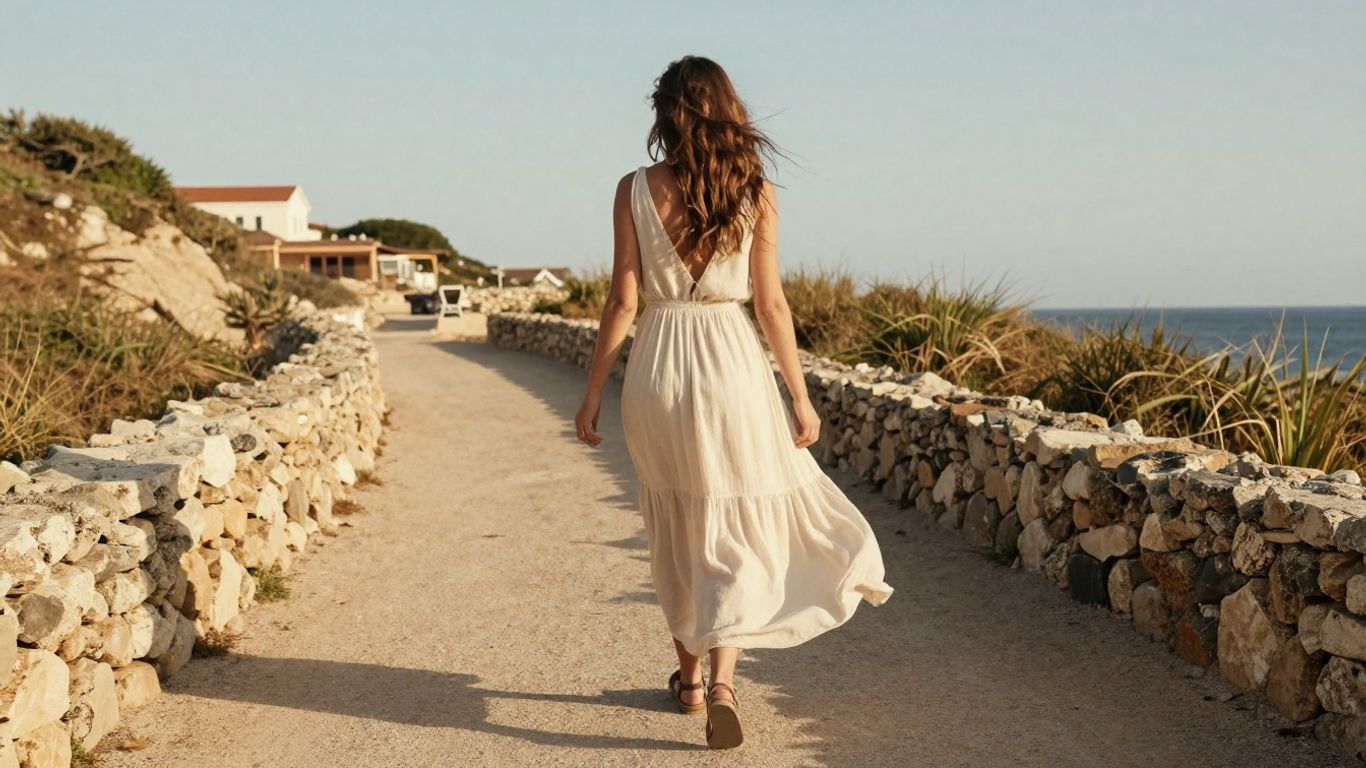 A traveler in a flowing vacation dress beside a sunny coastal path
Compare maxi, midi, and mini lengths
A maxi dress offers more leg coverage and can feel at home on a breezy evening, though its hem may need attention on stairs or uneven paths. Midi lengths land between versatility and coverage, while a mini can be easy to move in on warm days but may call for more thought when sitting or climbing. There is no universally best length; your itinerary and comfort are the useful measures.
A quick comparison can make the trade-offs clearer before you pack:
| Length | Often works well for | Consider before packing |
|---|---|---|
| Maxi | Evenings and more coverage | Hem length on stairs or uneven ground |
| Midi | Mixed plans and flexible styling | Where the hem falls when seated |
| Mini | Warm days and easy movement | Comfort when sitting or bending |
Use the table as a starting point, then try the dress in the kinds of movements your trip will involve. A length that feels effortless at home should still feel right when you’re carrying a day bag or climbing into a taxi.
Choose a cut that’s comfortable for long days
For an all-day outfit, check that the dress feels comfortable at the shoulders, waist, and underarms—not just while standing still. A cut that stays put when you reach, sit, and walk can spare you from constant small adjustments. If you’ll be out for hours, consider whether the skirt gives you enough stride and whether any seams or details might rub.
Look for adjustable details and flexible fits
Ties, elastic panels, adjustable straps, and wrap-style closures can make a dress easier to fine-tune as you wear it. These details are especially useful if you expect to layer or if your day moves from a warm afternoon to an air-conditioned space. Check that any adjustable feature feels secure and comfortable rather than relying on a quick glance in the mirror.
Consider how the dress moves when walking or dancing
Before packing a dress, take a few full steps, turn, sit down, and raise your arms. Notice whether the fabric catches, the hem rides up, or the neckline shifts more than you like. A dress that moves naturally with you tends to feel more wearable across a full day, whether you’re strolling through town or heading out to dance.
3. Choose travel-friendly fabrics
Fabric can determine whether a dress feels pleasant after a warm walk and whether it’s ready to wear again after being packed. Check the care label as well as the hand of the fabric; a garment that feels lovely but needs complicated care may not suit a trip with limited laundry options. The goal is a practical balance, not a claim that one material works for every climate.
Pick lightweight materials for warm-weather trips
For warm-weather travel, lightweight fabric can feel easier to wear, especially when the fit also allows some airflow. Hold the dress up to the light and consider how it will feel in direct sun, a crowded street, or a warm restaurant. Softness, breathability, and how the fabric rests against your skin matter more than a fabric name alone.
Check whether the fabric wrinkles easily
A dress that creases in your suitcase may still be worth bringing, but it helps to know what care it needs before you leave. Scrunch a small section gently in your hand, then see how it looks when released; this is a simple preview, not a guarantee of what packing will do. If you’d rather avoid ironing on holiday, prioritize garments that look presentable with a quick hang and a little time to settle.
Look for quick-drying options for beach days
For a beach or pool day, consider how quickly a dress might dry if it gets splashed or goes over a damp swimsuit. A lightweight cover-up can be useful between swimming and lunch, while a delicate fabric may be better kept for dry plans. Tiger Mist labels a category “Vacation Dresses,” which can be a useful browsing starting point when you’re considering getaway styles.
Balance comfort, coverage, and opacity
Lightweight fabric can be comfortable, but check how transparent it becomes in bright daylight and whether it feels secure when you move. A lining, slip, or thoughtfully chosen undergarment can make a dress more comfortable to wear in different settings. Try the garment under natural light before the trip, since indoor lighting can hide details you may notice outside.
4. Style dresses for different vacation occasions
A small number of dresses can cover many plans if you think about styling before you pack. Shoes and accessories can change the feel of an outfit, but comfort and the setting still come first. Choose combinations you can picture yourself wearing, not just ones that look good together in a suitcase.
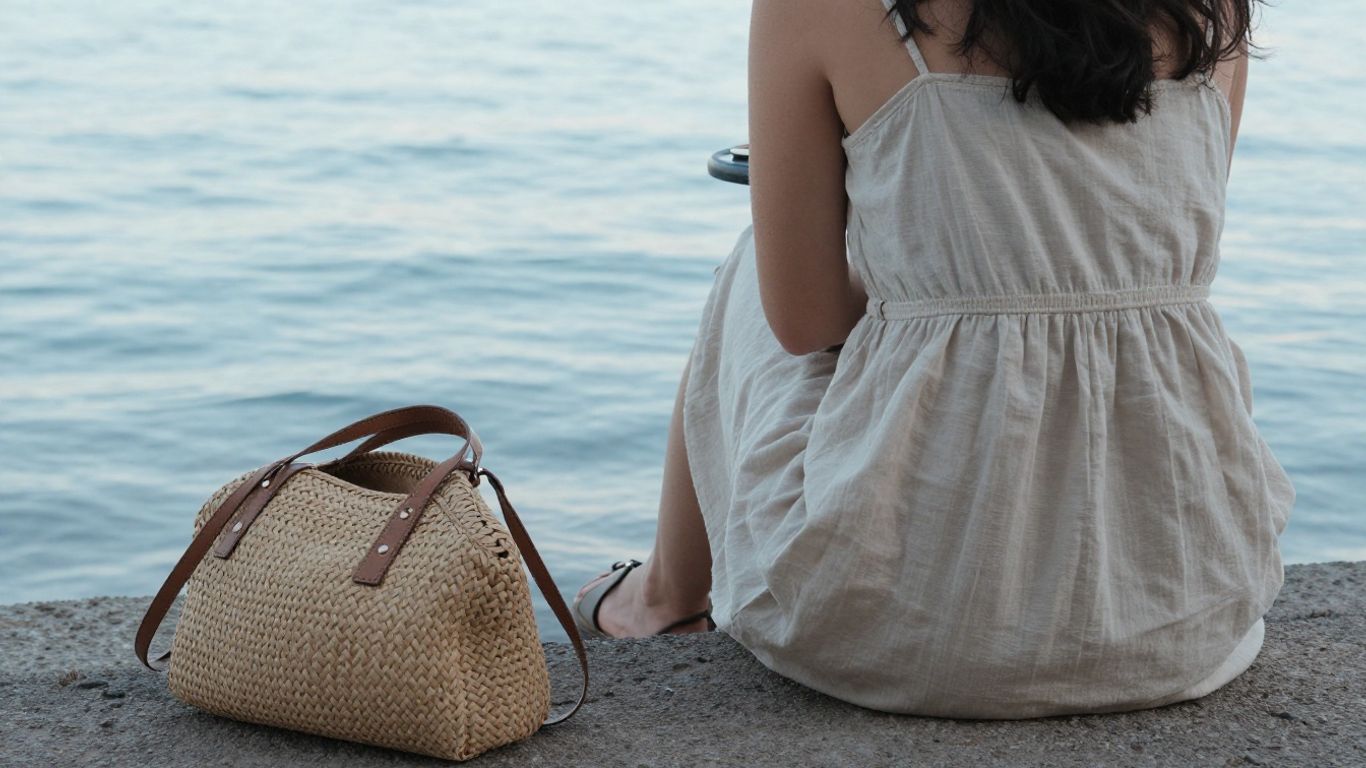 A woman in a summer dress at a seaside café with sandals and a bag
Wear a casual dress for sightseeing
For sightseeing, look for a dress that gives you room to walk, sit, and carry a day bag without fuss. Pair it with comfortable shoes and an easy layer if the day may run long. MESHKI’s vacation-dress selection includes styles described as ranging from breezy maxi dresses to mini dresses for evenings, a reminder that occasion and length can vary within one trip wardrobe.
Choose an easy cover-up for the beach or pool
A beach cover-up should be simple to pull on over a swimsuit and comfortable enough to wear for a walk to lunch or back to your room. Consider how much coverage you want and whether the fabric will feel comfortable when damp. A shirt dress, tunic, or relaxed wrap can be useful, as long as you can move easily and feel appropriately dressed for where you’re going.
Dress up for dinner with shoes and accessories
For dinner, a dress you already wear comfortably can feel more special with a different pair of shoes, earrings, or a small bag. If the restaurant has a dress code, check it before you leave rather than assuming vacation settings are always casual. The Resort Wear collection at Ulla Johnson features summer clothing, including dresses and separates, and can offer a reference point for a more polished getaway look.
Adapt one dress for daytime and evening plans
A day-to-evening outfit works best when the dress itself feels comfortable in both settings. Start with a straightforward base, then switch shoes or add a light layer and a few accessories when you have time to change the mood. Keep the transition practical: if you’ll be walking back to your room or between venues, pack footwear you can manage for the whole route.
5. Pack dresses efficiently
Packing efficiently is less about fitting the maximum number of dresses into a bag and more about making each piece useful. Choose a few that work with shoes and layers you’re already bringing, and avoid packing outfits that only function as a single look. This approach leaves space for the rest of your travel essentials without making your wardrobe feel repetitive.
Select versatile colors and prints
A versatile palette makes it easier to reuse a dress with different accessories and layers. Neutrals can pair with more pieces, while a print or bright color can add variety without requiring another complete outfit. Choose shades and patterns you genuinely like wearing; versatility only matters if you reach for the dress.
Build outfits around a small capsule wardrobe
A small capsule wardrobe works when its pieces have several natural combinations, rather than just matching in theory. Before packing, set out your dresses and the shoes or layers you plan to bring, then see whether they form outfits for your actual itinerary. A simple group might include:
- One casual dress for walking and daytime plans.
- One dress that can work with a layer in cooler weather.
- One option that feels appropriate for dinner or an evening out.
- A pair of shoes and a light layer that coordinate with more than one dress.
These are prompts, not a required shopping list; one dress may cover more than one role. Try the combinations at home and remove anything that needs a separate accessory or shoe you won’t use elsewhere.
Fold or roll dresses to limit creases
How you pack a dress depends on its fabric and construction, so check the care label and use a method that won’t strain delicate details. Folding along seams can help keep the shape tidy, while rolling may work for softer, casual pieces. Place heavier items away from delicate fabric, and unpack dresses soon after arriving so they can hang and settle.
Bring accessories that change the look
A few small accessories can make a familiar dress feel different without taking much room. A scarf, simple jewelry, or a belt may shift the outfit, while a layer can help it work in cooler air or a more covered setting. Choose pieces that coordinate with several items, and resist packing accessories for outfits you’re not sure you’ll wear.
6. Make your final dress selection
Before the suitcase closes, review each dress as a real outfit rather than an isolated item. Think through fit, care, footwear, and what else you’ll need to feel comfortable wearing it. A short try-on at home can reveal a problem that would be annoying to discover halfway through a trip.
Check fit and comfort before you travel
Put the dress on and move around in it: walk, sit, reach, and take a few steps up and down if you can. Notice whether the straps stay in place, the hem feels manageable, and the fabric is comfortable against your skin. If you find yourself tugging at it repeatedly, it may not be the easiest choice for a long day away from home.
Review care instructions and washing needs
Read the care label and consider whether the instructions fit the facilities and time you’ll have on the trip. If a dress needs special handling, decide in advance whether you’re willing to provide it. A garment that can be cared for simply is often easier to reuse during a longer stay.
Consider footwear and undergarments
Try each dress with the shoes and undergarments you plan to pack, not with whatever happens to be nearby. Check for visible lines, rubbing, or a hem that becomes awkward with your chosen footwear. This small rehearsal can help you avoid bringing an outfit that needs a missing piece to work.
Prioritize pieces you’ll wear more than once
Give priority to dresses you can imagine wearing on multiple occasions or pairing with different layers and accessories. If one piece only suits a single narrow plan, ask whether it earns its space in your bag. A reliable repeat-wear option makes it easier to pack lightly and still feel ready for the trip.
Conclusion
The right vacation dress is the one that suits your destination, feels comfortable through your real itinerary, and earns a place in more than one outfit. Check the fit, fabric, and care needs before you go, then pack with enough flexibility for the days to unfold as they will.
Frequently Asked Questions
How many dresses should I pack for a week-long vacation?
There’s no fixed number; it depends on your plans, access to laundry, and how often you’re happy to repeat outfits. Choose dresses that can work in more than one setting, then pack enough variety to feel comfortable without filling your bag with single-use looks.
What kind of dress is best for a hot vacation?
Look for a lightweight dress that feels comfortable against your skin and allows you to move easily. The best choice also depends on sun exposure, local customs, and whether you’ll be walking or spending time near water.
Is a maxi dress practical for sightseeing?
It can be, provided the hem is a manageable length and the dress allows a comfortable stride. Try walking and sitting in it before your trip, especially if your sightseeing includes stairs or uneven paths.
How can I keep vacation dresses from wrinkling in my suitcase?
Check the care label, fold along seams where practical, and avoid crushing delicate details beneath heavy items. Unpack your dresses soon after arrival and hang them so the fabric has time to settle.
What should I wear over a swimsuit on vacation?
A comfortable cover-up that is easy to pull on and gives you the coverage you prefer is a useful option. Choose one that suits the places you’ll walk to, not only the pool or beach itself.
How can I wear one dress from day to night?
Start with a dress that feels comfortable during the day, then change the shoes or add a layer and a few accessories for evening. Consider your route and plans so the updated outfit remains practical as well as polished.
How do I know whether a vacation dress is comfortable enough?
Try it on with the shoes and undergarments you plan to wear, then walk, sit, and reach in it. If it stays comfortable and secure without frequent adjustments, it is more likely to work for a full day away.

Published by
SwappaHome
SwappaHome Editorial Team
Home Exchange & Slow Travel Editorial
The SwappaHome Editorial Team brings together travel research, home-exchange community insights, and platform data to produce practical guides for first-time and experienced home swappers. Every article cites real platforms, current market rates, and verifiable city-level facts so readers can make informed decisions without guessing.
Ready to try home swapping?
Join SwappaHome and start traveling by exchanging homes. Get 7 free credits when you sign up!