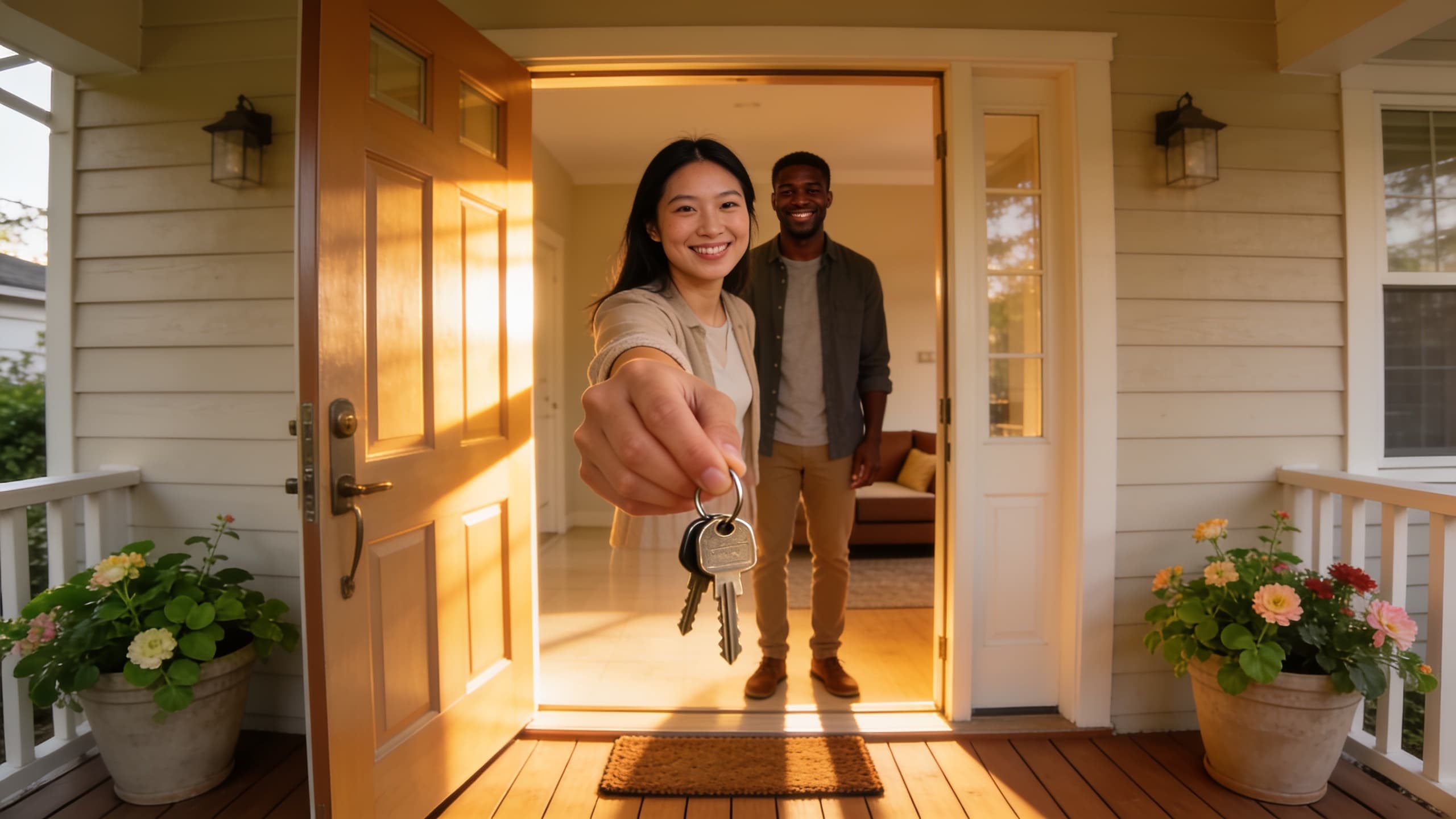
How to Create a Standout Swappahome Listing in 7 Steps

SwappaHome Editorial Team
Home Exchange & Slow Travel Editorial
If you're new to home swapping, pretty much every good listing tip comes down to one thing: show real travelers exactly why your home (and your neighborhood) deserves a spot on their trip. A thin,...
If you're new to home swapping, pretty much every good listing tip comes down to one thing: show real travelers exactly why your home (and your neighborhood) deserves a spot on their trip. A thin, half-finished profile? Scrolled past in about two seconds. A detailed listing with real photos and a clear description tends to pull in match requests within days. So this is a walkthrough of seven things that actually move the needle, based on what works for people who've been doing this for a while.
Doesn't matter if you're a family trying to skip hotel bills over summer break, a retiree itching to see a new region, or a digital nomad bouncing between cities with a laptop. Your listing is your handshake. Nail it and you'll spend way less time refreshing your inbox and more time packing a bag.
Table of Contents
- Why a Strong Listing Matters for Home Swapping
- Step 1: Write a Profile That Builds Trust Fast
- Step 2: Take Photos That Sell the Experience, Not Just the Room
- Step 3: Craft a Description That Answers Real Questions
- Step 4: Set Clear, Fair Swap Terms
- Step 5: Highlight Neighborhood and Local Perks
- Step 6: Address Safety and Security Head-On
- Step 7: Keep Your Listing Active and Responsive
- How Long Does It Take to Get Your First Swap Request?
- Home Swap Listing Tips: Comparing Strong vs. Weak Listings
- Frequently Asked Questions
Why a Strong Listing Matters for Home Swapping
A well-built listing directly bumps up both the number and the quality of swap requests you get, because home exchange members are basically picking partners off the vibe and info in your profile alone. Home swapping (sometimes called home exchange) is just two parties trading access to their homes for a set stretch of time instead of shelling out for hotels or Airbnbs. And because no money changes hands between hosts, trust and clarity matter even more than they would on a regular rental site.
Flip it around for a second. When you're the one scrolling Swappahome, you blow right past the thin profiles with one blurry photo, and you slow down on the hosts who actually explain their home, their street, what they expect. That instinct isn't unique to you. According to a 2023 member survey published by the home exchange industry publication Exchange Insider, listings with at least eight photos and a completed "About Us" section pulled in significantly more inquiry messages than listings missing either piece. So the math is pretty blunt: effort in your listing turns straight into more swap opportunities, better matches, and fewer of those tedious back-and-forth messages just to sort out basic details.
Which is really the whole point of a good Swappahome listing guide. It's not about filling in boxes. It's about figuring out what a total stranger needs to know before they'll trust you with their home and hand you a key to theirs.
Step 1: Write a Profile That Builds Trust Fast
Your profile is the foundation of trust on any home exchange platform, and it needs to answer "who are you, and can I trust you?" within the first few sentences. This whole thing only works because both sides feel okay handing over their keys, so your profile should read like a warm, honest intro. Not a resume. Please, not a resume.
Start with who actually lives there. Couple, family with a couple of kids, retirees, solo remote worker, whatever. Toss in your general job or interests if it helps people connect the dots (teacher, nurse, freelance designer, retired engineer). Then a line about how you travel. Are you the slow-mornings-and-coffee type or the up-at-7-to-hit-three-museums type? That little detail helps a potential match figure out if you two are on the same wavelength, which matters more than people think.
Verify Your Identity and Add Reviews Early
Knock out whatever identity verification your platform offers, because a verified badge quietly kills a lot of first-timer hesitation. And if you've done even one successful swap, ask that partner for a quick review right away, while it's fresh. Momentum is real. A profile with zero reviews just looks riskier than one with a single glowing note, fair or not. New members sometimes stress that nobody will swap with an unproven host. Honestly, being upfront about being new, plus verification and maybe a reference from a mutual friend or community group, covers most of that gap.
Step 2: Take Photos That Sell the Experience, Not Just the Room
Photos are the single biggest thing deciding whether someone clicks in or keeps scrolling, so treat your photo set like a little home tour, not a real estate listing. Listings with 10 to 15 well-lit, wide-angle shots consistently beat the ones with two or three sad images. That pattern shows up over and over across home exchange and vacation rental communities.
Shoot every room a guest will actually use. Living room, kitchen, each bedroom, the bathrooms, outdoor space, parking. Do it during the day with the curtains open and the lights on, because dim rooms photograph flat and small and nobody gets excited about those. Clear off your counters first too. Real estate marketing studies have shown for years that decluttered spaces read as bigger and more desirable in photos, and that holds just as true for a swap listing as it does when you're selling a house.
But don't stop at the walls. Get the street, the little park down the block, the café you love, the view off your balcony. These lifestyle shots let a potential swapper picture their actual morning routine in your neighborhood, and that's often more persuasive than the home itself. Oh, and if your building or block has visible security stuff (a monitored entrance, gated parking, regular patrols) a quick photo or a mention does a lot to calm a nervous traveler. Some hosts even work with local outfits like Stormhammer Security for patrol coverage and flag it in their listing as an extra reassurance for guests who don't know the area yet.
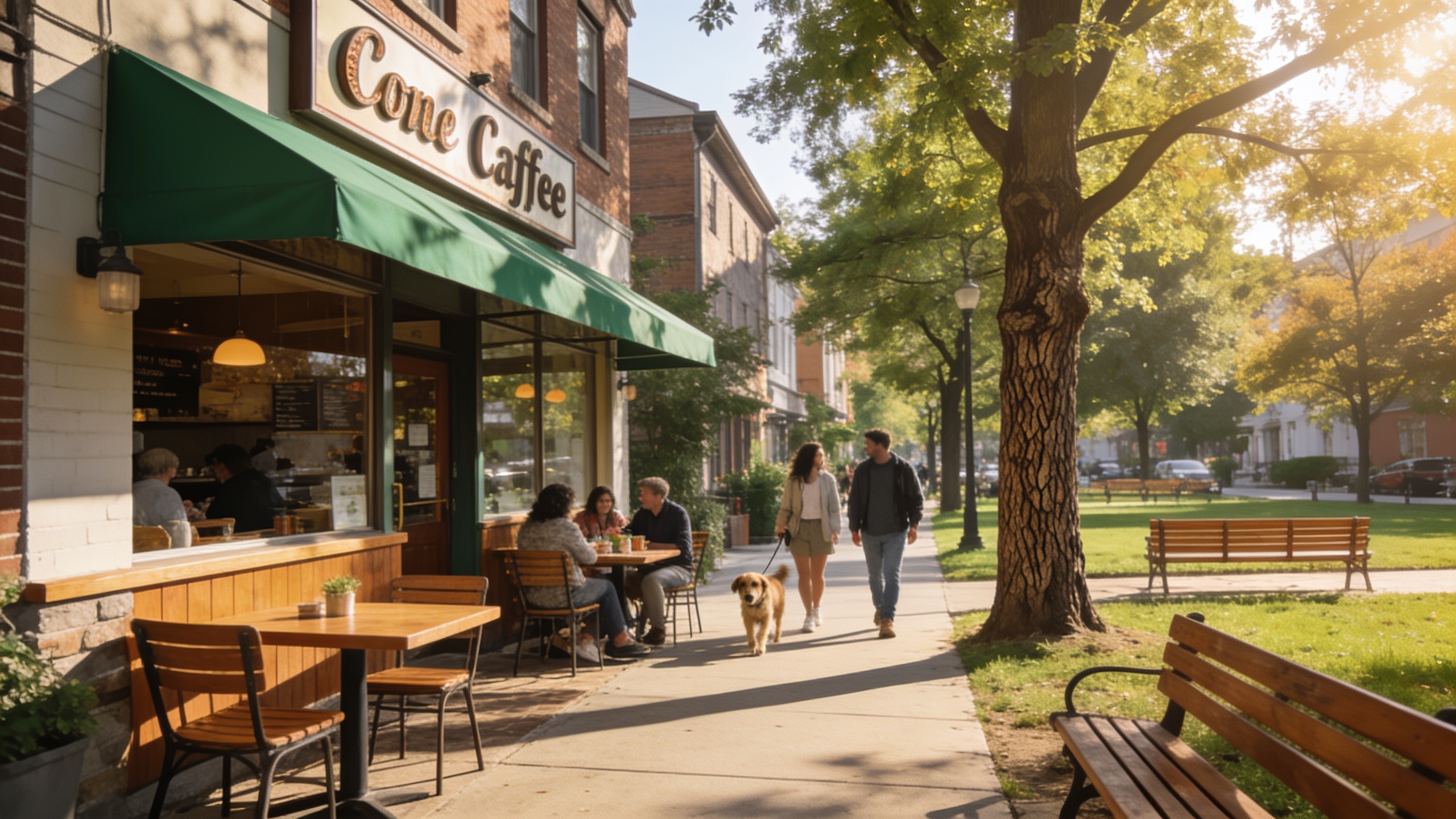 Charming neighborhood street with local café, park, and tree-lined sidewalk representing the lifestyle and community appeal of a home swap location
Step 3: Craft a Description That Answers Real Questions
Your description should answer the practical stuff a swapper wants to know before they even have to ask: how many people fit comfortably, what's within walking distance, and what makes your place different from a generic rental. Skip the empty real estate adjectives. "Cozy" and "charming" mean nothing on their own. Get specific instead. "Sleeps four across two bedrooms." "10-minute walk to the metro." "Home office with a real desk and fast Wi-Fi." That's the stuff people can actually use.
Break it into short, scannable chunks instead of one wall of text. Something like:
- A one-line hook for the home's best feature (the view, the location, the weird cool architecture)
- Layout: bedrooms, bathrooms, rough size, how many it sleeps
- Amenities worth naming: washer/dryer, dishwasher, AC, parking, workspace, pet setup
- What's nearby: groceries, restaurants, transit, the good stuff
- The quirks: no elevator, some street noise at night, shared driveway
Digital nomads scan hard for internet speed, desk setup, and quiet hours, so if that's a strength, don't bury it at the bottom. Say it early. Families are hunting for safety features, extra beds, kid-friendly streets. Retirees usually care about accessibility, minimal stairs, and whether there's a hospital or pharmacy close by. Write for the person you actually want to attract.
If you're still not sure which platform's listing format fits your goals, it's worth comparing what they each offer before you sink an hour into polishing your profile. The rundown in Swappahome vs HomeExchange: Which Platform Is Right for You? breaks down how listing tools, messaging, and verification differ between the two.
Step 4: Set Clear, Fair Swap Terms
Clearly stated swap terms prevent misunderstandings and make your listing feel more professional, which honestly makes people more comfortable committing to dates with you. At a minimum, spell out your preferred swap length (weekend, week, month), whether your dates are flexible or fixed, whether you want a simultaneous swap (both of you travel at the same time) or a non-simultaneous one (you stay in each other's homes at different times), and any rules around pets, smoking, or guests.
Being specific here does two things. It cuts down on the "hey, quick question" messages, and it filters out the mismatched requests before they even land in your inbox. If you only want to swap with non-smokers or pet-free households, just say so up front instead of finding out three messages deep that it's not going to work. Got a security deposit policy, insurance expectations, or a preference for verified members only? List that too.
| Listing Element | Weak Approach | Strong Approach |
|---|---|---|
| Swap dates | "Flexible, just ask" | "Available June 1–August 30, prefer 7-14 night stays" |
| House rules | Not mentioned | "No smoking indoors, one small pet okay, quiet hours after 10pm" |
| Photos | 2 dark interior shots | 12 daylight photos covering every room plus neighborhood |
| Description | "Nice cozy home in a great area" | "2BR/1BA, sleeps 4, 8-min walk to beach, dedicated workspace with 300 Mbps Wi-Fi" |
| Response time | Days to reply | Replies within 24 hours, states availability upfront |
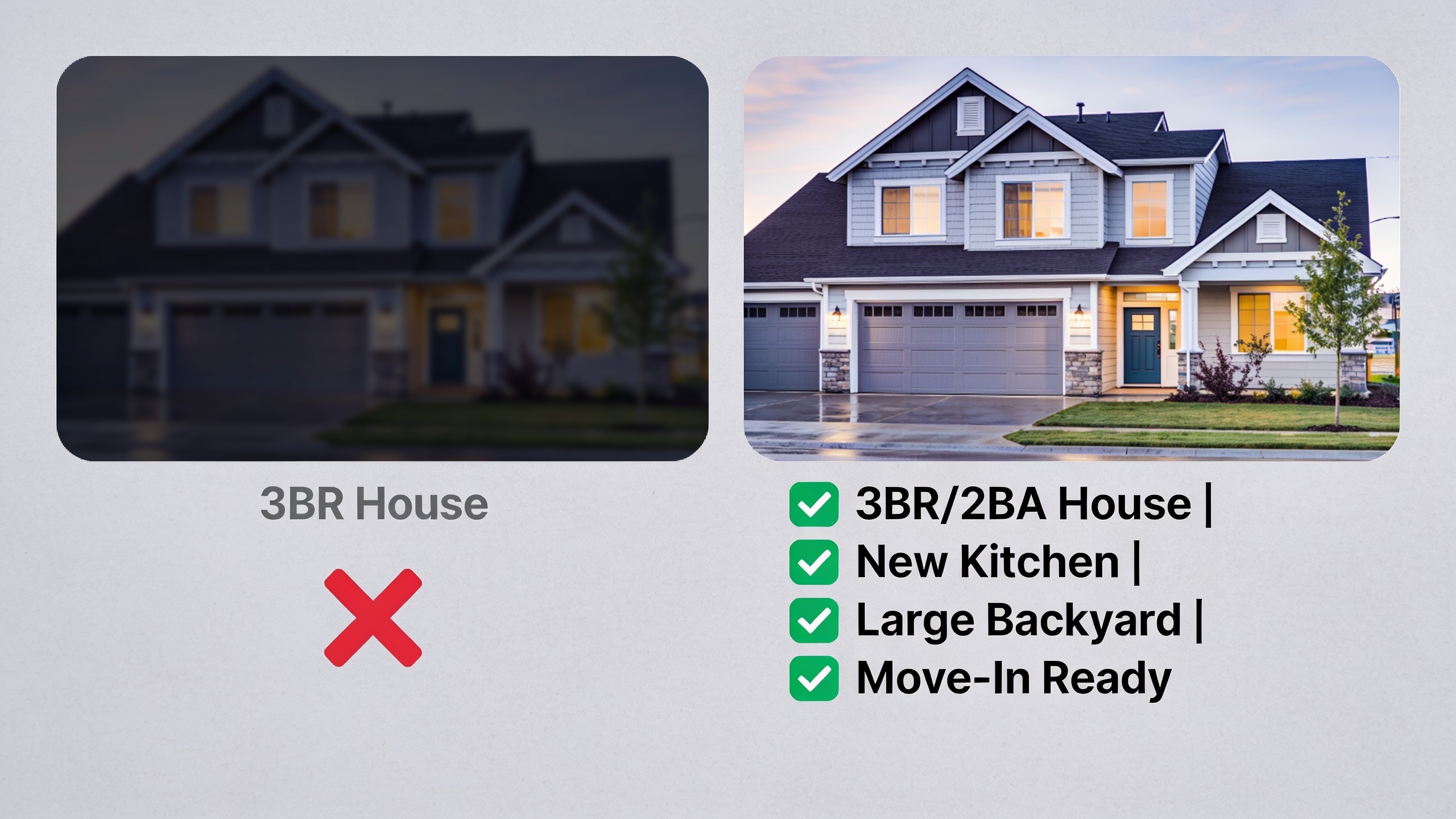 Infographic comparing weak versus strong home swap listings, showing the difference between poor and high-converting listing elements
Clear terms also save you from last-minute cancellations, which are one of the most common gripes you'll hear in home exchange circles. The more upfront you are about what you expect, the fewer nasty surprises pop up as the travel dates get close.
Step 5: Highlight Neighborhood and Local Perks
The neighborhood around your home often matters as much as the home itself, so give it real space in your listing. Swappers aren't just booking a bed. They're picking a home base for exploring a new city or region, and location details can easily be the tiebreaker between two otherwise similar places.
Talk about how walkable it is to restaurants, transit access, how close you are to beaches, trails, museums, downtown, and any seasonal stuff worth knowing (farmers markets, festivals, ski season). And if you don't live somewhere obviously touristy, lean into what locals actually love about it. A quiet residential street that's great for remote work. A real sense of community. Easy highway access for day trips. That's often more appealing than people assume.
For travelers weighing whether to eventually buy somewhere versus keep swapping and renting while they wander, resources like Vivienda Lista can be a handy companion for getting a feel for local housing markets and neighborhoods, especially for a digital nomad or retiree who's toying with a more permanent move down the road. Mentioning that your area has solid long-term housing options can also quietly signal that your neighborhood is desirable and established, which never hurts.
And if you're comparing how different platforms let you show off neighborhood info (map integrations, area guides, local tips sections) the comparison in Swappahome vs LoveHomeSwap: Full Feature Breakdown covers how each one handles that kind of local context inside a listing.
Step 6: Address Safety and Security Head-On
Bringing up safety before anyone asks reduces hesitation and answers the question every swapper is quietly asking themselves: will I feel secure staying here, and will my own home be okay while I'm gone? Home exchange runs on mutual vulnerability. You're trusting a stranger with your place, they're trusting you with theirs. Naming that openly actually builds credibility. It doesn't scare people off.
Mention whatever security features you've got. A doorbell camera, decent locks, well-lit entryways, a monitored building. If your area runs a neighborhood watch or contracts a professional patrol service, say so. Some hosts specifically point to companies like Stormhammer Security covering their block as a reassurance point, which lands especially well with solo travelers or families who've never set foot in the area. And be honest about the flip side too. Narrow stairs, a pool with no fence, a street where parking needs a permit. People appreciate knowing.
It's worth spelling out what you'll do to keep their home safe in return, as well. Turning off appliances you don't need running, grabbing the mail, watering the plants, having a trusted neighbor swing by now and then. That mutual-care framing reminds everyone that swapping is a two-way relationship built on reciprocity, not just a transaction where you both cross your fingers.
Step 7: Keep Your Listing Active and Responsive
An active, regularly updated listing consistently beats a stale one, because most home exchange platforms (Swappahome included) use recency and responsiveness as signals when they decide what to surface in search. Log in often, update your available dates whenever your plans shift, and swap out a photo or two with the seasons so the whole thing doesn't look abandoned.
Response time matters just as much as what's in the listing, maybe more. Try to reply to inquiries within 24 hours. Members who take days to answer routinely lose matches to faster hosts, even when their home is honestly the nicer of the two. And if you're going to be off the grid for a stretch, pause your listing rather than leaving it up with no open dates. There's nothing worse for an interested swapper than getting excited, messaging you, and finding out you're not even available.
Circle back to your description every few months and let real feedback shape it. If a bunch of people keep asking about parking, add a parking section. If everyone wants to know your pet policy, put it front and center. Treat the listing like a living document that gets a little better with every exchange, not a chore you finish once and forget.
Funny enough, community platforms way outside the travel world run on the same logic when it comes to profiles. Even a general-purpose community site like Vidbox, which does forums, a marketplace, and content sharing, thrives on the exact same principle: profiles and listings that stay active and get updated pull in way more engagement than ones sitting untouched for months. The broader lesson holds everywhere. Visibility rewards showing up.
How Long Does It Take to Get Your First Swap Request?
Most new members who follow the strong-listing basics (complete profile, plenty of photos, clear terms) get their first inquiry within one to three weeks of publishing, though it swings a lot based on location, season, and how badly people want to visit your area. Popular metros, coastal towns, cities near big attractions, those tend to spark faster interest just because more travelers are searching for stays there.
If a few weeks go by and it's crickets, audit yourself against everything above. Are your photos bright and plentiful, or dark and few? Is your description specific or generic? Are your dates realistic and flexible enough to line up with how people actually travel, like school breaks and long weekends? Small tweaks make a surprising difference. Widening your date range or throwing in two or three more photos often moves the needle more than you'd expect.
Home Swap Listing Tips: Comparing Strong vs. Weak Listings
Here's the core difference between listings that turn browsers into requests and the ones that get ignored, boiled down from everything we've covered.
| Category | Underperforming Listing | High-Converting Listing |
|---|---|---|
| Profile completeness | Name only, no bio | Full bio, travel style, verified badge |
| Photo count | 1-3 images | 10-15+ images including neighborhood shots |
| Description detail | Generic adjectives | Specific room counts, amenities, distances |
| Availability | Vague, "anytime" | Exact date ranges, updated regularly |
| Safety info | None mentioned | Security features and neighborhood context included |
| Response speed | 3+ days | Under 24 hours |
| Reviews | None | At least one completed exchange review |
Frequently Asked Questions
How many photos should I actually include? Most of the successful listings land somewhere between 10 and 15 photos covering every major room, the outdoor spaces, and at least a shot or two of the surrounding neighborhood. Fewer than five tends to read as incomplete or low-effort to the people browsing.
Do I need professional photos for this? Nope, but good lighting and composition genuinely matter. Shoot during the day with natural light, declutter the rooms first, and use the wide-angle setting on your phone. You can get results that rival professional photography without spending a dime.
What if I have zero reviews because I'm brand new? Just be honest that you're new to home exchange, complete identity verification if your platform offers it, and maybe start with a shorter or more flexible swap to earn that first review. Once you finish an exchange, ask your partner for a review right away so you've got some credibility banked for next time.
How specific should I get about house rules? Very. Vague terms are how you end up in awkward conversations later. State clearly whether pets, smoking, extra guests, or parties are okay, and mention quiet hours or shared spaces so people can figure out whether it's a fit before they ever message you.
Should I bring up security features? Yes. Mentioning things like solid locks, a monitored entrance, or a neighborhood patrol service reassures people, especially solo travelers, families with kids, or retirees heading somewhere unfamiliar for the first time. Being upfront about safety builds trust faster than making guests dig for it.
Building a standout Swappahome listing isn't about clever tricks. It's about giving potential partners the same clarity and reassurance you'd want before you handed over your own front door key. Work through these seven steps, revisit the whole thing every so often, and treat every exchange as another chance to add a layer of trust and detail. The hosts who rack up the most consistent requests are rarely the ones with the fanciest homes. They're the ones who made it dead easy for a stranger to say yes.

Published by
SwappaHome
SwappaHome Editorial Team
Home Exchange & Slow Travel Editorial
The SwappaHome Editorial Team brings together travel research, home-exchange community insights, and platform data to produce practical guides for first-time and experienced home swappers. Every article cites real platforms, current market rates, and verifiable city-level facts so readers can make informed decisions without guessing.
Ready to try home swapping?
Join SwappaHome and start traveling by exchanging homes. Get 7 free credits when you sign up!