
How to Manage Swap Requests for Home Exchanges

SwappaHome Editorial Team
Home Exchange & Slow Travel Editorial
How to Manage Swap Requests for Home Exchanges !Woman reviewing home exchange swap requests > TL;DR: > > - Effective management of swap requests...
How to Manage Swap Requests for Home Exchanges
 Woman reviewing home exchange swap requests
TL;DR:
- Effective management of swap requests involves establishing clear eligibility rules and using structured approval workflows to ensure smooth exchanges. Prompt responses within 48 hours and personalized communication build trust and foster positive relationships between hosts and travelers. Utilizing platform tools like messaging, calendar sync, and automated reminders helps streamline the process and reduce manual effort.
Managing swap requests is the process of controlling who can request a home exchange, how those requests get approved, and how both parties communicate throughout the process. Done well, it turns a potentially stressful coordination task into a smooth, trust-building experience. Platforms like Swappahome have built entire workflows around this process, recognizing that clear rules and structured approvals are what separate successful exchanges from frustrating ones. This guide shows you exactly how to manage swap requests from eligibility setup through final confirmation, so every exchange starts on solid ground.
How to manage swap requests: setting eligibility rules first
The first step in handling swap requests is deciding who qualifies to send or receive one. Eligibility rules and role-based permissions prevent unsuitable or unauthorized swaps, which protects both the homeowner and the traveler from wasted time and disappointment.
Think of eligibility criteria as your personal filter. Before a request even reaches your inbox, the right settings can screen out mismatches automatically. Here are the most useful criteria to define upfront:
- Home size compatibility. If you have a two-bedroom apartment, you probably do not want to receive requests from groups of eight. Set a maximum guest count that reflects your space.
- Date availability. Block off dates you cannot host. Most platforms let you mark unavailable periods on a calendar so requests only come in for open windows.
- Traveler verification status. Require that requesters have a verified profile, complete with ID confirmation and at least one review. This single filter removes a large share of low-quality requests.
- Location preferences. If you only want to swap to certain countries or cities, set that preference. Clearly defined swap criteria including home size, traveler numbers, and date availability help match suitable exchange partners from the start.
- Minimum credit balance. On credit-based platforms like Swappahome, requiring requesters to hold a minimum credit balance confirms they have already contributed to the community.
Pro Tip: Write a short "ideal swap partner" description in your listing profile. Travelers who read it self-select before sending a request, which means the requests you do receive are already a better fit.
Setting these rules once saves you from repeating the same screening conversation dozens of times. It also signals to potential partners that you are a serious, organized host, which attracts equally serious travelers.
How do structured approval workflows ensure smooth home swaps?
A structured approval workflow is the sequence of steps a swap request moves through before it becomes a confirmed exchange. The requester submits dates and rules, the requested member approves or denies, followed by optional further approval from a platform reviewer. Each stage is a checkpoint that catches problems before they become real conflicts.
 Desk with home swap approval workflow materials
Most home exchange platforms operate on a two-step model. The traveler submits a request, the homeowner reviews and responds, and the platform logs the agreement. Some platforms add a third layer where a community moderator or automated system verifies that both parties meet the exchange terms. Multi-level approval processes allow for safer and more transparent swap agreements, giving both sides a paper trail and a point of contact if something goes wrong.
Here is a comparison of the two most common approval structures:
| Feature | Simple Two-Step Approval | Multi-Stage Approval |
|---|---|---|
| Steps involved | Request, then host accept/deny | Request, host review, platform verification |
| Speed | Faster, fewer delays | Slightly slower but more thorough |
| Best for | Experienced hosts with clear listings | New hosts or high-value properties |
| Dispute protection | Limited | Stronger, with documented review trail |
| Trust signal to travelers | Moderate | High |
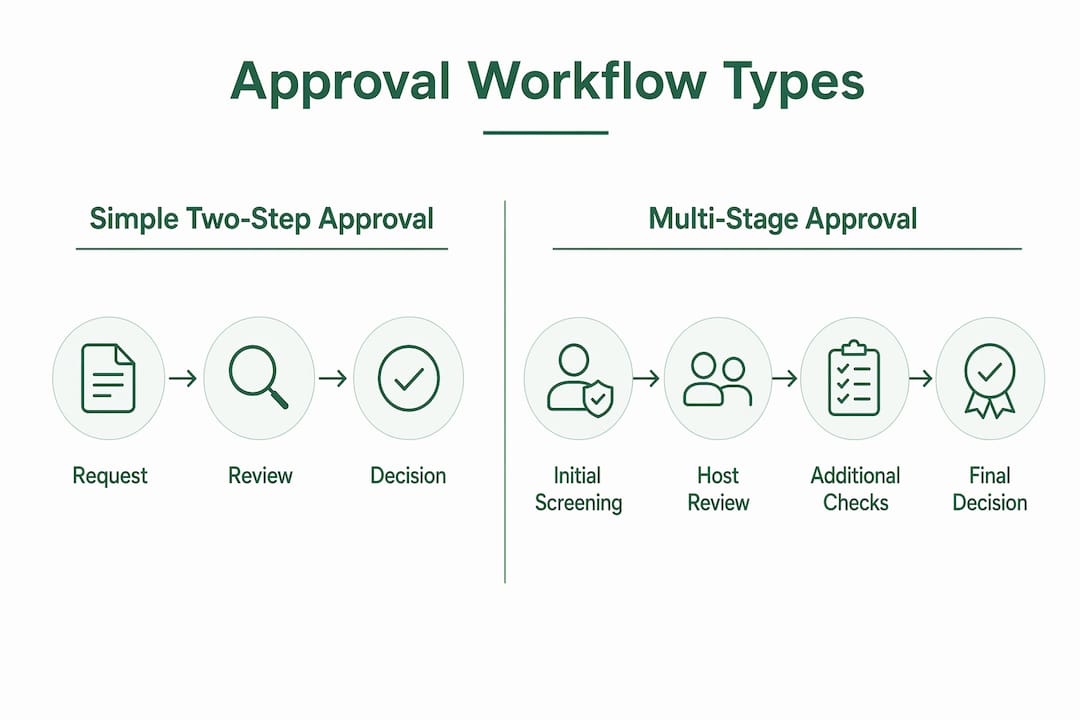 Infographic comparing home swap approval workflows
The right choice depends on your experience level and how much risk you are comfortable with. New hosts benefit from multi-stage approval because it adds a safety net. Experienced hosts with detailed listings and strong review histories often find two-step approval fast enough.
Pro Tip: Send a short personal message with every approval or denial. A single sentence explaining your decision turns a transactional notification into a human interaction, and travelers remember that.
Timely responses matter as much as the structure itself. Setting deadlines and reminders is a recognized best practice because unanswered requests create uncertainty and push travelers to look elsewhere.
What tools and platforms help manage swap requests effectively?
The right tools reduce the manual work of managing swap requests to almost nothing. Platforms send email or mobile alerts notifying users of swap requests and approvals, which means you never miss a request sitting in an inbox you forgot to check.
Swappahome provides integrated features for home swap management including request submission, eligibility filtering, built-in messaging, and approval communications in one place. That centralization matters because it keeps the full history of a swap conversation in one thread, which is invaluable if a dispute arises later.
Beyond the core platform, a few supporting tools make the process even smoother:
- Calendar sync tools. Connect your Swappahome availability calendar to Google Calendar or Apple Calendar so your open dates stay accurate without manual updates.
- Video call platforms. Zoom or Google Meet work well for pre-swap calls. Pre-swap video calls and written agreements establish trust and reduce misunderstandings before either party commits.
- Welcome guide documents. A shared Google Doc or PDF with house rules, appliance instructions, and local recommendations answers most traveler questions before they are asked.
- Automated reminders. Set calendar reminders for yourself at 48 hours and 24 hours before a response deadline so you never leave a request unanswered.
For hosts managing multiple listings or frequent exchanges, automation tools for rental management can handle repetitive tasks like sending confirmation messages and updating availability across platforms simultaneously.
The goal of any tool stack is to reduce friction. When the process feels easy for both you and the traveler, the exchange starts with goodwill already in the bank.
What are best practices to prioritize and respond to swap requests?
Responding well to swap requests is one of the clearest signals of what kind of exchange partner you will be. Travelers notice response speed and tone before they ever set foot in your home. Here are the most effective practices for managing swap requests efficiently:
- Respond within 48 hours. Set a personal rule to reply to every request within two days, even if your answer is a polite decline. Silence reads as disinterest and damages your reputation on the platform.
- Review the requester's profile completely. Check their verified status, past reviews, home photos, and any written description before deciding. A complete profile review takes five minutes and prevents most bad matches.
- Evaluate against your eligibility criteria. Compare the request against the rules you set earlier. If it does not meet your criteria, decline clearly and briefly. If it does, move to the next step.
- Ask one clarifying question if needed. If a request is close but has one unclear element, such as the exact number of guests or a pet situation, ask that single question before deciding. Do not ask five questions at once.
- Confirm in writing. Once you approve a request, send a written confirmation that restates the dates, guest count, and any key house rules. This protects both parties and sets clear expectations.
- Update your availability immediately after confirming. Block those dates on your calendar the moment you confirm a swap. Double-booking is the fastest way to damage your standing in any exchange community.
The home swap etiquette guide from Swappahome reinforces that consistent, respectful communication is the foundation of a strong exchange reputation. Hosts who respond quickly and clearly receive better requests over time because travelers recommend them to others.
How do you resolve common swap request problems?
Even well-managed swap requests run into problems. Knowing how to handle them calmly and fairly keeps your exchange relationships intact.
Denied requests. A denial does not have to end the relationship. Hosts can communicate reasons and suggest alternate dates or homes to keep exchanges flexible and maintain goodwill. A message like "Those dates are taken, but I am available in October" turns a no into a maybe.
Last-minute cancellations. These happen. The best response is immediate communication. Contact the other party as soon as you know, explain the situation briefly, and offer to help them find an alternative through the platform. Swappahome's community network means there are usually other options available quickly.
Scheduling conflicts. If dates overlap with a previously unblocked period, own the mistake and fix it fast. Update your calendar, apologize directly, and offer a revised window. Most travelers respect honesty far more than a perfect record.
Misunderstandings about house rules. These are almost always preventable with a clear welcome guide sent at confirmation. If one arises during a stay, address it through the platform's messaging system so there is a written record of the resolution.
"The fastest way to resolve a swap dispute is to have written confirmation of what was agreed. A single message restating the terms at approval time is worth more than any policy document."
Using platform support resources is not a sign of failure. Swappahome and similar platforms have community teams specifically trained to mediate exchange issues. Escalate early rather than letting a small problem grow into a formal complaint.
Key takeaways
Effective swap request management combines clear eligibility rules, structured approval workflows, and consistent communication to produce reliable, trust-based home exchanges.
| Point | Details |
|---|---|
| Set eligibility rules first | Define home size, guest limits, and verification requirements before accepting any requests. |
| Use structured approval workflows | A two-step or multi-stage process catches issues early and creates a documented agreement trail. |
| Respond within 48 hours | Timely replies signal reliability and protect your reputation within the exchange community. |
| Leverage platform tools | Use built-in messaging, calendar sync, and automated alerts to reduce manual coordination work. |
| Handle denials with alternatives | Offering alternate dates or homes when declining keeps relationships open and goodwill intact. |
What i have learned from watching swap requests go wrong
Most swap request problems I have seen trace back to one moment: the host skipped setting eligibility rules because it felt like extra work upfront. They figured they would just review each request as it came in. What actually happened was a flood of mismatched requests, slow response times, and at least one uncomfortable exchange where the guest count was never confirmed in writing.
The hosts who manage swap requests well are not necessarily more experienced. They are more deliberate. They spend twenty minutes configuring their profile settings and writing a clear listing description, and that investment pays back every time a well-matched request arrives instead of a vague one.
The other thing I have noticed is that people underestimate the value of a personal message. A two-sentence note with an approval or denial changes the entire tone of the interaction. Travelers who receive a warm, specific response become advocates. They leave better reviews, recommend the host to friends, and return for future swaps. That is not a small thing in a community-based platform like Swappahome.
My honest advice: treat every request as the beginning of a relationship, not a transaction to process. The booking home exchange guide from Swappahome puts it well. The mechanics of a swap are simple. The trust that makes it work takes deliberate effort to build.
— Swappa
Start managing home swaps with Swappahome
 https://swappahome.com
Swappahome is built specifically for homeowners and travelers who want a clear, trusted process for home exchanges. The platform includes eligibility filtering, built-in messaging, and a credit-based approval system where one credit equals one free night. Every member is verified, which means the requests you receive come from a screened community of real homeowners. New members receive free credits to get started immediately. Browse available homes worldwide or create your listing today at Swappahome and start receiving well-matched swap requests from travelers who are as serious about the process as you are.
FAQ
What does managing swap requests actually involve?
Managing swap requests covers setting eligibility rules, reviewing incoming requests, approving or declining them through a structured workflow, and communicating clearly with the other party throughout. The goal is a confirmed, well-documented exchange agreement that both sides understand before anyone travels.
How quickly should you respond to a swap request?
Respond within 48 hours. Timely responses prevent missed opportunities and signal to travelers that you are a reliable exchange partner, which directly affects the quality of future requests you receive.
What should you do when you need to deny a request?
Decline clearly and briefly, then offer an alternative such as different dates or a suggestion to reconnect later. Offering alternatives when denying maintains goodwill and keeps the door open for a future exchange.
How do eligibility rules reduce bad swap requests?
Eligibility rules prevent unsuitable swaps by filtering out requests that do not match your home size, availability, or guest requirements before they reach your inbox. Setting these rules once saves significant time over the long run.
Why are written confirmations important in home swaps?
Written confirmations restate the agreed dates, guest count, and house rules in a single message, creating a reference point both parties can return to if any question arises during the exchange. This single step prevents the majority of swap misunderstandings.
Recommended

Published by
SwappaHome
SwappaHome Editorial Team
Home Exchange & Slow Travel Editorial
The SwappaHome Editorial Team brings together travel research, home-exchange community insights, and platform data to produce practical guides for first-time and experienced home swappers. Every article cites real platforms, current market rates, and verifiable city-level facts so readers can make informed decisions without guessing.
Ready to try home swapping?
Join SwappaHome and start traveling by exchanging homes. Get 7 free credits when you sign up!