
How to plan a home exchange trip in 2026 affordably

SwappaHome Editorial Team
Home Exchange & Slow Travel Editorial
How to plan a home exchange trip in 2026 affordably !Couple planning home exchange in living room Traveling can drain your wallet fast, especially...
How to plan a home exchange trip in 2026 affordably
 Couple planning home exchange in living room
Traveling can drain your wallet fast, especially when accommodation costs eat up most of your budget. Hotels and vacation rentals often feel impersonal, leaving you disconnected from the local culture you came to experience. Home exchange offers a powerful alternative that slashes lodging expenses while immersing you in authentic neighborhoods and lifestyles. This guide walks you through every step of planning a successful home exchange trip, from preparing your listing months in advance to finalizing agreements that protect both parties and ensure memorable, cost-effective travel.
Table of Contents
- Understanding The Basics Of Home Exchange And Why Plan Ahead
- Preparing Your Home And Profile For A Successful Exchange
- Executing The Home Exchange: Communication, Agreements, And Logistics
- Benefits And Cost Considerations Of Home Exchange Trips
- Explore Home Exchange Opportunities With SwappaHome
- What Is The Best Way To Find Reliable Home Exchange Partners?
- How Much Can I Realistically Save Using Home Exchange Instead Of Hotels?
- What Should I Include In The Home Exchange Agreement?
- How Far In Advance Should I Start Planning My Home Exchange Trip?
Key takeaways
| Point | Details |
|---|---|
| Early planning wins | Starting 6 to 24 months ahead maximizes your swap options and destination choices. |
| Preparation matters | Quality photos and detailed descriptions can boost swap success by 60%. |
| Savings add up fast | Long-term exchanges can save over $12,000 compared to traditional lodging. |
| Communication is key | Clear agreements and thorough vetting create smooth, worry-free exchanges. |
| Flexibility pays off | Non-simultaneous swaps expand your travel possibilities throughout the year. |
Understanding the basics of home exchange and why plan ahead
Home exchange means swapping your residence with another homeowner for a set period, eliminating accommodation costs for both parties. This arrangement appeals to homeowners seeking affordable travel, budget-conscious explorers wanting authentic experiences, and anyone craving cultural immersion beyond tourist zones. Instead of paying thousands for hotels, you stay in a real home with a kitchen, laundry, and local neighborhood access.
Planning should begin 6 to 24 months ahead for best results. Early preparation gives you access to more potential partners, especially for popular destinations during peak seasons. You can browse listings, communicate with prospects, and finalize details without rushing. This timeline also lets you prepare your home properly and build trust through extended conversations.
Two main types exist: simultaneous and non-simultaneous exchanges. Simultaneous swaps happen when both parties occupy each other's homes at the same time, perfect for vacation periods. Non-simultaneous arrangements use credit systems where you host first, earn credits, then use those credits later for your own stay. This flexibility means you can travel year-round without coordinating exact dates.
The benefits extend beyond cost savings. You gain insider knowledge from homeowners who share local tips, restaurant recommendations, and hidden gems tourists miss. Many exchanges include car use, further reducing transportation expenses. You live like a local, shop at neighborhood markets, and experience daily rhythms that hotels never provide. For families, having multiple bedrooms and a full kitchen makes travel more comfortable and affordable than cramming into hotel rooms.
Getting started requires choosing a platform that matches your needs. Research options that verify members, offer secure messaging, and provide clear guidelines. Understanding how booking home exchange works on your chosen platform helps you navigate the process smoothly from initial search to final confirmation.
"Home exchange transforms travel from a financial burden into an accessible adventure, opening doors to destinations that might otherwise remain out of reach."
Key considerations before diving in:
- Assess whether your home meets platform requirements and appeals to potential swappers
- Determine your ideal travel dates and flexibility for timing adjustments
- Identify destinations that align with your interests and budget
- Understand insurance and liability protections offered by your platform
- Prepare to communicate openly and build trust with potential partners
Preparing your home and profile for a successful exchange
Creating an outstanding listing starts with completing every section of your profile thoroughly. Incomplete profiles raise red flags and delay approval processes. Fill in details about your home's size, amenities, neighborhood features, and nearby attractions. Mention public transportation access, parking availability, and special touches like a garden or workspace.
Photography makes or breaks your listing appeal. Photos play a major role in the HomeExchange Collection approval process and attracting quality swappers. Take bright, well-composed images of every room, outdoor spaces, and unique features. Capture your kitchen, bathrooms, bedrooms, living areas, and any extras like a pool or patio. Show the neighborhood, nearby parks, and local landmarks to give context. Natural lighting works best, so shoot during daylight hours and avoid harsh shadows.
 Woman preparing living room for home listing
Research confirms that detailed listings with photos increased swap success by 60%, proving visual presentation directly impacts results. Invest time in staging rooms to look inviting but lived-in. Remove clutter, arrange furniture attractively, and highlight what makes your space special. If your home qualifies for premium tiers, ensure it meets minimum value guidelines and showcases those qualifying features prominently.
Your written description should paint a vivid picture while staying accurate. Emphasize location advantages like walkability to restaurants, proximity to transit, or scenic views. List amenities honestly, including WiFi speed, appliance brands, and entertainment options. Mention what you provide like linens, toiletries, or pantry staples. Be specific about sleeping arrangements, bathroom count, and workspace availability for remote workers.
Pro Tip: Create a welcome guide for your home that includes WiFi passwords, appliance instructions, emergency contacts, and favorite local spots. Share this document during the planning phase to demonstrate your commitment to a great experience.
Before listing goes live, deep clean your entire home to impress potential swappers and meet platform standards. A home swap cleaning checklist ensures you cover every detail from baseboards to ceiling fans. Professional-level cleanliness signals respect for guests and sets expectations for how they should maintain your space.
Follow this preparation sequence:
- Declutter and organize all rooms, removing personal items you want protected
- Deep clean kitchen appliances, bathrooms, floors, and windows
- Photograph your home in its best condition with proper lighting
- Write detailed descriptions highlighting unique features and location benefits
- Upload photos and complete all profile sections before submitting for review
- Review platform guidelines and adjust listing to meet any specific requirements
Consider what makes your home uniquely appealing. Maybe you have a game room, a well-stocked kitchen for cooking enthusiasts, or a balcony with sunset views. Perhaps your neighborhood offers farmer's markets, bike trails, or cultural festivals. These distinctive elements help your listing stand out in search results and attract compatible swappers who value what you offer.
Using a prepare home checklist streamlines the process and ensures nothing gets overlooked. Address maintenance issues, test all appliances, and make minor repairs that improve presentation. First impressions matter tremendously in attracting serious inquiries from quality exchange partners.
Executing the home exchange: communication, agreements, and logistics
Successful exchanges depend on clear, early communication with potential partners. Start conversations months before your intended travel dates to build rapport and establish expectations. Ask detailed questions about their travel style, household composition, and specific needs. Share information about your home's quirks, neighborhood characteristics, and what you hope to experience in their location.
Thorough communication and pre-planning are crucial, covering amenities, access, and house rules. Discuss exactly what's included in the stay: which rooms guests can access, whether the car is available, if they can use bicycles, and what supplies you'll provide. Clarify expectations around pets, smoking, additional guests, and noise levels. The more specific you get upfront, the fewer misunderstandings arise later.
Written agreements formalize these discussions and protect both parties. Homeowners should vet swappers via references, reviews and use formal agreements. Your agreement should cover arrival and departure dates, key exchange methods, cleaning responsibilities, utility usage, and damage protocols. Include contact information for emergencies and local resources like plumbers or electricians.
Pro Tip: Exchange video calls before finalizing arrangements. Seeing each other's homes virtually and meeting face-to-face builds trust and reveals details photos might miss. This step often uncovers compatibility issues or confirms you've found the perfect match.
Logistics require careful coordination to ensure smooth transitions. Plan key exchange well in advance, whether using lockboxes, neighbor handoff, or direct meetups. Some swappers prefer overlapping by a day to personally show each other around. Discuss cleaning expectations, agreeing on standards for departure condition. Most exchanges expect guests to leave homes as clean as they found them, with some doing a professional clean before departure.
Transportation planning includes airport transfers, car usage terms, and public transit options. If offering your vehicle, clarify insurance coverage, fuel expectations, and any restrictions. Provide detailed parking information and local driving customs. For homes near public transit, share route maps, fare information, and recommended transportation apps.
Respecting cultural and house rules creates positive experiences for everyone. Learn about your host's customs, local etiquette, and community norms. Follow their guidelines about shoes indoors, quiet hours, waste sorting, and appliance use. Small gestures like leaving a welcome gift, stocking basics, or providing local recommendations demonstrate thoughtfulness that often gets reciprocated.
Key logistics to coordinate:
- Key exchange method with backup plans for delays or issues
- Cleaning standards and who handles final cleaning
- Utility usage expectations and any cost-sharing arrangements
- Car insurance, fuel, and maintenance responsibilities
- Emergency contacts including neighbors, property managers, or local friends
- House manual with appliance instructions and troubleshooting tips
Communication checklist for successful exchanges:
- Initial inquiry discussing travel dates and basic compatibility
- Detailed questions about home features, neighborhood, and expectations
- Reference checks and review verification on both sides
- Video call to tour homes and meet personally
- Written agreement covering all terms and contingencies
- Pre-arrival logistics confirmation including key exchange and arrival times
- During-stay check-ins to address any questions or issues
Maintaining home swap etiquette throughout the process builds your reputation and leads to future exchange opportunities. Respond promptly to messages, honor commitments, and treat others' homes with the care you expect for your own. Many successful swappers develop long-term relationships, returning to favorite destinations and building a network of trusted exchange partners worldwide.
Benefits and cost considerations of home exchange trips
The financial advantages of home exchange transform travel budgets dramatically. Home exchange can save thousands of Euros compared to hotels, particularly for families or groups needing multiple rooms. A week-long hotel stay in a major city easily costs $1,500 to $3,000, while home exchange eliminates that expense entirely. You only pay platform membership fees, typically $100 to $200 annually.
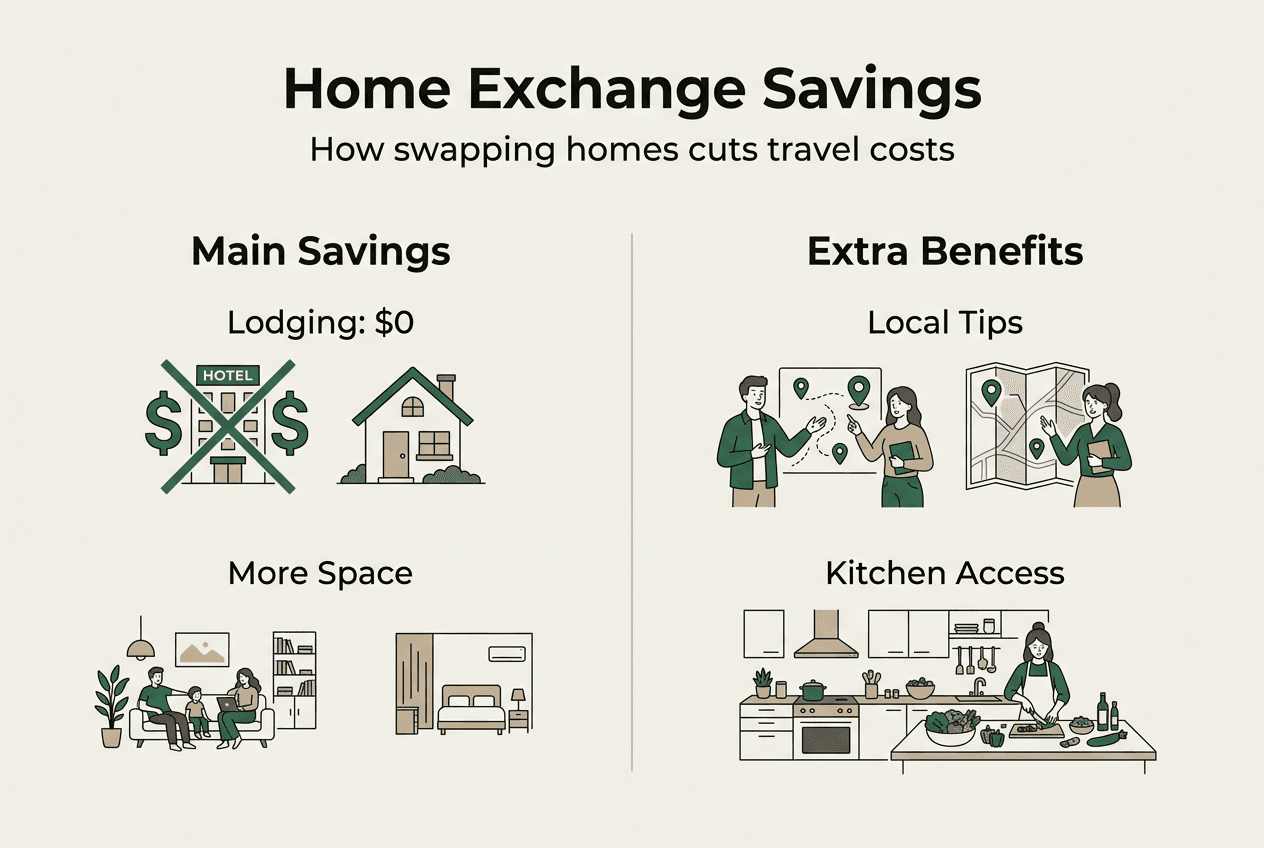 Infographic showing home exchange savings and benefits
Long-term exchanges multiply savings exponentially. A three-month exchange can save over $12,000 in accommodation costs, making extended travel or sabbaticals financially feasible. Retirees, remote workers, and academics particularly benefit from these extended arrangements. Research shows home exchange can reduce lodging expenses by up to 70%, freeing budget for experiences, dining, and activities.
Additional expenses require realistic budgeting to avoid surprises. Transportation costs remain whether you swap homes or book hotels. International flights, car rentals, and fuel add up quickly. Many exchanges include car use, offsetting rental costs significantly. Factor in cleaning supplies, restocking basics like coffee or toilet paper, and potential professional cleaning services if required by your agreement.
| Expense Category | Hotel Cost (1 Week) | Home Exchange Cost (1 Week) | Savings |
|---|---|---|---|
| Accommodation | $2,100 | $0 | $2,100 |
| Meals (with kitchen) | $700 | $350 | $350 |
| Transportation | $400 | $100 (gas only, car included) | $300 |
| Platform fee | $0 | $15 (annual fee divided) | $15 |
| Total | $3,200 | $465 | $2,735 |
This comparison assumes a family of four staying one week in a mid-range destination. Savings increase dramatically for longer stays or expensive cities. Having a kitchen cuts meal costs by 50% or more since you can cook breakfast and some dinners rather than eating every meal out. Laundry facilities eliminate the need to pack excessive clothing or pay hotel laundry fees.
Budget planning should account for all costs to set realistic expectations:
- Platform membership fees, typically annual subscriptions
- Transportation including flights, car rentals, or gas for host's vehicle
- Cleaning supplies and restocking household basics
- Travel insurance covering trip cancellation and liability
- Activities, dining, and entertainment at your destination
- Utility costs if agreements include usage limits or cost sharing
Some hidden savings emerge over time. You avoid resort fees, parking charges, and hotel amenity costs. Many swappers leave welcome baskets with local treats, saving initial grocery expenses. Access to washer and dryer means packing lighter and avoiding baggage fees. Neighborhood locations often provide free or low-cost entertainment like parks, beaches, or community events.
"The money saved on accommodation doesn't just reduce trip costs, it enables entirely new travel possibilities. Families can afford longer stays, visit multiple destinations, or travel more frequently throughout the year."
Comparing home swap vs hotel benefits reveals advantages beyond pure cost savings. Space, privacy, and authentic experiences add value that's hard to quantify. Children have room to play, couples enjoy separate living areas, and everyone benefits from home comforts that hotels can't match. These quality-of-life improvements make trips more enjoyable and less stressful, especially for extended stays.
For budget-conscious travelers, home exchange removes the biggest obstacle to frequent travel. Instead of saving for years to afford one major trip, you can explore multiple destinations annually. Retirees on fixed incomes discover they can winter in warm climates affordably. Families create regular travel traditions without breaking the bank. The financial accessibility opens doors that traditional travel models keep firmly closed.
Explore home exchange opportunities with SwappaHome
Ready to transform your travel plans with home exchange? SwappaHome connects verified homeowners across the globe, offering thousands of listings in destinations you've always dreamed of visiting. The platform combines a simple credit system with a curated community, ensuring quality matches and secure exchanges. Whether you're planning a weekend getaway or a three-month adventure, SwappaHome makes finding the perfect swap straightforward and reliable.
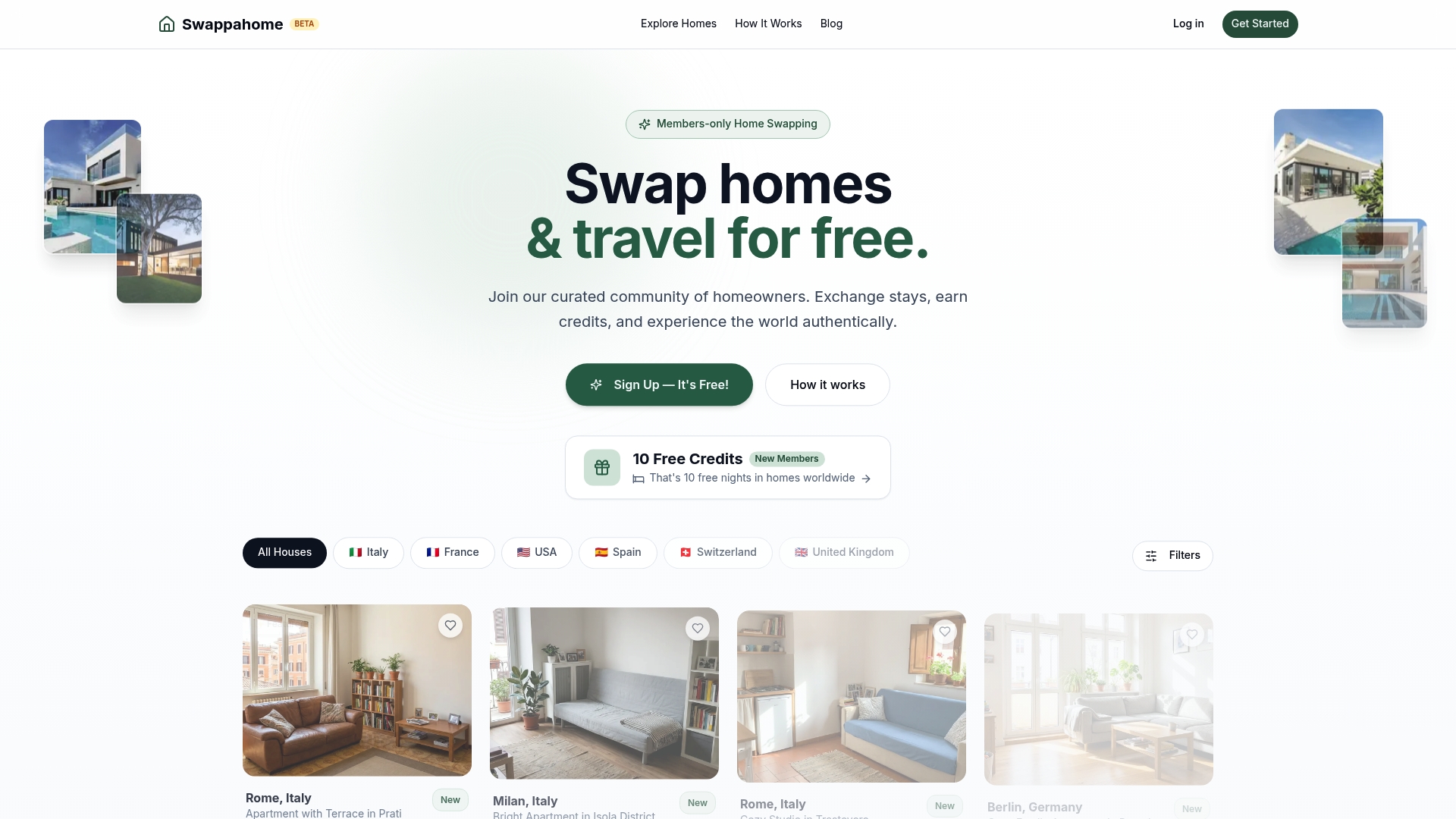 https://swappahome.com
Browse home exchange listings to discover verified homes in cities and countryside locations worldwide. Each profile includes detailed photos, amenity lists, and homeowner backgrounds to help you make informed decisions. The point-based system means one credit equals one free night, giving you flexibility to plan trips of any length. New members receive free credits to start exploring immediately, removing barriers to your first exchange experience.
What is the best way to find reliable home exchange partners?
Finding trustworthy partners requires thorough vetting before committing to an exchange. Vetting includes checking references, reviews, and extensive communication before agreeing. Start by reading all available reviews from previous swappers, looking for patterns in feedback about cleanliness, communication, and home accuracy. Request references and actually contact them to ask specific questions about their experience.
Communicate extensively through multiple channels before finalizing arrangements. Video calls reveal home condition and build personal rapport that text messages can't achieve. Ask detailed questions about neighborhood safety, home maintenance, and their exchange history. Trust your instincts; if something feels off or communication seems evasive, keep searching for better matches.
Formal agreements protect both parties and clarify expectations from the start. Document everything in writing, including house rules, included amenities, cleaning standards, and damage protocols. Platforms often provide agreement templates, but customize them to address your specific concerns and circumstances.
How much can I realistically save using home exchange instead of hotels?
Savings vary by destination and trip length, but savings can reach thousands of Euros and lodging costs drop up to 70%. A typical week-long family vacation saves $2,000 to $3,000 in accommodation alone. Add meal savings from cooking at home, and total savings often exceed $3,000 per trip.
Long-term exchanges offer even greater financial benefits. Three-month stays can save over $12,000 compared to renting apartments or extended hotel stays. These savings make sabbaticals, remote work abroad, and extended cultural immersion financially accessible for average families. The longer your stay, the more dramatic your savings become compared to traditional lodging options.
What should I include in the home exchange agreement?
Formal agreements should cover house rules, included amenities, and liability issues. Start with basic terms like exact dates, number of guests, and which areas of the home are accessible. Specify whether pets are allowed, smoking policies, and noise expectations for shared walls or close neighbors.
List all included amenities explicitly, from WiFi and streaming services to car usage and bicycle availability. Clarify cleaning expectations for both arrival and departure, including who handles trash removal and linen washing. Address liability clearly, covering accidental damage, insurance requirements, and how to handle repairs or replacements.
Include emergency contacts, utility usage guidelines, and any cost-sharing arrangements for excessive use. Document key exchange methods, security system codes, and parking details. The more comprehensive your agreement, the fewer disputes arise and the smoother your exchange experience becomes for everyone involved.
How far in advance should I start planning my home exchange trip?
Begin planning 6 to 24 months before your intended travel dates for optimal results. This timeline gives you access to the widest selection of available homes, especially for popular destinations during peak seasons. Early planning also allows time for multiple conversations, reference checks, and building trust with potential partners before committing.
Flexibility with dates expands your options significantly. If you can travel during shoulder seasons or adjust by a week or two, you'll find more compatible matches. Last-minute exchanges do happen, particularly for non-simultaneous arrangements where timing matters less, but advance planning consistently produces better outcomes and reduces stress.
Recommended
- Rise of Home Exchange 2025: Trends & Complete Guide | SwappaHome
- 6 Affordable Home Swap Options for Budget Travelers 2026 | SwappaHome Blog
- How to Travel for Free with Home Exchange | Complete 2024 Guide
- Top 7 Digital Nomad Home Exchange Options in 2026 | SwappaHome Blog
- Best World Tour Cruises 2026 | World Tour Cruise Deals

Published by
SwappaHome
SwappaHome Editorial Team
Home Exchange & Slow Travel Editorial
The SwappaHome Editorial Team brings together travel research, home-exchange community insights, and platform data to produce practical guides for first-time and experienced home swappers. Every article cites real platforms, current market rates, and verifiable city-level facts so readers can make informed decisions without guessing.
Ready to try home swapping?
Join SwappaHome and start traveling by exchanging homes. Get 7 free credits when you sign up!