
I am going on vacation: what to do before you leave

SwappaHome Editorial Team
Home Exchange & Slow Travel Editorial
Key Takeaways A little preparation can make the last day at home feel calmer and help your trip start smoothly. Focus first on the details that would be…
Key Takeaways
A little preparation can make the last day at home feel calmer and help your trip start smoothly. Focus first on the details that would be difficult to fix once you’re away.
- Confirm your bookings, transportation, entry requirements, and itinerary.
- Arrange care for your home, pets, plants, and deliveries.
- Close out urgent work and time-sensitive errands before you go.
- Pack for the forecast and keep important essentials in your carry-on.
- Check documents, health needs, home safety, and departure details before locking up.
Plan your trip details
A good trip plan is more than a reservation confirmation; it’s the set of details that keeps small snags from becoming stressful. If your first thought is “I am going on vacation,” take a moment to make sure the dates, routes, and arrangements are all in one place. A SwappaHome stay, for example, is a home exchange, so confirm the agreed dates and arrival details with your host. For more vacation-planning advice, gather the information you’ll want to reach quickly while you’re on the move.
Confirm dates, bookings, and transportation
Check each part of the journey against the same calendar: departure and return dates, lodging, connections, and any pickup or check-in windows. When plans involve several reservations, a simple summary can make gaps easier to spot. Here’s one way to organize the essentials:
| Detail | What to confirm | Where to keep it |
|---|---|---|
| Dates | Departure, arrival, and return | Calendar or itinerary |
| Stay | Address, check-in, and contact details | Reservation or message |
| Transportation | Route, transfers, and departure time | Ticket or travel app |
| Changes | Cancellation terms and deadlines | Booking confirmation |
Review the summary once against your confirmations, rather than relying on memory. If a booking is through SwappaHome, check its cancellation policy for how refunds depend on how far ahead a booking is canceled.
Check entry requirements and local travel advice
Look up current entry rules and travel advice for your destination, especially if your trip crosses a border or includes a connection in another country. Requirements can depend on your nationality, the purpose of travel, and how long you plan to stay. Leave enough time to handle anything that needs an application or appointment; a quick search the night before is not a reliable plan.
Share your itinerary with someone you trust
Give a trusted person your broad itinerary, lodging details, and a way to reach you. You don’t need to send a minute-by-minute schedule; the useful information is where you expect to be and how to get in touch if plans change. If you’re exchanging homes, share the relevant arrival and contact details with the person involved, too.
Get your home ready
Leaving a home in good shape is a practical kindness to your future self. Think through what needs attention while you’re away, from living things and incoming mail to doors and appliances. If you’re hosting a SwappaHome guest, include the home-preparation details you’ve agreed to share with them. A pre-vacation checklist can also help catch the small tasks that are easy to overlook when departure gets busy.
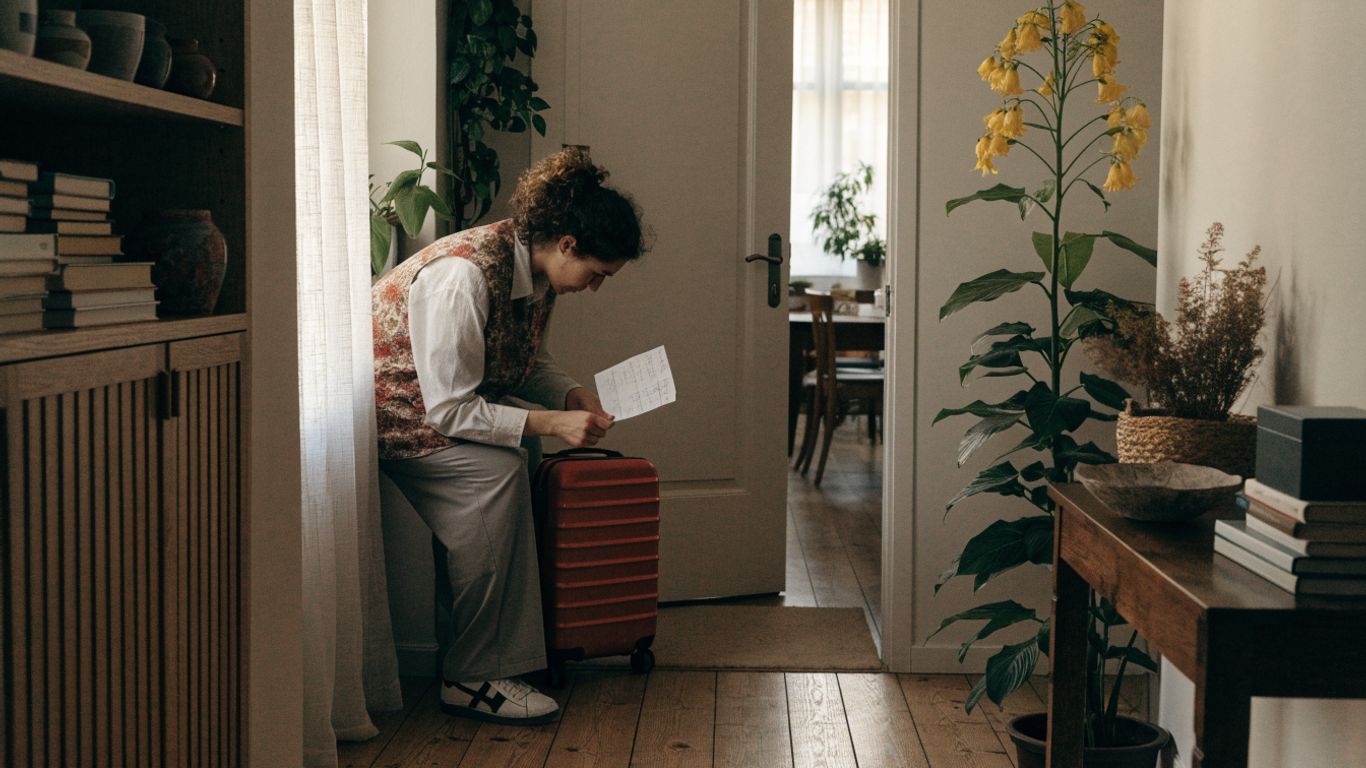 A traveler preparing a calm home before leaving
Arrange care for pets, plants, and deliveries
Confirm who will care for pets, how they’ll get in, and where to find feeding instructions or supplies. Set a realistic watering plan for plants, whether that means asking someone to stop by or moving pots to a suitable spot. If deliveries or mail will pile up, arrange for someone to collect them or pause what you can before you leave.
Secure doors, windows, and valuables
Walk through the home and check that accessible windows and doors close securely. Put valuables and sensitive items somewhere out of sight, and make sure any person who needs access knows how to enter and lock up. A calm, deliberate pass through each room is often more useful than trying to remember whether you checked everything while carrying bags.
Adjust lights, appliances, and thermostat settings
Before you go, set lights and temperature controls in a way that suits the length of your trip and the conditions at home. Unplug small appliances if appropriate, and avoid switching off anything that needs to stay on, such as equipment or systems you rely on. The right settings depend on your home, the season, and any care arrangements, so use your judgment rather than applying a one-size-fits-all rule.
Wrap up work and daily responsibilities
A few loose ends can follow you mentally even after the trip has begun. Decide what truly needs to be finished before you leave, what can wait, and who should know if something urgent comes up. Settling small decisions early makes it easier to step away without checking your phone every few minutes.
Finish urgent tasks and set an out-of-office message
Take care of deadlines that fall during your absence, then set an out-of-office message with your return date and an alternate contact when appropriate. Keep the message brief and avoid sharing more personal travel information than necessary. If your plans change, update the message so people know when to expect a response.
Delegate responsibilities and share key contacts
If someone is covering for you, explain what needs attention and where to find the relevant files or contacts. A short handoff is easier to use than a long, last-minute download of everything you know. Confirm who can make decisions while you’re away, and tell coworkers which issues can wait until you return.
Pay bills and handle time-sensitive errands
Look over bills, appointments, returns, and other errands that could become inconvenient while you’re gone. Pay anything due during the trip or schedule it in advance if that suits your situation. Keeping a short list of what’s done and what can wait gives you a clear stopping point instead of a vague sense that something remains unfinished.
Pack for your destination
Packing gets easier when it starts with the trip you actually planned, rather than a general idea of what a traveler might need. Consider the length of your stay, planned activities, and whether you’ll have access to laundry. A little restraint helps, too: leave room for what you’ll use, not every possible version of the day.
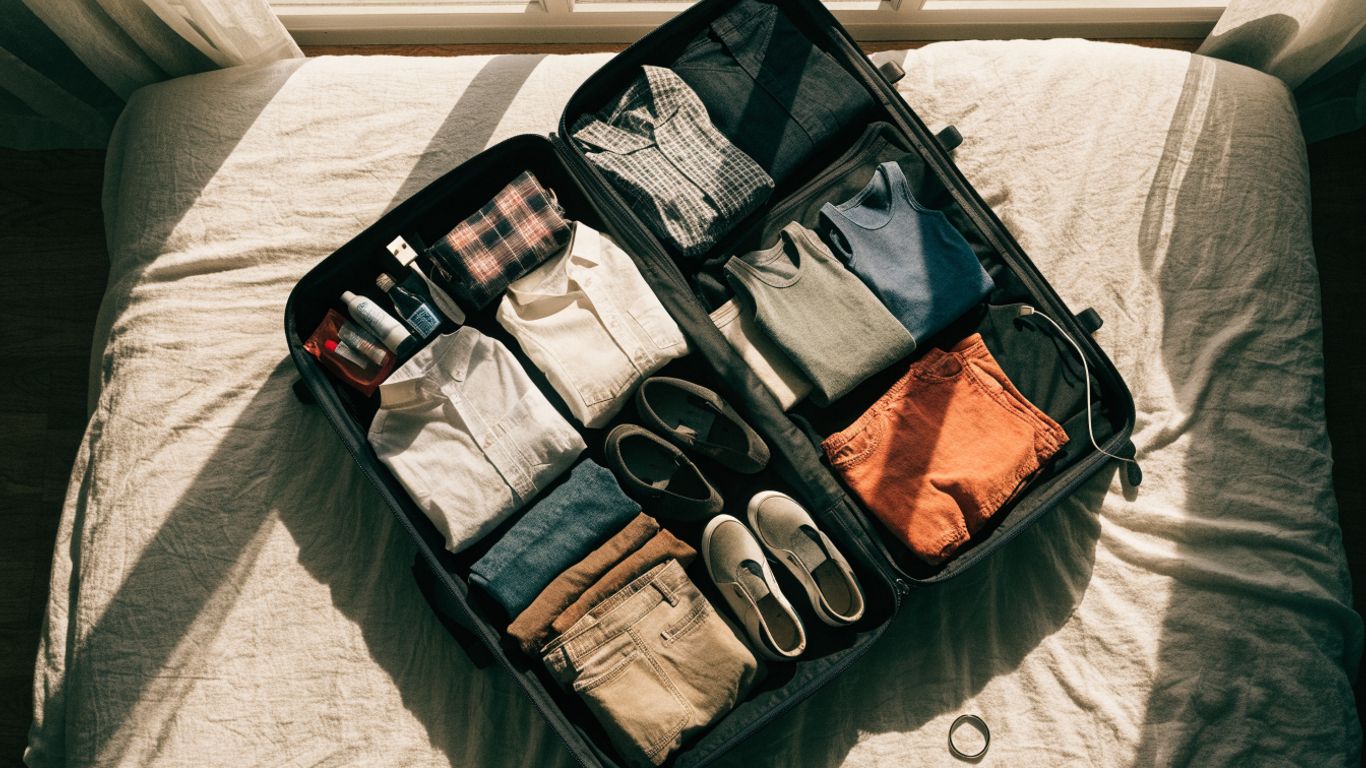 Open suitcase with neatly arranged travel essentials
Check the forecast and plan outfits
Check the forecast close to departure, then choose clothes that can work across more than one outfit. Remember that temperatures can shift between daytime, evening, and indoor spaces. If you’ll be outdoors, include suitable footwear and a layer for changing conditions; comfort often matters more than packing a different look for every hour.
Choose luggage and make a packing list
Choose luggage that fits the length and style of the trip, along with any transport limits you need to follow. A written list helps you notice essentials before the bag is full and keeps last-minute additions from taking over. Group items by purpose, such as clothing, toiletries, and documents, so it’s easier to see what you’ve packed and what still needs attention.
Pack essentials in your carry-on
Keep items you might need during the journey or shortly after arrival where you can reach them. That can include identification, medications, chargers, a change of clothes, and anything necessary for an unexpected delay. A compact carry-on is most useful when it holds the essentials without becoming a second full suitcase.
- Keep travel documents and reservation details accessible.
- Pack medications and other personal necessities with you.
- Add a charger, a small toiletry kit, and a change of clothes.
- Check current baggage rules before packing restricted items.
This is a flexible starting point, not a universal packing formula; adjust it to your route and personal needs. Once the carry-on is set, you can leave less urgent items in your main bag and avoid reopening everything at the door.
Prepare documents, money, and devices
Keep the practical pieces of travel in a place you can find without digging through messages. Make sure paper and digital copies are available where useful, and think through what you would need if your phone battery ran low. A few minutes of preparation now can save time at a counter or on an unfamiliar street.
Check IDs, passports, tickets, and reservations
Check that identification is current and that names and dates match your tickets and reservations. If you need a passport, verify its validity against the requirements for your destination rather than assuming it will be accepted. Save confirmations where they’re easy to retrieve, and consider keeping a separate copy of essential details in case you can’t access your usual device.
Set up payment options and notify your bank if needed
Bring a payment method you expect to use and a backup stored separately. Check whether you’ll need cash for any part of the trip, and review how you can contact your bank if a card is misplaced or declined. If you think a bank may flag unfamiliar transactions, check its travel guidance before leaving.
Download maps, tickets, and entertainment for offline use
Download the maps, tickets, and other information you may need when you don’t have a reliable connection. Save entertainment for longer waits or travel segments, and make sure your device has enough storage and charge. It’s worth opening downloaded files once before departure so you know they’re available offline.
Take care of health and safety
Health preparation is personal, so base it on your needs and the kind of trip you’re taking. Consider routine medication, basic supplies, and who to contact if a problem comes up. These steps don’t need to be complicated; the aim is to avoid being caught without something important.
Refill prescriptions and pack a basic first-aid kit
Check whether you have enough of any prescription medication for the full trip, including a little leeway for delays if appropriate. Keep medication in its original packaging when that is recommended, and review any rules that apply to carrying it across borders. A small first-aid kit can cover ordinary minor needs, but tailor it to your destination and personal circumstances.
Review travel insurance and emergency contacts
If you have travel insurance, review what it covers, how to reach the provider, and what documentation may be needed if you make a claim. Save local emergency information along with the contact details of someone at home. You may never need either, but having them accessible is better than searching for them under pressure.
Protect your personal information while traveling
Use care when connecting to public networks, and avoid accessing sensitive accounts on devices or connections you don’t trust. Set a screen lock and make sure you know how to locate or secure your device if it goes missing. Keep an eye on important belongings in busy places, particularly when you’re distracted by tickets, directions, or a changing schedule.
Do a final check before you leave
A final check works best when it’s steady rather than hurried. Give yourself enough time to confirm the journey, clear anything that should not be left out, and make one last pass through the home. If you’ve been thinking, “I am going on vacation,” this is the moment to trade the mental loop for a simple, deliberate routine.
Confirm transportation and check-in details
Check departure times, station or terminal details, and any check-in steps before you head out. Look for messages about delays or changes, and make sure you know how you’ll get to your first stop. A quick review of the route and your ticket can prevent an avoidable scramble on the way.
If you’d like a visual refresher on getting ready for a trip, this video can be a useful companion to your own departure routine.
After checking, put the information away somewhere accessible so you’re not searching for it again at the curb or platform. Leave a little margin for traffic, security lines, or other delays that are outside your control.
Remove trash and check kitchen appliances
Take out food waste and anything else that could become unpleasant while you’re gone. Check the kitchen for items that need attention, and confirm appliances are off if they don’t need to remain on. A final look at the sink, counters, and refrigerator can make coming home feel noticeably better.
Lock up and let your trusted contact know you’re on your way
Close and lock the doors and windows, then follow any agreed plan for keys or access. Tell your trusted contact that you’ve left and how to reach you if needed. Once you’re on your way, let the checklist go; you’ve done the work that makes it easier to enjoy the trip.
Conclusion
A vacation starts with more than the first mile of the journey: it begins with the small preparations that let you leave home and daily obligations in good order. Confirm what matters, make a few thoughtful checks, and give yourself permission to stop planning once it’s time to go.
Frequently Asked Questions
How early should I start getting ready for a vacation?
Start with anything that needs lead time, such as travel documents, pet care, or time-sensitive work. You can leave packing and the final home check for closer to departure, using a list to keep the smaller tasks visible.
What should I do at home before leaving for a trip?
Arrange care for pets and plants, manage deliveries, secure doors and windows, and check appliances and food. Adjust lights and temperature settings to suit your home and the length of your absence.
What should I keep in my carry-on?
Keep identification, important travel information, medications, a charger, and a few personal essentials with you. A change of clothes can also be helpful if checked luggage is delayed.
Should I tell someone I’m going away?
It’s sensible to share your itinerary and a way to contact you with someone you trust. Give them the information they may need, while avoiding unnecessary public announcements about your absence.
How can I avoid forgetting important items?
Make a packing list based on your destination, planned activities, and personal needs. Check it while packing, then do a separate final review of documents, medication, and devices.
What should I check before leaving for the airport or station?
Confirm the departure time, route, ticket, and any check-in requirements. Check for travel updates and allow enough time for the journey to your departure point.
What should I do the night before a vacation?
Finish packing what you can, charge your devices, and put essential documents and medication somewhere easy to reach. Take out trash and leave enough time the next day for a calm home and travel check.

Published by
SwappaHome
SwappaHome Editorial Team
Home Exchange & Slow Travel Editorial
The SwappaHome Editorial Team brings together travel research, home-exchange community insights, and platform data to produce practical guides for first-time and experienced home swappers. Every article cites real platforms, current market rates, and verifiable city-level facts so readers can make informed decisions without guessing.
Ready to try home swapping?
Join SwappaHome and start traveling by exchanging homes. Get 7 free credits when you sign up!