
Movie Johnson Family Vacation: Cast, plot, reviews, and where to watch

SwappaHome Editorial Team
Home Exchange & Slow Travel Editorial
Key Takeaways Johnson Family Vacation is a 2004 road comedy about a strained family traveling from California to Missouri. Cedric the Entertainer leads the…
Key Takeaways
Johnson Family Vacation is a 2004 road comedy about a strained family traveling from California to Missouri.
- Cedric the Entertainer leads the film as Nate Johnson, a father trying to repair his marriage and reconnect with his children.
- Vanessa Williams, Bow Wow, and Solange Knowles play key members of the Johnson family.
- The movie mixes broad highway mishaps with themes of marriage, parenting, pride, and family expectations.
- Critics generally disliked the uneven plot and noisy comedy, while some viewers enjoy its affectionate family chaos.
- Availability changes by country and service, so viewers should check current digital, streaming, and disc listings.
What movie Johnson Family Vacation is about
The movie johnson family vacation is a 2004 American road comedy centered on the Johnson family. Nate Johnson takes his wife and children on a long drive from California to Missouri for a family reunion, hoping the trip will bring them closer. The plan quickly becomes a chain of arguments, odd encounters, and comic disasters. Beneath the noise, the story asks whether a family can reconnect when everyone is carrying old frustrations.
The Johnson family’s cross-country road trip
The journey begins with a practical obligation but soon becomes an emotional test. Nate, Dorothy, D.J., and Kelly have to share a vehicle, meals, hotel stops, and long stretches of highway while their private disagreements become impossible to avoid. The mistaken upgrade of the family SUV adds another layer of absurdity, turning the vehicle itself into part of the joke.
The road structure gives the film a steady rhythm. Each stop brings a new disruption, but the family cannot simply walk away from one another; they still have Missouri ahead of them. That forced closeness is what makes the travel premise useful rather than decorative.
Nate Johnson’s struggle to reconnect with his family
Nate is not a relaxed vacationer. He is controlling, proud, and determined to make the trip work on his terms, even though his marriage is already under strain. His effort to reconnect with Dorothy and the children often creates more tension because he treats family repair like a problem he can manage.
Cedric the Entertainer plays Nate with a mixture of confidence and insecurity. The character wants to be respected as a husband and father, yet his defensiveness keeps exposing the distance between what he intends and how the family experiences him. That contradiction gives the broad jokes a recognizable emotional center.
The family reunion that drives the story
The reunion in Missouri supplies the destination and the deadline. Nate cannot simply abandon the journey after a bad argument because arriving together matters to the wider family, even if the Johnsons are barely managing to stay together. The event also brings old family comparisons and rivalries back into view.
A reunion is a useful pressure cooker for this kind of comedy. It promises celebration, but it also gathers relatives who know exactly which buttons to push. Nate’s desire to appear successful and in control becomes especially fragile when the family starts measuring him against others.
How comedy and family drama work together
The film moves between slapstick, uncomfortable arguments, and small attempts at affection. Some jokes are deliberately exaggerated, while the family conflict is more familiar: parents misunderstand children, spouses avoid direct conversations, and pride makes apologies difficult. The emotional stakes stay simple, which helps the audience follow the noisy detours.
The best parts use the comedy to reveal character rather than pause the story. A ridiculous encounter can show Nate’s impatience, D.J.’s independence, or Dorothy’s exhaustion. When the jokes do not connect to those tensions, the movie feels more like a string of sketches than a unified family story.
The main cast and characters
The cast gives the film its lively, ensemble-driven quality. Cedric the Entertainer carries the central role, while Vanessa Williams brings a calmer counterpoint to Nate’s bluster. Bow Wow and Solange Knowles play the younger members of the family, each reflecting a different response to parental pressure. The supporting performers add the larger-than-life energy expected from a road comedy.
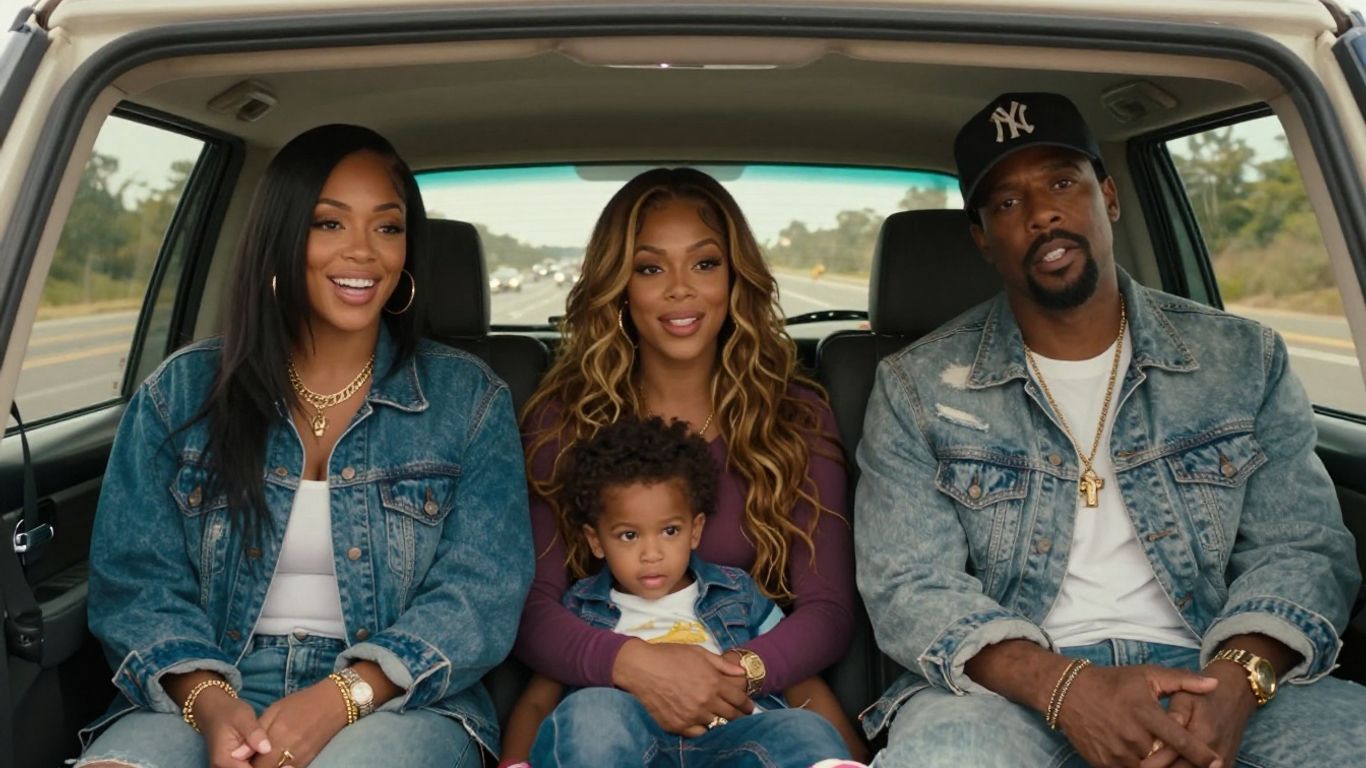 Cedric the Entertainer and family in SUV
Cedric the Entertainer as Nate Johnson
Cedric the Entertainer plays Nate as a father whose authority is constantly slipping. Nate wants to be the person who solves problems, but he often creates new ones through impatience and self-importance. The performance works best when his confidence gives way to visible embarrassment.
Nate is also the film’s main source of momentum. He pushes the family onto the road, insists on reaching the reunion, and reacts loudly whenever events move outside his control. That makes him frustrating, but it also keeps the story moving from one mishap to the next.
Vanessa Williams as Dorothy Johnson
Vanessa Williams plays Dorothy, Nate’s wife, as someone tired of being managed rather than heard. Her distance from Nate is not presented as a mystery; it grows from the way he handles marriage and family decisions. Dorothy’s restraint gives the arguments a sharper edge because she does not need to shout to make her dissatisfaction clear.
Her character also keeps the film from becoming only Nate’s story. Dorothy notices the effect of his behavior on the children and challenges his assumption that a shared destination automatically creates closeness. Their marriage is therefore part of the journey’s real destination.
Bow Wow as D.J. Johnson
Bow Wow plays D.J., Nate’s musically inclined son, who is developing an identity separate from his father’s expectations. D.J. is old enough to resist being treated like a little child but still young enough to need support. That tension creates several of the film’s parent-child conflicts.
D.J.’s presence makes the road trip feel like more than a marital repair exercise. Nate has to confront the fact that parenting is changing as his son becomes more independent. Their disagreements are often comic, but they also show a father who does not know how to adjust his role.
Solange Knowles as Kelly Johnson
Solange Knowles plays Kelly Johnson, one of the children caught in the family’s shifting mood. Kelly is part of the crowded family dynamic rather than an isolated subplot, and her reactions help show how much the adults’ conflict affects everyone in the vehicle.
Her role contributes to the sense that the Johnsons are a real family unit, not just a hero surrounded by side characters. The children observe, comment, and absorb the awkwardness, which gives the arguments a wider consequence.
The supporting characters and celebrity cameos
The supporting cast fills the trip with relatives, strangers, and eccentric figures who make the highway feel unpredictable. Steve Harvey is especially memorable in the family orbit, where competition and one-upmanship sharpen Nate’s insecurity. Other appearances add quick bursts of recognition without displacing the central family.
The cameos are most effective when they interrupt Nate’s carefully controlled plans. Each new personality gives him another chance to lose his temper or reveal what he is trying to hide. That recurring pattern suits the film’s broad, episodic style.
The movie’s story and major themes
At the plot level, the film is a family road trip with a clear destination. At the thematic level, it is about people who care about one another but have forgotten how to communicate without competing. The journey exposes habits that might remain hidden during ordinary home life. It also lets the movie explore family identity through jokes, embarrassment, and moments of reluctant honesty.
Communication problems between family members
The Johnsons rarely lack something to say; their problem is that they do not listen well. Nate gives instructions, D.J. pushes back, Dorothy withdraws, and the wider family adds commentary. Their conversations become contests instead of exchanges, so even reasonable concerns arrive wrapped in irritation.
The road makes this pattern impossible to ignore. A family can avoid one another at home by moving into separate rooms, but a long drive puts everyone in the same small space. The resulting arguments are exaggerated for comedy, yet the basic frustration feels familiar.
Marriage, parenting, and changing family roles
Nate and Dorothy’s marriage sits underneath the entire trip. Nate wants credit for trying, while Dorothy wants him to understand why the relationship has become distant. Neither desire is enough on its own, and the film finds humor in Nate’s repeated attempts to force a meaningful breakthrough.
Parenting creates a second version of the same conflict. Nate expects obedience and respect, while D.J. wants room to grow. The family has to adjust to changing roles rather than preserve an older arrangement simply because it once worked.
Race, identity, and family expectations
The film places its characters within a distinctly Black family and community setting, using relatives, music, status, and generational expectations as part of the comedy. These details give the reunion a social texture beyond the immediate nuclear family. Nate’s pride is personal, but it is also shaped by how he thinks he will be judged.
That theme is handled through accessible humor rather than a formal social argument. The characters tease one another, compare achievements, and carry assumptions about what a successful family should look like. Their disagreements become a way of showing how identity is negotiated inside families.
Finding humor in everyday road-trip problems
Many of the jokes grow out of ordinary travel annoyances: a difficult vehicle, confusing stops, uncomfortable encounters, and competing plans. The escalation is cartoonish, but the starting points are recognizable. The family is funny partly because everyone responds to inconvenience as if it were a personal insult.
The film’s road-trip logic can be reduced to a few recurring ingredients:
- A fixed destination that keeps the family moving.
- A crowded vehicle that removes privacy.
- Unexpected strangers who disrupt the schedule.
- Old family rivalries that make small problems feel enormous.
Those ingredients explain why the story keeps generating new incidents. They also show why the movie can feel episodic: the same comic engine drives nearly every stop.
Memorable scenes and comedic moments
The memorable moments in Johnson Family Vacation usually come from collision: Nate’s plans meet another person’s personality, or a family disagreement spills into a public setting. The humor is broad and sometimes deliberately chaotic. Even when a gag does not land, the scenes remain easy to recall because the characters react with such force.
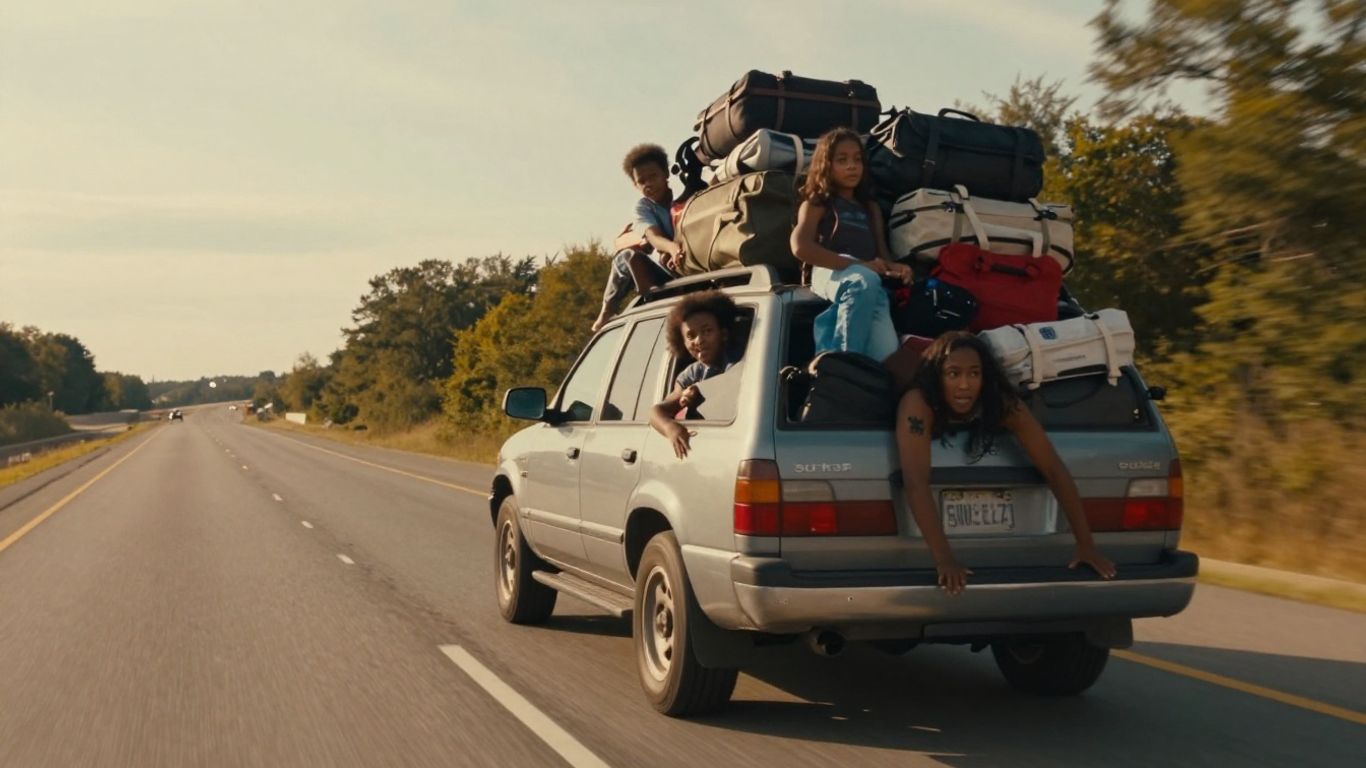 Family road trip comedy on an American highway
The chaotic drive to Missouri
The drive is funny because the family starts with little emotional unity and then has to operate as a team. The customized SUV becomes a moving battleground, with Nate trying to control the experience while everyone else responds to the vehicle and the journey in their own way.
Long highway sequences also give the performers room to build irritation. A small complaint can become a full argument, then fade into silence before the next problem appears. That stop-and-start rhythm mirrors the way real family trips can stretch patience.
The family’s encounters along the highway
The strangers and roadside figures are designed to throw the Johnsons off balance. A hitchhiker, an awkward stop, or an unexpected conversation can turn a routine part of the journey into a comic set piece. The family’s reactions matter as much as the encounters themselves.
These episodes also widen the movie’s world. The Johnsons are not only dealing with private tension; they are being watched, challenged, and misunderstood by people outside the family. Nate’s attempts to look composed usually make the situation even more conspicuous.
Nate’s rivalry with his brother-in-law
Nate’s rivalry with Mack, his brother-in-law, gives the family conflict a competitive edge. Mack knows how to needle Nate, especially by presenting himself as more successful or more aligned with their mother’s expectations. Nate responds by trying to prove that he is doing just as well, which rarely helps.
Their exchanges are funny because neither man is willing to surrender status. The rivalry also reveals that Nate’s insecurity does not begin with the road trip; the journey simply places it in front of an audience. Family gatherings make old comparisons feel immediate again.
The reunion’s emotional turning points
The reunion matters because the trip cannot remain a collection of disconnected mishaps. By the time the family reaches its destination, the arguments have clarified what each person wants and what Nate has failed to understand. The emotional turns are modest rather than sweeping, but they give the comedy a reason to resolve.
The final movement works best when the characters stop performing for one another. The family does not become perfect, and the earlier chaos is not erased. Instead, the possibility of listening replaces the need to win every exchange.
Reviews and audience reactions
Reviews of the film have been sharply mixed in tone, though professional criticism has generally been unfavorable. The movie has a recognizable cast and an uncomplicated family premise, but its uneven construction makes the experience divisive. Some viewers respond to the warmth beneath the arguments, while others find the jokes repetitive or too loud.
What critics praised about the film
Even negative reviews tend to leave room for the cast’s energy. Cedric the Entertainer is an engaging screen presence, and the family setup gives the performers clear comic friction. The movie also has an accessible premise: a father attempts to repair a fractured household during a trip that keeps going wrong.
The setting provides a steady supply of visual and situational comedy. Viewers who enjoy exaggerated family banter may find the cast’s commitment more appealing than the plot’s polish. The film’s appeal is therefore less about surprise than about watching familiar performers work through a crowded, unruly situation.
Common criticisms of the comedy and plot
The most common complaints concern the loose structure and reliance on broad gags. Several episodes feel only lightly connected, and the emotional reconciliation can seem too tidy after so much conflict. Critics have also objected to the film’s uneven pacing and jokes that repeat the same idea without adding much.
A useful overview of the critical reception shows why the movie has struggled with reviewers. The objections are not simply about one failed scene; they concern the overall balance between family feeling and road-comedy excess.
How viewers respond to the family dynamics
Audience reactions often depend on tolerance for loud, old-fashioned family comedy. Viewers who recognize the arguments between Nate and D.J., or the exhaustion behind Dorothy’s responses, may find the film more personable than critics did. Others see the same behavior as grating and feel that the movie does not earn its emotional turns.
The family dynamic remains the film’s strongest conversation point. Even people who dislike particular jokes can usually identify the underlying conflict: Nate wants closeness but keeps approaching it through control. That contradiction gives the movie more to discuss than its plot mechanics alone suggest.
How the movie compares with other road-trip comedies
Johnson Family Vacation follows a familiar road-comedy pattern: a family leaves home, meets a succession of odd characters, and reaches a destination changed by the experience. Its emphasis is more directly on family repair than on travel itself, although the episodic structure sometimes makes the two aims compete.
The movie is best approached as a broad ensemble comedy rather than a subtle domestic drama. It has the recognizable ingredients of the genre, but its tone and family-centered perspective give it a distinct identity. Viewers deciding whether to revisit it should expect uneven jokes alongside moments of genuine affection.
Where to watch Johnson Family Vacation
Where to watch Johnson Family Vacation depends on the viewer’s country, subscription services, and current licensing arrangements. Older films can move between catalogs, rental stores, and physical media with little warning. A listing that appears today may not be available next month, so checking the service directly is sensible.
Streaming and digital rental availability
The film may appear through a streaming catalog or as a digital rental, but availability is not identical everywhere. Search by the full title and verify the runtime, rating, audio options, and release year before pressing play. A current listing for Apple TV availability describes the 2004 film and its English-language presentation.
Digital storefronts can also separate subscription access from rental access. That distinction matters when a search result makes a movie look available but requires a separate payment. Families should also check the rating and content notes before choosing it for a group viewing.
Buying the movie on digital platforms
Buying a digital copy can make sense for viewers who expect to revisit the film or want to avoid changing subscription catalogs. The exact purchase option varies by country and platform, and some stores list a title for rent without offering ownership. Reading the listing carefully prevents confusion between those two choices.
The film’s relatively short running time makes it easy to fit into a casual movie night. Still, the PG-13 rating and references to language, suggestive dialogue, and violence are worth considering before watching with younger viewers.
DVD and physical-media options
DVD is another practical route for an older release, especially when digital rights are shifting. Used copies may be available through libraries, secondhand sellers, or personal collections. Disc quality and included features can vary, so buyers should inspect the edition and condition.
Physical media also has one simple advantage: it is not dependent on a current streaming license. For viewers who enjoy collecting early-2000s comedies, a disc can be a more dependable long-term option than a temporary catalog listing.
How availability can vary by location
Regional licensing explains why two viewers can search for the same film and see different results. Audio tracks, subtitles, ratings, rental prices, and even the title’s presence may change from one market to another. Services may also update their pages without much notice.
For broader family-travel ideas after the movie, family travel guides offer a separate starting point for planning trips and getaways. That is a different kind of journey from Nate Johnson’s highway ordeal, but the contrast is part of the fun: real travel benefits from planning, while comedy often depends on plans falling apart.
Conclusion
Johnson Family Vacation remains an uneven but recognizable family road comedy, carried by Cedric the Entertainer’s energetic performance and a simple story about reconnecting under pressure. Its broad jokes will not work for everyone, yet the tension between Nate’s good intentions and poor communication gives the movie a relatable center. Check current listings before watching, then treat the trip as a noisy, imperfect portrait of family life.
Frequently Asked Questions
What is Johnson Family Vacation about?
It follows Nate Johnson and his family as they travel from California to Missouri for a family reunion while trying to deal with marital tension, parenting conflicts, and a series of comic mishaps.
Who plays Nate Johnson?
Cedric the Entertainer plays Nate Johnson, the father whose attempt to reunite his family drives the story.
Who plays Dorothy Johnson?
Vanessa Williams plays Dorothy Johnson, Nate’s wife, whose strained relationship with him is one of the film’s central conflicts.
Is Johnson Family Vacation a family-friendly movie?
It is rated PG-13 and includes suggestive dialogue, language, and violence, so parents should review the content before watching with younger children.
Where does the family travel?
The Johnson family travels from California to Missouri to attend a family reunion.
How long is Johnson Family Vacation?
The film runs for approximately 97 minutes, or 1 hour and 37 minutes.
Why did critics dislike the movie?
Many critics objected to its uneven plot, broad and repetitive jokes, loose pacing, and lack of cohesion between its road-trip episodes.

Published by
SwappaHome
SwappaHome Editorial Team
Home Exchange & Slow Travel Editorial
The SwappaHome Editorial Team brings together travel research, home-exchange community insights, and platform data to produce practical guides for first-time and experienced home swappers. Every article cites real platforms, current market rates, and verifiable city-level facts so readers can make informed decisions without guessing.
Ready to try home swapping?
Join SwappaHome and start traveling by exchanging homes. Get 7 free credits when you sign up!