
National Lampoon European Vacation: Plot, cast, filming locations, and lasting legacy

SwappaHome Editorial Team
Home Exchange & Slow Travel Editorial
Key Takeaways National Lampoon European Vacation turns an ordinary family holiday into a fast-moving chain of misunderstandings, accidents, and cultural…
Key Takeaways
National Lampoon European Vacation turns an ordinary family holiday into a fast-moving chain of misunderstandings, accidents, and cultural collisions.
- The Griswolds win an all-expenses-paid European trip on a television game show.
- Clark’s carefully planned itinerary quickly collapses under real-world pressure.
- London, Paris, Germany, and Italy provide the film’s major comic settings.
- Chevy Chase and Beverly D’Angelo anchor the family’s chaotic dynamic.
- The movie remains a broad, messy travel comedy with a lasting cult following.
The story and setup of National Lampoon European Vacation
The second Griswold vacation movie sends the family out of the United States and into a chain of European mishaps. What begins as a lucky television prize becomes a test of patience, navigation, and family loyalty. The premise is simple, but the film keeps widening the gap between Clark’s expectations and what actually happens. Its humor comes from watching a familiar family struggle in unfamiliar places.
How the Griswold family wins the European trip
Clark, Ellen, Audrey, and Rusty appear on a television game show and win a trip through Europe. The prize sounds perfect: travel, sightseeing, and the chance to see famous landmarks without paying the usual cost. The family accepts the opportunity even though the children have mixed feelings about leaving home. From the beginning, the trip is less a shared dream than Clark’s dream that everyone else has agreed to join.
Clark Griswold’s attempt to plan the perfect vacation
Clark approaches the journey with the confidence of someone who believes enthusiasm can solve every practical problem. He wants the family to enjoy every attraction, every meal, and every carefully chosen stop. That confidence becomes increasingly ridiculous once schedules, roads, language barriers, and local customs refuse to cooperate. The perfect vacation exists mainly in Clark’s head, which makes each setback feel personal.
The family’s journey through London, Paris, Germany, and Italy
The route moves through several postcard-ready destinations, but the Griswolds rarely experience them peacefully. London brings driving confusion, Paris brings another humiliating setback, and Germany supplies a village visit that becomes one of the movie’s strangest detours. Italy continues the pattern of romance, suspicion, and disorder. The family’s itinerary can be summarized by the way each stop transforms a tourist attraction into a fresh problem.
| Destination | What Clark expects | What the family gets |
|---|---|---|
| London | A graceful introduction to Europe | Traffic confusion and embarrassment |
| Paris | Art, romance, and sightseeing | A stolen camera and frustration |
| Germany | A charming cultural visit | An awkward village encounter |
| Italy | A memorable final chapter | More complications and pursuit |
The table captures the movie’s basic joke: the scenery is grand, but the experience is consistently inconvenient. Europe gives the Griswolds plenty to look at, while Clark gives the audience plenty to worry about.
How the chaotic ending brings the adventure full circle
By the final stretch, the family is no longer chasing a calm holiday. They are trying to get through the trip with their relationships and belongings mostly intact. The escalating trouble eventually circles back to the same family dynamic that began the story: Clark insists he is helping, everyone else doubts him, and the next disaster arrives before anyone can recover. The ending feels less like a neat resolution than a comic confirmation that the Griswolds have learned very little.
The main cast and memorable characters
The film depends on the family’s contrasting reactions to travel. Clark treats every obstacle as a challenge to his authority, while Ellen often tries to keep the peace. Audrey and Rusty are old enough to be embarrassed by their parents but young enough to be swept into the chaos. Around them, a parade of strangers and locals gives the journey its odd, unpredictable texture.
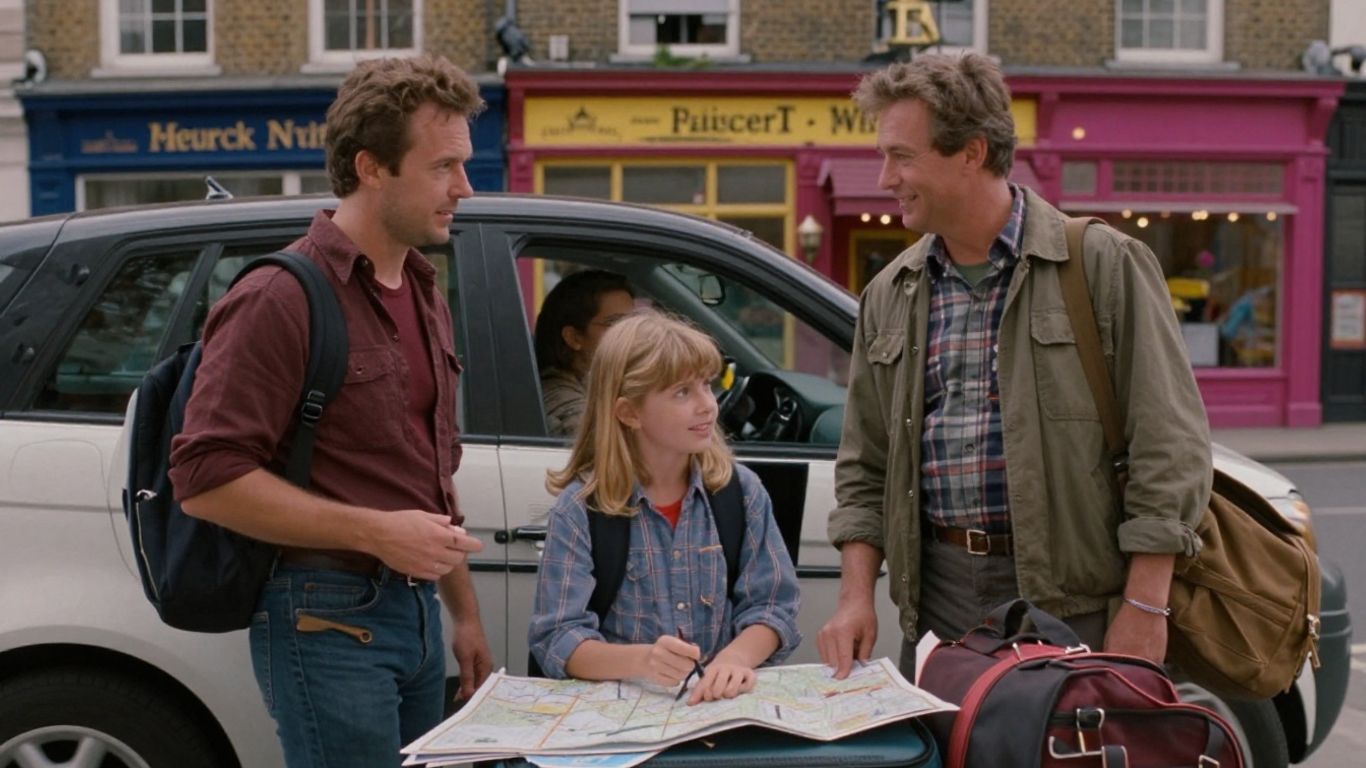 Chevy Chase and family beside European landmarks
Chevy Chase as Clark Griswold
Chevy Chase plays Clark as an optimistic father whose confidence repeatedly outruns his judgment. He is not malicious; his disasters usually begin with a genuine desire to give his family a wonderful experience. That sincerity makes the character both likable and exhausting. Chase’s physical reactions, sudden panic, and stubborn insistence keep the film moving even when the plot becomes episodic.
Beverly D’Angelo as Ellen Griswold
Beverly D’Angelo gives Ellen a steadier presence amid the confusion. She understands Clark’s good intentions, but she also sees how quickly his plans can become everyone else’s problem. Ellen’s patience supplies an emotional counterweight to the film’s louder jokes. Her role is especially important because the family would feel purely chaotic without someone trying to hold it together.
Audrey and Rusty Griswold’s changing roles
Audrey and Rusty respond to Europe in different ways, reflecting two familiar teenage travel anxieties. Audrey is preoccupied with what she has left behind, while Rusty is eager to discover what the trip might offer him. Their parents still control the itinerary, but the children increasingly recognize the absurdity of the adults’ behavior. That shift gives the family arguments a sharper, more recognizable edge.
Supporting characters who make the trip unforgettable
The supporting cast turns the vacation into a series of comic interruptions. Eric Idle’s memorable appearance adds a particularly dry, mischievous energy, while the various hotel workers, drivers, villagers, and strangers keep refusing to behave according to Clark’s expectations. Their brief encounters make Europe feel less like a single setting and more like a succession of unpredictable comic stages.
The film’s most memorable scenes
The movie is remembered less for a tightly constructed plot than for several large comic set pieces. Each one takes a normal tourist activity and pushes it toward physical absurdity. Driving, sightseeing, and taking family photographs all become dangerous once Clark gets involved. The result is a collection of scenes that remain easy to recall even when the story between them feels loose.
The disastrous drive through London
The rental-car sequences establish the film’s comic rhythm almost immediately. Clark struggles with unfamiliar traffic patterns while the family reacts with increasing alarm. The jokes work because his mistake is both obvious and strangely difficult for him to correct. Every turn adds another layer of confusion until sightseeing becomes an endurance test for everyone in the vehicle.
The mistaken landing at Big Ben
The Big Ben sequence is one of the film’s most famous examples of exaggerated travel comedy. A sightseeing flight takes an unexpectedly alarming direction, leaving the family close to one of London’s best-known landmarks. The scene treats a recognizable monument as if it were part of an amusement ride. Its visual simplicity is precisely why the gag remains so memorable.
The moment also shows how the film uses landmarks as comic props rather than quiet destinations. Once Clark is present, even a symbol of London becomes another obstacle in the family’s itinerary.
The family’s visit to the Louvre
The Louvre visit gives the film a different kind of embarrassment. Clark wants the family to appreciate great art, but the experience becomes another occasion for confusion and loss. The scene plays with the gap between cultural prestige and ordinary tourist behavior. Instead of becoming more sophisticated abroad, the Griswolds carry their domestic chaos into one of Europe’s most famous museums.
The collision with the Stonehenge monument
The Stonehenge scene turns a solemn historical site into a piece of slapstick machinery. Clark misjudges the space around the stones, and the resulting accident unfolds with the detached inevitability of falling dominoes. The joke is broad, but the image is unusually effective: a family vacation has somehow damaged one of the oldest places on its route. It is Clark’s planning failure reduced to one unforgettable visual gag.
Filming locations and European settings
The film’s settings are recognizable enough to make the family’s behavior feel even more outrageous. London, Paris, German villages, Alpine scenery, and Italian streets provide a glossy travel brochure backdrop for decidedly unglamorous experiences. The contrast between beautiful places and terrible timing is central to the movie’s appeal. The locations do not calm the Griswolds; they give their mistakes a larger stage.
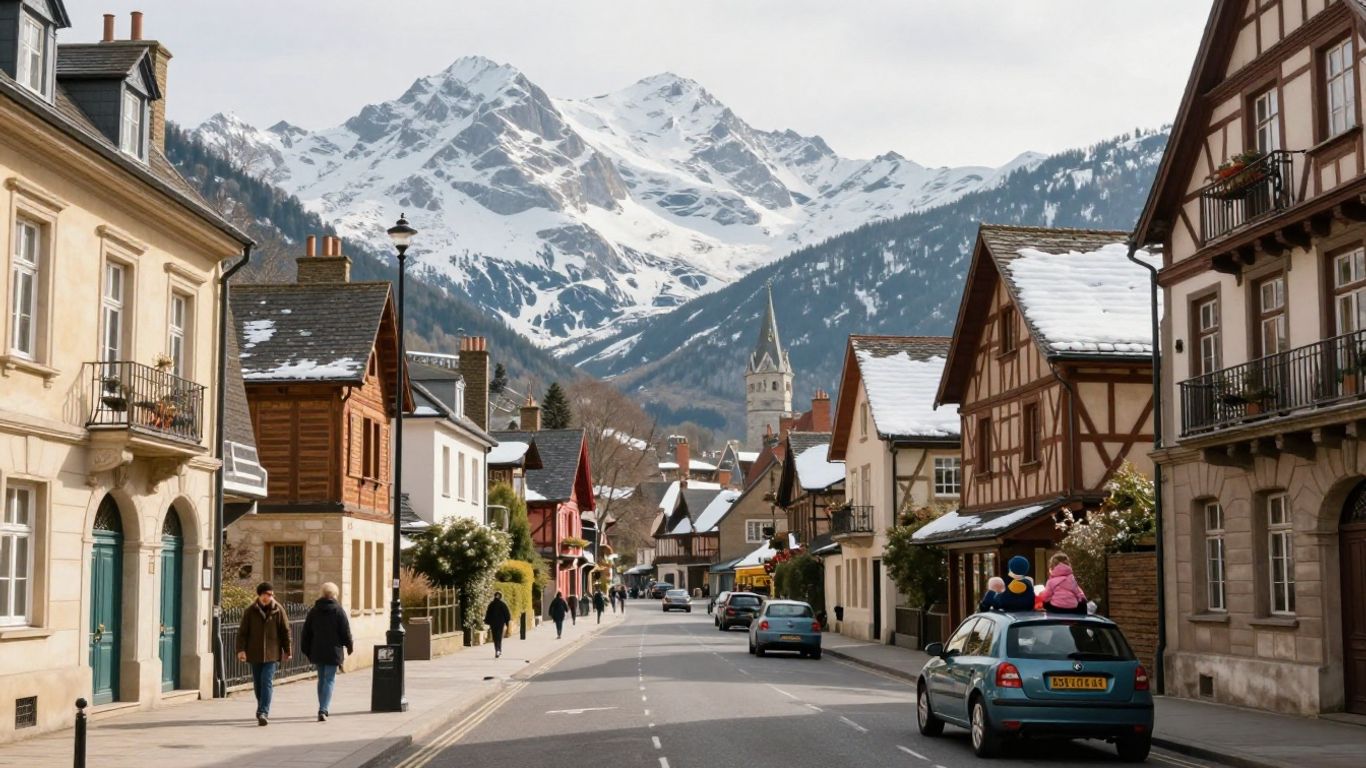 European streets and Alpine scenery on family journey
How London establishes the film’s comic tone
London introduces the family to the basic problem of the trip: familiar habits do not transfer smoothly to an unfamiliar city. The rental car becomes an extension of Clark’s misplaced confidence, while the crowded roads make every mistake immediately visible. Famous landmarks appear nearby, but the family can barely manage the journey between them. London therefore sets the film’s tone before the sightseeing has properly begun.
Paris landmarks featured in the story
Paris brings the promise of art, architecture, and romance, yet the family’s visit remains stubbornly practical and uncomfortable. The Louvre and other recognizable sights create a sharp contrast with Clark’s confusion. Rather than presenting Paris as a polished fantasy, the movie filters it through the irritation of lost belongings, hurried plans, and family disagreements. The city is beautiful, but beauty does not make the Griswolds better tourists.
The German village and Alpine sequences
The German portion of the trip shifts the movie toward folk tradition and storybook scenery. A village setting and mountainous landscapes suggest the kind of peaceful European experience Clark probably imagined when he first accepted the prize. Instead, social awkwardness and poor judgment take over. The quiet surroundings make the family’s noisy presence seem even more conspicuous.
The movie’s use of recognizable European attractions
These attractions work because viewers understand what they are supposed to mean: history, culture, romance, and memorable travel. The Griswolds keep replacing those meanings with panic, embarrassment, or slapstick. For readers thinking about a less frantic family trip through the continent, family travel in France offers a useful real-world contrast to the movie’s frantic sightseeing. The joke lands because the destinations are genuinely desirable, even when the visitors are spectacularly unprepared.
Humor, themes, and cultural commentary
National Lampoon European Vacation is built around the comic friction between intention and consequence. Clark wants to be a generous father, but his need to direct every moment makes him the source of many problems. The film also treats travel as a pressure cooker, where family habits become more visible because the surroundings are unfamiliar. Its stereotypes and broad humor can feel dated, but its central frustration remains recognizable.
Clark Griswold’s obsession with controlling the vacation
Clark believes a successful holiday requires constant motion and visible enjoyment. If the family is tired or disappointed, he responds by adding another attraction, another plan, or another burst of forced enthusiasm. His need for control prevents him from noticing what the others actually want. The joke is not simply that Clark fails to organize the trip; it is that he cannot imagine enjoying travel without managing everyone’s reaction to it.
The contrast between American tourists and European culture
The film uses the Griswolds as exaggerated outsiders. Their assumptions collide with different languages, customs, traffic systems, and social expectations. Much of the humor comes from that collision, although some of the cultural jokes rely on broad stereotypes that modern viewers may find uncomfortable. The movie is best understood as a product of its period rather than a careful portrait of the places it visits.
Physical comedy and escalating family disasters
The physical gags become funnier when they build on one another instead of appearing as isolated accidents. The family’s travel problems tend to follow a familiar pattern:
- Clark misunderstands a situation.
- He insists that his solution will fix everything.
- The solution creates a larger public disaster.
- The family reacts while Clark tries to preserve his confidence.
This rhythm gives the movie its momentum. Even when a joke is excessive, the escalation makes the next mishap feel almost inevitable.
Why the movie’s travel satire still resonates
Family travel still involves tired children, unrealistic schedules, unfamiliar roads, and the pressure to make every expensive day count. That is why Clark’s behavior remains recognizable beneath the louder comedy. Many travelers know the temptation to rush through a landmark simply because it was on the list. The film turns that ordinary anxiety into spectacle, but the underlying problem is still human: trying so hard to have fun that nobody is having fun.
Reception, legacy, and where to watch
The film arrived as a follow-up to a successful vacation comedy and attracted audiences despite receiving mixed critical reactions. Some reviewers found it too broad and episodic, while others enjoyed the energy of its set pieces and the returning family chemistry. Its reputation has lasted partly because its most famous scenes are easy to quote and remember. For a useful overview of its cast, plot, and production background, film production background provides a natural companion read.
How critics and audiences responded to the 1985 comedy
The response was divided from the start. Critics often compared it unfavorably with the earlier Griswold adventure, especially when the European episodes seemed assembled around individual gags rather than a strong emotional story. Audiences, however, found enough comic spectacle and recognizable family irritation to keep the film visible. Its financial success helped secure its place as more than a forgotten sequel.
The film’s place in the National Lampoon franchise
European Vacation is the second film in the Vacation series and expands the formula by moving the family away from the American road trip. That change gives the movie a different visual identity while preserving the basic structure: Clark plans, the family objects, and the journey goes wrong. It helped establish the Griswolds as characters who could survive almost any destination. Later entries would return to the same combination of optimism, embarrassment, and disaster.
How it compares with other Griswold family vacations
Compared with the original vacation, this film is more international, more episodic, and more dependent on large visual gags. It has less of the earlier movie’s road-movie continuity, but it offers a wider variety of settings. The family remains the constant, especially Clark and Ellen’s ability to keep moving after a catastrophe. Viewers who prefer character-driven comedy may favor the first film, while fans of location-based slapstick may enjoy this one’s excesses.
What new viewers should know before watching today
New viewers should expect broad 1980s comedy, strong language, sexual material, and jokes that may land differently now than they did in 1985. A parent’s content guide can help households decide whether the film suits their viewing plans. It is also worth approaching the movie as a sequence of comic set pieces rather than a realistic travel story. The best way to enjoy it is to accept that Clark’s confidence will keep making everything worse.
Conclusion
National Lampoon European Vacation remains a lively, uneven portrait of family travel gone spectacularly wrong. Its landmarks, cast performances, and escalating disasters give it a distinct place in the Griswold series, while its dated humor makes the viewing experience worth approaching with some context. The trip may be a failure for Clark, but it remains a memorable destination for fans of broad vacation comedy.
Frequently Asked Questions
What is National Lampoon European Vacation about?
The 1985 comedy follows the Griswold family after they win an all-expenses-paid trip through Europe and encounter one mishap after another.
Who plays Clark Griswold?
Chevy Chase plays Clark Griswold, the enthusiastic father whose attempts to control the family holiday repeatedly create new problems.
Who plays Ellen Griswold?
Beverly D’Angelo plays Ellen Griswold, Clark’s wife and a calmer presence within the family’s increasingly chaotic journey.
Which countries does the family visit?
The story takes the Griswolds through England, France, Germany, and Italy, with several famous attractions appearing along the way.
Is the movie connected to the original Vacation film?
Yes. It is the second film in the Griswold family’s Vacation series and continues the characters’ pattern of ambitious plans collapsing into comic disaster.
What is the Stonehenge scene about?
Clark accidentally backs the family’s vehicle into the Stonehenge monument, causing the stones to topple in one of the film’s best-known visual gags.
Is National Lampoon European Vacation suitable for children?
It contains strong language, sexual content, drinking, and comic violence, so parents may want to review its content before choosing it for a family screening.

Published by
SwappaHome
SwappaHome Editorial Team
Home Exchange & Slow Travel Editorial
The SwappaHome Editorial Team brings together travel research, home-exchange community insights, and platform data to produce practical guides for first-time and experienced home swappers. Every article cites real platforms, current market rates, and verifiable city-level facts so readers can make informed decisions without guessing.
Ready to try home swapping?
Join SwappaHome and start traveling by exchanging homes. Get 7 free credits when you sign up!