
Peer-to-Peer Lodging Explained: A Traveler's Guide

SwappaHome Editorial Team
Home Exchange & Slow Travel Editorial
Peer-to-Peer Lodging Explained: A Traveler's Guide !Traveler researching peer-to-peer lodging in café > TL;DR: > > - Peer-to-peer lodging allows...
Peer-to-Peer Lodging Explained: A Traveler's Guide
 Traveler researching peer-to-peer lodging in café
TL;DR:
- Peer-to-peer lodging allows individuals to rent out their homes directly to travelers through digital platforms, offering authentic experiences and cost savings. Trust infrastructure such as verification and reviews is essential for the platform's success and safety. Home swapping extends this model by enabling free travel through a credit system, connecting homeowners worldwide.
Peer-to-peer lodging is a form of accommodation where private individuals rent out their own homes, spare rooms, or vacation properties directly to travelers, bypassing hotels entirely. The industry term for this model is P2P accommodation, and it sits squarely within the sharing economy. Digital platforms act as the intermediary, handling listings, payments, and trust through verification and reviews. For budget-conscious travelers, this model delivers real cost savings alongside local, authentic experiences that no hotel chain can replicate.
What is peer-to-peer lodging and how does it work?
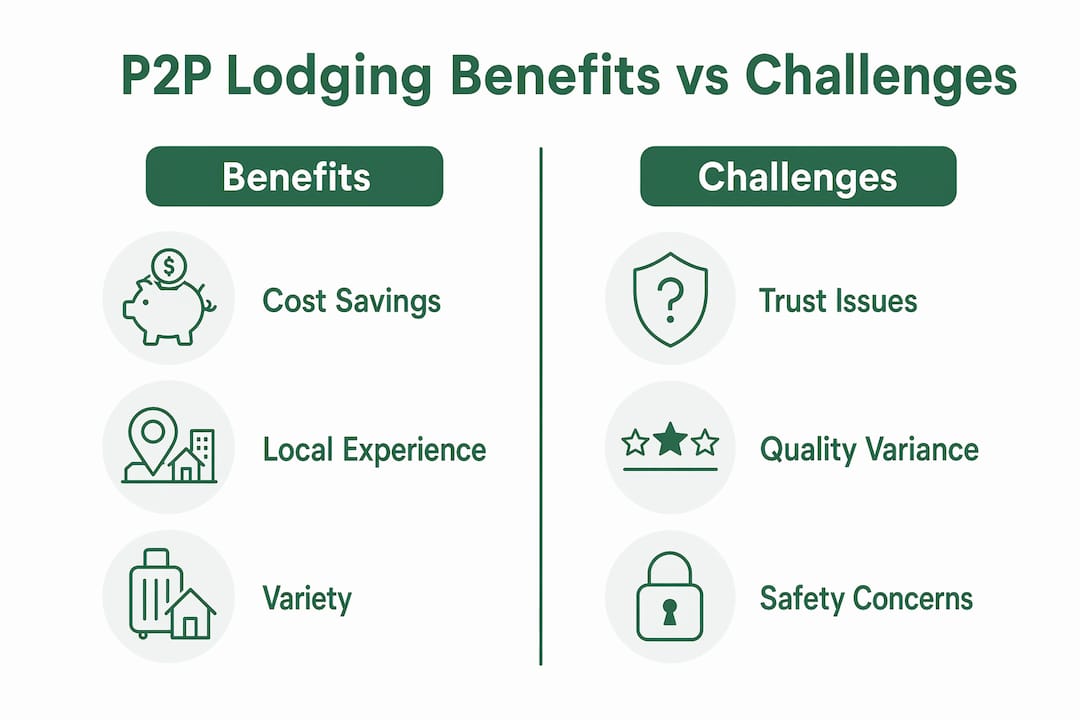 Infographic comparing benefits and challenges of peer-to-peer lodging
Peer-to-peer lodging is defined as a sharing economy segment where individuals rent out unused residential space directly to travelers, with digital platforms charging service fees up to 15% of the total booking cost. That fee structure funds the platform's core functions: listing management, secure payment processing, and dispute resolution. Without those functions, neither host nor traveler would have enough confidence to transact with a stranger.
The booking process follows a clear sequence:
- A host lists their property. They upload photos, write a description, set nightly rates, and define house rules. The listing goes live on the platform for travelers to browse.
- A traveler searches and requests a stay. Filters narrow results by location, price, property type, and dates. The traveler reads reviews from previous guests before sending a booking request.
- The host accepts or declines. Some listings offer instant booking; others require manual approval. Either way, the host retains control over who stays in their home.
- Payment is processed through the platform. The platform holds funds until after check-in, protecting both sides. Service fees are deducted automatically.
- Both parties leave reviews. After the stay, hosts and guests rate each other. Reciprocal rating systems incentivize responsible behavior on both sides, which is a key difference from traditional hotel reviews where only the guest rates the property.
Properties range from a single spare bedroom in a city apartment to an entire beachfront house. Stay durations span a single night to several months, making P2P accommodation flexible enough for weekend trips and extended remote work stays alike.
Pro Tip: Read at least five recent reviews before booking. Review volume is a strong signal of a listing's reliability. Research based on 12,108 rental listings confirms that review volume reduces booking uncertainty in non-standardized P2P accommodations.
 Diverse homes suitable for peer-to-peer lodging
What are the benefits of peer-to-peer lodging for travelers and hosts?
Travelers and hosts each gain something the traditional hotel model cannot offer. The advantages are concrete, not abstract.
For travelers:
- Lower cost. P2P accommodation typically costs less per night than a comparable hotel room, especially for groups or longer stays where renting an entire home splits the cost across multiple people.
- Authentic local experience. Travelers seek P2P lodging for unique local experiences and non-standardized environments that differ significantly from hotels. Staying in a real neighborhood, cooking in a real kitchen, and sleeping in a real home changes how you experience a destination.
- Personalized host knowledge. Travelers prize hosts who provide personalized local tips, adding value beyond the room itself. A host's restaurant recommendation or shortcut to the market is worth more than any concierge script.
- Flexible property types. Travelers can choose a studio apartment, a family home, a rural cottage, or a room in a shared house. That range of options simply does not exist in the hotel sector.
- Longer stays made practical. Full kitchens, laundry access, and living spaces make P2P accommodation far more livable for stays beyond a few nights.
For hosts:
- Extra income from underused space. P2P rentals monetize expensive but infrequently used assets like spare rooms or second homes. A room that sits empty generates nothing. Listed on a P2P platform, it generates income.
- Control over the calendar. Hosts set their own availability. They can block dates for personal use and open the listing only when it suits them.
- Community connection. Many hosts report that meeting travelers from different countries and cultures is a genuine reward, not just a side effect.
What challenges and risks exist in peer-to-peer lodging?
P2P accommodation carries real risks that travelers and hosts should weigh before committing.
- Inconsistent quality. Hotels follow brand standards. P2P listings do not. A photo can look great while the actual space falls short. Reading recent reviews carefully is the primary defense against this.
- Trust and safety concerns. Trust is the real product in peer-to-peer models, built through identity verification, secure payment, and reciprocal reviews. Platforms that skip rigorous verification create higher risk for both parties.
- House rules friction. Research from 2025 shows that house rules have an inverted U-shaped effect on rental performance. Too few rules leave guests uncertain about expectations. Too many rules trigger psychological reactance and reduce bookings. Hosts who find the right balance attract more guests and fewer conflicts.
- Platform fees and pricing transparency. Service fees up to 15% can push the final price closer to a hotel rate than the listed nightly price suggests. Always check the total cost at checkout before confirming a booking.
- Regulatory uncertainty. Some cities restrict or ban short-term rentals in residential zones. Travelers and hosts both carry responsibility for understanding local rules before listing or booking.
Pro Tip: Before booking, check whether the platform offers a damage protection policy or host guarantee. These programs vary widely across platforms and directly affect your financial exposure if something goes wrong.
How does peer-to-peer lodging compare to traditional hotels and other lodging types?
The differences between P2P accommodation and traditional hotels go beyond price. They reflect fundamentally different travel philosophies.
| Feature | Traditional hotels | P2P accommodation | Home swapping |
|---|---|---|---|
| Cost | Fixed nightly rate, often high | Variable, often lower | Free (credit or direct swap) |
| Experience | Standardized, branded | Unique, host-dependent | Highly personal, community-based |
| Amenities | Consistent (gym, room service) | Varies by property | Varies by home |
| Booking flexibility | High, last-minute friendly | Moderate, host approval may apply | Requires advance planning |
| Trust mechanism | Brand reputation | Reviews, verification | Member vetting, platform curation |
| Local connection | Minimal | Moderate to high | Very high |
Hotels deliver predictability. You know what you are getting before you arrive. P2P accommodation trades that predictability for character, cost savings, and local immersion. The quality of the digital interface and a host's virtual presence strongly influence whether a traveler feels confident enough to book, which is why well-written listings with detailed photos and prompt communication convert far better than sparse ones.
Home swapping sits at the far end of this spectrum. Platforms like Swappahome take the P2P model one step further by removing money from the equation entirely. Members list their homes, earn credits by hosting, and spend those credits to stay in other members' homes. One credit equals one free night. That structure makes peer-to-peer travel genuinely free for both parties, not just cheaper. For travelers who own a home and want to see the world without paying for accommodation, it is the most cost-effective peer-to-peer travel option available.
For travelers weighing their options, the right choice depends on trip length, budget, and how much local immersion they want. Short business trips often favor hotels. Longer leisure trips, family vacations, and budget-driven adventures consistently favor P2P accommodation or home swapping. The alternatives to traditional hotels available in 2026 are more varied and more accessible than at any point in travel history.
Key takeaways
Peer-to-peer lodging delivers the most value when travelers prioritize authentic local experiences and cost savings over standardized hotel comfort.
| Point | Details |
|---|---|
| Core definition | P2P lodging connects travelers directly with private homeowners, bypassing hotels entirely. |
| Trust is the product | Identity verification, secure payments, and reciprocal reviews are what make P2P platforms function. |
| Fees affect total cost | Platform service fees up to 15% can close the gap between P2P and hotel pricing at checkout. |
| House rules matter | Hosts who balance clear rules with guest freedom attract more bookings and fewer disputes. |
| Home swapping goes further | Platforms like Swappahome eliminate accommodation costs entirely through a credit-based exchange system. |
Why trust is the real currency of P2P travel
The most common mistake travelers make when evaluating P2P accommodation is treating it like a hotel booking. It is not. You are entering someone's home, and that changes everything about how the experience works.
I have watched the P2P lodging space evolve considerably, and the platforms that thrive are not the ones with the most listings. They are the ones that invest most seriously in trust infrastructure. Verification, reviews, and responsive support are not features. They are the foundation. Without them, the whole model collapses.
What surprises most first-time P2P travelers is how much a good host changes the trip. A host who leaves a handwritten note with neighborhood recommendations, stocks the fridge with local snacks, or responds within minutes to a question creates an experience that no hotel can manufacture. That human element is what keeps travelers coming back to P2P accommodation even when a hotel might be similarly priced.
My advice for anyone new to peer-to-peer renting: read the reviews for the host, not just the property. A great host in a modest apartment will outperform a stunning property with a distant or unresponsive owner every time. And if you own a home, consider what you are leaving on the table by not participating. The advantages for homeowners on membership-based platforms go well beyond extra income. They include reciprocal access to a global community of verified travelers who treat your home the way they want theirs treated.
— Swappa
Travel for free with Swappahome
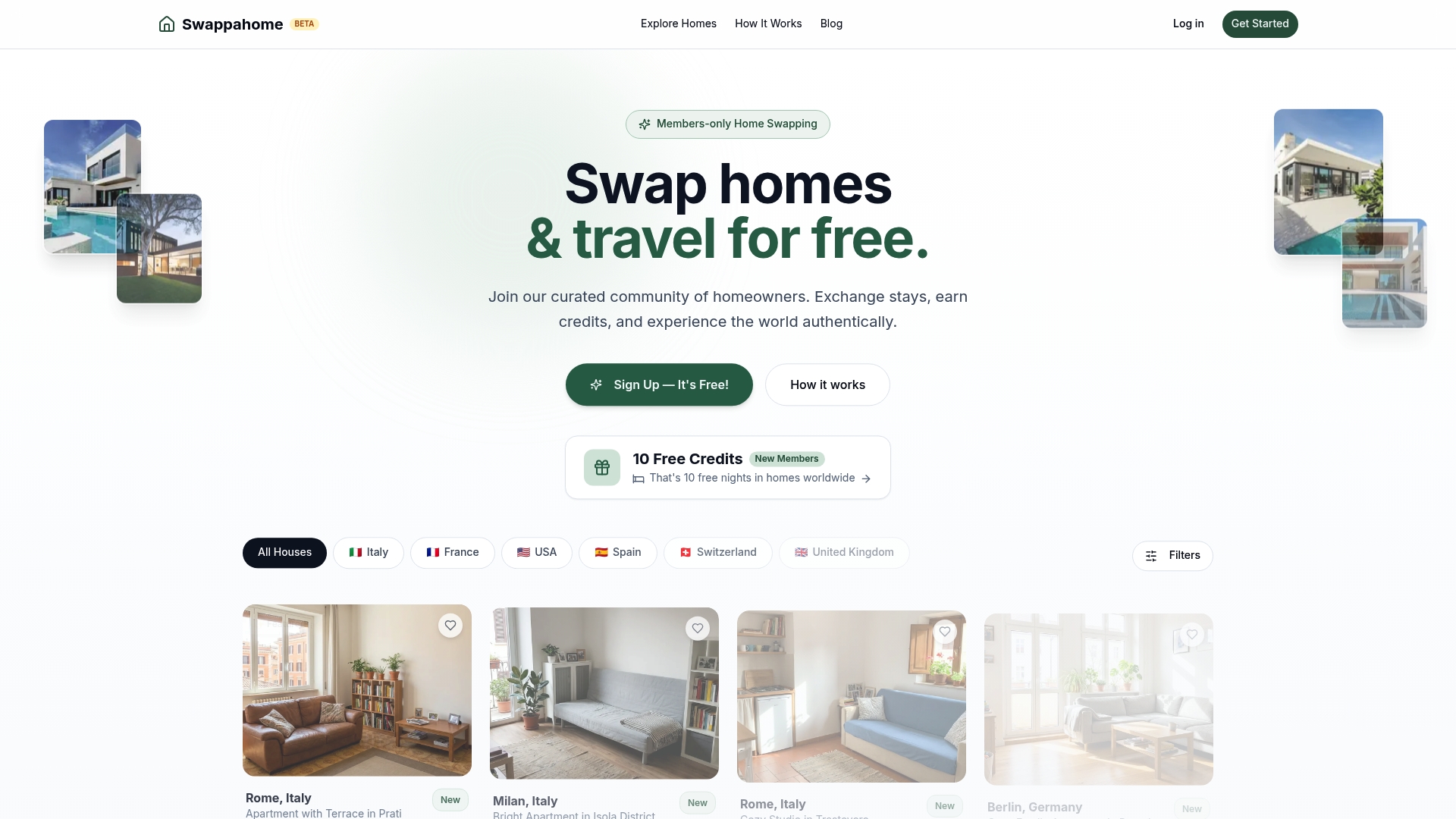
Swappahome is a members-only home swapping platform built for homeowners who want to travel without paying for accommodation. The model is straightforward: list your home, earn credits when you host, and use those credits to stay in verified homes across dozens of countries. One credit equals one free night.
 https://swappahome.com
New members receive free credits to get started, so the first stay costs nothing beyond membership. Every home on the platform belongs to a verified owner, which means the trust infrastructure is built into the community itself. If you are ready to see what free home exchange travel looks like in practice, Swappahome's available listings span cities, coastlines, and countryside properties worldwide.
FAQ
What is peer-to-peer lodging in simple terms?
Peer-to-peer lodging is when a private individual rents out their home, room, or property directly to a traveler through a digital platform, rather than through a hotel or traditional rental agency.
How does peer-to-peer accommodation differ from a hotel?
Hotels offer standardized, branded experiences with consistent amenities. P2P accommodation offers unique, host-dependent stays in real homes, typically at lower cost and with greater local character.
Are peer-to-peer lodging platforms safe?
Safety depends on the platform's verification standards. The most reliable platforms use identity verification, secure payment processing, and two-sided rating systems where both hosts and guests rate each other after every stay.
What fees do peer-to-peer lodging platforms charge?
Most platforms charge service fees up to 15% of the total booking cost. Always check the final checkout price, not just the nightly rate, before confirming a reservation.
What is home swapping and how does it relate to P2P lodging?
Home swapping is a form of peer-to-peer accommodation where two homeowners exchange stays in each other's homes, often at no cost. Platforms like Swappahome use a credit system so swaps do not need to happen simultaneously.
Recommended

Published by
SwappaHome
SwappaHome Editorial Team
Home Exchange & Slow Travel Editorial
The SwappaHome Editorial Team brings together travel research, home-exchange community insights, and platform data to produce practical guides for first-time and experienced home swappers. Every article cites real platforms, current market rates, and verifiable city-level facts so readers can make informed decisions without guessing.
Ready to try home swapping?
Join SwappaHome and start traveling by exchanging homes. Get 7 free credits when you sign up!