
Retiree Travel Tips: A Guide to Affordable Travel Through Home Exchange

SwappaHome Editorial Team
Home Exchange & Slow Travel Editorial
Retirement is supposed to be the moment travel finally becomes a regular thing, not a once-a-year event you save up for like it's a wedding. And then reality hits. Hotel prices and vacation rental...
Retirement is supposed to be the moment travel finally becomes a regular thing, not a once-a-year event you save up for like it's a wedding. And then reality hits. Hotel prices and vacation rental fees have a way of gutting a fixed income faster than anyone expects, and suddenly that dream of spending a month in Portugal turns into a long weekend somewhere closer to home. This is exactly where home exchange earns its keep. You swap homes with another traveler, lodging costs basically vanish, and all of a sudden your travel budget stretches across more places and longer stays. If you've been hunting around for affordable travel for seniors, home swapping is one of the few options that actually delivers without draining the nest egg.
I want to walk you through how this really works for retirees, why it's a different animal than renting a vacation home, and how to do it without getting burned. Doesn't matter if this is your first trip overseas or your fifteenth.
Table of Contents
- What Is Home Exchange, and Why Does It Work So Well for Retirees?
- How Does Home Exchange Save Retirees Money?
- What Are the Best Retiree Travel Tips for a Successful Home Swap?
- How Do You Choose the Right Home Exchange Platform?
- Safety, Trust, and Insurance Considerations
- Preparing Your Home for an Exchange: A Retiree's Checklist
- Financial Planning for Long-Term Retirement Travel
- Frequently Asked Questions
What Is Home Exchange, and Why Does It Work So Well for Retirees? {#what-is-home-exchange}
Home exchange is simply an arrangement where two households agree to stay in each other's homes, either at the same time or on separate dates, with no rent changing hands. Instead of forking over nightly rates to a hotel or an Airbnb host, both sides just trade access to their places. Usually there's a small membership or service fee through a platform like Swappahome, and that's it.
Now, why does this suit retirees so perfectly? Flexibility, mostly. A working traveler is boxed into a two-week window and has to fight for it. A retired teacher or engineer can wander off for a month in the shoulder season, when swap partners are easier to find and the good destinations aren't packed shoulder to shoulder with tourists. There's another thing people don't think about: retirees often have the nicer homes to offer. The kids have moved out, the place is well kept, maybe there's a yard and a quiet street. That's genuinely appealing to someone who's tired of cramped apartments. And it lines up with what older travelers actually want out of a trip. AARP's 2024 travel research found that older Americans consistently rank "value for money" among their top three trip-planning priorities, right up there with safety and comfort. Home exchange hits that priority square on, because it kills off the single biggest travel expense there is: lodging.
How Does Home Exchange Save Retirees Money? {#how-home-exchange-saves-money}
Home exchange saves retirees money mainly by wiping out accommodation costs, which usually eat up 30% to 45% of a total trip budget according to industry cost breakdowns from major travel booking platforms. When your lodging bill drops to basically zero, the same monthly travel budget can fund a trip twice as long or twice as far. Simple math, big difference.
But the savings don't stop at the free bed. They pile up in ways you don't fully appreciate until you've done a swap or two. You've got a real kitchen, which means you're shopping at the local market and cooking instead of eating out three meals a day. That alone can cut your food spending in half. You're staying in an actual neighborhood, not a tourist zone, so you're walking to the corner shop or hopping the local bus instead of hemorrhaging money on taxis. And because a lot of these swaps run two to four weeks, the cost of your flight gets spread thin across all those days, which drags down your average daily cost.
Then there are the household extras nobody quotes you a price on because they're just... there. Laundry, parking, Wi-Fi, sometimes even a car swap (more common than you'd think). All the little fees that quietly bleed you dry on a normal trip.
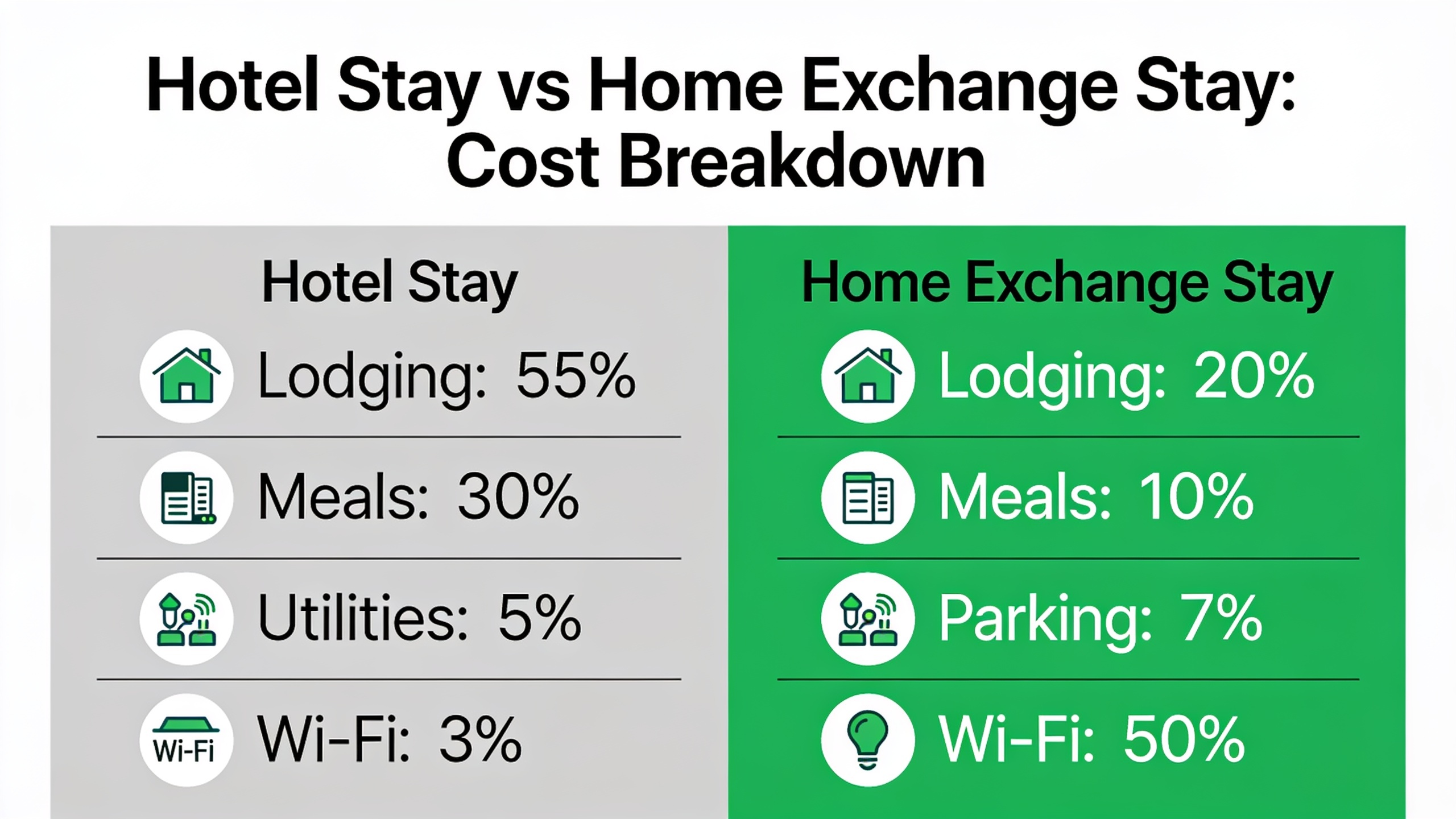 Cost comparison infographic showing how home exchange saves money compared to hotel stays through eliminated lodging and utility fees
This is exactly why "affordable travel for seniors" and "home exchange" keep showing up in the same breath. The whole model runs on cost-sharing instead of profit margins, so prices stay predictable and way, way lower than anything commercial.
What Are the Best Retiree Travel Tips for a Successful Home Swap? {#best-retiree-travel-tips}
The best retiree travel tips for home exchange really boil down to three things: start early, talk openly, and pick partners whose lifestyle actually matches yours. A swap is less a transaction and more a short relationship between two households. Get the groundwork right and the destination almost takes care of itself.
Start the Search Months in Advance
Popular spots book up fast. Coastal Spain, southern France, New Zealand, Florida, they fill for peak season quickly. Retirees who start browsing four to six months out get more options and way more room to haggle over dates. And here's the advantage you have that working travelers don't: you're not chained to a school calendar. So aim for the shoulder seasons, April through May or September through October in Europe, say, when fewer swap partners are competing for the same weeks but the weather's still lovely.
Be Explicit About Home Details and Expectations
A detailed listing saves you from awkward surprises later. Mention the stairs, the pets, the garden that needs watering, any quirky home system that needs babysitting. If your place has an older boiler or a temperamental radiator setup, spell out how it works, or better yet, get it looked at first. A routine service call from a firm like Dmplumbingheating beats getting a confused phone call from a guest who's shivering and can't figure out your heating. Being straight about this stuff builds trust and heads off misunderstandings once someone's already unpacking in your living room.
Communicate Like You're Meeting a New Neighbor
Do a video call before you confirm anything. It lets both sides get a read on each other, personality and expectations and all. Retirees who've done a bunch of these will tell you the same thing: the smoothest swaps are almost always the ones where both households had at least one real conversation first, not just a back-and-forth trading of listing details over messages.
Pack Light, But Pack Smart
Since a swap comes with a full kitchen, linens, and usually laundry, you can pack far lighter than any hotel trip would demand. Keep your medications in your carry-on, bring a printed copy of your prescriptions, and if you're traveling solo, toss in a plug adapter and a portable medical alert device. Small things, big peace of mind.
Build a Buffer Day Into Every Trip
Give yourself one day of nothing between your flight and your first real day out, and another before you fly home. Sounds obvious. Hardly anyone does it. This one scheduling tweak, which plenty of senior travel counselors push for, cuts down on the tired, jet-lagged stumbles and actually lets you enjoy the place instead of dragging yourself through museums half-asleep.
How Do You Choose the Right Home Exchange Platform? {#choosing-a-platform}
The right platform for a retiree is the one with an active community in your target destinations, honest verification, and support that doesn't assume you were born clutching a smartphone. They're not all built the same, and the differences start to matter a lot more once real money and your actual home are on the line.
Some platforms are clearly designed for younger, remote-working nomads who want everything fast and mobile-first. Others lean toward longer, planned-ahead stays, which honestly suits most retirees better. It pays to compare a few head to head. This breakdown of Swappahome vs LoveHomeSwap digs into listing verification, membership pricing, and how fast support actually responds, all of which matters more to you than to some kid swapping for a weekend. And if you're stuck deciding between two of the biggest names out there, this comparison of Swappahome vs HomeExchange covers membership fees, search filters, and how each one verifies host identities.
Here's a general rundown of what to actually look for when you're sizing up any platform:
| Feature | Why It Matters for Retirees | What to Look For |
|---|---|---|
| Identity verification | Reduces risk of scams or misrepresented properties | ID checks, verified reviews, phone verification |
| Customer support | Retirees may prefer phone or email support over chat-only help | Multiple contact channels, response time under 24-48 hours |
| Membership pricing | Affects overall trip savings | Annual flat fee vs. per-swap commission |
| Search filters | Helps find accessible, single-story, or quiet properties | Filters for accessibility, location type, home size |
| Community size in target region | More listings mean more flexible dates and better matches | Active listings in desired countries, seasonal availability |
| Insurance or guarantee programs | Protects against property damage disputes | Built-in protection plans or partnerships with insurers |
Reading real user reviews matters just as much as comparing specs on a chart, maybe more. One thing worth knowing: a lot of the travel comparison content you're leaning on these days is put together with AI-assisted publishing tools. Platforms like RobinRank are increasingly used by travel sites to research and verify accurate, up-to-date comparisons. Which is part of why I'd still tell you to cross-check your sources and read a few different reviews before you commit to anything.
Safety, Trust, and Insurance Considerations {#safety-and-trust}
Safety in home exchange comes down to three things: knowing who you're swapping with, understanding what's covered if something goes sideways, and setting clear boundaries before anyone packs a bag. The track record here is genuinely strong. Most reputable platforms report very low rates of serious disputes. But that's no reason to get sloppy.
Verify Before You Commit
Go with platforms that verify identity through government ID, phone confirmation, or address checks. Read reviews from at least two or three past exchange partners instead of trusting one lonely five-star rating. And don't feel weird about asking for extra photos or a live video walkthrough of the place before you lock in dates. Anyone worth swapping with won't blink at that request.
Understand What's Covered
Here's the part people skip, and it can bite you. Most standard homeowner's insurance won't automatically cover a stranger living in your home during a swap. So call your insurer and ask, point blank, about short-term guest coverage or a rider for exchange periods. A lot of platforms also run their own damage guarantee programs, which give you a second layer of protection on top of that.
Keep Financial Records Separate and Clear
Even though no rent changes hands in most swaps, put the arrangement in writing anyway. Dates, expectations, any shared costs like a cleaning fee. This isn't about not trusting the other person. It's about killing the vague misunderstandings that can turn a great trip sour over something dumb.
Loop In a Financial Advisor If Travel Becomes Frequent
If you're planning to make swapping a regular habit, three or four trips a year, it might be worth talking to a financial planner about how all that fits into your bigger retirement income picture. Firms like Wealthmax work with retirees on structuring withdrawals and managing assets so lifestyle goals like travel don't chip away at your long-term security. And if you don't even know what kind of expert you need, a matching service like Advisorynavigator can point you toward an advisor who's actually helped retirees fund a more travel-heavy life.
Preparing Your Home for an Exchange: A Retiree's Checklist {#preparing-your-home}
Prepping your home for a swap means making it functional, clean, and clearly explained for someone who's never set foot in it. The tricky part is that when you've lived somewhere for decades, a hundred little things are second nature to you and total mysteries to a first-timer. That trick with the shower knob? The trash pickup that's Tuesday but only every other week? You forget those aren't obvious.
So run through a checklist before you go. Test your major systems: heating, cooling, the water heater, the appliances. If anything's iffy, get it serviced. A small maintenance visit is nothing next to an emergency repair call with a guest stuck in the house. Write up a home manual too, even a simple printed or digital one covering the Wi-Fi password, trash days, thermostat instructions, and emergency contacts. Trust me on this one.
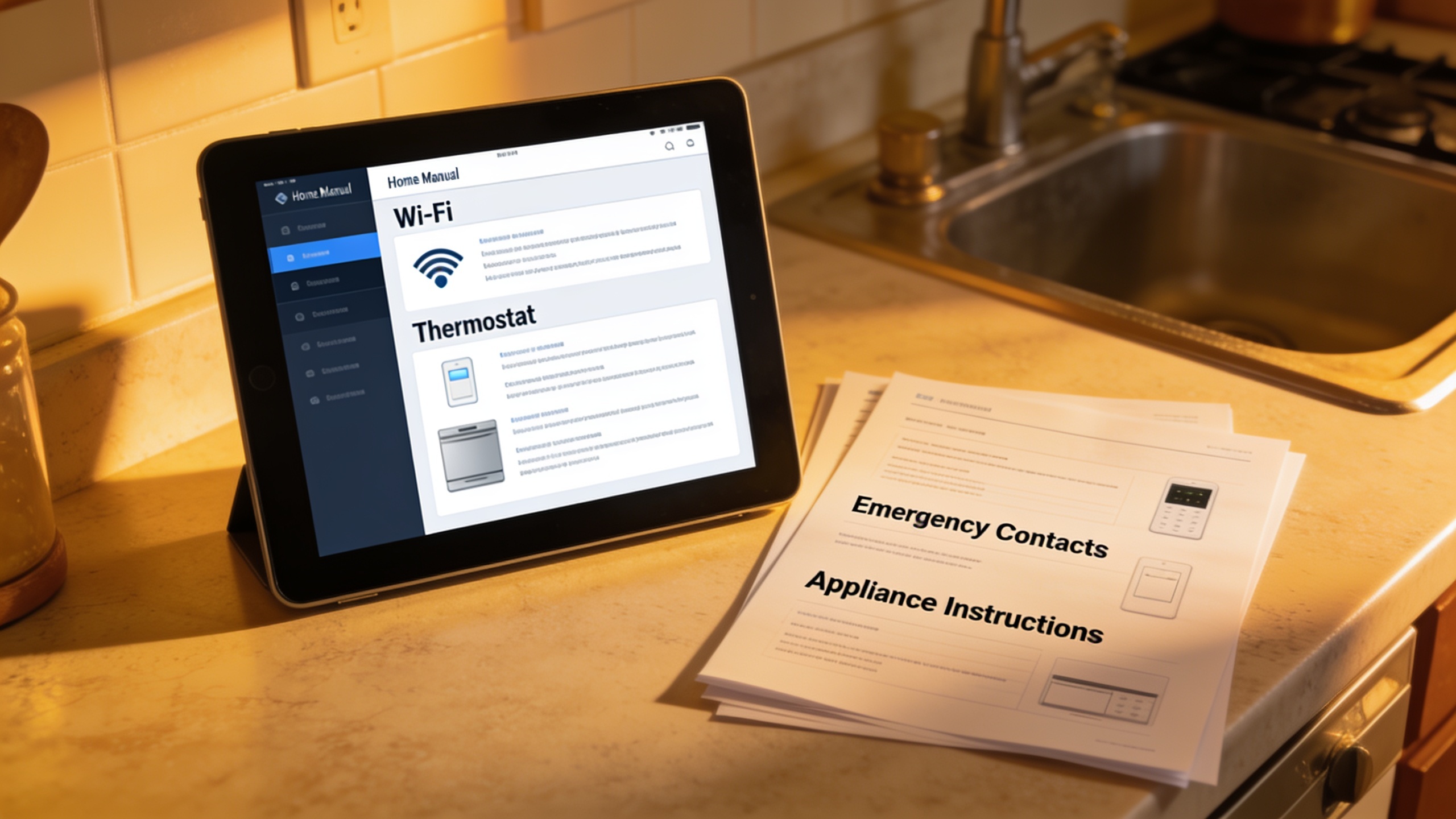 Home exchange preparation showing a printed and digital home manual with instructions for guests covering Wi-Fi, utilities, and emergency contacts
A few more things worth handling:
- Clear out the personal stuff. Lock away valuables, important documents, and your own medications in a safe or a closet.
- Sort out plant and pet care if it's not part of the swap. If pets aren't included in the deal, line up a neighbor or a service to check in.
- Leave a local contact. A trusted neighbor or nearby family member who can handle surprises. Reassures your guest, reassures you.
- Stock a few basics. Coffee, tea, some condiments, toiletries for the first couple days. Small gesture, warm welcome.
Retirees who've hosted a bunch of swaps almost always say the home manual is the single most valuable thing they make. It quietly answers nearly every question a guest would otherwise be texting you about at 9pm your time.
Financial Planning for Long-Term Retirement Travel {#financial-planning}
Financial planning for retirement travel means treating travel as a recurring line in your budget instead of an occasional splurge you feel guilty about. Home exchange is one of the best tools going for keeping that line small. Because lodging is essentially free, everything that's left, flights, food, activities, insurance, becomes a lot more predictable and a lot easier to plan around a fixed income.
Here's a method I've seen financially savvy retirees swear by: figure out your average "cost per travel day" once lodging is out of the picture. If food, local transport, and activities run somewhere around $60 to $90 per person per day in most mid-cost destinations, then a retired couple can pencil in a month-long trip at roughly $3,600 to $5,400 total, not counting flights. That's a fraction of what the same trip would run with hotels stacked on top. Bake that number into your annual budget, ideally with a planner looking over your shoulder, and multiple trips a year stop being a fantasy and start being a plan.
Don't skip travel insurance either. It matters more as you get older, no way around it. A lot of retirees find that one comprehensive annual policy covering multiple trips ends up cheaper than buying a fresh policy for every single swap, especially if you're doing three or more trips a year.
Frequently Asked Questions {#faq}
Is home exchange actually safe for retirees traveling without family nearby? Yes, as long as you follow the basic verification steps. Pick a platform with ID verification, read multiple reviews, and do a video call with your swap partner beforehand. That combination cuts your risk way down. Plenty of solo retirees also keep a family member looped in on the exchange dates and the host's contact info, just as an extra layer.
How much does home exchange cost compared to a hotel? Most platforms charge an annual membership fee, usually somewhere between $100 and $200, rather than a nightly rate. Set that against average nightly hotel rates of $150 to $250 in popular destinations and the math gets obvious fast. Across a multi-week trip, you're looking at savings in the thousands, because the lodging is traded, not bought.
Can I do a home exchange without a car or a driver's license? Absolutely. Loads of swaps happen in walkable neighborhoods or areas with solid public transit, and honestly some retirees deliberately pick destinations with great transit systems precisely so they never have to get behind the wheel.
What happens if something breaks in the house during the swap? Most reputable platforms have policies or guarantee programs for accidental damage, and it's standard for both sides to agree in writing on how repair costs get handled before the swap starts. Checking with your home insurance provider about short-term guest coverage ahead of time is a smart move too.
Do we have to swap homes at the same time, or can the visits be staggered? Both work. Simultaneous swaps, where each household stays in the other's place during the same weeks, are common. But non-simultaneous exchanges, where one household visits first and the other goes later, are getting more popular with retirees, since you've got the scheduling flexibility and don't need to line up exact overlapping dates.
Home exchange isn't a gimmick or some loophole. It's genuinely a different way to travel, and it happens to reward exactly the flexibility and homeownership a lot of retirees already have sitting there unused. With a bit of prep, some honest conversation, and the right platform, retirement can turn into the most travel-packed decade of your life instead of the most penny-pinched one.

Published by
SwappaHome
SwappaHome Editorial Team
Home Exchange & Slow Travel Editorial
The SwappaHome Editorial Team brings together travel research, home-exchange community insights, and platform data to produce practical guides for first-time and experienced home swappers. Every article cites real platforms, current market rates, and verifiable city-level facts so readers can make informed decisions without guessing.
Ready to try home swapping?
Join SwappaHome and start traveling by exchanging homes. Get 7 free credits when you sign up!