Security in Home Swapping: What Homeowners Must Know

SwappaHome Editorial Team
Home Exchange & Slow Travel Editorial
Security in Home Swapping: What Homeowners Must Know !Couple stages living room for home swap Sharing your home with another family in a different...
Security in Home Swapping: What Homeowners Must Know
 Couple stages living room for home swap
Sharing your home with another family in a different city or country can feel risky, especially when it involves your most valuable asset. For urban homeowners eager to travel affordably and authentically, trust and security in home swapping are essential to transform anxiety into peace of mind. This guide explores proven security protocols, personal verification strategies, and legal responsibilities so you can confidently explore new cultures through safe home exchanges.
Table of Contents
- Defining Security in Home Swapping Exchanges
- Home Swapping Types and Safety Features
- Verification and Trust on Member-Only Platforms
- Legal Responsibilities for Verified Homeowners
- Risk Prevention and Smart Swap Practices
Key Takeaways
| Point | Details |
|---|---|
| Security Framework | Establish a robust framework of trust through personal verification, property protection, and transparent communication to ensure safe home exchanges. |
| Legal Responsibilities | Understand and adhere to your legal obligations regarding property condition disclosure, insurance, and contractual agreements to mitigate risks. |
| Risk Prevention Strategies | Implement both digital and physical risk management practices to protect personal information and property during exchanges. |
| Continuous Trust Building | Foster ongoing trust through regular communication and verification processes to enhance the exchange experience for all parties involved. |
Defining Security in Home Swapping Exchanges
Home swapping represents a unique travel accommodation model where two parties agree to temporarily exchange living spaces without monetary transactions. Home exchange mechanisms fundamentally rely on trust, mutual respect, and comprehensive safety protocols to create secure experiences for participants.
At its core, security in home swapping involves multiple interconnected dimensions that protect both the physical property and the personal information of participants. These dimensions include:
- Personal Verification: Comprehensive background checks and identity confirmation processes
- Property Protection: Establishing clear guidelines for home maintenance and potential damage compensation
- Information Security: Safeguarding personal contact details and home location information
- Communication Transparency: Creating structured communication channels between exchanging parties
Successful home exchanges depend on creating a robust framework of trust. Dedicated platforms like Swappahome implement multiple security layers to mitigate potential risks and ensure positive experiences for homeowners. These layers typically include member verification, credit-based exchange systems, and structured communication protocols.
The psychological foundation of home swapping security rests on mutual accountability. When homeowners understand they are exchanging spaces with vetted, trustworthy individuals who have similar investment in property care, the entire experience becomes more comfortable and predictable.
Security in home swapping is not about eliminating all risk, but about creating transparent, accountable systems that minimize potential issues.
Pro tip: Always conduct a comprehensive video call with potential home swap partners to establish personal connection and verify their identity before finalizing any exchange.
Home Swapping Types and Safety Features
Home swapping offers diverse exchange models that cater to different traveler preferences and lifestyle needs. Home exchange platforms provide multiple formats for property exchanges, each with unique safety considerations and operational mechanisms.
The primary types of home exchanges include:
Here's a concise comparison of home swapping types and their typical safety considerations:
| Exchange Type | Main Appeal | Unique Safety Focus |
|---|---|---|
| Simultaneous Exchange | Simple scheduling, fairness | Key coordination, trust |
| Non-Simultaneous | Greater flexibility | Timeline management |
| Hospitality Exchange | Personal interaction | Hosting etiquette |
| Partial Home Exchange | Privacy for both parties | Clear boundaries, security |
- Simultaneous Exchanges: Parties swap homes at the same time, reducing scheduling complexities
- Non-Simultaneous Exchanges: Travelers use each other's properties at different times, offering greater flexibility
- Hospitality Exchanges: One party hosts while the other stays, creating more personalized interactions
- Partial Home Exchanges: Sharing specific rooms or sections of a property instead of entire spaces
Safety features on reputable home swapping platforms are critical to building participant confidence. These comprehensive protection mechanisms typically encompass:
- Mandatory user identity verification processes
- Detailed property condition documentation
- User rating and review systems
- Optional damage protection insurance
- Secure communication channels
- Background screening protocols
Successful home exchanges depend on robust platform infrastructure that prioritizes participant safety. By implementing multi-layered verification systems and transparent communication protocols, platforms can significantly mitigate potential risks associated with property sharing.
The most effective home swapping experiences are built on trust, clear expectations, and comprehensive safety frameworks.
Pro tip: Always document your property's condition through detailed photographs and written descriptions before initiating any home swap to protect yourself legally and financially.
Verification and Trust on Member-Only Platforms
Member-only home swapping platforms require sophisticated identity management mechanisms to establish a secure and trustworthy environment for participants. These digital platforms integrate multiple verification layers designed to protect homeowners and create transparent exchange experiences.
Key verification strategies typically include:
- Personal Identity Verification
- Government-issued ID checks
- Social media profile cross-referencing
- Professional background validation
- Digital Trust Markers
- User rating systems
- Comprehensive member profiles
- Verified contact information
- Security Protocol Implementations
- Two-factor authentication
- Regular account audits
- Continuous member screening
The fundamental principle underlying these verification processes is establishing digital trust. By implementing rigorous authentication protocols, platforms can significantly reduce potential risks associated with property exchanges. Zero trust architectures have revolutionized how digital platforms approach user verification, emphasizing continuous authentication and dynamic access controls.
Trust-building extends beyond initial verification. Successful member-only platforms create comprehensive ecosystems where transparency, mutual accountability, and clear communication become the foundation of safe, reliable exchanges.
Digital trust is not a destination, but a continuous journey of verification and validation.
Pro tip: Always thoroughly review a potential home swap partner's complete profile, including reviews and verification badges, before finalizing any exchange agreement.
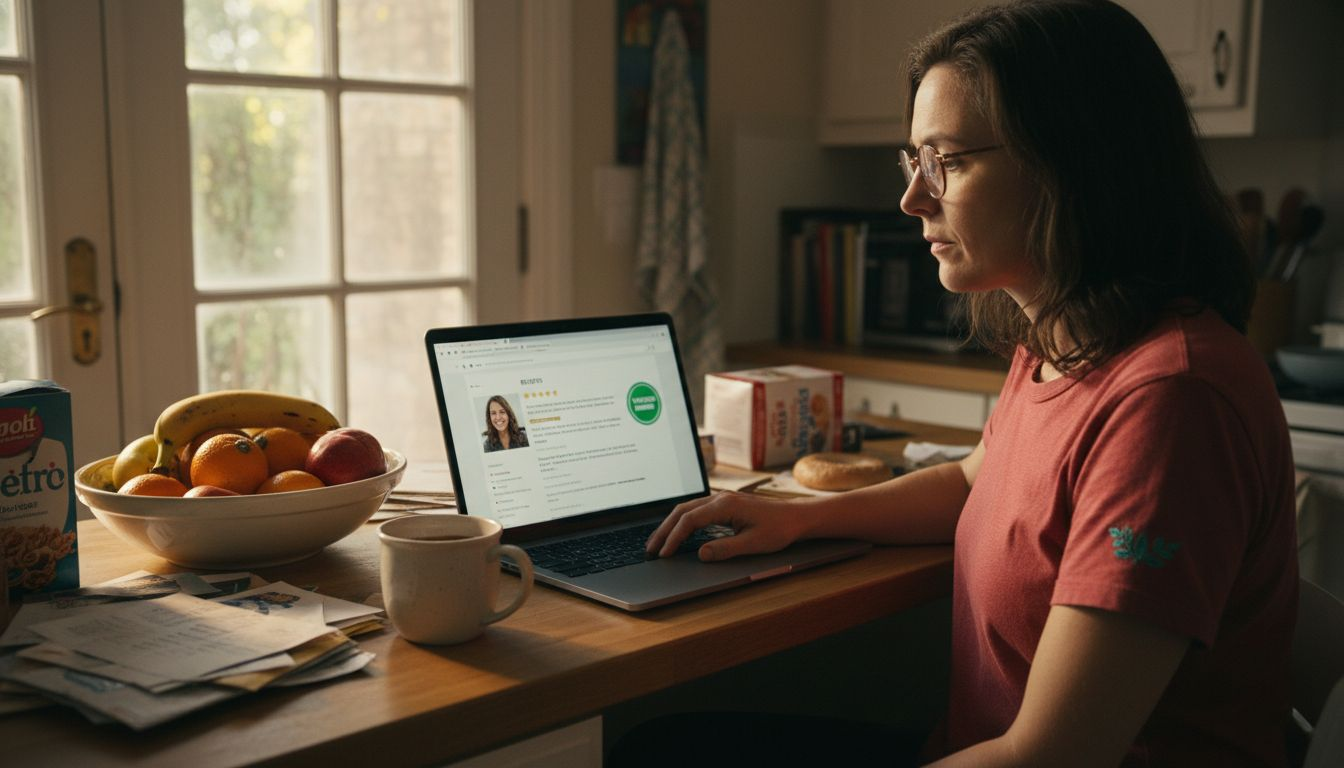 Homeowner reviewing swap partner verification
Legal Responsibilities for Verified Homeowners
Home swapping introduces unique legal considerations that verified homeowners must carefully navigate. Homeowners' legal responsibilities extend beyond traditional property ownership, creating a complex landscape of rights, obligations, and potential liabilities during home exchanges.
Key legal responsibilities for verified homeowners include:
- Property Condition Disclosure
- Accurately represent home's current state
- Disclose any known structural or maintenance issues
- Provide transparent information about living spaces
- Insurance and Liability Protection
- Maintain appropriate home insurance coverage
- Understand policy limitations during home exchanges
- Consider additional short-term exchange insurance
- Contractual Obligations
- Adhere to platform-specific exchange agreements
- Respect agreed-upon exchange terms
- Communicate promptly about potential changes
The legal framework surrounding home exchanges emphasizes mutual accountability. Community association standards highlight that homeowners bear responsibility for maintaining property standards and respecting agreed-upon protocols, even during temporary exchanges.
Successful home swapping requires a proactive approach to legal preparedness. This means understanding local regulations, platform-specific guidelines, and potential scenarios that might impact property use and personal liability.
Legal protection in home exchanges is not about avoiding risk, but about creating transparent, mutually understood boundaries.
Pro tip: Consult with a local real estate attorney to review your home swap agreement and understand specific legal protections specific to your jurisdiction.
Risk Prevention and Smart Swap Practices
Home swapping requires a strategic approach to mitigating potential risks across physical and digital domains. Cybersecurity best practices are critical in creating a comprehensive safety framework for home exchanges, protecting both property and personal information.
Key risk prevention strategies include:
- Digital Security Measures
- Use strong, unique passwords for exchange platform accounts
- Enable two-factor authentication
- Use secure, encrypted communication channels
- Limit personal information shared online
- Physical Property Protection
- Remove or secure valuable personal items
- Document home condition before and after exchange
- Change locks or secure sensitive areas
- Provide clear instructions for home maintenance
- Communication and Documentation
- Create detailed exchange agreements
- Establish clear communication protocols
- Verify partner's identity and background
- Maintain open, transparent dialogue
Platform security extends beyond digital protocols. Home network security recommendations emphasize the importance of comprehensive protection strategies that address both technological and human elements of risk management.
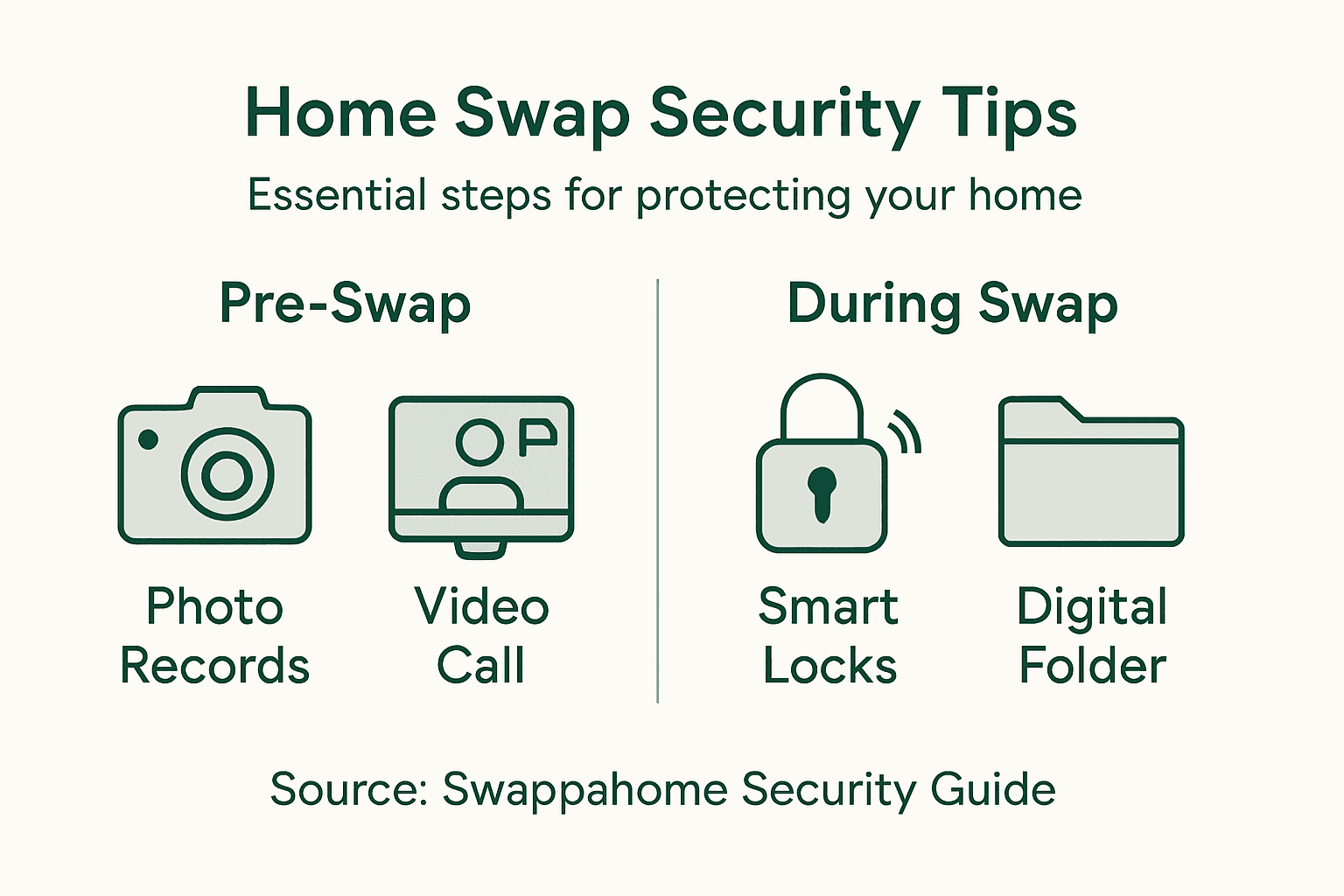 Infographic outlining home swapping security tips
Successful home swapping demands a proactive mindset where prevention becomes more important than reaction. Homeowners must continuously educate themselves about emerging risks and adapt their security practices accordingly.
Below is a quick summary of digital and physical risk prevention strategies for safe home swapping:
| Domain | Key Strategy | Additional Benefit |
|---|---|---|
| Digital | Two-factor authentication | Prevents account breaches |
| Digital | Encrypted messaging | Protects private details |
| Physical | Remove valuables before swap | Minimizes theft risk |
| Physical | Take pre- and post-exchange photos | Supports claims if needed |
Smart risk prevention is about creating multiple layers of protection, not seeking absolute guarantees.
Pro tip: Create a dedicated digital folder with all exchange documentation, including communication records, agreements, and property condition photographs, to maintain a comprehensive risk management record.
Secure Your Next Home Swap With Confidence
Security in home swapping is essential to protecting your property and peace of mind. This article highlights common challenges such as identity verification, property protection, clear communication, and legal responsibilities. At Swappahome, we address these concerns with a members-only platform that puts trust and safety first. Our rigorous verification process, secure point-based exchange system, and transparent member profiles ensure you connect only with verified homeowners who share your commitment to responsible hosting.
Experience the benefits of exchanging homes without monetary transactions while enjoying the comfort of knowing your swap is backed by Swappahome’s reliable safety measures. If you want to minimize risks and maximize authentic cultural exchange, start your secure home swapping journey with us today.
 https://swappahome.com
Discover how easy and safe home swapping can be by joining Swappahome. Earn credits for hosting your verified home, browse our worldwide listings, and book stays confidently through our trusted community platform. Visit Swappahome to learn more and take the first step toward your next worry-free adventure.
Frequently Asked Questions
What security measures should I look for in a home swapping platform?
Look for platforms that implement mandatory user identity verification processes, user rating and review systems, secure communication channels, and optional damage protection insurance to ensure a safe experience.
How can I ensure the trustworthiness of my home swap partner?
Conduct a comprehensive video call, thoroughly review their profile, including reviews and verification badges, and establish clear communication to assess their identity and reliability prior to finalizing the exchange.
What legal responsibilities do I have as a homeowner in a home swap?
Homeowners must accurately represent their home's condition, maintain appropriate insurance coverage, and adhere to the agreed terms outlined in the platform's exchange agreement.
What are some best practices for risk prevention in home swapping?
Implement strong digital security measures, document the property's condition before and after the exchange, and communicate clearly with your swap partner about expectations and maintenance instructions.
Recommended

Published by
SwappaHome
SwappaHome Editorial Team
Home Exchange & Slow Travel Editorial
The SwappaHome Editorial Team brings together travel research, home-exchange community insights, and platform data to produce practical guides for first-time and experienced home swappers. Every article cites real platforms, current market rates, and verifiable city-level facts so readers can make informed decisions without guessing.
Ready to try home swapping?
Join SwappaHome and start traveling by exchanging homes. Get 7 free credits when you sign up!