
Sustainable Travel Through Home Exchange: Real Impact

SwappaHome Editorial Team
Home Exchange & Slow Travel Editorial
Sustainable Travel Through Home Exchange: Real Impact !Couple video calling in home exchange living room Over 60 percent of American city dwellers...
Sustainable Travel Through Home Exchange: Real Impact
 Couple video calling in home exchange living room
Over 60 percent of American city dwellers say environmental impact shapes their travel choices. As eco-conscious homeowners search for ways to reduce costs and carbon footprints, home exchange is emerging as a smart solution. This alternative model delivers affordable stays while opening doors to genuine cultural experiences in cities from Berlin to Sydney. Discover how verified home exchanges can transform your next trip into a positive, planet-friendly adventure.
Table of Contents
- Home Exchange For Sustainable Travel Explained
- Types Of Home Exchange And Core Distinctions
- How Swappahome's Process Works Globally
- Environmental And Economic Impact Of Home Swapping
- Safety, Legal, And Host Responsibilities
- Comparing Home Exchange With Hotels And Rentals
Key Takeaways
| Point | Details |
|---|---|
| Sustainable Travel Model | Home exchange promotes environmentally friendly tourism by repurposing existing residential spaces, reducing energy consumption and carbon emissions associated with traditional accommodations. |
| Cultural Immersion | The model facilitates authentic cultural exchanges, allowing travelers to experience destinations from the perspective of local homeowners, enhancing the travel experience beyond mere accommodation. |
| Flexible Exchange Options | Various home exchange types, such as reciprocal and points-based systems, cater to diverse traveler needs, providing flexibility in arrangements and accommodating different preferences. |
| Safety and Trust | Comprehensive verification processes and clear communication protocols are essential for ensuring the safety of all participants in home exchanges, fostering a secure, respectful environment. |
Home exchange for sustainable travel explained
Home exchange represents a revolutionary approach to travel that transforms traditional accommodation models into collaborative, environmentally conscious experiences. By enabling travelers to swap living spaces directly, this practice goes beyond mere cost savings to create meaningful, sustainable travel opportunities.
The core principle of home exchange is simple yet powerful. Instead of booking hotels or rentals, travelers directly swap accommodations with verified homeowners globally, reducing the environmental footprint associated with traditional tourism. This peer-to-peer model supports collaborative consumption by maximizing existing resources rather than constructing new hospitality infrastructure. Travelers essentially use spaces that already exist, which significantly decreases energy consumption, water usage, and the carbon emissions typically generated by hotel operations.
Sustainable travel through home exchange offers multifaceted benefits. Peer-to-peer accommodation sharing creates economic, social-psychological, and spatial advantages that extend far beyond environmental considerations. Participants gain authentic cultural immersion, connecting directly with local communities and experiencing destinations through a resident's perspective. This model transforms travel from a transactional experience into a meaningful cultural exchange, where personal connections and mutual understanding become the primary currency.
Pro tip: When considering home exchange, thoroughly verify your potential swap partners through trusted platforms and establish clear communication guidelines to ensure a smooth, respectful experience.
Types of home exchange and core distinctions
Home exchange has evolved from informal arrangements into sophisticated networks with diverse operational models. Contemporary platforms facilitate multiple exchange structures that cater to different traveler preferences and logistical requirements.
The primary home exchange types include reciprocal exchanges and points-based exchanges. Reciprocal exchanges involve direct swaps between homeowners, which can occur simultaneously or non-simultaneously. For example, a family in New York might swap homes with another family in California during different vacation periods. Points-based systems introduce additional flexibility by allowing participants to earn and spend credits across a broader network, removing the strict necessity of finding a direct swap partner.
Core distinctions in home exchange models emerge through variations in scope, duration, and exchange mechanics. Some platforms specialize in whole-home swaps, while others accommodate room exchanges or partial home sharing. Duration can range from weekend getaways to extended international stays, with each model presenting unique logistical and interpersonal considerations. The underlying philosophy remains consistent: creating meaningful travel experiences that prioritize cultural understanding and resource efficiency over traditional commercial transactions.
Pro tip: Before committing to a home exchange, carefully review the platform's verification processes and establish clear communication protocols with potential exchange partners to ensure a smooth and comfortable experience.
Here's a comparison of home exchange types to help travelers choose the best fit for their needs:
| Exchange Type | Key Mechanic | Flexibility Level | Typical Use Case |
|---|---|---|---|
| Reciprocal | Direct swap between two parties | Limited to matched dates | Simultaneous or timed vacations |
| Non-Simultaneous | Swap occurs at different times | Moderate | Seasonal homes, flexible travel |
| Points-Based | Earn/use credits across network | High, no direct matching | Frequent travelers, solo users |
| Room/Partial Exchange | Share just a room or part of a home | Varies by listing | Urban settings, shorter stays |
How Swappahome's process works globally
Swappahome operates as a sophisticated global platform that transforms home exchange from a complex logistical challenge into a streamlined, user-friendly experience. The platform connects verified homeowners across international boundaries, creating a trusted network where cultural exchange becomes as simple as a few digital interactions.
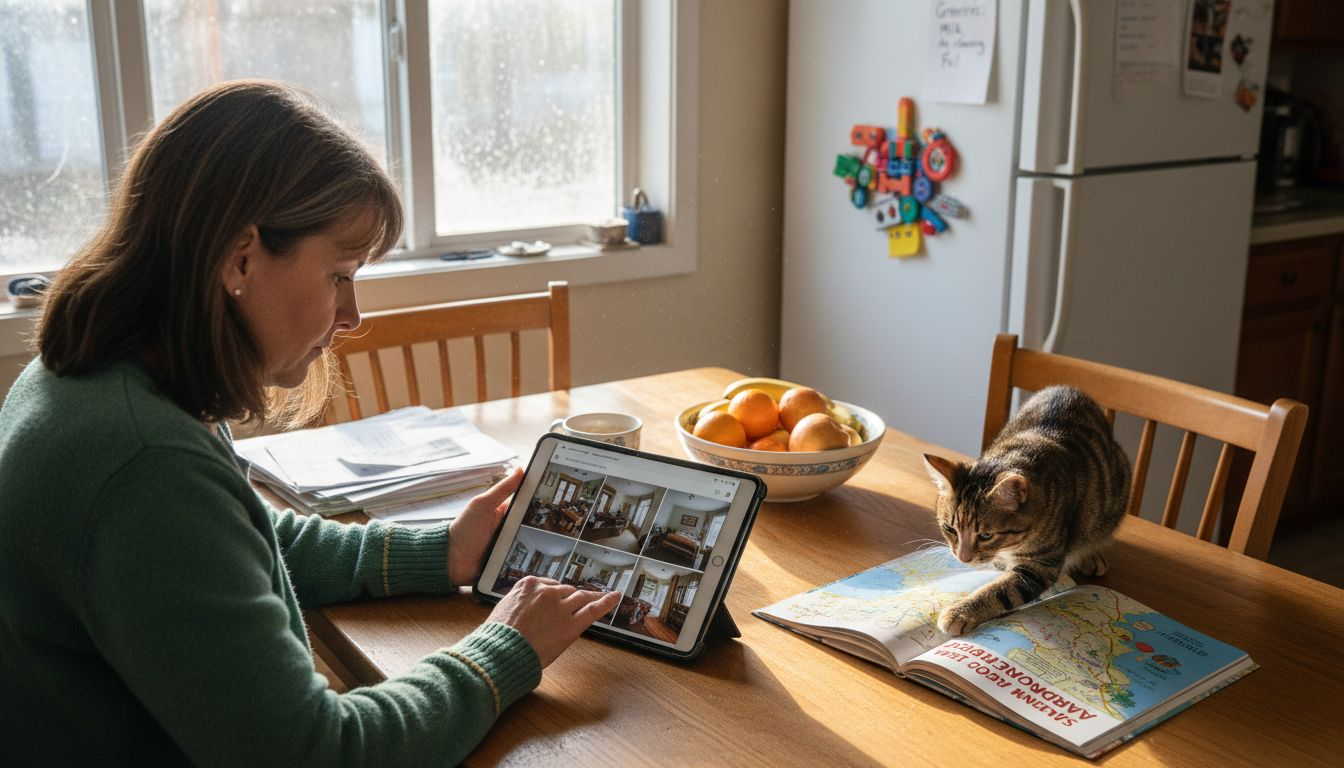 Woman verifies profile for home exchange
The core process begins with member verification, a critical step that ensures community safety and reliability. Potential members complete detailed profiles, providing comprehensive information about their homes, travel preferences, and personal background. Home exchange platforms like Swappahome implement rigorous screening mechanisms to validate user identities, creating a secure environment for global home swapping. Members earn credits by hosting travelers, which can then be utilized for their own future travel experiences, establishing a collaborative and equitable system.
Once verified, members can browse available homes worldwide, communicate directly with potential exchange partners, and negotiate swap details. The platform facilitates this communication through integrated messaging systems, allowing travelers to discuss specific requirements, exchange logistics, and establish mutual comfort before finalizing any arrangements. Advanced features like detailed home descriptions, high-resolution images, and user reviews provide transparency and help members make informed decisions about potential exchanges.
Pro tip: Create a comprehensive, honest profile with clear, recent photos of your home and detailed information about your location to increase your chances of successful home exchanges.
Environmental and economic impact of home swapping
Home swapping represents a transformative approach to travel that extends far beyond personal convenience, delivering substantial environmental and economic benefits. By reimagining how living spaces are utilized, this innovative model challenges traditional consumption patterns and creates meaningful sustainability impacts.
 Infographic showing home exchange environmental and economic benefits
Strategic home exchanges can significantly reduce commuting distances and associated carbon emissions, offering a practical solution to urban environmental challenges. When households strategically swap residences, they minimize unnecessary transportation, thereby decreasing vehicle emissions and reducing overall carbon footprints. This approach goes beyond individual travel experiences, contributing to broader urban sustainability goals by optimizing existing housing resources and minimizing infrastructure strain.
Home swapping supports economic efficiency by facilitating more intelligent use of residential spaces, potentially reducing per capita living space consumption. The economic advantages emerge through multiple channels: travelers save on accommodation costs, homeowners generate value from their existing properties, and communities benefit from more dynamic, flexible housing utilization. By creating a collaborative ecosystem that prioritizes resource sharing, home swapping challenges traditional economic models of ownership and consumption.
Pro tip: Calculate your potential carbon savings by tracking the miles you would have traveled using traditional accommodations versus home exchanges.
Safety, legal, and host responsibilities
Home exchange platforms operate on a foundation of mutual trust, requiring comprehensive safety protocols and clear legal frameworks to protect all participants. Unlike traditional travel accommodations, home swapping demands a heightened level of personal responsibility and transparent communication between exchange partners.
Host responsibilities extend far beyond providing a physical living space, encompassing critical aspects of participant safety and well-being. This includes maintaining a welcoming environment, ensuring the property is clean and functional, and providing accurate representations of the living conditions. Legal considerations are paramount, requiring hosts to comply with local regulations, verify insurance coverage, and understand potential liability issues that might arise during an exchange.
Successful home exchanges rely on comprehensive verification processes that go beyond simple profile checks. Platforms implement multi-layered screening mechanisms, including identity verification, background checks, and user reputation systems. These safeguards help create a secure ecosystem where members can confidently share their most personal spaces. Additional protective measures often include secure messaging platforms, review systems, and guidelines that outline expected behaviors and mutual respect between exchange participants.
Pro tip: Document your home's condition with dated, high-resolution photographs before each exchange and communicate any specific house rules or unique considerations to your exchange partner in advance.
Comparing home exchange with hotels and rentals
Home exchange emerges as a distinctive travel model that fundamentally challenges traditional accommodation approaches. Unlike hotels and rentals that operate on purely transactional principles, this innovative method transforms travel into a collaborative, community-driven experience that prioritizes human connection and resource efficiency.
Comparative studies reveal significant sustainability advantages of home exchanges over conventional lodging options, demonstrating profound differences in environmental and social impacts. Hotels typically consume substantial energy and water resources, while short-term rentals can contribute to local housing market disruptions. Home exchanges, by contrast, utilize existing infrastructure, reduce unnecessary construction, and minimize per-traveler resource consumption by directly leveraging residential spaces that would otherwise remain unused.
Home exchange platforms distinguish themselves by eliminating monetary transactions and emphasizing cultural exchange and community trust, creating a fundamentally different travel experience. While hotels offer standardized services and rentals provide temporary living spaces, home exchanges enable travelers to experience destinations through an authentic, local lens. Participants not only save on accommodation costs but also gain deeper cultural insights, personal connections, and a more sustainable approach to global exploration.
To clarify the unique advantages of home exchange versus hotels and rentals, see the table below:
| Aspect | Home Exchange | Hotels | Short-Term Rentals |
|---|---|---|---|
| Environmental Impact | Low, repurposes housing | High, heavy resource use | Medium, may stress local market |
| Cultural Experience | Immersive, local living | Standardized, less authentic | Varies, less local involvement |
| Transaction Model | Non-monetary, peer-based | Commercial, pay per night | Commercial, service fees apply |
| Cost Savings | High, accommodation free | Low, nightly costs add up | Moderate, variable pricing |
Pro tip: Research potential home exchange destinations thoroughly and create a comprehensive, honest profile that highlights your home's unique features and your willingness to engage in genuine cultural exchange.
Embrace Sustainable Travel with Swappahome's Verified Home Exchange Network
The article highlights the challenge many travelers face when seeking authentic and sustainable travel options that reduce environmental impact without sacrificing comfort or cultural immersion. If you want to avoid the high costs and ecological footprint of hotels while enjoying genuine local experiences, the concept of home exchange offers a powerful solution. Swappahome addresses the key pain points discussed such as trust, verification, and a streamlined points-based system that makes home swapping accessible and safe for verified homeowners worldwide.
By joining Swappahome, you become part of a curated community that encourages meaningful cultural exchange and cost-effective travel through a user-friendly platform. With simple steps to list your home, earn credits, and book stays, you can reduce your travel footprint while enjoying unique stays in authentic homes across numerous countries. Start your sustainable travel journey today and transform the way you explore the world by visiting Swappahome's main page.
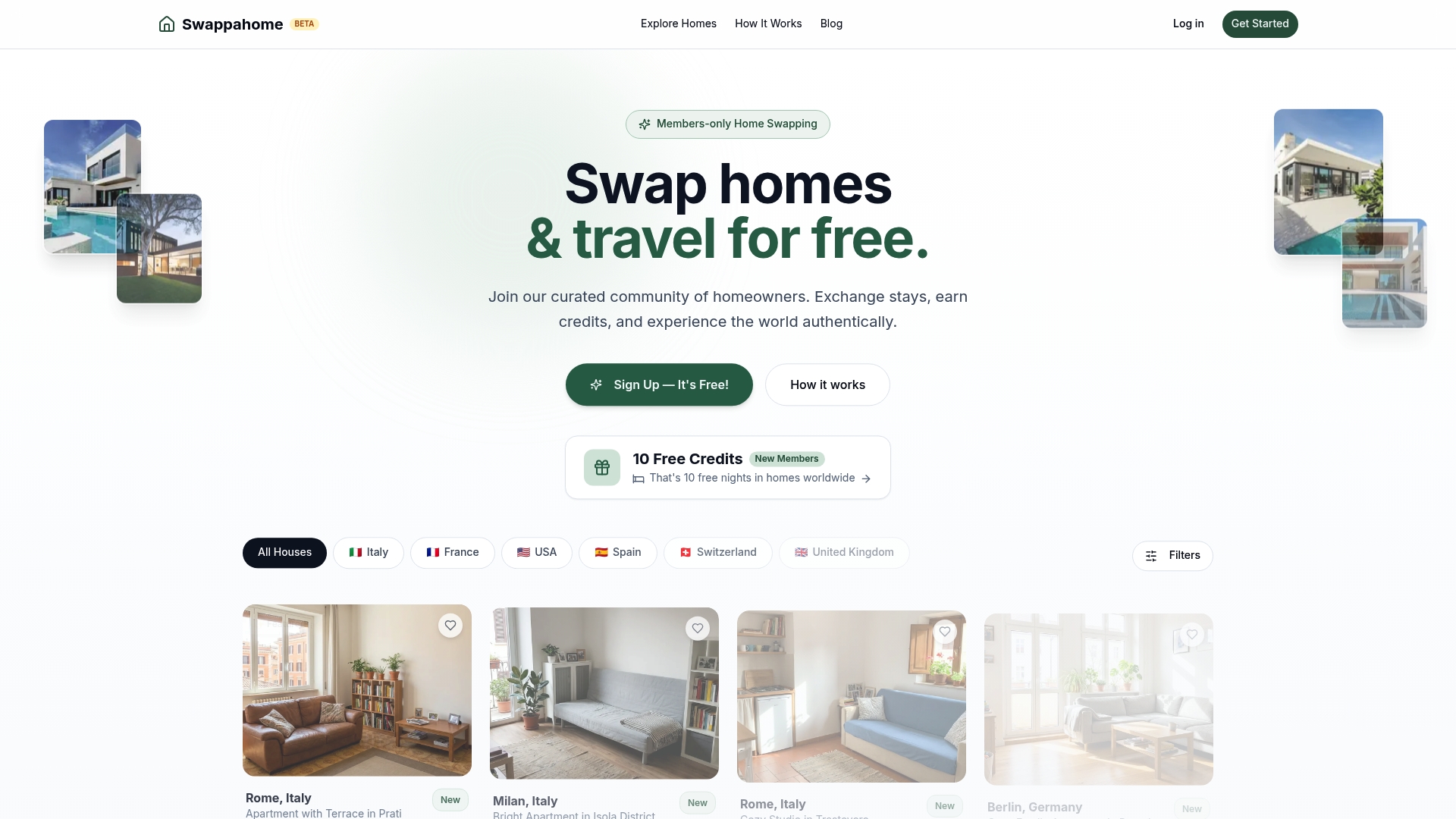 https://swappahome.com
Discover the freedom of traveling sustainably without monetary transactions. Sign up now to receive free initial credits and connect with verified members globally. Take control of your travel experience and make an immediate positive impact on the environment while saving money. Visit Swappahome and start swapping homes the smart way.
Frequently Asked Questions
What is home exchange?
Home exchange is a travel model where individuals swap living spaces directly, allowing for cost-effective and sustainable travel experiences without the need for traditional accommodations like hotels or rentals.
How does home exchange contribute to sustainable travel?
Home exchange helps reduce the environmental footprint of tourism by utilizing existing residential spaces, thus minimizing energy consumption and resource use associated with constructing new hospitality infrastructure.
What are the different types of home exchange?
The main types of home exchange include reciprocal exchanges (directly swapping homes), non-simultaneous exchanges (swapping at different times), points-based exchanges (earning credits to stay in others' homes), and room/partial exchanges (sharing part of a home).
How can I ensure a safe home exchange experience?
To ensure safety, it’s important to verify potential exchange partners through trusted platforms, maintain clear communication regarding expectations, and document your home’s condition with photos before the exchange.
Recommended
- Home Exchange Savings: Real Numbers From 40+ Swaps | 2024 Guide
- Teaching Kids About Travel Through Home Swapping | Family Guide
- How to Travel for Free with Home Exchange | Complete 2024 Guide
- Home Swapping vs Hotels: Why Families Choose Home Exchange
- 7 Smart Sustainable Travel Tips Austin Luxury Explorers Love | Trinity Concierge
- Affordable Ways to See the World - PilotTravelDeals.com
- Cross-Cultural Tours: Lasting Impact on Global Travelers - Spectrum Ethiopia Tours

Published by
SwappaHome
SwappaHome Editorial Team
Home Exchange & Slow Travel Editorial
The SwappaHome Editorial Team brings together travel research, home-exchange community insights, and platform data to produce practical guides for first-time and experienced home swappers. Every article cites real platforms, current market rates, and verifiable city-level facts so readers can make informed decisions without guessing.
Ready to try home swapping?
Join SwappaHome and start traveling by exchanging homes. Get 7 free credits when you sign up!