
The road trip: how to plan a memorable journey from start to finish

SwappaHome Editorial Team
Home Exchange & Slow Travel Editorial
Key Takeaways A memorable road trip comes from planning enough to feel prepared while leaving space for the unexpected. Start with a pace and budget that suit…
Key Takeaways
A memorable road trip comes from planning enough to feel prepared while leaving space for the unexpected. Start with a pace and budget that suit the people traveling, then make the journey itself part of the fun.
- Choose daily driving distances that leave time to enjoy your stops.
- Estimate major costs and keep extra money aside for surprises.
- Check your vehicle, supplies, and backup navigation before leaving.
- Make comfort and rest part of the itinerary, not an afterthought.
- Stay curious at each stop while respecting the places you visit.
Choose a route that fits your travel style
A good route is more than a line between two places: it sets the pace and mood for the whole trip. Decide what matters most, whether that is covering ground, wandering through small towns, or spending longer in a few places. Then shape the drive around the people in the car, not just the map. A little room to change course can make the plan feel easier to live with.
Decide how far you want to drive each day
There is no ideal number of miles for every traveler. A stretch that feels manageable on an empty highway can become tiring when it includes traffic, meals, and frequent stops. Think in terms of total time behind the wheel, and leave daylight for arrival, settling in, or a short walk. On a trip with children or several drivers, a gentler schedule often makes the days feel much less rushed.
Balance scenic roads with practical stops
A scenic detour can be worth the extra time, but the route also needs reliable places to refuel, eat, and take a break. Look at the whole day rather than choosing every road for its views. If a scenic stretch means driving farther between services, plan supplies and fuel accordingly. The best route usually has a few memorable stretches and enough practical stops to keep everyone comfortable.
Build flexibility into your itinerary
Treat the itinerary as a helpful outline, not a promise that every hour will go to plan. Leave open space around longer drives and avoid booking every night so tightly that a small delay creates a chain reaction. A quick search may also bring up the television program The Road Trip Season 1; here, the focus is the real-world journey, where the best moments can be unplanned. Keep one or two alternate stops in mind and let the day tell you whether to use them.
Check seasonal conditions and road closures
A route that works well in one season may be slower or unavailable in another. Before departure, check current road conditions, forecasts, and any seasonal closures for the areas you will cross. In mountain or remote regions, allow extra time for changing weather and limited services. Recheck the details shortly before leaving, since conditions can shift after the itinerary is made.
Set a realistic road trip budget
A budget is most useful when it reflects the way you actually plan to travel. Look beyond fuel to include lodging, meals, parking, tolls, and the small purchases that add up over several days. Prices can vary along a route, so estimate costs by leg rather than relying on one overall guess. Keeping the plan visible makes it easier to decide where a splurge matters and where a simpler choice will do.
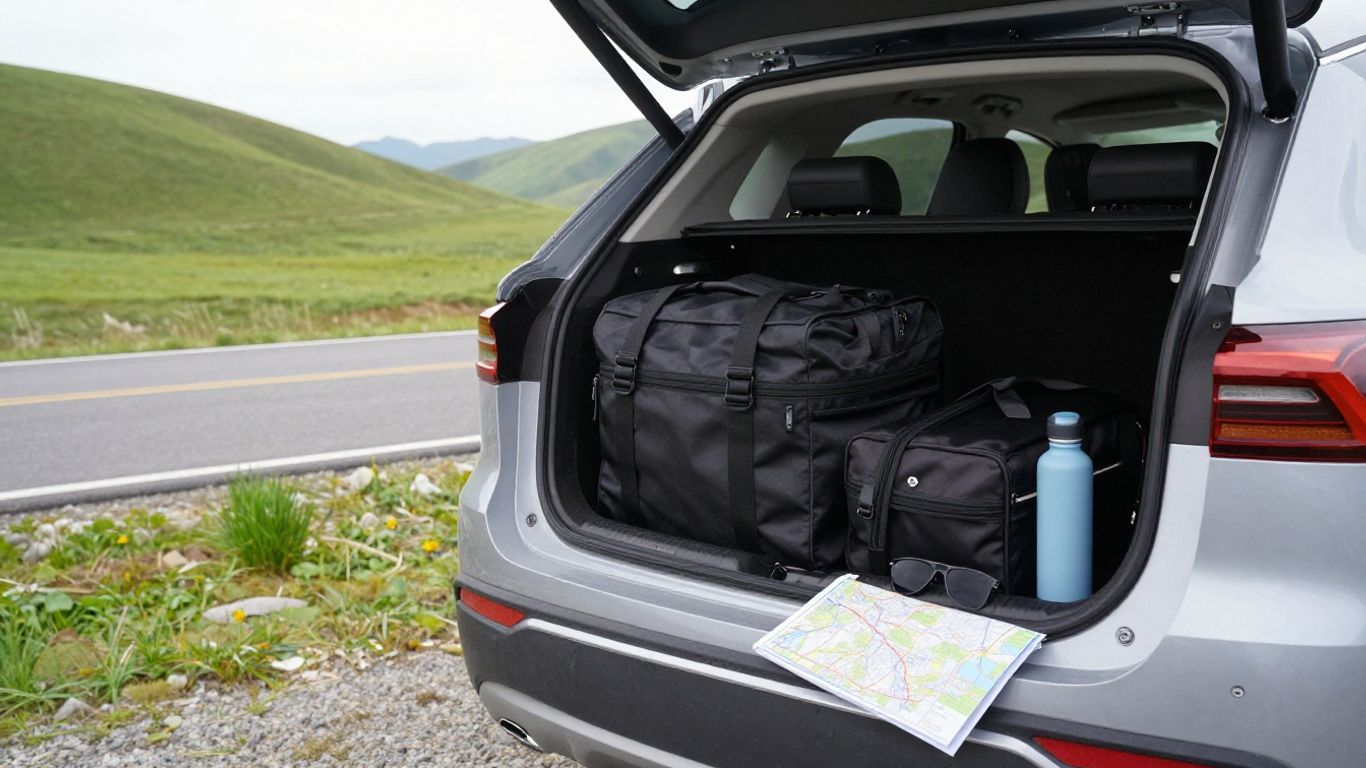 A car packed for a scenic road journey
Estimate fuel, tolls, and parking costs
Start with the route and your vehicle’s typical fuel use, then check likely fuel prices and tolls along the way. Parking can be easy to overlook, especially in busy towns and at popular attractions. A simple breakdown helps you spot which costs are predictable and which will depend on your stops.
| Expense | How to estimate it | What can change it |
|---|---|---|
| Fuel | Distance and typical fuel use | Detours, traffic, and local prices |
| Tolls | Roads on your planned route | Route changes and payment methods |
| Parking | Overnight and attraction parking | Location, timing, and length of stay |
| Local transport | Expected use at destinations | Walking distance and transit availability |
Use the estimates as a starting point, not a rigid limit. If fuel or parking looks higher than expected, you can adjust the route or activity choices before those costs catch you by surprise.
Compare lodging options along the route
Compare lodging by its total cost and location, not only its nightly price. A place farther from town may cost less but add driving or parking, while a stop with a kitchen can make meals easier. SwappaHome publishes guides to home exchange, another option some travelers may consider when planning accommodation. Whatever you choose, confirm the dates, location, and arrangements before building the rest of the trip around them.
Plan for meals and activities
Meals and attractions are easier to budget when you decide in advance which experiences matter most. Set aside room for a few special meals or paid activities, then balance them with picnics, scenic walks, and free local sights. SwappaHome also offers guides to food and cultural experiences for travelers interested in exploring local markets and neighborhood eateries. These ideas can help you think beyond the obvious stops, while your own route and budget determine what fits.
Reserve a cushion for unexpected expenses
Even a careful estimate cannot account for every change of plan. A late arrival, a necessary repair, or an extra night can affect the total, so keep some money available for the unexpected. Decide ahead of time what you would cut first if costs rise, and what you would rather protect. That small bit of financial breathing room can make an inconvenient surprise easier to handle.
Prepare your vehicle for the journey
A little preparation can prevent avoidable delays and help you feel more confident once you leave home. Make time to check the vehicle before the day of departure, especially if it has been sitting unused or will carry a full load. Think through both routine maintenance and the practical details of getting help if something goes wrong. A ready car is not a guarantee of a trouble-free trip, but it gives you a better starting point.
Schedule a maintenance check before departure
If you are due for maintenance, handle it before packing the car. Ask a qualified mechanic to check the basics and mention the distance and conditions you expect to encounter. Give yourself a little time between the appointment and departure in case something needs attention. Also check that the spare tire, if your vehicle has one, is accessible and in usable condition.
Pack an emergency kit and essential tools
A compact kit can help with minor problems and make an unexpected wait more comfortable. Choose supplies suited to your route, weather, and vehicle, and make sure everyone knows where they are stored. Useful basics can include:
- A first-aid kit and any essential personal medication.
- A flashlight with spare batteries or a charged light.
- Jumper cables or a portable jump starter compatible with your vehicle.
- Water, a blanket, and a phone charging cable.
Check the kit before setting off, replacing anything used or out of date. Keep frequently needed items reachable without unloading the trunk, but secure heavier tools so they cannot shift while driving.
Confirm roadside assistance coverage
Before you go, confirm what roadside assistance you already have through your vehicle, insurance, or another plan. Check how to request help and whether the coverage applies to the places on your route. Save relevant contact details somewhere accessible offline as well as on your phone. Knowing the process in advance is far easier than trying to understand it on a roadside shoulder.
Organize navigation and backup directions
Use navigation that suits the route, but do not rely on a single device or a constant data connection. Download maps for areas where reception may be limited, and keep a broad paper map or written directions as a backup. Share your main route and expected arrival times with someone at home. The point is not to follow every turn perfectly; it is to have a calm next step if the signal disappears.
Pack for comfort, safety, and convenience
Packing well is less about bringing everything and more about making the things you need easy to reach. Start with the space available in the vehicle, then divide luggage by how often you will use it. Keep daily essentials separate from items that can stay packed until you arrive. That small bit of organization can make rest stops and overnight arrivals feel much smoother.
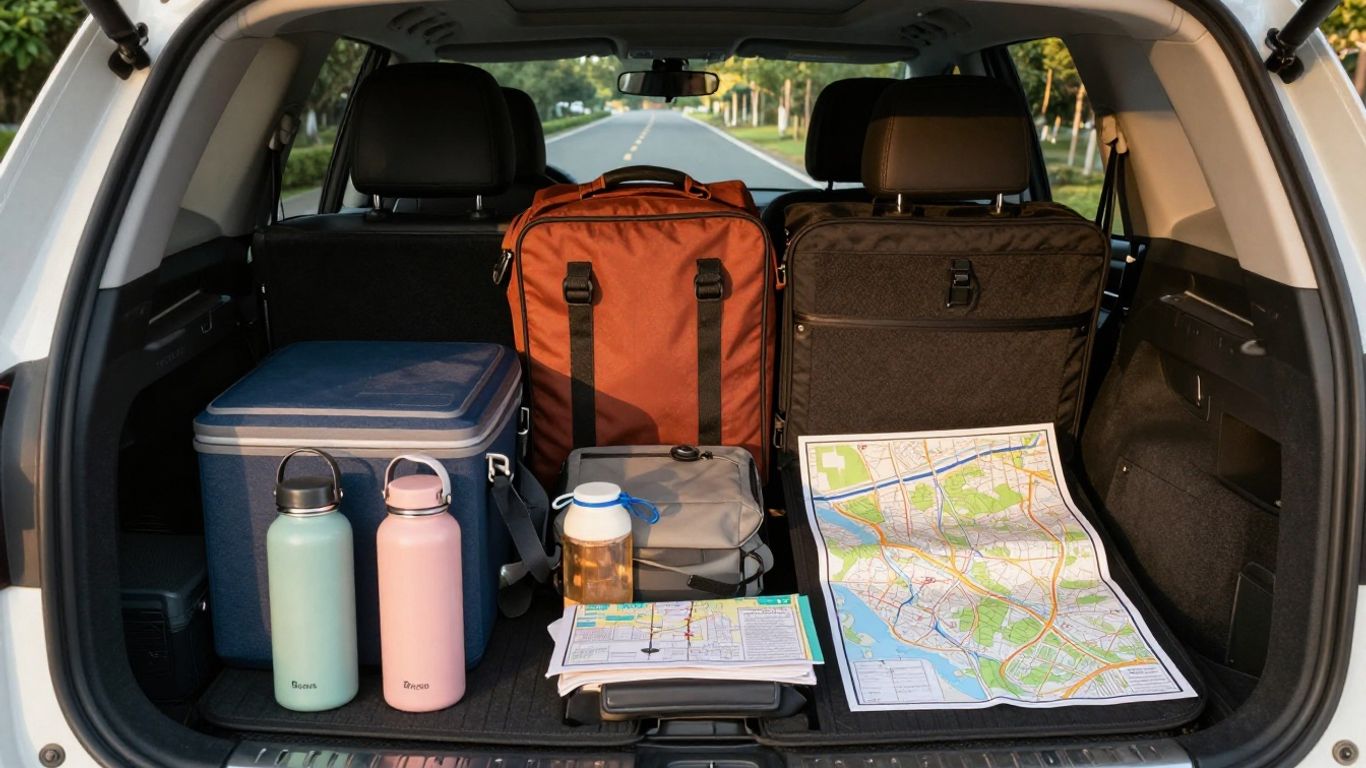 Road trip bags and snacks arranged in a car
Choose luggage that fits your vehicle
Check trunk space before filling bags, especially if passengers need legroom or the car will carry bulky equipment. Soft-sided luggage can be easier to fit around other items, while smaller day bags make overnight stops less of a production. Keep the rear view clear and avoid stacking anything where it could shift toward passengers. If you are traveling with several people, agree on a reasonable amount of luggage before departure.
Bring snacks, water, and travel-friendly meals
Pack water and a mix of snacks that are easy to eat without making a mess. For longer drives, a small cooler can keep simple meals fresh, but plan how you will store and replenish it. Put a few items where passengers can reach them safely while the car is stopped, rather than asking the driver to search through bags. Regular access to food and water helps keep a long stretch from feeling longer than it needs to.
Keep important documents within reach
Store identification, reservation details, insurance information, and any required travel documents in one secure place. Keep only what you need during the drive close at hand, and avoid leaving sensitive papers visible when you park. It can also help to have digital copies available offline, while keeping the original documents protected. A quick check before leaving each stop reduces the chance of discovering something is missing miles down the road.
Prepare entertainment for long stretches
Long stretches can feel quieter or more tiring than expected, so choose entertainment that works for everyone in the car. Download playlists, podcasts, or audiobooks in advance, and bring headphones for passengers who want their own quiet time. Avoid anything that distracts the driver, and agree on shared listening choices before tempers get frayed. A few different options make it easier to switch things up as the day unfolds.
Stay safe and comfortable on the road
The safest plan is one that leaves room for real life: traffic, changing weather, and the ordinary fatigue of a long day. Decide in advance how you will handle breaks and who can take the wheel, if another licensed driver is available. Keep comfort in mind, too; a steady pace and a few small adjustments can make a meaningful difference. When something changes, respond to the conditions rather than trying to protect the original schedule.
Take regular breaks and share driving when possible
Pause regularly to stretch, use the restroom, and get some fresh air. If another licensed and insured driver is traveling with you, sharing the driving can help prevent one person from becoming worn down. Discuss handoffs and expectations before you set off, and let the driver who is currently behind the wheel focus on the road. If everyone is tired, stopping for the day is a sensible part of the plan.
Adjust plans for weather and fatigue
Give yourself permission to slow down or change the route when conditions call for it. Rain, poor visibility, heavy traffic, or a tired driver can turn a routine leg into a stressful one. Check forecasts and road updates at safe stops, then choose a plan that leaves enough time to reach shelter or lodging. An arrival time is never worth pushing through when someone needs rest.
Secure belongings and protect valuables
Before leaving the car, put valuables out of view and take important items with you when practical. Lock the vehicle and choose well-lit parking when available, particularly if you have luggage inside. Secure loose objects before driving so they do not become a distraction or shift during a sudden stop. A brief check each time you park can become a useful habit over the course of the trip.
Know what to do if your car breaks down
If the car develops a problem, move to a safe location away from moving traffic if you can do so without adding risk. Turn on hazard lights and follow the vehicle’s guidance for roadside emergencies. Contact your roadside assistance provider or emergency services as appropriate, and give your location as clearly as possible. Keep passengers together in a safe place while you wait, and avoid attempting repairs beside traffic.
Make the most of each stop
A stop does not have to be famous to become a favorite part of the journey. Look for places that fit your interests, whether that means a neighborhood walk, a local meal, or a short trail away from the busiest areas. Leave enough time to experience a place rather than simply collect a photo of it. Small choices, made with curiosity and care, can give the road trip its lasting texture.
Find worthwhile attractions along the route
Search for attractions that genuinely appeal to the people traveling, and check opening hours before making them the focus of a day. A local market, viewpoint, or small museum may fit the route better than a crowded detour that requires hours of extra driving. Destination-specific local experience ideas can help you discover possibilities, but use them as inspiration rather than a fixed itinerary. Choose a few stops that feel meaningful and give each enough time.
Leave time for spontaneous detours
Some of the best detours begin with a view from the road or a recommendation you hear over lunch. Leave a little unbooked time so you can follow an interesting lead without putting the whole day behind schedule. Before turning off, check how much extra driving the detour involves and whether you have enough daylight. That quick check lets spontaneity feel enjoyable rather than stressful.
Capture memories without rushing the experience
Take photos when you want to remember a view, but let yourself spend some of the visit without a camera in hand. A short note at the end of the day can preserve small details that pictures miss, like the name of a café or a funny conversation. If you are traveling with others, ask before sharing photos that include them. The best record of a place is often the time you gave it, not the number of images you took.
Respect local communities and natural areas
Travel thoughtfully by following local rules, staying on marked paths, and carrying out anything you bring into natural spaces. In towns and neighborhoods, be considerate of residents’ privacy, noise, and parking needs. SwappaHome publishes guides to local experiences and cultural immersion that can give travelers ideas for engaging with a destination thoughtfully. A little awareness helps keep the places that make a journey memorable welcoming for the people who live there, too.
Conclusion
A memorable road trip does not need a perfect itinerary; it needs a thoughtful pace, a realistic budget, a prepared vehicle, and enough flexibility to respond to the day. Plan the essentials, make room for rest, and leave a few moments open for the places you did not expect to love. The journey will feel more rewarding when you have time to enjoy it as it happens.
Frequently Asked Questions
How far should I drive each day on a road trip?
Choose a distance that leaves enough time for breaks, meals, traffic, and arriving before you are exhausted. The right amount depends on the route, the people traveling, and how much time you want to spend at stops.
How do I estimate the cost of a road trip?
Add up expected fuel, tolls, lodging, parking, meals, and activities, then set aside extra money for changes or emergencies. Estimating by individual travel days can make the total easier to adjust.
What should I check on my car before a long drive?
Arrange any due maintenance and check basic vehicle readiness before departure. If you are unsure what your car needs, ask a qualified mechanic and mention the length and conditions of the trip.
What should I pack in a road trip emergency kit?
Consider a first-aid kit, a flashlight, water, a blanket, charging supplies, and tools suited to your vehicle. Adapt the contents to the weather, route, and needs of the people traveling.
How often should I take breaks while driving?
Take breaks before you feel overly tired, and stop to stretch, use the restroom, and reset your attention. If fatigue affects driving, stop for the day rather than trying to push through.
How can I keep a road trip comfortable for everyone?
Agree on a flexible schedule, bring water and snacks, and give passengers a way to rest or choose their own entertainment. Regular breaks and open communication help keep small frustrations from building.
What should I do if my car breaks down during a road trip?
Move to a safe place away from traffic if possible, turn on hazard lights, and contact roadside assistance or emergency services as appropriate. Share your location clearly and keep passengers in a safe place while help is on the way.

Published by
SwappaHome
SwappaHome Editorial Team
Home Exchange & Slow Travel Editorial
The SwappaHome Editorial Team brings together travel research, home-exchange community insights, and platform data to produce practical guides for first-time and experienced home swappers. Every article cites real platforms, current market rates, and verifiable city-level facts so readers can make informed decisions without guessing.
Ready to try home swapping?
Join SwappaHome and start traveling by exchanging homes. Get 7 free credits when you sign up!