The role of sharing models in travel: save more, live local

SwappaHome Editorial Team
Home Exchange & Slow Travel Editorial
The role of sharing models in travel: save more, live local !Couple settling into swapped family living room > TL;DR: > > - Home swapping offers an...
The role of sharing models in travel: save more, live local
 Couple settling into swapped family living room
TL;DR:
- Home swapping offers an affordable alternative to traditional accommodation costs by allowing families to stay in full homes for free or a minimal fee. It fosters authentic local experiences and environmental sustainability through shared housing, building mutual trust with verified reviews and clear communication. Selecting between simultaneous or points-based models depends on travelers' schedules and flexibility, making home swapping a versatile and future-forward travel approach.
Accommodation costs have quietly become the biggest budget killer for travelers. A family of four spending two weeks in Europe can easily drop $4,000 or more on hotels alone, before a single meal, museum ticket, or train ride. The role of sharing models in travel has shifted that math entirely. Home swapping, in particular, gives homeowners a way to travel for the cost of a platform membership while staying in real homes, real neighborhoods, and real communities. This isn't a niche workaround. It's a fundamentally different way to travel that millions of families are already using.
Table of Contents
- Understanding home swapping: how sharing models reshape travel
- Financial benefits and authentic experiences through home swapping
- How to prepare for a successful home swap
- Risk management and building trust in home swapping communities
- Choosing the right sharing model for your travel and lifestyle needs
- Why home swapping is the future of authentic, sustainable travel
- Explore home swapping with SwappaHome today
- Frequently asked questions
Understanding home swapping: how sharing models reshape travel
Home swapping is not the same as renting your place on a short-term rental platform. When you swap, no money changes hands for accommodation. You either stay in someone's home while they stay in yours, or you earn credits by hosting and spend those credits on future stays. The sharing economy travel guide gives a deeper look at how this model fits into the broader shift in how people travel.
Home swapping platforms have grown steadily, allowing travelers to stay in each other's homes for free through both simultaneous and non-simultaneous exchanges. That growth reflects a real shift in what travelers want: not just a cheaper bed, but a richer, more grounded experience.
There are two core models worth knowing:
- Simultaneous swaps: Both parties travel at the same time, staying in each other's homes. This requires schedule alignment but has immediate reciprocity built in.
- Non-simultaneous, points-based swaps: You host someone first (or later), earn credits, and use those credits to book a stay at your own pace. One credit typically equals one free night.
The practical upside is significant. You only pay the platform membership fee. No per-night charges, no cleaning fees stacked on top, no surprise resort fees at checkout. For travelers who want to book longer stays or travel more than once a year, this model makes that possible. A two-week trip that would cost $3,000 in hotels becomes a planning exercise, not a budget crisis. For a fuller travel exchange guide on how this works in practice, the mechanics are worth studying before your first swap.
Financial benefits and authentic experiences through home swapping
Let's put actual numbers on this. Average members save over $7,000 annually through home swapping, with families benefiting most from full homes with kitchens. Family participation in home swapping has grown by 73% since 2022, and it's not hard to see why.
Hotels charge you per room. Short-term rentals charge per night plus cleaning fees plus service fees, often adding 30-40% to the listed price. A home swap gives a family of four an entire house: multiple bedrooms, a kitchen to cut food costs, a backyard for the kids, and often a car in the driveway. The financial comparison isn't close.
| Accommodation type | Average cost (2 weeks, family of 4) | Kitchen access | Local feel |
|---|---|---|---|
| Hotel (3-star) | $2,800 to $4,200 | No | Low |
| Short-term rental | $2,000 to $3,500 + fees | Yes | Medium |
| Home swap | $0 to $150 (membership) | Yes | High |
Beyond the numbers, there's something qualitatively different about staying in a real home. You shop at the same grocery store the owner uses. You eat at the neighborhood restaurant three blocks away, not the tourist trap near the main square. You meet the neighbors. That's the kind of authentic experience that commercial rentals promise but rarely deliver.
The benefits of travel sharing models for families specifically include:
- Full kitchens that cut food costs by 40-60% compared to eating out every meal
- Multiple bedrooms that keep families together without paying for connecting hotel rooms
- Kid-friendly setups like high chairs, toys, and stroller storage that hosts often leave available
- Longer stays that become financially viable because accommodation is essentially free
Pro Tip: When searching listings, filter specifically for homes that mention family amenities. Many hosts leave a section in their listing describing what's available for children. It saves a lot of back-and-forth messaging.
For a direct look at how the numbers stack up, the home swapping vs rentals savings breakdown is one of the most useful comparisons available. If you want to understand cost-effective travel at a global scale, the savings patterns across different countries are genuinely surprising.
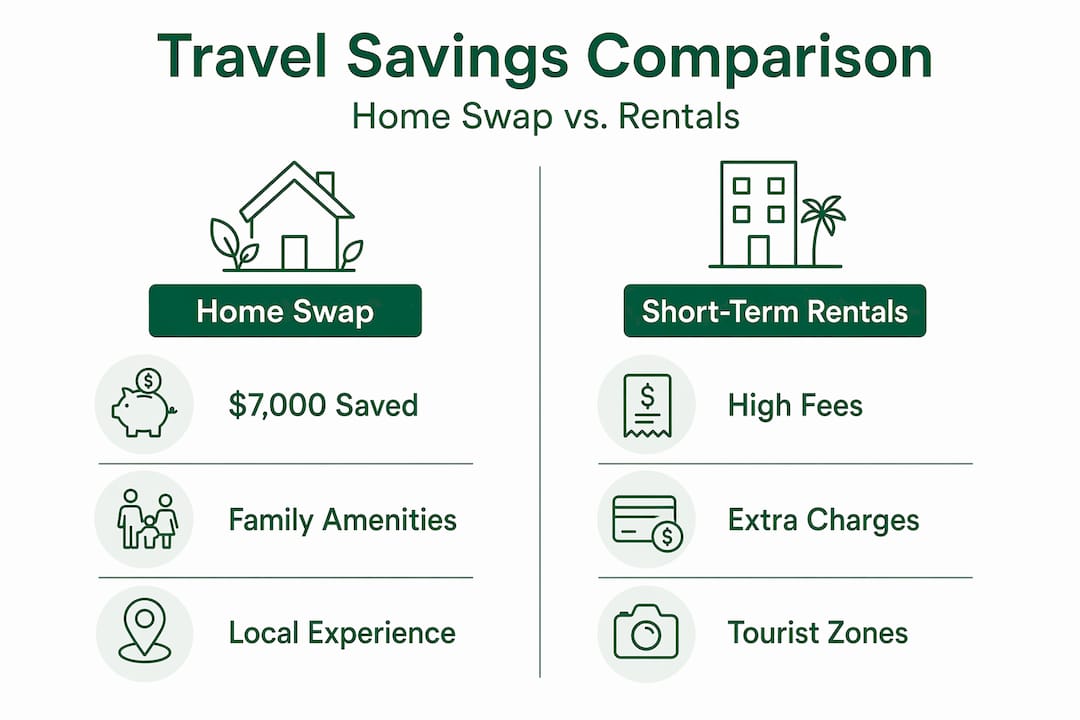 Infographic comparing home swapping and short-term rental savings
How to prepare for a successful home swap
First-time hosts often underestimate how much preparation shapes the experience, both for their guests and for themselves when they travel. A poorly described listing gets few requests. A well-prepared home gets repeat guests and glowing reviews that unlock better swap opportunities.
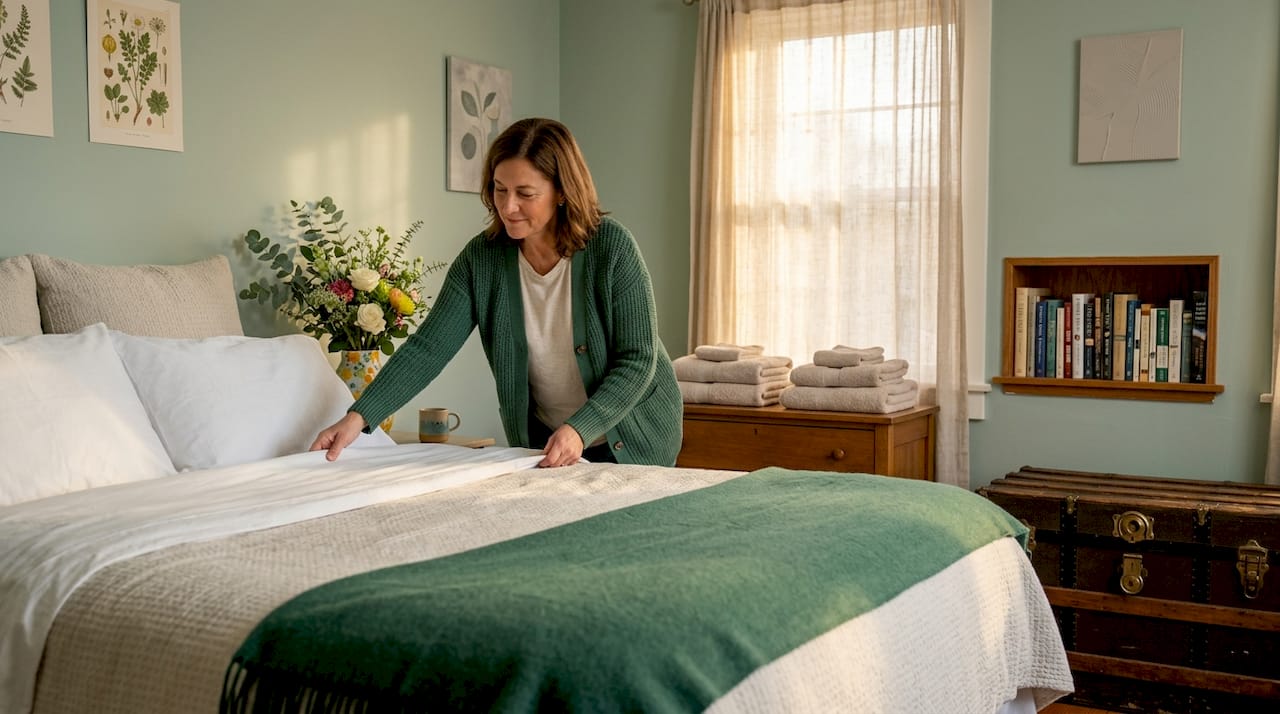 Host preparing guest bedroom for home swap
Successful swaps require quality photos, clear house rules, a welcome book, and pre-swap communication about essentials like towels and toiletries to avoid surprises. That blueprint isn't complicated, but skipping any part of it creates friction.
Here's a practical preparation sequence:
- Verify your identity on the platform. This is non-negotiable. Verified profiles get far more swap requests than unverified ones.
- Photograph your home honestly and well. Natural light, tidy rooms, and photos of every space including bathrooms and the kitchen. Blurry or dark photos signal a sloppy host.
- Write house rules that are specific, not vague. "Please treat the home as your own" means nothing. "No shoes past the entry, please water the plants on Tuesdays, parking is in the left spot" is actually useful.
- Create a welcome book. Include the WiFi password, appliance quirks (that third burner runs hot), nearest grocery stores, your favorite local restaurants, and emergency contacts.
- Communicate before the swap. A brief video call or message exchange to cover basics like check-in time, where spare keys are, and whether linens are provided prevents 80% of post-arrival confusion.
- Leave the home the way you'd want to find it. Clean surfaces, fresh towels, empty fridge space, and a small welcome gesture like local coffee or snacks go further than any listing description.
The travel reciprocity guide covers the mutual expectations that make swaps work, and it's worth reading before you host your first guest.
Pro Tip: Ask your exchange partner what they're most looking forward to in your city. It takes two minutes and lets you add one or two personalized tips to your welcome book. Guests remember that kind of thoughtfulness.
Risk management and building trust in home swapping communities
The most common hesitation first-time swappers have is some version of "What if they break something?" or "What if they go through my things?" These are reasonable questions. They're also, for the most part, the wrong questions to focus on.
Platforms foster trust using reviews and GuestPoints systems, and mutual respect tends to be higher than on commercial platforms because no profit is involved. When someone isn't paying you, they're not a customer. They're a fellow traveler who trusts you with their home at the same time you trust them with yours. That mutual stake changes behavior.
The key trust mechanisms on serious home swapping platforms include:
- ID verification for every member before any exchange is approved
- Two-way reviews that both parties submit after a swap, creating accountability in both directions
- Communication history kept on the platform so there's always a record of what was agreed
- Points systems that reward good hosting and good guest behavior over time
"The home swapping community operates on a social contract that commercial rentals simply can't replicate. When you're also a host, you understand what it means to invite someone into your space. That understanding doesn't need a deposit to enforce."
Common practices that reduce friction and protect both parties include locking away irreplaceable personal items (not because swappers steal, but because accidents happen), doing a walkthrough video of your home before leaving, and sending a brief post-swap message to confirm everything went smoothly.
Trust isn't built on platforms alone. It's built through the small gestures: responding promptly to messages, being honest about your home's limitations, and treating your exchange partner's home the way you'd want yours treated. Those habits compound over time into a strong profile that attracts better swaps.
Choosing the right sharing model for your travel and lifestyle needs
Not every traveler's schedule fits neatly into a simultaneous swap. That's where the choice between swap models actually matters. The GuestPoints system offers flexibility by decoupling hosting and traveling times, while simultaneous swaps require aligned schedules but offer immediate reciprocity.
| Model | Best for | Schedule requirement | Flexibility |
|---|---|---|---|
| Simultaneous swap | Couples, retirees, flexible schedules | Must match dates | Low |
| Points-based swap | Families, busy professionals | Host and travel separately | High |
How to decide which model works for you:
- Assess your calendar flexibility. If you can travel in a window that matches someone else's availability, simultaneous swaps are efficient and simple. If you're tied to school breaks or specific work windows, points-based is almost always the better fit.
- Consider your hosting capacity. If you travel frequently and can host multiple times a year, you'll accumulate points quickly and have more booking options.
- Think about destination preferences. Simultaneous swaps work best when both parties have genuinely interesting destinations to offer. Points-based opens up the full network to you regardless of who wants your specific location.
- Factor in minimum stay lengths. Some listings have minimum night requirements. If you're planning a short weekend trip, filter for listings that accommodate that.
Exploring the home swapping networks available globally shows just how wide the destination options have become.
Why home swapping is the future of authentic, sustainable travel
Commercial rentals made a promise they couldn't keep. The pitch was always "live like a local." The reality, in most cases, is that you're staying in a property managed at arm's length by someone who has never met you, in a building that may have displaced actual residents, reviewed like a hotel room and priced accordingly. The experience is cleaner than a hostel, but it's still transactional.
Home swapping transforms travelers from customers to temporary residents, creating genuine relationships and deep local immersion that commercial rentals simply cannot manufacture. Families who swap homes report something that surprises them the first time: they feel like they belong somewhere, even briefly. They cook in the kitchen, walk the dog, have coffee with the neighbor who checks the mail. That's not a product. It's a lived experience.
There's also an environmental argument that rarely gets enough attention. Home swapping uses existing housing stock. Nobody builds a new property for a swap. The carbon footprint of the accommodation itself is essentially zero. As the effects of sharing services on tourism continue to reshape travel patterns, the environmental math increasingly favors models that don't require new construction or constant commercial operation.
The deeper shift is cultural. When you stay in someone's home, you carry a responsibility to that place. You treat it well not because of a deposit, but because another human being trusted you. That reciprocity builds something. Families who swap regularly report lasting friendships with exchange partners across different countries. That's a different outcome than a five-star review of a rental unit.
For affordable global travel that also happens to be richer, more connected, and more sustainable, home swapping isn't just a budget hack. It's a better model of travel, full stop.
Explore home swapping with SwappaHome today
If everything above resonates but you're not sure where to start, SwappaHome makes it straightforward. It's a members-only home swapping platform built for verified homeowners who want to travel without paying hotel prices.
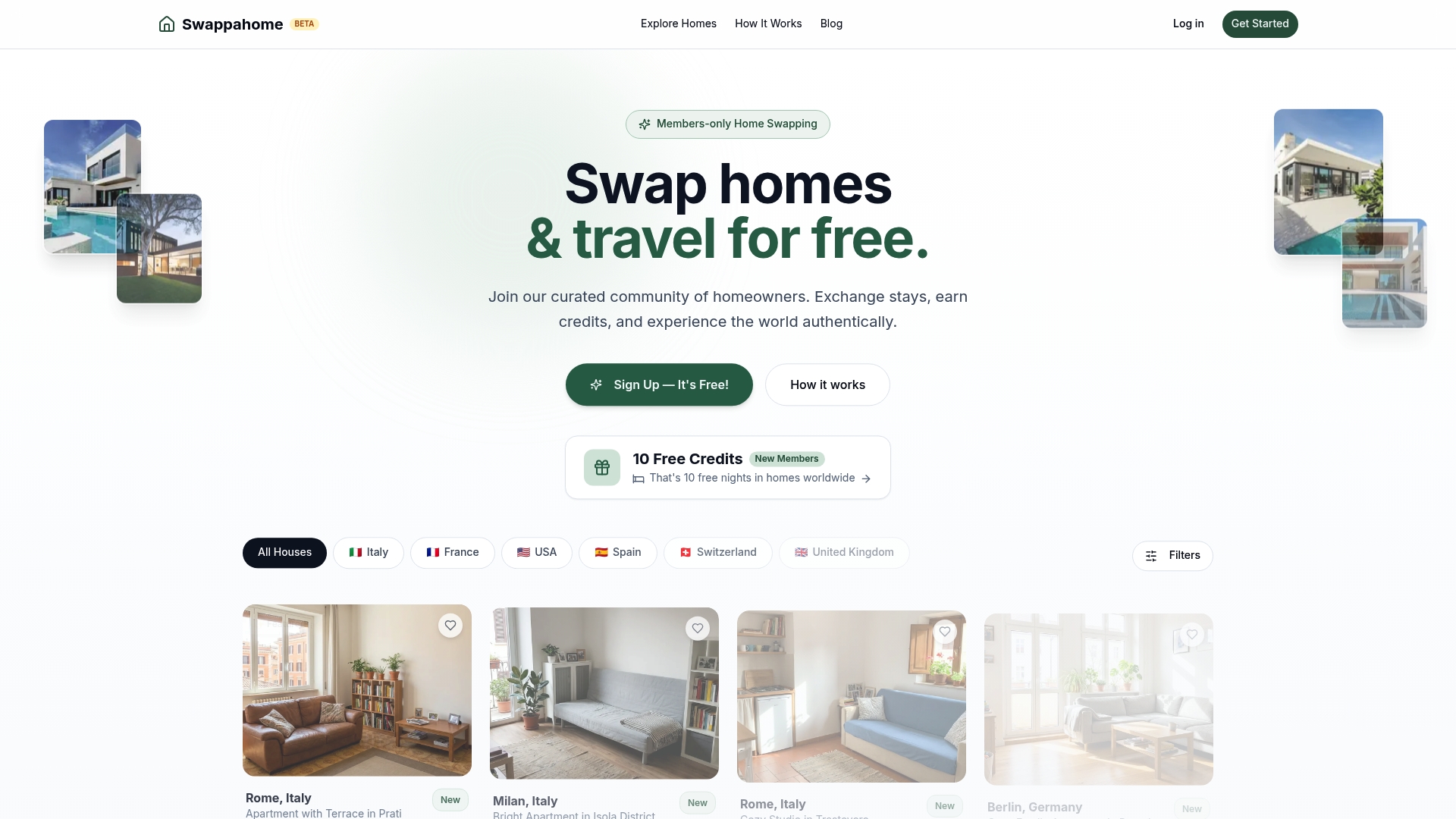 https://swappahome.com
List your home on SwappaHome, earn credits every time you host, and use those credits to book free nights in verified homes across the world. New members receive free credits to start, so your first trip doesn't require hosting first. Browse the full SwappaHome listings to see what's available in your next destination and how members describe their homes and neighborhoods. The platform handles verification, messaging, and booking in one place, so the logistics stay simple and the focus stays on the travel itself.
Frequently asked questions
What is home swapping and how does it work?
Home swapping is a travel method where two homeowners agree to stay in each other's homes for a set period, either simultaneously or through a points-based exchange that decouples hosting and traveling dates. No money is exchanged for the accommodation itself.
How much can I save by using home swapping instead of hotels or rentals?
Members save over $7,000 annually on average through home swapping, with families seeing the highest savings because they get full homes with kitchens rather than paying for multiple hotel rooms.
Is home swapping safe and how do I build trust with exchange partners?
Platforms use verified reviews and points systems to build mutual accountability, and because swapping involves no financial transaction, members tend to treat each other's homes with more care than paying guests on commercial platforms.
What should I do to prepare my home for swapping?
Start with ID verification, then upload clear photos, write specific house rules, build a welcome guide with local recommendations, and communicate pre-swap with your partner about essentials like towels, parking, and appliance quirks to avoid any surprises.
Which home swapping model is right for me, simultaneous or points-based?
If your travel dates align with a partner's, a simultaneous swap is the most direct option; if you need more flexibility, a points-based system lets you host and travel at separate times, which works especially well for families tied to school calendars or irregular work schedules.
Recommended

Published by
SwappaHome
SwappaHome Editorial Team
Home Exchange & Slow Travel Editorial
The SwappaHome Editorial Team brings together travel research, home-exchange community insights, and platform data to produce practical guides for first-time and experienced home swappers. Every article cites real platforms, current market rates, and verifiable city-level facts so readers can make informed decisions without guessing.
Ready to try home swapping?
Join SwappaHome and start traveling by exchanging homes. Get 7 free credits when you sign up!