
The ultimate guide to choosing the perfect travel backpack rucksack

SwappaHome Editorial Team
Home Exchange & Slow Travel Editorial
Key Takeaways Choosing the right gear is essential for any excursion, and this guide provides the foundation for finding the perfect travel backpack rucksack.…
Key Takeaways
Choosing the right gear is essential for any excursion, and this guide provides the foundation for finding the perfect travel backpack rucksack. Consider these core pillars for your selection process:
- Assess your total trip duration to determine the necessary liter capacity for your belongings.
- Prioritize high-quality, weather-resistant materials to protect your valuables against environmental hazards.
- Look for ergonomic suspension systems that distribute weight evenly across your torso to prevent physical strain.
- Ensure bag dimensions comply with airline cabin requirements if you plan to carry your pack on board.
- Utilize organizational systems like packing cubes to maximize space and keep your items easily accessible.
Understanding your travel style and needs
The way you travel dictates the type of equipment you need to carry, and finding the right balance begins with an honest assessment of your habits. Whether you prefer fast-paced city hopping or slow-travel immersion, your pack should function as an extension of your itinerary rather than an obstacle. It is helpful to reflect on how profound impact of books about distant cultures can influence your wandering spirit as you prepare to explore new destinations. By narrowing down your specific requirements, you can shift your focus from general features to the functional details that truly matter for your unique adventure.
Identifying the trip duration and type
A weekend escape to a nearby city requires vastly different storage needs than a three-month trek through mountainous terrain. For short trips, you might prioritize speed and agility, allowing for a compact bag that fits under an airplane seat. Conversely, long-term travel demands a more robust system that can handle a variety of climates and activities. Think about your planned itinerary, paying close attention to whether you will be moving between hotels daily or settling into one location for an extended period.
Determining your carry-on vs. checked baggage requirements
Airline policies are perhaps the most rigid constraint you will face when selecting a pack. Carrying your bag on the plane saves significant time at arrival airports and eliminates the risk of lost luggage. However, if your travels require specialized gear or heavier loads, you may find that checking a larger bag provides more freedom. Always double-check the specific dimensions allowed by your preferred airlines to ensure your pack does not end up as a gate-checked item.
Evaluating individual mobility and comfort levels
Your physical stature and comfort preferences are the final pieces of the puzzle when matching a bag to your body. A backpack that feels comfortable for one person might cause significant strain for another due to torso length differences. Test your pack with a weighted load to see how the hip belt and shoulder straps interact with your skeletal frame. If you anticipate walking long distances with your pack, prioritize options with well-padded panels and breathable back mesh to manage heat exhaustion.
Crucial features to look for in a travel backpack
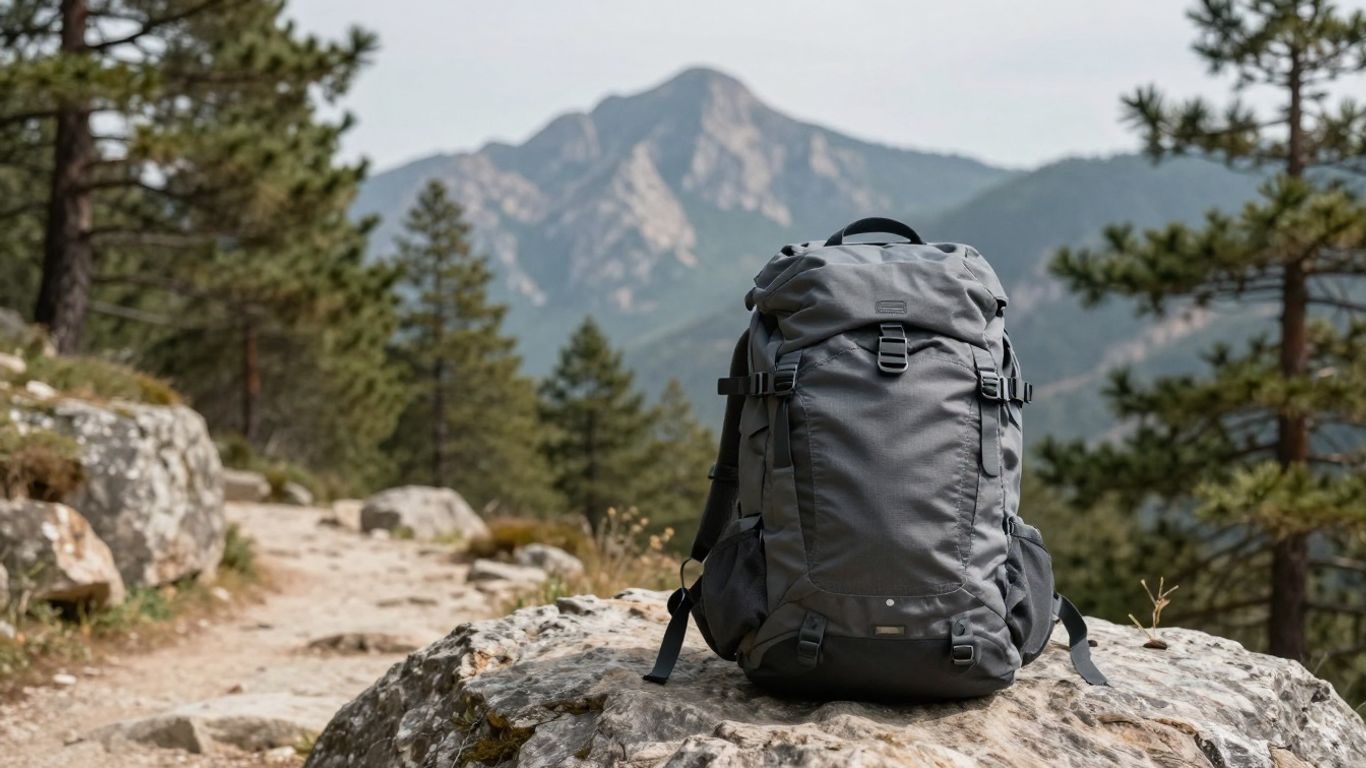 A weathered adventurer exploring a rocky mountain trail
Investing in a high-quality pack means paying attention to the specific components that suffer the most wear and tear over time. The ideal bag should function reliably in diverse environments, from bustling airports to remote wilderness trails. By focusing on materials and hardware quality, you protect your investment and ensure your belongings remain safe throughout your journeys. Carefully inspect each seam and fastener to confirm they meet the standard of performance you expect for your travels.
Assessing internal storage and compartmentalization
Effective storage is not just about the total volume in liters; it is about how you access and manage those items. Many experienced travelers swear by internal organization that separates tech essentials from clothing. Dedicated sleeves for documents, chargers, and laundry can keep your gear from shifting during transit. Look for designs that allow you to reach frequently used items without unpacking the entire contents of your main compartment.
Checking waterproof fabrics and material durability
When you are caught in an unexpected downpour, the integrity of your belongings depends entirely on your fabric choice. WITZMAN Canvas Backpacks provide an example of durability by utilizing high-density, eco-friendly materials that resist daily abrasion. Choosing a pack made from weather-resistant synthetic or treated natural fibers can save your electronics and clothing from moisture damage. Never underestimate the importance of robust outer shells against scuffs caused by rough handling at transportation hubs.
Inspecting zipper quality for anti-theft security
Zippers are often the first component to fail on a travel bag, making their quality paramount for security and function. Look for lockable fasteners and durable metal sliders that can withstand repeated use without catching or breaking. Anti-theft designs often include concealed pockets or interlocking zippers that keep your belongings shielded from opportunistic hands. Always perform a test drive of every zipper tab to ensure they move smoothly and close tightly.
Validating ergonomic support and strap adjustment systems
Long travel days require a sophisticated suspension system that transfers weight from your shoulders to your hips. An effective strap adjustment system allows you to fine-tune the fit at the sternum, shoulders, and waist for optimal comfort. Padding should be dense and responsive, protecting your skin while providing enough structure to avoid bunching under load. Test the load-lifter straps at your shoulders; when adjusted correctly, they bring the pack closer to your center of gravity.
Navigating size and capacity guidelines
The relationship between capacity and size can be confusing, as internal volume does not always equate to external dimensions. You must find the sweet spot where you have enough room for your gear while still maintaining a manageable profile for your body type. Understanding these metrics early will help you avoid the common mistake of over-packing just because you have the physical space to do so.
Comparing liter capacity for weekend vs. long-term journeys
For a two-day trip, a 20L to 30L pack often suffices, keeping your load light and your steps quick. Stepping up to a 40L or 50L capacity typically serves as the baseline for week-long excursions or international travel where you need clothing for varying weather. Long-term journeys or multi-sport adventures might necessitate even higher capacity, though this adds significant weight. Always aim to fill the smallest possible volume that accommodates your absolute essentials to keep your weight down.
Understanding how physical dimensions affect airline compliance
Most international carriers enforce a strict carry-on limit, typically around 55cm x 40cm x 20cm. A rectangular, clamshell-style pack often maximizes this allowed space far better than a traditional top-loading hiking rucksack. If you plan to travel via smaller regional jets, be aware that their overhead bins are often smaller than those on long-haul aircraft. Failing to adhere to these dimensions can lead to expensive checked baggage fees and the stress of dealing with gate agents.
Balancing exterior pack size with internal payload potential
Sometimes a pack appears large on the outside due to frame structure but offers limited storage inside. Conversely, soft-sided duffel-style bags provide flexible packing power but may lack the form required to protect delicate items. Focus on boxes that provide a structured shape to simplify the task of packing. A balanced pack uses internal compression straps to pin down your items, which effectively pulls the weight closer to your back and reduces the total exterior footprint.
Specialized design variations for diverse travelers
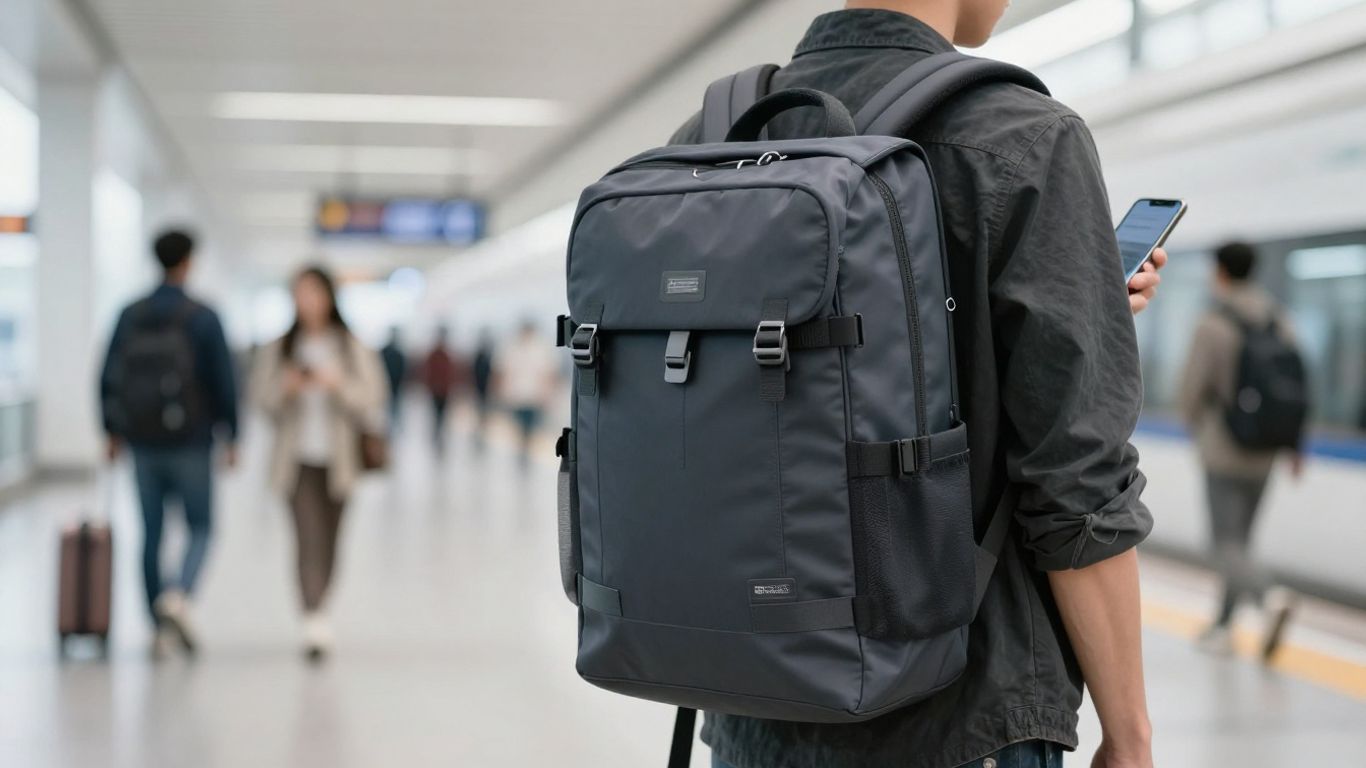 A minimalist traveler standing in a train station
Individual travel profiles have driven manufacturers to create designs that address specific lifestyle needs beyond simple hiking functionality. The Patagonia Black Hole MLC serves as a classic example of this evolution, blending the organizational ease of a suitcase with the comfort of a backpack for versatile travel. Your choice should reflect your daily activities, whether you are moving between boardrooms or remote villages. Matching the design variation to your primary mode of travel is the quickest way to upgrade your experience.
The best travel bag is the one that disappears from your awareness during the day, becoming a seamless partner rather than a burden you constantly manage.
Choosing between top-loading and clamshell openings
Top-loading packs are rugged and often considered more secure, but they force you to dig deep if your socks end up at the bottom. Clamshell openings offer the convenience of a modern suitcase, allowing you to lay your bag flat and see everything inside at once. If you are packing for a trip that requires constant wardrobe changes, the accessibility of a clamshell design is nearly impossible to beat. Choose the opening style that aligns with your patience for organizing and your need for quick access.
Exploring the versatility of convertible straps for professional settings
Professional travelers often need a bag that can switch from a rugged backpack to a sleek briefcase or messenger bag. Convertible straps allow you to tuck the harness away, preventing the aesthetic of a camping bag from clashing with business formal environments. This versatility is vital for digital nomads moving directly from the airport to a coworking space. Look for hidden compartments or clean lines that facilitate this seamless visual transition.
Evaluating the benefits and drawbacks of hybrid wheeled rucksacks
Wheeled rucksacks represent a compromise between the mobility of a backpack and the convenience of a rolling suitcase. While they save your back on smooth airport floors or paved streets, they add significant weight due to the wheels and handle assembly. Consider if the extra weight is worth the benefit for your specific terrain. They are excellent for urban travelers but often become cumbersome when navigating cobblestones, narrow stairs, or sandy trails.
Assessing the importance of gender-specific fit profiles
Bodies vary significantly in shoulder width, chest size, and torso length, which is why gender-specific packs are worth considering. These are not just variations in color; they feature redesigned harness systems that better accommodate various frames. A properly fitting pack rests correctly on the iliac crest and does not inhibit arm movement. Try on both categories if you can, as the most comfortable pack for your specific shape might come from the design category you least expected.
Managing your packing strategy for efficiency
Properly managing what you carry involves more than just folding clothes carefully; it requires a systematic approach to weight distribution and access. When you utilize the G4Free 45L Hiking Daypack or similar models, you quickly realize that the bag's design supports your packing method. Consistency is your best friend when packing, as it removes the daily mental tax of tracking your gear. By building a reliable routine, you ensure that you are ready to relocate with minimal stress.
Implementing modular packing cubes for organization
Packing cubes allow you to partition your clothing into logical categories, which keeps everything compressed and tidy. Instead of a single chaotic main compartment, you maintain distinct sections that can be moved from the backpack directly to an hotel dresser. This method also helps you identify what needs laundering without disrupting your entire collection of organized gear. It is a simple yet effective way to maintain order throughout long international journeys.
Strategizing load distribution to prevent musculoskeletal strain
Heavier items should always be packed closest to your back and roughly in the middle of the bag to keep your center of gravity stable. Placing light, bulky items like sleeping gear at the bottom and heavy objects higher up helps maintain an upright posture. Regularly check that your pack is not leaning too far away from your spine, as this adds unnecessary stress to your lower back muscles. Using internal compression straps or outer cinch straps keeps the contents from shifting while you are in motion.
Securing valuable electronics in dedicated padded compartments
Tech items are often the most fragile and expensive things in your bag, deserving the safest placement possible. A dedicated, padded sleeve suspended above the base of the bag protects your laptop from impacts when the bag is set down. Ideally, place these compartments between your back and the main load as this protects the screen from being crushed by other gear. Always carry sensitive items like camera lenses or laptops in your personal item or directly against your frame to minimize impact risk.
Designing an intuitive layout for rapid access at security checkpoints
Security checkpoints require that you strip down your pack quickly without fumbling with hidden zippers. Keep your liquids bag, laptop, and important documents in exterior or easy-reach areas to streamline the process. A well-organized, consistent layout ensures that you can move through these checkpoints with confidence, sparing you the embarrassment of holding up the line. Practice your packing layout at home until you can reach for any core item without looking.
Maintaining the longevity of your rucksack
Your pack goes through significant physical stress during travel, and simple maintenance routines will extend its lifespan significantly. Proactive care keeps your gear functional and prevents the degradation that comes from environmental exposure and travel grime. Think of your backpack as a high-performance tool that requires occasional attention to stay in top working condition year after year.
Implementing cleaning techniques for specialized fabrics
Most modern travel fabrics do not require harsh detergents or machine washing, which can strip away protective coatings. Instead, use a soft bristle brush to remove dirt and a damp cloth with mild soap for localized stains. Thoroughly rinsing and, most importantly, air-drying your pack in a shaded area prevents fabric rot and preserves color. Avoid high heat during the drying process, as this can degrade synthetic materials and melt delicate zipper tape.
Utilizing proper storage methods to prevent mildew and fabric degradation
When your trip concludes, do not leave your items inside, as moisture and stale air can quickly lead to mildew. Store your empty, clean bag in a cool, dry place away from direct sunlight, which can weaken fibers and cause premature color fading. Standing the pack upright or hanging it properly ensures the structural components remain in their intended shape. Occasional ventilation after long periods in closets helps keep the internal material fresh and free from mold.
Proactively inspecting load-bearing seams and hardware for wear
Spend a few minutes after each major trip inspecting your bag for signs of stress on the stitching or fraying at the webbing. Look at the stress points where your straps meet the body of the bag and check that the buckles haven't developed cracks. Tightening any loose screws on hardware and applying a light lubricant to sticky zippers can prevent permanent failure. Catching these small issues early allows you to repair them before they become catastrophic problems during your next journey.
Conclusion
Selecting the right travel backpack rucksack is a personal process that balances your physical needs with the logistical demands of your destination. By focusing on quality craftsmanship, ergonomic comfort, and efficient internal organization, you build a foundation for comfortable travel adventures that last for years. Take your time to test different models and trust your instincts as you prepare for your upcoming travels, knowing that a well-chosen pack simplifies the complexities of the road and lets you focus on the experiences ahead.
Frequently Asked Questions
How often should I clean my travel backpack?
You should perform a light surface cleaning after every major trip to remove dust and travel grime, but a deep cleaning is usually only necessary if the bag is visibly stained or smells. Following this minimal approach helps preserve the protective weather-resistant coatings on the fabric.
Can I take a 50L backpack as a carry-on?
Most airlines have strict size limits that a 50L pack often exceeds, though it depends heavily on the bag's dimensions and how full it is. You should always measure your pack while fully loaded and compare it directly to your specific airline's baggage policy to avoid surprises at the gate.
What are the main benefits of using packing cubes?
Packing cubes allow you to separate items by category, making it easier to find exactly what you need without unpacking your entire bag. They also act as compression tools, which helps you maximize the usable space inside your rucksack throughout your trip.
How do I stop a heavy backpack from hurting my back?
To prevent pain, focus on adjusting the weight distribution using your hip belt and sternum strap until the weight is carried by your hips rather than your shoulders. Ensure your pack is packed properly with heavy items placed close to your spine to maintain a stable center of gravity.
Do I really need a waterproof travel backpack?
While not strictly necessary for every trip, a water-resistant or waterproof bag provides essential peace of mind when traveling through unpredictable weather. It ensures that your electronics and documents remain protected even if you are caught in a rainstorm without an umbrella.
What should I look for when testing a backpack's fit?
When testing a fit, pay attention to where the hip belt sits on your pelvis and ensure the shoulder straps do not pinch your armpits or cause awkward bowing across your chest. A properly fitted pack should feel like it is hugging your upper torso without inhibiting your natural walking gait.
Is a wheeled rucksack better than a traditional one?
A wheeled rucksack offers relief from carrying weight on your back in urban environments with smooth surfaces, but it comes with a weight penalty that can be frustrating on stairs or rugged terrain. The best choice depends on whether you value carrying comfort or the convenience of rolling your bag through modern transportation hubs.

Published by
SwappaHome
SwappaHome Editorial Team
Home Exchange & Slow Travel Editorial
The SwappaHome Editorial Team brings together travel research, home-exchange community insights, and platform data to produce practical guides for first-time and experienced home swappers. Every article cites real platforms, current market rates, and verifiable city-level facts so readers can make informed decisions without guessing.
Ready to try home swapping?
Join SwappaHome and start traveling by exchanging homes. Get 7 free credits when you sign up!