
The ultimate guide to securing a digital nomad visa in Europe

SwappaHome Editorial Team
Home Exchange & Slow Travel Editorial
Key Takeaways Securing a long-term remote work permit allows you to legally reside and work in a foreign country for extended periods. Understanding the…
Key Takeaways
Securing a long-term remote work permit allows you to legally reside and work in a foreign country for extended periods. Understanding the specific requirements for a digital nomad visa europe is essential for a successful application.
- Differentiate clearly between tourist stays and official work permits.
- Prepare extensive financial documentation to meet minimum income thresholds.
- Research tax implications and bilateral agreements between your home country and the host nation.
- Maintain consistent housing documentation to satisfy local registration requirements.
- Plan for potential administrative delays during the embassy application process.
Understanding digital nomad visas in Europe
What is a digital nomad visa?
A digital nomad visa is a specialized residency permit that allows remote professionals to live and work legally in a foreign country. Unlike standard holiday visas, these permits are tailored for individuals employed by companies outside the host nation, ensuring they do not compete for local job opportunities.
Key differences between tourist and work visas
Tourist visas are designed for short-term visits and strictly prohibit gainful employment, often capping stays at 90 days. In contrast, nomad permits provide a path to temporary residency, allowing you to operate from SwappaHome while enjoying full local access to infrastructure and services.
Why European countries are competing for remote talent
Many nations are actively vying for highly-skilled professionals to inject capital into their local economies. By relaxing residency laws, they hope to integrate long-term residents who contribute to the cultural and economic vitality of their cities.
Eligibility requirements and residency definitions
Most permit definitions hinge on your ability to work location-independently without drawing from the host country’s labor market. You generally need to prove you are over 18 years of age and have a stable source of income, providing clear verification that your work is performed for non-local entities.
Popular European destinations for remote workers
 A vibrant city street with people working in cafe
Southern Europe hotspots such as Portugal, Spain, and Italy
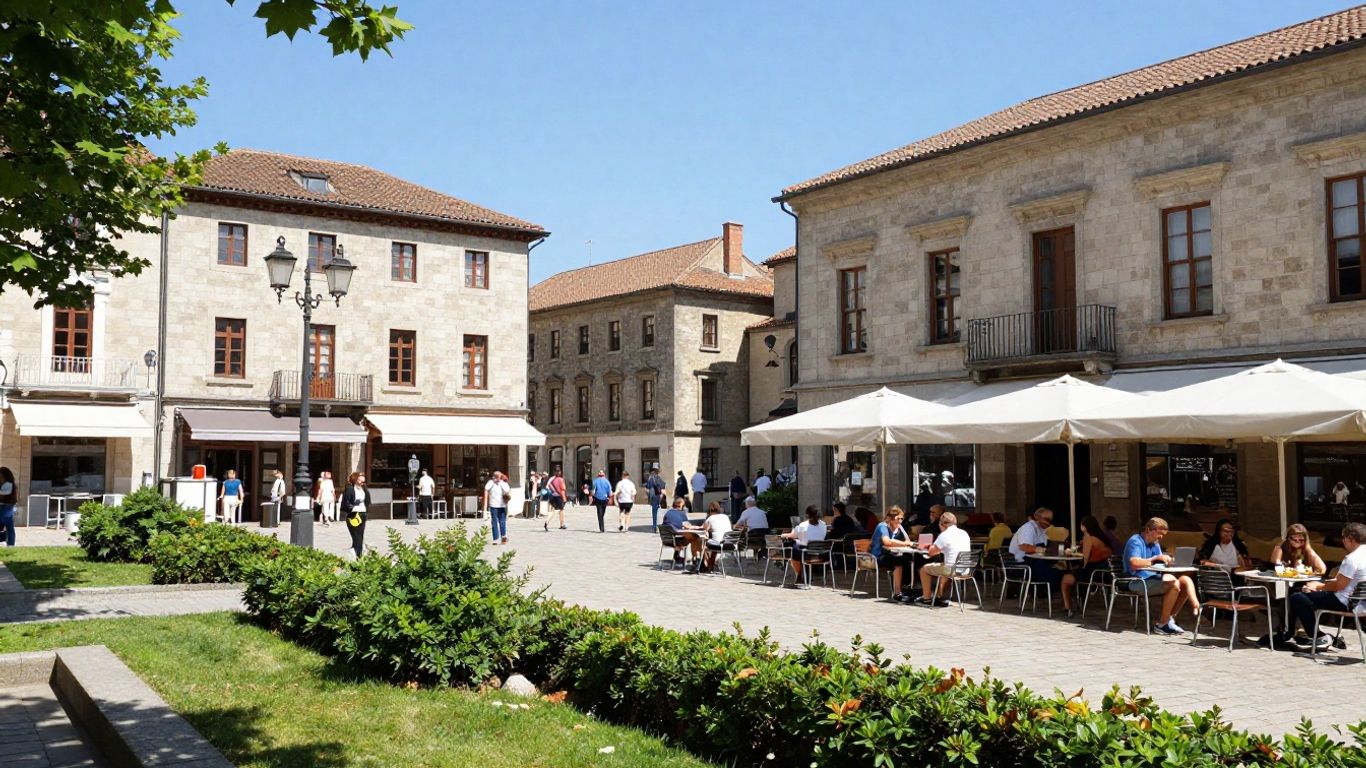
Southern Europe remains a top region for nomads due to its favorable climate and accessible permit programs. Many travelers choose to use Swappa Home to find long-term exchanges that balance work and leisure.
| Country | Typical Income Requirement | Best For | Typical Residency |
|---|---|---|---|
| Spain | €2,700/mo | Tech hubs | 1-3 years |
| Portugal | €3,280/mo | Coastal living | 1-2 years |
| Italy | €30,000/year | Urban culture | 1 year |
You can find excellent opportunities throughout the region, but always ensure your specific remote employment setup aligns with the unique legal definitions of these countries.
Emerging opportunities in Eastern Europe
Eastern Europe is attracting professionals with lower living costs and rapidly modernizing fiber-optic infrastructure. These locations are ideal for nomads who want to stretch their salary while remaining within the European time zones for client collaboration.
The appeal of Nordic and Baltic remote work policies
Countries like Estonia paved the way for modern remote work policies by streamlining digital interactions between citizens and the state. Their approach prioritizes transparency and efficiency, which benefits those transitioning to a fully digital lifestyle.
Comparing cost of living versus salary requirements
- High-cost cities like London or Paris demand higher savings buffers.
- Secondary cities often provide a better value-to-income ratio.
- Remote workers must often account for a higher tax burden.
- Inflation of housing costs in popular hubs can impact accessibility.
- Local currency fluctuations should be considered in your budgeting.
Comparing these factors helps maintain a comfortable lifestyle while meeting the rigorous visa income criteria required by local authorities.
Essential eligibility and application criteria
Minimum income thresholds for visa approval
Consulates require concrete proof that you will not become a state burden, typically demanding bank statements showing a consistent monthly inflow. Ensuring your regular remote income exceeds their mandated threshold is the primary hurdle for most applicants.
Documentation needed to prove remote employment
Your employer must acknowledge your intent to work from abroad to satisfy residency requirements. You will likely need formal letters from your HR department stating your remote contract status and verifying that your tasks do not require physical presence in your home country.
Health insurance and social security requirements
Policies must be comprehensive, ideally providing coverage that is valid throughout the entire Schengen Area. Relying on basic travel insurance is often insufficient, so you may need to look for specific providers that coordinate with host-nation requirements.
Criminal record checks and security vetting
Background checks are mandatory and must be recent, typically issued within the last three to six months. You will need these documents officially translated and legalized to prove you have no criminal history.
Step-by-step application workflow
 A desk with laptop and passport near window
Gathering and apostilling your financial documents
Securing an apostille for every legal document is a critical step, as nations require international verification of your papers. Don't skip this, as missing apostilles often lead to immediate rejection by the embassy.
Navigating consulate and embassy appointment processes
Appointments can be scarce, requiring you to monitor booking windows daily for months in advance. It is best to prepare your entire file before even attempting to book, ensuring you can submit everything on your first attempt.
Managing the administrative timeline for approval
Administrative processing can drag on, sometimes taking several months beyond the initial estimate. Always keep a buffer of three months to account for potential bureaucratic slowdowns or requests for additional paperwork.
Strategies for handling legal translations
Certified translators must handle every document not in the local language, using official seals to guarantee accuracy. Never attempt to translate documents yourself, as only verified, stamped versions are accepted by the judicial authorities.
Challenges and pitfalls to avoid
Misunderstanding double taxation and tax residency
Living in a country for more than 183 days often triggers tax residency, which can lead to double taxation if not managed correctly. Utilizing professional tax advice is often the only way to navigate these jurisdictional complexities effectively.
Failing to secure long-term housing documentation
Most visas require a valid lease agreement or property documentation before the entry permit is finalized. Finding these through SwappaHome can provide reliable evidence of your residence while you familiarize yourself with the city.
Ignoring local registration and residency laws
Once you arrive, you must complete your registration with the local municipal office within specific timeframes. Failure to do so can result in hefty fines or even the cancellation of your residency permit.
The risks of missing renewal deadlines
Renewals must be initiated well before your current status expires to ensure continuous legal residency. Many nomads find themselves in a precarious position by waiting until the last minute and miscalculating the processing time.
Living and working in Europe as a digital nomad
Balancing time zones with global remote teams
Maintaining a schedule that overlaps with domestic and international partners requires serious planning. It is common for nomads to adapt their waking hours, perhaps working deep into the evening to capture late-afternoon calls.
Utilizing local coworking spaces and hubs
Coworking spaces provide the structural support needed for deep work sessions, especially when apartment Wi-Fi fails. They also serve as vital social hubs, helping you build a community and preventing the isolation that can occur when moving frequently.
Integrating into local communities and business cultures
Making a genuine effort to learn basic local phrases and participating in neighborhood activities goes a long way toward long-term success. It shifts your perspective from transient guest to valued community contributor.
Maintaining compliance with Schengen Area rules
Even with a national visa, you are subject to broader regional agreements regarding travel. Always verify your rights to move between borders, ensuring you don't breach restrictions on total time spent outside your host country while on your specific visa.
Conclusion
Securing a long-term residency permit allows you to immerse yourself in foreign cultures while maintaining your professional momentum, and properly aligning your paperwork is the most significant step toward achieving this freedom. By understanding the fiscal obligations and legal requirements, you can navigate the complex application landscape and successfully establish your base in the heart of Europe.
Frequently Asked Questions
Can I apply for a visa while already in the country on a tourist visa?
Some countries allow you to switch your status internally, though it is usually safer and more straightforward to apply from your home country before departure.
Does the visa allow me to work for companies located strictly in the host nation?
No, these visas are designed for digital nomads holding roles with companies or clients established outside the host nation to maintain the separation of labor markets.
What happens if I lose my remote employment after receiving the visa?
Job loss typically mandates that you report your change in circumstances to immigration authorities, as your residency is contingent upon your income and employment status.
Can my spouse and children accompany me on my digital nomad permit?
Most European countries provide pathways for dependents to join you, though you will need to demonstrate significantly higher income levels to accommodate additional family members.
Is the visa valid for all countries within the Schengen Area?
Your visa is issued by a specific country and grants you residency for that nation, while also providing standard travel rights for the rest of the Schengen Area.
How often do I need to renew my foreign residency permit?
Renewal cycles vary by nation and permit type, ranging from annually to every three years, and you should always check the specific local expiration rules upon arrival.
Do I need to buy a house to meet the housing requirements for residency?
No, a valid and registered lease agreement or proof of long-term accommodation such as a housing swap agreement or verified residence confirmation is usually sufficient for authorization.

Published by
SwappaHome
SwappaHome Editorial Team
Home Exchange & Slow Travel Editorial
The SwappaHome Editorial Team brings together travel research, home-exchange community insights, and platform data to produce practical guides for first-time and experienced home swappers. Every article cites real platforms, current market rates, and verifiable city-level facts so readers can make informed decisions without guessing.
Ready to try home swapping?
Join SwappaHome and start traveling by exchanging homes. Get 7 free credits when you sign up!