
Travel state gov phone number: how to find the right U.S. travel support contact

SwappaHome Editorial Team
Home Exchange & Slow Travel Editorial
Key Takeaways Finding the right U.S. travel support contact starts with using the official Department of State website and matching the service to your…
Key Takeaways
Finding the right U.S. travel support contact starts with using the official Department of State website and matching the service to your situation. A few minutes of preparation can prevent delays, scams, and calls to the wrong office.
- Begin with travel.state.gov or another official .gov page.
- Match passport, overseas emergency, and advisory questions to the correct service.
- Keep application numbers, travel details, and identification information nearby.
- Use embassy and consulate pages for help while abroad.
- Verify phone numbers and protect personal information during every call.
Find the official travel.state.gov phone number
The phrase “travel state gov phone number” usually refers to a search for official U.S. Department of State assistance. There is not one universal number for every travel question, so the safest approach is to start at the government website and follow the issue-specific contact instructions. Phone numbers, hours, and procedures can change, which makes checking the current page worthwhile.
Start with the U.S. Department of State website
Open travel.state.gov by typing the address yourself or using a trusted bookmark. Look for the site’s contact, passport, travel advisory, or embassy and consulate pages rather than relying on a number copied from a forum or social media post. The official page should clearly identify the U.S. Department of State and provide instructions for the service you need.
The website may direct you to a national information center, a U.S. embassy or consulate, or another government office. That distinction matters because the office handling a passport application is not necessarily the office handling an emergency overseas. Read the surrounding instructions before dialing.
Distinguish official contact pages from search ads
Search results can place advertisements, commercial assistance services, and scraped directories above the official result. An advertisement may look authoritative while charging for help that the government provides directly or sending callers to an unrelated call center. Check the address bar and make sure the page belongs to a .gov domain before using its number.
Do not treat a familiar-looking logo as proof of authenticity. The web address matters most: compare the number with the contact information shown on the official page, and avoid calling a number that appears only in a banner, pop-up, or unsolicited message.
Confirm the phone number for your specific need
Before calling, identify the practical category of your question. A pending passport application, a lost passport abroad, a serious emergency involving a U.S. citizen, and a question about destination conditions can each lead to different instructions. Choosing the right category usually saves more time than searching for a general switchboard.
If a page provides both online and telephone options, read the eligibility details carefully. Some questions can be answered through status tools or destination pages, while urgent situations require direct contact with an embassy, consulate, or emergency line.
Check current hours, time zones, and language options
A number may be correct but unavailable when you call. Review the listed operating hours, holidays, time zone, and any language information before planning your call. Overseas offices may follow local business hours, while emergency assistance can have separate instructions.
Write down the hours beside the number rather than assuming a U.S. office is open around the clock. If you are abroad, also check whether the page gives a local dialing format or a number that can be reached from outside the United States.
Choose the right Department of State service
The Department of State provides different routes for different travel problems. A clear description of what happened, where you are, and what you need will help you reach the appropriate service without repeating the entire story several times. Start with the most specific official page available.
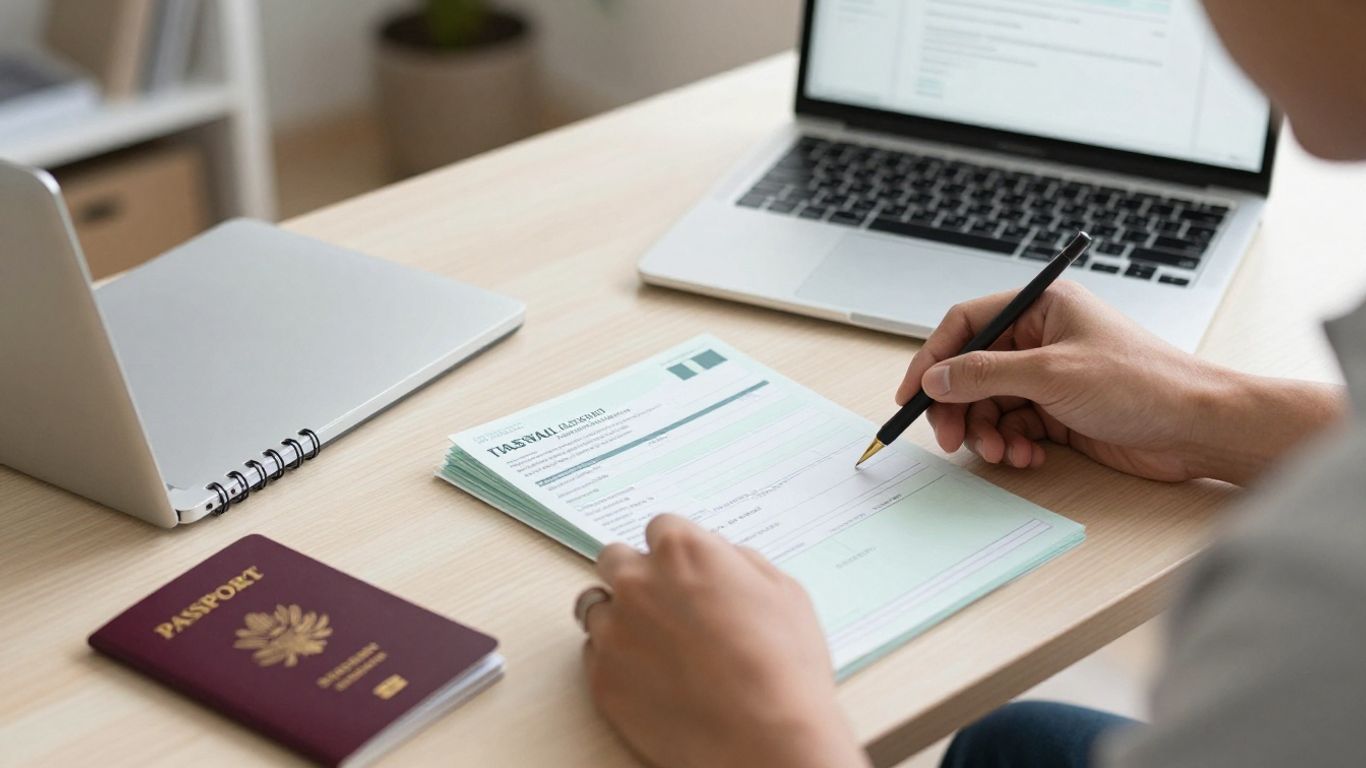 Traveler reviewing official U.S. support information
Get help with passports and passport applications
Passport questions generally fall into two groups: applying for or renewing a passport, and dealing with a passport problem during travel. For an application in progress, gather the application details and use the passport-specific instructions. For a passport lost or stolen abroad, follow the embassy or consulate guidance instead of treating it as a routine status inquiry.
Keep copies of submitted documents and any correspondence. Do not send sensitive information to a number found through an unofficial service, even if the caller promises faster processing.
Contact consular services while traveling abroad
When you are outside the United States, the nearest U.S. embassy or consulate is often the most relevant starting point for consular questions. Its official page can explain local appointment procedures, emergency contact methods, and the services available at that particular post.
The office may ask where you are located and whether the matter is urgent. State your location plainly, including the city or region, and explain whether you can safely continue communicating by phone or online.
Report an emergency involving a U.S. citizen
An arrest, hospitalization, serious accident, missing traveler, or immediate threat involving a U.S. citizen should be described as an emergency when contacting the appropriate embassy or consulate. Give the person’s name, location, and the basic facts first. Avoid delaying contact while trying to assemble a perfect account.
If there is an immediate physical danger, contact local emergency services as well when it is safe to do so. U.S. consular assistance does not replace local police, medical care, or emergency response.
Ask about travel advisories and destination information
Questions about safety conditions, entry rules, and destination guidance are best answered by the official country information and travel advisory pages. Read the full advisory, not just its level or headline, because the details may distinguish regions, activities, or types of risk.
For trip-planning context outside official government guidance, you might also browse these travel planning guides, then return to travel.state.gov for current government information. Private travel ideas should supplement—not replace—official advisories and entry requirements.
Contact the National Passport Information Center
The National Passport Information Center is the relevant contact for many passport application and service questions in the United States. It is still useful to check the official passport pages first, because online status tools and instructions may answer a routine question immediately. Have your records ready if a call is necessary.
Know when to call about a passport application
Call when your question concerns an application, renewal, delivery, processing issue, or a service option that the official online information does not resolve. If you have recently submitted materials, allow the stated processing period to pass unless the instructions tell you to act sooner.
A call is more productive when you can explain what you submitted, when you submitted it, and what the current status page says. Avoid opening duplicate applications simply because a status update has not appeared yet; follow the current official guidance instead.
Prepare your application locator number and personal details
The representative may need an application locator number or other identifying details to find the record. Keep your full name as it appeared on the application, date of birth, submission date, travel date, and contact information close at hand.
Do not read sensitive information aloud in a public place if you can avoid it. If someone calls you unexpectedly, end the conversation and independently locate the official number before continuing.
Understand routine and expedited service options
Routine and expedited processing have different requirements, fees, and estimated timelines. Review the current official explanation before calling so you can ask a focused question about eligibility, timing, or next steps. Travel dates may affect which option is appropriate, but they do not automatically guarantee a particular result.
Here is a simple way to frame the issue before dialing:
| Question to clarify | Why it helps | Information to gather |
|---|---|---|
| What service did I request? | Identifies the relevant process | Application or renewal type |
| When did I submit it? | Puts the timeline in context | Mailing or appointment date |
| When do I travel? | Shows the practical urgency | Itinerary or departure date |
| What does status show? | Prevents repeated explanations | Current status wording |
Once these details are organized, the representative can focus on the actual problem rather than reconstructing the application from memory. Timelines remain subject to the current official guidance.
Use online tools before calling
Check the official application status tool, processing information, and frequently asked questions before waiting on hold. Online resources are often the fastest route for a straightforward status check or a question about required documents.
If the online result conflicts with a letter or email you received, save both records and mention the discrepancy when you call. A screenshot or printed confirmation can make the conversation clearer, especially when dates are involved.
Get emergency assistance overseas
Emergency assistance abroad begins with the U.S. embassy or consulate responsible for the place where the traveler is located. The correct post may not be the one in the country’s capital, and some areas are served by a different consular district. Use the official embassy and consulate directory to identify the right office.
 Traveler contacting a U.S. consulate abroad
Contact the nearest U.S. embassy or consulate
Find the post’s official page and follow its emergency instructions. Tell the staff your location, the traveler’s citizenship, the nature of the emergency, and the safest way to reach you. If you are moving between cities, give both your current location and your expected next location.
Do not wait for a routine appointment system if the page provides separate emergency instructions. Those instructions are designed to route urgent matters differently from ordinary visa or document questions.
Request help after a lost or stolen passport
Report a lost or stolen passport to local authorities when appropriate and contact the nearest U.S. embassy or consulate. Consular staff can explain the replacement process and the documents or photographs you may need. Keep a copy of the police report if one is issued.
Travelers should also contact airlines, hotels, tour providers, or insurers when the loss affects an itinerary. The consular post handles the U.S. document issue, while other organizations may need to adjust reservations or provide local assistance.
Report an arrest, medical emergency, or serious incident
Give the consular staff the essential facts without guessing at details. For an arrest, provide the person’s name and location if known; for a medical emergency, explain where the person is receiving care; for a serious incident, describe what has happened and whether there is an immediate safety concern.
A short, accurate first report is better than a long account filled with assumptions. Update the office when you learn more, and keep a record of names, times, and instructions.
Understand what consular staff can and cannot do
Consular staff may help explain local procedures, communicate certain concerns, provide lists of local resources, and assist with passport-related steps. Their role does not generally include overriding local law, providing unlimited funds, guaranteeing medical treatment, or acting as a private attorney.
Knowing these boundaries helps set realistic expectations. Ask what the office can do next, what you must arrange yourself, and whether a local authority or service provider should be contacted immediately.
Avoid travel scams and incorrect phone numbers
Scams often appear when travelers are anxious, rushed, or facing a passport problem. A caller may claim to be an embassy employee, offer an unusually fast document, or request payment through an unusual method. Slow down enough to verify the contact independently.
Verify that a number belongs to a .gov website
Use the official page rather than trusting caller ID, a forwarded message, or a directory listing. Check the spelling of the domain and look for secure contact instructions connected to the relevant government office. If two pages show different numbers, use the main official site to determine which page is current.
A .gov address is a strong sign that you are on a government website, but still read the page carefully. Fraudulent messages can imitate official language while directing you elsewhere.
Recognize fake embassy and passport service claims
Be cautious when anyone guarantees approval, promises a passport without the normal process, or pressures you to pay immediately. Government offices do not need you to use a private intermediary simply because the situation feels urgent.
Ask for the caller’s name and department, then independently find the official number and call back. Do not use a callback number supplied only during the suspicious conversation.
Protect personal information during a phone call
Share only what the official representative needs for the stated purpose. Never disclose passwords, full financial account credentials, or one-time security codes to an unsolicited caller. If payment is requested, confirm the process on the official website before proceeding.
When calling from a shared space, move somewhere private before discussing passport identifiers or travel details. It is reasonable to pause and verify rather than answer every question immediately.
Use official embassy and consulate contact pages
Embassy and consulate pages provide location-specific instructions that a general search result may miss. Check the page for emergency numbers, appointment requirements, local address information, and any special notices affecting visitors.
Save the page or its official contact details before departure, but verify them again shortly before travel. Conditions and office procedures can change, and an old screenshot may no longer be enough.
Prepare before calling travel.state.gov support
A prepared call is usually shorter and more useful. Put the relevant documents in front of you, decide what outcome you need, and write down the official number before dialing. If the matter is urgent, begin with the location and immediate risk rather than a long background story.
Gather passport, itinerary, and application information
Collect the passport number if available, application locator number, full legal name, date of birth, travel dates, current location, and a reachable callback number. You may not need every item, but having them ready prevents a second call caused by missing information.
Keep copies secure and avoid emailing documents unless the official instructions specifically request them. For a family or group, label each person’s information separately.
Write down key questions and reference numbers
Write two or three direct questions before the call. Include any confirmation, case, or reference numbers, along with the date and time of earlier contacts. This gives you a simple record if the matter needs follow-up.
A short list also helps when a call becomes stressful. You can ask the representative to repeat an instruction and confirm what action is expected from you.
Know when online forms or email are better
Not every issue belongs on a phone line. A routine inquiry, document upload, feedback message, or request that needs an attachment may be better handled through an official online form or email channel. Use the method the relevant page specifies rather than sending documents to a random address.
Phone contact is generally more appropriate when timing is critical, the instructions say to call, or the situation involves an immediate emergency. When uncertain, start with the official service page and follow its routing guidance.
Record the representative’s instructions and next steps
During the call, note the representative’s name or identifier if provided, the date, the advice given, and any deadline. Repeat the next step in your own words before ending the conversation so misunderstandings can be corrected immediately.
Afterward, store the notes with your application or travel records. If you were told to wait, write down how long to wait and what event should prompt another contact.
Conclusion
The safest way to find the right travel.state.gov phone number is to begin with the official Department of State website, identify the service that matches your situation, and verify the current contact instructions. Whether you are checking a passport application or seeking help overseas, organized information and careful verification make the process clearer and reduce the risk of scams.
Frequently Asked Questions
Is there one travel.state.gov phone number for every issue?
No. Passport applications, overseas emergencies, consular matters, and travel advisories may use different contact routes. Start with the official Department of State page for the specific issue.
How can I tell whether a phone number is official?
Find it on a current Department of State, embassy, or consulate page hosted on a .gov domain. Do not rely only on search ads, social media posts, forwarded messages, or caller ID.
Who should I contact about a passport application in the United States?
Use the official passport information and application-status resources first. If the online information does not resolve the issue, follow the current instructions for contacting the National Passport Information Center.
What should I do if my passport is lost abroad?
Contact the nearest U.S. embassy or consulate and follow its emergency passport instructions. You may also need a local police report and help from your airline or insurer.
Can a U.S. embassy provide emergency medical treatment?
An embassy or consulate can explain consular assistance and help identify local resources, but it does not replace local emergency services or medical providers. Contact local emergency responders when immediate care is needed.
What information should I have before calling?
Keep your name, date of birth, passport or application details, travel dates, current location, and relevant reference numbers nearby. Only provide information through a contact method you independently verified.
Should I call or use an online form?
Follow the instructions on the official page for your issue. Online tools are often suitable for routine status checks and document questions, while urgent matters or instructions that specifically request a call should be handled by phone.

Published by
SwappaHome
SwappaHome Editorial Team
Home Exchange & Slow Travel Editorial
The SwappaHome Editorial Team brings together travel research, home-exchange community insights, and platform data to produce practical guides for first-time and experienced home swappers. Every article cites real platforms, current market rates, and verifiable city-level facts so readers can make informed decisions without guessing.
Ready to try home swapping?
Join SwappaHome and start traveling by exchanging homes. Get 7 free credits when you sign up!