Unlock Affordable Travel: Guide to Travel Communities

SwappaHome Editorial Team
Home Exchange & Slow Travel Editorial
Unlock Affordable Travel: Guide to Travel Communities !Woman chatting for home swap planning > TL;DR: > > - Travel communities replace expensive...
Unlock Affordable Travel: Guide to Travel Communities
 Woman chatting for home swap planning
TL;DR:
- Travel communities replace expensive hotels by enabling home exchanges and credit-based stays.
- They offer authentic local experiences, significant savings, and cultural exchange opportunities.
- Getting started involves creating a detailed profile, choosing the right platform, and communicating openly with members.
Most people assume that truly memorable travel costs a fortune. The reality? The biggest barrier to authentic, immersive experiences isn't money. It's knowing where to look. Travel communities have quietly been rewriting the rules of how homeowners and budget-conscious travelers explore the world. Instead of booking overpriced hotels or scrolling through rental listings, members swap homes, earn credits, and stay in real neighborhoods with real locals. This guide breaks down exactly how these communities work, what types exist, and how you can start using them to travel smarter, cheaper, and more meaningfully.
Table of Contents
- What are travel communities?
- Types of travel communities and how they work
- Benefits of joining a travel community
- How to get started in a travel community
- Our take: The real value and future of travel communities
- Ready to experience travel communities? Start swapping today
- Frequently asked questions
Key Takeaways
| Point | Details |
|---|---|
| Travel communities explained | These platforms enable home swaps and cultural exchanges, making travel more affordable and immersive. |
| Multiple community types | Options include direct swaps, credit-based networks, and hosted stays to suit different travel needs. |
| Major cost savings | Home swapping can reduce travel expenses by hundreds or thousands per trip versus rentals. |
| Simple steps to join | Start by finding the right platform, creating a profile, and following best practices for trust and success. |
What are travel communities?
A travel community is a network of homeowners and travelers who connect to share, swap, or exchange lodging. Think of it less like a booking platform and more like a trusted neighborhood where everyone looks out for each other. The goal isn't just to find a free place to sleep. It's to experience a destination the way locals do, from the corner bakery to the weekend farmer's market.
Travel communities enable homeowners to exchange homes for authentic travel experiences without traditional hotel costs. That single shift, from transactional to relational, changes everything about how you travel.
These communities come in several forms. Home swapping is the most direct: you stay in someone's home while they stay in yours. Credit-based platforms let you earn points by hosting guests and spend those points to stay elsewhere. Sharing economy lodging, popularized by platforms like Couchsurfing, focuses more on hospitality and connection than strict reciprocity.
What makes travel communities especially powerful during peak travel seasons is their immunity to hotel price surges. When summer rates double and holiday rentals hit record highs, community members are still staying for free or near-free.
Here's what sets travel communities apart from traditional travel services:
- No nightly fees: Stays are funded by credits or direct swaps, not cash.
- Verified members: Most platforms screen and verify participants before listing.
- Real homes, real neighborhoods: You live like a local, not a tourist.
- Built-in trust networks: Reviews, ratings, and communication histories create accountability.
- Cultural exchange: Hosts often share tips, traditions, and local knowledge that no guidebook covers.
For homeowners especially, these communities flip the script. Your home isn't just an asset. It's a passport.
Types of travel communities and how they work
There are multiple types of travel communities, each offering unique ways to connect and trade lodging. Understanding the differences helps you pick the right fit for your travel style and goals.
Direct home swaps are exactly what they sound like. Two homeowners agree to stay in each other's homes simultaneously or at different times. It requires mutual trust and scheduling coordination, but it's the most straightforward form of exchange.
Credit-based exchanges add flexibility. You host a guest, earn credits, and spend those credits to stay somewhere else entirely. You're not tied to a single swap partner. Swappahome uses this model: one credit equals one free night, and new members even receive free credits to get started.
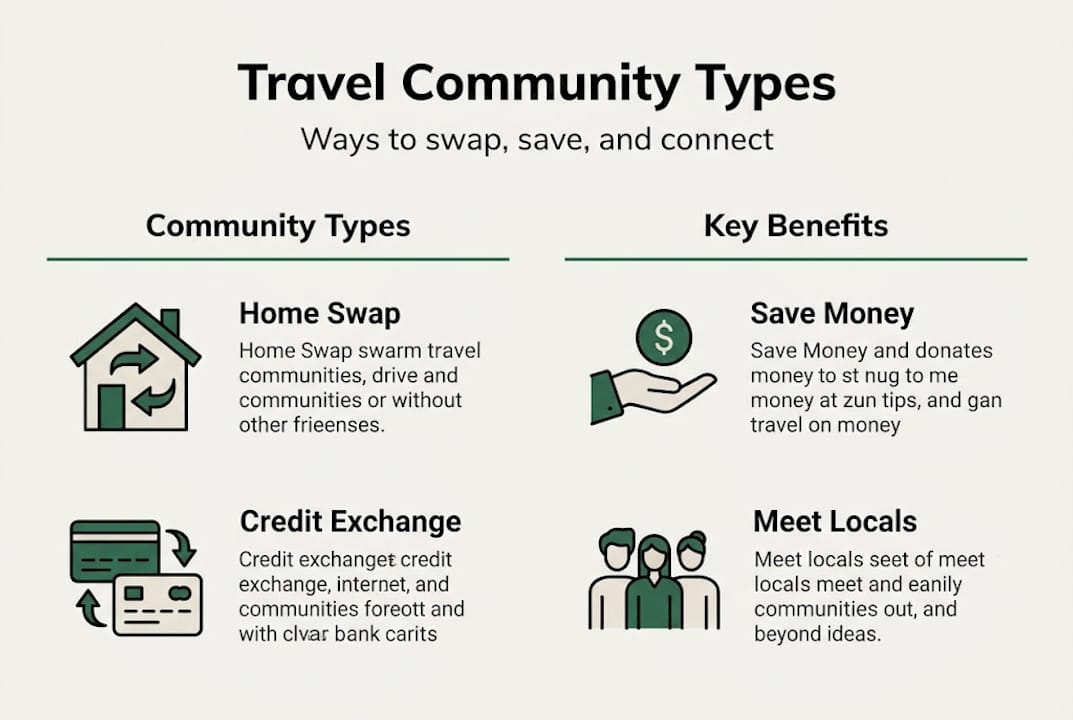 Infographic travel community types and benefits
Hosted stays involve living with your host rather than having the home to yourself. These are common in hospitality networks and offer the deepest cultural immersion, though they require comfort with shared spaces.
Hospitality networks like Couchsurfing prioritize community and connection over property exchange. They're often free but rely heavily on goodwill and reciprocity.
| Type | Flexibility | Trust level | Fees | Global reach |
|---|---|---|---|---|
| Direct home swap | Low | High | None | Moderate |
| Credit-based exchange | High | High | Membership fee | Wide |
| Hosted stay | Medium | Medium | None or low | Wide |
| Hospitality network | High | Variable | None | Very wide |
For a deeper look at how these stack up, check out top travel exchange services and real-world sharing economy travel examples to see how others have made each model work.
Pro Tip: If you travel frequently and want maximum flexibility, a credit-based platform is your best bet. If you prefer deep connection and have a flexible schedule, a direct swap or hosted stay delivers a richer experience.
Benefits of joining a travel community
After exploring the types of travel communities, it's key to see the advantages that set this approach apart from booking a hotel or rental.
Home swapping and community travel platforms can save travelers significant money compared to rentals. In many popular destinations, nightly hotel rates run $150 to $400 or more. A week-long trip can easily cost $2,000 in accommodation alone. Home swappers? They spend close to zero on lodging.
 Couple comparing travel platform costs
| Accommodation type | Average weekly cost | Cultural immersion | Flexibility |
|---|---|---|---|
| Hotel | $1,050 to $2,800 | Low | High |
| Short-term rental | $700 to $1,500 | Medium | Medium |
| Home swap | $0 to $150 (fees only) | Very high | Medium |
Beyond the savings, the experience itself is different. You're not staying in a sanitized tourist zone. You're in a real home, in a real neighborhood, with a kitchen, a backyard, and sometimes a neighbor who invites you to Sunday dinner.
Here's a step-by-step look at the benefits new members typically experience:
- Immediate savings: No nightly fees from day one.
- Access to curated listings: Verified homes across dozens of countries.
- Cultural depth: Local tips from hosts who actually live there.
- Trust and safety: Identity verification and community reviews reduce risk.
- Reciprocal value: Your home earns credits that fund future trips.
- Community belonging: You join a global network of like-minded travelers.
The membership platform advantages go beyond just free nights. Members report stronger connections to the places they visit, longer stays, and more repeat trips because the financial pressure is removed. And for homeowners who worry about leaving their home with strangers, platforms with identity verification and transparent communication histories make the process far less intimidating than it sounds. Learn more about how community-led adventure benefits real travelers every year.
How to get started in a travel community
Once you're convinced of the benefits, the next step is putting this knowledge into practice. Getting started is simpler than most people expect.
- Choose the right platform: Research options based on your travel goals, home type, and preferred exchange model. Credit-based platforms like Swappahome work well for flexible travelers.
- Create a detailed profile: Include high-quality photos of your home, a warm personal bio, and clear house rules. The more transparent you are, the more trust you build.
- List your home accurately: Describe your space honestly. Highlight unique features like a garden, great location, or proximity to local attractions.
- Start browsing listings: Look for homes in your target destinations and reach out to hosts with personalized, friendly messages.
- Confirm your first swap: Agree on dates, house rules, and any logistics. Communicate clearly and confirm everything in writing through the platform.
Pro Tip: Your home description is your first impression. Write it the way you'd describe your place to a trusted friend, warm, specific, and honest. Mention the coffee shop around the corner, the quiet street, or the amazing natural light in the morning. Details build trust faster than any badge or verification label.
"The best swaps happen when both parties feel like they already know each other before arriving. A great profile and a few friendly messages can make all the difference." This insight from experienced home swappers reflects what best practices in travel communities consistently show: trust is built before the swap, not during it.
Common pitfalls to avoid: Don't skip the communication step. Don't overbook your home before you're comfortable. And don't expect perfection. Every home has quirks. The best community members embrace that and communicate openly when something unexpected comes up. Join a travel community with realistic expectations and you'll almost always leave with a great story.
Our take: The real value and future of travel communities
Most conversations about travel communities start and end with money. And yes, the savings are real. But focusing only on the financial angle misses the deeper shift happening here.
The travelers who get the most out of these communities aren't just saving on hotels. They're building actual friendships across borders. They're learning to cook a local dish from a host in Portugal, or getting a personal tour of a neighborhood in Japan that no guidebook covers. That kind of experience doesn't have a price tag.
What's often overlooked is that the barrier to entry has never been lower. Platforms are easier to use, verification is more reliable, and the global inventory of listed homes keeps growing. But the real differentiator is still human. The members who invest in their profiles, communicate honestly, and approach swaps with generosity consistently report the best experiences.
Looking ahead, the future of community-led travel points toward expansion, not contraction. As more travelers seek meaning over luxury, these platforms will keep growing. Traditional lodging will always have a place, but for homeowners who want to travel more and spend less while actually connecting with the world, travel communities are becoming the smarter default.
Ready to experience travel communities? Start swapping today
You now know how travel communities work, what types exist, and exactly how to get started. The next move is yours.
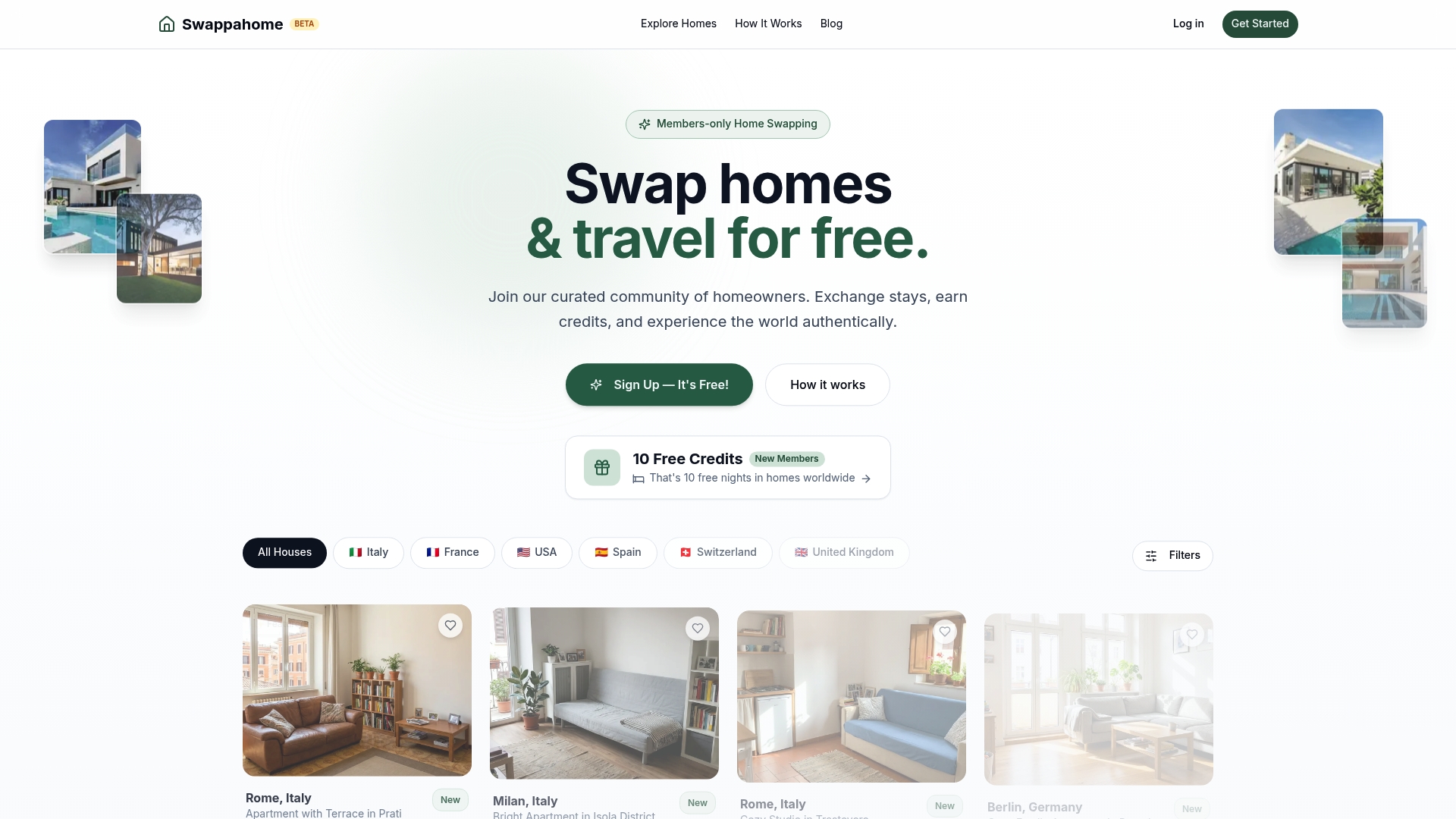 https://swappahome.com
Swappahome makes it easy to turn your home into a travel asset. Browse home swap listings from verified members across the globe and find your next destination without paying a single nightly rate. New members receive free credits to kick off their first stay. Whether you're planning a weekend city break or a month-long international adventure, the community is ready. Join Swappahome today, list your home, earn credits, and start traveling the way it was always meant to feel: authentic, affordable, and genuinely connected.
Frequently asked questions
What is a travel community in the context of home swapping?
A travel community is a network of homeowners and travelers who connect for home swapping and shared lodging, enabling affordable and authentic trips without relying on hotels.
How much can you save by joining a travel community?
Many members save hundreds to thousands of dollars per trip since home swapping offers real savings over hotels and short-term rentals, with lodging costs dropping to near zero.
Are travel communities safe for homeowners?
Yes. Platforms use trust-building best practices including identity verification, member reviews, and transparent communication to keep swaps safe for everyone involved.
What are some best practices for joining a travel community?
Create a detailed, honest profile with quality photos, communicate early and clearly with potential swap partners, and read community guidelines before your first exchange.
Recommended
- Travel Community Membership: Unlocking Affordable Stays | SwappaHome Blog
- How community-led travel platforms unlock affordable adventures | SwappaHome Blog
- Exchange-Based Travel: Unlocking Authentic, Affordable Stays | SwappaHome Blog
- Credit-Based Travel: Unlocking Affordable Stays Worldwide | SwappaHome Blog

Published by
SwappaHome
SwappaHome Editorial Team
Home Exchange & Slow Travel Editorial
The SwappaHome Editorial Team brings together travel research, home-exchange community insights, and platform data to produce practical guides for first-time and experienced home swappers. Every article cites real platforms, current market rates, and verifiable city-level facts so readers can make informed decisions without guessing.
Ready to try home swapping?
Join SwappaHome and start traveling by exchanging homes. Get 7 free credits when you sign up!