
Vacation bloggers: How to find, follow, and learn from the best travel creators

SwappaHome Editorial Team
Home Exchange & Slow Travel Editorial
Key Takeaways Vacation bloggers can turn a vague wish to travel into practical, personal guidance. The best ones help you decide where to go, what to do, and…
Key Takeaways
Vacation bloggers can turn a vague wish to travel into practical, personal guidance. The best ones help you decide where to go, what to do, and which details still need independent checking.
- Choose creators whose destinations, budgets, and travel habits resemble your own.
- Look for firsthand reporting, recent updates, and useful logistical details.
- Treat reviews and recommendations as informed starting points, not guarantees.
- Cross-check rules, prices, opening hours, and transport before booking.
- Build trust with readers through transparency, consistency, and genuine experience.
What vacation bloggers do and why their content matters
Vacation bloggers sit somewhere between personal diarists, researchers, and practical trip advisers. They may publish destination guides, hotel reviews, itineraries, photographs, and stories from the road. Their value comes from combining lived experience with the small details that are often difficult to find in a generic search result.
How vacation bloggers differ from travel influencers
A travel influencer often builds around a visual identity and a social audience, while a blogger usually creates longer, searchable resources on a website. The distinction is not absolute: one person can do both well. Still, a blog post tends to preserve context, alternatives, caveats, and planning information that a short social post cannot easily hold.
The types of trips and audiences they serve
Some creators focus on solo travel, family holidays, luxury stays, backpacking, road trips, food, accessibility, or remote work. Others write for a particular age group, region, or travel budget. For example, readers interested in women traveling alone may find useful perspective in solo travel guidance, while broader lists such as travel blog recommendations can help when you are still exploring your options.
Where bloggers add value beyond search engines
Search engines can locate facts, but they rarely explain how a place feels across several days or whether an itinerary is exhausting in practice. A good blogger connects scattered information into a sequence: where to stay, how to move around, what to skip, and what deserves extra time. That editorial judgment is especially useful when several destinations look equally appealing on paper.
How destination content earns reader trust
Trust grows when a writer separates observation from fact and admits the limits of personal experience. Clear dates, specific locations, original photographs, and corrections all help. Practical honesty matters more than an endless stream of praise; a thoughtful warning about crowds, steep streets, or a disappointing meal can be as useful as a recommendation.
How to find vacation bloggers who match your travel style
The biggest travel blog is not automatically the best fit. Start with your own priorities, then search for creators who repeatedly address them rather than publishing one occasional post on the subject. A useful match will make planning feel more like a conversation with an informed traveler than a generic brochure.
 Traveler researching destinations beside an open suitcase
Search by destination, trip type, and budget
Use searches that combine a place with the kind of trip you want: a low-cost family weekend, a slow road trip, or a solo city break. Add practical terms such as neighborhood, public transport, accessible, or three-day itinerary. Searching this way surfaces writers who understand the conditions behind your trip, not only the destination’s most photogenic landmarks.
Evaluate firsthand experience and publishing history
Look for evidence that the writer has actually visited the places described. A publishing history with several posts from the same region may reveal deeper familiarity than a single generic overview. Dates also matter: a creator who revisits destinations and updates older guides is usually more useful than one whose entire archive is frozen in time.
Look for practical details beyond inspirational photos
Beautiful images can spark an idea, but planning depends on details such as transfer times, reservation advice, neighborhood character, and realistic daily pacing. Read several paragraphs before deciding whether a post is useful. The strongest vacation bloggers explain how a recommendation worked for them and who might reasonably prefer another option.
Compare niche experts with broad travel sites
A niche expert may understand one travel style unusually well, while a broad site can help you compare destinations and gather a wider range of ideas. Neither approach is always superior. Use the broad source for discovery, then consult a specialist when the decision involves a meaningful constraint such as mobility, dietary needs, children, or a limited budget.
How to assess the quality of a vacation blog
Reading a blog critically does not make travel less fun; it keeps inspiration from quietly becoming a booking decision. A polished layout can hide old information, and a casual-looking site can contain careful reporting. Check the evidence behind a recommendation before allowing it to shape your route or spending.
Check whether recommendations are current
Look for publication and update dates, especially on posts about visas, transport, attractions, and accommodation. A place may have changed ownership, introduced timed entry, or lost a bus connection since the article was written. If the post has no clear date, treat time-sensitive details as leads to verify elsewhere.
Identify transparent sponsorships and affiliate links
Sponsored stays and affiliate links are not automatically signs of poor work. The useful question is whether the writer discloses them and maintains a recognizable editorial voice. Pay attention to language that explains what was provided, what was paid personally, and whether criticism appears alongside positive observations.
Assess the accuracy of costs, maps, and logistics
Prices should include a date or at least a clear qualification, since fares and exchange rates move quickly. Compare maps with official transport information and check whether listed attractions are actually near one another. A post becomes much more credible when its route, timing, and costs fit together rather than appearing as a collection of attractive stops.
Use reader comments and independent sources as cross-checks
Comments can reveal closures, construction, seasonal changes, and mistakes that the author has not yet corrected. They are not authoritative on their own, so compare them with official destination sites, transit providers, and accommodation pages. This two-minute check can prevent a long detour or an expensive misunderstanding.
The most useful content vacation bloggers publish
Not every post needs to become part of your research file. The most useful pieces answer a specific planning question and give enough context to apply the answer to your own trip. Save different formats for different stages, from daydreaming to final preparation.
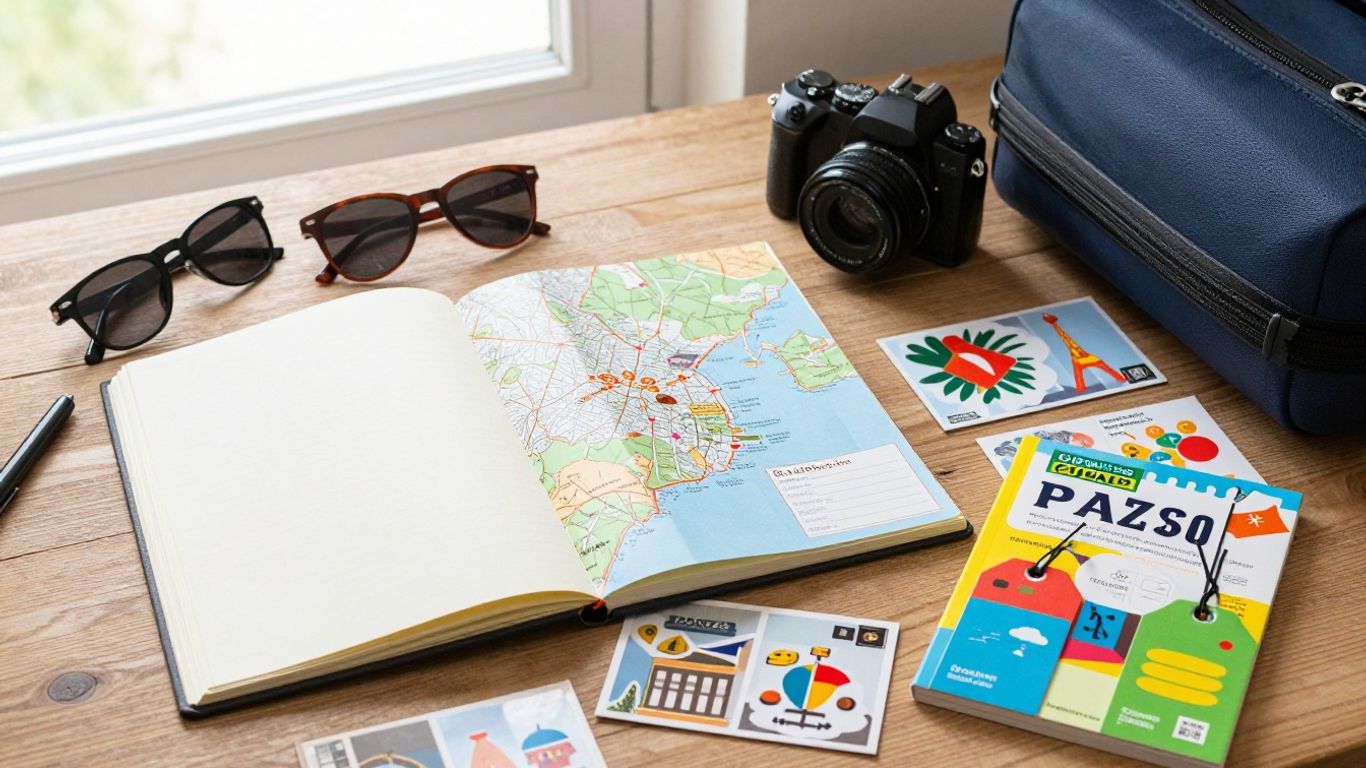 Colorful travel notebook with maps camera and postcards
Destination guides for planning an itinerary
A strong destination guide gives you a sense of scale, suggests areas to base yourself, and groups nearby experiences sensibly. It may offer sample itineraries, but you should treat them as frameworks rather than fixed schedules. The best guides explain what changes with season, trip length, and transport style.
Hotel and vacation rental reviews
Useful accommodation reviews describe the room, noise, location, access, shared spaces, and the experience of reaching nearby attractions. They also identify the kind of traveler who would enjoy the property. For home-based stays, details about kitchens, work areas, check-in, and neighborhood routines may matter more than a star rating.
Packing lists and trip preparation advice
Packing posts work best when they explain the conditions behind each item. A list for humid city walking should not look like a list for a cold-weather trek, even if both trips last a week. Use the advice as a prompt, then remove anything that does not fit your activities, luggage limits, or comfort preferences.
Food, activities, and local experience recommendations
Food and activity posts can reveal the rhythm of a neighborhood better than a standard attraction list. Look for descriptions of booking pressure, typical visit length, accessibility, and whether the experience is genuinely local or simply popular online. A recommendation becomes easier to trust when the writer explains why it suited the occasion.
Travel stories that reveal cultural context
Personal stories can show etiquette, family life, history, and social expectations that a checklist leaves out. They should not be mistaken for a complete portrait of a place, but they can encourage more considerate behavior. Read several perspectives, particularly when a story makes broad claims about local people or customs.
How to use vacation bloggers to plan a trip
A blog is most helpful when it becomes part of a process rather than the process itself. Begin with open-ended reading, then narrow your research as dates, budget, and interests become clearer. Keep the writer’s experience in view while making room for your own energy, preferences, and uncertainties.
Build an initial list of destinations and experiences
Save a small number of promising ideas instead of collecting every attractive post. For each one, record the destination, the reason it appeals, and the question it raises. This keeps inspiration separate from commitment and makes it easier to notice repeated suggestions across different sources.
Turn blog posts into a realistic itinerary
Translate recommendations into neighborhoods, travel times, opening windows, and rest periods. Three major activities in distant parts of a city may look manageable in a post but feel punishing in real life. Leave space for weather, meals, wandering, and the occasional plan that does not work.
Verify entry rules, opening hours, and transportation
Bloggers can point you toward the right authority, but rules and schedules belong to the relevant official sources. Check entry requirements for your nationality, attraction booking systems, seasonal closures, and last transport connections. Do this again shortly before departure if the information is especially important.
Adapt recommendations to your budget and travel pace
A creator’s “reasonable” hotel or restaurant may sit well above your own comfort level. Keep the underlying idea and change the execution: choose a different neighborhood, shorten a paid activity, or replace a private transfer with public transport. Advice becomes yours when it reflects your resources and the way you actually like to travel.
Save research in a practical planning system
A simple document or notes folder is enough if it is organized around decisions. Separate confirmed bookings from possibilities, and label information that still needs checking. A useful research file usually includes:
- links to official rules and reservations;
- saved addresses grouped by neighborhood;
- estimated transport times and costs;
- questions to confirm before departure.
This small structure prevents an enjoyable research session from becoming a pile of forgotten tabs. It also makes it easier to update the plan when a blogger’s recommendation no longer fits your dates.
How vacation bloggers build a sustainable online business
For creators, a vacation blog is both a publishing practice and a small media business. Growth rarely comes from one viral post alone; it usually depends on a useful archive, repeat readers, and several carefully managed income sources. The business side works best when it supports the editorial promise rather than replacing it.
Choosing a focused travel niche
A clear niche helps a new writer decide what to publish and helps readers know why to return. It might be defined by audience, destination, trip style, or a recurring problem. Focus does not mean refusing every adjacent topic; it means giving the main reader a consistent reason to pay attention.
Creating content for SEO and social platforms
Search-friendly posts answer recognizable questions with clear structure, while social content can offer a quick visual entry point. The two formats should support each other without becoming identical. A short video may attract attention, but a detailed article can carry the maps, alternatives, and explanations that help someone make a decision.
Earning through affiliates, partnerships, and products
Common revenue paths include affiliate commissions, sponsored campaigns, advertising, consulting, memberships, and digital products. Each option has different work and disclosure requirements. Creators should choose income sources that fit their audience and avoid recommending something solely because it pays.
Balancing monetization with audience trust
Readers notice when every paragraph leads toward a sale. A healthier approach keeps advice useful even when a reader does not click, book, or buy. Clear disclosures, honest limitations, and a willingness to mention alternatives make commercial content easier to evaluate.
Measuring performance with meaningful KPIs
Traffic is only one measure of a blog’s health. Creators may also watch returning readers, email sign-ups, time spent with planning resources, affiliate conversion quality, and the number of useful questions received. The right measures depend on the business model, but they should reflect reader value rather than vanity alone.
How to start a vacation blog that stands out
Starting a blog is easy; developing a reason for people to remember it takes longer. New creators do not need to cover the whole world or publish perfect work immediately. They need a clear promise, dependable habits, and enough curiosity to notice details others skip.
Define a clear audience and editorial angle
Write a one-sentence description of who you help and how. “Travel tips” is too broad to guide decisions, while a specific promise can shape destinations, tone, and formats. Revisit that promise after publishing a few pieces, because your actual strengths may be different from your initial idea.
Develop original stories and useful visuals
Originality can come from access, perspective, method, or careful observation. You do not need an unusual destination if you explain a familiar place with unusual clarity. Photographs, maps, short videos, and annotated routes should answer questions, not merely decorate the page.
Create a consistent publishing workflow
A manageable workflow might move from idea capture to research, firsthand reporting, drafting, editing, photography, and updating. Set a pace that leaves room for accuracy. A smaller archive of genuinely useful posts is more durable than a large archive produced too quickly to maintain.
Follow disclosure, copyright, and privacy requirements
Ask permission before using photographs, maps, or other protected material, and identify commercial relationships plainly. Be careful with identifiable images of other travelers and with private details about hosts or local residents. Requirements vary by location and business arrangement, so creators should seek appropriate legal or professional guidance when unsure.
Grow an engaged community over time
Community develops through replies, newsletters, thoughtful comment moderation, and consistent follow-through. Invite readers to share corrections and experiences without turning every discussion into content extraction. Over time, those conversations can reveal unanswered questions and help a blog become more useful to the people it serves.
Conclusion
The best vacation bloggers do more than collect beautiful places: they explain choices, share context, and make the practical parts of travel easier to imagine. Follow creators who match your style, test their advice against current sources, and use their work as a flexible foundation for your own trip. For writers, the same principle applies in reverse—useful, honest guidance is what gives a blog staying power.
Frequently Asked Questions
What is a vacation blogger?
A vacation blogger publishes personal and practical travel content, often including destination guides, itineraries, reviews, stories, and preparation advice. Their work may appear on a website, newsletter, or connected social channels.
How do I find vacation bloggers for a specific destination?
Search the destination alongside your trip type, budget, and interests. Then review several posts to confirm that the creator has firsthand experience and provides details relevant to your plans.
Are travel bloggers trustworthy?
Some are highly careful and transparent, while others may publish outdated or promotional material. Check dates, disclosures, firsthand evidence, and independent sources before relying on important recommendations.
Should I follow a niche travel blogger or a broad travel site?
Use broad sites for discovery and comparison, then turn to niche creators when you have a specific need. A specialist may offer deeper insight into a travel style, audience, or destination.
How current should travel blog information be?
Time-sensitive information should be checked close to your trip. Entry rules, prices, opening hours, transport schedules, and business details can change even when the original article remains online.
Can travel bloggers help me save money?
They can suggest lower-cost neighborhoods, transport options, free activities, and ways to prioritize spending. Their estimates are starting points, so compare current prices and adapt them to your own dates.
How can a new vacation blogger build an audience?
Choose a clear audience, publish genuinely useful material, maintain a consistent workflow, and respond thoughtfully to readers. Trust usually grows through repeated helpful interactions rather than one isolated post.

Published by
SwappaHome
SwappaHome Editorial Team
Home Exchange & Slow Travel Editorial
The SwappaHome Editorial Team brings together travel research, home-exchange community insights, and platform data to produce practical guides for first-time and experienced home swappers. Every article cites real platforms, current market rates, and verifiable city-level facts so readers can make informed decisions without guessing.
Ready to try home swapping?
Join SwappaHome and start traveling by exchanging homes. Get 7 free credits when you sign up!