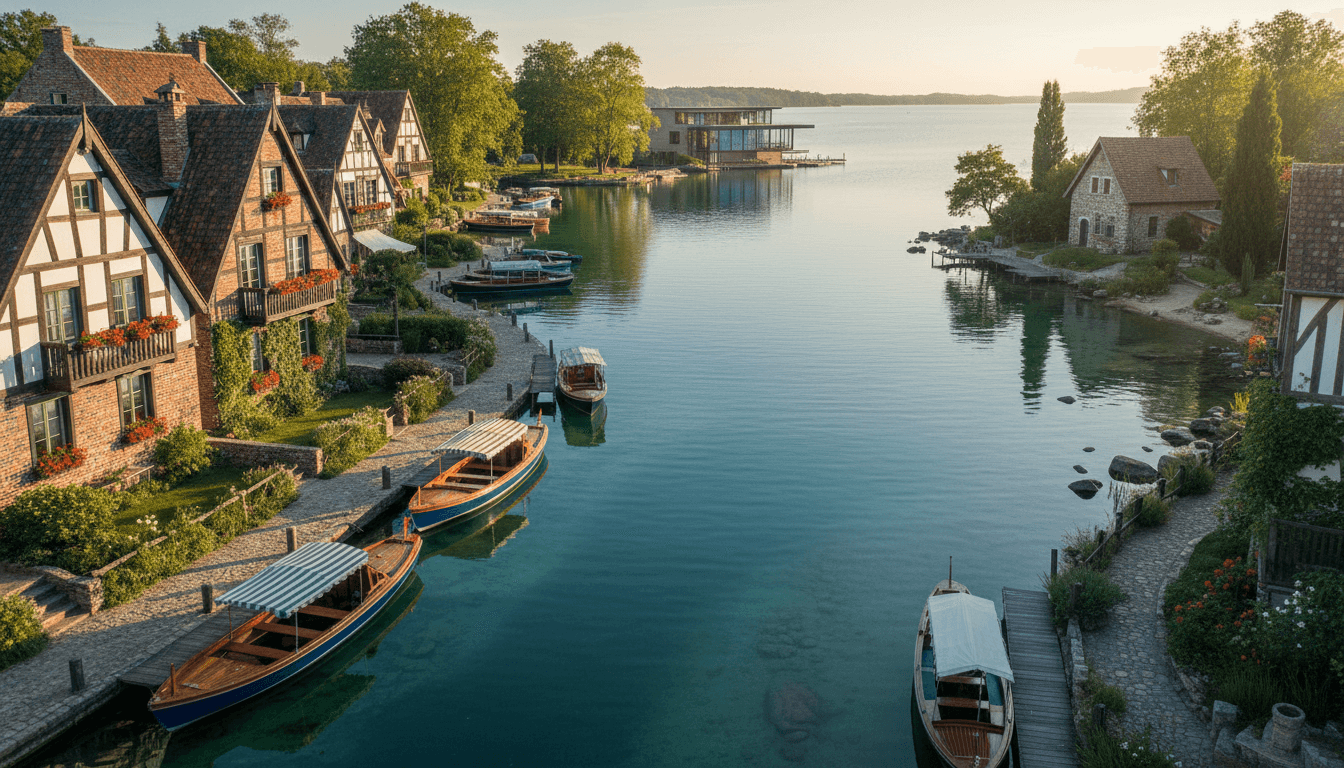
Waterfront Properties for Home Exchange: Lake Houses, Canal Boats, and Coastal Escapes

SwappaHome Editorial Team
Home Exchange & Slow Travel Editorial
Discover how to swap your home for stunning lake houses, canal boats, and beachfront cottages. Your guide to the best waterfront property exchanges worldwide.
I woke up to the sound of water lapping against the hull, and for a solid thirty seconds, I had absolutely no idea where I was. Then it came back to me—I was on a narrowboat in the English Midlands, somewhere between Birmingham and Oxford, and the gentle rocking that had disoriented me was actually the most peaceful alarm clock I'd ever experienced.
That was three years ago. Waterfront properties for home exchange have been my obsession ever since.
There's something about waking up next to water—whether it's a glassy mountain lake, a bustling Amsterdam canal, or the endless blue of the Mediterranean—that transforms a trip from "vacation" into something almost spiritual. And here's what most people don't realize: waterfront home exchanges aren't just for the wealthy or the lucky. They're surprisingly accessible if you know where to look, what to offer, and how to make your request stand out.
I've stayed in everything from a modest fishing cabin on Lake Superior to a converted barge in Paris. Let me share exactly how you can do the same.
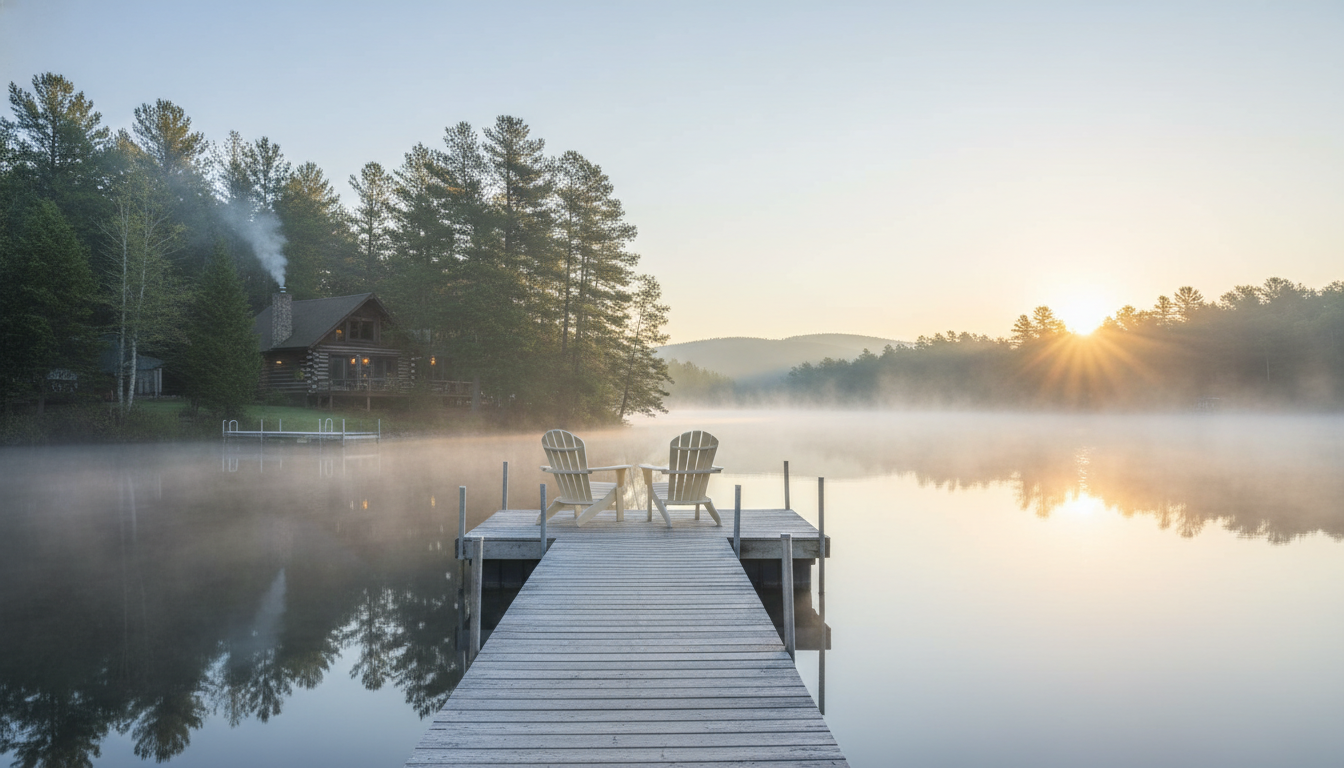 Morning mist rising over a serene lake with a wooden dock and Adirondack chairs, a cozy cabin visibl
Why Waterfront Properties Are the Ultimate Home Exchange
I'll be honest—I used to think waterfront stays were out of reach. Hotels on the water? Easily $400-800 per night for anything decent. Vacation rentals? Don't even get me started on peak season pricing for a lake house in Tahoe. We're talking $500-1,200 nightly.
Then I discovered that homeowners with waterfront properties are often the most enthusiastic home exchangers.
Think about it: they've invested in a slice of paradise, but they can't be there year-round. Many of them are itching to travel but don't want their property sitting empty. That's where you come in.
The economics are almost absurdly good. On SwappaHome, every stay costs 1 credit per night—whether you're booking a studio apartment in Cleveland or a lakefront estate in Como. I've used my 10 starter credits for a week-long canal boat stay that would have cost me $2,100 to rent. The math doesn't lie.
But beyond the savings, there's something else. Waterfront homeowners tend to be a particular breed of host. They're often outdoorsy, detail-oriented, and genuinely proud of their properties. I've received handwritten guides to the best fishing spots, detailed instructions on how to operate a vintage wooden boat, and once, a freezer full of homemade soup "for those chilly mornings on the dock."
Lake Houses for Exchange: Where to Find Them
Lake houses are probably the most sought-after waterfront properties, and for good reason. They offer that perfect blend of nature immersion and creature comforts—you can kayak at sunrise and still have Wi-Fi for your evening Netflix binge.
North American Lake House Hotspots
The Great Lakes region is absolutely stacked with exchange opportunities. I've personally stayed at properties on Lake Michigan near Traverse City, Michigan—cherry country, incredibly underrated—and Lake Superior in the Apostle Islands area of Wisconsin, which felt like stepping into a Bob Ross painting.
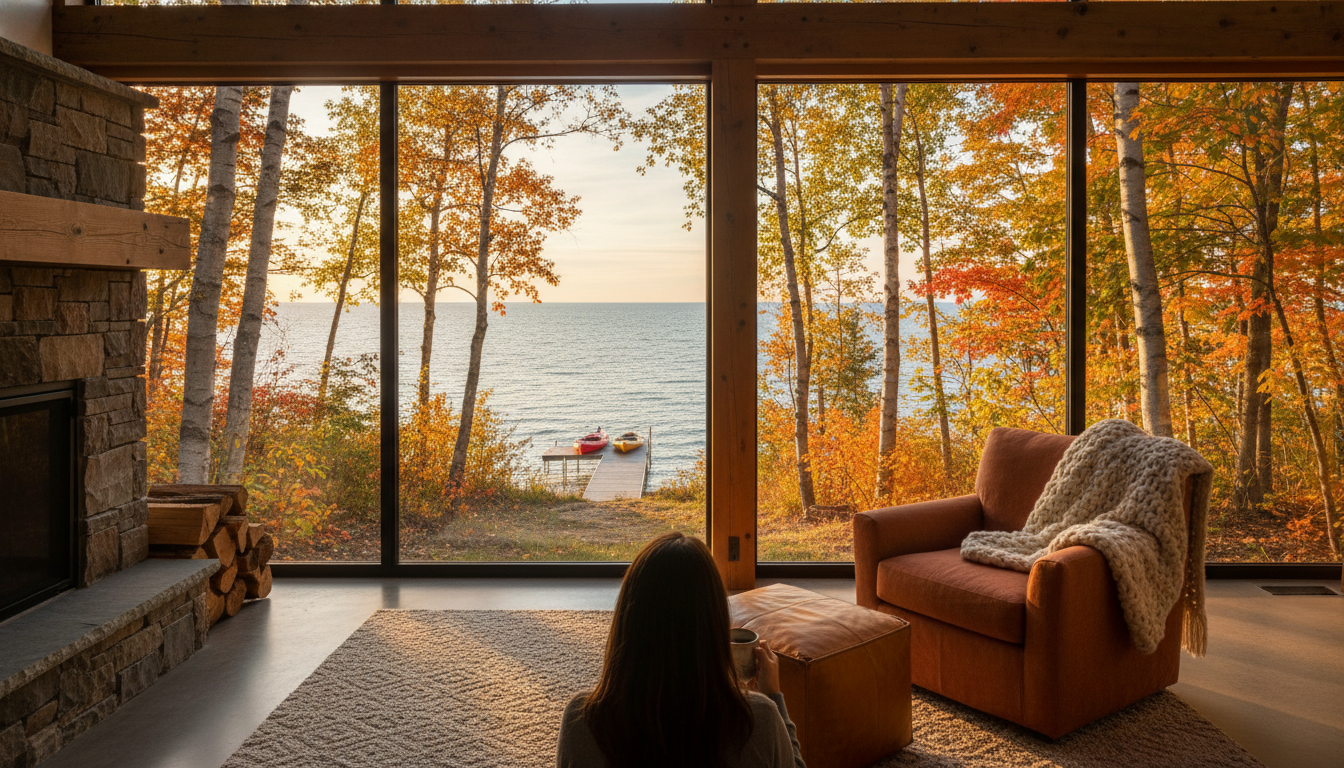 A rustic-modern lake house with floor-to-ceiling windows overlooking Lake Michigan, private dock wit
The Finger Lakes in New York are another goldmine. Homeowners there often have properties they use for summer weekends but are happy to exchange during shoulder seasons. I connected with a couple from Seneca Lake who were desperate to visit San Francisco in October—my timing couldn't have been better.
Here's what you're saving: Lake Tahoe cabin rentals run $350-800 per night in peak season. Finger Lakes lakefront properties go for $200-450 nightly. Northern Michigan waterfront? $175-400 per night. With home exchange? One credit. Same as any other night.
European Lake Properties Worth Pursuing
European lakes have a completely different vibe—often more historic, always more walkable to villages and cafés. Lake Como in Italy is the obvious dream (George Clooney's neighborhood, enough said), but the competition for exchanges there is fierce.
My insider tip? Look at the "second tier" lakes that locals actually prefer.
Lake Orta, Italy is Como's quieter neighbor, with medieval villages and a fraction of the tourists. I found a stone cottage there through a SwappaHome member who wanted to experience "real American suburbs." She stayed at my friend's place in Phoenix and loved it. Weirdly.
Lake Bled, Slovenia—that famous island church you've seen on Instagram? You can wake up to that view. Slovenian homeowners are incredibly active in the exchange community, and many speak excellent English.
Lake Annecy, France is often called Europe's cleanest lake. The water is actually drinkable. Properties here range from Alpine chalets to Belle Époque apartments in the old town.
Swedish Lake Country, specifically the Dalarna and Småland regions, deserves more attention. Sweden has "allemansrätten" (freedom to roam), which means your lake house exchange often comes with access to miles of hiking, foraging rights, and that famous Nordic light.
Canal Boats and Houseboats: A Different Kind of Waterfront Exchange
Okay, this is where things get interesting. Canal boat exchanges are their own category entirely, and honestly? They've ruined regular accommodations for me.
The UK Narrowboat Experience
British narrowboats are essentially floating tiny homes, typically 6-7 feet wide and anywhere from 30-70 feet long. They navigate the historic canal network that crisscrosses England, Wales, and Scotland—over 2,000 miles of waterways built during the Industrial Revolution.
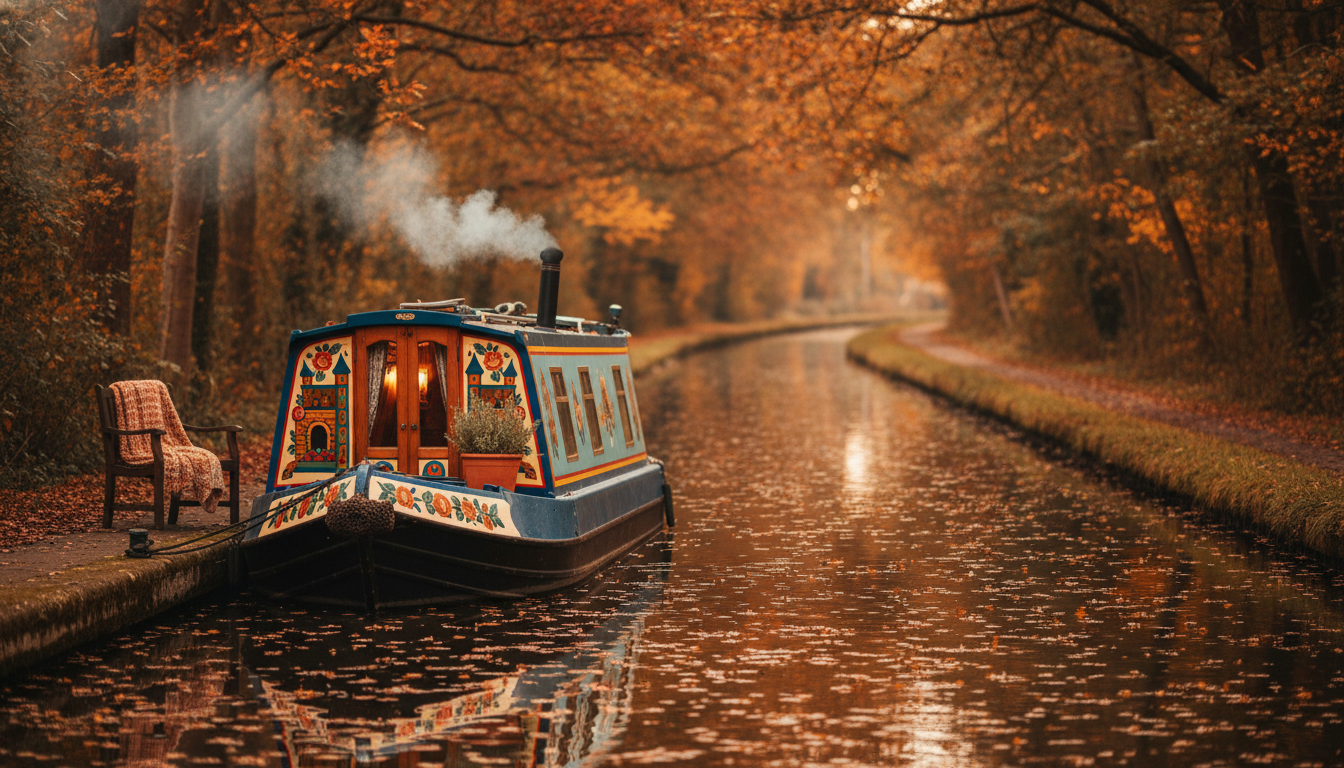 A colorfully painted British narrowboat moored along a tree-lined canal, smoke rising from the chimn
My week on a narrowboat near Stratford-upon-Avon remains one of my top five travel experiences ever. The owner, a retired teacher named Margaret, had converted it herself over fifteen years. Every inch was thoughtfully designed—fold-down tables, hidden storage, a wood-burning stove that made the whole boat smell like a cabin.
So here's what you need to know about narrowboat exchanges:
Most are stationary exchanges, meaning the boat stays moored at one location. You're essentially staying in a floating apartment. This is actually ideal for first-timers.
Some include cruising rights. If you have boating experience (or are willing to learn), some owners will let you navigate the canals yourself. You'll need a basic tutorial on locks, bridges, and canal etiquette. It's not difficult, but it requires attention.
Winter is cozy, not cold. Modern narrowboats have excellent heating. I stayed in February and was toasty. Just bring slippers—the metal hull gets cold underfoot.
Location matters enormously. A boat moored in central London (Little Venice, Paddington Basin) offers a completely different experience than one in the Cotswolds countryside. Both are valid; just know what you want.
Amsterdam and Dutch Canal Living
Dutch houseboats—woonboten—are larger and more house-like than British narrowboats. Many are permanently moored and have been converted into genuine homes with multiple bedrooms, full kitchens, and sometimes even gardens on the roof.
Amsterdam's canal houseboats are legendary. And yes—they're available for exchange.
The trick is timing. Dutch homeowners often travel during school holidays (late July, August, and around Christmas), so that's when you'll see the most listings.
I stayed on a houseboat in Amsterdam's Jordaan neighborhood for five nights last spring. The owner, Pieter, had a three-bedroom boat that his family had lived on for two generations. Waking up to see cyclists streaming past the windows, ducks paddling by at eye level, church bells echoing across the water—it was like living inside a Vermeer painting, except with better coffee.
A few practical notes for Dutch houseboat exchanges: expect to pay for utilities (electricity, water, pump-out) separately, usually €20-40 for a week. The boats rock slightly when large boats pass—not everyone's cup of tea. Parking is typically impossible, so plan to use bikes or transit. And many boats are in residential neighborhoods, not tourist zones—which is actually a feature, not a bug.
French Canal Barges: The Luxury Option
French péniches (converted cargo barges) are the Rolls-Royces of canal living. These are often 80-100 feet long, with proper bedrooms, living rooms, and sometimes decks large enough for dinner parties.
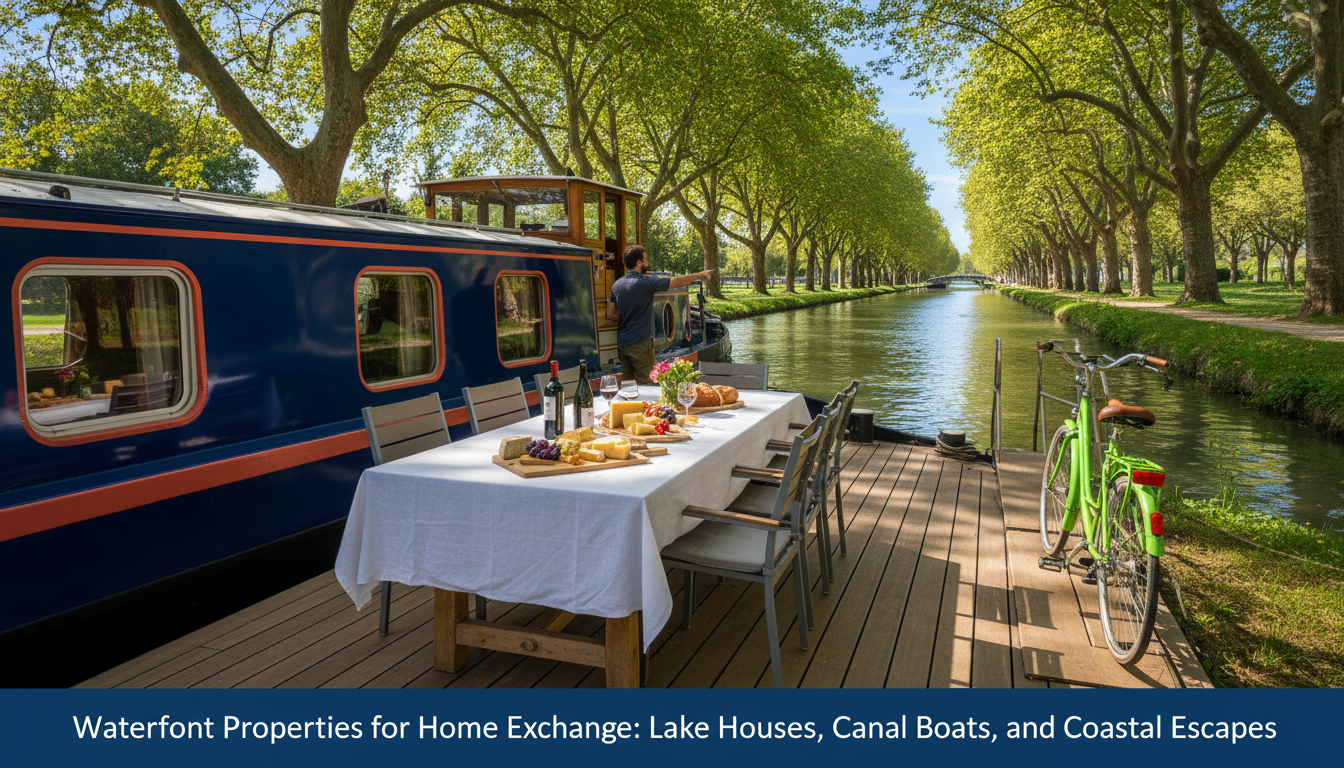 An elegant French pniche barge moored along the Canal du Midi, outdoor dining table set with wine an
The Canal du Midi in southern France is the most famous route, but I've also heard incredible things about the Burgundy canals. Wine country cruising—need I say more?
French barge owners tend to be either retirees living their dream or investors who rent their boats commercially part of the year. The latter group is often very open to exchanges because it gives them travel flexibility without losing income.
Coastal and Beachfront Properties: The Ocean Alternative
Not all waterfront properties involve fresh water. Coastal exchanges deserve their own section because they come with unique considerations.
Beach House Exchange Realities
Beach houses are the most competitive category in home exchange. Everyone wants them, especially during summer.
But here's what I've learned: the shoulder seasons are where the magic happens.
September on Cape Cod. October in the Outer Banks. November in Portugal's Algarve. The crowds vanish, the prices drop, and homeowners are often desperate to get some use out of their properties before winter.
I did a two-week exchange in a Malibu beach cottage last November. The owner, a screenwriter who was tired of LA, wanted to experience "seasons" in New England. We swapped, and I spent fourteen days watching sunsets over the Pacific from a deck that would have cost me $600 per night to rent.
Mediterranean Coastal Exchanges
The Mediterranean coast offers everything from Greek island cottages to Spanish Costa Brava apartments to Croatian seafront villas. The key is understanding the rhythm of each region.
In Greece, island homeowners often leave for Athens in winter. September-October and April-May are your best windows for exchanges.
Spain's Costa Brava and Costa Blanca have huge expat communities, many of whom are active home exchangers. English is widely spoken.
Croatia's Dalmatian coast properties have exploded in popularity. The town of Rovinj in Istria has become a particular hotspot for exchange-minded homeowners.
And Portugal—the Algarve is obvious, but don't sleep on the Silver Coast (Costa de Prata) north of Lisbon. Fewer tourists, dramatic cliffs, excellent surfing.
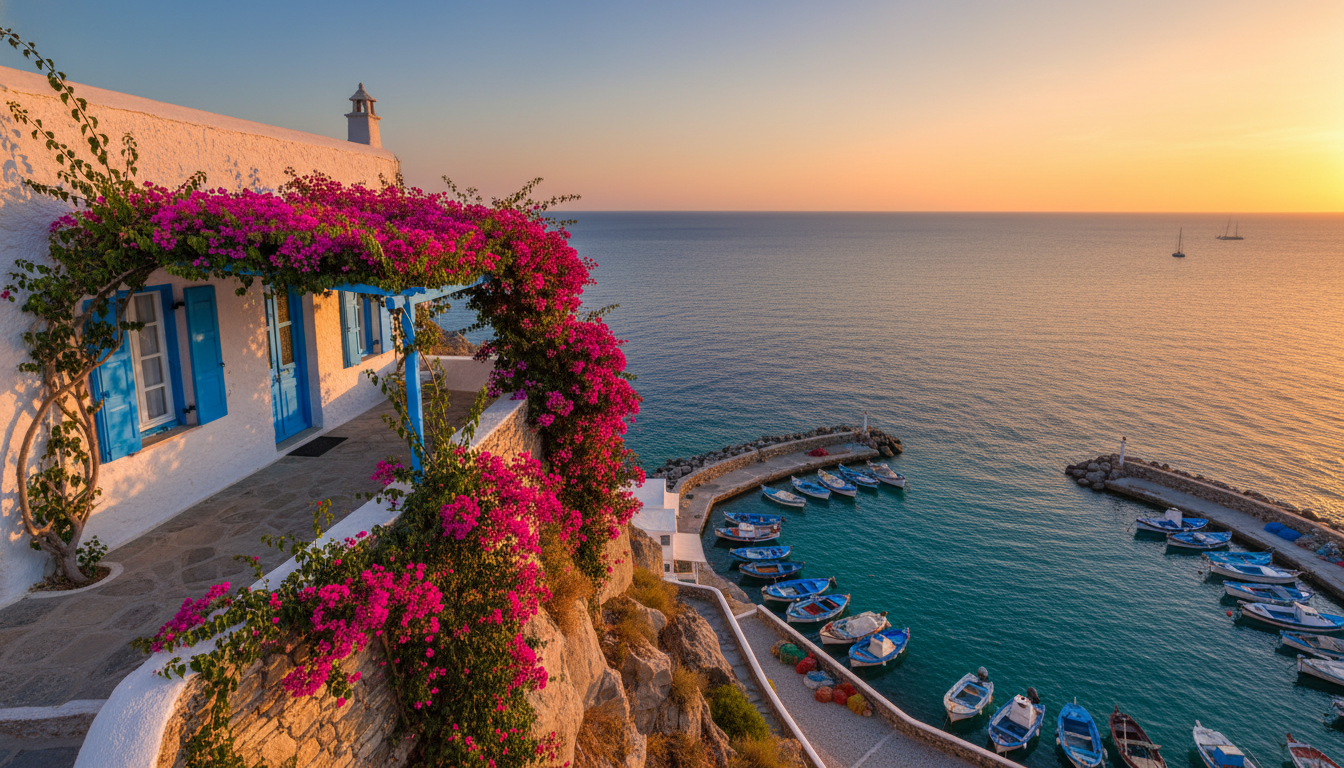 A whitewashed Greek cottage with blue shutters perched on a cliff overlooking the Aegean Sea, bougai
How to Make Your Waterfront Exchange Request Stand Out
Here's where I get tactical. Waterfront property owners receive more exchange requests than average. You need to differentiate yourself.
Lead with Specificity
Don't send a generic "I'd love to stay at your lake house!" message. Instead, mention something specific about their property or location:
"I noticed your cabin is near the Boundary Waters—I've been wanting to paddle the BWCA since reading 'A Sand County Almanac' in college. Would you be open to an exchange the week of September 15th?"
This shows you've done research, have genuine interest, and aren't just mass-messaging every waterfront listing.
Offer Flexibility on Dates
Waterfront homeowners often have specific weeks they want to travel. If you can be flexible, say so explicitly: "I can work with any two-week window between June and September—whatever works best for your travel plans."
Highlight Your Property's Unique Appeal
Even if you don't have a waterfront home yourself, you have something to offer. Urban apartments appeal to rural homeowners craving city life. Suburban houses with yards attract Europeans curious about American neighborhoods. A condo near a national park? Gold.
I once secured a lakefront exchange by emphasizing that my San Francisco apartment was walking distance from Chinatown dim sum and Golden Gate Park. The lake house owner had never been to California and was sold immediately.
Build Your Profile Credibility
Before requesting waterfront properties, make sure your SwappaHome profile is complete: verification done (this matters enormously to waterfront owners), high-quality photos of your space, a detailed description of your neighborhood and nearby attractions, and at least 2-3 reviews from previous exchanges if possible.
Waterfront property owners are protective of their investments. They want to see that you're a responsible, communicative person who will treat their space with care.
Practical Considerations for Waterfront Stays
Let me share some lessons I've learned the hard way.
Insurance and Liability
This is important: SwappaHome connects you with hosts, but it doesn't provide insurance coverage. For waterfront properties—especially boats—you'll want to consider your own travel insurance that covers personal liability, damage to personal belongings, and trip cancellation.
Many homeowners also carry their own property insurance, but don't assume. Have an honest conversation before confirming any exchange.
Boat-Specific Preparations
If you're staying on a canal boat or houseboat, ask about the toilet situation. Pump-out vs. cassette vs. composting—yes, this matters. Understand the water tank capacity and how to refill. Know where the fire extinguisher and life jackets are located. Get emergency contact numbers for the marina or mooring site.
Lake House Essentials
For lake houses, clarify whether the dock is private or shared, whether watercraft like kayaks, canoes, or paddleboards are included, what the water quality is for swimming, and whether there are any HOA rules about noise, guests, or dock usage.
Making the Most of Your Waterfront Exchange
Once you've secured your waterfront stay, here's how to maximize the experience.
Embrace the Pace
Waterfront living moves slower. This isn't a bug—it's the entire point.
Resist the urge to fill every day with activities. Some of my best memories from lake house stays involve doing absolutely nothing: reading on the dock, watching storms roll in across the water, listening to loons call at dusk.
Connect with the Local Community
Waterfront communities are often tight-knit. Introduce yourself to neighbors, ask for recommendations at the local bait shop or marina, attend the farmers market. You'll get insider tips that no guidebook could provide.
Document Responsibly
Yes, take photos—these places are photogenic for a reason. But also put the phone down sometimes. I have a personal rule: no screens before 9 AM on waterfront stays. Those early morning hours on the water are too precious to spend scrolling.
Leave It Better
This applies to all home exchanges, but especially waterfront properties. Clean thoroughly, replace anything you used, and leave a small gift if you can. I always leave a bottle of local wine or a handwritten note. These gestures build the kind of reputation that leads to more waterfront invitations in the future.
The Waterfront Exchange Community
Here's something I've noticed over years of waterfront exchanges: the people who own these properties tend to be kindred spirits. They value experiences over things, nature over nightlife, authenticity over luxury.
When you exchange with them, you're not just getting a place to sleep—you're joining a loose community of people who've figured out that the best things in life really can be free. Or at least, cost only one credit per night.
My narrowboat host Margaret and I still exchange Christmas cards. The couple from Seneca Lake visited me in San Francisco two years later, and we spent a weekend exploring Muir Woods together. The Malibu screenwriter and I grab coffee whenever I'm in LA.
These connections are the hidden value of home exchange that no hotel could ever replicate.
Getting Started with Waterfront Property Exchanges
If you're new to home exchange and waterfront properties feel intimidating, start small. A lakeside cabin for a long weekend is less commitment than a two-week canal boat adventure. Build your exchange history, collect reviews, and work your way up to the more competitive listings.
SwappaHome's credit system makes this progression natural. Those 10 starter credits? Use a few for shorter stays, prove yourself as a great guest, and then go after your dream waterfront property with a track record that speaks for itself.
The water is waiting. And trust me—once you've had your morning coffee while watching the sun rise over a lake, or fallen asleep to the gentle rocking of a canal boat, you'll never look at travel the same way again.
Frequently Asked Questions
Are waterfront home exchanges safe for first-time swappers?
Absolutely. Start with a stationary property like a lake house or moored houseboat rather than a cruising boat. Complete your profile verification, communicate thoroughly with your host about property details and expectations, and consider getting your own travel insurance for peace of mind. Most waterfront homeowners are experienced exchangers who provide detailed guides for their properties.
How much can I save with waterfront property home exchange versus rentals?
The savings are substantial. Lake house rentals typically run $200-800 per night depending on location and season. Canal boats rent for $150-400 nightly. Beach houses can exceed $500 per night in peak season. With SwappaHome, every stay costs just 1 credit per night regardless of property type, potentially saving you $1,400-5,600 on a two-week waterfront vacation.
What's the best time of year to find waterfront property exchanges?
Shoulder seasons offer the best availability. For lake houses, target May-June or September-October. European coastal properties open up in April-May and September-November. Canal boats in the UK are available year-round, though spring and fall offer the most comfortable cruising weather. Avoid peak summer months when homeowners typically use their properties themselves.
Do I need boating experience to stay on a canal boat or houseboat?
Not for most exchanges. The majority of canal boat and houseboat exchanges are stationary—the vessel stays moored and functions as a floating apartment. If an exchange includes cruising privileges, owners typically require some boating background or will provide training. Always clarify the arrangement before confirming your exchange.
Can I exchange my city apartment for a waterfront property?
Yes—this is actually one of the most common exchange patterns. Waterfront property owners often crave urban experiences: access to restaurants, museums, and city life they don't get at their lake house or boat. Highlight your neighborhood's unique attractions, nearby public transit, and walkability. Many successful waterfront exchanges pair rural retreats with urban apartments.

Published by
SwappaHome
SwappaHome Editorial Team
Home Exchange & Slow Travel Editorial
The SwappaHome Editorial Team brings together travel research, home-exchange community insights, and platform data to produce practical guides for first-time and experienced home swappers. Every article cites real platforms, current market rates, and verifiable city-level facts so readers can make informed decisions without guessing.
Ready to try home swapping?
Join SwappaHome and start traveling by exchanging homes. Get 7 free credits when you sign up!
Related articles
Bachelor and Bachelorette Parties in Singapore: The Complete Home Swap Group Guide for 2026
Planning a bachelor or bachelorette party in Singapore? Discover how home swapping lets groups of 6-12 stay together in luxury condos, saving thousands while partying in Marina Bay.

Cycling in Lisbon: 7 Home Swap Bike Tour Itineraries for Every Rider
Discover the best cycling routes in Lisbon with these home swap bike tour itineraries—from waterfront paths to hilltop adventures, all starting from your borrowed home.

Graduation Trip to Barcelona: How Home Swapping Gives New Graduates the Ultimate Celebration
Planning a graduation trip to Barcelona? Discover how home swapping lets new graduates explore Spain's most vibrant city without the hostel crowds or hotel costs.