What Is Experiential Travel—Why It Matters for Homeowners

SwappaHome Editorial Team
Home Exchange & Slow Travel Editorial
What Is Experiential Travel—Why It Matters for Homeowners !Couple engaging with neighbor in local community Every traveler faces a crossroads...
What Is Experiential Travel—Why It Matters for Homeowners
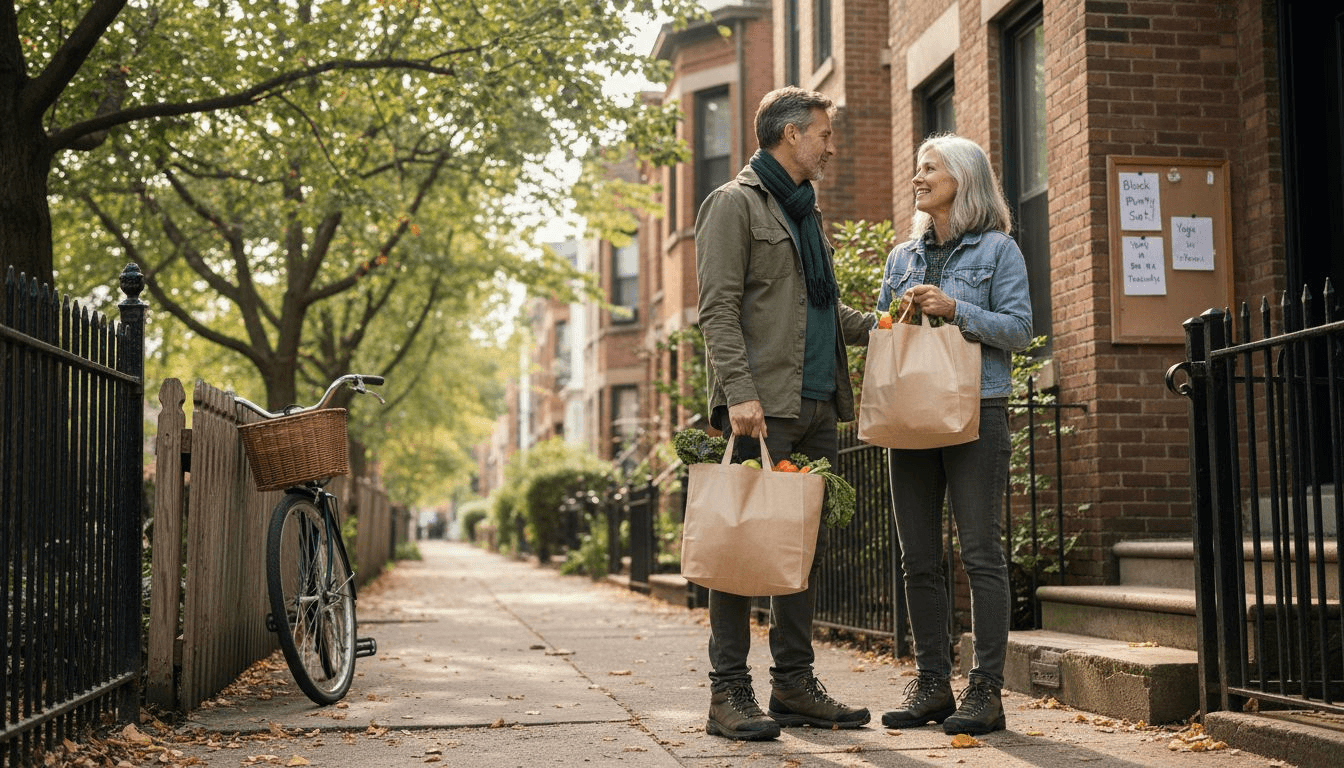
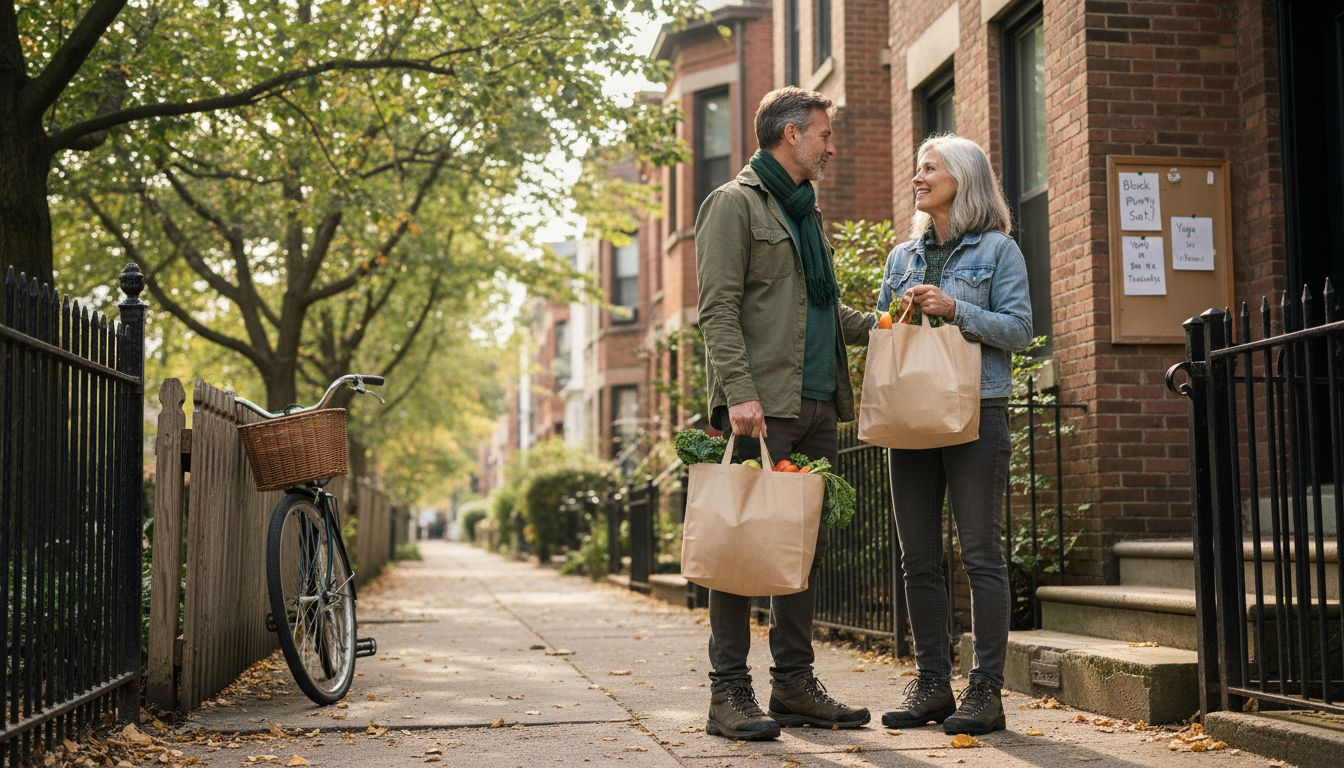 Couple engaging with neighbor in local community
Every traveler faces a crossroads choosing between routine sightseeing and something truly memorable. For budget-conscious homeowners in Europe or North America, meaningful journeys do not have to mean expensive hotels or cookie-cutter tours. Experiential travel stands out for its focus on authentic engagement, where active participation and real cultural connections take center stage. This guide brings clear steps and fresh insights for making cultural exchange—and serious savings—a central part of your next adventure.
Table of Contents
- Defining Experiential Travel And Core Concepts
- Major Types And Emerging Trends In 2026
- Key Characteristics And How It Works
- How Home Swapping Enables Authentic Travel
- Risks, Costs, And Common Mistakes To Avoid
Key Takeaways
| Point | Details |
|---|---|
| Experiential Travel | Focuses on active participation and meaningful connections with locals instead of passive observation. |
| Cost-Effective Approach | Often more affordable than traditional tourism by minimizing accommodation and tourist markups. |
| Home Swapping Benefits | Facilitates authentic immersion in local culture, enabling deeper engagement and relationships in communities. |
| Flexible Itineraries | Encourages spontaneous exploration and personalized experiences tailored to individual interests. |
Defining Experiential Travel and Core Concepts
Experiential travel puts you at the center of your journey, not as a passive observer watching from a tour bus window. Instead of collecting passport stamps and hotel check-ins, you're actively participating in the destination—cooking meals with locals, learning traditional crafts, or exploring neighborhoods on foot with residents who actually live there.
The core difference from traditional tourism is simple: authentic engagement replaces typical sightseeing. You're not just seeing a place; you're experiencing how people actually live there. This shift happens because modern travelers, especially budget-conscious homeowners, crave deeper connections and meaningful memories over superficial tourist attractions.
What Makes Experiential Travel Different
Traditional tourism follows a predictable pattern. You book a hotel, visit famous landmarks, eat at restaurants marked "Tourist Friendly," and move on. Experiential travel flips this approach entirely.
Here's what sets it apart:
- Active participation rather than passive observation
- Direct interaction with locals instead of professional tour guides
- Immersion in daily culture rather than curated tourist experiences
- Personalized discoveries aligned with your actual interests
- Sustainable impact that benefits the local community, not corporate chains
Deep cultural connection and interaction with locals now motivate travel decisions for millions of people globally. This isn't just a trend—it's how travelers actually want to spend their time and money.
Here's how experiential travel compares to traditional tourism:
| Aspect | Experiential Travel | Traditional Tourism |
|---|---|---|
| Engagement Level | Active participation | Passive observation |
| Local Interaction | Direct with residents | Mostly with tour operators |
| Cost Structure | Lower, fewer markups | Higher due to hotels/tours |
| Memory Creation | Personal stories and skills | Photos and sightseeing highlights |
| Flexibility | High, adjusted on the ground | Restricted by fixed schedules |
Why This Matters for Your Budget and Lifestyle
Here's the practical reality: experiential travel often costs less than conventional vacations. You skip expensive hotels, skip tour operators, and skip restaurants designed purely for tourists. Instead, you stay in real homes, eat where locals eat, and use community recommendations instead of guidebooks.
For homeowners aged 30–50, this model transforms travel from a luxury expense into an accessible lifestyle choice. You're not cutting corners; you're simply avoiding unnecessary markups.
Experiential travel reduces costs while multiplying the value of every day spent in a destination.
When you engage authentically with a place, those experiences stick with you. They become stories you actually tell people, not just photos you scroll past. That's the difference between a vacation and a memory.
The Connection to Home Swapping
Home swapping aligns perfectly with experiential travel philosophy. By exchanging your home with another homeowner, you're not just saving money on accommodation—you're gaining automatic local credibility and insight.
Living in someone's actual house rather than a hotel puts you naturally into neighborhood rhythms. Neighbors become familiar faces. Local shops near your swapped home become regular stops. You experience the destination as a resident, not as a visitor.
 Travelers sharing coffee in real home setting
Examples from the sharing economy demonstrate how authentic adventures emerge through travel community participation. When you swap homes, you're joining a network of people committed to genuine connection rather than transactional tourism.
The Transformation Element
Meaningful engagement through active participation often leads to personal growth. Travelers report changed perspectives, new skills learned, and lasting friendships formed. You return home different—not because you checked boxes on an itinerary, but because you genuinely experienced a different way of living.
This transformative aspect appeals strongly to homeowners seeking more from travel than entertainment. You're investing in understanding the world differently, one authentic experience at a time.
Pro tip: Start with neighborhoods near your potential swap location; research local community centers, farmers markets, and non-tourist restaurants to identify where authentic daily life happens before you arrive.
Major Types and Emerging Trends in 2026
Experiential travel is fragmenting into specialized categories that appeal to different interests and travel styles. Rather than one-size-fits-all vacations, 2026 travelers are choosing experiences aligned with their passions—whether that's wellness, adventure, or cultural immersion.
Understanding these types helps you identify what resonates with your lifestyle and budget. Each category offers unique ways to connect authentically with destinations while keeping costs reasonable.
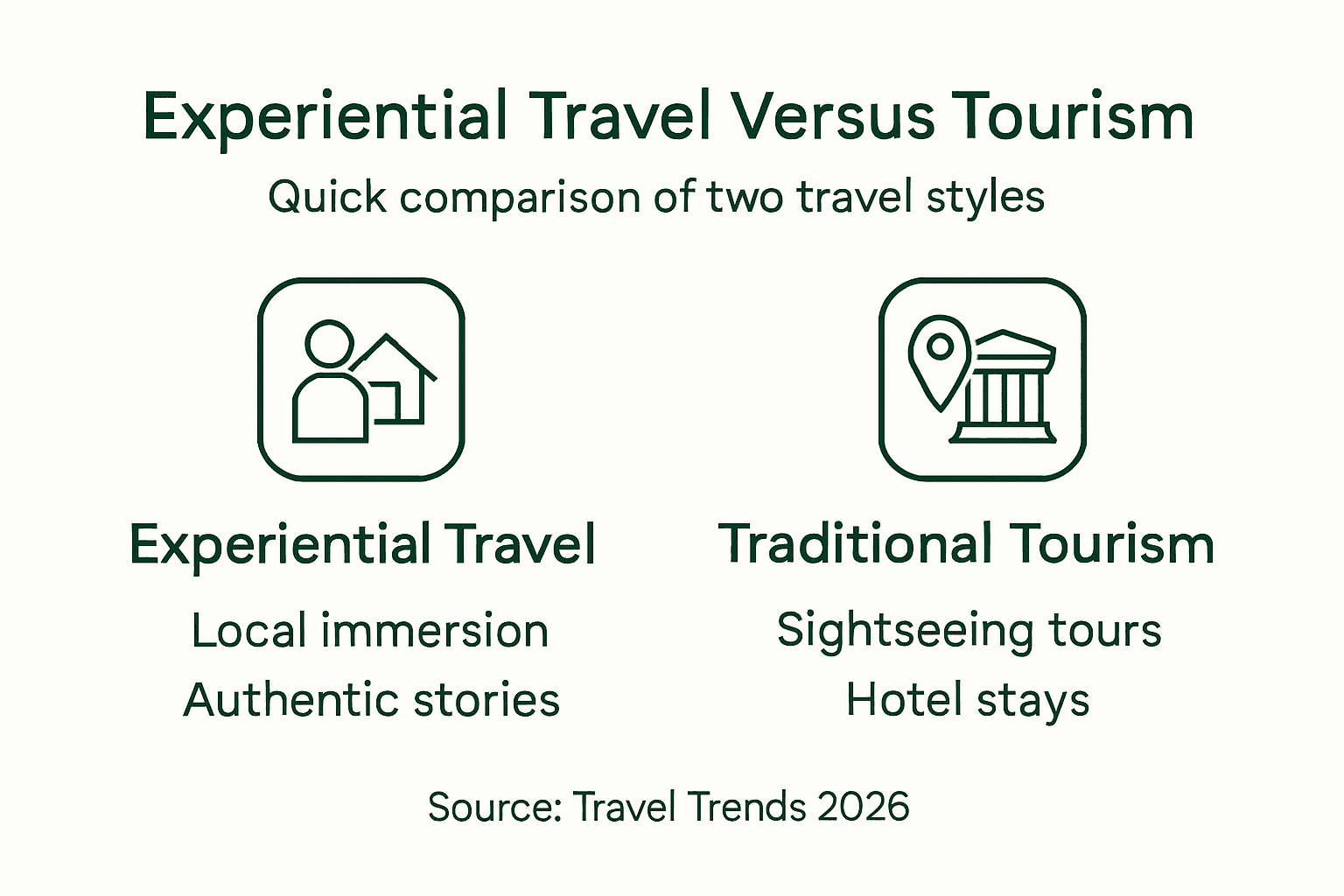 Infographic contrasting experiential and traditional tourism
Current Dominant Types
Three main categories dominate experiential travel today:
- Cultural immersion experiences focus on learning local traditions, cooking, language, and daily life through direct interaction with residents
- Nature-based activities emphasize outdoor exploration, hiking, wildlife observation, and environmental stewardship aligned with sustainable travel
- Wellness journeys combine travel with health-focused activities like yoga, meditation, nutrition, and holistic healing practices
Each type addresses the core desire for meaningful connection rather than superficial tourism. Home swapping naturally supports all three categories since you're living in actual communities where these experiences naturally unfold.
Seven megatrends shaping tourism in 2026 confirm that travelers increasingly prioritize authentic local narratives and slow-travel options over rushed itineraries.
Emerging 2026 Trends Worth Watching
New experiential travel trends are reshaping how people travel this year. These aren't passing fads—they reflect genuine shifts in what homeowners actually want from their time away.
Key emerging trends include:
- Noctourism explores destinations through evening and night activities, revealing different cultural perspectives beyond typical daytime tourism
- Set-jetting involves visiting filming locations and cultural landmarks featured in films and television shows
- Heritage journeys emphasize learning personal or ancestral history through guided exploration with local experts
- Purpose-led travel combines vacation with volunteer work, environmental conservation, or community development projects
- Emotion-driven experiences prioritize how travel makes you feel rather than what you see or accomplish
Emotion-driven and immersive journeys are becoming central to why people travel. Technology plays a supporting role through personalized recommendations, but authenticity remains the foundation.
For quick reference, here's an overview of 2026's dominant and emerging experiential travel types:
| Travel Category | Key Activities | Typical Traveler Motivation |
|---|---|---|
| Cultural Immersion | Local crafts, language, food | Seeking authentic daily life |
| Nature-Based | Hiking, wildlife, stewardship | Connecting with environment |
| Wellness Journeys | Yoga, nutrition, meditation | Enhancing personal well-being |
| Noctourism | Night tours, markets, events | Exploring off-peak culture |
| Set-Jetting | Film/TV location visits | Fandom and cultural connection |
| Heritage Journeys | Ancestral history, experts | Learning about personal roots |
| Purpose-Led Travel | Volunteering, conservation | Giving back, making impact |
| Emotion-Driven | Mood-based experience curation | Prioritizing how travel feels |
What This Means for Your Home Swap Strategy
These emerging trends open opportunities to design your swap experiences strategically. Rather than randomly selecting homes, you can target destinations that align with specific experiential goals.
For example, if heritage journeys appeal to you, search for swaps in regions connected to your family background. If noctourism interests you, choose neighborhoods known for evening cultural activities or night markets.
The most successful experiential travelers design their swaps around meaningful interests, not just cheap flights.
When you live in someone's home rather than a hotel, pursuing these specialized experiences becomes easier. Neighbors can recommend authentic heritage guides, wellness practitioners, or evening cultural events you'd never find in guidebooks.
Flexibility as a Core Trend
Modern experiential travelers value flexibility and spontaneity as much as planning. You're not locked into rigid tour schedules; you can adjust based on neighborhood discoveries and local recommendations.
Home swapping embodies this flexibility perfectly. You have a home base that's genuinely local, time to explore at your pace, and the freedom to follow your interests without tour operator constraints.
Pro tip: Before confirming a home swap, connect with the homeowner about local experiences aligned with your interests; they often know hidden gems and insider recommendations that enhance your entire trip.
Key Characteristics and How It Works
Experiential travel operates on a simple but powerful principle: you're doing things, not just observing them. This fundamental shift changes everything about how you experience a destination, what you remember, and what you spend.
Understanding the mechanics helps you plan swaps that actually deliver meaningful experiences rather than just affordable accommodation.
Core Characteristics That Define Experiential Travel
Experiential travel has distinct hallmarks that separate it from conventional vacations. These characteristics work together to create lasting impact:
- Active participation means you're involved in activities, not watching from the sidelines
- Authenticity prioritizes genuine local practices over packaged tourist versions
- Sensory engagement involves multiple senses—flavors, sounds, textures, aromas—creating memorable impressions
- Personal connection builds relationships with locals who share knowledge and perspectives
- Transformative potential leaves you changed in some way—new skills, broader perspectives, deeper understanding
Immersive engagement with local culture and environment naturally fosters emotional connections that stick with you long after returning home. This is why experiential travel memories outlast typical vacation photos.
How Experiential Travel Actually Works
The mechanics differ significantly from traditional tourism. You're not following a tour guide's script; you're creating your own experience within a framework that encourages authentic interaction.
Here's the process:
- Discover opportunities aligned with your interests through community recommendations, local connections, or curated platforms
- Participate actively in activities—cooking classes, craft workshops, neighborhood walks—rather than passively observing
- Interact directly with locals who provide insider knowledge and cultural context
- Reflect on what you're learning and how it changes your perspective
- Connect emotionally to people and places through sustained engagement
Emotional responses and personal growth drive the entire model. When you cook dinner in someone's kitchen with their neighbors, you're not just learning recipes—you're building relationships and understanding how people actually live.
The Home Swap Advantage
Home swapping amplifies experiential travel's effectiveness. Living in an actual home creates natural pathways to authentic experiences that hotel guests never access.
Your swap home becomes a community hub rather than a temporary bed. Neighbors introduce you to local spots. You shop at neighborhood markets. You notice which restaurants locals actually frequent. You experience daily rhythms rather than curated tourist moments.
This proximity to real life transforms casual observations into meaningful engagement. You're not visiting a neighborhood; you're briefly living in it.
Experiential travel works best when you're embedded in daily community life, not observing from tourist spaces.
Technology's Supporting Role
While authenticity remains the foundation, technology helps you discover and access experiences. Apps connect you with local hosts, platforms suggest personalized activities, and reviews help identify genuine opportunities worth your time.
But technology serves experience, not replaces it. The actual meaningful part happens when you're face-to-face with someone teaching you their craft or sharing their neighborhood stories.
Pro tip: After booking your home swap, ask the homeowner for three local experiences they personally enjoy; these insider recommendations consistently beat any online search for authentic, worthwhile activities.
How Home Swapping Enables Authentic Travel
Home swapping transforms you from tourist to temporary resident. Instead of a hotel room overlooking the city, you have someone's actual home in a real neighborhood where locals actually live and work.
This shift is everything. It's the difference between seeing a destination and experiencing how it functions.
Living Like a Local, Not Like a Visitor
When you stay in a hotel, you're in a tourist bubble. Everyone around you is also visiting. The staff caters to temporary guests. The neighborhood exists for your consumption.
Home swapping breaks this pattern completely. You're in a residential area where people have routines, relationships, and reasons to be there beyond serving travelers.
This creates authentic immersion:
- You shop at neighborhood groceries where actual residents buy food
- You learn which cafes locals prefer, not which ones advertise to tourists
- You walk streets without crowds, noticing real details of daily life
- Neighbors become familiar faces, sometimes leading to genuine connections
- You maintain a normal schedule aligned with community rhythms, not tourist hours
Living in residential neighborhoods rather than tourist areas naturally facilitates cultural immersion that's impossible in hotels. You're not visiting a neighborhood; you're briefly living in it.
The Trust-Based Foundation
Home swapping operates on something hotels can never replicate: mutual trust. You're entrusting your home to another person. They're entrusting theirs to you. This creates a fundamentally different relationship than a transactional hotel booking.
That trust foundation changes how you interact with the destination. You're not a customer; you're a member of an exchange community. People are more likely to help, recommend genuine local spots, and share authentic perspectives when they know you respect their space and community.
Verified homeowners on platforms like Swappahome represent carefully screened members committed to respectful cultural exchange. This verification matters—it means both parties have accountability and shared values around authenticity.
Trust-based travel creates genuine connections that transactional tourism never achieves.
Cost Savings That Enable Longer Stays
Eliminating accommodation costs fundamentally changes what's possible. A two-week stay that would cost thousands in hotels becomes completely manageable through swapping. This affordability allows you to actually settle into a place rather than rushing through a compressed itinerary.
Longer stays enable authentic experiences. You can take cooking classes, attend community events, develop casual friendships with neighbors. Quick hotel visits don't allow this depth.
Eliminating accommodation fees while gaining cultural immersion means your travel budget stretches significantly further. You can invest in meaningful experiences instead of paying resort markups.
Flexibility for How You Actually Travel
Traditional tourism follows rigid schedules. Experiential travel requires flexibility—discovering opportunities, following recommendations, adjusting based on neighborhood discoveries.
Home swapping provides this flexibility naturally. You have a comfortable home base where you can work, rest, or spontaneously explore. Remote workers especially appreciate stable, home-like environments while traveling internationally, enabling productive travel rather than constant movement.
Your own kitchen means you can cook with local ingredients discovered at markets. Your own living room means you can invite neighbors over, deepening relationships. Your own schedule means you're not checking out and moving on.
Pro tip: Request the homeowner's personal recommendations for neighborhood shops, restaurants, and gathering spots they actually use; these insider suggestions consistently lead to more authentic, less touristed experiences than any guidebook or review site.
Risks, Costs, and Common Mistakes to Avoid
Home swapping and experiential travel aren't risk-free. Like any travel, real concerns exist—property damage, health emergencies, mismatched expectations. The difference is that understanding these risks lets you prevent most of them.
Being prepared doesn't kill authenticity; it enables it. You can't fully experience a destination if you're stressed about what could go wrong.
Property and Trust-Related Risks
The biggest fear for homeowners is obvious: what if the other person damages your home? This anxiety is valid but manageable.
Protect yourself strategically:
- Choose verified members with established swap histories and positive reviews
- Document your home's condition with photos and video before departure
- Create a detailed house manual covering appliances, emergencies, and expectations
- Use home swap platforms with built-in protection policies and insurance options
- Set clear boundaries about what's off-limits and what guests can access
- Consider temporary property insurance during swap periods
Swappahome's verification process screens members carefully, reducing risk significantly. But verification isn't a guarantee—it's one layer of protection among several.
Health and Safety Considerations
Identifying and mitigating risks related to transportation, location, and health requires planning before departure. Travel itself carries inherent risks; experiential travel amplifies some of them.
Prepare for health scenarios:
- Research healthcare access in your destination country
- Carry comprehensive travel insurance covering medical emergencies
- Keep copies of prescriptions and medication records accessible
- Understand local emergency numbers and nearest hospitals
- Consult your doctor about destination-specific health precautions
- Stay aware of mental health impacts from extended solo travel
The Hidden Costs
Home swapping saves accommodation, but other expenses surprise unprepared travelers. Transportation between neighborhoods, activities, meals outside your swapped home—these add up.
Budget realistically for:
- Local transportation (public transit, occasional taxis)
- Activities aligned with experiential travel interests
- Meals when cooking isn't practical or desired
- Travel insurance and emergency reserves
- Home repairs or unexpected costs at your own property
- Utilities and internet at the swapped home
The cost advantage remains substantial compared to hotels, but it's not zero spending. Experiential travel requires investment in experiences, not just accommodation avoidance.
Budget for experiences, not just accommodation—the cost difference is the whole point.
Common Planning Mistakes
Most problems stem from poor communication or unrealistic expectations, not malicious intent. Avoid these frequent missteps:
Insufficient communication with your swap partner before arrival creates assumptions and conflicts. Discuss expectations, house rules, and emergency protocols explicitly.
Overambitious itineraries pack too many activities, defeating experiential travel's purpose. Slow down and actually settle into places.
Ignoring neighborhood research means missing authentic local experiences. Spend time learning the area before arrival, not after.
Inadequate contingency plans leave you stranded when flights are delayed, emergencies occur, or plans change. Build flexibility into every arrangement.
Underestimating cultural differences creates friction. What seems normal to you might offend locals. Research cultural expectations before arrival.
Building Accountability
Comprehensive risk planning and support systems substantially reduce travel problems. Share your itinerary with trusted people at home, maintain regular contact, and establish check-in routines.
This isn't paranoia—it's responsible travel that lets you relax and engage authentically without worrying alone.
Pro tip: Create a detailed house manual for your swap partner including emergency contacts, appliance instructions, WiFi passwords, and neighborhood recommendations—the more information you provide, the fewer problems arise and the more your guest can experience authentically.
Unlock Authentic Experiences with Trusted Home Swapping
Experiential travel invites you to move beyond ordinary tourism and fully immerse yourself in local culture. If you want to live like a resident rather than just visit, Swappahome offers the perfect solution. We understand the challenge of finding affordable, genuine accommodations that connect you with neighborhoods instead of tourist zones. By exchanging homes with verified homeowners worldwide, you skip expensive hotels and enjoy real community living, fostering meaningful local interactions just as the article describes.
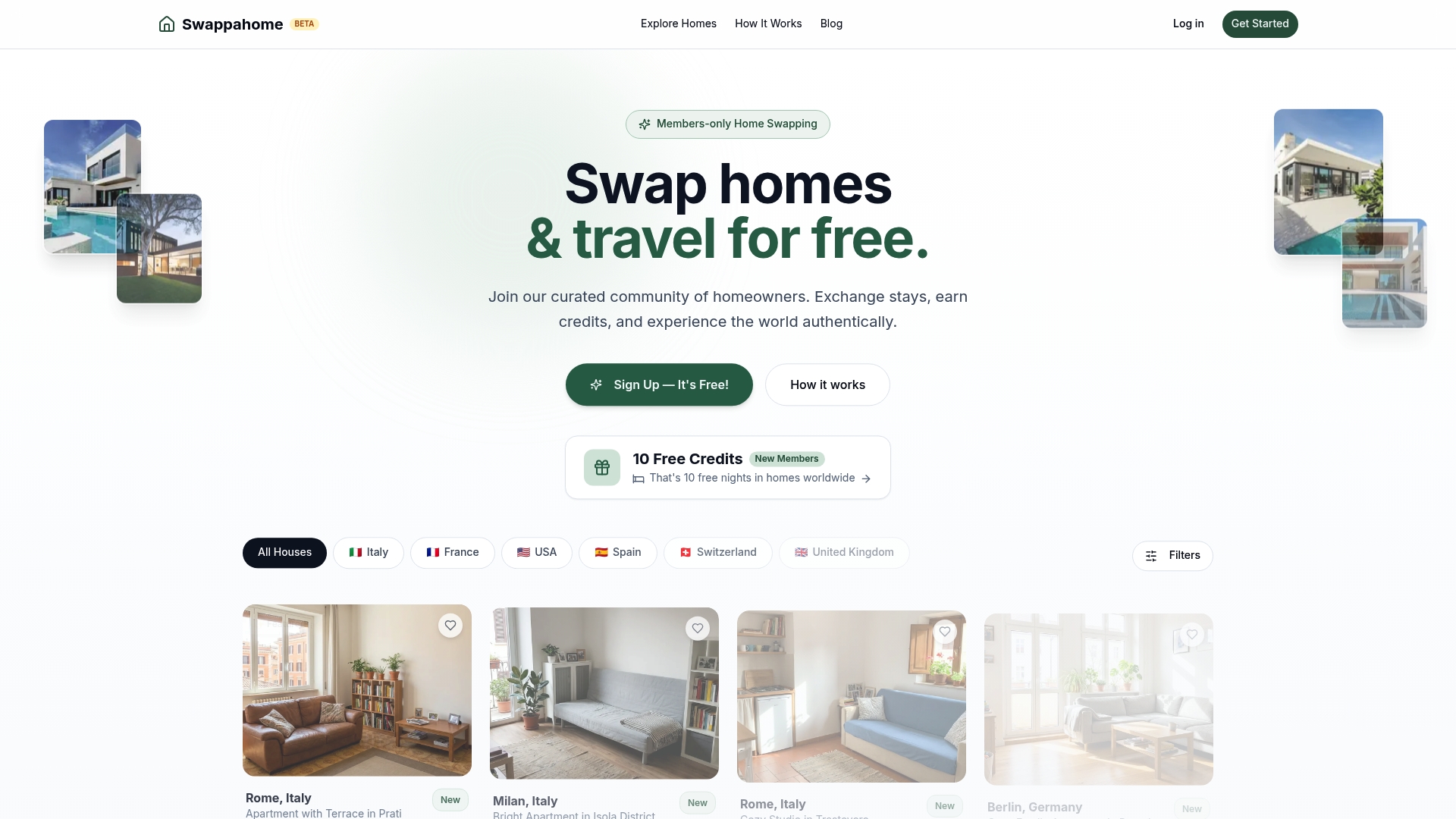 https://swappahome.com
Join a trusted network that shares your passion for authentic travel and budget-friendly adventures. Start earning credits by listing your home, then explore unique stays tailored to your interests—from cultural immersion to wellness journeys. Visit Swappahome now to experience travel that transforms, supported by a verified, respectful community. Discover how easy it is to swap, engage, and create memories that go beyond sightseeing in just a few simple steps.
Frequently Asked Questions
What is experiential travel?
Experiential travel is a style of travel that focuses on actively engaging with local culture and communities rather than merely observing tourist attractions. It emphasizes authentic interactions, personalized discoveries, and immersive experiences.
How does experiential travel differ from traditional tourism?
Experiential travel differs from traditional tourism by fostering active participation and direct interaction with locals, allowing travelers to immerse themselves in daily culture rather than following a preset itinerary of famous landmarks and attractions.
What are the benefits of home swapping for experiential travel?
Home swapping allows travelers to live in actual residential neighborhoods, which fosters authentic engagement with the destination. It often leads to cost savings on accommodations and provides access to local insights and experiences that hotel guests may not encounter.
What are some core characteristics of experiential travel?
Core characteristics of experiential travel include active participation in activities, a focus on authentic local practices, sensory engagement, personal connections with locals, and the potential for transformative experiences that offer lasting memories.
Recommended
- 7 Inspiring Examples of Sharing Economy Travel for Homeowners | SwappaHome Blog
- 7 Essential Types of Travel Communities Every Homeowner Should Know | SwappaHome Blog
- Teaching Kids About Travel Through Home Swapping | Family Guide
- Home Swapping vs Hotels: Why Families Choose Home Exchange
- How do I travel Solo? | Elite Travel

Published by
SwappaHome
SwappaHome Editorial Team
Home Exchange & Slow Travel Editorial
The SwappaHome Editorial Team brings together travel research, home-exchange community insights, and platform data to produce practical guides for first-time and experienced home swappers. Every article cites real platforms, current market rates, and verifiable city-level facts so readers can make informed decisions without guessing.
Ready to try home swapping?
Join SwappaHome and start traveling by exchanging homes. Get 7 free credits when you sign up!