
What Is Sustainable Travel and Why It Matters

SwappaHome Editorial Team
Home Exchange & Slow Travel Editorial
What Is Sustainable Travel and Why It Matters !Family unloading luggage at eco-friendly guesthouse Booking a hotel often means higher costs and a...
What Is Sustainable Travel and Why It Matters
 Family unloading luggage at eco-friendly guesthouse
Booking a hotel often means higher costs and a bigger environmental footprint for eco-conscious travelers. The search for truly sustainable and budget-friendly ways to experience the world matters because traditional tourism can lead to resource depletion and dilute cultural authenticity. This article explains how sustainable travel principles and home swapping offer a path to authentic, responsible exploration that benefits local communities while lowering both your expenses and impact.
Table of Contents
- Defining Sustainable Travel Practices And Concepts
- Types Of Sustainable Travel And Key Approaches
- How Sustainable Travel Works For Home Swappers
- Benefits Of Choosing Sustainable Travel Methods
- Common Pitfalls And How To Avoid Them
Key Takeaways
| Point | Details |
|---|---|
| Emphasize Sustainability | Sustainable travel focuses on minimizing environmental impact while promoting local economies and cultural preservation. |
| Collaborative Efforts | Successful sustainable travel relies on cooperation among travelers, local communities, governments, and businesses. |
| Conscious Choices | Travelers should seek certified sustainable options and engage in responsible practices to avoid common pitfalls. |
| Research Before Travel | Investigating destinations and their sustainability efforts enhances the travel experience and supports eco-friendly practices. |
Defining Sustainable Travel Practices and Concepts
Sustainable travel represents a comprehensive approach to tourism that prioritizes environmental preservation, cultural respect, and economic responsibility. At its core, sustainable travel is about minimizing negative impacts while maximizing positive contributions to destinations and local communities. Sustainable tourism strategies focus on creating meaningful experiences that protect natural resources and support local economies.
The fundamental principles of sustainable travel encompass several critical dimensions:
- Environmental conservation and reducing carbon footprints
- Respecting and preserving local cultural heritage
- Supporting local economic development
- Minimizing waste and promoting responsible consumption
- Creating authentic, meaningful traveler experiences
Understanding sustainable travel requires recognizing the interconnected challenges facing global tourism. Destination sustainability efforts must address complex issues like overtourism, resource depletion, and ecological disruption. This means developing strategies that balance traveler experiences with long-term environmental and social sustainability.
Key stakeholders in sustainable travel include travelers, local communities, governments, and tourism businesses. Each plays a crucial role in developing practices that protect destinations while enabling meaningful cultural exchanges. By adopting sustainable travel principles, we can transform tourism from a potential environmental burden into a positive force for global understanding and conservation.
Pro tip: Start your sustainable travel journey by researching destinations committed to ecological preservation and supporting local economies before booking your next trip.
Types of Sustainable Travel and Key Approaches
Sustainable travel encompasses a diverse range of approaches designed to minimize environmental impact while maximizing positive contributions to local communities. Sustainable tourism strategies recognize that travel can be a powerful tool for economic development, cultural exchange, and environmental preservation when implemented thoughtfully.
Key types of sustainable travel include:
- Community-based tourism: Directly involving local populations in tourism experiences
- Ecotourism: Focusing on natural environments with minimal ecological disruption
- Voluntourism: Combining travel with meaningful community service projects
- Cultural heritage tourism: Preserving and respecting local traditions and historical sites
- Slow travel: Emphasizing deeper, more meaningful interactions with destinations
Sustainable tourism recovery efforts highlight five critical pillars for transforming travel practices. These include reimagining tourism's fundamental purpose, integrating policies across industries and communities, mainstreaming sustainable practices, developing innovative business models, and improving destination management strategies.
Successful sustainable travel requires collaboration between travelers, local communities, governments, and tourism businesses. By adopting a holistic approach that balances economic opportunities with environmental and cultural preservation, we can create travel experiences that benefit both visitors and host communities.
Here's a summary of how different types of sustainable travel benefit destinations and communities:
| Approach | Economic Impact | Cultural Impact | Environmental Impact |
|---|---|---|---|
| Community-based | Local job creation | Preserves traditions | Promotes eco-friendly stays |
| Ecotourism | Supports rural economies | Encourages education | Protects natural habitats |
| Voluntourism | Funds community projects | Boosts local engagement | Reduces resource consumption |
| Cultural heritage | Generates tourism revenue | Maintains historical sites | Prevents overdevelopment |
| Slow travel | Supports small businesses | Fosters deeper connections | Minimizes visitor footprint |
Pro tip: Research and choose travel experiences that directly support local economies and minimize environmental impact before planning your next trip.
How Sustainable Travel Works for Home Swappers
Home swapping represents a transformative approach to sustainable travel, offering an innovative solution that reduces environmental impact while creating meaningful cultural exchanges. Home swapping supports sustainable travel by eliminating the need for additional accommodation infrastructure and significantly lowering the carbon footprint associated with traditional travel lodging.
The key mechanisms of sustainable home swapping include:
- Resource optimization: Utilizing existing living spaces instead of building new hotels
- Carbon footprint reduction: Minimizing travel-related environmental emissions
- Cultural immersion: Experiencing destinations through authentic local perspectives
- Cost efficiency: Eliminating expensive accommodation expenses
- Community connection: Fostering direct person-to-person cultural exchanges
Traveler surveys reveal that 76% of travelers want more sustainable travel options but face barriers like cost and limited alternatives. Home swapping directly addresses these challenges by providing an affordable, low-impact accommodation model that enables travelers to explore destinations responsibly and authentically.
 Home swapper video chatting for sustainable travel
Successful home swapping requires trust, mutual respect, and a commitment to sustainable travel principles. By participating in home exchange networks, travelers can transform their journeys from transactional experiences to meaningful cultural interactions that benefit both hosts and visitors while minimizing environmental impact.
Pro tip: Create a detailed, welcoming home profile and establish clear communication expectations to maximize your home swapping success.
Benefits of Choosing Sustainable Travel Methods
Sustainable travel offers a transformative approach to exploring the world while creating positive global impact. Sustainable tourism reduces global poverty by generating economic opportunities that simultaneously protect environmental and cultural resources, demonstrating that responsible travel can be a powerful force for global development.
Key benefits of sustainable travel methods include:
- Economic empowerment: Supporting local communities and creating meaningful job opportunities
- Environmental protection: Minimizing ecological disruption and preserving natural habitats
- Cultural preservation: Maintaining authentic cultural heritage and traditions
- Personal growth: Developing deeper, more meaningful travel experiences
- Global responsibility: Contributing to broader sustainability goals
Sustainable travel efforts contribute to economic growth while decoupling environmental impact, focusing on critical areas like reducing greenhouse gas emissions, protecting biodiversity, and promoting social inclusion. By choosing sustainable travel methods, individuals can directly participate in a global movement that supports destinations, communities, and ecosystems.
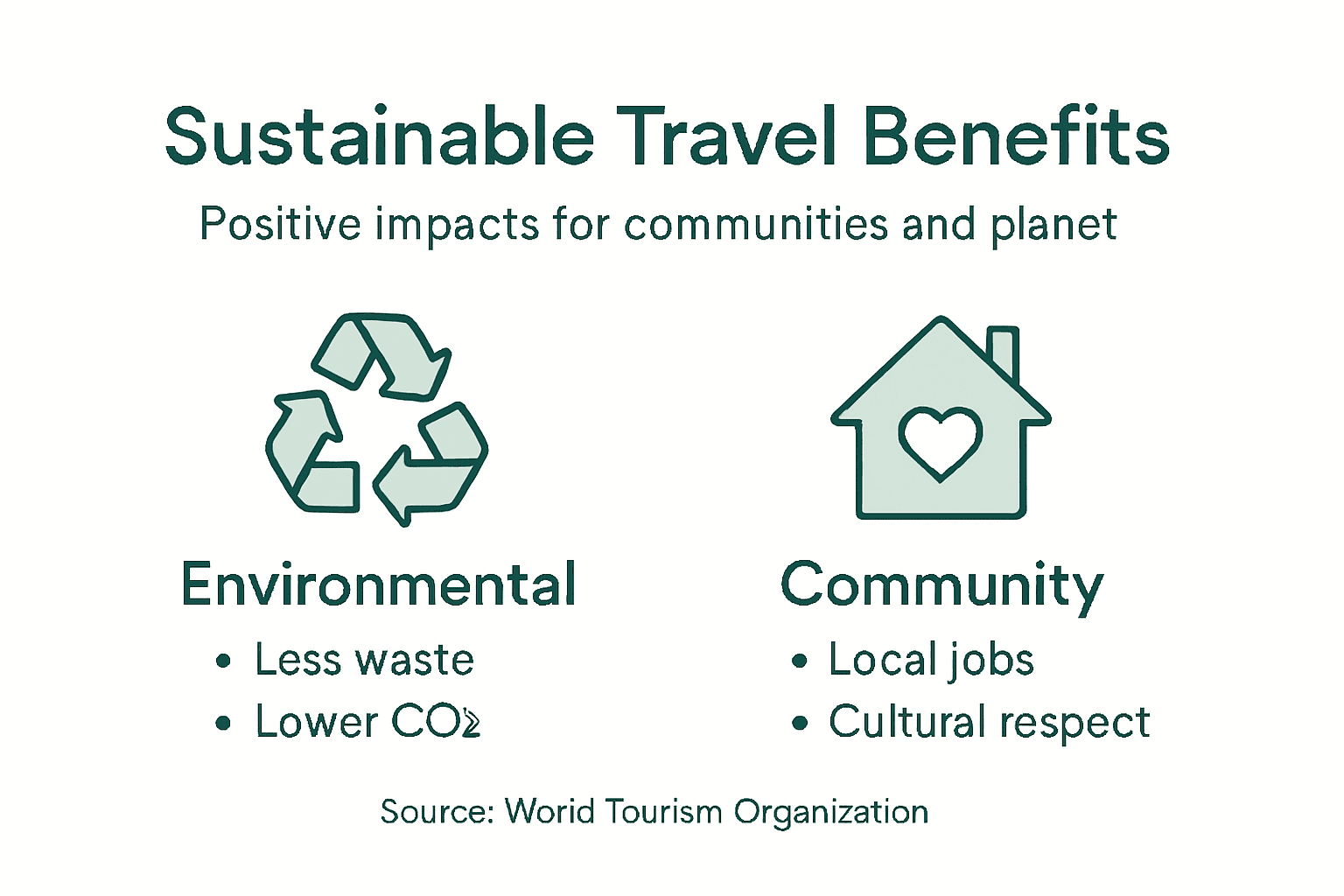 Infographic showing key sustainable travel benefits
The most impactful sustainable travel approaches prioritize genuine cultural understanding, environmental stewardship, and mutual respect between travelers and host communities. These methods transform travel from a transactional experience into a meaningful opportunity for global connection and positive change.
Pro tip: Research destinations and travel methods that demonstrate genuine commitment to sustainable practices before planning your next trip.
Common Pitfalls and How to Avoid Them
Sustainable travel requires careful navigation to truly create positive impact, as many well-intentioned travelers unknowingly undermine their goals. Travelers often struggle with sustainable choices due to gaps between intention and actual behavior, influenced by factors like cost, availability, and lack of transparent information.
Common pitfalls in sustainable travel include:
- Greenwashing: Falling for marketing claims without substantive environmental commitment
- Uninformed spending: Supporting businesses that don't genuinely prioritize sustainability
- Cultural insensitivity: Disrespecting local customs and traditions
- Environmental negligence: Failing to minimize personal ecological footprint
- Superficial engagement: Treating destinations as tourist attractions rather than living communities
Responsible travel strategies emphasize thorough research, choosing certified sustainable operators, reducing waste, and actively respecting local economic and cultural ecosystems. By developing a more nuanced understanding of sustainable travel, travelers can transform potential pitfalls into opportunities for meaningful cultural exchange and environmental stewardship.
Successful sustainable travel demands intentionality, curiosity, and a genuine commitment to learning about and supporting the destinations we visit. This means moving beyond performative sustainability and developing a deeper, more authentic approach to global exploration.
To help travelers avoid common mistakes, here's a comparison of pitfalls and best practices for sustainable travel:
| Pitfall | Why It's a Problem | Best Practice to Avoid It |
|---|---|---|
| Greenwashing | Misleads travelers about impact | Choose certified operators |
| Uninformed spending | Supports unsustainable businesses | Research local sustainability |
| Cultural insensitivity | Disrupts community harmony | Learn local customs and norms |
| Environmental negligence | Increases ecological damage | Reduce personal waste and emissions |
| Superficial engagement | Misses authentic experiences | Participate in local initiatives |
Pro tip: Always verify a destination's sustainability credentials through independent certifications and local community testimonials before finalizing your travel plans.
Embrace Sustainable Travel with Home Swapping
The challenge of making travel truly sustainable often feels overwhelming. From reducing environmental footprints to supporting local cultures and economies, travelers seek authentic experiences that align with their values without breaking the bank. The article highlights how sustainable travel requires conscious choices like minimizing waste, respecting traditions, and fostering genuine community connections. Swappahome answers these needs by offering a unique home swapping platform where verified homeowners exchange accommodations without monetary costs. This model naturally promotes resource optimization, cultural immersion, and significant carbon footprint reductions.
 https://swappahome.com
Discover how Swappahome makes sustainable travel accessible and rewarding. Join a curated community that values trust, cultural exchange, and affordability. By listing your home or booking stays with credits, you contribute to a global movement toward responsible tourism while enjoying authentic local experiences. Start your journey today and transform how you travel at Swappahome. Explore our simple point system, verified listings, and learn more about our sustainable travel approach for ethical explorers ready to make an impact.
Take action now to travel smarter and greener with Swappahome and be part of the solution.
Frequently Asked Questions
What is sustainable travel?
Sustainable travel is a comprehensive approach to tourism that prioritizes environmental preservation, cultural respect, and economic responsibility while minimizing negative impacts on destinations.
Why does sustainable travel matter?
Sustainable travel matters because it helps protect natural resources, supports local economies, preserves cultural heritage, and promotes responsible consumption, all of which contribute to long-term global sustainability.
What are the key principles of sustainable travel?
The key principles of sustainable travel include environmental conservation, cultural respect, local economic support, waste minimization, and creating meaningful traveler experiences.
How can travelers ensure they are engaging in sustainable travel practices?
Travelers can engage in sustainable practices by researching destinations committed to sustainability, choosing certified operators, reducing waste, respecting local cultures, and supporting local businesses.
Recommended
- Sustainable Travel Through Home Exchange: Real Impact | SwappaHome Blog
- 7 Inspiring Examples of Sharing Economy Travel for Homeowners | SwappaHome Blog
- 7 Essential Types of Travel Communities Every Homeowner Should Know | SwappaHome Blog
- 7 Advantages of Membership Travel Platforms for Homeowners | SwappaHome Blog
- Importance of Culinary Tradition – Shaping Authentic Travel
- What Is Health Enhancement Travel – Transforming Vacations Into Vitali – Longevity Travel
- Why Adventure Travel Matters for Modern Travelers

Published by
SwappaHome
SwappaHome Editorial Team
Home Exchange & Slow Travel Editorial
The SwappaHome Editorial Team brings together travel research, home-exchange community insights, and platform data to produce practical guides for first-time and experienced home swappers. Every article cites real platforms, current market rates, and verifiable city-level facts so readers can make informed decisions without guessing.
Ready to try home swapping?
Join SwappaHome and start traveling by exchanging homes. Get 7 free credits when you sign up!