
Why Choose Home Swapping for Affordable Travel

SwappaHome Editorial Team
Home Exchange & Slow Travel Editorial
Why Choose Home Swapping for Affordable Travel !Family packs bags for home swapping trip Most American travelers spend thousands every year on...
Why Choose Home Swapping for Affordable Travel
 Family packs bags for home swapping trip
Most American travelers spend thousands every year on hotels, yet experienced home swappers often save up to 80 percent by exchanging homes instead. If you are searching for genuine cultural exchanges and want to travel affordably without sacrificing comfort, understanding home swapping could be your smartest move. This article highlights what home swapping really means, clears up common myths, and shows budget-minded homeowners and global explorers how verified exchanges create safer, richer travel experiences.
Table of Contents
- Defining Home Swapping and Common Myths
- Major Types of Home Swapping Platforms
- How Credit-Based Exchange Systems Work
- Safety, Verification, and Legal Protections
- Costs, Common Risks, and Hotel Comparisons
Key Takeaways
| Point | Details |
|---|---|
| Home Swapping is a Structured Process | It involves verified members and mutual interests, ensuring safety and cultural exchange through specialized platforms. |
| Multiple Home Swapping Platforms Exist | They offer various models such as direct exchanges, credit-based systems, and multi-destination arrangements suited for diverse traveler needs. |
| Credit-Based Systems Enhance Flexibility | Members can earn credits through hosting, allowing for spontaneous travel without the need for simultaneous exchanges. |
| Robust Safety Mechanisms are in Place | Comprehensive verification and legal protections ensure a trustworthy environment for all participants. |
Defining Home Swapping and Common Myths
Home swapping represents an innovative approach to travel accommodation that challenges traditional lodging models. At its core, home swapping enables homeowners to exchange living spaces temporarily without monetary transactions, creating unique opportunities for affordable and authentic travel experiences. Home exchange strategies in the sharing economy reveal a sophisticated peer-to-peer model that goes far beyond simple room rentals.
Contrary to popular misconceptions, home swapping isn't about randomly trading keys with strangers. It's a carefully curated process involving verified members who share mutual interests in cultural exchange and sustainable travel. Participants typically join specialized platforms that facilitate connections, background checks, and communication protocols. The process ensures safety through structured verification systems that protect both homeowners and travelers.
Several common myths persist about home swapping that deserve clear demystification. Some people believe home swapping is risky or complicated, when in reality, these exchanges are often more structured and secure than traditional accommodation options. Sustainable housing exchange methods demonstrate that these platforms create robust community networks with built-in accountability mechanisms. Participants typically establish clear communication guidelines, mutual respect agreements, and detailed property usage expectations before any exchange occurs.
Ultimately, home swapping represents more than just a travel strategy - it's a collaborative approach to experiencing new destinations authentically and affordably. By challenging conventional travel accommodations, home swappers create meaningful connections that transcend typical tourist experiences.
Pro Tip: Before your first home swap, create a detailed house manual with specific instructions about home care, pet requirements, and local neighborhood recommendations to ensure a smooth exchange experience.
Major Types of Home Swapping Platforms
Home swapping platforms have evolved into sophisticated digital ecosystems that cater to diverse traveler needs and preferences. Sharing economy accommodation models reveal multiple platform types that go beyond simple accommodation exchanges, creating intricate networks of cultural and social interaction.
Typically, home swapping platforms can be categorized into three primary models. First, direct exchange platforms enable members to swap homes simultaneously, with both parties traveling to each other's locations. Second, non-simultaneous platforms allow members to earn credits by hosting travelers, which they can then use for future stays in other members' homes. Third, multi-destination platforms provide more flexible arrangements where members can stay in various properties across different locations without requiring a direct one-to-one exchange.
Each platform type brings unique advantages to travelers. Digital home exchange networks demonstrate how these models support different traveler motivations, from budget-conscious explorers to digital nomads seeking extended stays. Some platforms specialize in specific demographics, such as families, retirees, or professionals, while others offer more generalized membership structures that appeal to a broader audience.
The sophistication of modern home swapping platforms extends beyond simple accommodation trading. These networks incorporate robust verification processes, communication tools, insurance protections, and community rating systems that ensure safe, reliable, and enriching travel experiences for all participants.
Here's a comparison of the primary home swapping platform models:
| Platform Model | Exchange Type | Flexibility Level | Best For |
|---|---|---|---|
| Direct Exchange | Simultaneous swap | Moderate | Families, traditionalists |
| Credit-Based (Non-Sim.) | Credit-driven stays | High | Frequent travelers, busy |
| Multi-Destination | Multiple locations | Very High | Digital nomads, explorers |
Pro Tip: Research multiple home swapping platforms to find the model that best matches your specific travel style, destination preferences, and personal comfort level with accommodation exchanges.
How Credit-Based Exchange Systems Work
Credit-based home swapping represents a revolutionary approach to travel accommodation that breaks traditional exchange limitations. Unlike direct home swaps that require simultaneous travel, these systems allow members to earn and spend credits by hosting and staying in different properties across a global network. Home swapping digital platforms enable travelers to accumulate value through their participation, creating a flexible and dynamic accommodation ecosystem.
The mechanics of credit-based systems are relatively straightforward. When a homeowner hosts a traveler, they earn credits proportional to their property's value, location, and amenities. These credits can then be used to book stays in other members' homes around the world, effectively decoupling the exchange from direct, simultaneous swaps. This model provides significant advantages for travelers with unpredictable schedules or those unable to coordinate exact travel dates with another homeowner.
Most credit-based platforms implement sophisticated rating and verification systems to ensure quality and trust. Members typically receive credits based on factors like property condition, hosting reliability, and positive community feedback. Some platforms also incorporate tiered credit systems, where higher-quality properties or more desirable locations require more credits, creating a market-like dynamic within the home swapping community.
Participants benefit from this system's flexibility, allowing them to travel more spontaneously and explore destinations that might have been financially out of reach through traditional accommodation methods. The credit system transforms home swapping from a direct exchange into a community-driven travel network where members can accumulate and spend value across diverse geographical locations.
Pro Tip: Carefully track and manage your credit balance, and aim to provide exceptional hosting experiences to maximize your earning potential within the home swapping network.
Safety, Verification, and Legal Protections
Home swapping platforms prioritize member safety through comprehensive verification processes that go far beyond traditional accommodation exchanges. Home swapping security protocols are designed to create a transparent, trustworthy environment where travelers and homeowners can confidently interact and exchange properties with minimal risk.
The verification process typically involves multiple layers of authentication. Most platforms require extensive personal documentation, including government-issued identification, proof of address, and background checks. Members often undergo a rigorous screening that includes social media profile validation, references from previous exchanges, and a detailed review of their personal and professional background. Some platforms implement additional security measures like video interviews, community recommendations, and mandatory profile completeness requirements to ensure only genuine, responsible individuals can participate.
 Woman verifies steps for safe home swap
Legal protections are equally critical in home swapping ecosystems. Reputable platforms provide comprehensive insurance coverage that protects both homeowners and travelers against potential damages, property issues, or unexpected complications. These protections often include liability insurance, property damage coverage, and emergency support services. Many platforms also establish clear contractual agreements that outline responsibilities, expectations, and recourse mechanisms, ensuring that both parties understand their rights and obligations before any exchange takes place.
Beyond formal protections, home swapping communities rely on robust reputation systems that incentivize responsible behavior. Members are typically rated and reviewed after each exchange, creating a self-regulating environment where trust is earned through consistent, respectful interactions. Negative behavior can result in account suspension or removal, which motivates participants to maintain high standards of conduct and property care.
Pro Tip: Always thoroughly review a potential exchange partner's profile, complete verification steps meticulously, and maintain open communication to establish mutual trust before confirming any home swap.
Costs, Common Risks, and Hotel Comparisons
Home swapping cost effectiveness presents a compelling alternative to traditional hotel accommodations, offering significant financial advantages for budget-conscious travelers. Unlike hotels with fixed pricing and limited personalization, home swapping provides unique opportunities to reduce travel expenses while experiencing destinations through a more authentic lens.
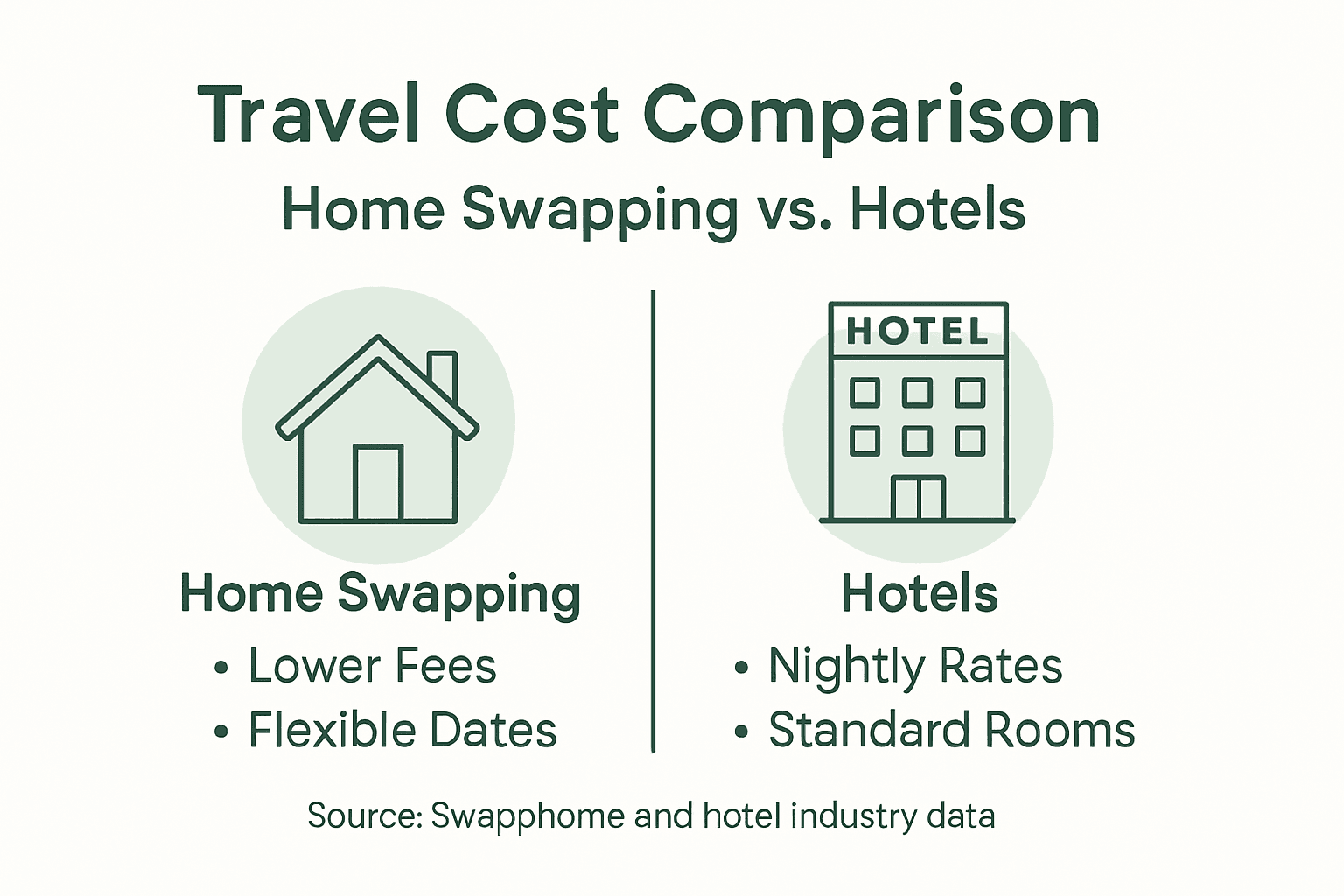 Infographic comparing home swap and hotel costs
The financial benefits of home swapping extend far beyond simple accommodation costs. Travelers eliminate not just nightly room rates, but also associated expenses like hotel dining, minibar charges, and additional service fees. A typical home swap can save travelers between 60-80% of traditional travel accommodation expenses, making extended trips more accessible. Risks do exist, including potential property damage, scheduling conflicts, and the need for detailed communication, but most platforms mitigate these concerns through comprehensive verification and insurance protocols.
Compared to hotels, home swapping offers several distinct advantages. Hotel stays provide standardized experiences with predictable amenities, while home exchanges allow travelers to live like locals, accessing fully equipped kitchens, neighborhood insights, and unique living spaces. This approach also promotes cultural understanding and personal connections that transactional hotel experiences cannot replicate. However, travelers must be comfortable with potential variability in accommodation standards and be willing to engage in detailed pre-exchange communications.
Additionally, home swapping introduces environmental benefits by optimizing existing housing resources. Rather than constructing additional tourist accommodations, this model leverages current residential infrastructure, reducing overall carbon footprint and promoting more sustainable travel practices. The economic model transforms unused living spaces into valuable travel opportunities, creating a win-win scenario for homeowners and travelers alike.
Below is a summary highlighting key differences between home swapping and hotels:
| Aspect | Home Swapping | Hotels |
|---|---|---|
| Accommodation Cost | 60-80% savings possible | Fixed nightly rates |
| Local Experience | Live like a resident | Standard tourist experiences |
| Environmental Impact | Utilizes existing homes | Requires new construction |
| Personal Interaction | Direct peer-to-peer connection | Staff-mediated transactions |
| Amenity Consistency | Varies by home | Predictable, uniform amenities |
Pro Tip: Create a comprehensive property description and house manual that highlights your home's unique features and provides clear instructions to maximize the likelihood of successful home swap matches.
Discover Affordable Travel with Trusted Home Swapping at Swappahome
If you are looking to escape the high costs and impersonal nature of traditional lodging the article "Why Choose Home Swapping for Affordable Travel" clearly highlights how home swapping offers authentic experiences through verified community connections and flexible credit-based exchanges. Many travelers face concerns about safety verification, complicated processes, and unpredictable costs. Swappahome solves these challenges by offering a secure members-only platform where you can list your home, earn credits, and enjoy stays in beautiful verified homes worldwide with transparency and ease.
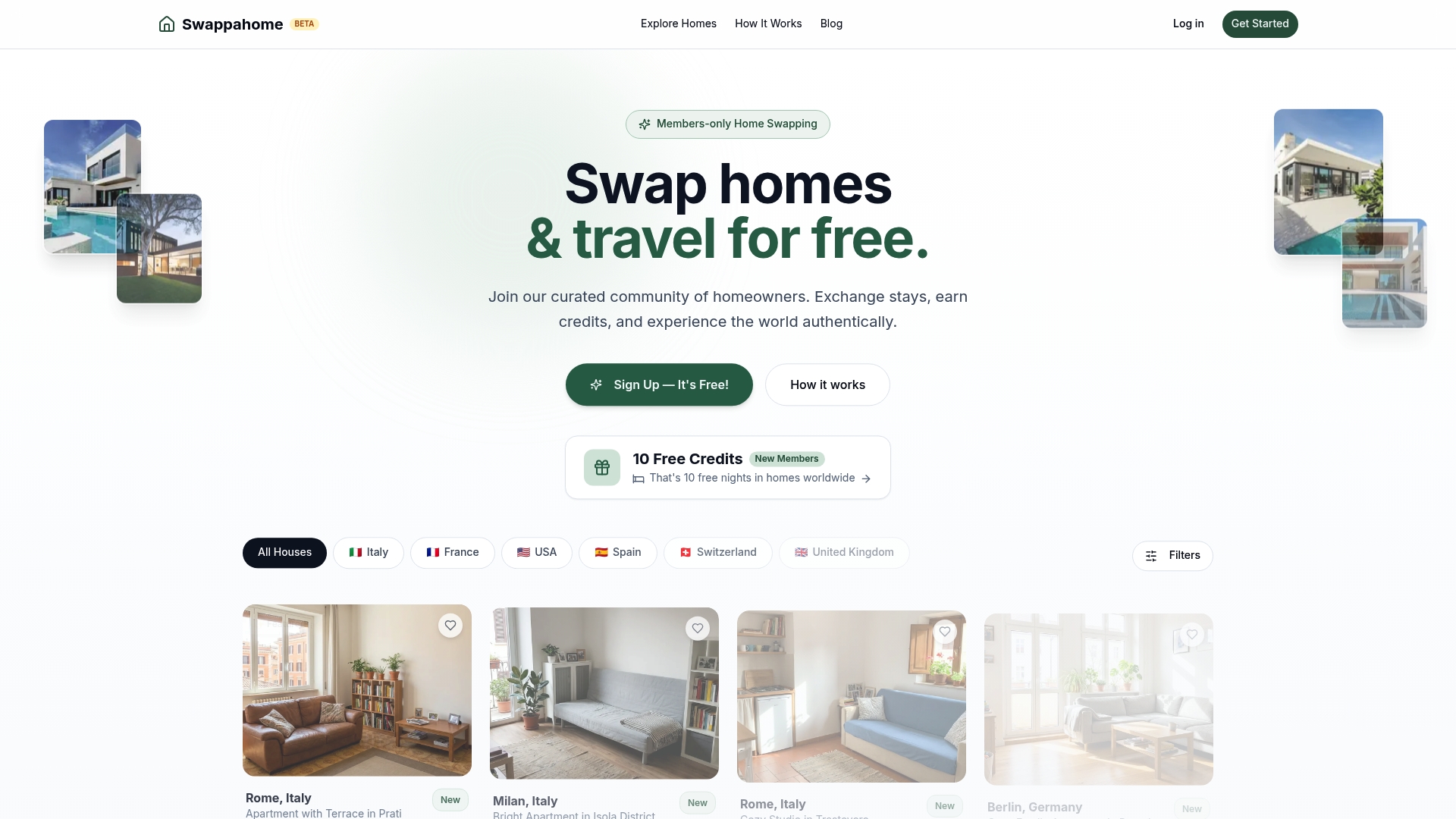 https://swappahome.com
Join Swappahome today and unlock the full benefits of flexible, affordable travel that puts you in the heart of real neighborhoods across countries. By choosing Swappahome you gain access to a curated community focused on trust and authentic cultural exchange. Visit the Swappahome landing page now to start your journey. Find out how our simple point-based system and initial free credits can make your next trip unforgettable. Take control of your travel budget while discovering new places and meeting like-minded homeowners in a seamless and secure environment.
Frequently Asked Questions
What is home swapping?
Home swapping is a travel accommodation method where homeowners exchange their living spaces temporarily without any monetary transactions, allowing for affordable and authentic travel experiences.
How does the credit-based home swapping system work?
In a credit-based system, members earn credits by hosting travelers in their homes. These credits can then be used to book stays in other members' homes, allowing for greater flexibility compared to direct swaps.
What safety measures are in place when home swapping?
Home swapping platforms implement thorough verification processes, including identity checks and references. Many also provide insurance coverage and encourage clear communication between participants to ensure a safe exchange experience.
What are the financial benefits of home swapping compared to hotels?
Home swapping can save travelers 60-80% on accommodation costs since it eliminates hotel fees and allows access to fully equipped homes. It also offers unique experiences and local insights that hotels cannot provide.
Recommended
- Home Swapping vs Hotels: Why Families Choose Home Exchange
- Home Swapping for Digital Nomads: Work From Anywhere
- Home Swapping in London: Affordable Stays in the UK Capital
- Home Exchange Savings: Real Numbers From 40+ Swaps | 2024 Guide
- What Is Travel Planning? Complete Expert Overview | Trinity Concierge

Published by
SwappaHome
SwappaHome Editorial Team
Home Exchange & Slow Travel Editorial
The SwappaHome Editorial Team brings together travel research, home-exchange community insights, and platform data to produce practical guides for first-time and experienced home swappers. Every article cites real platforms, current market rates, and verifiable city-level facts so readers can make informed decisions without guessing.
Ready to try home swapping?
Join SwappaHome and start traveling by exchanging homes. Get 7 free credits when you sign up!