
Why Prefer Local Stays: Real Benefits for Travelers

SwappaHome Editorial Team
Home Exchange & Slow Travel Editorial
Why Prefer Local Stays: Real Benefits for Travelers !Travelers planning day at local guesthouse > TL;DR: > > - Choosing local stays supports...
Why Prefer Local Stays: Real Benefits for Travelers
 Travelers planning day at local guesthouse
TL;DR:
- Choosing local stays supports community reinvestment and promotes cultural exchange beyond tourist enclaves.
- However, travelers must research verification, benefit-sharing, and community impact to ensure responsible tourism.
Most travelers assume that a branded hotel chain is the safest, most comfortable bet. Clean rooms, predictable service, loyalty points. What's not to like? Quite a lot, as it turns out. The real question of why prefer local stays goes deeper than budget. It touches on where your money actually goes, what you remember long after checkout, and whether your trip added anything to the place you visited. This article breaks down the economic, cultural, and environmental reasons that local accommodations consistently outperform hotels on the things that matter most to curious, engaged travelers.
Table of Contents
- Key takeaways
- Why prefer local stays for your wallet and theirs
- Cultural immersion you cannot manufacture
- Environmental and social impact: the full picture
- How to choose local stays that actually deliver
- My take on what local stays actually require from you
- Stay local the smart way with Swappahome
- FAQ
Key takeaways
| Point | Details |
|---|---|
| Local money stays local | Community-owned lodgings reinvest profits into staff wages, local services, and crisis funds. |
| Hosts are your cultural guides | Local accommodation advantages include direct access to traditions, food, and insider knowledge hotels cannot offer. |
| Environmental impact cuts both ways | Local stays can support conservation or strain resources; knowing what to look for keeps your choice responsible. |
| Service quality varies by design | Expect warmth and authenticity, but understand that host training levels differ across regions and platforms. |
| Verified platforms reduce risk | Choosing local lodging through curated, community-driven platforms protects both travelers and hosts. |
Why prefer local stays for your wallet and theirs
When you book a chain hotel, the majority of your nightly rate leaves the destination almost immediately. It goes to corporate headquarters, international shareholders, and centralized supply chains. Local stays work differently, and the difference is measurable.
Research on community-owned lodgings shows that structured profit-sharing creates real resilience. Witsieshoek Mountain Lodge in South Africa, for example, banks 2% of turnover into a community trust. During COVID-19, that fund kept staff paid throughout a period when most hospitality workers worldwide lost their income entirely. The trust repaid the loans with interest. That is not charity. That is a financial architecture that makes a community genuinely stronger.
The benefits of local stays extend to individual household income too. Studies of tourism-heavy communities show that 80% of residents involved in local tourism reported meaningful income increases, and 81% reported improved family economic conditions. More than half of the tourism businesses surveyed were locally owned. Those numbers tell a story that no hotel brochure does.
Here is what to look for when assessing whether a local stay actually moves money in the right direction:
- Community trust or cooperative structure: The lodging channels a defined percentage of revenue back into a shared fund.
- Local hiring and local procurement: Staff are residents, and food, linens, and supplies are sourced from nearby businesses.
- Transparent benefit reporting: Hosts or platforms openly share how guest spending supports the area.
- No absentee ownership: The person benefiting from your stay lives in or near the community you are visiting.
Pro Tip: Ask your host directly: "Do you source your breakfast ingredients from local producers?" A straightforward yes, backed by a name or a market, tells you more than any certification badge.
| Accommodation type | Who profits | Community employment | Local procurement |
|---|---|---|---|
| International hotel chain | Corporate shareholders | Partial, management often external | Low to moderate |
| Community-owned lodge | Local trust or cooperative | High, often 100% local | High |
| Verified home swap (e.g., Swappahome) | Homeowners directly | N/A, no paid staff model | Guest-driven, host-guided |
| Unregulated short-term rental | Individual owner (often absentee) | None | Variable |
Cultural immersion you cannot manufacture
A hotel gives you a minibar and a city map. A local stay gives you a neighbor. That distinction sounds simple, but it reshapes the entire trip.
When you stay with a local host or in a community-run guesthouse, you get access to things that do not appear on any tourist board website. You learn which market opens before sunrise and which vendor makes the best street food. You get invited to a family meal, a local festival, or a Sunday morning walk that a hotel concierge would never think to mention. These are the experiences that travelers actually talk about for years.
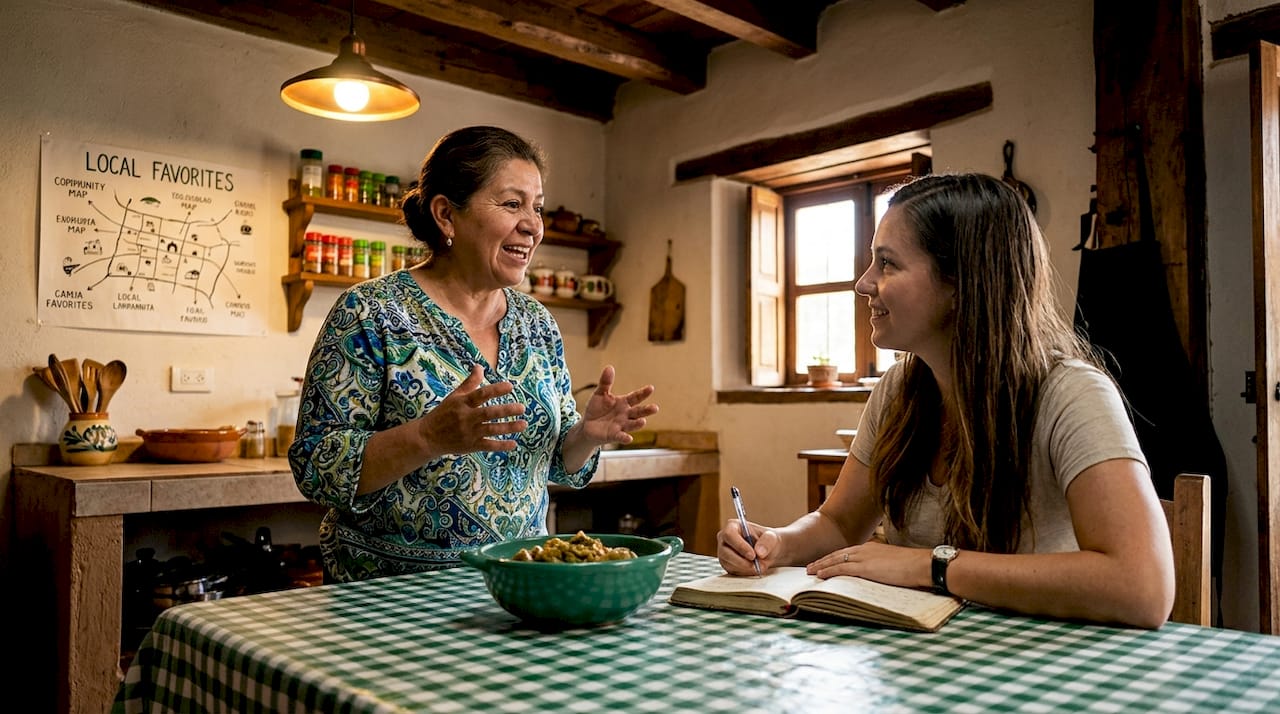 Host sharing local culture with guest
The importance of local stays for cultural exchange is well-documented. Hosts who participate in tourism training programs score 66% to 70% effectiveness ratings on service quality, room cleanliness, and food preparation. Those are solid numbers. What they also reveal is that some hosts score lower on digital marketing and language fluency, sitting around 42% and 34% respectively. That gap matters for setting expectations.
Pro Tip: Before booking, send a short message to your host and ask one specific question about the area. Their response speed and detail level will tell you more about the experience you can expect than any star rating.
The local accommodation advantages here go beyond comfort. They include:
- Direct participation in everyday life rather than observation from a tourist bubble
- Access to oral histories, family recipes, and neighborhood knowledge
- Opportunities to support cultural preservation through your presence and spending
- Host introductions to local artisans, guides, and community events
One thing worth being honest about: service at local stays is not always polished. You might encounter language barriers, simpler facilities, or less predictable logistics. That variability is part of the experience, not a flaw in the model. Travelers who thrive in local accommodations tend to arrive with flexibility and curiosity rather than fixed expectations.
Environmental and social impact: the full picture
Choosing a local stay is not automatically a green choice. The advantages of staying local are real, but so are the pressures that tourism places on smaller communities. Understanding both sides makes you a better traveler and a better guest.
On the positive side, tourism revenue in community settings often funds infrastructure that residents themselves benefit from. Roads get paved. Clean water systems get built. Cultural sites get maintained. When personal benefits from tourism are visible and fairly distributed, local populations develop genuinely positive attitudes toward tourism development, which creates a healthier host-guest dynamic for everyone.
The risks are real too. Communities near popular destinations often experience:
- Overcrowding that strains local transport, water, and waste systems
- Rising housing costs when rentals are converted to tourism use
- Cultural disruption when visitor behavior conflicts with local norms
- Exclusion of lower-income residents from tourism benefits
Research on residents near protected areas found that people who were not directly involved in tourism reported more negative impacts, including exclusion and higher living costs. That is a design problem. It happens when tourism grows without community planning. The short-term rental market in parts of Chile shows the same pattern: housing commodification in peripheral tourist towns is putting affordable housing under pressure.
"Inclusive tourism planning isn't idealism. It's the difference between a destination that thrives for a generation and one that burns out in a decade."
As a traveler, you cannot fix those systemic issues alone. But you can choose accommodations that demonstrate real inclusion rather than just marketing the idea of it.
How to choose local stays that actually deliver
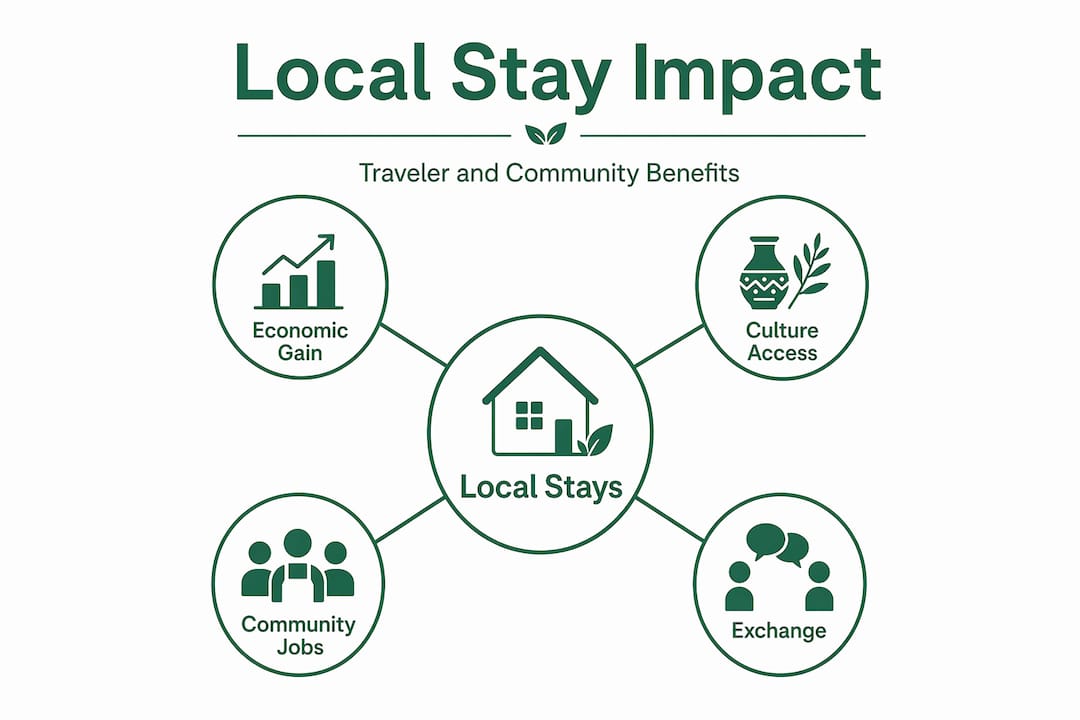 Hierarchy infographic: local stays impact breakdown
Knowing why choose local lodging is one thing. Finding the right one takes a bit more legwork. Here is a practical framework for making a choice you feel good about.
| What to look for | Why it matters |
|---|---|
| Explicit benefit-sharing mechanism | Signals that community impact is built into the business model, not optional |
| Host lives on-site or nearby | Reduces absentee ownership and increases authenticity of the stay |
| Reviews mentioning local connection | Guest accounts of real host interaction indicate consistent cultural engagement |
| Platform verification of hosts | Reduces risk, especially for first-time travelers to a new region |
| Transparent house rules and local context | Shows host investment in preparing guests for the community, not just the room |
One thing that consistently separates a meaningful local stay from a disappointing one is host preparation. Studies on homestay management training show that even well-trained hosts see only moderate income and occupancy gains due to infrastructure gaps. That means a great host in a rural area may still lack reliable Wi-Fi or consistent hot water. Knowing that in advance lets you prepare rather than be frustrated.
Look for budget travel communities and platforms that verify their hosts and provide cultural context upfront. That combination of trust and transparency is where the best local stays consistently live. If a platform cannot tell you anything concrete about how hosts are vetted or how community benefit is structured, treat that as a red flag.
Pro Tip: Cross-reference a local stay listing with recent traveler reviews that specifically mention the host interaction. Listings with warm, specific host mentions are almost always the stronger cultural experience.
My take on what local stays actually require from you
I've seen travelers book local stays expecting a hotel with a human face. They want authenticity, but they also want perfect Wi-Fi, a pillow menu, and no surprises. That gap between expectation and reality is where most negative local stay experiences are born.
What I've learned, through years of thinking about and advocating for community-connected travel, is that the best local stays are a two-way exchange. You bring respect, flexibility, and genuine curiosity. The host brings access, warmth, and local knowledge that no hotel can replicate. When both sides show up with that understanding, the experience tends to be remarkable.
The uncomfortable truth is that "local" branding is sometimes superficial. A property can market itself as a community guesthouse while the owner lives in a capital city and the profits flow outward. The formal benefit-sharing arrangements that distinguish real community impact from performative local branding are not always visible on a listing page. You have to ask. You have to read carefully. You have to be the kind of traveler who does the homework.
I also think travelers underestimate how much their behavior shapes the host community's experience of tourism. The way you interact with locals, whether you buy from neighborhood vendors, how you handle cultural norms: all of it feeds into whether that community sees tourism as a benefit or a burden. The why choose local lodging question is not just about your experience. It is about what you leave behind.
— Swappa
Stay local the smart way with Swappahome
If the benefits of local stays appeal to you but the search process feels overwhelming, Swappahome is built for exactly that.
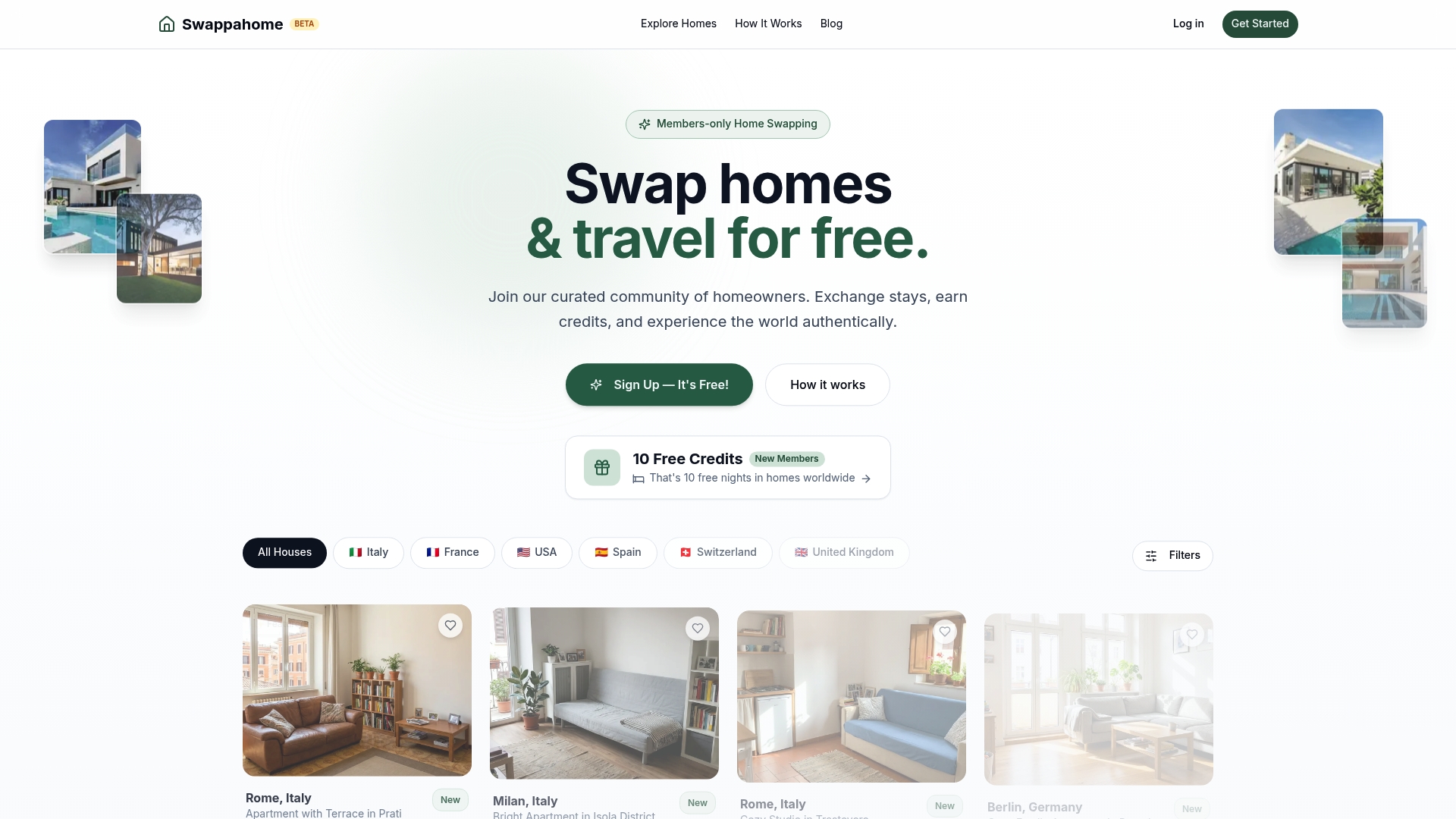 https://swappahome.com
Swappahome is a members-only home swapping platform where verified homeowners exchange stays without money changing hands. You earn credits by hosting travelers in your home and use those credits to stay in someone else's. Every home in the network is real, owner-occupied, and community-connected in the most direct way possible. Browse authentic local homes across dozens of countries and find your next stay in a real neighborhood, not a hotel corridor. New members receive free credits to get started. If you are serious about why prefer local stays becoming your default travel approach, join Swappahome and experience what genuine home-based travel actually feels like.
FAQ
What makes local stays better than hotels for cultural experiences?
Local stays give you direct access to host knowledge, neighborhood life, and community traditions that hotels are structurally designed to filter out. The advantage is proximity: you live where locals live, not in a tourist-optimized bubble.
Do local stays always support the local economy?
Not automatically. Research shows that community benefit-sharing mechanisms like cooperative structures and local hiring are what determine real economic impact. Always check how a property channels revenue back to residents before booking.
How do I know if a local stay is genuinely community-run?
Look for on-site ownership, transparent benefit-sharing arrangements, locally sourced food and services, and platform verification of hosts. Reviews that describe specific host interactions are a strong positive signal.
What are the risks of choosing local lodging?
Service quality can vary, especially in areas with limited host training and infrastructure. Research on homestay training programs shows that facilities and occupancy gains are often limited by capital constraints rather than host commitment.
Can local stays have negative environmental or social impacts?
Yes. Rapid growth in local rentals can raise housing costs and displace residents in tourist-heavy areas. Choosing verified, community-involved accommodations through responsible platforms reduces that risk significantly.
Recommended

Published by
SwappaHome
SwappaHome Editorial Team
Home Exchange & Slow Travel Editorial
The SwappaHome Editorial Team brings together travel research, home-exchange community insights, and platform data to produce practical guides for first-time and experienced home swappers. Every article cites real platforms, current market rates, and verifiable city-level facts so readers can make informed decisions without guessing.
Ready to try home swapping?
Join SwappaHome and start traveling by exchanging homes. Get 7 free credits when you sign up!