
Why Travel Community Vetting Matters for Safe Trips

SwappaHome Editorial Team
Home Exchange & Slow Travel Editorial
Why Travel Community Vetting Matters for Safe Trips !Group reviewing travel community vetting together > TL;DR: > > - Travel community vetting...
Why Travel Community Vetting Matters for Safe Trips
 Group reviewing travel community vetting together
TL;DR:
- Travel community vetting involves verifying travelers' identities, reputations, and social compatibility to ensure safety and trustworthiness. It combines digital ID checks, multi-source reviews, and pre-trip social screening, forming a layered system that reduces risks and fosters genuine cultural exchanges. Ongoing engagement and updated trust signals maintain community safety and authenticity over time.
Travel community vetting is the deliberate process of screening and verifying travelers and hosts within home exchange and cultural travel networks to confirm safety, trustworthiness, and authentic interactions. Without it, home swaps and group travel become exercises in blind faith. Platforms like TrustedHousesitters, TripGini, and Swappahome have demonstrated that the importance of travel community vetting goes far beyond a background check. It is the foundation that makes genuine cultural exchange possible, protects property, and turns strangers into trusted guests.
What are the key components of travel community vetting?
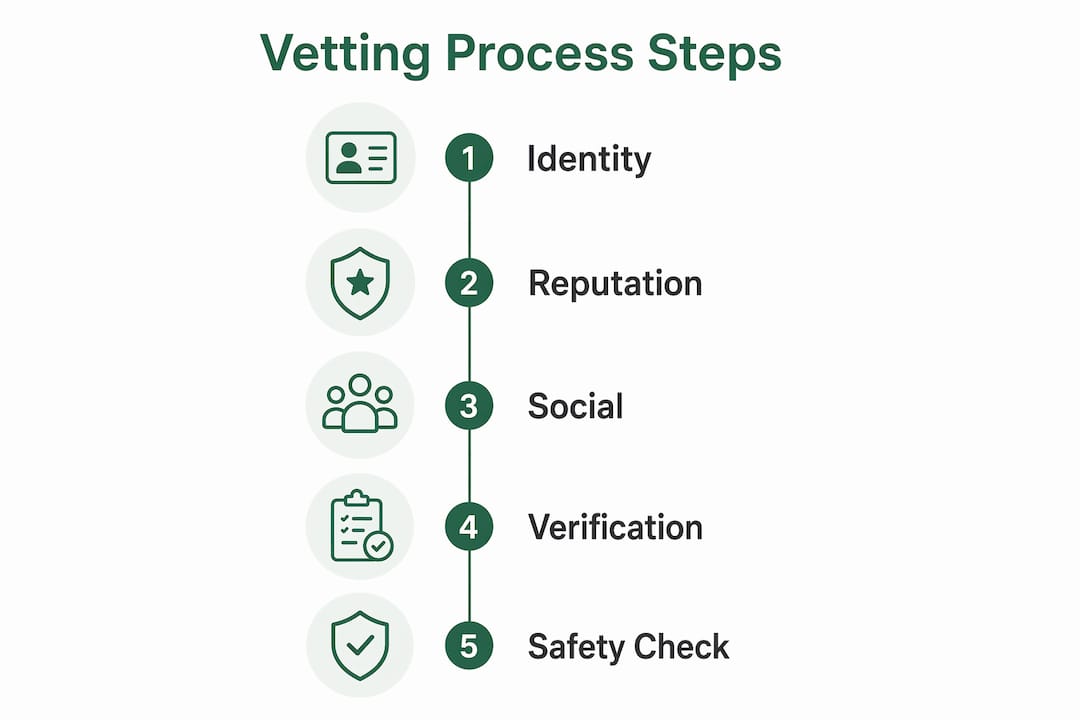
Travel community vetting combines identity verification, reputation signals, and social compatibility screening into a layered system. No single check is sufficient on its own. The strongest platforms use at least three independent signals before granting full community access.
 Hands holding smartphone showing digital identity verification
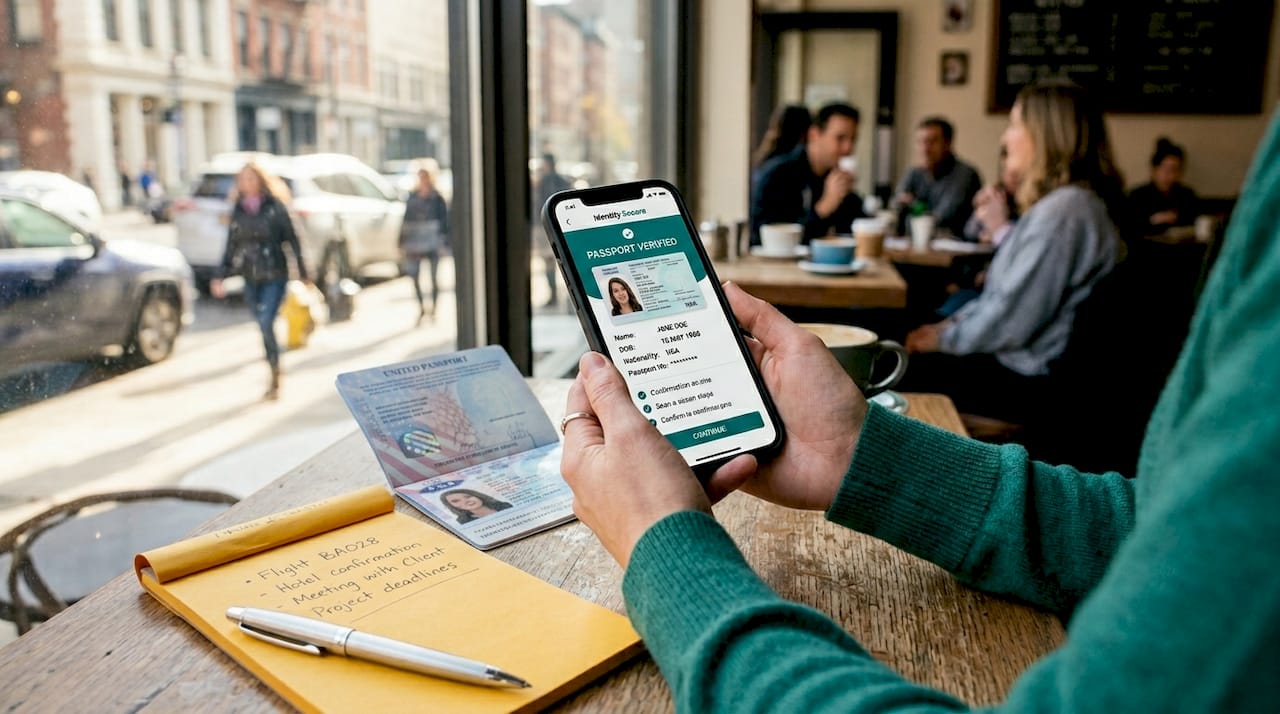
Identity verification is the technical baseline. Tools like Facephi's digital credentials combine OCR document capture, NFC chip reading, and biometric matching to confirm that a person is who they claim to be. Facephi holds ISO 27001 and SOC 2 compliance, which means its verification layer meets the same standards used by airlines and border agencies. That level of rigor, applied to a home exchange platform, closes the gap between "I think this person is legitimate" and "I know they are."
Reputation verification adds the social layer. TripGini integrates verified IDs with multi-source reviews and escrow payments so that every booking carries a traceable trust history. A traveler with 40 verified reviews across three platforms is a fundamentally different risk profile than a new account with a single photo. Multi-source reviews matter because they are harder to game than single-platform ratings.
Social compatibility screening is the component most platforms underinvest in. WeRoad addresses this directly by recruiting group leaders with strong interpersonal skills and organizing pre-trip meetups under its WeMeet brand. In 2025, WeMeet attracted over 50,000 attendees and 150,000 app downloads. That number signals a real market demand for social vetting before travel begins, not just after booking.
The practical checklist for a solid travel group vetting process looks like this:
- Passport or government ID verification through an accredited digital tool
- Background check or criminal record review where legally permitted
- Multi-source review history across at least two platforms
- Video call or live interview before confirming a home exchange
- Escrow or platform-held payment to protect both parties financially
- Community Q&A or pre-trip social event to assess social fit
Pro Tip: Before accepting any home swap request, schedule a 20-minute video call. TrustedHousesitters reports that video calls and messaging are among the most effective trust signals between hosts and sitters before a sit begins.
How does community vetting improve safety and reduce travel risks?
 Infographic illustrating steps in travel community vetting process
Vetting gaps translate directly into real-world harm. The USCIS has documented cases where screening failures created security threats, leading to enhanced biometric checks, social media vetting, and background reviews. The lesson for travel communities is identical: a gap in verification is not a minor inconvenience. It is an open door.
For home exchanges specifically, the risks without vetting include property theft, unauthorized subletting, and damage that falls outside insurance coverage. Social risks are equally real. A traveler placed with an incompatible host can face cultural misunderstandings, boundary violations, or outright hostility. Compatibility screening prevents these outcomes before they happen.
Escrow payments add a financial safety net that pure trust cannot provide. TripGini's model of platform-held payments means neither party loses money if a booking falls through or a dispute arises. This structure removes the financial incentive for fraud and reduces the anxiety that makes travelers hesitant to try home exchanges in the first place.
"Trust programs in travel communities require continuous trust-building and verification to maintain safety and quality — not just a one-time check at sign-up." — Vanta Community
The benefits of community vetting for safety include:
- Fraud prevention through verified identity and payment protection
- Property protection via compatibility screening and clear house rules
- Personal safety through social vetting and pre-trip communication
- Financial security through escrow and dispute resolution systems
- Long-term trust built through ongoing community engagement and updated reviews
Risk-based vetting also improves fairness. The American Immigration Lawyers Association recommends focused verification targeting demonstrated threats rather than blanket suspicion. Applied to travel communities, this means vetting should be proportionate. A member with five years of verified exchanges and 30 positive reviews does not need the same level of scrutiny as a brand-new account. Proportionate vetting keeps communities safe without creating friction that drives good-faith travelers away.
What role does vetting play in authentic cultural experiences?
Verified communities create the conditions for genuine cultural exchange rather than surface-level tourism. When both host and guest have passed identity and social compatibility checks, the relationship starts with a baseline of trust that allows real conversations, shared meals, and honest cultural exchange to happen naturally.
The process of matching travelers with compatible hosts goes beyond logistics. TripGini's community-driven model uses verified social signals and pre-trip calls to align expectations before anyone books a flight. A traveler who values quiet mornings and local markets needs a different host than one who wants nightlife and restaurant recommendations. Vetting surfaces these preferences before they become conflicts.
Here is how community vetting directly enables authentic travel experiences:
- Compatibility matching connects travelers with hosts who share values, schedules, and expectations, reducing friction and increasing genuine connection.
- Cultural respect is built into the vetting process when platforms screen for awareness of local customs and community norms.
- Local economic support follows naturally when verified travelers stay in real homes rather than hotels, spending money in neighborhood businesses and markets.
- Sustainability improves because vetted travelers are more likely to follow house rules, respect local environments, and leave properties in good condition.
- Social bonds form more readily when both parties have been introduced through a trusted community framework rather than a cold booking transaction.
WeRoad's WeMeet model proves this at scale. By organizing local meetups before trips, WeRoad transforms strangers into familiar faces before anyone boards a plane. The result is travel that feels immersive rather than transactional.
How do modern digital tools enhance the vetting process?
Digital identity technology has made thorough vetting faster and less intrusive than ever before. Facephi's platform interoperates with SITA, Amadeus, and Collins and supports digital wallets including Apple Wallet and Google Wallet. A traveler can now carry a verified digital credential on their phone that any compliant platform can authenticate in seconds. That removes the friction of manual document submission while maintaining rigorous identity standards.
The comparison below shows how different platform types approach trust frameworks:
| Platform type | Vetting approach | Key trust signals |
|---|---|---|
| Curated community (e.g., Swappahome) | Manual review plus digital ID verification | Verified homeowner status, credit history, community reviews |
| Marketplace (e.g., TripGini) | Automated ID plus multi-source ratings | Verified badges, escrow payments, background checks |
| Group travel (e.g., WeRoad) | Social vetting plus leader screening | Pre-trip meetups, leader soft skills, community events |
Curated platforms carry a structural advantage. Because membership is selective from the start, every interaction begins with a higher baseline of trust. Marketplace models scale faster but require stronger automated vetting to compensate for lower entry barriers.
AI-assisted trust scoring is the next frontier. Platforms are beginning to combine review history, response rates, communication patterns, and verified credential data into dynamic trust scores that update in real time. This approach catches problems that static background checks miss, such as a member whose behavior has changed since their initial verification.
Pro Tip: When evaluating any travel community, check whether the platform uses live chat and pre-trip calls as standard features. Platforms that build these into the booking flow take social vetting seriously, not just identity verification.
What best practices should travelers and hosts follow?
Effective community vetting is not only the platform's responsibility. Travelers and hosts who take an active role in the process get better outcomes than those who rely entirely on automated systems.
The most effective practices include:
- Request a video call before confirming any home exchange. A 15-minute conversation reveals communication style, expectations, and cultural fit in ways that a written profile cannot.
- Check verification badges on every profile. Platforms like Swappahome and TrustedHousesitters display verification status prominently. A missing badge is a meaningful signal.
- Read reviews across multiple sources where possible. A traveler with strong reviews on one platform and no history elsewhere warrants a closer look.
- Clarify house rules and expectations in writing before travel begins. Documented agreements reduce disputes and protect both parties.
- Use platform-held payments rather than direct transfers. Escrow systems protect both host and guest if plans change.
- Update your own profile regularly. Adding recent reviews, new photos, and current contact information signals active community engagement and builds long-term trust.
- Respect cultural norms specific to each destination. Vetted communities expect members to research and honor local customs, not just show up with good intentions.
The verified homeowner checklist from Swappahome covers the specific documentation and steps that make a home swap listing trustworthy from the host side. Completing it before listing a property signals seriousness to prospective guests.
Key takeaways
Travel community vetting works because it combines identity verification, reputation signals, and social compatibility screening into a layered system that protects both travelers and hosts at every stage of the exchange.
| Point | Details |
|---|---|
| Vetting is multi-layered | Effective screening combines digital ID, background checks, reviews, and social compatibility. |
| Escrow payments reduce fraud | Platform-held payments protect both parties financially and remove incentives for deception. |
| Social vetting drives satisfaction | Compatibility screening before travel reduces conflict and enables genuine cultural connection. |
| Digital tools scale trust | Biometric credentials from providers like Facephi make rigorous vetting fast and user-friendly. |
| Trust requires ongoing management | One-time verification is insufficient. Active community engagement maintains safety over time. |
Why I think most travelers underestimate what vetting actually does
Most people think of community vetting as a security measure. It is that, but treating it only as a safety filter misses the bigger picture. In my experience watching how vetted communities operate versus open marketplaces, the difference is not just in the absence of bad actors. It is in the quality of every interaction that follows.
When you know the person on the other side of a home exchange has been verified, reviewed, and socially screened, you show up differently. You communicate more openly. You ask better questions. You extend more goodwill when small things go wrong. That behavioral shift is what turns a home swap into a genuine cultural experience rather than a transaction with a stranger.
The technology is getting better fast. Facephi's biometric credentials and WeRoad's WeMeet model are early indicators of where the industry is heading: toward vetting that is thorough enough to build real trust and frictionless enough that it does not deter participation. The platforms that get this balance right will define what trustworthy travel networks look like in 2026 and beyond.
The uncomfortable truth is that travelers who skip vetting are not just taking a personal risk. They are degrading the community for everyone else. Every unvetted exchange that goes badly makes verified members more cautious and raises barriers for good-faith newcomers. Vetting is not a bureaucratic hurdle. It is the mechanism that keeps the community worth joining.
— Swappa
Travel safely with Swappahome's verified community
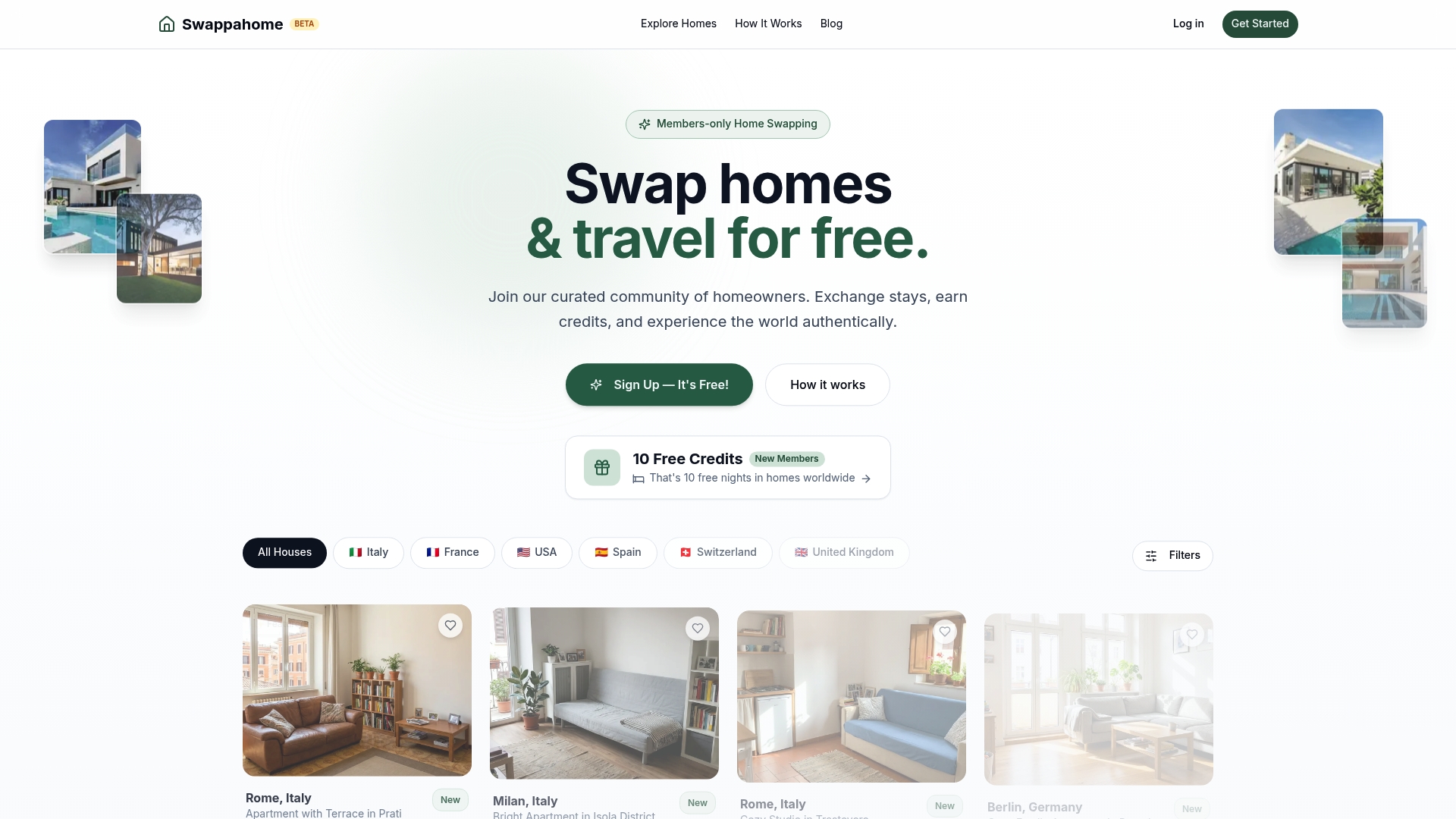
Swappahome is built on the principle that safe travel starts with a trusted community. Every member goes through a verification process before accessing home swap listings worldwide, so you know the people you are exchanging with have been screened, reviewed, and confirmed as genuine homeowners.
 https://swappahome.com
New members receive free credits to get started, and the credit system means every stay is earned through reciprocal hosting rather than cash transactions. That structure naturally filters for members who are serious about the community. If you want to swap homes and travel free with people you can actually trust, Swappahome's curated network is where that experience begins. Browse verified listings across dozens of countries and find your next authentic stay today.
FAQ
What is travel community vetting?
Travel community vetting is the process of verifying the identity, reputation, and social compatibility of travelers and hosts within a travel network before exchanges or bookings take place. It typically includes digital ID checks, background reviews, multi-source ratings, and pre-trip communication.
Why does community vetting matter for home exchanges?
Community vetting reduces fraud, property damage, and social conflict by confirming that both hosts and guests are who they claim to be and compatible with each other's expectations. Platforms like TrustedHousesitters use passport checks and video calls as standard vetting steps before any home sit begins.
How do escrow payments support travel safety?
Escrow payments hold funds on the platform until both parties confirm a successful exchange, removing the financial incentive for fraud. TripGini's model demonstrates that platform-held payments combined with verified credentials significantly reduce booking risks.
What is the difference between identity vetting and social vetting?
Identity vetting confirms who a person is through documents and biometrics. Social vetting confirms whether they are a compatible travel partner through reviews, video calls, and community interactions. WeRoad's pre-trip meetup model shows that social compatibility screening is as important as identity verification for traveler satisfaction.
How often should travel community trust signals be updated?
Trust signals should be updated after every exchange, not just at sign-up. Ongoing community engagement, fresh reviews, and current profile information maintain the accuracy of trust scores and signal active, good-faith participation to other members.
Recommended

Published by
SwappaHome
SwappaHome Editorial Team
Home Exchange & Slow Travel Editorial
The SwappaHome Editorial Team brings together travel research, home-exchange community insights, and platform data to produce practical guides for first-time and experienced home swappers. Every article cites real platforms, current market rates, and verifiable city-level facts so readers can make informed decisions without guessing.
Ready to try home swapping?
Join SwappaHome and start traveling by exchanging homes. Get 7 free credits when you sign up!