
Your Guide to the Italy Digital Nomad Visa: Requirements and Application Process

SwappaHome Editorial Team
Home Exchange & Slow Travel Editorial
Here are the main things to remember about the Italy digital nomad visa and living in Italy as a remote worker: Key Takeaways The Italy digital nomad visa…
Here are the main things to remember about the Italy digital nomad visa and living in Italy as a remote worker:
Key Takeaways
- The Italy digital nomad visa allows remote workers to live and work in Italy for an extended period.
- You'll need to prove remote employment, meet income requirements, have health insurance, and secure accommodation.
- The application process involves gathering specific documents and attending an interview at the Italian consulate.
- Italy offers great internet in major cities, but it's good to have a backup plan.
- Embrace the local lifestyle, learn some Italian, and explore the diverse regions of Italy for the full experience.
Understanding the Italy Digital Nomad Visa
So, you're thinking about working remotely from Italy? That's awesome! Italy has rolled out a special visa just for people like us – digital nomads. It's a pretty neat way to live and work in Italy for a while, soaking up the culture and, you know, eating all the pasta.
What is the Italy Digital Nomad Visa?
Basically, this visa is designed for folks who can work from anywhere, as long as they have a stable internet connection. It lets you stay in Italy for an extended period, typically up to a year, while you continue your remote work. It's a game-changer for those who dream of blending their professional life with the Italian lifestyle. It's not just a tourist visa; it's a pathway to actually living and working in Italy legally for a longer stretch.
Who Qualifies for the Italy Digital Nomad Visa?
To even be considered, you need to prove you're not just a tourist looking for a long vacation. You've got to be working remotely for a company based outside of Italy, or be a freelancer with clients outside the country. You can't be employed by an Italian company or have clients based in Italy. It’s all about bringing your foreign income into Italy. You'll also need to show you have enough money coming in to support yourself without needing to work locally. Think of it as showing you're self-sufficient.
Key Benefits of the Italy Digital Nomad Visa
Why go through the trouble? Well, besides the obvious perk of working from Italy, there are some solid advantages:
- Legal Stay: You get to live and work in Italy legally for an extended period, usually up to a year, with the possibility of renewal.
- Cultural Immersion: This visa allows for a deeper dive into Italian life than a short tourist trip ever could. You can explore local markets, learn a few phrases, and really get a feel for the daily rhythm.
- Travel Opportunities: Once you're settled, Italy is a fantastic base for exploring Europe. Plus, you can easily find homes for exchange in various Italian cities, making longer stays more affordable and authentic.
- Potential for Residency: While not a direct path to permanent residency, a digital nomad visa can be a stepping stone for those considering a longer-term move.
It's a pretty sweet deal if you're looking to experience Italy beyond the usual tourist trail while keeping your career on track.
Eligibility Requirements for the Italy Digital Nomad Visa
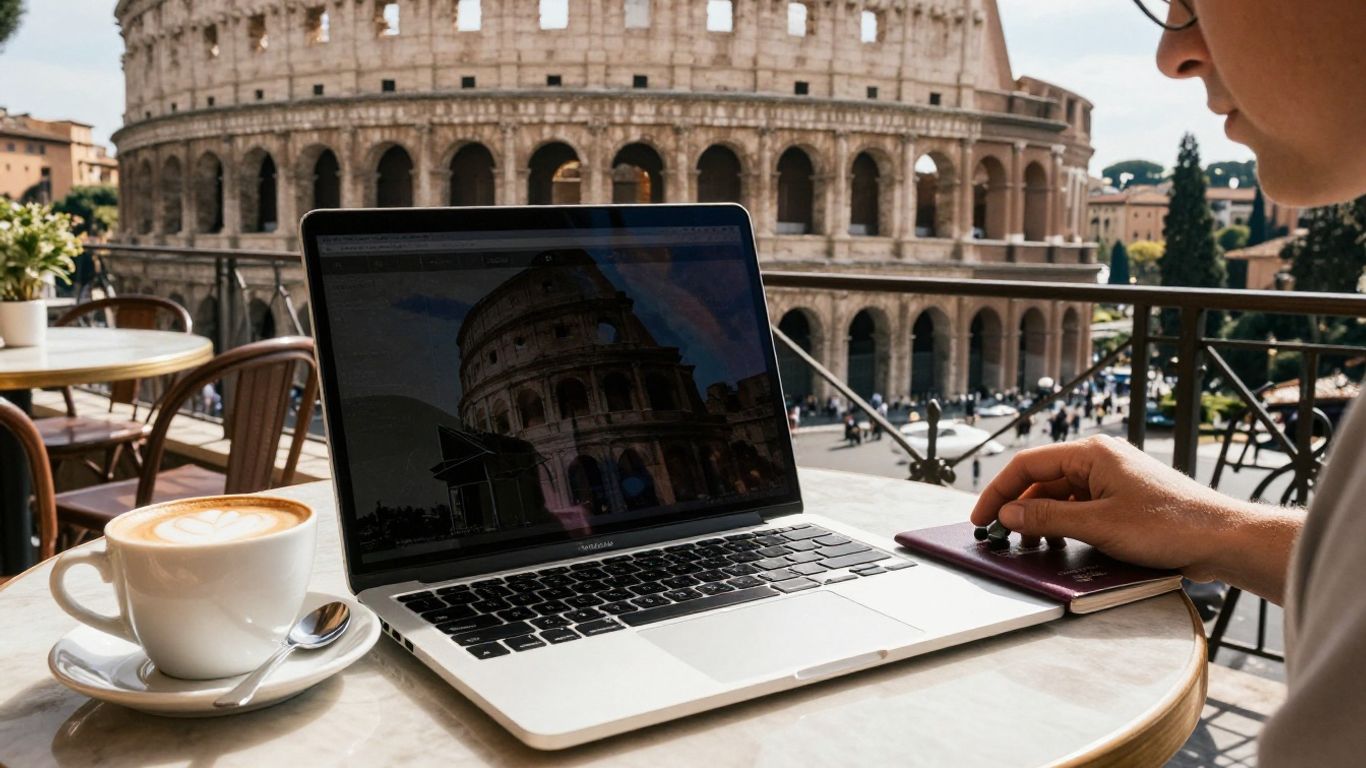 Digital nomad working on laptop in Italy
So, you're thinking about ditching the office for an Italian adventure? Awesome! But before you start practicing your pasta-making skills, let's talk about what Italy actually wants to see from you to get that digital nomad visa. It's not just about having a laptop and a dream; there are some concrete things you need to tick off.
Proof of Remote Employment or Self-Employment
This is pretty straightforward. You need to show that you're not planning to work for an Italian company while you're there. Your income needs to come from outside of Italy. This could be from a foreign employer, or if you're freelancing, you'll need to prove you have clients outside of Italy. Think contracts, letters from your employer, or invoices from clients. You'll generally need to demonstrate at least three years of professional experience in your field. This isn't a visa for fresh grads just starting out. It's for established remote workers who have a solid track record.
Minimum Income Thresholds
Italy wants to make sure you can support yourself without becoming a burden on their social system. The exact amount can fluctuate a bit, but it's usually tied to the Italian minimum wage or social security benefits. As of recent guidelines, you're looking at needing an income that's at least double the Italian social security allowance (assegno sociale). For 2026, this roughly translates to about €1,200 per month, but always check the latest figures before you apply.
Here's a general idea, but remember to verify the current numbers:
| Year | Approximate Monthly Income Requirement |
|---|---|---|
| 2024 | €1,200 |
| 2025 | €1,250 |
| 2026 | €1,300 |
This means you'll need to show consistent income over a period, usually the last six months, through bank statements or similar financial records. It's not just about having a high-paying job; it's about proving that income is stable and reliable.
Health Insurance Coverage
This is a big one. You absolutely need to have valid health insurance that covers you for your entire stay in Italy. It needs to be recognized by Italian authorities and cover medical expenses, hospitalization, and repatriation. It's not enough to have travel insurance that just covers emergencies; you need comprehensive coverage that's equivalent to what Italian citizens have. You'll need to provide proof of this policy when you apply. This is a non-negotiable requirement for obtaining the visa.
Accommodation in Italy
While you don't necessarily need to have a permanent address locked down before you apply, you do need to show that you have a place to stay. This could be a rental agreement, a letter of invitation from someone in Italy who is providing you with accommodation, or even a confirmed hotel booking for your initial period. Some applicants have used home exchange services to secure temporary stays, which can be a great way to live like a local while you figure out longer-term options. The key is demonstrating that you won't be homeless upon arrival. You'll need to provide documentation that proves you have a place to live, whether it's a lease or a similar arrangement.
It's always a good idea to have all your documents translated into Italian by a certified translator. This can save a lot of headaches down the line when dealing with various Italian offices. Double-checking every detail before submitting your application is super important.
The Application Process for the Italy Digital Nomad Visa
So, you've decided Italy is where you want to work remotely from. Awesome choice! Now comes the part where you actually make it happen: the visa application. It might seem a bit daunting, but breaking it down makes it totally manageable. Think of it like assembling IKEA furniture – confusing at first, but with the right instructions, you get there.
Gathering Necessary Documentation
This is where you'll spend most of your time. You need to collect a bunch of papers to prove you're legit. It’s not just a quick grab-and-go situation; some of these documents take time to get.
Here’s a general rundown of what you’ll likely need:
- Proof of Remote Employment: This means showing contracts, pay stubs, or letters from your employer stating you work remotely and detailing your role and salary. If you're self-employed, you'll need business registration documents and proof of income from your clients.
- Financial Solvency: You’ve got to show you have enough money to support yourself. This usually involves bank statements for the last few months. The exact amount can vary, so check the latest requirements for the specific consulate you’re applying through.
- Health Insurance: You need a policy that covers you in Italy. It should have a minimum coverage amount, often around €30,000, and cover hospitalization and repatriation. Make sure it's valid for your entire intended stay.
- Accommodation Proof: You need to show where you'll be living. This could be a rental contract, a letter of invitation from someone in Italy, or even a hotel booking for your initial stay. Some people find home exchange options a good way to secure temporary lodging while they get settled.
- Criminal Record Certificate: You'll need a certificate from your home country showing you don't have a criminal record.
- Passport Photos: Standard passport-sized photos are a must.
It’s super important to check the exact list of required documents with the Italian consulate or embassy in your country. Requirements can change, and what works for one person might not be exactly what another needs.
Submitting Your Visa Application
Once you have all your documents in order, it's time to actually apply. This usually happens at the Italian consulate or embassy that has jurisdiction over your place of residence. Some countries might have designated visa application centers that handle the submission process on behalf of the consulate.
- Book an Appointment: Most consulates require you to book an appointment online well in advance. Don't wait until the last minute, as slots can fill up quickly.
- Submit Your Application: Show up on your appointment day with all your original documents and copies. You'll fill out the visa application form (usually available online) and submit everything to the consular officer.
- Pay the Fee: There's a visa application fee, which varies. Be prepared to pay this at the time of submission.
The process can feel like a bit of a maze, especially when dealing with official paperwork. It’s always a good idea to have everything organized in a binder or folder, making it easy to present and double-check.
The Interview and Approval Stages
After you submit your application, there might be an interview. This is usually a brief chat where the consular officer might ask you a few questions about your plans in Italy, your remote work situation, and your ties to your home country. They just want to make sure everything you've presented is accurate and that you meet the visa requirements.
- Interview: Be prepared to answer questions honestly and clearly. Bring any additional documents they might ask for on the spot.
- Processing Time: The time it takes to get a decision can vary a lot. It could be a few weeks, or sometimes longer, depending on the consulate's workload and the complexity of your application.
- Approval/Rejection: If approved, you'll get your visa stamped in your passport. If rejected, they usually provide a reason, and you might be able to reapply after addressing the issues.
It’s a good idea to start this whole process at least 2-3 months before you plan to move. That way, you have plenty of buffer time if anything unexpected pops up. Good luck!
Life in Italy as a Digital Nomad
So, you've got the visa, you've booked your flight, and now you're actually living the dream in Italy. Awesome! But let's be real, settling into a new country, especially one with its own unique pace, takes a little getting used to. It's not just about finding a good coffee shop; it's about understanding how things work here.
Navigating Italian Bureaucracy
Okay, this is probably the part everyone warns you about. Italian bureaucracy can feel like a maze sometimes. Think paperwork, waiting in lines, and needing specific documents you didn't even know existed. The key is patience and organization. Keep copies of everything, and don't be afraid to ask for help, even if it's just from a friendly neighbor or a local expat group. It might take a few tries to get things right, but you'll get there.
Here are a few things to keep in mind:
- Permesso di Soggiorno: This is your residence permit, and it's a big one. You'll need to start this process pretty soon after arriving.
- Codice Fiscale: This is like your Italian tax code, and you'll need it for almost everything, from opening a bank account to signing a lease.
- Local Town Hall (Comune): Many local registrations happen here. It's good to know where yours is and what their hours are.
Remember that many Italians appreciate it when you try to speak even a little bit of Italian. A simple 'Buongiorno' or 'Grazie' goes a long way and can make interactions smoother, even when dealing with official matters.
Finding Reliable Internet Connectivity
This is non-negotiable for us digital nomads, right? Italy has made huge strides in internet infrastructure, especially in bigger cities. You'll find fiber optic connections (FTTH) are becoming more common, offering speeds that are great for video calls and uploading large files. However, it's not uniform across the country. Older buildings or more rural areas might still rely on older technologies like ADSL or FTTC, which can be slower. Always ask about the specific internet setup before committing to a place. Having a backup plan, like a local SIM card with a good data plan for hotspotting, is always a smart move. You can find great deals on mobile plans if you shop around.
Cost of Living and Budgeting
Italy can be surprisingly affordable, especially when you compare it to other Western European countries. Your money can stretch quite far, but it really depends on where you choose to live and your lifestyle. Big cities like Milan and Rome will naturally be more expensive than smaller towns or southern regions.
Here's a rough idea of what to expect:
- Rent: Varies wildly, but expect to pay more in major city centers. Consider looking slightly outside the main tourist zones for better value.
- Groceries: Shopping at local markets (mercati) and supermarkets is much cheaper than convenience stores. Eating seasonally is your friend here.
- Dining Out: You can eat affordably if you stick to local trattorias and take advantage of aperitivo culture, where a drink often comes with substantial snacks.
It's all about finding that balance between experiencing the Italian way of life and keeping your budget in check. You'll find that living like a local, rather than a tourist, makes a big difference to your wallet and your experience.
Exploring Italy's Digital Nomad Hubs
So, you've got the visa sorted and you're ready to work from Italy. Awesome! But where exactly should you set up your temporary base? Italy isn't just one big, beautiful postcard; it's a collection of distinct regions and cities, each with its own vibe and offerings for remote workers. While the whole country is pretty amazing, some spots are really starting to shine for digital nomads.
Turin: A Tech-Forward City
Turin often gets overlooked for more famous Italian cities, but it's quietly becoming a favorite for remote workers. It's got this cool mix of historic elegance and a growing tech scene. Think wide boulevards, stunning architecture, and a surprisingly vibrant startup culture. Plus, it's generally more affordable than Milan, which is just a train ride away. You'll find good internet speeds, especially in newer buildings, and a decent number of co-working spaces popping up. It's a city that feels lived-in, not just for tourists, which is a big plus when you're staying for a while. It's a great place to find homes for remote workers that offer a real local feel.
Rome: The Eternal City for Remote Work
Okay, Rome. It's Rome. The history is mind-blowing, the food is, well, Roman food (need I say more?), and the energy is infectious. For digital nomads, it offers a bit of everything. You've got the historical sites, of course, but also a growing number of modern co-working spots and cafes with reliable Wi-Fi. Finding a place to stay can be a bit of a project, but if you look in neighborhoods outside the absolute center, you can find some gems. It’s a city where ancient ruins meet modern life, and you can easily spend your days exploring and your evenings working from a charming apartment.
Other Emerging Digital Nomad Destinations
Italy is full of places that are becoming more popular with remote workers. Bologna, for instance, is known for its amazing food scene and its historic porticoes, which make walking around super comfortable, rain or shine. It's a university city, so it has a youthful energy and a good infrastructure. Then there's places like Florence, which, while very popular with tourists, also has a strong creative community and offers a beautiful backdrop for work. You might also consider cities like Bari in the south, which is more affordable and offers a different pace of life. The key is to research based on what you're looking for – whether it's a bustling city or a quieter, more traditional town.
When choosing your Italian base, consider these points:
- Internet Speed: While major cities are getting better, always double-check the specifics for your accommodation. Fiber optic is becoming more common, but older buildings might still rely on older tech.
- Cost of Living: Cities like Turin and Bologna tend to be more budget-friendly than Rome or Milan. Exploring options outside the absolute city centers can also save you money.
- Community: Look for cities with existing digital nomad groups or co-working spaces if you're keen on networking and meeting other remote workers.
Italy's charm for digital nomads lies not just in its beauty, but in its ability to integrate you into a local rhythm. Choosing the right city means finding a place where you can balance work with the unique Italian lifestyle, making your experience truly memorable.
Maximizing Your Italy Digital Nomad Experience
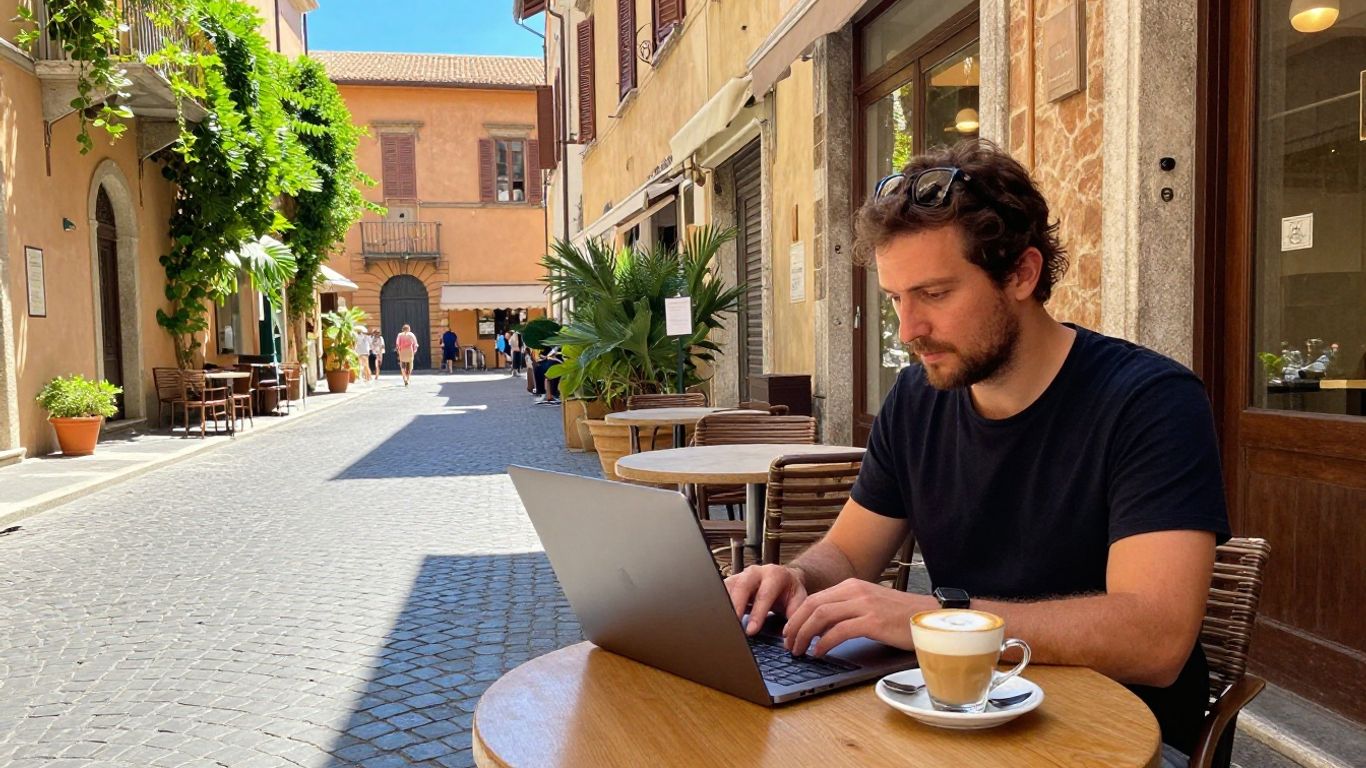 Digital nomad working on a laptop in an Italian piazza.
So, you've got the visa, you've figured out where you're going to live – now what? Making the most of your time in Italy as a digital nomad is all about blending work with the incredible lifestyle the country offers. It's not just about getting your tasks done; it's about truly living there, even if it's just for a little while.
Embracing the Italian Lifestyle
Forget the frantic pace of your home country. Italy operates on a different clock. Mornings often start with a quick espresso at a local bar, standing up, chatting with the barista. Lunch is a serious affair, usually between 1 PM and 3 PM, and many smaller shops will close for a few hours in the afternoon. Don't fight it; lean into it. Use this time to take a walk, read a book, or even take a siesta. The evening brings the 'passeggiata,' a leisurely stroll through the town or city, where people catch up and enjoy the cooler air. It's a social ritual that’s incredibly welcoming. Learning a few basic Italian phrases will go a long way in making these interactions smoother and more enjoyable.
Networking and Community Building
While you're there to work, connecting with others can make your experience richer. Look for local co-working spaces; they're not just for Wi-Fi but also for meeting people, both locals and other travelers. Many cities have expat groups or digital nomad meetups you can find online. Don't be shy about striking up conversations at cafes or markets. Italians are generally warm and curious, and you might find unexpected friendships or collaborations forming. If you're staying for a longer period, consider joining a local club or taking a class – maybe cooking, art, or even a language exchange.
Travel Tips for Digital Nomads in Italy
Getting around Italy is pretty straightforward, especially with its extensive train network. High-speed trains connect major cities, while regional trains are great for exploring smaller towns. Booking tickets in advance can often save you money. When it comes to accommodation, think beyond hotels. Platforms that facilitate home exchanges can be a fantastic way to live like a local, often providing more space, a kitchen, and a neighborhood feel. This can be a more budget-friendly option than hotels, especially for longer stays. You can find homes that are specifically curated for digital nomads, often with reliable Wi-Fi and dedicated workspaces. Finding a good home base is key to settling in.
It's also wise to have a backup plan for internet. While major cities have good fiber optic coverage, older buildings or more remote areas might have slower connections. Consider getting a local SIM card with a generous data plan for hotspotting if needed. Always confirm the internet speed with your accommodation provider before booking if it's a critical factor for your work.
Here’s a quick checklist for settling in:
- Get a local SIM card: Essential for communication and as a backup internet source.
- Understand meal times: Plan your work around the Italian lunch and dinner schedules.
- Explore local markets: Great for fresh food and experiencing daily life.
- Utilize public transport: Trains and buses are efficient ways to see the country.
- Learn basic phrases: 'Buongiorno', 'Grazie', 'Prego', 'Scusi' can open many doors.
Italy rewards those who take the time to slow down and observe. The best experiences often happen when you're not rushing between famous landmarks, but instead are simply present in a local piazza or enjoying a coffee at a neighborhood bar. Embrace the rhythm, be open to spontaneous conversations, and you'll find your digital nomad experience here becomes truly unforgettable.
Conclusion
Italy offers a unique blend of culture, history, and modern living, making it an attractive destination for digital nomads. The Italy digital nomad visa opens the door to this experience, but it requires careful planning and adherence to specific requirements. By understanding the eligibility criteria, gathering the necessary documents, and preparing for the application process, you can increase your chances of success. Once there, embracing the Italian lifestyle, finding your community, and exploring the country will make your time as a digital nomad truly unforgettable. Italy is more than just a place to work remotely; it's an invitation to live life beautifully.
Frequently Asked Questions
What is the Italy digital nomad visa?
Think of it as a special permit that lets people who work online for companies outside of Italy live there for a while. It’s for folks who can do their jobs from anywhere, as long as they have a good internet connection.
Do I need a lot of money to get this visa?
Yes, you generally need to show you earn a certain amount of money each month from your remote work. Italy wants to make sure you can support yourself without needing help from the government while you're there. The exact amount can change, so it's best to check the latest rules.
How long does it take to get the visa?
The time it takes can vary a lot. It depends on where you apply and how busy the consulate is. Some people get it in a few weeks, while for others, it can take a couple of months. It’s a good idea to start your application well before you plan to travel.
Can I work for an Italian company with this visa?
No, this visa is specifically for people who work for companies or clients located *outside* of Italy. You can't use it to get a job with an Italian employer while you're in the country.
What kind of accommodation do I need to show?
You usually need to show proof that you have a place to stay in Italy. This could be a rental agreement for an apartment, a hotel booking for your first few weeks, or even an invitation from friends or family if they own a home there.
Is it hard to find good internet in Italy?
In big cities like Rome, Milan, and Turin, internet speeds are often pretty good, especially in newer buildings or co-working spaces. However, in smaller towns or older buildings, the connection might be slower. It's smart to confirm internet speeds before you rent a place and maybe have a mobile hotspot as a backup.

Published by
SwappaHome
SwappaHome Editorial Team
Home Exchange & Slow Travel Editorial
The SwappaHome Editorial Team brings together travel research, home-exchange community insights, and platform data to produce practical guides for first-time and experienced home swappers. Every article cites real platforms, current market rates, and verifiable city-level facts so readers can make informed decisions without guessing.
Ready to try home swapping?
Join SwappaHome and start traveling by exchanging homes. Get 7 free credits when you sign up!