
10 best digital nomad visa countries for remote workers in 2026

SwappaHome Editorial Team
Home Exchange & Slow Travel Editorial
Key Takeaways The best digital nomad visa countries depend on more than sunshine and a low monthly budget. Visa duration, tax rules, internet quality,…
Key Takeaways
The best digital nomad visa countries depend on more than sunshine and a low monthly budget. Visa duration, tax rules, internet quality, community, and the kind of daily life you want all matter.
- Spain offers one of the strongest all-round options in Europe.
- Portugal combines a relaxed lifestyle with an established remote-work community.
- Italy, Croatia, Greece, and Malta suit different versions of Mediterranean living.
- Colombia, Costa Rica, and Thailand can offer more affordable long stays.
- Visa rules, tax obligations, and income requirements should be checked before booking a flight.
1. Spain: Best overall digital nomad visa option
Spain is an easy country to imagine as a long-term remote-work base: good transport, varied cities, warm weather, and a strong café culture. Madrid and Barcelona offer large international communities, while Valencia, Málaga, Seville, and the Canary Islands can feel less intense. For many workers, the appeal is the balance between professional infrastructure and an enjoyable ordinary routine.
The Spanish digital nomad visa is designed for people working remotely for employers or clients outside Spain, subject to eligibility rules and supporting documentation. Applicants should check the latest income, insurance, professional-history, and tax requirements directly with the relevant authorities, since these details can change. The visa may be especially attractive to people who want a European base without giving up access to lively urban life.
A practical shortlist helps distinguish the cities. Spain home exchange options can be useful inspiration when comparing neighborhoods, workspace needs, and the difference between a short visit and a livable base. Daily practicality matters as much as scenery: test the commute, internet connection, summer heat, and monthly housing cost before committing.
| Spain base | Best for | Watch for |
|---|---|---|
| Madrid | Culture, transport, and year-round city energy | Hot summers and higher central rents |
| Valencia | Beaches, cycling, and a calmer urban rhythm | Fewer international flights than Madrid |
| Málaga | Mild weather and coastal living | Seasonal housing pressure |
| Seville | Food, architecture, and a strong local rhythm | Very hot summer afternoons |
The table is a starting point rather than a verdict. Spain rewards remote workers who choose a neighborhood carefully, plan around the climate, and treat the visa as part of a broader residency and tax decision.
2. Portugal: Best digital nomad visa country for lifestyle and community
Portugal remains one of the most appealing digital nomad visa countries for people who want an approachable landing place. Lisbon has a deep international community, while Porto offers a slightly slower pace and the Algarve brings beaches and smaller-town living. English is widely used in expat-facing services, although learning basic Portuguese makes daily life warmer and easier.
Portugal’s remote-work residence options require applicants to document their work and income, and the route selected can affect the length and conditions of stay. Housing costs in Lisbon deserve close attention; the country may be less inexpensive than its reputation suggests. Smaller cities and towns can provide better value, but they may offer a thinner pool of coworking spaces and international connections.
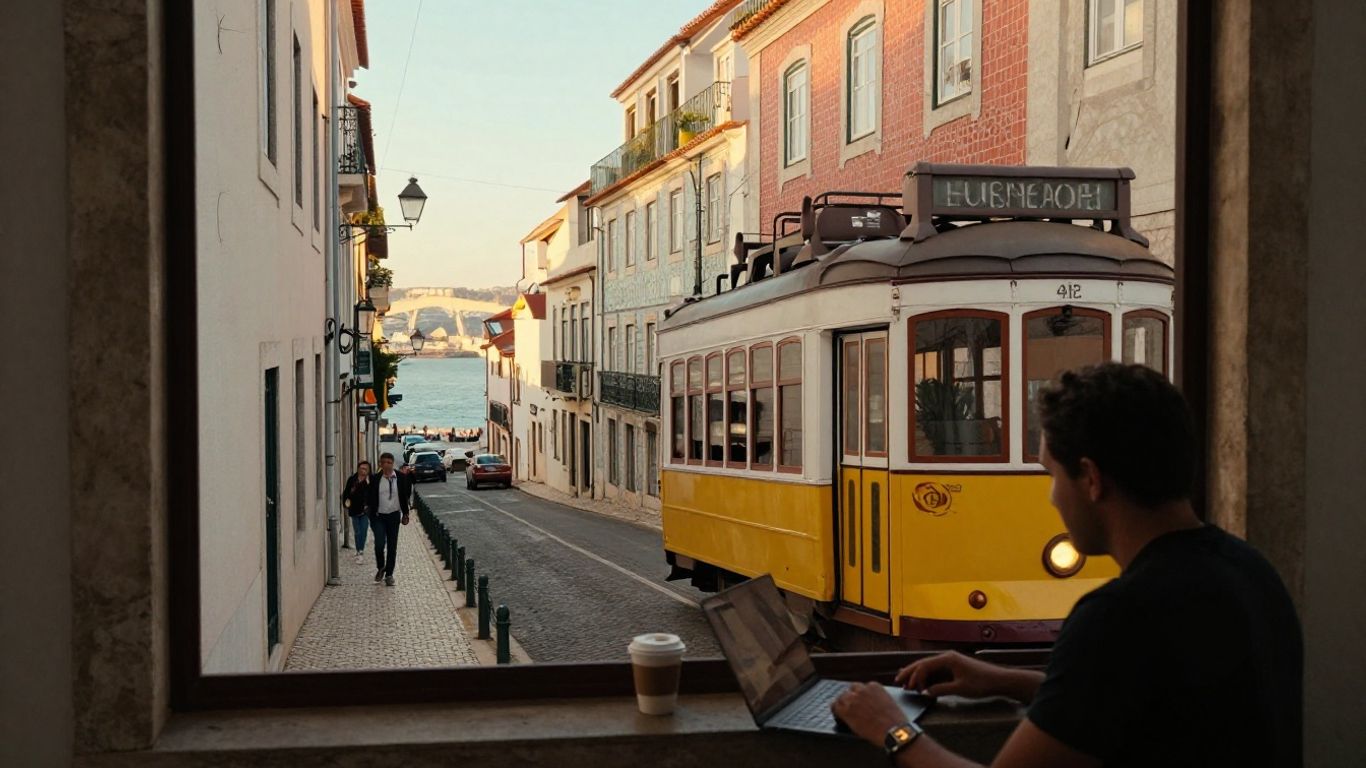 Lisbon tram beside colorful hillside homes
A real home can change the experience of staying for several months. Portugal home exchange opportunities focus on reliable WiFi, dedicated workspaces, and walkable neighborhoods, which are useful criteria whether you rent, swap, or book a conventional stay. Portugal works best for people who want a social base but still value unhurried mornings, neighborhood cafés, and easy access to the coast.
3. Italy: Best choice for long-term stays and cultural immersion
Italy suits remote workers who want their stay to feel less like an extended holiday and more like a temporary chapter of ordinary life. Rome, Milan, Turin, Bologna, Naples, Florence, and Palermo each have a distinct rhythm, cost profile, and relationship with tourism. The reward is cultural depth: a quick coffee, a market run, or an evening walk can become part of a much richer daily routine.
Italy’s newer digital nomad permit has made the country more relevant to remote workers, but applicants still need to verify the current rules, qualifying work status, documentation, and tax consequences. Internet quality is generally strongest in major urban centers and newer buildings, while older residential properties can vary. A local SIM or hotspot is a sensible backup for important calls.
The best Italian base may not be the most famous one. Turin can offer a calmer, more affordable alternative to Milan, while Bologna and Naples provide strong food cultures and active city life. For a longer stay, look for a proper desk, reliable upload speeds, heating or cooling, and a neighborhood where errands can be done on foot rather than choosing solely by historic views.
4. Croatia: Best digital nomad visa country for coastal living
Croatia is a natural choice for remote workers who want the Adriatic close at hand. Split, Dubrovnik, Zadar, and Rijeka offer different versions of coastal life, while Zagreb provides a more practical inland base with a stronger year-round rhythm. Outside the busiest summer months, the shoreline can feel peaceful and unusually restorative.
The Croatian digital nomad residence route is intended for remote work performed for companies or clients outside Croatia. Eligibility, proof of funds, health insurance, and permitted stay length should be confirmed before applying. Seasonal housing is the main practical challenge: a place that feels affordable in winter may be difficult to secure at the same price in July and August.
Coastal beauty can also blur the line between a holiday and a sustainable work routine. Check desk space, heating, air conditioning, ferry or flight connections, and the availability of groceries outside peak season. Croatia is strongest for workers who can arrange a quiet base, tolerate a seasonal market, and genuinely enjoy a slower schedule between deadlines.
5. Estonia: Best option for digital infrastructure and e-residency support
Estonia appeals to remote workers who prefer efficient systems, compact cities, and a digitally minded culture. Tallinn offers a polished technology scene, reliable public services, and a strong international presence, while Tartu feels smaller and more academic. The country’s northern climate is a genuine consideration, particularly for anyone drawn primarily by warm weather.
Estonia’s digital nomad visa allows eligible remote workers to stay for a defined period while working for an employer or business outside the country. It is separate from e-residency, which is a digital identity and business-administration tool rather than a right to live in Estonia. That distinction matters, as does checking the latest income, insurance, and documentation requirements.
For the right worker, Estonia’s appeal is not glamour but low friction. Fast online administration, dependable connectivity, and a concentrated capital make it easy to establish a routine. The trade-off is a smaller social and geographic scale, higher winter heating needs, and a cost of living that is no longer uniformly low in central Tallinn.
6. Greece: Best digital nomad visa country for Mediterranean living
Greece offers a compelling mix of sea, history, food, and a relaxed social rhythm. Athens is the most practical base for flights, services, and community, while Thessaloniki brings a younger café culture and the islands offer a more deliberate pace. Remote workers should be realistic about island logistics, especially outside the main tourist season.
The Greek digital nomad visa is aimed at people whose remote work and income come from outside Greece. Rules around income, documents, family members, residence, and taxation require careful checking because the most attractive headline is not always the simplest long-term arrangement. A local accountant or qualified immigration professional can be worthwhile when a stay approaches tax-residency territory.
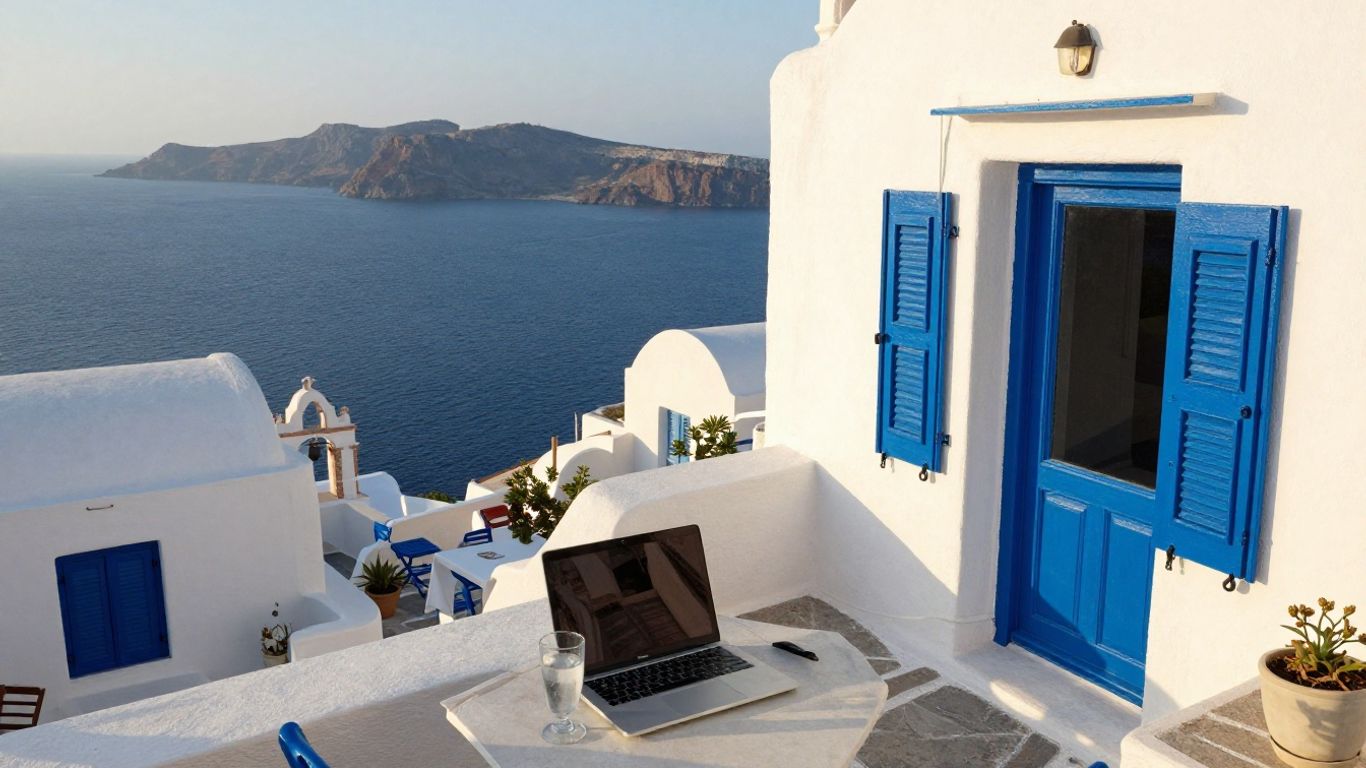 Whitewashed Greek village above the blue Aegean Sea
Greece is particularly good for workers who can shape their schedule around heat and transport. Summers may call for early work sessions and shaded afternoons, while winter island life can be quieter and less convenient. Choose the base first, then assess the internet, workspace, ferry links, and access to everyday services rather than relying on postcard appeal.
7. Malta: Best English-speaking European destination for remote workers
Malta is compact, sunny, and unusually easy to navigate for English-speaking remote workers. Valletta, Sliema, St. Julian’s, and quieter areas around the island provide different balances of nightlife, swimming, restaurants, and residential calm. Because distances are short, it is possible to explore without giving up much working time.
The Nomad Residence Permit is intended for eligible third-country nationals working remotely for employers or clients based outside Malta. Applicants should confirm current requirements for income, contracts, insurance, accommodation, and the permitted period of residence. Malta’s small size can simplify logistics, but it does not eliminate the need to inspect a property carefully.
Housing quality varies, and dense areas can be noisy or heavily built up. Summer heat, construction, traffic, and limited green space may matter more after the first few weeks than they did on arrival. Malta is a strong fit for someone who values English-language accessibility and a social Mediterranean setting, provided they choose a genuinely comfortable home office.
8. Colombia: Best affordable digital nomad visa in Latin America
Colombia is one of the most interesting options for remote workers seeking a large, varied country rather than a resort bubble. Medellín is known for its springlike climate and international community, Bogotá offers cultural depth and cooler weather, and coastal cities bring a very different pace. Each location has its own altitude, rain pattern, safety considerations, and housing market.
The Colombian digital nomad visa is generally built around remote work for foreign employers or clients, with eligibility based on documented income and other requirements. Applicants should examine the latest rules and understand how immigration status interacts with local tax residence. Affordability can be attractive, but it should never be assessed without considering neighborhood, transport, healthcare, and security.
Colombia rewards a trial stay before a longer commitment. Spend enough time to learn how the altitude affects you, whether your neighborhood feels comfortable after dark, and how dependable the apartment’s internet is during work hours. A strong local routine can make the country feel generous and energizing; choosing solely on price can create avoidable friction.
9. Costa Rica: Best digital nomad visa country for nature and outdoor living
Costa Rica is a natural fit for remote workers who measure quality of life in beaches, forests, wildlife, and time outdoors. San José provides the widest range of services, while Tamarindo, Santa Teresa, the Central Valley, and other smaller areas appeal to people who want more immediate access to nature. The country’s geography creates a surprising range of climates and living costs.
Costa Rica’s digital nomad program is aimed at remote workers earning from outside the country, and the application process includes financial and insurance requirements that should be checked against current official guidance. Internet can be perfectly workable in established areas, but rural or coastal properties deserve extra due diligence. Ask about backup power, upload speeds, and what happens during heavy rain.
Costa Rica home exchange options describe work-ready homes with reliable WiFi, dedicated workspaces, and local neighborhood immersion. That same checklist is useful for any accommodation search. Costa Rica works best when the outdoor lifestyle is paired with a realistic plan for groceries, transport, medical care, and uninterrupted calls.
10. Thailand: Best digital nomad visa country for affordability and flexibility
Thailand combines excellent food, strong transport links, varied landscapes, and a cost structure that can still suit many remote workers. Bangkok is energetic and well connected, Chiang Mai has a slower café-centered rhythm, and the islands offer a more scenic but sometimes less predictable work base. The country can support both a highly social lifestyle and a quiet, focused one.
Thailand’s long-term visa landscape includes routes that may suit remote workers, but the right option depends on nationality, income, employment, qualifications, and intended stay. Requirements and benefits can be detailed, so applicants should rely on current official information rather than an old social-media summary. Visa flexibility is useful only when the status matches the work arrangement.
Before choosing a Thai base, sort out a few practical questions:
- Is the apartment’s internet reliable during video calls and storms?
- Can you work comfortably through the hottest part of the day?
- Is the neighborhood convenient without depending on taxis?
- Do you have a backup plan for visas, health care, and banking?
These questions separate a pleasant month from a sustainable working stay. Thailand is especially attractive to people who enjoy variety and can adapt quickly, but a little preparation prevents low rent or beautiful views from hiding everyday inconveniences.
Conclusion
The best digital nomad visa countries are not identical, and that is the point: Spain may offer the strongest balance, Portugal the easiest lifestyle fit, Italy the deepest cultural immersion, and Thailand or Colombia a more flexible budget. Compare the visa rules with the life you actually want to lead, then test the practical details before turning a destination into a home.
Frequently Asked Questions
What is a digital nomad visa?
A digital nomad visa is a residence or stay permission designed for people who work remotely for employers or clients outside the host country. It usually sits between a tourist stay and a conventional local employment visa.
Do digital nomad visas allow local employment?
Usually, these programs are intended for foreign-based work rather than employment with a company in the host country. The exact restriction varies, so applicants should read the current program rules carefully.
How long do digital nomad visas last?
Validity differs widely. Some permits cover several months, while others can be renewed or linked to a longer residence route. The initial visa period is not always the same as the maximum possible stay.
Do remote workers still owe taxes in their home country?
Possibly. Visa status does not automatically end home-country tax obligations, and citizenship, residence, income source, and treaty rules can all matter. Professional tax advice is sensible before a long stay.
What documents are commonly required?
Common requirements include proof of remote employment or clients, income records, health insurance, a valid passport, accommodation details, and a clean criminal-record check. Each country sets its own list.
Which destinations are best for affordable remote work?
Colombia and Thailand are often considered for affordability, while parts of Greece, Croatia, Portugal, and Spain may offer better value outside the most popular neighborhoods and peak seasons.
Should I rent a home before applying for the visa?
Some applications require accommodation evidence, but a long lease is not always necessary. Check the application rules first, and avoid making an inflexible commitment before you understand the location, tax position, and visa outcome.

Published by
SwappaHome
SwappaHome Editorial Team
Home Exchange & Slow Travel Editorial
The SwappaHome Editorial Team brings together travel research, home-exchange community insights, and platform data to produce practical guides for first-time and experienced home swappers. Every article cites real platforms, current market rates, and verifiable city-level facts so readers can make informed decisions without guessing.
Ready to try home swapping?
Join SwappaHome and start traveling by exchanging homes. Get 7 free credits when you sign up!