
Americas travel: the ultimate guide to planning unforgettable trips across North, Central, and South America

SwappaHome Editorial Team
Home Exchange & Slow Travel Editorial
Key Takeaways Americas travel rewards curiosity, patience, and a willingness to leave room for the unexpected. The best trip is shaped around your interests,…
Key Takeaways
Americas travel rewards curiosity, patience, and a willingness to leave room for the unexpected. The best trip is shaped around your interests, not an attempt to collect every famous sight.
- Choose a region that matches your travel style and available time.
- Build around a few meaningful bases instead of constant transfers.
- Check seasonal weather, entry rules, and local event calendars early.
- Budget for transport, taxes, tips, insurance, and flexibility.
- Travel with respect for communities, cultures, and natural environments.
Choose the right destination for your travel style
The Americas are too varied for one universal itinerary. A city break in Montréal feels entirely different from a rainforest stay in Costa Rica or a long journey through the Andes. Start with the experiences you want most, then choose a region that makes those experiences easy to reach. A focused trip usually feels richer than a hurried tour of several countries.
North America for cities, nature, and road trips
North America works well for travelers who want a mix of major cities, national parks, food scenes, and flexible road travel. You might pair museums and neighborhoods in New York or Montréal with mountain landscapes, desert parks, or a coastal drive. Distances can be enormous, though, so look at a map before promising yourself several far-apart stops.
For destination inspiration, browse these Americas travel guides, which cover places ranging from Montréal and Norfolk to San Miguel de Allende and Charleston. They can help turn a broad regional idea into a more specific route with a clear character.
Central America for beaches, wildlife, and adventure
Central America suits travelers drawn to warm coastlines, volcanoes, cloud forests, wildlife, and active days. Surf towns, colonial cities, and protected natural areas can sit surprisingly close together, but travel times are not always predictable. Choose two or three bases and consider whether you would rather spend the afternoon on a bus or in the water.
Costa Rica is a natural fit for an independent trip built around forests, parks, and outdoor activities; this Costa Rica solo travel guide offers one way to think about living locally while exploring. Mexico, Guatemala, Panama, and Belize each bring a different balance of culture, coastline, and adventure.
South America for culture, mountains, and diverse landscapes
South America rewards longer stays because its landscapes and cultures change dramatically across borders. Buenos Aires brings late dinners, grand architecture, and neighborhood life; the Andes offer high-altitude scenery; Chile stretches from desert to Patagonia; and Colombia combines historic towns with lively cities and mountain valleys. Allow time to adjust when altitude, climate, or language shifts quickly.
A home-based stay can also change the rhythm of a city visit. For example, a Buenos Aires home exchange is framed around exploring local neighborhoods and experiencing Argentina’s capital at a slower pace. Treat that kind of accommodation as one possible travel style rather than a substitute for checking location, house rules, and availability.
How to match destinations with your budget and available time
A week is enough for one city and its nearby surroundings, while two weeks can support a regional pairing with careful planning. Longer trips make internal flights, overland routes, and slower stays more worthwhile. Your budget should influence the shape of the journey from the start, not merely determine which restaurant you choose after booking.
Home exchange is another option to investigate when accommodation is a major part of the cost. Home exchange across the Americas describes stays in verified homes, local neighborhood living, and a credit-based approach; compare the practical details with hotels, hostels, and rentals before deciding what suits you.
Plan the ideal Americas travel itinerary
A strong itinerary has a visible center of gravity. Perhaps it is a food-focused city journey, a sequence of national parks, or a beach-and-mountains trip with time for local culture. Sketch the route on a calendar, then remove one stop before booking anything. That small act of restraint often creates the space that makes a trip memorable.
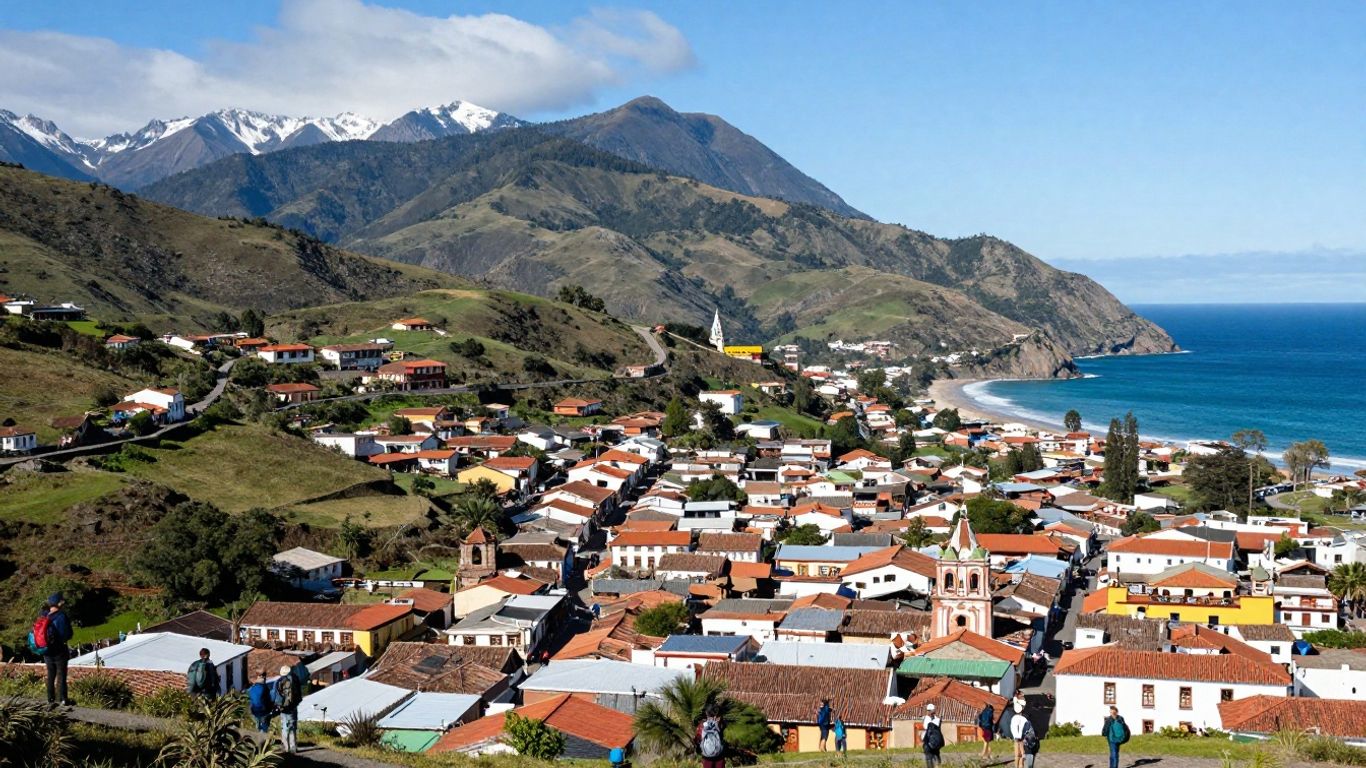 Colorful Americas journey through cities and mountains
How to combine multiple countries without rushing
Crossing a border can consume more of a day than a map suggests. Add airport transfers, check-in windows, delays, and the mental effort of changing money or language. If two countries are essential, connect places with practical transport and keep at least two nights at most stops.
A useful test is to ask what you would do if one travel day went wrong. If the answer is “cancel a major experience,” the itinerary is too tight. Build the route so a delay changes the order of activities rather than ruining the whole trip.
Choosing between regional hubs and slower travel routes
Regional hubs make complex journeys easier because they offer more flights, accommodation, and services. Slower routes can be more rewarding when the journey itself—by bus, ferry, or train—is part of the experience. Pick one approach for each portion of the trip instead of mixing rapid flights with an overland schedule that leaves no breathing room.
You can also divide a long trip into chapters: one city, one natural area, and one slower local stay. That structure gives the journey variety without forcing every destination to compete for attention.
Building an itinerary around seasons and major events
Festivals, migrations, snow seasons, and major cultural events can define the timing of a trip. Research dates early, since popular periods may fill accommodation and raise transport prices. Then check whether the event is genuinely central to your experience or simply an attractive reason to travel at the busiest possible time.
Keep a backup activity for weather-sensitive days. A museum, food market, neighborhood walk, or cooking class can preserve the mood of a trip when a hike or boat excursion is postponed.
Allowing time for rest, transfers, and unexpected changes
Rest is not wasted time, especially after a long flight or a change in altitude. Give yourself an uncomplicated first day and avoid placing a nonrefundable tour immediately after an international transfer. Leave some unassigned hours for laundry, local recommendations, and the ordinary discoveries that do not appear in a guidebook.
Before finalizing reservations, identify the parts of the itinerary that are fixed and the parts that can move. That distinction makes disruptions easier to manage and keeps one missed connection from becoming an expensive chain reaction.
Understand the best time to visit
There is no single best season for the Americas. The northern and southern hemispheres have opposite summers, tropical regions may have wet and dry periods, and mountain conditions can change within a single country. Weather is only one factor, but it is a useful starting point for deciding what kind of day-to-day experience you want.
Weather patterns across the Americas
North American summers can be ideal for cities, lakes, and national parks, while winters favor snow trips and milder southern destinations. Central America often has clearer distinctions between dry and rainy periods, although showers can be brief or highly localized. South America ranges from equatorial climates to cool southern landscapes, so country-level averages are rarely enough.
Check conditions for each stop rather than relying on a regional label. Elevation, coastline, and latitude can produce very different temperatures within a few hours of travel.
Peak, shoulder, and low-season travel
Peak season usually brings the easiest conditions and the highest demand. Shoulder seasons can offer a helpful compromise: reasonable weather, fewer crowds, and more choice in accommodation. Low season may deliver excellent value, but you need to accept closures, shorter operating hours, or more changeable conditions.
Choose based on your priorities. A photographer may welcome quiet streets, while a family with fixed school dates may value reliable weather and straightforward logistics more than a lower nightly rate.
Hurricane season and other regional weather risks
Caribbean and coastal areas can face hurricanes during the Atlantic season, while other regions experience flooding, wildfire, extreme heat, or heavy mountain rain. Monitor official forecasts close to departure and understand the cancellation terms attached to flights, tours, and accommodation. Travel insurance is most useful when it is purchased before a known disruption affects your plans.
Do not treat a weather warning as a minor inconvenience. Follow local instructions, avoid exposed routes, and be prepared to change destinations if conditions make travel unsafe.
When to plan around festivals, wildlife, and outdoor activities
Events and natural encounters can justify precise timing, but they also require patience. Wildlife sightings are never guaranteed, and festival days may involve crowds, road closures, or limited services. Reserve high-demand activities early, then protect the rest of the itinerary from becoming equally rigid.
Ask local operators about responsible viewing practices and seasonal limitations. The best experience is one that leaves the place and its animals undisturbed.
Set a realistic travel budget
A travel budget should describe how you actually move through a place, not just add up nightly room rates. Include arrival costs, local transport, meals, activities, connectivity, and a reserve for changes. A flexible buffer matters because long-distance travel rarely follows the first spreadsheet perfectly.
Estimating flights, accommodation, and transportation
Price the major segments first: international flights, internal connections, intercity transport, and accommodation in the most expensive locations. Then estimate a daily amount for meals and activities using the travel style you expect to maintain. A budget hotel does not help much if every destination requires costly transfers or taxis.
Compare total trip cost rather than isolated bargains. A slightly more expensive room near useful transport may save both time and daily fares.
Comparing costs across popular destinations
Costs vary within every country. A capital city, beach resort, and remote national park may have entirely different prices for food, rooms, and transport. The table below is a planning framework rather than a price list; use it to identify which categories deserve local research.
| Trip element | Often costs more when | Often costs less when | Planning question |
|---|---|---|---|
| Accommodation | Dates are fixed and demand is high | You stay longer or travel in shoulder season | Is the location worth the premium? |
| Transportation | You book late or need private transfers | You use buses, rail, or shared routes | Does the slower option fit the schedule? |
| Food | You eat in tourist centers every day | You mix restaurants with markets and local cafés | What daily rhythm feels realistic? |
| Activities | Tours are private or tightly scheduled | You choose public sites and self-guided outings | Which experiences truly need a guide? |
The framework makes trade-offs visible. If flights consume most of the budget, reduce the number of internal moves rather than cutting every meaningful activity.
Saving money with flexible dates and local experiences
Moving your trip by a few days can change airfare and accommodation costs considerably. Staying several nights in one place may also unlock better rates and reduce transfer expenses. Local markets, public parks, neighborhood cafés, and free cultural spaces can be memorable without making the trip feel austere.
Consider accommodation that supports a slower routine. For example, a Miami home exchange guide discusses local neighborhoods and free accommodation through home swapping; verify current options and terms before including that approach in your budget.
Preparing for taxes, tipping, and unexpected expenses
Taxes may appear at checkout, and tipping customs differ across countries and services. Set aside money for baggage, airport transfers, SIM cards, medication, replacement documents, and a last-minute night near an airport. Carry more than one payment method and keep emergency funds separate from your everyday wallet.
Review the budget once a week during a longer journey. A small correction early is easier than discovering near the end that every remaining activity must be canceled.
Navigate transportation and borders
Movement is part of the character of an Americas trip. A flight may save a day, while a bus or ferry can reveal landscapes that would otherwise pass unnoticed. Border rules and transport schedules change, so confirm details with official sources shortly before departure and keep essential documents accessible.
Choosing flights, buses, trains, ferries, and rental cars
Flights make sense across huge distances, but regional buses can be efficient and affordable where routes are well established. Trains are especially appealing on selected corridors, while ferries may connect coastal towns and islands. Rental cars offer freedom in rural areas but add insurance, fuel, parking, and navigation considerations.
Choose transport according to the experience and the geography. A scenic road trip needs daylight and spare time; an overnight bus may be practical but should not be treated as a guaranteed rest day.
Understanding visa and entry requirements
Entry requirements can depend on citizenship, passport validity, onward travel, vaccination rules, and the purpose or length of your stay. Check the official immigration or consular website for every country on the route. Save copies of confirmations, but do not assume a screenshot replaces a required original document.
Rules can change between booking and departure. Recheck them shortly before leaving and confirm whether transit through a third country creates an additional requirement.
Crossing land borders between countries
Land crossings may involve separate procedures on each side, transport changes, fees, and queues. Keep your passport, entry records, insurance details, and onward plans easy to reach. Avoid scheduling a major flight or tour immediately after a border crossing unless there is a generous margin.
Ask your accommodation or a reputable local operator about the practical crossing process, while still checking official information yourself. Advice that is useful in one season or at one checkpoint may not apply elsewhere.
Managing currency, mobile service, and travel documents
Carry a small amount of local currency for transport and small purchases, but avoid carrying all your money together. An unlocked phone, an offline map, and a backup way to access reservations can make an unfamiliar arrival much calmer. Keep digital and physical copies of your passport and key insurance information in secure, separate places.
A simple document folder—digital and paper—should include these essentials:
- Passport and visa or entry confirmations.
- Transport tickets and accommodation addresses.
- Insurance policy details and emergency contacts.
- Prescription information and relevant medical records.
Organizing these items before departure means less searching at a border or clinic. It also gives a trusted person at home a clear record of your route.
Travel safely and responsibly
Safety is less about removing every uncertainty than about preparing for the predictable ones. Research the specific neighborhoods and activities you will use, listen to local advice, and keep your plans visible to someone you trust. Responsible travel adds another layer: the trip should be good for you without placing unnecessary pressure on people or places.
Health preparations, vaccinations, and travel insurance
Arrange a medical consultation well before departure, particularly for long trips or visits involving remote areas and high altitude. Ask about routine vaccinations, destination-specific advice, prescriptions, food and water precautions, and a plan for managing existing conditions. Travel insurance should reflect your activities and cover the countries you will actually visit.
Bring medication in original packaging and carry a written list of medicines and allergies. If you plan trekking, diving, or winter sports, check that the policy covers those activities rather than assuming every adventure is included.
Common safety concerns by destination
Risks vary from place to place, but crowded transport, petty theft, unofficial taxis, poor road conditions, and isolated nighttime walks are common areas for caution. Use well-reviewed transport, keep valuables discreet, and avoid displaying your full travel budget. In nature, follow marked routes and local guidance about weather, wildlife, water, and altitude.
Avoid broad assumptions about an entire country. A practical safety plan is specific to your lodging, route, transport, and daily activities.
Respecting local cultures and Indigenous communities
Learn a few local phrases, ask before photographing people or ceremonies, and dress in a way that fits the setting. Indigenous communities are not backdrops for travel content; their histories, rights, and traditions deserve attention and consent. Choose guides and businesses that share value with local communities when possible.
Listen more than you perform. A respectful traveler accepts that some places, stories, and ceremonies are not available for casual consumption.
Reducing environmental impact while traveling
The biggest gains often come from traveling less frantically. Stay longer, use public transport where practical, refill a reusable bottle when safe, and avoid activities that exploit wildlife or damage fragile habitats. Accommodation choices, food waste, and unnecessary domestic flights also shape the footprint of a journey.
Small decisions accumulate across a long trip. Leave natural areas as you found them, support local businesses, and choose experiences that help protect the landscapes that brought you there.
Conclusion
The most unforgettable Americas travel plans balance ambition with attention: choose a coherent route, understand the season, budget honestly, and leave room for real life. Whether your journey centers on cities, coastlines, mountains, or local neighborhoods, traveling more slowly usually gives you more to remember.
Frequently Asked Questions
How long should a trip across the Americas be?
There is no fixed ideal, but one to two weeks suits a focused region, while longer journeys allow more overland travel and slower stays. Avoid measuring success by the number of borders crossed.
Which part of the Americas is best for first-time travelers?
The best starting point depends on your interests, language comfort, budget, and preferred transport. Choose a destination with infrastructure that matches your experience and a route that does not require constant transfers.
What is the cheapest way to travel through the Americas?
Costs depend on season and distance, but staying longer, using buses where practical, cooking occasionally, and choosing local experiences can reduce spending. Compare the full journey cost rather than only the room rate.
Do I need a visa for every country I visit?
Not necessarily. Requirements depend on your nationality, passport, transit route, and length or purpose of stay. Check official government sources for each country before booking and again before departure.
Is it safe to travel alone in the Americas?
Many people travel alone successfully, but conditions vary widely. Research each destination, choose accommodation carefully, protect valuables, share your itinerary, and use local advice for transport and outdoor activities.
When should I book flights and accommodation?
Book major transport and high-demand accommodation early when traveling during festivals, school holidays, or peak seasons. For shoulder-season trips, some flexibility can help you find better value.
How can I travel more responsibly?
Stay longer in fewer places, support locally owned businesses, respect cultural and Indigenous communities, avoid harmful wildlife activities, and reduce waste and unnecessary transport whenever practical.

Published by
SwappaHome
SwappaHome Editorial Team
Home Exchange & Slow Travel Editorial
The SwappaHome Editorial Team brings together travel research, home-exchange community insights, and platform data to produce practical guides for first-time and experienced home swappers. Every article cites real platforms, current market rates, and verifiable city-level facts so readers can make informed decisions without guessing.
Ready to try home swapping?
Join SwappaHome and start traveling by exchanging homes. Get 7 free credits when you sign up!