
Bahamas vacation packages: How to choose the best trip for your budget and travel style

SwappaHome Editorial Team
Home Exchange & Slow Travel Editorial
Key Takeaways The best Bahamas vacation packages are the ones that match how you actually want to spend your time, not simply the ones with the largest…
Key Takeaways
The best Bahamas vacation packages are the ones that match how you actually want to spend your time, not simply the ones with the largest discount. Compare destinations, inclusions, dates, and cancellation terms before you book.
- Choose an all-inclusive, family, romantic, cruise, or independent package based on your travel style.
- Match the island to your priorities, whether that means nightlife, beaches, boating, or quiet scenery.
- Check flights, transfers, meals, activities, taxes, resort fees, and baggage rules together.
- Expect higher prices during the busiest winter and early-spring travel period.
- Read the cancellation policy and full price breakdown before paying a deposit.
Compare the main types of Bahamas vacation packages
Bahamas vacation packages can look similar at first glance, yet the experience varies greatly depending on what is bundled. One deal may focus on a resort stay and meals, while another combines flights, a cruise itinerary, or a selection of excursions. Start by deciding whether you value convenience, flexibility, privacy, or predictable spending most.
All-inclusive resort packages
An all-inclusive package usually brings accommodation, meals, selected drinks, entertainment, and some activities into one reservation. It can be a comfortable choice if you prefer to settle in rather than plan every meal and transfer separately. Before booking, confirm which restaurants, premium drinks, water sports, and excursions are actually covered, since “all-inclusive” does not always mean every resort service is free.
For adults seeking a resort-centered trip, Sandals presents an adults-only, all-inclusive option with accommodation, dining, entertainment, and land and water sports included in the listed price. Treat that description as a starting point, then check the exact property and dates because package terms can vary.
Family-friendly vacation packages
Family packages work best when the schedule leaves room for naps, pool time, and slower meals rather than filling every day with tours. Look for adjoining or connecting rooms, child-friendly dining, shallow swimming areas, and convenient transfers from the airport. A kids’ club can be useful, but ask about age limits, operating hours, supervision, and whether it carries an additional fee.
Families should also compare the practical details that are easy to overlook. A slightly higher package price may be worthwhile if it includes breakfast, airport transportation, and activities that would otherwise require several separate bookings. The right package reduces friction without forcing everyone into the same pace.
Couples and romantic getaway packages
Couples often care less about the number of included activities and more about privacy, room quality, dining atmosphere, and uninterrupted time together. A package with a balcony, late checkout, a quieter beach, or a private transfer may feel more valuable than one with a long list of organized entertainment. Check whether romantic extras, such as a dinner reservation or spa treatment, are included or merely advertised as optional add-ons.
It also helps to separate the celebration from the destination. A resort near Nassau may offer easy access to restaurants and nightlife, while a smaller island can provide a calmer setting. If you are planning a wedding or celebration, compare vendor policies and weather backup plans early; a guide to Dominican Republic wedding beauty is a useful reminder that tropical hair and makeup require their own planning, even though the destination differs.
Cruise, island-hopping, and independent travel packages
Cruises provide a structured way to see more than one place, with meals and entertainment often organized onboard. The tradeoff is limited time in port and less control over where you spend the night. Island-hopping packages offer more variety but require careful attention to ferry or domestic flight schedules, luggage, and weather-related changes.
Independent travel gives you the most freedom to choose neighborhoods, restaurants, and activities. It can also require more work, especially when combining separate hotels and transfers. For a trip built around comparison rather than a single resort, Bahamas vacation deals can help you think through common attractions, seasonal timing, and package possibilities without treating one itinerary as universally best.
Choose the right Bahamas destination
The Bahamas is an archipelago, so “a beach vacation” can mean very different things from one island to another. Nassau and Paradise Island tend to suit travelers who want convenience and activity, while the Exumas appeal to people drawn to open water and quiet scenery. Your destination affects transfer time, dining choices, excursions, and the overall rhythm of the trip.
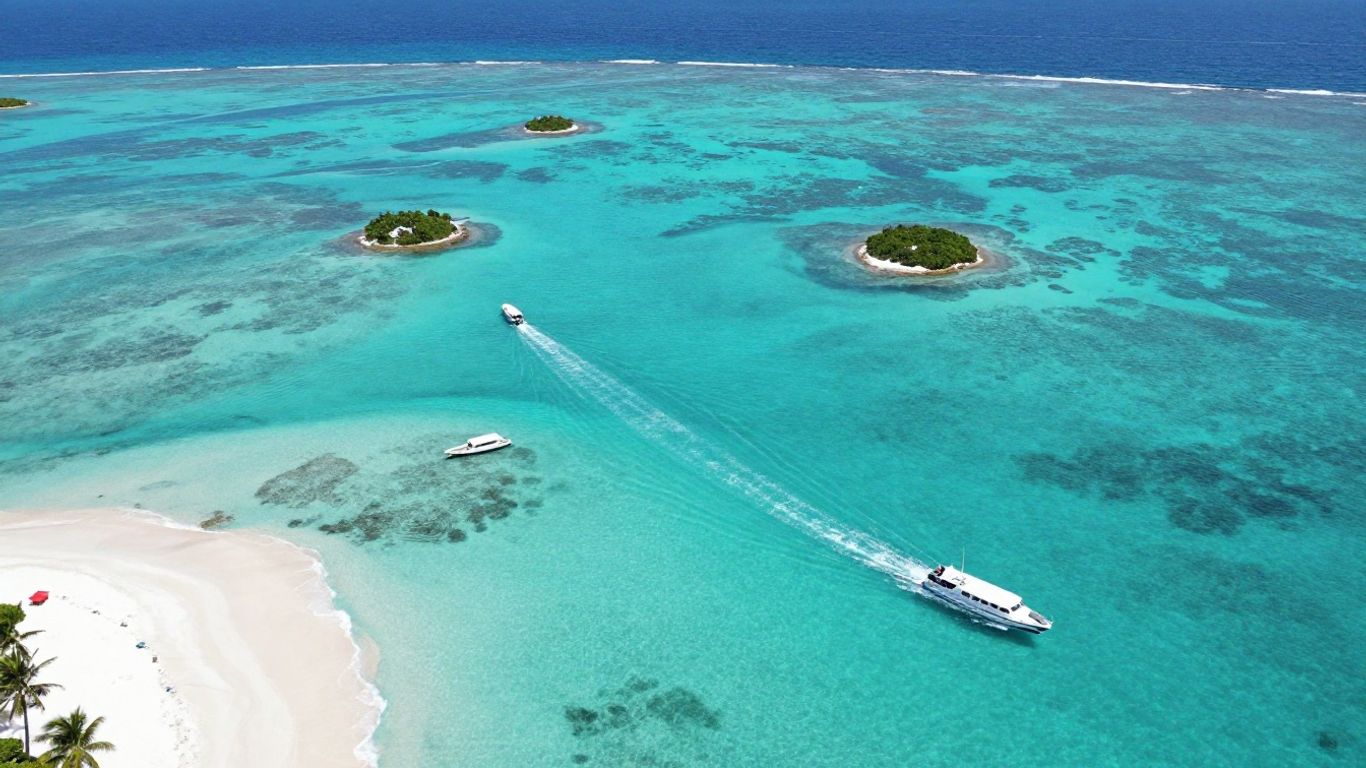 Aerial view of turquoise Bahamian islands
Nassau and Paradise Island for convenience and nightlife
Nassau and Paradise Island are practical choices for a first visit or a short break. They offer access to restaurants, shopping, historic sites, nightlife, resorts, and a broad range of tours. Because many packages are built around this area, it is often easier to compare flight schedules and airport transfers here than on a smaller island.
The busier setting is part of the appeal, but it may not suit someone hoping for an empty beach every afternoon. Read recent reviews for the specific resort area, and consider how much time you want to spend traveling to excursions versus relaxing close to your room.
Grand Bahama for beaches and outdoor activities
Grand Bahama can be a good fit for travelers who want beaches alongside outdoor recreation. Depending on the package, you may find opportunities for boating, snorkeling, nature-focused outings, and other active pursuits without committing to a tightly packed itinerary. Compare the location of the hotel with the activities you want, since an attractive excursion list is less useful if every outing requires a lengthy transfer.
This island can also appeal to repeat visitors who have already experienced Nassau. Build in a little unscheduled time; outdoor conditions, boat availability, and energy levels can change the shape of a day.
The Exumas for secluded scenery and boating
The Exumas are known for striking water, smaller islands, and a more secluded feel. They suit travelers who place boating, snorkeling, photography, and natural scenery above nightlife or extensive shopping. Packages here may be more specialized, and transfers can involve extra planning, so confirm exactly how you will reach the property after landing.
Ask whether boat trips are shared or private, how weather changes are handled, and what equipment is supplied. A package that looks expensive on paper may be reasonable if it includes the particular water activities you would otherwise book separately.
Eleuthera and Harbour Island for a slower-paced escape
Eleuthera and Harbour Island are appealing when you want a quieter trip shaped by beaches, small-scale dining, and unhurried days. They can work especially well for couples, repeat visitors, or anyone who finds large resort zones tiring. The smaller scale means fewer last-minute alternatives, however, so reserve important transfers and dinners ahead of time.
Think carefully about your preferred balance of seclusion and convenience. If you want to explore several restaurants and nightlife venues spontaneously, a more connected destination may be easier. If your ideal day is a long walk followed by a relaxed meal, the slower pace may be exactly the point.
Decide what your package should include
A package price is only useful when you know what it covers. Two reservations with the same room category can have very different final costs once flights, baggage, transfers, meals, activities, taxes, and resort charges are added. Save the inclusions page or confirmation email so you can compare the offer later without relying on memory.
Flights, airport transfers, and baggage
Check the airports, flight times, layovers, seat rules, and baggage allowance before comparing package totals. A low fare with an inconvenient overnight connection may not be a bargain for a family or a short weekend. Confirm whether airport transfers are private, shared, scheduled, or excluded, and ask what happens if a flight arrives late.
If you plan to rent a vehicle for part of the trip, read the practical Florida Keys car rental guide for a useful comparison point on vehicle choice, tolls, parking, and driving logistics. The Florida Keys are not the Bahamas, but the same habit applies: understand the transport details before assuming a package is fully convenient.
Hotel rooms, meals, and drinks
Look beyond the room photograph. Confirm bed configuration, view category, occupancy rules, check-in times, and whether the room is located in the main resort or a separate building. For meals and drinks, find out whether reservations are required, whether specialty restaurants carry surcharges, and whether bottled water, minibar items, or premium beverages are excluded.
A European-plan stay can suit travelers who want to eat around town, while a meal-inclusive plan may be simpler for guests who expect to remain at the resort. The better option depends on your destination, dining habits, and willingness to arrange reservations each day.
Excursions, water sports, and entertainment
Included activities can add real value, but only if they match your interests and are available during your stay. Read the fine print for age limits, weather cancellations, advance reservations, equipment, guides, and transportation. A resort may list snorkeling or kayaking among its activities while limiting access to certain hours or conditions.
Make a short priority list before you compare packages:
- One or two activities you would be disappointed to miss.
- The amount of time you want to spend on the beach or by the pool.
- Dining experiences that matter more than included entertainment.
- Whether you prefer guided outings or independent exploration.
This list keeps attractive extras from distracting you from the actual shape of your holiday. If the package includes your top priorities, a smaller activity menu may be perfectly adequate.
Resort fees, taxes, and other extras
Look for taxes, service charges, resort fees, port fees, transfer charges, and gratuities in the final price rather than in the headline rate. Also check for optional costs such as spa treatments, premium Wi-Fi, cabanas, room upgrades, and transportation to off-site activities. The final price matters most when you are comparing packages with different inclusion levels.
Ask for a complete per-person and per-room total, including the payment schedule. If the quote is in another currency, note the exchange-rate assumptions and whether your card issuer may add a foreign transaction fee.
Set a realistic budget for your Bahamas vacation
A useful budget includes more than the advertised package. Count the cost of getting to the departure airport, meals outside the plan, tips, souvenirs, insurance, and a reserve for weather or transport changes. Then compare the total against the kind of trip you want rather than chasing the lowest initial number.
 Couple relaxing beside a Bahamian beach resort
Typical costs by travel style and destination
Resort stays in convenient areas often offer the widest range of package prices, while smaller-island stays may cost more because of limited inventory and additional transfers. Cruise packages can simplify accommodation and onboard meals, but shore excursions and port transportation may increase the total. Independent trips vary widely according to room type, dining choices, and how many islands you combine.
Use a simple comparison rather than an assumed daily rate:
| Travel style | Main cost drivers | Budget question to ask |
|---|---|---|
| All-inclusive resort | Room category, dates, transfers, upgrades | Are the meals and activities I want included? |
| Family resort stay | Occupancy, room layout, kids’ services, meals | Will convenience reduce extra daily spending? |
| Cruise | Cabin, port charges, excursions, drinks | What will we spend while ashore? |
| Independent island trip | Hotels, ferries or flights, dining, tours | Does flexibility justify the planning and transfers? |
After making the comparison, add a personal spending allowance. Someone who plans to stay at the resort may need far less than a traveler who wants daily boat trips and restaurant meals.
How travel dates affect package prices
Demand commonly rises during the winter and early spring period, when many travelers seek warm, dry weather. School holidays and long weekends can also affect airfare and room availability. If your schedule is flexible, compare nearby departure dates rather than searching for only one exact week.
Shoulder periods can offer a middle ground between peak prices and the quietest parts of the year. Check the weather outlook and cancellation terms carefully, though; a lower rate is not helpful if the booking cannot be changed when plans shift.
When all-inclusive pricing offers better value
All-inclusive pricing tends to make more sense when you expect to eat most meals at the resort, want several included activities, or prefer to know the core cost in advance. It may be less economical for travelers who spend most days off-property or enjoy sampling independent restaurants. Calculate the meals and activities you would realistically buy, not every item technically available.
For example, a couple planning two boat excursions and several dinners away from the resort may value a room-only or breakfast plan more highly. A family that wants predictable mealtimes and pool days may get more from an all-inclusive arrangement, even if its headline price is higher.
Ways to find discounts and seasonal deals
Compare the same room and dates across several legitimate booking channels, then read the terms behind any percentage-off claim. Some offers lower the room rate but exclude transfers, taxes, or popular room categories. Others provide resort credit that is useful only for services you already planned to purchase.
You can also reduce costs by choosing a less expensive room category, traveling midweek, or booking activities directly after checking the resort’s cancellation rules. For broader ideas on accommodation savings and flexible travel planning, budget-friendly home exchange guides offer a different model from a conventional Bahamas package; it may not fit every island itinerary, but it can sharpen your thinking about where your budget is going.
Plan the timing and logistics of your trip
Good planning is less about filling every hour than removing avoidable uncertainty. Check seasonal weather, entry requirements, transfer schedules, and insurance before you pay a nonrefundable deposit. A little preparation is especially valuable when your itinerary includes more than one island.
Best times to visit the Bahamas
December through April is often popular for warm, generally drier conditions, but it is also a busy period in many destinations. Late spring and parts of autumn may bring different prices and fewer crowds, although conditions can be less predictable. Choose dates according to your priorities: dependable beach days, lower rates, school calendars, or a particular event.
Book popular excursions early during high-demand periods, but leave some flexibility for weather. The perfect schedule on paper can become stressful if every day depends on a boat departing at a fixed time.
Hurricane season and weather considerations
The Atlantic hurricane season runs from June through November, and tropical weather can affect flights, ferries, excursions, and resort operations. This does not mean every trip during that period will be disrupted, but it does make flexible reservations and suitable insurance more valuable. Review the provider’s storm policy rather than assuming a cancellation will automatically produce a refund.
Pack for heat, sun, and sudden showers, and keep important medications and documents in your carry-on. If a storm is forecast, follow official guidance and instructions from airlines, hotels, and local authorities.
Passport, entry, and travel insurance requirements
Travel documents depend on your nationality, route, length of stay, and purpose of travel. Check current entry rules with the Bahamian government, your airline, and the relevant consulate before departure; requirements can change. Make sure your passport has sufficient validity and that names match across tickets, reservations, and identification.
Travel insurance can help with medical emergencies, trip interruption, baggage problems, and weather-related changes, depending on the policy. Read exclusions carefully, particularly for pre-existing conditions, named storms, and activities such as diving or boating.
Getting around between islands and resorts
Moving between islands requires more than choosing two points on a map. Compare ferry and flight schedules, luggage allowances, terminal locations, transfer times, and backup options. A short connection may look efficient but leave little room for a delayed flight or a late ferry.
If you are combining islands, avoid placing your most important activity immediately after a transfer. Arrive with enough time to check in, settle your bags, and adjust if the schedule changes. A simpler itinerary is often more relaxing than one that adds a second island merely to appear comprehensive.
Evaluate and book the right package
The final decision should come from a side-by-side review of the offer, not from a bright discount label. Put the itinerary, inclusions, payment schedule, cancellation policy, and final price in one place. Then ask whether the package supports the way you want to spend your days.
Comparing package providers and cancellation policies
Read who is responsible for each part of the booking: the airline, hotel, resort, cruise operator, or package seller. Check whether changing one element changes the entire reservation, and note deadlines for partial refunds, credits, or name corrections. A flexible booking can be worth more than a small upfront saving when your dates are uncertain.
Keep screenshots or PDFs of the offer at the time of purchase. Terms displayed during a search can change, and clear records make it easier to resolve a discrepancy later.
Checking resort reviews and package inclusions
Recent reviews can reveal recurring issues with noise, transfers, maintenance, dining reservations, or beach conditions. Read beyond the overall score and look for comments from travelers with a similar room type and trip purpose. Resort photos may show the best-case view, so compare them with independent guest images when possible.
At the same time, return to the written inclusions. Reviews describe individual stays and may refer to packages different from yours. Confirm every important promise in the booking confirmation rather than assuming a reviewer’s experience applies to your reservation.
Avoiding hidden fees and misleading deals
Be cautious when a deal emphasizes a low nightly or per-person rate without displaying the full total. Ask about taxes, resort charges, mandatory transfers, service fees, payment deadlines, and the cost of changing dates. A “free” upgrade may be subject to availability, while a credit may expire or apply only to selected services.
Before confirming, make sure you know the following:
- The complete total for every traveler.
- What is due now and what is due later.
- Which services are optional, mandatory, or unavailable on your dates.
- The cancellation, rebooking, and weather-related rules.
Then compare like with like. A higher quote that includes transfers and meals may be less expensive overall than a cheaper room-only offer.
Building an itinerary around your priorities
Choose two or three trip priorities and let them shape the booking. If your priority is relaxation, favor a convenient resort and minimal transfers. If it is exploration, reserve enough time and budget for excursions rather than paying extra for amenities you will not use.
A practical pre-trip review can also draw on unrelated planning resources when they address a specific task: Seamless Gutter Installation, Boric Acid vs Ozonated Suppositories, and a CIPD provider guide are examples of pages that cover different kinds of preparation, not Bahamas travel itself. For transport comparisons, DiscoverCars is another separate resource. These links are not substitutes for checking Bahamian travel rules; they simply illustrate why precise, task-specific information is more useful than a generic checklist.
Finally, if you are considering a home-based stay rather than a conventional resort, SwappaHome describes guides on home swapping and travel planning. That approach is not interchangeable with a package, so weigh the extra coordination against the savings and flexibility it may offer.
Conclusion
The best Bahamas vacation packages make your preferred kind of holiday easier without hiding the real cost. Choose the destination first, compare what is genuinely included, allow for weather and transport changes, and book only after reading the cancellation terms. A thoughtful match between budget, pace, and priorities will matter more than a flashy deal.
Frequently Asked Questions
What is usually included in a Bahamas vacation package?
Packages may include accommodation, flights, transfers, meals, drinks, activities, entertainment, or some combination of these. Always check the written inclusions because taxes, resort fees, baggage, premium drinks, and excursions may be separate.
Are all-inclusive Bahamas packages worth it?
They can be worthwhile if you plan to eat and spend most of your time at the resort and want predictable core costs. Travelers who explore off-property frequently may find a room-only or breakfast plan better value.
Which Bahamas island is best for a first visit?
Nassau and Paradise Island are convenient for many first-time visitors because they offer broad accommodation, dining, nightlife, and excursion choices. A quieter island may be a better fit if relaxation and seclusion matter more than convenience.
What is the best month to visit the Bahamas?
Many travelers prefer December through April for warm, generally drier weather, though this period can be busier and more expensive. Shoulder-season dates may offer a useful balance of price, crowds, and weather.
How far in advance should a Bahamas vacation be booked?
Book earlier for peak travel dates, school holidays, popular resorts, or limited island transfers. Flexible travelers can compare closer dates, but they should still check cancellation rules and availability before waiting for a lower price.
Do I need travel insurance for a Bahamas trip?
Travel insurance is not a universal substitute for careful planning, but it can help with covered medical emergencies, interruptions, baggage issues, and certain weather disruptions. Review exclusions and storm-related terms before purchasing.
Is it easy to travel between Bahamian islands?
It is possible, but schedules, luggage rules, weather, and terminal transfers require planning. Leave buffer time between connections and avoid scheduling an important excursion immediately after arriving on another island.

Published by
SwappaHome
SwappaHome Editorial Team
Home Exchange & Slow Travel Editorial
The SwappaHome Editorial Team brings together travel research, home-exchange community insights, and platform data to produce practical guides for first-time and experienced home swappers. Every article cites real platforms, current market rates, and verifiable city-level facts so readers can make informed decisions without guessing.
Ready to try home swapping?
Join SwappaHome and start traveling by exchanging homes. Get 7 free credits when you sign up!