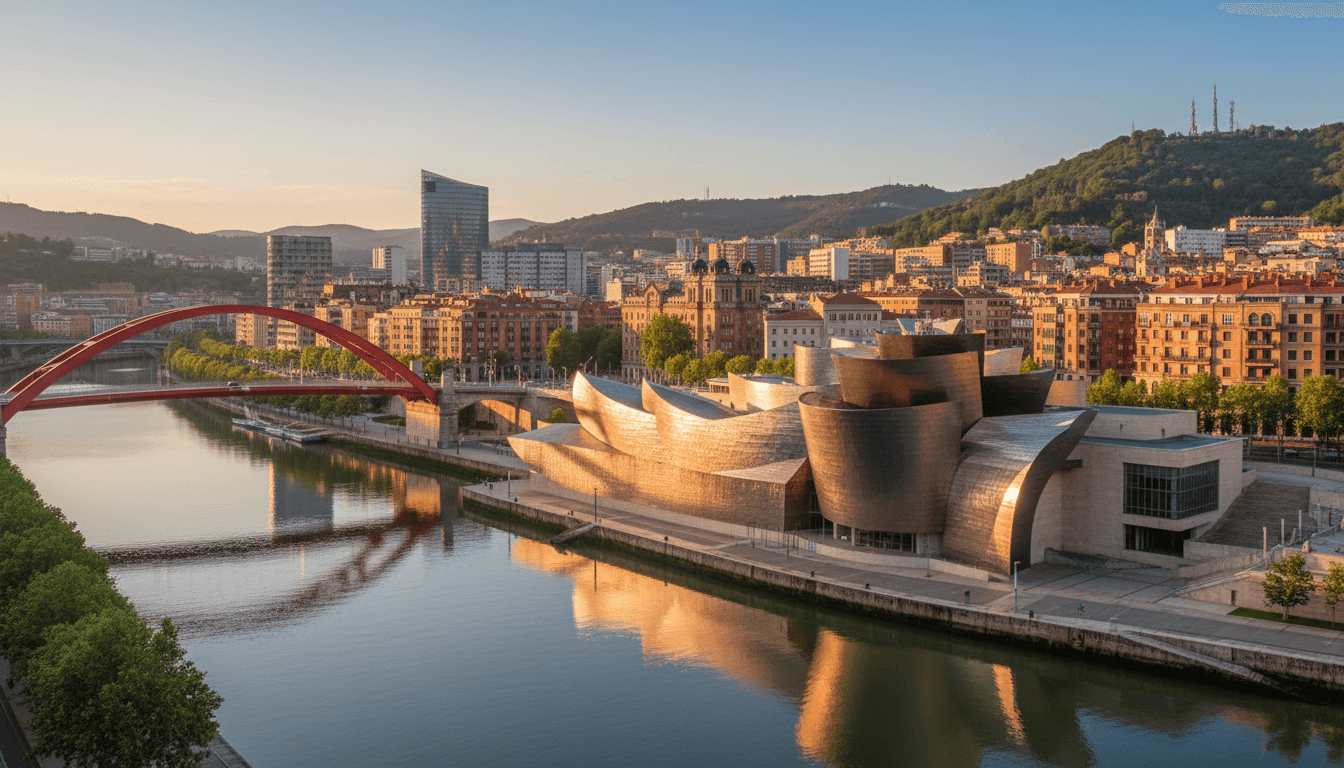
Bilbao Home Swap Guide: Your Complete Blueprint for Spain's Most Underrated City

SwappaHome Editorial Team
Home Exchange & Slow Travel Editorial
Everything you need to know about home swapping in Bilbao—from the best neighborhoods and local secrets to practical tips that'll save you hundreds.
The Guggenheim gets all the credit, but it was the smell of grilled txuletón drifting from a neighborhood asador that made me fall for Bilbao. I'd booked a home swap in the Casco Viejo on a whim—three weeks in a compact apartment above a pintxos bar—and by day two, I knew I'd stumbled onto something special.
So here's the thing: I wish someone had handed me this guide before my first trip. Not the glossy tourist board version, but the real stuff. Which neighborhoods actually feel like home. What to expect from Basque hosts. How to stretch your euros (or credits) further than you thought possible.
 morning light filtering through wooden shutters onto a rustic breakfast table with caf con leche and
Why Bilbao Is Perfect for Home Exchange
Most travel guides won't tell you this: Bilbao isn't trying to be Barcelona or Madrid. It's aggressively, wonderfully itself. The city has this working-class soul that survived the industrial decline, the Guggenheim renaissance, and the subsequent tourist attention without losing its edge.
For home swappers? That translates into authenticity that doesn't cost a fortune.
Hotel prices here hover around €150-200/night ($165-220 USD) for anything decent near the old town. Airbnbs run €90-140/night ($100-155 USD) for a one-bedroom. Through SwappaHome's credit system, though, you're spending one credit per night regardless of the apartment's market value. I've stayed in places that would easily rent for €180/night on the open market.
But honestly, it's not just about savings. When you swap homes in Bilbao, you get a kitchen to store those incredible cheeses from La Ribera market. A washing machine—crucial for longer stays. A neighborhood where the barista starts making your cortado the moment you walk in.
The Basque Country has this thing about hospitality. It's understated but deeply genuine. My host, Aitor, left me a hand-drawn map of his favorite spots, a bottle of txakoli in the fridge, and his mother's number "in case you need anything." I never called her, but I almost cried at the gesture.
Best Neighborhoods for Your Bilbao Home Swap
Location matters more in Bilbao than in sprawling cities. The good news? The central neighborhoods are walkable, distinct, and each offers a different flavor of Basque life.
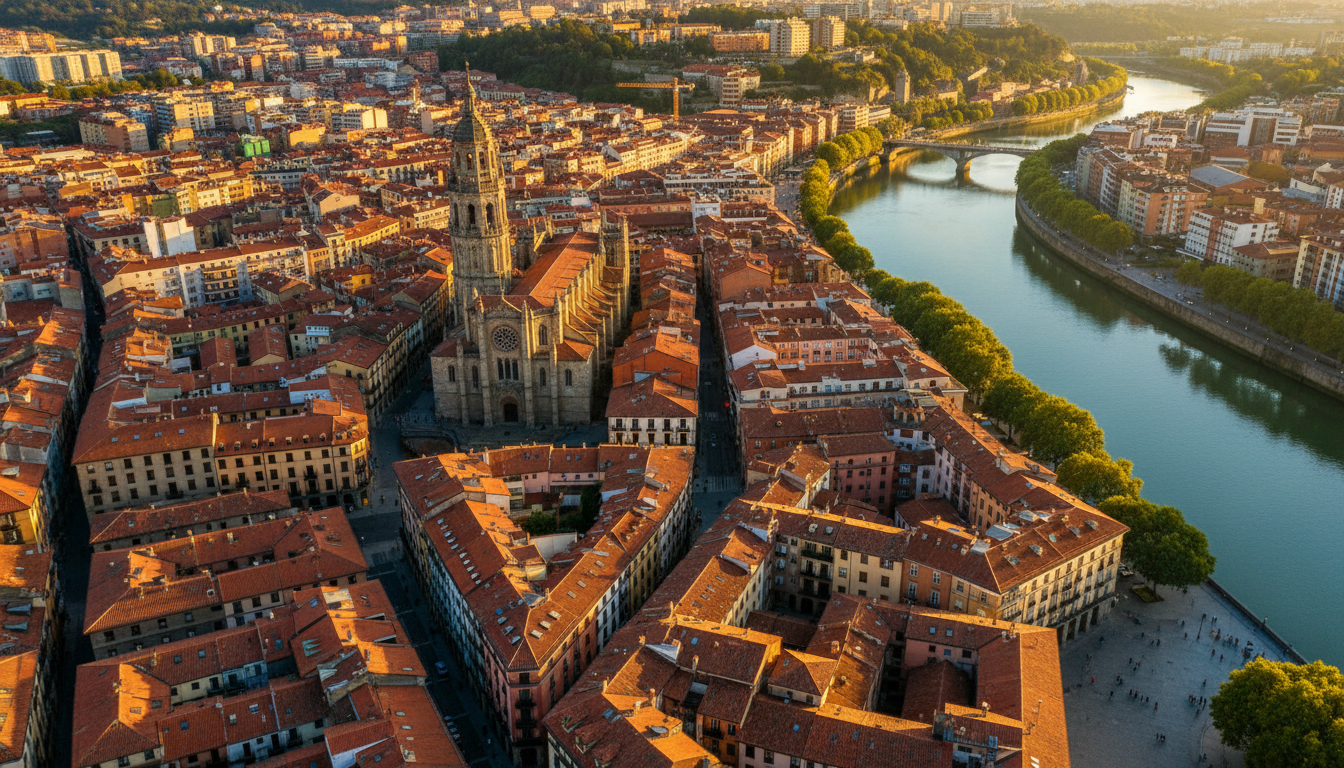 aerial view of Bilbaos Casco Viejo at golden hour, showing the dense medieval streets, the Santiago
Casco Viejo: The Historic Heart
This is where I stayed on my first Bilbao home swap, and I'm biased—I think it's the best starting point for newcomers.
The Casco Viejo (Old Town) is seven original streets dating back to the 1300s, now packed with pintxos bars, independent shops, and locals who've lived here for generations. It's pedestrianized, which means you'll hear conversations bouncing off stone walls instead of traffic. The apartments here have character over space—most are in renovated buildings with exposed brick, narrow staircases, and that particular European charm of "the bathroom is somehow in the kitchen." Sizes range from studios to three-bedrooms, though two-bedroom places are most common.
The pros: walkable to everything, best pintxos concentration, authentic neighborhood feel, Sunday market at Plaza Nueva. The cons: can be noisy on weekend nights (especially around Calle Somera), limited parking if you're renting a car, some buildings lack elevators.
Abando and Ensanche: The Elegant Grid
If the Casco Viejo feels too medieval, Abando offers the 19th-century bourgeois alternative. This is where you'll find the Guggenheim, wide boulevards, and the kind of apartments with high ceilings and ornate moldings.
I swapped into an Abando place last fall—a three-bedroom that felt like a museum curator's home, complete with a library and a balcony overlooking Gran Vía. The neighborhood is quieter, more residential, and attracts families and professionals. Expect more space, modern amenities, better natural light. Many buildings have elevators and parking garages.
The pros: close to Guggenheim and Fine Arts Museum, excellent restaurants (slightly more upscale), good transport connections, safer feeling at night. The cons: less "authentic" neighborhood vibe, fewer casual pintxos bars, can feel corporate during weekdays.
Deusto: The University Quarter
Across the river from Abando, Deusto has that slightly bohemian energy that comes with university towns. It's where students, young families, and artists have landed as the center got pricier.
I haven't swapped here yet, but friends rave about the value—larger apartments, local prices at restaurants, and a community feel that the tourist areas lack. Expect modern builds mixed with older renovations, more outdoor space (terraces, small gardens), family-friendly setups.
The pros: best value per square meter, authentic local life, beautiful river walks, easy tram access to center. The cons: 15-20 minute walk to Casco Viejo, fewer tourist conveniences, some areas feel residential-sleepy.
Bilbao La Vieja: The Creative Edge
This former working-class neighborhood across the river from Casco Viejo has transformed into Bilbao's creative hub. Street art covers building facades, vintage shops occupy former warehouses, and the multicultural energy is palpable.
Real talk: Bilbao La Vieja divides opinion. Some find it edgy and exciting; others feel uncomfortable with the grittier streets. It's gentrifying fast, but unevenly. If you're the type who loves Brooklyn's Bushwick or London's Peckham, you'll probably love it here. Expect industrial-chic conversions, artist studios, more experimental interior design—and prices lower than the center.
The pros: best street art and alternative culture, cheapest pintxos, interesting galleries and studios, young international community. The cons: some streets feel sketchy after dark, fewer traditional Basque experiences, can be loud.
How to Find the Perfect Bilbao Home Swap
Searching for a Bilbao home swap on SwappaHome is straightforward, but a few strategies will get you better results.
 laptop open on a wooden desk showing a home exchange listing, with a cup of coffee and a Bilbao trav
Timing matters. Bilbao's peak season runs from June through September, with Semana Grande (Big Week festival) in mid-August being absolute chaos. If you want the best selection of homes, start your search 3-4 months ahead for summer, 6-8 weeks for shoulder season.
When browsing listings, look beyond the photos. The description tells you about the host as much as the home. Hosts who mention their favorite local spots, their neighborhood's quirks, or their home's limitations are usually the most reliable. Generic descriptions that could apply to any city? Red flag.
Send personalized messages—I can't stress this enough. Basque hosts, like hosts everywhere, respond better to requests that show you've actually read their listing. Mention something specific: their book collection, the balcony view, the proximity to a market they mentioned. It takes two extra minutes and dramatically increases your acceptance rate.
Be upfront about your needs. Traveling with a dog? Say so immediately. Need reliable wifi for remote work? Ask about speeds. Planning to host a small dinner party? Check if that's welcome. Assumptions lead to awkward situations.
The verification system on SwappaHome helps build trust, but reviews are your best friend. A host with fifteen positive reviews and one mildly critical one is often better than a host with three perfect reviews—more data points mean more reliability.
What to Expect from Your Basque Host
Basque hospitality operates on a different frequency than what you might experience elsewhere in Spain.
There's less effusiveness, more substance. Your host probably won't shower you with exclamation points in messages, but they'll leave detailed instructions, quality olive oil in the pantry, and recommendations that actually match your interests. The communication style tends toward direct and practical—don't mistake brevity for coldness. It's cultural. When Aitor wrote "keys under mat, instructions on table, call if problems," he wasn't being dismissive. He'd spent hours preparing those instructions and trusted me to figure out the rest.
Most Basque hosts I've encountered through home swaps take tremendous pride in their region. They want you to experience the "real" Basque Country, not the tourist version. This means you'll often get recommendations for their favorite neighborhood asador rather than the famous ones, day trips to coastal villages like Getaria or Mundaka, the specific time to visit La Ribera market (Saturday morning, arrive by 10am), and which pintxos bars are actually good versus just Instagram-famous.
One thing to understand: Basque homes often run on different schedules than American or Northern European ones. Lunch happens around 2pm, dinner rarely before 9pm. Your host might mention that "the neighborhood is quiet in the afternoon"—this is siesta culture, still alive in residential areas.
 traditional Basque pintxos spread on a wooden bar counter, including gildas olive-anchovy-pepper ske
Practical Tips for Your Bilbao Home Swap Experience
Getting There and Around
Bilbao Airport (BIO) sits about 12 kilometers north of the city center. The Bizkaibus A3247 runs every 20-30 minutes and costs €3 ($3.30 USD)—it drops you at the Termibus station, walking distance from most central neighborhoods. Taxis run about €25-30 ($27-33 USD) to the center.
Once you're in Bilbao, you won't need a car. The metro system is clean, efficient, and designed by Norman Foster (yes, the architect). A single ride costs €1.70 ($1.85 USD); a Barik card gives you discounts on multiple trips. The tram connects key spots along the river. Most home swappers walk everywhere—the city is compact. Casco Viejo to the Guggenheim takes about 20 minutes on foot along the river, and it's genuinely pleasant.
Money Matters
Bilbao is significantly cheaper than Barcelona or Madrid, but it's not a budget destination by Spanish standards.
Expect to spend roughly €1.50-2 ($1.65-2.20 USD) for coffee, €2.50-4 ($2.75-4.40 USD) per pintxo, €12-18 ($13-20 USD) for a casual lunch, €35-60 ($38-66 USD) for a nice dinner, and €30-50 ($33-55 USD) for a grocery run covering a few days.
The home swap advantage shows up most in accommodation savings. At €150/night average hotel rate, a two-week stay costs €2,100 ($2,310 USD). Through SwappaHome, that's 14 credits—which you can earn by hosting guests at your own place. The math gets ridiculous quickly.
Cash is still useful in older pintxos bars and markets, though cards are increasingly accepted everywhere. ATMs (cajeros) are plentiful; avoid the ones in tourist spots that charge fees.
Weather and Packing
Bilbao's weather has a reputation, and it's earned. The Basque Country is green for a reason—rain happens year-round, often without warning.
Summer (June-August) is warmest and driest, but "dry" is relative. Expect 20-28°C (68-82°F) with occasional rain—pack layers and a light rain jacket. Spring and fall (April-May, September-October) are my favorite times: mild temperatures, fewer tourists, occasional spectacular storms. Pack layers, waterproof jacket, comfortable walking shoes. Winter (November-March) is cool and wet, 8-14°C (46-57°F). The city gets moody and atmospheric—pack warm layers, waterproof everything, and embrace the coziness of long lunches.
One packing essential: shoes that can handle wet cobblestones. The Casco Viejo's medieval streets get slippery, and you'll be walking constantly.
Language
Spanish works perfectly in Bilbao. English is common in tourist areas, restaurants, and among younger people. You'll see signs in both Spanish and Euskera (Basque), but don't worry—you're not expected to speak Basque.
A few phrases go a long way, though. Kaixo (kai-SHO) means hello in Basque. Eskerrik asko (es-KER-ik AS-ko) means thank you. "Un pintxo, por favor" gets you one pintxo, and "la cuenta, por favor" gets you the check. Basque people appreciate any attempt at their language, even if you butcher it completely.
Making the Most of Your Bilbao Home Swap
The beauty of staying in someone's home is access to neighborhood rhythms that hotels can't offer.
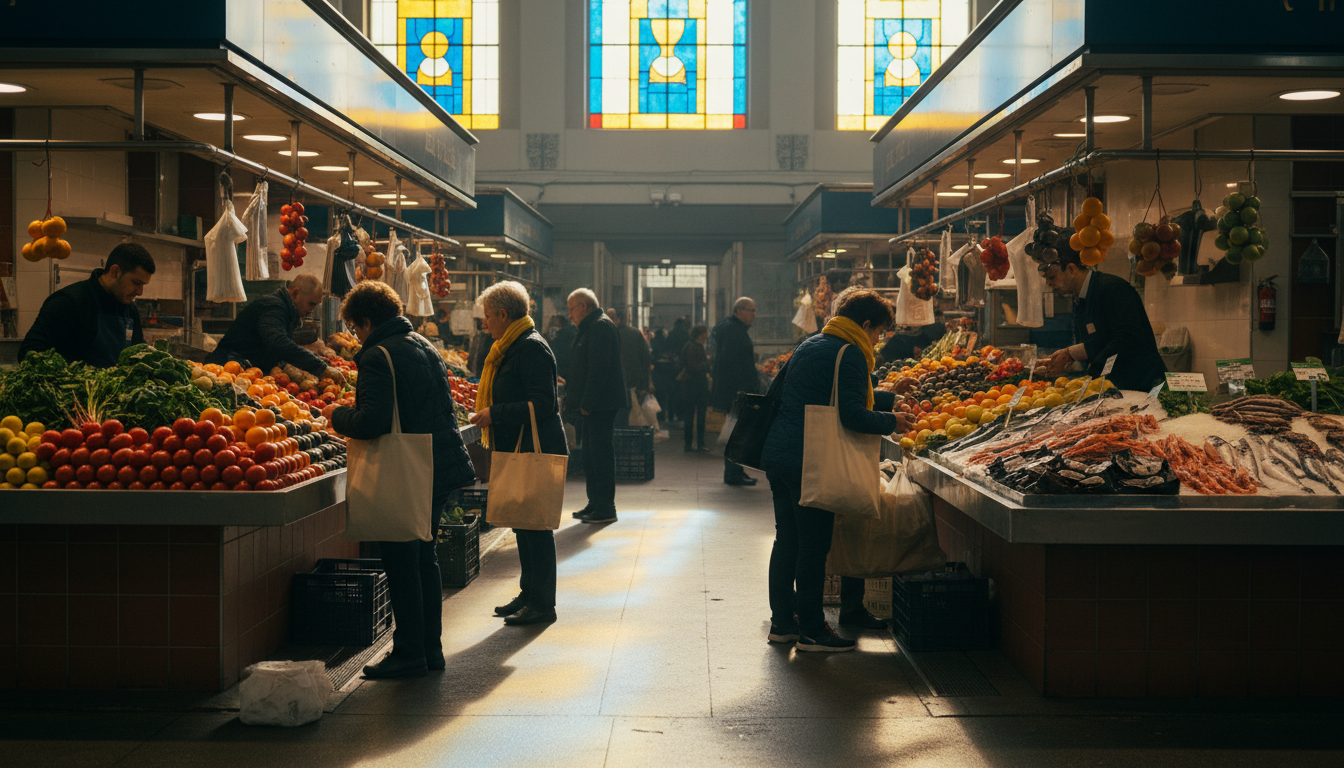 morning scene at La Ribera market in Bilbao, vendors arranging fresh produce and seafood, early shop
Eat Like a Local
Forget the Michelin-starred restaurants for a moment. The real Bilbao food experience happens standing at pintxos bars, plate in one hand, txakoli in the other.
The ritual goes like this: enter a bar, scan the counter, point at what looks good, eat, repeat at the next bar. Most locals visit 3-4 bars in an evening, having one or two pintxos at each. This is called a txikiteo, and it's social, casual, and the best way to experience Basque food culture.
My favorite bars in Casco Viejo—and I'm being specific because vague recommendations are useless: Gure Toki for creative pintxos (try the foie with apple), Bar Zuga for old-school excellence and incredible tortilla, Café Iruna not for pintxos but for the Belle Époque interior and afternoon vermouth, and Xukela which is tiny, packed, with incredible croquetas.
For sit-down meals, the asadores (grill houses) are essential. Basque beef—txuletón—is legendary for a reason. Expect to pay €40-60 ($44-66 USD) per person for a proper asador experience with wine.
Beyond the Guggenheim
Yes, visit the Guggenheim. It's extraordinary, and the building alone justifies the €18 ($20 USD) entry. But Bilbao has depth beyond its famous museum.
The Fine Arts Museum (Museo de Bellas Artes) is genuinely world-class and often overlooked. Entry is €10 ($11 USD), free on Thursdays. The collection spans medieval to contemporary, with particular strength in Basque and Spanish artists.
Take the funicular up to Artxanda for sunset views over the city. It costs €4.30 ($4.70 USD) round trip and runs until 10pm in summer. Bring wine and cheese from La Ribera market.
Walk the river. Seriously. The Nervión's banks have been transformed into a continuous public space with sculptures, parks, and architectural landmarks. Start at the Zubizuri bridge (Calatrava's white swooping footbridge), walk past the Guggenheim, continue to the Euskalduna Palace.
Day trip to San Juan de Gaztelugatxe if you have time—it's the dramatic island hermitage that appeared in Game of Thrones, about 35 kilometers east. The hike down (and up) 241 steps is memorable. Go early to avoid crowds.
Connect with Your Host's World
The best part of home swapping isn't the free accommodation—it's the window into someone else's life.
Read the books on their shelves. Cook with the spices in their kitchen. Follow their recommendations even when they seem odd. Aitor insisted I visit a specific hardware store in Bilbao La Vieja because "the owner knows everything about the neighborhood." He was right. That conversation led me to a hidden courtyard garden I never would have found otherwise.
Leave the place better than you found it. Not just clean—thoughtful. I always leave a small gift (local specialty from my home, a book I loved) and a handwritten note. It's not required, but it builds the kind of community that makes home swapping work.
Preparing Your Home for Exchange
Home swapping works both ways. When you list your place on SwappaHome for Bilbao travelers (or anyone) to book, a few preparations make the difference between good and great hosting.
Clean thoroughly—not just surface clean, but the kind of clean you'd want to arrive to. Stock basics: coffee, tea, olive oil, salt. Leave fresh towels and linens. Write a guide to your neighborhood with the same specificity you'd want in Bilbao.
The credit system means your hosting earns future travel. One night hosting equals one credit, which equals one night anywhere in the SwappaHome network. Host a family from Bilbao for a week, earn seven credits toward your own Spanish adventure. The math is simple; the experiences are priceless.
When Things Go Differently Than Expected
I'll be honest: not every home swap is perfect. The apartment might be smaller than photos suggested. The neighborhood might be noisier than described. The wifi might struggle with your video calls.
Most issues resolve with direct communication. Message your host, explain the situation, ask for solutions. Basque hosts—in my experience—are practical problem-solvers. They'll tell you which café has reliable wifi, which room is quietest, how to work the finicky hot water.
For bigger concerns, SwappaHome's messaging system keeps a record of all communication. The review system means hosts have incentive to resolve issues—their reputation depends on it.
One thing to consider: travel insurance that covers your belongings and any liability. SwappaHome connects members but doesn't provide coverage for damages or theft. I always carry a policy that covers my stuff and any accidental damage I might cause. It's typically €30-50 ($33-55 USD) for a two-week trip and worth every cent for peace of mind.
The Bilbao Home Swap Experience: Why It's Worth It
I'm writing this from my San Francisco apartment, but part of me is still in that Casco Viejo flat, listening to the Saturday morning bustle of Plaza Nueva below, planning which pintxos bars to hit that evening.
Bilbao doesn't try to impress you. It just... is. The industrial grit softened by world-class architecture. The Basque pride expressed through food rather than flags. The rain that makes the green hills impossibly green and the indoor moments impossibly cozy.
A home swap here isn't just budget travel—though the savings are real. It's a different mode of experiencing a place. You become, briefly, a resident. You have a neighborhood. You have a routine. You have a key to somewhere that feels, for a week or two, like yours.
If you're considering your first Bilbao home swap, stop considering. The SwappaHome community has listings across the city's best neighborhoods, hosts who genuinely want to share their corner of the Basque Country, and a credit system that makes extended stays actually affordable.
Pack a rain jacket. Learn to say "eskerrik asko." And leave room in your suitcase for the txakoli you'll inevitably bring home.
Frequently Asked Questions
Is a home swap in Bilbao safe for solo travelers?
Bilbao is one of Spain's safest cities, and home swapping adds an extra layer of security through community accountability. SwappaHome's verification system and review history let you vet hosts before booking. Solo travelers—myself included—find that staying in residential neighborhoods feels safer than anonymous hotels. Stick to well-lit areas at night, trust your instincts, and you'll be fine.
How much money can I save with a Bilbao home swap compared to hotels?
The savings are substantial. Average hotel rates in central Bilbao run €150-200/night ($165-220 USD), while home swapping through SwappaHome costs one credit per night regardless of the property's market value. For a two-week stay, you're looking at €2,100-2,800 ($2,310-3,080 USD) in hotel costs versus 14 credits. Those credits can be earned by hosting travelers at your own home—essentially making your Bilbao accommodation free.
What's the best time of year for a Bilbao home swap?
September and early October offer the ideal combination: warm weather, fewer tourists, and excellent availability of home swap listings. Summer (June-August) is peak season with higher demand and Semana Grande festival crowds in mid-August. Spring (April-May) brings mild temperatures and blooming countryside. Winter is quieter and rainier but atmospheric, with easier booking and cozy indoor culture.
Do I need to speak Spanish for a home swap in Bilbao?
Spanish helps but isn't essential. Most SwappaHome hosts in Bilbao communicate comfortably in English, and tourist areas are well-equipped for English speakers. Learning basic Spanish phrases improves your experience significantly, especially in traditional pintxos bars and markets. A few Basque words (kaixo for hello, eskerrik asko for thank you) earn genuine appreciation from locals.
How far in advance should I book a Bilbao home swap?
For summer stays, start searching 3-4 months ahead to get the best selection of properties. Shoulder season (spring and fall) requires 6-8 weeks of lead time. Winter bookings can often be arranged 3-4 weeks out. Send personalized messages to hosts, mention specific details from their listings, and be flexible with dates if possible—this significantly increases your acceptance rate on SwappaHome.

Published by
SwappaHome
SwappaHome Editorial Team
Home Exchange & Slow Travel Editorial
The SwappaHome Editorial Team brings together travel research, home-exchange community insights, and platform data to produce practical guides for first-time and experienced home swappers. Every article cites real platforms, current market rates, and verifiable city-level facts so readers can make informed decisions without guessing.
Ready to try home swapping?
Join SwappaHome and start traveling by exchanging homes. Get 7 free credits when you sign up!
Related articles

Bachelor and Bachelorette Parties in Singapore: The Complete Home Swap Group Guide for 2026
Planning a bachelor or bachelorette party in Singapore? Discover how home swapping lets groups of 6-12 stay together in luxury condos, saving thousands while partying in Marina Bay.
Cycling in Lisbon: 7 Home Swap Bike Tour Itineraries for Every Rider
Discover the best cycling routes in Lisbon with these home swap bike tour itineraries—from waterfront paths to hilltop adventures, all starting from your borrowed home.
Graduation Trip to Barcelona: How Home Swapping Gives New Graduates the Ultimate Celebration
Planning a graduation trip to Barcelona? Discover how home swapping lets new graduates explore Spain's most vibrant city without the hostel crowds or hotel costs.