Dublin Home Exchange Utilities Guide: WiFi, Heating & Everything Your Guests Need

SwappaHome Editorial Team
Home Exchange & Slow Travel Editorial
Master Dublin home exchange utilities—from dodgy WiFi fixes to heating quirks. Practical tips from 7 years of swapping homes across Ireland.
The radiator in my first Dublin home exchange made a sound like a dying seal every morning at 6 AM.
I'm not exaggerating. My host had warned me about "the pipes being a bit chatty," which I'd assumed was charming Irish understatement. It was not. By day three, I'd figured out the timing system, learned which valves to adjust, and discovered that the immersion heater was basically a sacred object that could bankrupt you if left on too long. Classic Dublin.
That experience—equal parts frustrating and hilarious—taught me something crucial about Dublin home exchange utilities: they're not complicated, but they're definitely different from what you might expect. Whether you're hosting guests from abroad or preparing to stay in someone's Georgian townhouse in Rathmines, understanding how Irish homes actually work will make or break the experience.
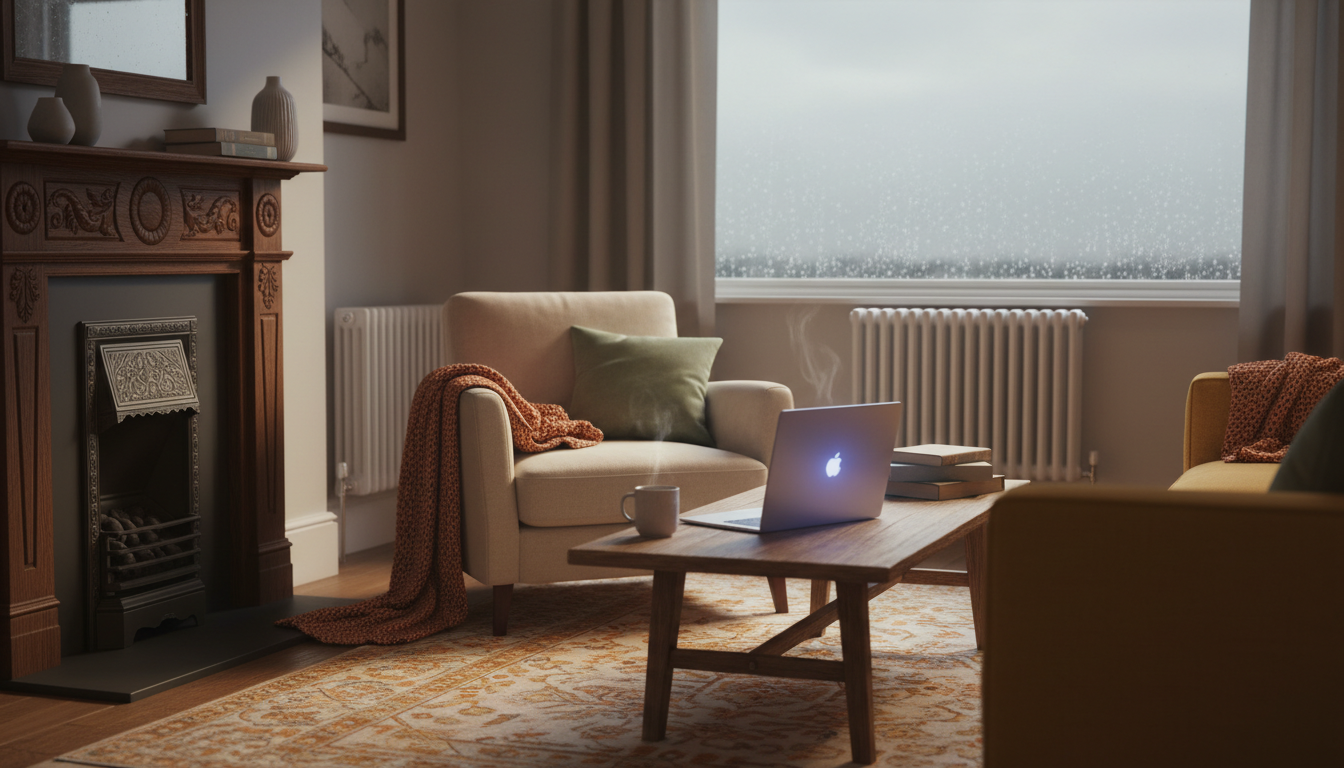 cozy Dublin living room with period fireplace, modern radiators, and rain-streaked windows showing a
Here's everything I've learned from swapping homes in Dublin over the past seven years—the practical stuff nobody tells you until you're standing in a cold kitchen at midnight wondering why the hot water won't work.
Understanding Dublin Home Exchange Utilities: The Basics
Irish homes operate differently than American, Australian, or even most European ones. The electrical system runs on 230V (versus 120V in the US), outlets have switches that need to be turned ON, and central heating is often controlled by timers that require a PhD to decipher. Only half-joking there.
When you're preparing your Dublin home for exchange guests—or arriving at someone else's place—these are the utility essentials you'll encounter:
Electricity comes from ESB (Electricity Supply Board) Networks, but you'll likely be with a supplier like Electric Ireland, Bord Gáis Energy, or one of the newer providers like Energia or SSE Airtricity. The average Dublin household pays around €150-180 per month ($165-200 USD), though this varies wildly depending on property size and insulation. Spoiler: many Dublin homes are not well-insulated.
Gas is common for heating and cooking, supplied through the national grid. Bord Gáis is the main provider, though there are alternatives. Monthly costs average €80-120 ($88-132 USD) in winter, dropping significantly in summer.
Water is where it gets interesting—or rather, boring in the best way. Irish Water provides water services, and here's the thing: residential water charges were effectively abolished in 2017 after massive public protests. Your guests won't need to worry about water bills. They might need to worry about water pressure in older buildings, but that's a different story.
WiFi and Internet Essentials for Dublin Home Exchange
Real talk: WiFi in Dublin can be excellent or absolutely maddening, and it often depends on the age of the building and which provider the homeowner uses.
The main broadband providers are:
- Virgin Media – Generally the fastest, offers speeds up to 1Gbps in urban Dublin. Most reliable in my experience.
- Eir – The former state telecoms company. Coverage is extensive but speeds vary.
- Sky Ireland – Decent mid-range option.
- Vodafone – Solid performer, especially with their fiber packages.
- SIRO – Fiber-to-the-building service available in some areas, incredibly fast when you can get it.
Average broadband costs run €40-60 per month ($44-66 USD) for decent speeds. For home exchange purposes, I always recommend hosts ensure they have at least 100Mbps download speeds—anything less and your guests will struggle with video calls or streaming.
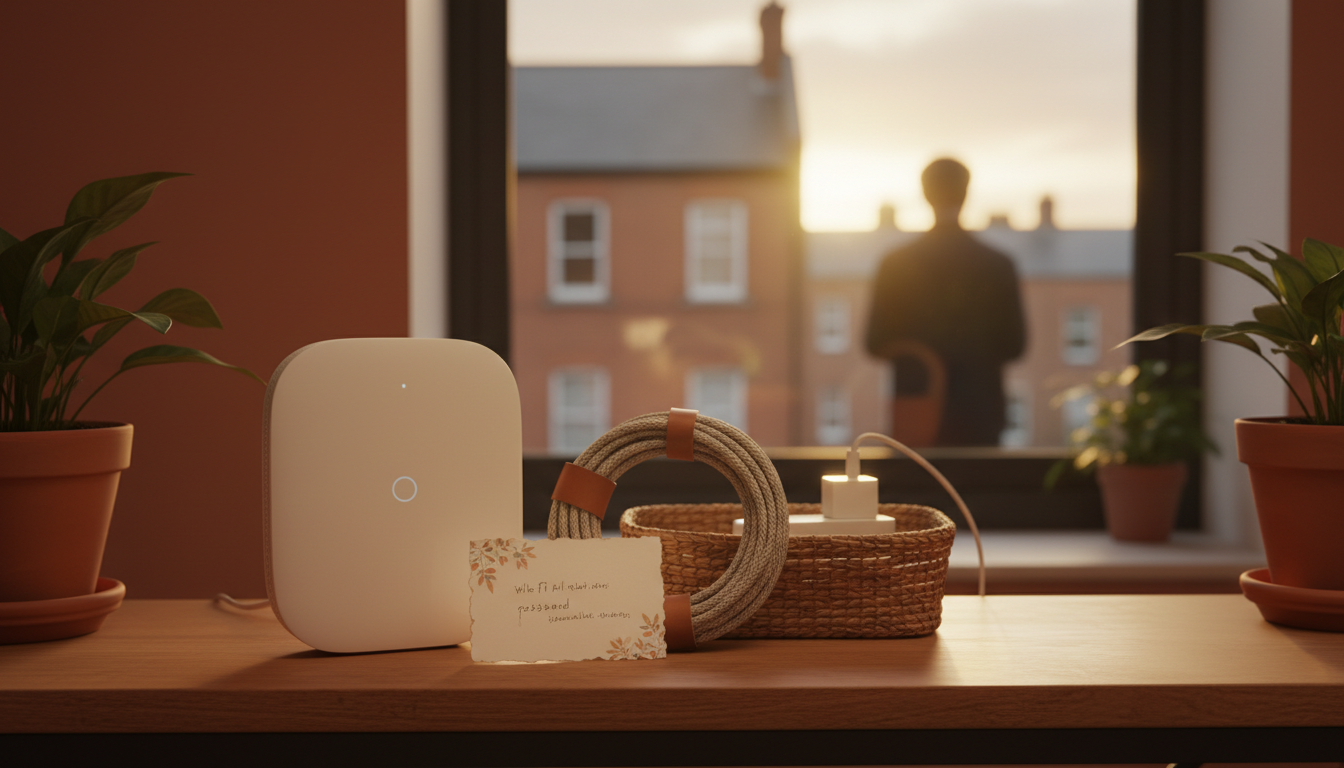 modern router setup on a shelf in a Dublin apartment, ethernet cables neatly organized, with a handw
WiFi Tips for Hosts
Here's what I include in every welcome guide for my Dublin home exchanges:
Network name and password – Printed clearly, not in some cursive font that makes zeros look like O's. I learned this the hard way when a lovely couple from Toronto spent 45 minutes trying "SwankyFlat2019" instead of "SwankyF1at2019."
Router location – Tell guests where it is and whether they can restart it if things get wonky. In Dublin's older buildings with thick walls, WiFi signal can be patchy. I keep a cheap WiFi extender plugged in near the bedroom—cost me €25 and saved countless frustrated messages.
Speed expectations – Be honest. If your broadband is 50Mbps, say so. Remote workers need to know this before they book.
Backup options – I mention that most Dublin cafés have free WiFi, and that Three Ireland offers decent pay-as-you-go mobile data if they need a backup. A 30-day unlimited data SIM costs around €20 ($22 USD).
WiFi Tips for Guests
If you're staying in a Dublin home exchange and the WiFi is struggling:
- Check if the router needs a restart (unplug for 30 seconds, plug back in)
- Connect to the 5GHz network if available—it's faster but has shorter range
- Ask your host about ethernet cables for important video calls
- Download offline content before arriving (Dublin's airport WiFi is decent for this)
Heating Systems in Dublin Homes: A Survival Guide
This is where things get properly Irish. Dublin heating systems are a unique beast, and I've seen more confused home exchange guests struggle with this than anything else.
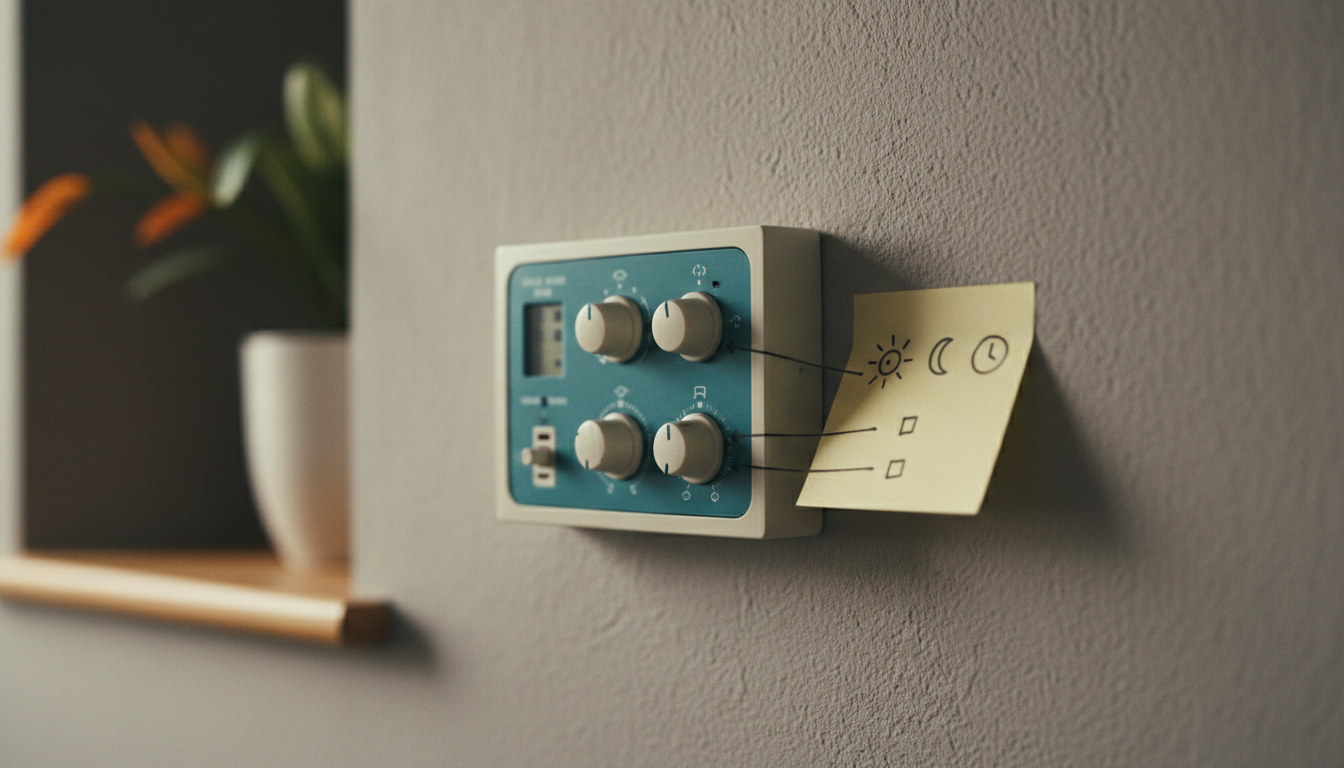 typical Dublin heating timer control panel on a wallthe kind with multiple dials, switches, and cryp
The Immersion Heater
If you take nothing else from this guide, remember this: the immersion is not your friend if you leave it on.
The immersion heater is an electric water heater, usually located in a hot press (that's Irish for airing cupboard/water heater closet). It heats water directly using electricity, which is expensive. The switch is typically in the bathroom or hallway, often with a red indicator light.
Turn it on 30-45 minutes before you need hot water, then turn it OFF. Leaving it on all day can add €30-50 to a monthly electricity bill. I always leave a note for guests explaining this—complete with a small diagram because honestly, it's confusing.
Central Heating Timers
Most Dublin homes have gas central heating controlled by a timer. These timers range from relatively modern digital ones to ancient mechanical dial systems that look like they survived the 1970s. Because they did.
Common timer types:
- Horstmann – Very common, has a dial with pins you push in/out for heating times
- Danfoss – Digital, slightly more intuitive
- Honeywell – Modern touchscreen versions in newer builds
As a host, I strongly recommend creating a simple guide with photos showing:
- How to turn heating ON manually (override the timer)
- How to turn heating OFF completely
- What temperature to set the thermostat (usually 18-20°C / 64-68°F is comfortable)
- How to adjust timing if they want to change the schedule
Radiator Valves
Each radiator typically has a thermostatic valve (TRV) that controls temperature for that specific room. Guests often don't realize these exist. I point them out and explain that turning them to 3-4 is usually comfortable, and that they can turn off radiators in unused rooms to save energy.
Storage Heaters
Some older Dublin apartments—especially in the city center—have storage heaters instead of gas central heating. These charge up overnight using cheaper night-rate electricity and release heat during the day. They're... an acquired taste.
If your exchange home has storage heaters:
- The INPUT dial controls how much heat it stores overnight
- The OUTPUT dial controls how quickly it releases heat
- They work best when you plan ahead—set them high the night before a cold day
Essential Appliances and How They Work in Dublin
The Kettle
I'm putting this first because Irish people are genuinely passionate about tea, and your guests will likely use the kettle more than any other appliance. Electric kettles are standard (stovetop kettles are rare). Fill it, flip the switch, wait for the click. Easy.
But here's a pro tip for hosts: leave some decent tea bags. Barry's or Lyons—not Lipton. This sounds trivial but trust me, it matters to Irish guests and delights international visitors who want the "authentic" experience.
Washing Machines
Irish washing machines are typically front-loading and located in the kitchen (utility rooms are a luxury). They often have approximately 47 different settings, most of which no one uses.
For guests, I leave a note saying: "For normal clothes, use the 40°C cotton cycle. Takes about 2 hours. Yes, really. That's normal here."
Dryers are less common than you'd expect given the weather. Many Dublin homes rely on heated drying racks or the mysterious "hot press" where you drape things over the water tank. If you have a dryer, show guests how to empty the lint filter—I've had guests who'd never used a European condenser dryer before.
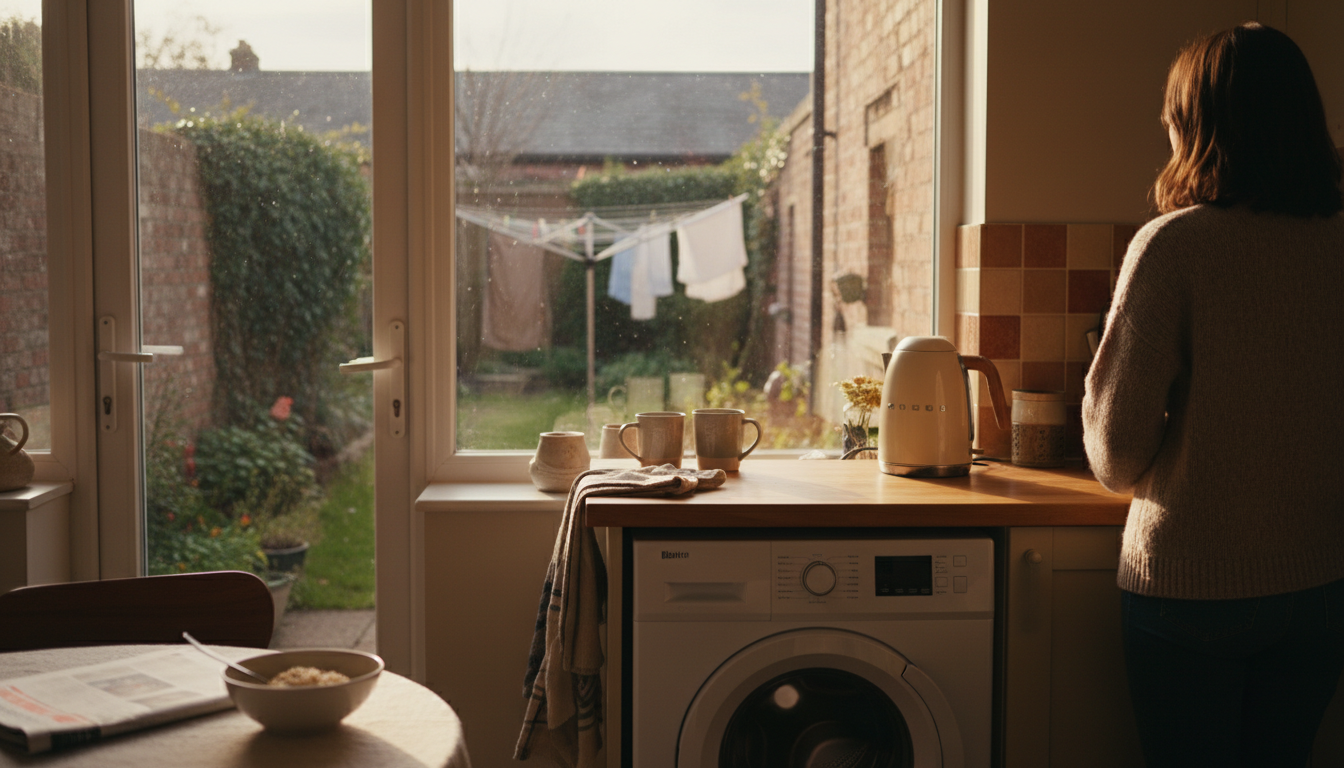 typical Dublin kitchen showing washing machine integrated under counter, kettle on countertop, and w
Ovens and Hobs
Gas hobs are common in Dublin, electric ovens slightly more so. The main thing guests struggle with is the ignition—some older gas hobs require you to hold a button while turning the dial, then hold for 10 seconds after it lights. I demonstrate this in a video I send to guests because written instructions never quite capture it.
Fan-assisted ovens are standard. Temperatures are in Celsius (180°C = 350°F for the Americans reading this).
The Dishwasher Situation
Not every Dublin home has a dishwasher—space is at a premium, especially in older buildings. If yours does, show guests where the tablets go and mention that Irish water is relatively soft, so they don't need extra salt in most areas.
Bins, Recycling, and Waste Collection in Dublin
This catches out so many home exchange guests. Dublin has a pay-by-weight waste system, and getting it wrong can mean fines or overflowing bins.
The Three-Bin System
Black bin – General waste (everything that can't be recycled or composted). This is the expensive one, charged by weight.
Green bin – Recycling. Clean plastics (1, 2, 5, 7), cardboard, paper, tins, cans. NO soft plastics, no food-contaminated containers, no black plastic.
Brown bin – Organic/food waste. All food scraps, tea bags, coffee grounds, garden waste. Compostable bags only (regular plastic bags will get your bin rejected).
Collection is usually every two weeks for each bin type, on a rotating schedule. As a host, leave the collection calendar somewhere visible and explain which bin goes out when.
Cost varies by provider (Panda, Greyhound, City Bin Co) but expect around €15-25 per lift for general waste. Recycling and organic bins are usually free or very cheap.
Glass Recycling
Glass doesn't go in the green bin. Instead, there are bottle banks at various locations around Dublin—usually in supermarket car parks. I include the nearest bottle bank location in my welcome guide.
Preparing Your Dublin Home for Exchange Guests
After hosting dozens of swaps through SwappaHome, I've developed a checklist that covers the utilities essentials:
Before they arrive:
- Test all heating systems and make sure they're working
- Check WiFi speed (run a speed test) and ensure the router is functioning
- Top up electricity/gas if you're on a prepay meter (some older apartments still have these)
- Empty all bins and confirm next collection dates
- Check that all light bulbs work (Irish winters are DARK)
- Ensure hot water is working and explain the immersion if relevant
Leave clear instructions for:
- WiFi network and password
- Heating timer operation (with photos)
- Immersion heater (if applicable)
- Bin collection schedule and sorting rules
- How to contact you if something breaks
- Emergency numbers (ESB Networks: 1800 372 999 for power outages; Gas Networks Ireland: 1800 20 50 50 for gas emergencies)
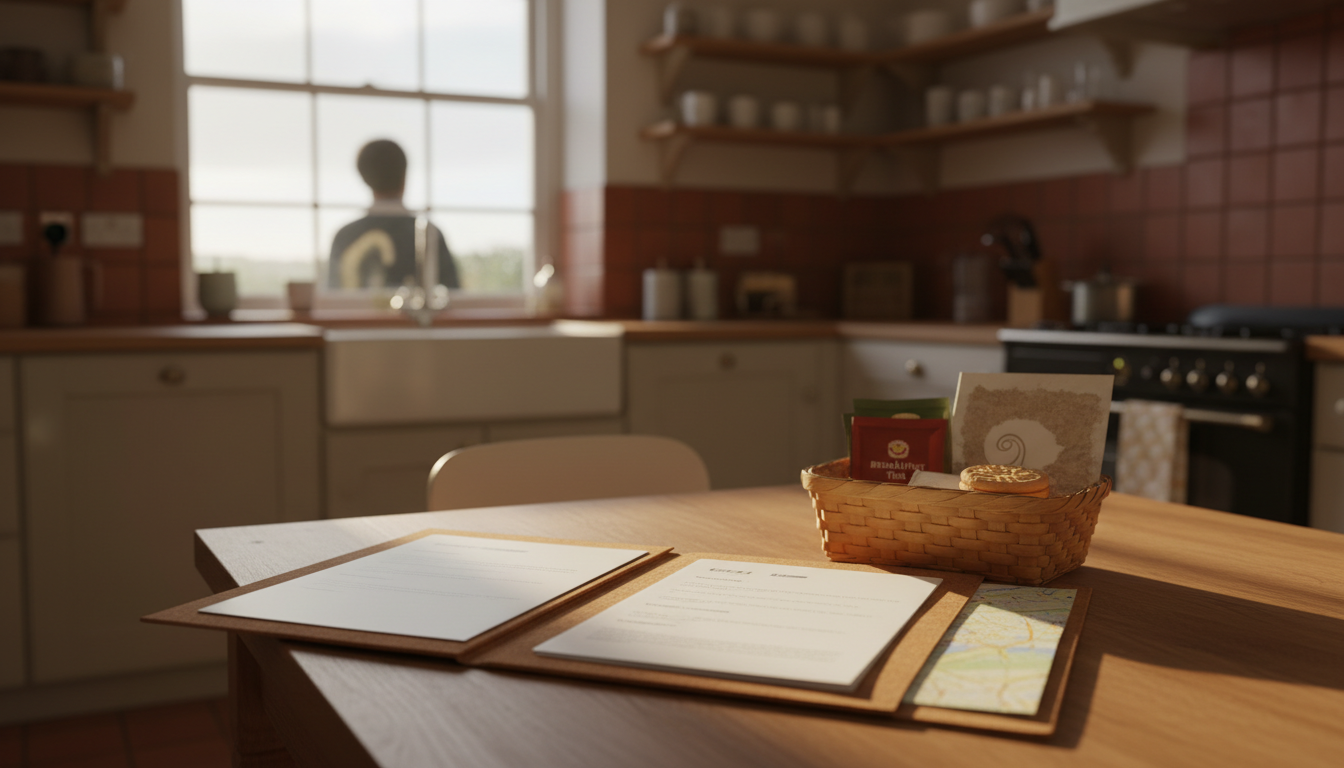 organized welcome folder on a Dublin kitchen table, containing printed instructions, local maps, and
What to Expect When Staying in a Dublin Home Exchange
If you're the guest, here's what I wish someone had told me before my first Dublin swap:
Heating takes time. Irish homes—especially older ones—take a while to warm up. Don't expect instant heat like you might get from American HVAC systems. Turn the heating on an hour before you need the house warm.
Hot water isn't always instant. If it's a combi boiler system, you're fine—hot water on demand. If there's a hot water tank, it needs time to heat. Ask your host about the schedule or how to boost it.
Electricity is expensive. Ireland has some of the highest electricity prices in Europe. Be mindful of leaving things on—especially that immersion heater.
The weather will surprise you. Even in summer, Dublin evenings can be chilly. You might need the heating in July. This is normal.
Plugs have switches. Every outlet has an on/off switch. If your phone isn't charging, check the switch. I've had guests message me in a panic thinking the electricity was out when they just hadn't flipped the switch.
Costs to Expect: Dublin Home Exchange Utilities Budget
For guests staying in a Dublin home exchange, here's a realistic breakdown of utility costs you might need to cover or factor in:
| Utility | Monthly Cost | Notes |
|---|---|---|
| Electricity | €150-200 ($165-220 USD) | Higher in winter with heating |
| Gas | €80-150 ($88-165 USD) | Varies dramatically by season |
| Broadband | €40-60 ($44-66 USD) | Usually included in exchange |
| Waste collection | €30-50 ($33-55 USD) | Depends on usage |
| Water | €0 | No residential charges |
Most home exchanges include utilities in the arrangement—this is standard on SwappaHome and something you should clarify in your pre-swap messaging. I always tell guests utilities are included but ask them to be reasonably mindful (no leaving the heating on full blast with windows open, that sort of thing).
Troubleshooting Common Dublin Utility Issues
"The power went out!"
Check the fuse board (usually in the hallway or under the stairs). If a switch has tripped, flip it back. If it keeps tripping, something's overloading the circuit—unplug appliances and try again. For area-wide outages, check ESB's PowerCheck website.
"There's no hot water!"
Is the immersion on? Has it been on long enough (30-45 mins)? Is the heating timer set to heat water? Check the hot water tank—if it's cold to the touch, the system isn't heating it.
"The heating won't turn on!"
Check the timer is set to ON or in manual override mode. Check the thermostat is set above current room temperature. Check the boiler itself has power and the pilot light is on (for older systems). Make sure the programmer hasn't been accidentally switched to "off" or "holiday" mode.
"The WiFi is slow/not working!"
Restart the router. Check if you're on the 2.4GHz or 5GHz network. Move closer to the router for important calls. Check if the provider has reported outages in the area.
Local Resources for Dublin Home Exchange Utilities
Sometimes things go wrong and you need professional help. Here are the numbers I keep in my welcome guide:
Emergency Services: 999 or 112 ESB Networks (power outages): 1800 372 999 Gas Networks Ireland (gas emergencies): 1800 20 50 50 Irish Water: 1800 278 278
Non-emergency but useful:
- Local plumbers, electricians, and heating engineers (I keep a list of ones I've used and trust)
- The nearest hardware store (Woodies and Homebase are the main chains)
- 24-hour pharmacies and shops (for those midnight emergencies)
Making Your Dublin Home Exchange Smooth
Honestly, most utility issues in Dublin home exchanges come down to communication. The heating system that seems obvious to you after living with it for years is genuinely confusing to someone encountering it for the first time. That immersion switch you flip without thinking? Your guest from California has never seen one.
I've found that a 10-minute video walkthrough of my Dublin apartment—showing how to work the heating, where the fuse board is, how to sort the bins—prevents about 90% of the panicked messages I used to get. SwappaHome's messaging system makes it easy to share this before guests arrive.
The other thing I've learned: Irish guests staying abroad struggle with different things. American thermostats confuse them. The concept of garbage disposals is wild. Air conditioning controls are mysterious. It goes both ways.
Dublin home exchange utilities aren't difficult—they're just different. A bit of preparation, some clear instructions, and a willingness to answer questions goes a long way. And honestly? Figuring out that ancient heating timer together has been the start of some genuinely lovely friendships with my exchange guests.
Now if you'll excuse me, I need to go turn off the immersion.
Frequently Asked Questions
How do Dublin home exchange utilities work compared to hotels?
In a Dublin home exchange, you'll use utilities like a local resident—managing heating timers, WiFi, and waste collection yourself. Unlike hotels, there's no housekeeping or maintenance staff on call. Most hosts include utilities in the exchange arrangement, but you should confirm this through SwappaHome's messaging before your stay. The trade-off? Significant savings and a much more authentic Dublin living experience.
Is WiFi reliable for remote work during a Dublin home exchange?
Dublin WiFi is generally reliable, with most homes offering 100Mbps+ speeds through providers like Virgin Media or Eir. Older buildings with thick walls can have patchy coverage though. Always ask your host about their broadband speed before booking if you're planning to work remotely. Request the router location and whether ethernet cables are available for important video calls.
How much do utilities cost per month in Dublin?
Dublin utility costs average €230-350 ($250-385 USD) monthly, breaking down to approximately €150-200 for electricity, €80-150 for gas heating, and €40-60 for broadband. Water is free for residential properties. Costs spike in winter due to heating. Most home exchange arrangements include utilities, but clarify this with your host beforehand through SwappaHome.
What's an immersion heater and why does everyone in Dublin talk about it?
The immersion is an electric water heater found in most Dublin homes, located in the hot press (airing cupboard). It heats water using electricity, which is expensive—leaving it on all day can add €30-50 to monthly bills. Turn it on 30-45 minutes before you need hot water, then switch it OFF. It's practically a national obsession because forgetting it can be costly.
How does waste collection work for Dublin home exchange guests?
Dublin uses a three-bin system: black (general waste, charged by weight), green (recycling, usually free), and brown (food/organic waste). Collection is typically fortnightly for each bin type. Glass goes to bottle banks, not in bins. Your host should provide the collection schedule and sorting instructions. Getting it wrong can mean rejected bins or fines, so pay attention to the guidelines.

Published by
SwappaHome
SwappaHome Editorial Team
Home Exchange & Slow Travel Editorial
The SwappaHome Editorial Team brings together travel research, home-exchange community insights, and platform data to produce practical guides for first-time and experienced home swappers. Every article cites real platforms, current market rates, and verifiable city-level facts so readers can make informed decisions without guessing.
Ready to try home swapping?
Join SwappaHome and start traveling by exchanging homes. Get 7 free credits when you sign up!
Related articles

Bachelor and Bachelorette Parties in Singapore: The Complete Home Swap Group Guide for 2026
Planning a bachelor or bachelorette party in Singapore? Discover how home swapping lets groups of 6-12 stay together in luxury condos, saving thousands while partying in Marina Bay.

Cycling in Lisbon: 7 Home Swap Bike Tour Itineraries for Every Rider
Discover the best cycling routes in Lisbon with these home swap bike tour itineraries—from waterfront paths to hilltop adventures, all starting from your borrowed home.

Graduation Trip to Barcelona: How Home Swapping Gives New Graduates the Ultimate Celebration
Planning a graduation trip to Barcelona? Discover how home swapping lets new graduates explore Spain's most vibrant city without the hostel crowds or hotel costs.