
Cost-Effective Travel Explained: Real Savings Globally

SwappaHome Editorial Team
Home Exchange & Slow Travel Editorial
Cost-Effective Travel Explained: Real Savings Globally !Traveler planning journey at busy station Stretching your travel dollars without sacrificing...
Cost-Effective Travel Explained: Real Savings Globally
 Traveler planning journey at busy station
Stretching your travel dollars without sacrificing adventure can seem impossible when standard hotel rates eat into your budget before you even arrive. For many digital nomads, this constant tradeoff limits real cultural immersion and longer journeys. Cost-effective travel empowers you to bypass traditional expenses by embracing strategies like home swapping, helping you explore the world authentically while keeping your finances in check. Discover how thoughtful planning and alternative accommodations can unlock new destinations and unforgettable local experiences.
Table of Contents
- What Cost-Effective Travel Really Means
- How Home Swapping Platforms Operate
- Types of Home Exchange and Point Systems
- True Financial Impact Versus Traditional Travel
- Security, Verification, and Trust Basics
- Common Mistakes and How to Avoid Them
Key Takeaways
| Point | Details |
|---|---|
| Cost-Effective Travel | Focus on maximizing value through strategic planning, prioritizing experiences over luxury, and leveraging sustainable travel strategies. |
| Home Swapping Benefits | Home exchange platforms reduce accommodation costs, allowing travelers to allocate funds for cultural experiences and extended trips. |
| Security and Trust | Reliable verification processes and transparent communication are essential for successful home exchanges, fostering trust among participants. |
| Common Pitfalls | Avoid communication errors and logistical oversights by meticulously planning and setting clear expectations for successful home swapping experiences. |
What Cost-Effective Travel Really Means
Cost-effective travel transcends simple budget tracking and transforms how digital nomads approach global exploration. It represents a strategic approach to traveling that maximizes experiences while minimizing financial expenditure through intelligent planning and resourceful decision-making.
At its core, cost-effective travel isn't just about spending less, but about getting more value from every dollar invested. This means carefully selecting destinations, accommodations, and experiences that provide maximum cultural immersion and personal enrichment with minimal financial strain. Sustainable travel strategies emphasize reducing both monetary and environmental costs through intentional choices.
Key characteristics of cost-effective travel include:
- Prioritizing experiences over luxury accommodations
- Utilizing alternative lodging options like home exchanges
- Selecting destinations with lower overall living expenses
- Traveling during off-peak seasons
- Embracing local transportation and cultural immersion
- Leveraging travel rewards and credit strategies
Understanding cost-effective travel requires recognizing that true value emerges from strategic planning and a willingness to think creatively about movement and lodging. Digital nomads who master this approach can extend their travel duration, explore more diverse locations, and create richer memories without draining their financial resources.
Pro tip: Track your daily expenses using digital apps and set a realistic budget that allows flexibility for unexpected adventures.
How Home Swapping Platforms Operate
Home swapping platforms have revolutionized travel accommodations by creating sophisticated digital networks that connect travelers worldwide. These innovative platforms leverage technology to facilitate secure, mutually beneficial home exchanges that eliminate traditional lodging expenses and create unique cultural experiences.
Peer-to-peer accommodation exchanges operate through carefully designed digital ecosystems that prioritize user trust and verification. The core mechanism involves matching homeowners with complementary travel interests, enabling them to swap residences for predetermined periods without monetary transactions.
Key operational components of home swapping platforms typically include:
- Comprehensive user profile verification systems
- Advanced matching algorithms based on location and preferences
- Secure messaging and negotiation tools
- Detailed home description and amenities listings
- Insurance and protection mechanisms
- Credit or point-based exchange systems
The platform's success relies on building a community of trust where members feel confident exchanging their personal spaces. Digital technologies enable sophisticated background checks, user ratings, and communication tools that transform potential strangers into trusted travel partners.
Trust is the fundamental currency in home swapping networks, more valuable than any monetary exchange.
These platforms are not just about saving money, but creating meaningful connections and enabling unique travel experiences that traditional accommodations cannot provide. By removing financial barriers, home swapping opens up global travel opportunities for budget-conscious adventurers.
Pro tip: Complete your profile comprehensively and include high-quality photos to increase your chances of successful home exchanges.
Types of Home Exchange and Point Systems
Home exchange platforms have developed sophisticated point systems that transform how travelers approach global accommodation, creating flexible and innovative ways to explore the world without traditional financial transactions. Credit-based exchanges represent the most common mechanism, allowing members to accumulate and spend travel credits across different destinations.
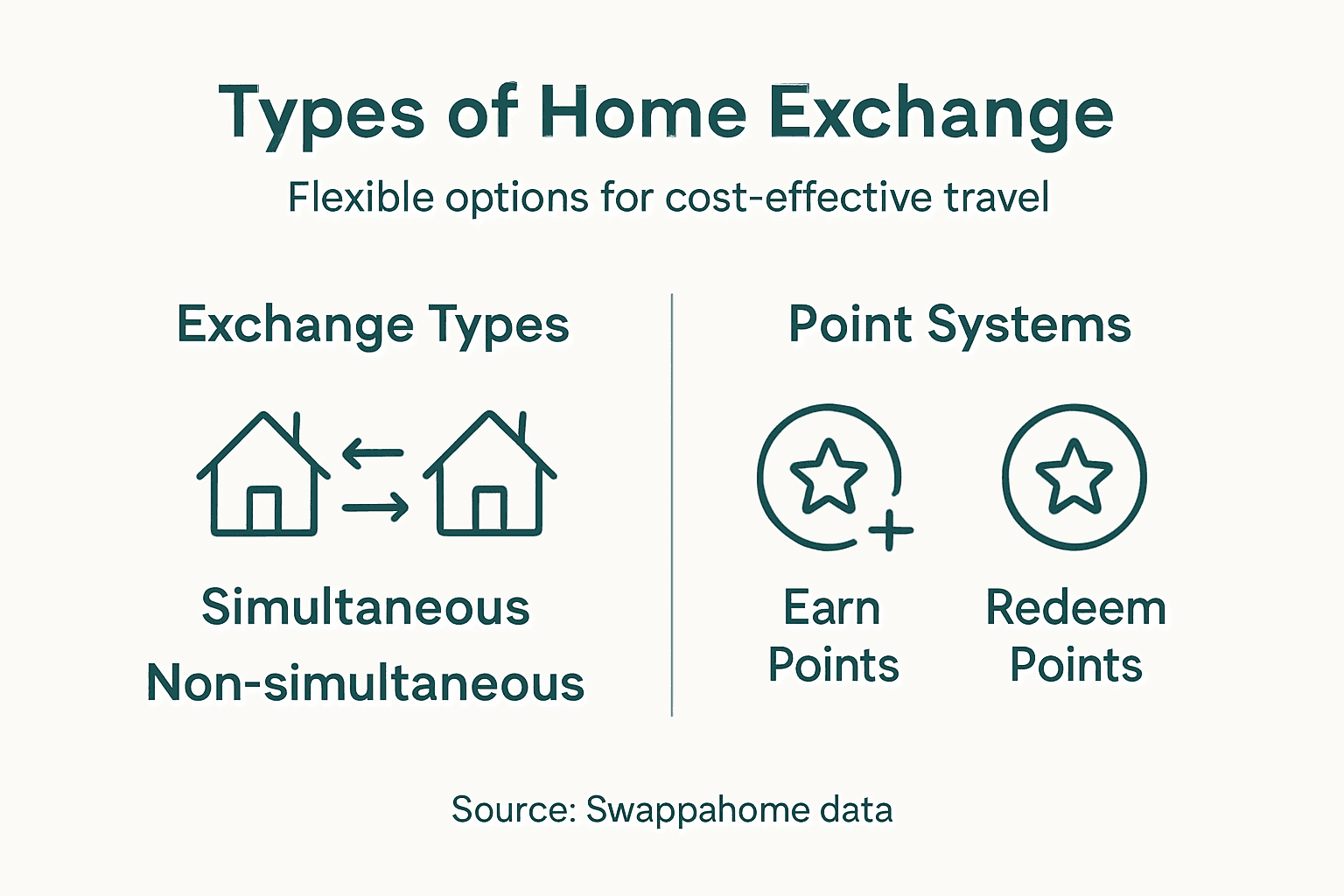 Infographic showing home exchange types and points
Academic exchange networks demonstrate how structured point systems can facilitate meaningful interactions beyond simple travel accommodations. In home exchange platforms, these systems work similarly by creating value through mutual trust and strategic point allocation.
Typical home exchange point systems include:
- Direct Reciprocal Exchanges
- One-to-one home swaps between two parties
- Immediate and simultaneous property exchanges
- Credit-Based Exchanges
- Members earn credits by hosting other travelers
- Credits can be used for stays in different locations
- Indirect Exchanges
- Multi-party exchanges involving three or more participants
- More flexible than direct one-to-one swaps
The complexity of these systems allows travelers unprecedented flexibility in planning their global adventures. By decoupling travel from direct monetary transactions, home exchange platforms create a more collaborative and community-driven approach to international travel.
Here is an overview of home exchange point systems for easier comparison:
| Exchange Type | Method | Benefits | Typical Use Case |
|---|---|---|---|
| Direct Reciprocal | One-to-one swap | Immediate exchanges | Simultaneous trips |
| Credit-Based | Earn & spend credits | Maximum flexibility | Multi-destination travel |
| Indirect | Multi-party swap | Greater booking options | Complex trip planning |
Use this table to recognize which exchange type suits different travel needs.
Point systems transform travel from a transactional experience to a collaborative global network.
Successful home exchange platforms balance sophisticated technological infrastructure with human connection, ensuring that each point represents not just a potential stay, but an opportunity for cultural understanding and personal growth.
Pro tip: Understand each platform's specific point system rules before committing to membership to maximize your travel potential.
True Financial Impact Versus Traditional Travel
Traditional travel accommodations come with significant financial burdens that can dramatically reduce a traveler's budget and overall experience. Hotel stays, vacation rentals, and standard lodging options consistently drain financial resources, often consuming 30-40% of total travel expenses before even considering additional costs like meals and local transportation.
 Travelers comparing cost of accommodations
Home exchanging represents a transformative economic approach that fundamentally challenges conventional travel spending models. By eliminating accommodation expenses, travelers can redirect substantial funds toward experiences, cultural interactions, and extended travel durations.
Key financial differences between traditional travel and home exchanges include:
- Accommodation Cost Comparison
- Traditional Hotels: $100-$300 per night
- Home Exchange: Potentially $0 per night
- Long-Term Travel Savings
- Hotel Extended Stay: Exponentially increasing costs
- Home Exchange: Predictable, credit-based system
- Additional Economic Benefits
- Reduced transportation expenses
- Potential for longer, more immersive trips
- Elimination of nightly lodging fees
The economic model of home exchanges transcends mere cost-saving, representing a fundamental shift in how travelers conceptualize and budget for international experiences. By removing monetary transactions from accommodation, these platforms create a more collaborative and community-driven approach to global travel.
Here's a quick comparison of traditional travel versus home exchange platforms:
| Aspect | Traditional Travel | Home Exchange Platforms | Impact on Experience |
|---|---|---|---|
| Accommodation Cost | $100-$300 per night | Typically $0 per night | Enables longer stays |
| Flexibility | Limited by budget | Flexible with credits | More destination choices |
| Cultural Immersion | Often touristic | Connects with locals | Deeper cultural insight |
| Community | Transactional | Collaborative network | Builds personal connections |
This table highlights how home exchange platforms change financial and social aspects of travel compared to conventional methods.
Economic freedom isn't about spending less, but about investing intelligently in transformative experiences.
Home exchange platforms democratize travel by breaking down financial barriers that traditionally limited international exploration. They enable budget-conscious travelers to access global destinations without the prohibitive costs associated with conventional lodging.
Pro tip: Calculate your potential annual savings by comparing home exchange costs against traditional accommodation expenses in your target travel destinations.
Security, Verification, and Trust Basics
Home exchange platforms recognize that trust is the fundamental currency of their ecosystem, requiring sophisticated mechanisms to ensure participant safety and platform integrity. Digital technologies have transformed how these networks establish and maintain security protocols, moving far beyond traditional verification methods.
Security in home swapping relies on comprehensive, multi-layered identity management systems that protect both homeowners and travelers. These intricate verification processes create transparent environments where participants can confidently engage in global home exchanges.
Key security and verification components typically include:
- User Profile Verification
- Government ID confirmation
- Social media cross-referencing
- Professional background checks
- Platform-Level Security Measures
- Two-factor authentication
- Encrypted personal information
- Continuous user screening
- Exchange-Specific Protections
- Detailed home descriptions
- Mutual agreement documentation
- Insurance coverage options
Successful home exchange platforms balance rigorous security protocols with user-friendly experiences. The goal is creating an environment where technological safeguards become nearly invisible, allowing genuine human connections to flourish.
Trust is built through transparency, verified identities, and mutual respect.
Understanding these security frameworks helps potential users recognize that home exchanges are not about blind faith, but calculated trust built on systematic verification and shared community standards.
Pro tip: Always complete your profile comprehensively and maintain an updated, authentic digital presence to increase your verification credibility.
Common Mistakes and How to Avoid Them
Home swapping sounds straightforward, but numerous pitfalls can transform an exciting travel opportunity into a stressful experience. Digital nomads and travelers must approach home exchanges with strategic planning and meticulous attention to detail to ensure smooth, enjoyable interactions.
Common home swapping mistakes often stem from inadequate communication, poor preparation, and unrealistic expectations. Understanding these potential challenges helps travelers develop robust strategies for successful exchanges.
Most frequent mistakes in home exchanges include:
- Communication Errors
- Vague or incomplete home descriptions
- Inconsistent messaging
- Failing to establish clear expectations
- Logistical Oversights
- Incomplete property preparation
- Neglecting key handover details
- Ignoring local transportation information
- Trust and Verification Issues
- Skipping comprehensive background checks
- Not verifying identity thoroughly
- Rushing into exchanges without proper screening
Successful home exchangers recognize that transparency and detailed communication are the cornerstones of positive experiences. Each interaction requires careful negotiation, mutual respect, and a commitment to creating comfortable environments for both parties.
Preparation transforms potential risks into extraordinary travel opportunities.
Navigating home exchanges effectively means being proactive, detail-oriented, and willing to invest time in building trust with potential exchange partners. The most successful travelers approach these platforms as collaborative communities rather than transactional services.
Pro tip: Create a comprehensive house manual with detailed instructions, local recommendations, and emergency contact information to set your exchange up for success.
Unlock True Cost-Effective Travel with Swappahome
The article highlights how cost-effective travel is about maximizing experiences while minimizing expenses and the challenge of finding affordable, trusted accommodations globally. If saving on lodging costs and immersing yourself authentically in new cultures without the financial burden sounds like your goal, then home swapping is a game changer. Swappahome offers a curated, members-only platform where you can list your verified home, earn credits, and stay in beautiful spaces worldwide without spending traditional money on hotels. This approach directly tackles the key pain points of costly accommodations and limited travel flexibility discussed in the article.
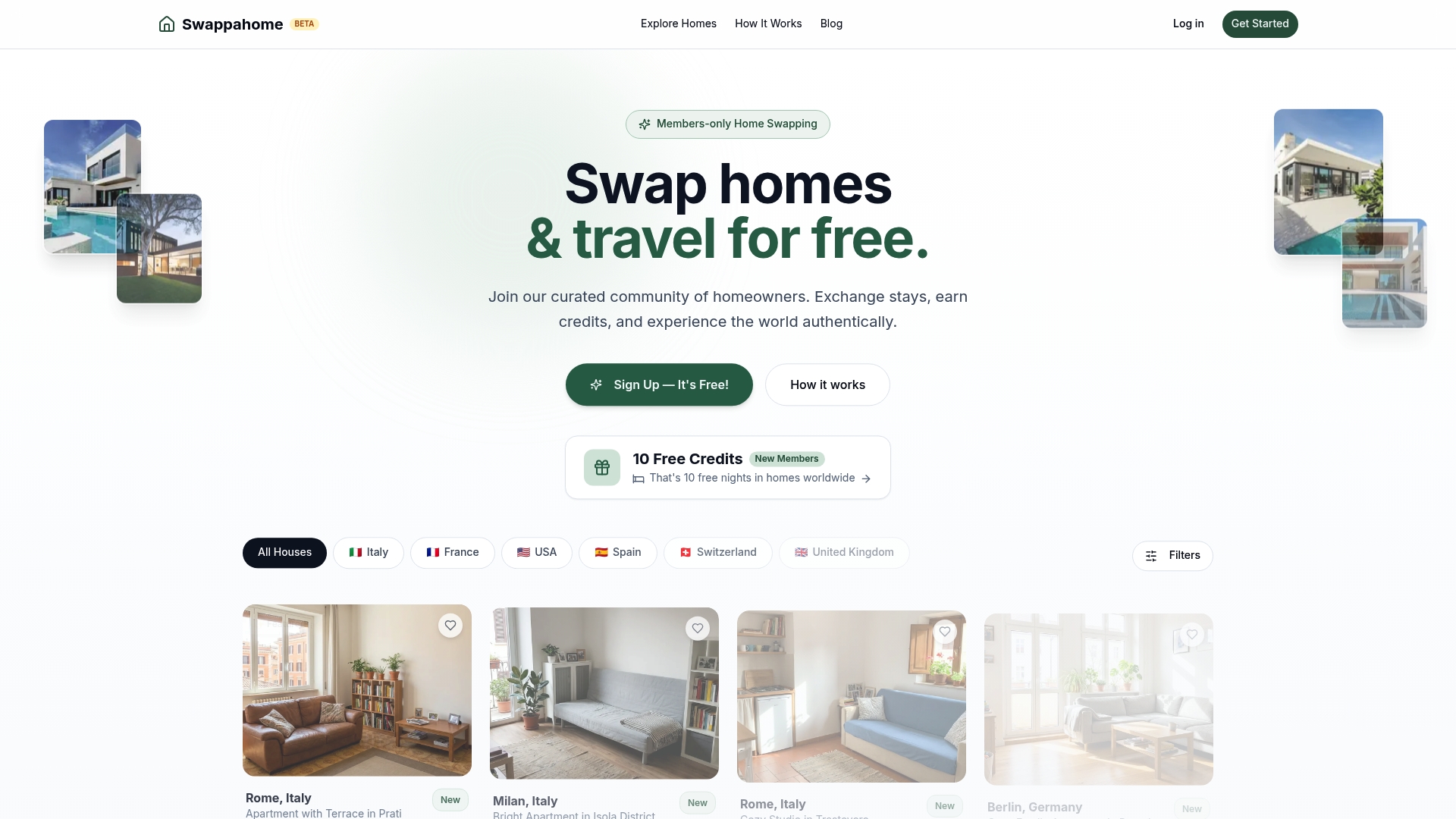 https://swappahome.com
Start your journey with Swappahome today and embrace a smarter way to travel that combines authenticity, community trust, and real financial savings. Visit Swappahome to create your profile, explore a growing network of verified homes, and take advantage of free starter credits that help you begin swapping right away. Experience how this simple point-based exchange system revolutionizes your travel budget and expands your possibilities instantly.
Learn more about how our platform works here and see for yourself how you can extend your adventures without letting lodging costs hold you back.
Frequently Asked Questions
What does cost-effective travel mean?
Cost-effective travel refers to a strategic approach to traveling that maximizes experiences while minimizing financial expenditure through intelligent planning and decision-making. It focuses on getting more value from each dollar spent rather than just spending less.
How can digital nomads benefit from cost-effective travel?
Digital nomads can extend their travel duration, explore diverse locations, and create richer memories without draining their financial resources. By prioritizing experiences over luxury accommodations and utilizing strategies like home exchanges, they can enhance their travels economically.
What are some key strategies for cost-effective travel?
Key strategies include prioritizing experiences over luxury, utilizing alternative lodging like home exchanges, traveling during off-peak seasons, embracing local transportation, and leveraging travel rewards programs.
How does home exchanging reduce travel costs?
Home exchanging eliminates traditional lodging expenses by allowing travelers to stay in each other’s homes without monetary transactions. This allows travelers to redirect funds toward richer travel experiences instead of accommodation costs.
Recommended
- Home Swapping vs Rentals: Real Savings for Travelers | SwappaHome Blog
- Exchanging Homes Internationally: True Cost Savings | SwappaHome Blog
- Budget Home Exchange: Save Money Traveling | SwappaHome
- Home Swap vs Hotel: 10 Reasons Home Exchange Wins | 2024
- 7 Key Benefits of Guest Houses for Budget Travellers
- Culinary Experiences Abroad: Unforgettable Adventures -

Published by
SwappaHome
SwappaHome Editorial Team
Home Exchange & Slow Travel Editorial
The SwappaHome Editorial Team brings together travel research, home-exchange community insights, and platform data to produce practical guides for first-time and experienced home swappers. Every article cites real platforms, current market rates, and verifiable city-level facts so readers can make informed decisions without guessing.
Ready to try home swapping?
Join SwappaHome and start traveling by exchanging homes. Get 7 free credits when you sign up!