
Cultural Immersion in Cape Town: How Home Swapping Unlocks Authentic South African Experiences

SwappaHome Editorial Team
Home Exchange & Slow Travel Editorial
Skip the tourist hotels and experience real Cape Town through home swapping. Live like a local in Bo-Kaap, Woodstock, or Camps Bay while saving thousands on accommodation.
The moment I stepped into Fatima's kitchen in Bo-Kaap, surrounded by the smell of cinnamon and cardamom from the koesisters she'd left cooling on the counter, I understood something about Cape Town that no hotel could ever teach me. Her handwritten note pointed me to the spice merchant three doors down, the mosque's call to prayer schedule, and her neighbor Aunty Rashida who "makes the best samoosas in the Cape Flats—just knock and tell her Fatima sent you."
That's the thing about cultural immersion in Cape Town through home swapping—you don't just visit a destination. You inherit a life, temporarily. You wake up to the same sounds your host does, shop at their corner store, and become a temporary neighbor rather than a passing tourist.
 Colorful row houses of Bo-Kaap neighborhood with cobblestone street in morning light, a local reside
Why Cape Town Is Perfect for Home Exchange Travel
Cape Town isn't just photogenic (though, let's be honest, it's absurdly photogenic). It's a city of micro-neighborhoods, each with its own rhythm, history, and personality. The problem? Most tourists only see the sanitized version—the V&A Waterfront, the cable car up Table Mountain, maybe a quick drive through the Winelands.
I've stayed in Cape Town hotels. Nice ones, even. But I learned more about South African culture in three days at Fatima's place than in two weeks of previous hotel-based visits combined.
So what makes home swapping here particularly powerful?
The neighborhood diversity is staggering. Within a 20-minute drive, you can experience the Cape Malay heritage of Bo-Kaap, the hipster-artisan energy of Woodstock, the old-money elegance of Constantia, and the beach-bum vibes of Muizenberg. Staying in a local home means you're not just visiting these neighborhoods—you're actually living in one.
South Africans are genuinely hospitable. And I don't mean that in a tourism-board kind of way. There's a cultural concept called "ubuntu"—roughly translated as "I am because we are"—that shapes how many South Africans approach community and guests. Your home swap host isn't just handing over keys; they're often sharing their entire world.
The cost savings are dramatic. A decent hotel in Camps Bay runs $250-400 USD per night in high season. A boutique guesthouse in Woodstock? Still $150-200 USD. Meanwhile, home swapping through SwappaHome costs just 1 credit per night, regardless of the property. Those savings add up fast—we're talking $3,000-5,000 USD saved on a two-week stay.
Best Cape Town Neighborhoods for Home Swap Cultural Immersion
Not all neighborhoods offer the same depth of cultural experience. After four separate home swaps in Cape Town over the years, here's my honest breakdown:
Bo-Kaap: The Heart of Cape Malay Culture
Those Instagram-famous rainbow houses? They're not just pretty—they're the physical manifestation of a community's resistance and identity. Bo-Kaap has been home to the Cape Malay community since the 1760s, descendants of enslaved people brought from Southeast Asia.
Staying in a Bo-Kaap home means waking to the adhaan (call to prayer) from the Auwal Mosque, Africa's oldest. It means your host might leave you bobotie in the fridge with reheating instructions, or point you to the Atlas Trading Company on Wale Street for the freshest spices in the city.
What to expect: Homes here tend to be historic and compact—think charming Victorian cottages with steep staircases. Many have been in families for generations. The streets are hilly (good calves workout), and parking is a nightmare, but you won't need a car much.
Cultural tip: If you swap here, ask your host about the Bo-Kaap Museum and whether they recommend any local cooking classes. Some residents offer informal lessons in traditional Cape Malay cuisine—far more authentic than the tourist-oriented options.
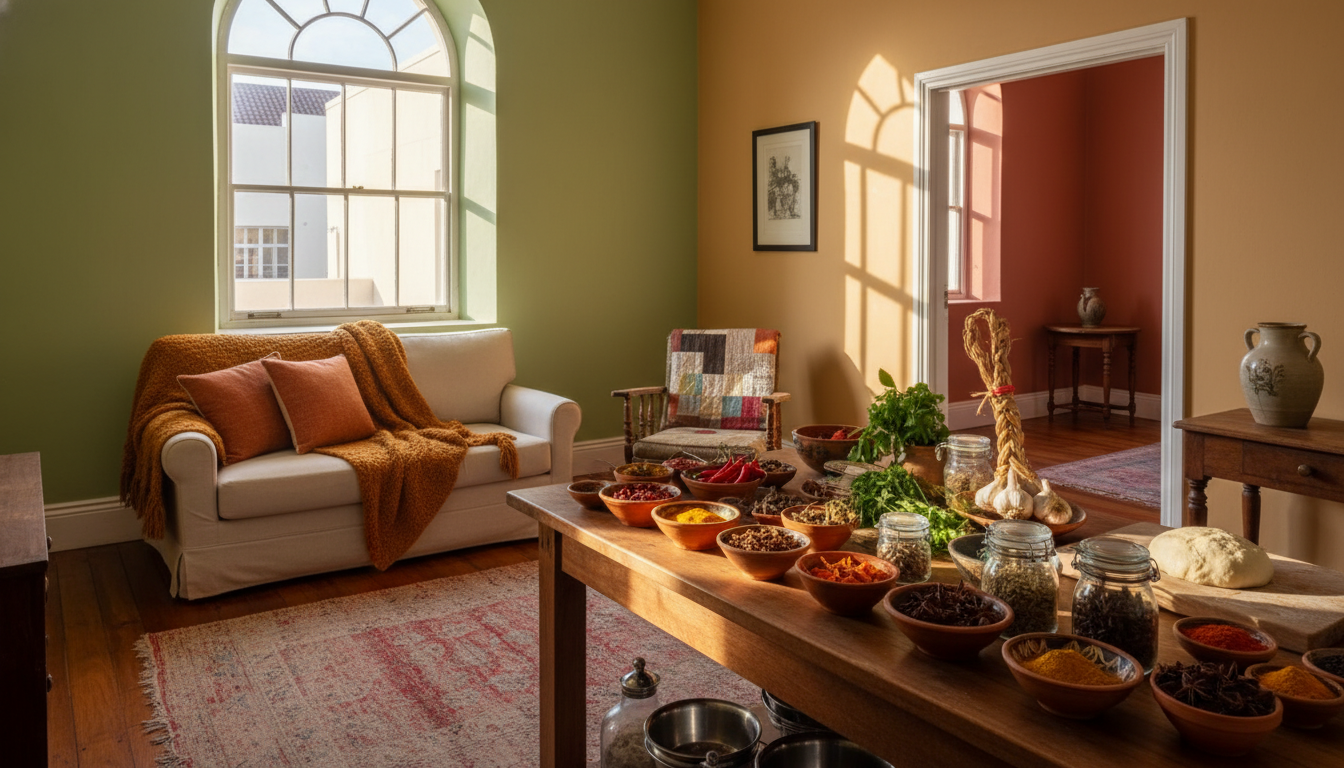 Interior of a traditional Bo-Kaap home with colorful walls, vintage furniture, and a kitchen counter
Woodstock: Where Art Meets Gentrification (Honestly)
I have complicated feelings about Woodstock. It's undeniably cool—street art murals on every corner, converted warehouse studios, craft breweries, and the famous Old Biscuit Mill Saturday market. It's also a neighborhood in the midst of rapid gentrification, which means staying here offers a front-row seat to one of Cape Town's most pressing social tensions.
My Woodstock home swap was in a converted Victorian with 12-foot ceilings and a rooftop deck. My host, a documentary filmmaker named James, left me a reading list about the neighborhood's history and the displacement debates. That context transformed my experience—I wasn't just enjoying the hip coffee shops; I was thinking about who used to live where I was sipping my flat white.
What to expect: Loft apartments, artist studios, and renovated Victorians. The neighborhood is walkable during the day but requires street smarts at night. Uber is your friend after dark.
Cultural tip: Visit the Woodstock Exchange on a weekday when it's less crowded. Chat with the artists and makers in their studios—most are happy to talk about their work and the neighborhood's evolution.
Kalk Bay: Fishing Village Charm
If you want to understand the Cape's relationship with the sea, Kalk Bay is your spot. This tiny fishing village on the False Bay coast has somehow resisted over-development, maintaining its working harbor where you can still buy fish straight off the boats.
I spent a week in a fisherman's cottage here—white walls, blue shutters, the sound of seals barking at dawn. My host's neighbor was a third-generation fisherman who invited me to watch the catch come in at 6 AM. We didn't speak much (my Afrikaans is nonexistent), but he showed me how to identify the freshest snoek and which boat captains were worth buying from.
What to expect: Quirky, eclectic homes—many built into the hillside with steep stairs and ocean views. The main street has excellent antique shops, bookstores, and the legendary Olympia Café (get there before 8 AM or accept a long wait).
Cultural tip: Time your visit for a weekend when the Kalk Bay Theatre has a show. It's a 78-seat venue in a former church hall, and the productions often tackle South African social issues with dark humor.
 Kalk Bay harbor at sunrise with colorful fishing boats, fishermen unloading catch, seals on the dock
Observatory: Student Energy and Activist History
Obs, as locals call it, is Cape Town's answer to Berkeley or Camden. It's scrappy, politically engaged, and perpetually young thanks to its proximity to the University of Cape Town. The neighborhood played a significant role in the anti-apartheid movement, and that activist spirit persists.
Staying in Observatory means late-night conversations at the Obz Café, browsing at the African Music Store, and possibly attending a poetry slam or protest march (both happen regularly). It's not polished, and some visitors find it too gritty. I find it honest.
What to expect: Victorian homes divided into flats, cottages with overgrown gardens, and the occasional commune. The neighborhood is diverse in every sense—racially, economically, and ideologically.
Cultural tip: Ask your host about the Observatory Improvement District walking tours. They're free, led by residents, and cover everything from the area's astronomical history (there's a real observatory) to its role in resistance movements.
How to Find the Right Cape Town Home Swap
Not every home exchange will be a cultural revelation. I've had swaps that were basically just free accommodation—nice, but not transformative. Here's how to find the ones that offer genuine immersion:
Look for Hosts Who Live Their Neighborhood
When browsing listings on SwappaHome, pay attention to how hosts describe their area. Do they mention specific restaurants by name? Local events? Their favorite walking routes? These details signal someone who's genuinely embedded in their community.
Red flags: listings that only mention tourist attractions or describe the neighborhood as "close to everything." That's hotel-speak, not neighbor-speak.
Read Between the Lines of Reviews
Past guests often reveal more than they intend. "The host's recommendations were amazing" is good. "We felt like we were staying with friends" is better. "The neighbor brought us homemade koeksisters" is the jackpot.
Ask Specific Questions Before Booking
Don't be shy. Before confirming a swap, message your potential host with questions like: What's your favorite thing about living in this neighborhood? Are there any local events happening during my stay? Is there a neighbor or nearby shop owner I should introduce myself to? What do you wish tourists understood better about Cape Town?
The quality of their answers will tell you everything about the quality of cultural experience you'll have.
 SwappaHome messaging interface showing a conversation between a traveler and Cape Town host, with th
Navigating Cape Town's Complex Social Landscape
I'd be doing you a disservice if I wrote about cultural immersion in Cape Town without addressing this: South Africa's history is heavy, and its present is complicated. Apartheid ended in 1994, but its spatial and economic legacies are visible everywhere.
Home swapping puts you in a position to engage with this reality in ways hotels insulate you from. Here's how to approach it thoughtfully:
Understand the Geography of Inequality
Cape Town is one of the most segregated cities in the world—not by law anymore, but by economics shaped by decades of racist policy. The Cape Flats, where non-white residents were forcibly relocated during apartheid, remain largely separate from the wealthy suburbs tourists typically see.
If your home swap is in a historically white neighborhood like Constantia or Camps Bay, you're seeing one version of Cape Town. If it's in a more integrated area like Woodstock or Observatory, you'll see more of the city's diversity—and its tensions.
Listen More Than You Speak
Your home swap host may share stories about their family's experience during apartheid, or their views on current politics. They may not. Either way, approach these conversations with curiosity rather than assumptions. South Africans are tired of tourists who arrive with pre-formed opinions about their country.
The best question I've learned to ask: "What do you wish people from other countries understood about South Africa?" Then actually listen.
Support Black-Owned Businesses Intentionally
The tourism economy in Cape Town remains heavily skewed toward white-owned businesses. Seek out alternatives: Siyazama Ceramics in Khayelitsha, Vovo Telo bakery (founded by a Black South African entrepreneur), the Neighbourgoods Market stalls run by township entrepreneurs.
Your home swap host can be a great resource here—ask them specifically for recommendations that support economic transformation.
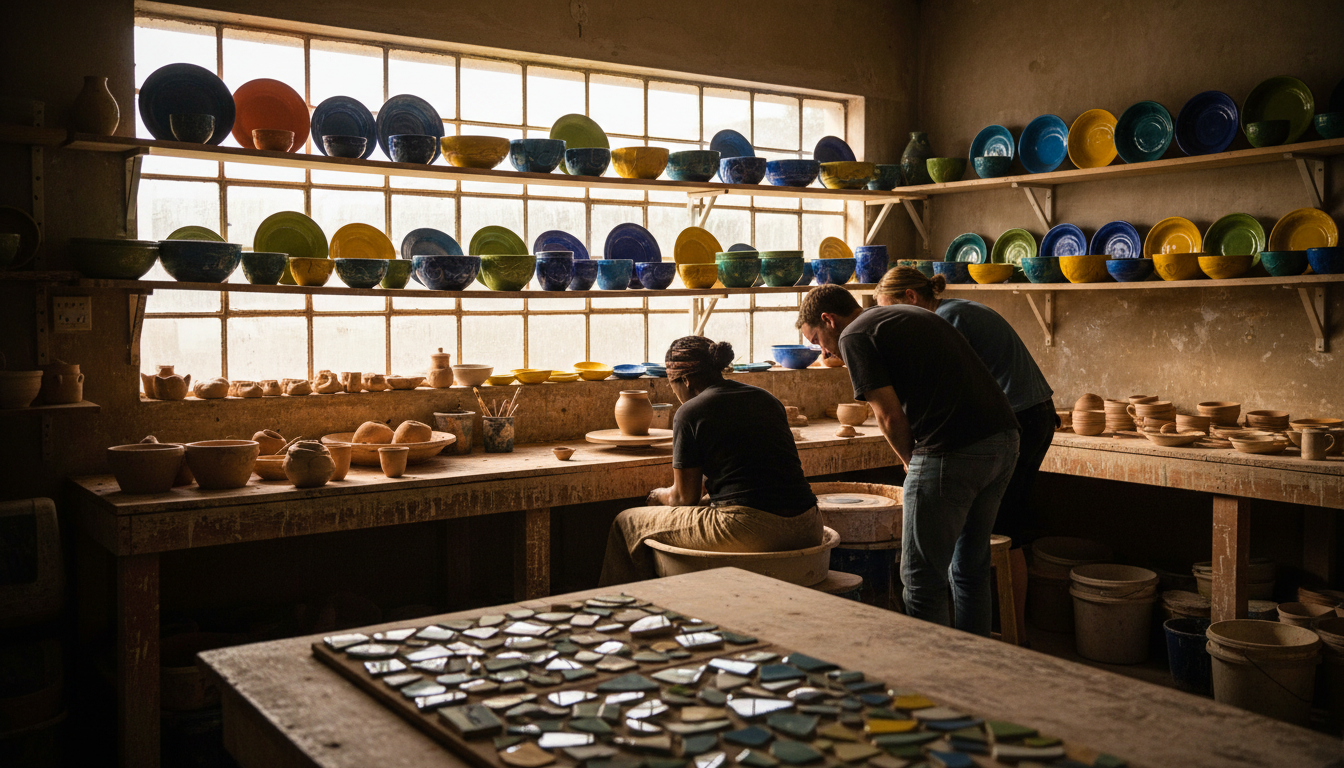 Local artisan at Siyazama Ceramics workshop in Khayelitsha demonstrating traditional pottery techniq
Practical Tips for Your Cape Town Home Swap
Cultural immersion is the goal, but logistics still matter. Here's what I've learned:
Timing Your Visit
Cape Town's seasons are flipped from the Northern Hemisphere. December-February is peak summer—crowded and expensive, but the weather is spectacular. My favorite time? March-April (early autumn) or October-November (late spring). Fewer tourists, mild weather, and jacaranda trees blooming purple across the city.
Winter (June-August) brings rain and moody skies. Some people love it—cozy wine tastings, dramatic ocean storms. Others find it depressing. Know yourself.
Getting Around
You'll probably want a car, especially if your home swap is outside the City Bowl. Renting runs about $25-40 USD per day for a basic vehicle. Just remember: South Africans drive on the left.
Alternatively, Uber works well in Cape Town and is affordable—a 20-minute ride rarely exceeds $8-10 USD. The MyCiti bus system is reliable for certain routes, particularly the airport-city connection.
Safety Realities
I'm not going to pretend Cape Town doesn't have crime—it does, including violent crime in certain areas. But I've also walked home alone at midnight in Observatory and felt completely fine.
The key is local knowledge. Your home swap host will tell you which streets to avoid, which times to take Uber, and which neighborhoods require extra caution. This is one of the biggest advantages of home swapping over hotels: you get hyper-local safety intel, not generic warnings.
What to Bring for Your Host
A small gift from your home city is customary and appreciated. I've brought San Francisco sourdough starter (carefully packaged), local honey, and a coffee table book about California architecture. Food items that travel well are always a hit.
Making the Most of Your Temporary Cape Town Life
Once you're settled in your home swap, resist the urge to tourist-mode. You're not here to check boxes; you're here to live, even if briefly.
Establish Routines
Find a coffee shop and go every morning. The baristas will start to recognize you. Chat with them. Ask what's happening in the neighborhood this week.
I always locate three things immediately: the nearest good coffee, the best produce market, and a walking route I can do daily. In Kalk Bay, my route went along the coastal path to St. James Beach and back. By day four, I was nodding hello to the same dog walkers.
Say Yes to Invitations
Your host's neighbor invites you for a braai (South African barbecue)? Go. The shop owner suggests you check out a jazz night at a local bar? Go. These unplanned moments are where real cultural immersion happens.
Cook at Home (At Least Sometimes)
One of home swapping's underrated benefits: a real kitchen. Hit the Oranjezicht City Farm Market on Saturday morning, buy ingredients you don't recognize, and ask the vendor how to prepare them. My attempt at making bobotie from scratch was a minor disaster, but the process taught me more about Cape Malay cuisine than any restaurant meal.
The Deeper Rewards of Home Exchange Travel in Cape Town
I've been home swapping for seven years now, across 25 countries. But Cape Town holds a special place in my memory—maybe because the cultural contrasts are so stark, or because South Africans have a particular gift for hospitality, or because the landscape is so dramatic that even mundane moments feel cinematic.
Mostly, though, I think it's because home swapping there forced me to reckon with my own assumptions. About Africa, about post-colonial societies, about what "authentic travel" even means.
Fatima's note in Bo-Kaap didn't just point me to good spices. It pointed me toward a community that had survived centuries of displacement and discrimination, that had held onto its identity through food and faith and those defiant rainbow houses. Staying in her home—sleeping in her bed, using her coffee mug—made that history personal in a way no museum ever could.
That's what cultural immersion through home swapping actually offers. Not just a free place to stay, but an entry point into lives and histories you'd otherwise only glimpse from the outside.
Getting Started with SwappaHome for Your Cape Town Adventure
If you're convinced (and honestly, if you've read this far, you probably are), here's the practical path forward:
Sign up for SwappaHome and list your own home—even if you think it's nothing special. I've swapped my modest San Francisco apartment for stunning properties because home exchange isn't about matching value; it's about matching timing and trust. Every night you host earns you 1 credit, and every night you stay costs 1 credit. Simple.
Start browsing Cape Town listings now, even if your trip is months away. The best properties get booked early, especially in desirable neighborhoods. Message hosts whose descriptions resonate with you. Ask questions. Build relationships before you book.
And when you finally arrive—when you're standing in someone else's kitchen, reading their handwritten note about the spice merchant down the street—remember that you're not just saving money on accommodation.
You're entering a life. That's the real exchange.
Frequently Asked Questions
Is home swapping in Cape Town safe for solo travelers?
Cape Town is generally safe for solo travelers who exercise normal precautions. Home swapping actually enhances safety because your host provides neighborhood-specific advice about which areas to avoid and when. I've done two solo home swaps in Cape Town and felt secure, though I always used Uber after dark and stayed aware of my surroundings in less-traveled areas.
How much money can I save with home exchange in Cape Town versus hotels?
Significant savings are typical. A mid-range hotel in Cape Town costs $150-250 USD per night, while luxury options in Camps Bay or Constantia run $300-500 USD. A two-week home swap saves approximately $2,100-7,000 USD on accommodation alone. SwappaHome charges just 1 credit per night regardless of property value, and new members start with 7 free credits.
What's the best neighborhood in Cape Town for first-time home swappers?
Woodstock or Observatory offer the best balance of cultural immersion, safety, and accessibility for first-timers. Both neighborhoods are walkable, have excellent food and coffee scenes, and attract hosts who tend to be engaged and communicative. Bo-Kaap is incredible but more traditional, while Camps Bay is beautiful but more touristy and less culturally immersive.
Do I need a car for a Cape Town home swap?
It depends on your neighborhood and plans. City Bowl locations (Bo-Kaap, Woodstock, Observatory) are manageable without a car using Uber and the MyCiti bus. However, if you want to explore the Winelands, Cape Point, or the Garden Route, renting a car ($25-40 USD/day) is recommended. Ask your home swap host—they'll know what's realistic from their specific location.
How far in advance should I book a Cape Town home swap?
For peak season (December-February), book 3-6 months ahead for the best selection. Shoulder seasons (March-May, September-November) require 1-3 months notice. Winter (June-August) offers more last-minute flexibility. Start messaging potential hosts early to build rapport—the best cultural immersion experiences come from hosts who feel connected to you before you arrive.

Published by
SwappaHome
SwappaHome Editorial Team
Home Exchange & Slow Travel Editorial
The SwappaHome Editorial Team brings together travel research, home-exchange community insights, and platform data to produce practical guides for first-time and experienced home swappers. Every article cites real platforms, current market rates, and verifiable city-level facts so readers can make informed decisions without guessing.
Ready to try home swapping?
Join SwappaHome and start traveling by exchanging homes. Get 7 free credits when you sign up!
Related articles

Bachelor and Bachelorette Parties in Singapore: The Complete Home Swap Group Guide for 2026
Planning a bachelor or bachelorette party in Singapore? Discover how home swapping lets groups of 6-12 stay together in luxury condos, saving thousands while partying in Marina Bay.

Cycling in Lisbon: 7 Home Swap Bike Tour Itineraries for Every Rider
Discover the best cycling routes in Lisbon with these home swap bike tour itineraries—from waterfront paths to hilltop adventures, all starting from your borrowed home.

Graduation Trip to Barcelona: How Home Swapping Gives New Graduates the Ultimate Celebration
Planning a graduation trip to Barcelona? Discover how home swapping lets new graduates explore Spain's most vibrant city without the hostel crowds or hotel costs.