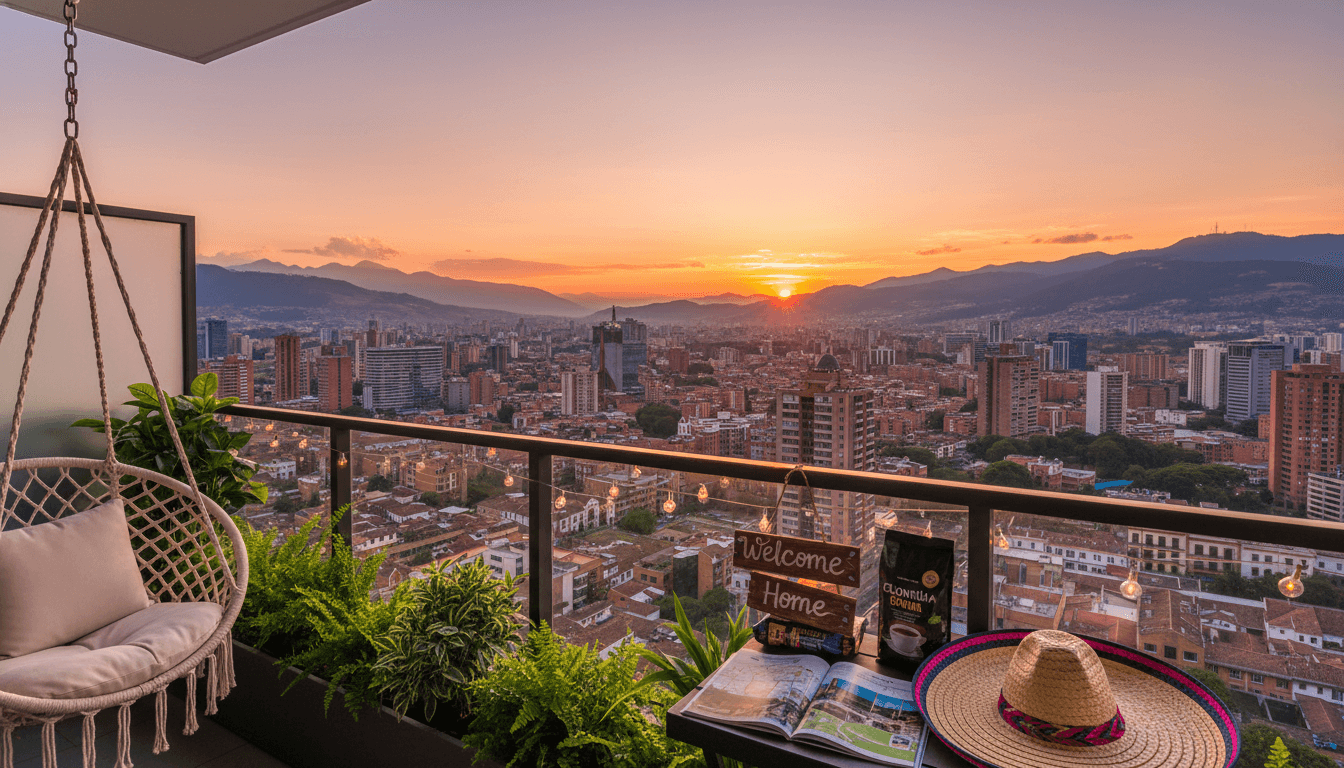
Home Exchange in Bogotá: The Complete Guide to Swapping Your Way Through Colombia's Capital

SwappaHome Editorial Team
Home Exchange & Slow Travel Editorial
Discover how home exchange in Bogotá lets you live like a local in La Candelaria, Chapinero, or Usaquén—saving thousands while experiencing Colombia's vibrant capital authentically.
The smell hit me before I even stepped off the plane—eucalyptus and diesel and something faintly sweet I couldn't place. My first home exchange in Bogotá was supposed to be a quick stopover, three nights before heading to Cartagena. I ended up staying three weeks.
That was four years ago. I've been back twice since, each time through home exchange, each time discovering a city that refuses to be pinned down. Bogotá isn't an easy city to love at first—it's sprawling, chaotic, sitting at 8,660 feet where the altitude makes your first coffee feel like rocket fuel. But once you settle into a real neighborhood, sleep in an actual bogotano's apartment, wake up to the sound of vendors selling arepas on the street below? That's when Bogotá cracks open.
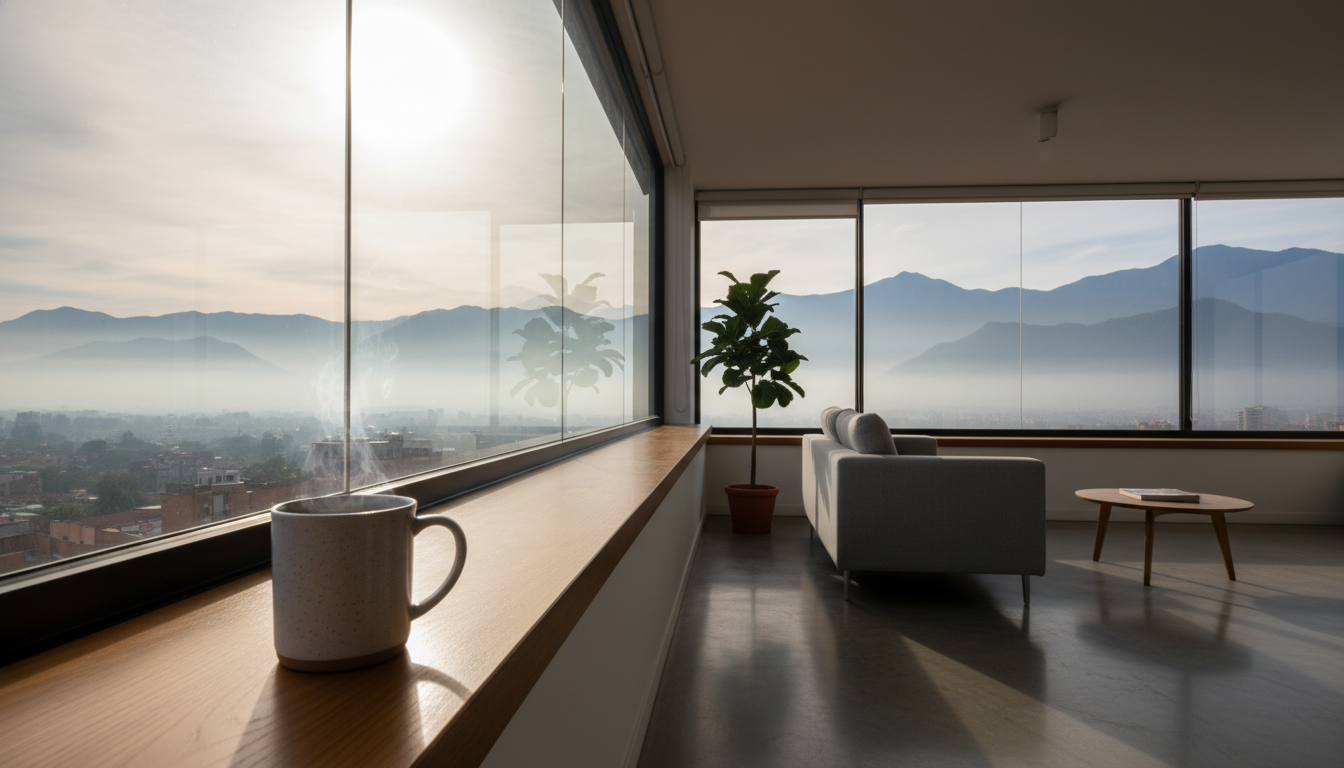 Morning light filtering through floor-to-ceiling windows of a modern Chapinero apartment, with a ste
Home exchange in Bogotá makes financial sense—hotels in decent neighborhoods run $80-150 USD per night, and you're still stuck eating every meal out. But honestly? The money isn't even the main thing. It's the difference between visiting a city and actually living in it, even briefly.
Why Home Exchange in Bogotá Changes Everything
I'll be real with you: Bogotá has a reputation problem. People hear "Colombia" and their minds go somewhere between Netflix narco dramas and State Department warnings from 2002. Meanwhile, actual Bogotá in 2024 is a thriving metropolis of 8 million people with world-class restaurants, a contemporary art scene that rivals any in Latin America, and neighborhoods so distinct they feel like different cities.
The thing about home exchange here is that it drops you directly into this reality. You're not in a hotel bubble in the financial district. You're buying eggs at the tienda on the corner. You're figuring out which panadería has the best pan de bono—spoiler: it's always the one with the longest line at 7 AM. You're nodding at the portero who knows your host and therefore trusts you.
On SwappaHome, I've noticed Bogotá listings have exploded over the past two years. Colombian members are eager to travel—Europe and North America especially—and they're offering some genuinely spectacular homes in return. I'm talking converted colonial houses in La Candelaria, sleek high-rise apartments in Chicó with doormen and rooftop pools, cozy casas in Usaquén steps from the Sunday flea market.
The credit system makes this beautifully simple: you earn 1 credit for every night you host someone at your place, and you spend 1 credit for every night you stay somewhere else. No complicated exchange rates, no negotiating. A night in a mansion costs the same as a night in a studio. New members start with 7 free credits, which in Bogotá terms means 7 nights of free accommodation—easily $1,000+ in hotel savings.
Best Neighborhoods for Home Exchange in Bogotá
Here's where it gets fun. Bogotá's neighborhoods have such distinct personalities that choosing where to stay is basically choosing what kind of trip you want.
La Candelaria: History and Grit
This is the old colonial heart of the city, and it's not for everyone—I want to be honest about that. The streets are steep, the cobblestones murder your ankles, and yes, you need to be more aware of your surroundings here than in northern neighborhoods. But La Candelaria is also where you'll find 400-year-old buildings painted in impossible colors, street art that's genuinely world-famous, and the kind of creative energy that comes from artists and students and dreamers all crammed together.
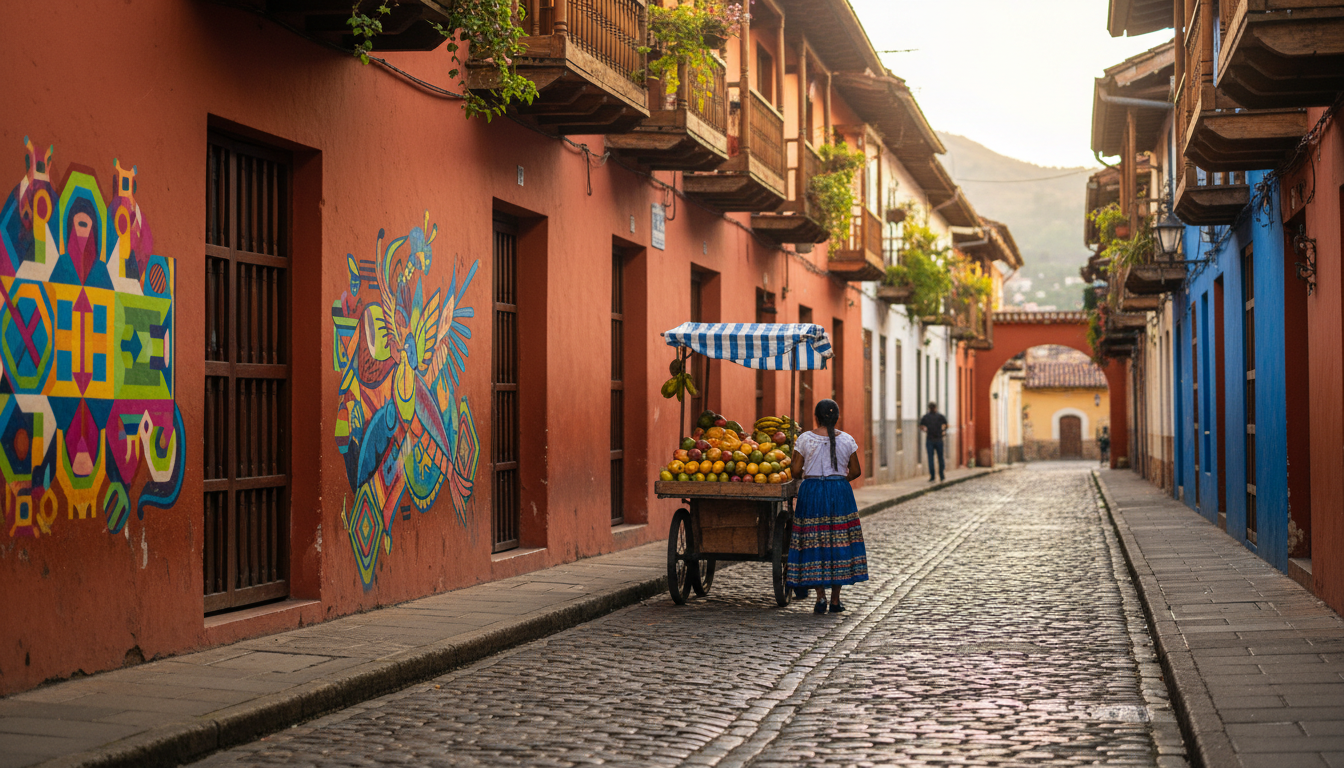 Narrow cobblestone street in La Candelaria with colonial buildings painted in terracotta and cobalt
Home exchanges here tend to be in renovated colonial houses—thick walls, interior courtyards, wooden beams that have seen centuries. My first Bogotá swap was in a place like this, a three-story townhouse where my bedroom had a tiny balcony overlooking a courtyard with a lemon tree. The host left me a handwritten note about which bakery to visit (Panadería Florida, still my favorite) and which streets to avoid after dark (basically anything south of Calle 10).
Expect to pay around 25,000-35,000 COP ($6-9 USD) for a solid lunch in La Candelaria, and half that for street food. The famous Museo del Oro is here, and it's genuinely unmissable—the largest collection of pre-Hispanic gold artifacts in the world, and entrance is free on Sundays.
Chapinero: The Creative Heart
If La Candelaria is Bogotá's past, Chapinero is its present. This neighborhood—really a collection of micro-neighborhoods—is where you'll find the best restaurants, the most interesting bars, and a thriving LGBTQ+ scene centered around Chapinero Alto. It's also where a lot of young professionals live, which means home exchange options tend toward modern apartments with reliable WiFi and actual kitchens.
I stayed in Chapinero Alto for two weeks on my second Bogotá swap, in an apartment that belonged to a graphic designer. She'd left me her coffee setup—Chemex, locally roasted beans from Amor Perfecto, detailed instructions—and a list of her favorite spots that I still reference. Salvo Patria for brunch. Andrés Carne de Res for a chaotic, overwhelming, absolutely essential night out. Mini-Mal for contemporary Colombian cuisine that'll make you rethink everything you thought you knew about the country's food.
Chapinero is also one of the safest areas for walking around at night, which matters. You can wander from dinner to drinks to a gallery opening without constantly calculating risk. That relaxed feeling changes how you experience a city.
Usaquén: The Polished North
Usaquén used to be a separate town before Bogotá swallowed it up, and it still has that village-within-a-city feel. The central plaza is all whitewashed colonial buildings, upscale boutiques, and restaurants with outdoor seating. On Sundays, the entire area transforms into a massive flea market with antiques, crafts, and some of the best street food in the city.
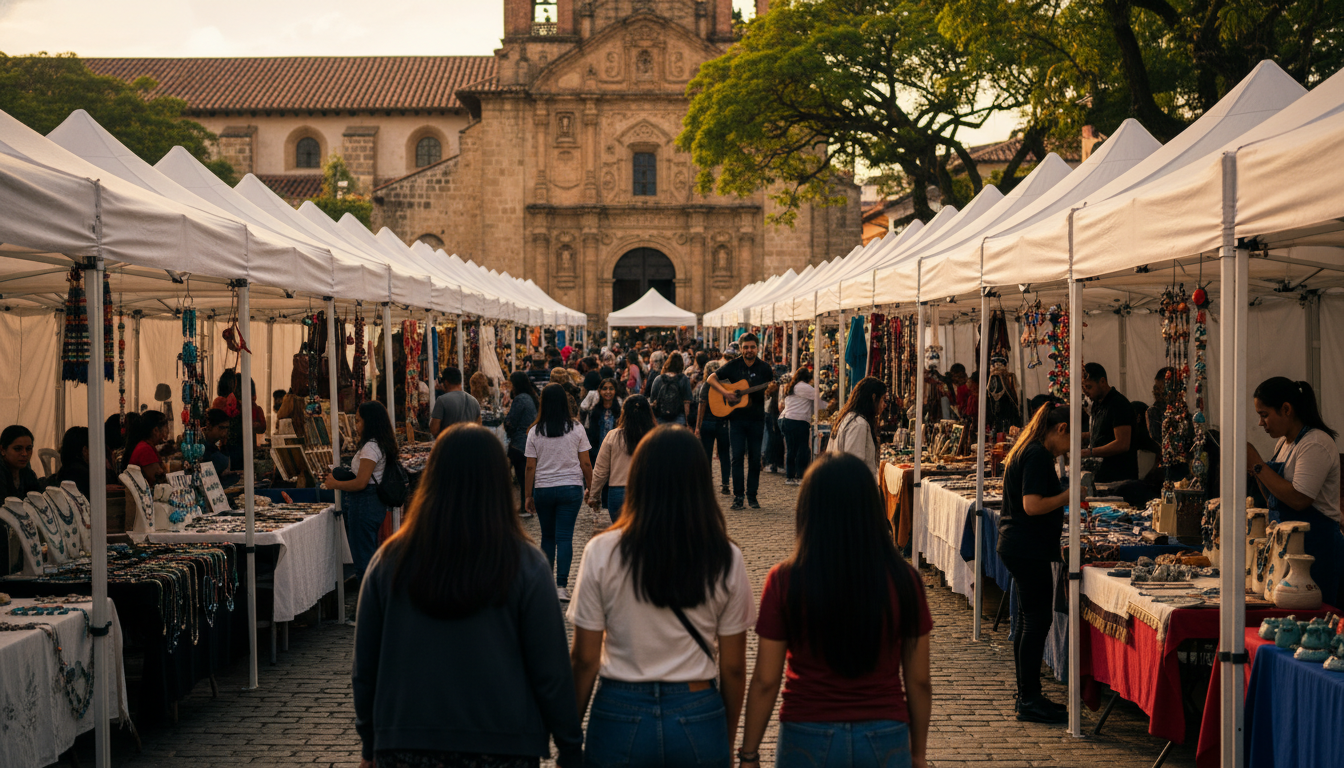 Sunday flea market in Usaquns main plaza, with white tents, crowds browsing handmade jewelry and vin
Home exchanges in Usaquén tend to be comfortable and convenient—think modern apartments in secure buildings, often with parking if you're brave enough to rent a car. I'm not, but some people are. It's the most "international" feeling neighborhood, which can be a pro or con depending on what you're looking for. Personally, I like Usaquén for longer stays when I need to get work done—the cafés have reliable WiFi and nobody bats an eye at a laptop.
Chicó and Zona Rosa: Business and Nightlife
These northern neighborhoods are where money lives in Bogotá. Gleaming towers, international hotels, shopping malls that could be in Miami. Not my usual scene, but I did a home exchange here once when I needed to be near the airport for an early flight. The apartment was absurd—floor-to-ceiling windows, a doorman who called me "doctora," a rooftop pool I had entirely to myself at sunset.
If you're doing business in Bogotá or want easy access to upscale nightlife, Zona Rosa delivers. Just know that you're trading authenticity for convenience. The restaurants are good but generic. The bars are fun but could be anywhere. You'll save money through home exchange, but you might miss the soul of the city.
How to Find the Perfect Home Exchange in Bogotá
Alright, practical stuff. Finding a great home exchange here isn't hard, but there are some Colombia-specific things to keep in mind.
Timing matters. Bogotá doesn't really have a "tourist season" the way beach destinations do—the weather is basically the same year-round, spring-like with afternoon rain showers. But Colombian holidays are intense. Semana Santa (Holy Week) and the weeks around Christmas/New Year see massive internal travel, which means more Colombians wanting to swap their Bogotá apartments for places elsewhere. Great time to find options. Conversely, August is when many bogotanos take vacation, so you might find fewer available listings.
When browsing SwappaHome listings, pay attention to the building situation. Most desirable Bogotá apartments are in edificios with porteros (doormen) and sometimes additional security. This is normal and good—it means 24/7 building access, package acceptance, and an extra layer of accountability. Hosts should explain the building entry process in their listing. If they don't, ask.
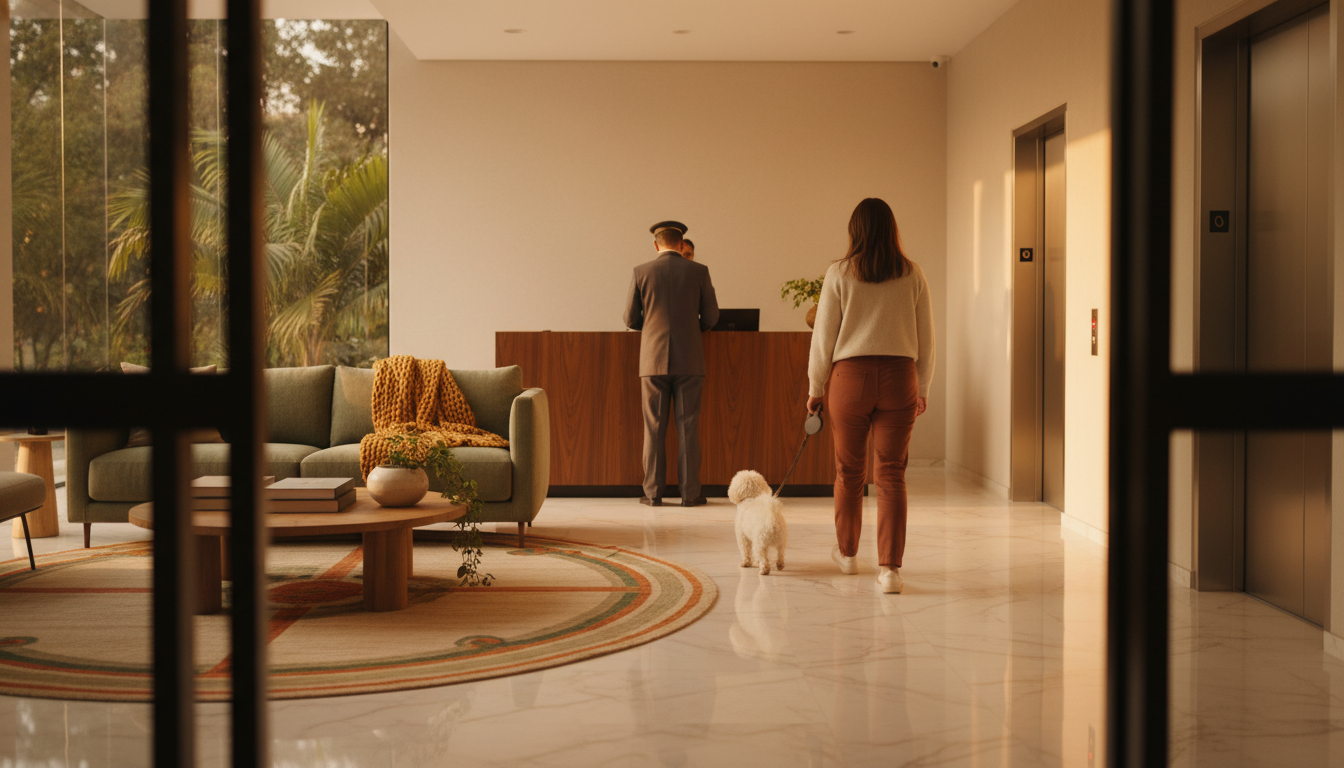 Modern apartment building lobby in Bogot with a uniformed portero at the desk, marble floors, and a
Look for listings that mention estrato (socioeconomic classification, 1-6; you probably want 4-6 for tourist-friendly areas), TransMilenio or SITP access for getting around on Bogotá's bus system, the hot water situation since some older buildings have inconsistent hot water and this matters at 8,660 feet, and security features like porteros, cameras, or secure parking if applicable.
On SwappaHome, you can message hosts directly before committing. I always ask about the neighborhood vibe, their favorite local spots, and any quirks about the apartment. Colombian hosts are usually incredibly warm and detailed in their responses—hospitality is deeply cultural here.
What to Expect from Your Bogotá Home Exchange Host
Colombian hospitality is legendary, and it extends to home exchange in ways that consistently surprise me. My hosts have left me everything from detailed neighborhood maps to fully stocked refrigerators to WhatsApp introductions to their neighbors "just in case."
That said, expectations vary. Some hosts treat it as a pure accommodation swap—here are the keys, here's the WiFi, see you never. Others want to meet for coffee before you arrive or have their cousin check in on you. Both approaches are valid. The SwappaHome messaging system lets you gauge communication styles before committing.
One thing that's pretty universal: Colombian hosts expect you to treat their home with respect, which means being mindful of noise since apartments have thin walls, following building rules about guests, and leaving the place clean. This seems obvious, but I've heard horror stories from hosts whose swappers threw parties or left apartments trashed. Don't be that person. The review system exists for a reason.
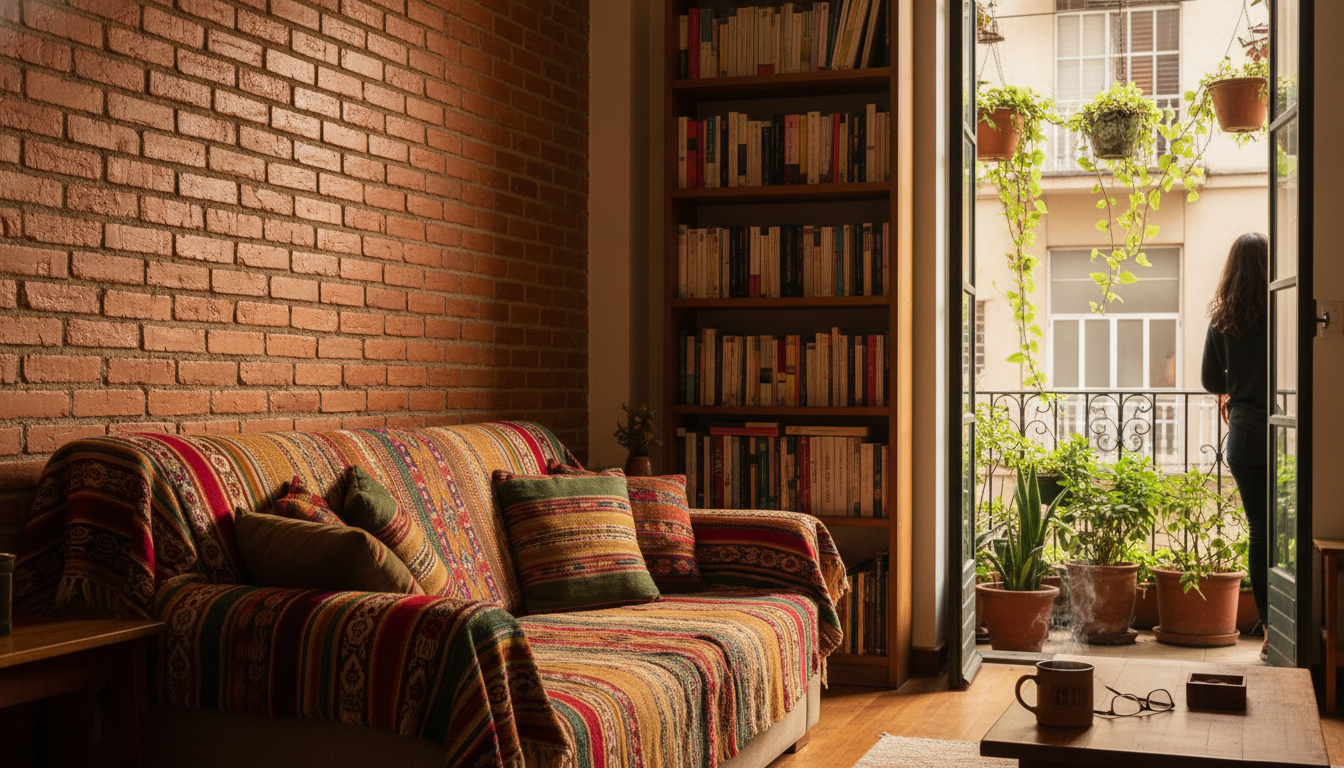 Cozy living room in a Bogot apartment with exposed brick wall, comfortable sofa with colorful Colomb
A note on pets: Bogotá is a dog city. Seriously, everyone has dogs, and many home exchange listings include pet care as part of the deal. If you're comfortable with animals, being open to pet-sitting can unlock some incredible properties—I once stayed in a stunning Chapinero penthouse in exchange for walking a very chill golden retriever twice a day. Worth it.
Living Like a Local: Daily Life in Your Bogotá Home Exchange
Here's where home exchange really shines over hotels. You have a kitchen. You have a neighborhood. You have a routine.
Mornings in my Bogotá swaps always start the same way: walking to the nearest panadería for fresh bread, stopping at a tienda for eggs and fruit, making breakfast in a real kitchen while Colombian radio plays from my phone. Total cost: maybe 15,000 COP ($4 USD). Compare that to hotel breakfast buffets at $25+ and you start to see the math.
Grocery shopping in Bogotá is an experience. The big chains—Éxito, Carulla, Jumbo—are fine for basics, but the real action is at the plazas de mercado, those covered markets selling everything from exotic fruits you've never seen to fresh cheese to medicinal herbs. Plaza de Paloquemao is the most famous, a sensory overload of colors and smells and vendors shouting prices. Go early, before 9 AM, and bring cash.
For getting around, forget Uber—well, don't forget it entirely, but know that it operates in a legal gray zone here. Many locals use apps like InDriver or Didi instead, or simply hail yellow taxis. Make sure they use the meter, or agree on a price beforehand. The TransMilenio bus system is cheap and extensive but absolutely packed during rush hours. I usually walk when possible; Bogotá is surprisingly walkable if you stick to main streets and don't mind hills.
Safety and Trust: The Real Talk Section
I'm not going to pretend Bogotá is Copenhagen. It's a massive Latin American city with real inequality, and that means real crime. But the Bogotá of 2024 is dramatically safer than even ten years ago, and millions of people live here happily without incident.
For home exchange specifically, the trust equation works both ways. You're trusting your host's neighborhood assessment and security setup. They're trusting you with their home. The SwappaHome review system creates accountability—members with solid track records are safer bets on both sides.
Some practical safety tips that apply regardless of where you're staying: don't flash expensive electronics on the street (this is true in most major cities worldwide), use ATMs inside banks or shopping centers rather than street-facing ones, keep your phone in a front pocket or cross-body bag, learn basic Spanish phrases since even broken Spanish dramatically improves interactions, trust your gut and if a street feels sketchy take another route, and ask your host about their neighborhood specifically because they know it best.
Regarding home exchange trust: SwappaHome offers member verification, and I always check reviews before confirming any swap. The platform facilitates the connection, but members are ultimately responsible for their own arrangements. Some travelers choose to get their own travel insurance or temporary home insurance for extra peace of mind—that's a personal decision based on your comfort level.
Making the Most of Your Bogotá Home Exchange
You've got the apartment. You've got the neighborhood. Now what?
Bogotá rewards slow exploration. Yes, there are tourist highlights—the Museo del Oro, the Botero Museum (free!), the Monserrate cable car for sunset views over the city. Do those. But also leave time for wandering.
Spend a morning in the Usaquén flea market even if you don't buy anything. Take a street art tour in La Candelaria—Bogotá Graffiti Tour is excellent and tip-based. Eat at a corrientazo restaurant, those set lunch specials that office workers rely on, usually 12,000-18,000 COP ($3-5 USD) for soup, main, drink, and dessert. Find a neighborhood café and just sit there for an hour, watching bogotanos go about their day.
If you're staying more than a week, consider day trips. The Salt Cathedral of Zipaquirá is genuinely impressive—an underground cathedral carved into a salt mine, about 90 minutes north. Lake Guatavita, the origin of the El Dorado legend, is a beautiful hike. Villa de Leyva is a perfectly preserved colonial town worth an overnight.
But honestly? Some of my best Bogotá memories are the small moments. Watching a thunderstorm roll over the mountains from my borrowed balcony. Getting unreasonably invested in a telenovela because it was the only thing on TV. Having a three-hour dinner with my host's neighbors who insisted on teaching me to make ajiaco, the city's signature chicken soup.
That's what home exchange gives you. Not just a place to sleep, but a place to belong, even temporarily.
Getting Started with Home Exchange in Bogotá
If you're new to home exchange, Bogotá is actually a great place to start. The community is growing, Colombian hosts tend to be communicative and welcoming, and the cost savings are dramatic enough to feel immediately worth it.
On SwappaHome, start by creating a detailed profile and listing your own home—even if you're not ready to host yet, having a complete profile builds trust. Browse Bogotá listings to get a sense of what's available. Send a few introductory messages to hosts whose places interest you. The 7 free credits you get as a new member mean you can book a significant Bogotá stay without hosting first, though building up credits through hosting makes the whole system sustainable.
I'd recommend planning your first Bogotá home exchange for at least a week. Shorter stays are possible, but you'll spend half your time adjusting to the altitude and figuring out the neighborhood. A week gives you time to settle in, make mistakes, and actually experience daily life.
And look—I know home exchange requires more trust than booking a hotel. You're staying in a stranger's home, sleeping in their bed, using their kitchen. It feels vulnerable. But that vulnerability is also what makes it meaningful. You're not a tourist passing through. You're a guest, welcomed into someone's actual life. In a city like Bogotá, where warmth and hospitality are cultural values, that welcome can be transformative.
Four years after that first accidental three-week stay, I still think about the lemon tree in that La Candelaria courtyard. The host and I are still in touch—she's visited San Francisco twice, staying at my place both times. That's the thing about home exchange. Sometimes you find a place to stay. Sometimes you find a connection that outlasts the trip entirely.
Frequently Asked Questions
Is home exchange in Bogotá safe for solo travelers?
Yes, home exchange in Bogotá is generally safe for solo travelers, especially in neighborhoods like Chapinero, Usaquén, and Chicó. Choose verified hosts with positive reviews, stay in buildings with porteros (doormen), and follow standard urban safety practices. Many solo travelers—myself included—have had excellent experiences swapping in Bogotá. The key is researching neighborhoods and communicating clearly with hosts about security features.
How much money can I save with home exchange in Bogotá compared to hotels?
Home exchange in Bogotá can save you $80-150 USD per night compared to mid-range hotels in safe neighborhoods. Over a two-week trip, that's $1,100-2,100 in accommodation savings alone. Add kitchen access (saving $30-50 daily on meals) and you're looking at potential savings of $1,500-2,800 for a two-week stay. SwappaHome's credit system means your only cost is the membership fee.
What's the best neighborhood for first-time home exchange visitors to Bogotá?
Chapinero is ideal for first-time home exchange visitors to Bogotá. It offers the best balance of safety, walkability, restaurant options, and authentic local atmosphere. Specifically, Chapinero Alto provides modern apartments with good security, easy TransMilenio access, and a vibrant but manageable neighborhood feel. Usaquén is another excellent choice for those preferring a quieter, more polished environment.
Do I need to speak Spanish for home exchange in Bogotá?
While you don't need fluent Spanish for home exchange in Bogotá, basic phrases significantly improve your experience. Most SwappaHome hosts in Bogotá speak some English, and communication through the platform works well. However, navigating daily life—markets, taxis, local restaurants—is much easier with basic Spanish. Apps like Google Translate help, but learning greetings, numbers, and common phrases shows respect and opens doors.
When is the best time of year for home exchange in Bogotá?
Bogotá has consistent spring-like weather year-round (average 57-65°F / 14-18°C), so there's no bad time for home exchange. However, December-January and Semana Santa (Holy Week) see more Colombian travelers seeking international swaps, increasing your options. Avoid booking during major local holidays if you want a quieter experience. The dry seasons (December-March and July-August) mean fewer afternoon rain showers for exploring.

Published by
SwappaHome
SwappaHome Editorial Team
Home Exchange & Slow Travel Editorial
The SwappaHome Editorial Team brings together travel research, home-exchange community insights, and platform data to produce practical guides for first-time and experienced home swappers. Every article cites real platforms, current market rates, and verifiable city-level facts so readers can make informed decisions without guessing.
Ready to try home swapping?
Join SwappaHome and start traveling by exchanging homes. Get 7 free credits when you sign up!
Related articles

Bachelor and Bachelorette Parties in Singapore: The Complete Home Swap Group Guide for 2026
Planning a bachelor or bachelorette party in Singapore? Discover how home swapping lets groups of 6-12 stay together in luxury condos, saving thousands while partying in Marina Bay.
Cycling in Lisbon: 7 Home Swap Bike Tour Itineraries for Every Rider
Discover the best cycling routes in Lisbon with these home swap bike tour itineraries—from waterfront paths to hilltop adventures, all starting from your borrowed home.
Graduation Trip to Barcelona: How Home Swapping Gives New Graduates the Ultimate Celebration
Planning a graduation trip to Barcelona? Discover how home swapping lets new graduates explore Spain's most vibrant city without the hostel crowds or hotel costs.